Prescription Numbing Cream Guide for Cosmetic Procedures
You're sitting in the exam chair, your appointment for Botox is in a few minutes, and the only thing on your mind is the needle. That's a common moment, and it's exactly why prescription numbing cream matters in aesthetic care. Used correctly, it can make injections and minor cosmetic procedures feel far more manageable, but the benefit depends on the right product, the right timing, and the right dose.
Introduction to Prescription Numbing Cream
A good numbing plan starts before the first needle ever touches skin. In cosmetic settings, clinicians often use prescription numbing cream to reduce discomfort for injections, laser work, and other minor procedures, because it offers a non-invasive way to soften the experience without turning every treatment into a struggle.
The basic idea is simple. The cream creates a temporary local anesthetic effect on the skin surface, so the brain receives fewer pain signals from the area being treated. The tricky part is that the skin has to absorb enough medicine to work, but not so much that it creates avoidable risk.
That balance is why this topic gets misunderstood so often. People want the fastest, strongest numbing possible, but aesthetic care works best when the cream is chosen and timed like a precision tool, not treated like a heavy-handed shortcut.
Understanding How Numbing Cream Works

Think of the skin like an electrical circuit. Pain starts at tiny nerve endings, then travels upward until the brain registers it. Topical anesthetics interrupt that message before it gets through, which is why the area feels numb instead of sharp or stingy.
What the medicine is doing at skin level
Prescription products such as lidocaine, prilocaine, and tetracaine diffuse through the outer layer of skin, the stratum corneum, then reversibly inhibit voltage-gated sodium channels. That blocks the nerve from firing pain signals, which is the same basic logic behind a circuit breaker stopping current from flowing. The effect is local, not total, so the goal is to quiet the area being treated rather than sedate the whole body.
Timing matters because absorption is not instant. The NHS says lidocaine skin cream usually starts numbing within 30 to 60 minutes and higher-concentration formulations can begin working in 5 to 15 minutes with a typical effect lasting 20 to 30 minutes NHS lidocaine skin cream. That difference is why one cream can be a fit for a quick facial injection while another works better when the appointment takes longer.
Practical rule: if the skin is numb too early, the timing was probably off. If it's still stingy at treatment time, the application window was too short or the layer was too thin.
For readers who want to compare anesthetic options across procedure types, What is bupivacaine is a useful companion read because it frames how different local anesthetics are used for different depths and durations.
Comparing Active Ingredients and Formulations

A prescription numbing cream is not one standard product. It is a group of formulations, and each one changes how quickly numbness starts, how intensely it numbs, and how long the skin stays quiet. For aesthetic patients, that difference matters because a facial injector, a laser session, and a small skin procedure do not all need the same timing or the same amount of coverage.
The most common prescriptions use lidocaine, prilocaine, or tetracaine, either alone or in combination. A paired formula can behave very differently from a single-ingredient cream because each active ingredient has its own balance of onset, depth, and duration Data.gov lidocaine and prilocaine.
Why one formula feels different from another
The ingredient list only tells part of the story. The base, or vehicle, matters too, because creams, ointments, and other topical forms spread and absorb at different rates. That is why two products with similar active ingredients can still feel different on the skin, much like two paintbrushes can lay down the same paint in very different ways.
Concentration is only one piece of the decision. A higher-strength formula may suit a longer cosmetic appointment, but a quick injectable treatment may do better with a product that reaches a predictable level of numbness within the appointment window. In practice, the useful question is not which cream sounds stronger, but which one matches the procedure, the area being treated, and the amount of time the skin will stay covered.
Timing is where many cosmetic patients run into trouble. If a product is applied too late, the skin may still sting when the needle or device starts. If it is left on too long, or spread too thickly, absorption can become less predictable, especially on the face where the skin is thinner and the treatment area is often smaller.
Common combinations at a glance
- Lidocaine/prilocaine 2.5%/2.5%. Often used for needle procedures, minor skin surgery, or blood draws, with a well-established profile for controlled topical anesthesia Data.gov lidocaine and prilocaine.
- Lidocaine/tetracaine 7%/7%. Used when a stronger local effect is needed on intact skin, with application parameters kept tightly controlled Mayo Clinic topical application route.
- Cream and ointment vehicles. These change spreadability, contact time, and penetration, which is why the same active ingredient can behave differently from one product to another.
For cosmetic care, that difference shows up in dosing mistakes more than in the ingredient name itself. A product can be appropriate on paper and still perform poorly if the layer is too thin, the treated area is too wide, or the skin is uncovered sooner than planned. Patients asking about prescription numbing cream for injectables often need the same kind of practical guidance used in other topical pain settings, including managing post-pregnancy hemorrhoid pain, because the basic issue is still how to match the drug, the skin, and the timing.
OTC Versus Prescription and Legal Considerations

Over-the-counter numbing products and prescription products are not just different by label, they're different by risk profile and intended use. The FDA warned consumers to avoid certain topical pain-relief products for cosmetic procedures and specifically advised against products with more than 4% lidocaine because of serious harms, including irregular heartbeat, seizures, coma, slowed breathing, and two deaths FDA warning.
Why the legal line matters
That warning changed how many clinicians and patients think about numbing cream. The issue isn't just whether a cream works, it's whether it can be used safely on the face, under occlusion, or over a large enough area to create systemic absorption. In cosmetic practice, those details matter more than they do for a small, isolated skin irritation.
OTC products can be enough for minor surface discomfort, but they're not the same thing as a medically directed anesthetic plan for injectables or lasers. If a treatment area is larger, deeper, or more sensitive, a prescription product may be the appropriate tool because it comes with clearer dosing control and clinical oversight.
For readers comparing access routes, trusted UK online prescription providers is a practical overview of how online prescribing is handled in a regulated setting.
What patients usually miss
The most common mistake is thinking a higher lidocaine percentage automatically means better numbness. In reality, safety depends on the amount used, the surface area, and whether the cream sits under occlusion long enough to absorb. That's why the prescription label matters as much as the ingredient list.
If you're also navigating other prescription-only cosmetic care, this internal guide is helpful: how to get a prescription for Latisse. The prescribing logic is similar, since the right product still has to match the right person and the right use.
Clinical Uses and Application Guidance

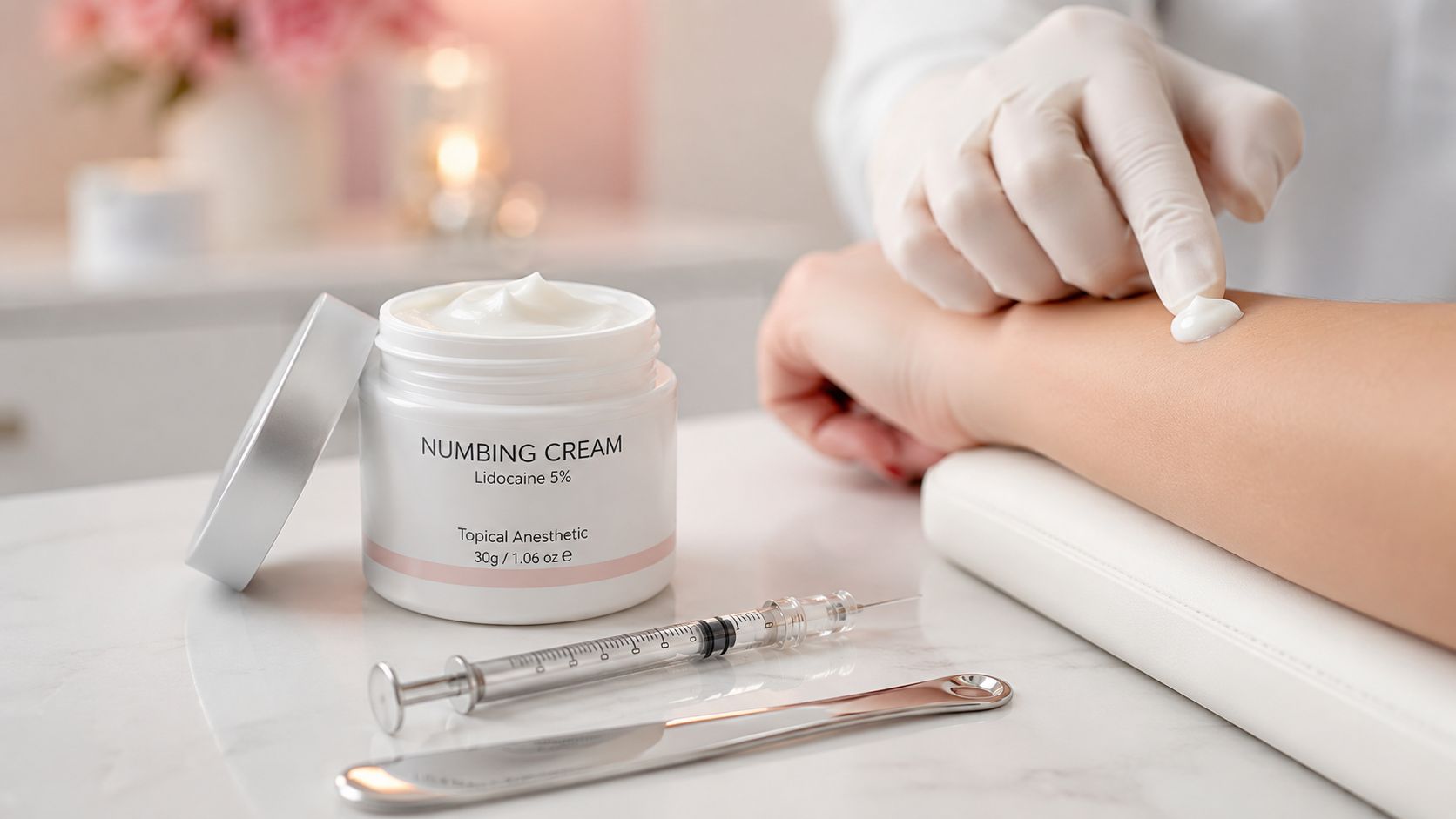
In aesthetic care, the best results come from a consistent routine. The NHS advises a thin 1 mm layer under occlusion for 30 to 60 minutes, with timing adjusted to the vehicle and the depth of the procedure NHS how and when to use lidocaine skin cream. That's the backbone of cosmetic application, whether the treatment is a small injectable or a more involved skin procedure.
The application sequence that keeps numbing predictable
- Prepare the skin. Clean, dry skin absorbs more predictably than skin coated with lotion, oil, or makeup residue.
- Apply the cream evenly. The key is coverage, not rubbing. A thick, even layer stays in contact with the skin better than a thin smear.
- Cover with occlusion. A dressing or wrap holds the medicine against the skin and helps it do its job.
- Respect the wait time. If the product needs 30 to 60 minutes, don't rush the appointment.
- Remove it completely. Wipe away the cream before treatment so the provider can work on clean skin.
A patient who applies more cream usually doesn't get faster numbness, just more variable dosing. The better habit is correct coverage, correct timing, and correct removal.
For Botox, dermal fillers, PRP injections, and laser treatments, the same rule applies. The treatment depth and surface sensitivity guide how long the cream stays on, but the goal is always the same, a calm patient and a smooth procedure. When a treatment is more superficial, a shorter window may be enough. When the skin is being worked more intensively, clinicians usually plan farther ahead.
If you want a procedure-specific comparison of skin-recovery workflows, microneedling a comprehensive guide to rejuvenating your skin gives useful context for how topical comfort measures fit into a broader aesthetic plan.
Safety Risks Side Effects and Contraindications
Aesthetic patients often run into problems with numbing cream at the point where they try to get a stronger effect for a more sensitive treatment. The mistake is usually simple, more cream, a wider area, or a longer wait under wrap. That combination can push lidocaine and prilocaine beyond the skin and into the rest of the body, which is why these products need careful dosing and timing control.
Cleveland Clinic advises patients to report serious symptoms such as rapid or irregular heartbeat, shortness of breath, blue skin or lips, or swelling because these can point to methemoglobinemia or an allergic reaction Cleveland Clinic lidocaine-prilocaine cream. Those symptoms call for prompt medical attention, not a wait-and-see approach.
Warning signs that deserve immediate attention
The cosmetic setting can make warning signs easier to miss. A patient may assume a tight mask, a warm wrap, or the normal nerves before treatment explain the feeling, when the underlying problem is that the anesthetic is affecting the whole body instead of just the skin. If the lips, skin, or nails start turning blue, if breathing feels harder than expected, or if the heart suddenly feels off rhythm, stop the procedure flow and get evaluated.
Skin irritation is another common issue. Some people develop redness, burning, itching, or swelling where the cream sat, especially if the skin was already sensitive or the product stayed on longer than planned. Broken, inflamed, or highly reactive skin can absorb medication less predictably, so intact skin is the safer choice for prescription topical anesthetics.
The safest habits are the boring ones
- Use only the prescribed amount. More cream does not give more safety or better numbness.
- Limit the covered area. Larger treatment zones raise absorption risk.
- Watch the clock. Longer contact time can increase systemic exposure, especially under occlusion.
- Stop if symptoms appear. Dizziness, trouble breathing, or color changes need prompt evaluation.
- Do not treat questionable skin. Broken, inflamed, or highly compromised areas deserve medical review first.
The common confusion is assuming topical means harmless. Topical anesthetics can still act like systemic medications when the dose, surface area, or timing gets out of hand. For cosmetic patients, the biggest pitfall is often not the product itself, but how it is used before a facial procedure, where a little extra cream feels harmless and changes absorption in ways patients do not expect.
Alternatives and BotoxBarb Solutions
If a patient can't tolerate a cream, there are other comfort tools, but each one has trade-offs. Cooling methods can blunt the first sting, sprays can help in limited situations, and nerve blocks may work for selected procedures, but they're not always practical for routine aesthetic care. Prescription numbing cream remains popular because it's non-invasive, familiar, and easy to tailor to the appointment.
A second layer of support comes from skin-prep and recovery tools. A LED Facial Mask can be useful in a broader aesthetic routine because it adds a calming, non-needle-based step around treatment days. The Barb N.P. Facial Mark is designed with a wireless setup, a comfortable facial fit, and 3 lighting settings for different treatment goals, which makes it easy to incorporate into a routine when a patient wants simplicity and consistency.
The broader service model is important too. Aesthetic care works best when comfort, timing, and product selection are coordinated by a licensed team rather than pieced together from random retail products. You can see how that kind of structure is organized on BotoxBarb services, where in-clinic care sits alongside curated skin-focused support.
For patients who want a smoother experience, the best choice is usually the one that matches the actual procedure, not the one that sounds strongest on paper. Prescription topical anesthetics, paired with thoughtful prep and recovery tools, create a more predictable visit and less day-of anxiety.
Conclusion and Next Steps
Prescription numbing cream works best when the product, the timing, and the procedure all line up. The key takeaways are simple, use the right formulation, apply the right amount, respect the wait time, and keep safety controls tight. For cosmetic injections and related treatments, that usually means careful planning rather than last-minute guessing.
If you're preparing for Botox, fillers, PRP, or laser work, talk with a licensed practitioner about which anesthetic approach fits your skin and your appointment length. If you want a guided aesthetic visit with product selection support, explore the next step at BotoxBarb and choose comfort with clinical oversight.
A CTA for BotoxBarb.