A Complete Guide to Skin Care Analysis
Your bathroom counter can look expensive and still leave you stuck. A cleanser for breakouts, a serum for glow, another serum for dark spots, a cream for “barrier repair,” and sunscreen you use inconsistently because half the time you're not sure what your skin needs.
That's where most skin frustration starts. Not with a lack of effort, but with too much guessing.
A proper skin care analysis changes the job from shopping to decision-making. Instead of asking, “What product is trending?” you ask, “What is my skin showing me, and what problem am I solving first?” That shift matters in a category this crowded. The global skin care market was valued at USD 122.11 billion in 2025 and is projected to reach USD 227.13 billion by 2034, with a 7.32% CAGR according to Fortune Business Insights on the skin care market. More products don't automatically mean better outcomes. They usually mean more noise.
Beyond the Bathroom Mirror
I see the same pattern often in practice. Someone comes in convinced they have “dry skin,” but the underlying problem is dehydration from over-cleansing. Another person thinks they need a stronger acne routine, when their skin is irritated, inflamed, and reacting to too many active ingredients layered too fast.
The mirror only gives you part of the story.
Why guessing keeps people stuck
Many individuals build routines backward. They start with a product promise, then hope their skin matches the marketing. That's how you end up using rich creams on congested skin, exfoliating a damaged barrier, or chasing brightness when the bigger issue is chronic redness.
A thoughtful skin care analysis helps sort these problems into priorities:
- Barrier problems first: If the skin is reactive, tight, or easily stings, pushing more actives usually makes things worse.
- Pigment problems second: Uneven tone responds better when the skin is stable, not inflamed.
- Texture and aging concerns third: Fine lines, pore appearance, and dullness often improve more predictably once hydration and irritation are under control.
Practical rule: If your routine keeps changing but your skin doesn't improve, the missing step usually isn't another product. It's better assessment.
What changes when you know your baseline
Once you understand what your skin is doing, your routine gets smaller and smarter. You stop buying categories you don't need. You become more realistic about what topical care can fix and what needs in-clinic support. You also get a way to track progress without relying on day-to-day mood or lighting.
That's the true value of skin care analysis. It turns skin care from trial and error into a plan.
What Is Skin Care Analysis
Think of skin care analysis as a blueprint for your skin. It combines what can be seen on the surface with what can be measured or inferred through imaging, guided observation, and clinical history. The goal isn't to create a complicated report. The goal is to understand what's driving your skin behavior so your routine matches reality.
Professional analysis usually includes more than one layer of evaluation. A trained provider looks at visible concerns such as tone, texture, pores, redness, and congestion. Then they connect those findings with pattern clues like dehydration, oil imbalance, sun-related discoloration, or a stressed barrier.
What a good analysis is trying to uncover
A useful skin care analysis doesn't just label your skin as oily, dry, or sensitive. It asks better questions.
- What's visible now: redness, flaking, acne marks, uneven tone, enlarged pores, fine lines
- What's developing underneath: early pigment change, inflammation patterns, sun-related changes, dehydration
- What's influencing it: routine habits, irritation triggers, environment, medication history, hormones, and recovery capacity

Why the process matters more than the gadget
Technology helps, but the machine isn't the diagnosis. The strongest analyses combine four things: visual inspection, imaging data, symptom history, and product review. If one of those is missing, recommendations get less reliable.
That's why a short, algorithm-only quiz often misses the mark. A good analysis should explain not just what you have, but why a certain routine structure makes sense for your skin today. It should also create a baseline so you can compare your skin over time instead of reacting to every breakout or dry patch as if it's a new problem.
When done well, skin care analysis gives you a clinical map. That map guides treatment choices, ingredient tolerance, and realistic expectations.
In-Clinic Precision vs At-Home Convenience
In-clinic tools and at-home apps serve different purposes. One gives you more controlled, deeper evaluation. The other gives you speed and access. Both can be helpful if you use them for the right job.
The biggest mistake is expecting them to do the same thing.
Where in-clinic analysis wins
Clinical imaging works in a controlled setting. Lighting is standardized. Angles are consistent. The provider can compare what the device shows with what your skin feels like, how it reacts, and what your history suggests.
That combination matters because AI skin analysis can perform well, but results vary by the concern being measured. One review discussed AI-dermatologist agreement ranging from about 69% to over 90%, with one cited study showing 83.7% for erythema, 81.6% for wrinkles, and 95% test-retest reliability, as summarized in this review of AI skin analysis accuracy. Strong performance for one feature doesn't mean equal performance for every skin issue.
Where at-home tools fit well
At-home apps are useful for pattern tracking. They can help you notice whether redness is calming down, whether breakouts are clustering in the same area, or whether your skin looks consistently dull after introducing a new product.
They're also a reasonable first step if you want direction before booking a professional visit. If you're exploring a broader treatment plan, many people start by reviewing options for a medical aesthetics and med spa setting before deciding whether they need imaging, a facial consultation, or a clinician-led treatment plan.
In-Clinic vs At-Home Skin Analysis
| Feature | In-Clinic Analysis (e.g., VISIA) | At-Home Analysis (e.g., AI Apps) |
|---|---|---|
| Environment | Controlled lighting and positioning | Variable lighting, angle, and camera quality |
| Interpretation | Reviewed in context by a clinician or skin professional | Usually algorithm-led, sometimes with limited context |
| Depth of insight | Better for combining imaging with history and exam | Better for quick snapshots and routine tracking |
| Use case | Treatment planning, baseline evaluation, nuanced concerns | Convenience, habit support, early screening |
| Limitations | Requires an appointment and higher commitment | Can misread features if image quality or lighting is poor |
At-home analysis is useful for monitoring. It's less reliable as a stand-alone decision-maker when your skin is inflamed, reactive, or difficult to classify.
Decoding Your Skin Metrics
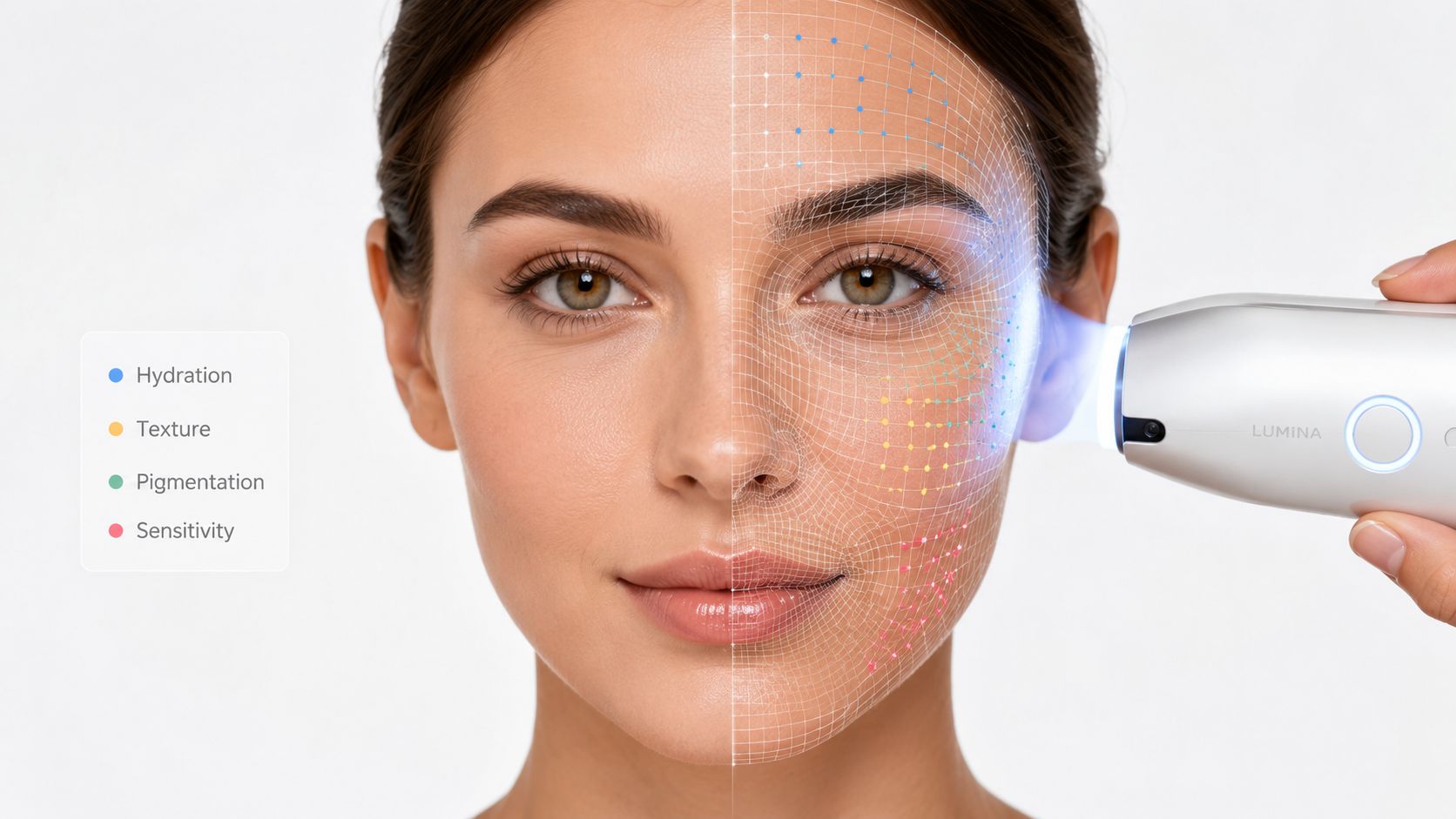
A report only helps if you know how to read it. Terms like hydration, TEWL, sebum, pigmentation, and erythema sound technical, but in practice they answer simple questions: Is your skin holding water? Is it producing excess oil? Is discoloration from inflammation, sun exposure, or both?
Hydration and TEWL
Hydration tells you how much water the skin is holding. Skin can be oily and dehydrated at the same time. That's common.
TEWL, or transepidermal water loss, reflects how much water escapes through the skin barrier. If TEWL is high, the barrier is acting leaky. In real life, that often shows up as stinging, tightness, flaky patches, and poor tolerance for acids or retinoids.
If that sounds familiar, a barrier-first approach usually makes more sense than adding stronger actives. Supportive routines often start with gentle cleansing, lipid-rich moisturizers, and fewer treatment steps. If you're working through that issue, this guide on how to repair a damaged skin barrier gives a practical framework for what to simplify first.
Sebum, pores, and texture
Sebum production reflects oil output. More oil can make pores look larger and can contribute to congestion, but oil alone isn't the enemy. Some oily skins age with fewer visible dehydration lines. The problem is usually imbalance, not just “too much oil.”
Texture includes roughness, uneven surface pattern, and visible pore prominence. Texture can come from congestion, irritation, residual acne changes, or sun-related wear. The right response depends on the rest of the report. Exfoliation helps some texture patterns and worsens others.
Pigmentation, redness, and what they don't tell you
Pigmentation refers to uneven melanin distribution. That can include sun spots, post-inflammatory marks, and patchy tone after breakouts or irritation.
Redness can point toward sensitivity, inflammation, vascular reactivity, or barrier stress. But appearance alone has limits. Sometimes what looks like a cosmetic issue overlaps with broader triggers such as diet, environment, or immune response. If your skin flares in patterns that seem linked to meals, bloating, or chronic inflammation, this overview of food sensitivities gives helpful context for how non-topical factors may contribute.
One number never tells the whole story. The pattern across hydration, oil, redness, pigment, and texture is what guides treatment.
How to Interpret Your Analysis Report
Most reports become useful when you stop reading each score separately and start reading them as a pattern. Skin rarely has one isolated issue. It usually shows a combination of barrier status, inflammation level, oil behavior, and recovery ability.

Skin profile A
This person often reports that their skin feels dry, but the analysis shows more than low moisture. Hydration is down, TEWL suggests poor barrier function, and there may be fine surface lines with diffuse redness.
That profile usually means the skin is overexposed to irritation. Common triggers include overuse of exfoliating acids, too-frequent cleansing, scrubs, aggressive retinoid use, or skipping moisturizer because the skin is also breaking out. The treatment priority is not brightness or anti-aging. It's restoring barrier stability so the skin can tolerate treatment later.
A routine for this report usually emphasizes a gentle cleanser, a barrier-supportive serum, a richer moisturizer, and daily sunscreen. In-clinic care may focus on soothing treatments and collagen-supportive options once the skin is calm.
Skin profile B
This person often describes their skin as oily, acne-prone, and uneven. The report may show higher sebum, visible pore congestion, and pigment irregularity after breakouts.
That pattern points to a different sequence. You still want barrier support, but now the main issue is controlling congestion while reducing post-inflammatory marks. To address this, a targeted serum, measured exfoliation, and consistent sun protection can do more than piling on multiple heavy creams.
Why context still matters
Automated tools can miss nuance, especially across diverse skin tones. Computer-assisted imaging can struggle to distinguish erythema from pigmentation in darker skin, and the AI skin analysis market is projected to reach USD 2.13 billion in 2026, as discussed in this review on computer-assisted facial imaging and AI skin analysis. Growth in technology is real, but interpretation still matters.
If your report says “redness” but your lived concern is dark marks after inflammation, don't assume the software got it right. Ask whether the device is reading vascular change, pigment, or a mix of both.
The strongest interpretation connects the report to your history. What products sting. What flares after heat. What lingers after acne. What changed after travel, stress, or hormonal shifts. That's the difference between data and advice.
Building Your Personalized Routine
A routine should grow out of the analysis, not the other way around. More steps are often not the solution; instead, the correct sequence is vital.
Consumer behavior supports that approach. In a survey highlighted by Drive Research on skin care product usage, 93% of women reported using moisturizers, 85% cleansers, and 83% sunscreens. 57% used serums. That tells you where the foundation belongs: cleanse, moisturize, protect, then add treatment where your analysis shows a real need.

Start with the foundation
If your report points to dehydration or barrier stress, build around comfort and consistency:
- Cleanser: use a non-stripping formula that leaves the skin calm, not squeaky
- Moisturizer: choose one with barrier-supportive lipids or a texture you'll use twice daily
- Sunscreen: always include this when you're treating redness, pigment, or post-acne marks
If your report points to congestion and excess oil, don't skip moisturizer. Balance usually improves when the skin isn't forced into rebound dryness.
Add one targeted layer
Serums and devices are relevant. A well-chosen serum can address pigment, dullness, or signs of aging. Clinical-grade vitamin C formulas can support brightness. Barrier-focused lipid serums can help reactive skin recover. If you're considering treatment options beyond home care, this guide to Skin Revision best facial treatments is a useful example of how professionals match concerns like aging, texture, and tone to different facial approaches.
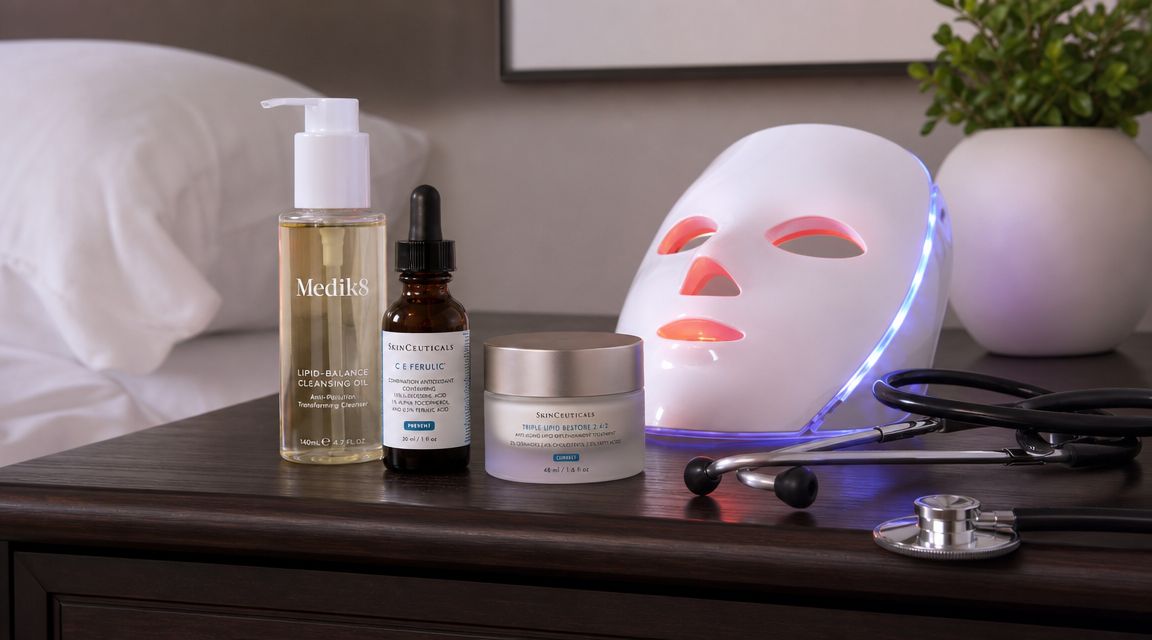
For device support at home, one option is the Barb N.P. Facial Mask, which uses LED light therapy with three lighting settings for different goals: red for anti-aging support, blue for acne-focused care, and amber for healing support. The design is wireless and made for comfortable wear on the face, which matters because at-home devices only help when people use them consistently.
Keep the routine realistic
A personalized plan doesn't need to feel clinical or complicated. It needs to be repeatable. That often looks like:
- Morning: gentle cleanse, targeted serum if tolerated, moisturizer, sunscreen
- Evening: cleanse, treatment step based on your analysis, moisturizer
- Weekly: one adjustment only if your skin stays stable
If you want a simple framework for putting those pieces together, this guide on how to build a skincare routine is a solid place to start.
Good routines don't chase every concern at once. They fix the condition that's blocking progress, then layer in the next goal.
Frequently Asked Questions About Skin Analysis
How often should you get a skin care analysis
A professional analysis is most useful when something changes. That could be a new routine, a flare that won't settle, a treatment plan you want to track, or a shift in skin behavior with age, stress, or climate.
If your skin is stable, occasional reassessment is usually enough. If you're actively treating acne, pigmentation, sensitivity, or visible aging, more regular check-ins can help you adjust before irritation builds.
Can skin analysis detect skin cancer
No. Skin care analysis is not a substitute for a dermatology exam. It can flag areas that look different, but it does not diagnose skin cancer.
If you have a lesion that changes shape, color, border, or behavior, or a spot that bleeds, crusts, or doesn't heal, see a dermatologist promptly.
What if an app gives a confusing or alarming result
Don't panic and don't overhaul your routine overnight. First, retake the image in better lighting and with clean skin. Then compare the app result to what you feel and see.
If the result still doesn't make sense, use it as a prompt for an in-person evaluation rather than a conclusion.
Can a skin analysis tell you why you're breaking out or flushing
Not fully. Expert-led analysis can connect visible changes to patterns involving hormones, gut health, and environmental triggers, but it still has limits. The analysis shows what the skin is doing. A medical professional is needed to diagnose the systemic why when a problem doesn't respond to topical care, as explained in this overview of what a facial skin analysis can and cannot reveal.
When should you escalate beyond aesthetic care
Book medical evaluation when you have persistent rashes, painful cystic acne, sudden pigment changes, unexplained swelling, severe itching, or symptoms that keep recurring despite a sensible routine. Cosmetic planning and medical diagnosis are not the same service.
A good practitioner should know that boundary and tell you when skin care is no longer the full answer.
If you're ready to stop guessing and build a routine around what your skin is showing, explore BotoxBarb for professional treatments, medical-grade skin care, and practical tools that support a more informed approach to skin health.