Your Perfect Skin Care Kit for Women: A Pro Guide
You're probably here because your bathroom shelf is crowded, your saved posts are full of conflicting advice, and your skin still isn't behaving the way you want. That's a common place to start. Most women don't need more products. They need a skin care kit that makes sense for their skin, their schedule, and any treatments they're already doing.
A well-built routine should feel calm, not chaotic. It should protect your barrier, address a real concern, and be simple enough that you'll use it every day. That's where a clinically guided approach makes a difference.
Navigating the World of Women's Skincare
The number of options on the market isn't your imagination. The global skincare market was valued at USD 122.11 billion in 2025, and the women's segment accounted for 83.39% of market share in 2026, which helps explain why shopping for skin care can feel crowded and confusing (Fortune Business Insights skincare market data).
That volume creates noise. One brand tells you to exfoliate more. Another tells you to slug. A third tells you that your skin needs a ten-step ritual. In practice, most skin does better when you start with a disciplined core and add only what serves a clear purpose.
What a core kit actually does
A proper skin care kit for women should do three things well:
- Clean the skin without stripping it
- Support the barrier so skin stays comfortable and resilient
- Protect against daily UV exposure
Everything else is secondary until those pieces are working.
This matters even more when hormones are shifting. Breakouts, dryness, sensitivity, and pigment changes often track with life stage as much as product choice. If your skin has changed suddenly and you suspect internal factors are part of it, resources like private at-home hormone testing can help you start the conversation with more context.
A strong routine isn't built around trend products. It's built around skin behavior.
Why I favor medically guided routines
Department-store kits often sell a mood. A clinical kit should solve a problem. That means looking at your skin state first, then choosing products with a reason behind them. If you're acne-prone, your cleanser and treatment strategy should look different from someone dealing with redness after in-office procedures. If you're postpartum or entering midlife dryness, your kit should shift with that.
Medical-grade options are useful because they tend to be more intentional about formulation, compatibility, and routine structure. That doesn't mean every woman needs a long routine. Usually, the opposite works better.
The Building Blocks of Every Effective Skin Care Kit
Consumer behavior reflects what gets used. Among women who use skincare products regularly, the most-used products are moisturizers at 93%, cleansers at 85%, and sunscreens at 83% (women's skincare usage data). That pattern makes sense clinically because these are the products that keep skin functional day after day.

The core three
Think of your routine like a house. If the foundation is unstable, decorative upgrades won't help.
- Cleanser removes sweat, sunscreen, makeup, excess oil, and environmental residue. A good cleanser leaves skin clean, not tight. If your face feels squeaky, you've usually gone too far. For a deeper explanation of what cleansing does for skin health, this guide on the benefits of using a cleanser is worth reading.
- Moisturizer reduces water loss and supports barrier function. It isn't just for dry skin. Oily and acne-prone patients often do better when they moisturize consistently because skin is less likely to stay inflamed and reactive.
- Sunscreen is essential. Treatment products can improve texture, tone, and barrier health, but they can't undo the effect of inadequate daily UV protection.
Why sunscreen gets its own lane
A lot of women try to combine protection and treatment into one shortcut product. That's where routines often fall apart.
According to Dermalogica's guidance on photoprotection and treatment separation, sunscreen should stand apart from treatment actives because its benefit scales directly with daily exposure, while serums and creams address barrier support and specific concerns. In plain terms, if you're under-protecting your skin from ultraviolet exposure, your brightening serum isn't going to rescue the situation.
Practical rule: If you're choosing where to be disciplined, be disciplined with sunscreen first.
The optional products that earn their place
Not every woman needs toner, exfoliants, masks, eye cream, and oil at the same time. Those products should be selected because they fit a need, not because they came in a trendy bundle.
Here's a simple way to think about the add-ons:
| Product type | Best use | Common mistake |
|---|---|---|
| Serum | Targets a defined concern such as dullness, dehydration, or discoloration | Using multiple strong actives at once |
| Toner | Adds hydration or helps prep skin, if tolerated | Assuming toner is mandatory |
| Exfoliant | Helps with congestion or texture when used carefully | Overusing acids on sensitive skin |
| Eye treatment | Useful when the eye area is dry or irritated | Expecting it to replace sleep or sunscreen |
| Mask or oil | Supportive step for occasional dryness or recovery | Treating it as a daily necessity |
If you're building a giftable routine or buying for someone who enjoys the ritual side of skin care, a luxury self-care gift option can be a thoughtful addition. Just don't confuse a beautiful set with a complete clinical routine.
How to Choose Your Kit by Skin Type and Concern
The most useful way to build a skin care kit for women is by skin state and life stage, not by how many products fit in a pouch. The modern approach is to start with basics and expand only when a specific concern like hyperpigmentation, postpartum changes, or midlife dryness needs attention, as noted in this discussion of building routines by life stage and skin state.

Start with skin behavior, not labels
Many women say, “I have sensitive skin,” when what they really have is over-exfoliated skin. Others say, “I have dry skin,” when they're dehydrated and irritated from strong acne products. The distinction matters because the fix is different.
Use this clinical shorthand:
- Oily skin produces excess sebum and often looks shiny by midday.
- Dry skin lacks enough oil and often feels tight or rough.
- Combination skin usually gets oil through the T-zone and dryness at the cheeks.
- Sensitive skin reacts easily, stings, flushes, or develops irritation with too many actives.
- Acne-prone skin breaks out repeatedly, even if the skin itself feels dry.
Matching the kit to the skin
Oily or acne-prone skin
This routine needs restraint. Women with breakouts often overcorrect with harsh cleansers, strong pads, and too many spot treatments. That strips the barrier and keeps inflammation active.
Choose:
- A gentle gel or low-residue cleanser
- A balancing serum with niacinamide or a breakout-focused active if tolerated
- A lightweight, non-greasy moisturizer
- A daily sunscreen that layers cleanly
Avoid stacking exfoliating cleanser, exfoliating toner, and retinoid all at once. That's a common reason acne-prone skin gets redder and harder to manage.
Dry or midlife skin
Dry skin needs comfort and structure. These patients usually benefit from creamy cleansers, humectant-rich serums, and moisturizers with barrier-supportive ingredients such as ceramides.
Look for:
- A non-stripping cream cleanser
- A hydrating serum
- A richer moisturizer at night
- Consistent daily SPF
If skin feels flaky and reactive, don't rush to exfoliate. Often the skin first needs repair.
If your skin stings when you apply multiple products, treat that as a barrier warning, not a cue to buy more actives.
Sensitive or barrier-impaired skin
Many kits frequently fail. A sensitive-skinned patient often doesn't need more steps. She needs fewer variables.
Keep the routine narrow:
- Fragrance-free or low-irritant cleanser
- Simple moisturizer
- Broad-spectrum sunscreen
- One treatment only if the skin is stable
For women using retinoids, recovering from exfoliation, or pairing home care with injectables or other aesthetic services, I usually favor a stripped-down kit first and only expand when the skin is calm.
Combination skin
Combination skin benefits from flexible product texture more than aggressive treatment. A gentle foaming cleanser, a balancing serum, and a lighter moisturizer usually work better than trying to treat every zone with a different routine.
Product selection in real life
One practical option within a medically guided routine is the BARB N.P. Gentle Antioxidant Soothing Cleanser, used as a low-irritation cleansing step when skin needs a calm baseline before stronger treatment products are introduced. That type of cleanser is especially useful when the goal is tolerance, not just a freshly washed feel.
For discoloration, fine lines, or rough texture, add one targeted serum at a time. For redness, simplify first. For postpartum or hormonally shifting skin, expect your routine to need adjustment over time. Your ideal kit at one stage of life may not be the right kit later.
Assembling Your Routine Order and Timing for Results
A strong kit can still underperform if the order is wrong. Sequencing matters because thin products absorb differently from creams, and irritation rises fast when strong treatments are layered without a plan.

Morning routine
Morning care should focus on preparation and protection.
-
Cleanse
Use a gentle cleanser. If your skin is dry or sensitive, a light cleanse may be enough. -
Tone, if you use one
A hydrating toner can help prep the skin, but it isn't mandatory. - Apply serum This step typically includes an antioxidant or hydrating serum.
-
Moisturize
Use enough to keep the skin comfortable without making sunscreen pill. -
Finish with sunscreen
This step sits last in the morning routine because it needs to form a protective layer.
Evening routine
Night care is where treatment products usually belong because you're not layering sunscreen and makeup on top.
A straightforward evening sequence looks like this:
- Cleanse, and double cleanse if you wear makeup or heavier sunscreen
- Tone, if part of your routine
- Apply treatment serum
- Use eye treatment if needed
- Seal with moisturizer
If you use exfoliating acids or retinoids, don't introduce both at full strength on the same night unless your skin is already very well conditioned and you know it tolerates the combination.
Timing mistakes I see often
| Mistake | What happens |
|---|---|
| Using too many actives together | Skin gets irritated, flaky, or inflamed |
| Applying sunscreen too early in the routine | It can be diluted or disrupted by later layers |
| Skipping moisturizer because skin is oily | Barrier stress often gets worse |
| Changing products too quickly | You can't tell what's helping or hurting |
For a more detailed look at sequencing treatment products, this guide on how to layer serums is a useful reference.
Elevating Your Routine with Advanced At-Home Tools
Once the core routine is stable, at-home devices can support it. They should enhance a healthy regimen, not compensate for a chaotic one.

Where LED therapy fits
LED belongs in the category of supportive treatment. It doesn't replace cleanser, moisturizer, or sunscreen. It can, however, complement a routine aimed at calming inflammation, supporting skin recovery, or maintaining a more consistent home-care plan between professional treatments.
Different light settings are typically used for different goals:
- Red light is often chosen when the focus is overall skin rejuvenation.
- Blue light is commonly used in acne-focused routines.
- Amber light is often used when the goal is a soothing treatment approach.
Why device design matters
A facial mask only becomes part of your routine if you'll use it. In real life, comfort and convenience drive consistency. A rigid device that feels awkward usually ends up in a drawer.
The Barb N.P. Facial Mask is one example of a home LED device designed around useability. It's wireless, which makes sessions easier to fit into a normal evening. The mask is built for comfort on the face, which matters because pressure points and poor fit make regular use less likely. It also includes 3 lighting settings for different treatment goals, which helps users keep one device in rotation instead of juggling multiple tools.
Home devices work best when they remove friction. If setup feels annoying, adherence drops fast.
Pairing LED with the rest of your kit
The best time to use LED is usually when your skin is clean and your routine is otherwise uncomplicated. I prefer to keep the session separate from heavy exfoliation nights. Skin that is freshly irritated doesn't need a long, layered routine plus device use.
LED also makes sense for women who already invest in aesthetic maintenance and want a more structured at-home routine in between visits. If you want a broader explanation of where this fits in skin care, this overview of the benefits of LED light therapy covers the category well.
Smart Strategies for Budgeting and Maintaining Your Kit
A good routine doesn't have to be oversized. In fact, most women waste money when they buy too many treatment products and neglect the basics.
Where to spend and where to simplify
Spend more thoughtfully on products that stay on the skin and do a specific job. That usually means serums, retinoid-type treatments, and sunscreen textures you'll wear every day.
You can often keep it simpler with:
- Cleanser, as long as it's gentle and compatible with your skin
- Basic moisturizer, if your barrier is stable
- Travel duplicates, rather than a whole second routine
Travel kits can improve consistency
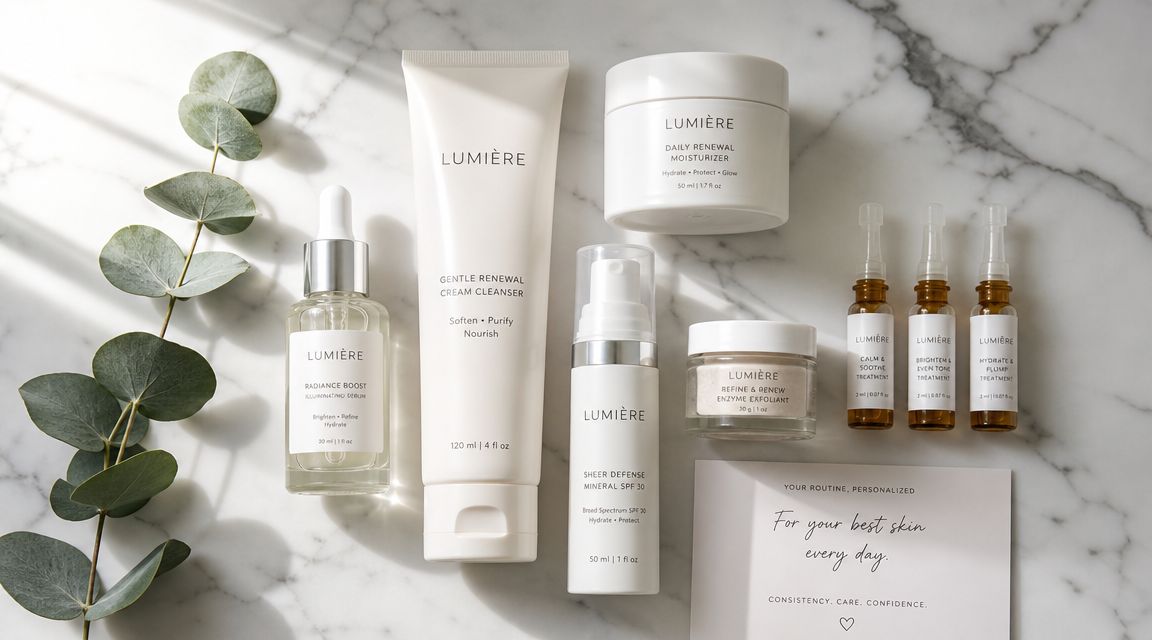
Using travel-size or regimen-complete sets can improve adherence because they reduce routine complexity and preserve layer order across steps like serum, eye treatment, and moisturizer, as reflected in this regimen-complete skincare set example.
That matters more than people think. Most skin setbacks during travel happen because routines become random. A mini cleanser, serum, moisturizer, and sunscreen will outperform a vacation bag packed with impulse samples.
Maintenance rules that keep a kit working
- Replace chaos with repetition. If a routine works, stay with it long enough to judge it fairly.
- Add one new product at a time. That's the easiest way to identify irritation.
- Keep a home set and a travel set aligned. Skin tends to do better when the routine remains familiar.
- Use retailer perks strategically. Free shipping and modest product discounts can make refill habits easier, especially when you're buying medical-grade essentials instead of novelty items.
Frequently Asked Questions About Skincare Kits
Can I mix brands in one skin care kit for women
Yes, as long as the formulas are compatible and the routine has logic. I often prefer mixed-brand routines over buying an entire line blindly. The key is not to stack competing actives just because the labels sound impressive. A calm cleanser from one brand, a targeted serum from another, and a sunscreen you'll wear daily can work very well together.
How long does it take to see results
That depends on the problem you're treating. Hydration and barrier comfort can improve fairly quickly. Pigment, breakouts, and textural changes usually need more patience. What matters most is consistency. Constantly switching products slows progress because your skin never gets a stable environment.
Is a bigger kit always better
No. Many women do better with fewer products. A stripped-down routine often improves tolerance, especially if your skin is sensitive, post-procedure, or already irritated by overuse of acids and retinoids. Complexity only helps when each product has a clear role.
What makes a medically guided kit different from a generic gift set
A medically guided kit is built around skin function, concern targeting, and compatibility. A generic set is often built around packaging, scent, trend ingredients, or gifting. That doesn't make gift sets useless. It just means they shouldn't be mistaken for treatment plans.
Should every woman use toner, eye cream, and masks
No. Those are optional categories. Some women benefit from them. Others get no meaningful advantage and only add cost and irritation risk. Start with the essentials, then add one targeted step if your skin needs it.
What if I'm also getting injectables or doing in-office treatments
Keep your home routine calmer than you think you need. Barrier support, gentle cleansing, moisturizer, and reliable sunscreen usually matter more than chasing aggressive resurfacing at home. The closer your routine aligns with treatment recovery, the better your skin tends to behave.
If you want to build a routine with clinical logic instead of guesswork, explore BotoxBarb for curated skin care, wellness tools, and treatment-supportive options that fit real skin concerns.