Skin Care Men: The Ultimate Guide for 2026
A lot of men start skin care the same way. Face gets washed with whatever is in the shower, shaving cream does double duty, and sunscreen shows up only at the beach. That usually works until it doesn't.
Then the signs show up fast. Skin feels tight after shaving. Forehead lines stick around longer. Redness lingers. Breakouts sit next to dryness. The routine that used to be “good enough” stops matching what your skin is doing now.
That's where a better approach to skin care men need comes in. Not a 10-step routine. Not a shelf full of actives you won't use. A routine that starts with the basics, then scales only when your skin has a reason to level up.
More Than Just Soap and Water The Rise of Men's Skin Care
Men's skin care has moved far beyond a niche grooming add-on. The category reached USD 16.9 billion in 2024 and is projected to reach USD 23.0 billion by 2030 at a 5.2% CAGR, according to this men's skincare market report.
That matters because it reflects something I see in practice all the time. Men aren't just buying shave products anymore. They're looking for cleaner skin, less irritation, better texture, and a routine that keeps them looking rested instead of worn down.
Why this shift makes sense
Most men don't come in asking for “beauty” advice. They want practical outcomes.
- Less redness after shaving means skin looks calmer at work and in photos.
- Daily sunscreen helps prevent the uneven tone and roughness that build over time.
- A real moisturizer can cut that cycle where skin feels dry but still looks oily.
- Targeted treatments make sense once the basics are working.
Good skin care isn't vanity. It's maintenance.
The mistake is thinking you need to jump from bar soap straight to an elaborate routine. You don't. The smarter move is to build a system that matches your current problem. If your issue is shaving irritation, start there. If it's oil and breakouts, start there. If it's lines and rough texture, there's a path for that too.
A scalable plan works better because most men will stay consistent with three steps. Very few stay consistent with nine.
Why Men's Skin Needs A Different Game Plan
Men's skin often behaves differently in daily life, even when the goal is the same: keep the barrier intact, control oil, and prevent unnecessary irritation. That's one reason routines need to be built around friction, shaving, sweat, and adherence instead of copying advice meant for someone else.

Adoption data shows this is no longer a fringe topic. Mintel reported that 52% of US men used facial skincare products in 2024, up from 31% in 2022. Among Gen Z men, adoption reached 68% in 2024 versus 42% in 2022, as noted in Mintel's report on men's facial skincare use.
The real-world differences that affect routine design
The biggest issue for many men isn't lack of products. It's using the wrong texture, the wrong cleanser, or the wrong timing.
- More oil through the day often means heavy creams feel greasy and get abandoned.
- Regular shaving creates repeated low-grade irritation, especially around the neck and jawline.
- Facial hair changes how serums, moisturizers, and sunscreen need to be applied.
- Preference for speed means low-friction products usually get used more consistently.
If a product pills under beard stubble, stings after a shave, or leaves a shiny film, most men stop using it. That's not a motivation problem. It's a product selection problem.
What works better
A men's routine usually works best when it follows three rules:
- Keep textures light enough to use daily
- Protect the barrier before chasing correction
- Add actives only after the basics are stable
Skin that's irritated from over-cleansing or harsh shaving won't tolerate strong actives well.
That's why I rarely start a new male client with aggressive exfoliation or multiple serums. Calm skin performs better. Once the barrier is stable, you can push results further.
The Three Non-Negotiables A Core Morning and Evening Routine
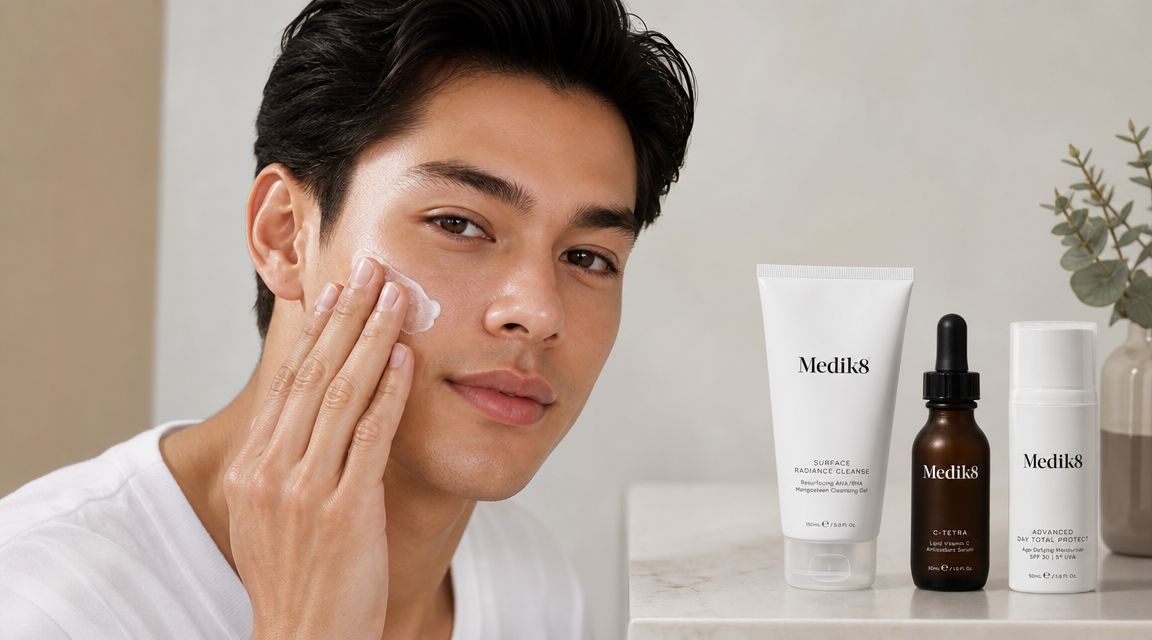
The foundation is simple. Cleanse, moisturize, protect. Cleveland Clinic recommends that exact barrier-first structure for men: a gentle, pH-balanced cleanser, moisturizer applied to damp skin, and daily sunscreen as the last step, as outlined in Cleveland Clinic's guidance on skin care for men.

Step one matters more than most men think
Use a cleanser that removes oil, sweat, sunscreen, and debris without stripping the skin. If your face feels squeaky, tight, or hot after washing, the cleanser is probably too harsh.
A practical rule:
- Foaming cleanser tends to suit oily or combination skin
- Cream cleanser usually fits dry or sensitive skin
- Fragrance-free formulas are safer if you get razor burn, redness, or stinging
Don't use body wash or regular bar soap on your face if your skin is already dry, reactive, or freshly shaved. That's one of the fastest ways to keep irritation going.
Moisturizer is not optional
A lot of men skip moisturizer because they think it will make oily skin worse. Usually the opposite happens when the right product is chosen. Lightweight lotion or gel-cream textures work well for skin that produces more oil. Creams make more sense if your skin feels tight, flaky, or irritated.
Apply moisturizer while the skin is still slightly damp. That helps hold water in the outer layer of skin and supports the barrier.
If you want a straightforward example of the kind of daily facial moisturizer that fits a simple routine, you can find Jigsaw Health moisturizer here.
Sunscreen is the daily insurance policy
If you do only one anti-aging step, make it sunscreen. Pick a broad-spectrum SPF 30+ that you'll wear every morning. The best formula for you is the one that doesn't feel greasy, doesn't sting around the eyes, and layers cleanly over moisturizer.
For many men, that means:
- Fluid or lightweight lotion textures for oily skin
- Moisturizing sunscreen for dry skin
- Non-greasy finish if you shave daily or have facial hair
Practical rule: The routine that gets used every day beats the perfect routine you use twice a week.
Here's the simplest version to follow.
| Step | Morning (AM) | Evening (PM) |
|---|---|---|
| Cleanse | Gentle facial cleanser | Gentle facial cleanser |
| Moisturize | Lightweight or richer moisturizer based on skin type | Moisturizer applied to slightly damp skin |
| Protect | Broad-spectrum SPF 30+ | Not needed |
Keep your baseline tight
A basic schedule is enough for most beginners:
- Morning means cleanse if needed, moisturize, then sunscreen.
- Night means cleanse well, then moisturize.
- After shaving means avoid piling on multiple actives right away if your skin burns easily.
If you want a more detailed daily framework, this guide to a morning skincare routine with clear step order is a useful reference.
Level Up Your Game With Targeted Ingredients
Once the basics stop feeling like work, then it makes sense to add an upgrade. Not five upgrades. One.
That approach fits where men's demand is going. The American Academy of Dermatology notes growing interest among U.S. male consumers in SPF (+7%), moisturizing (+7%), and brightening (+7%) claims from 2022 to 2023, as summarized in AAD guidance for men's skin care.

Match the ingredient to the problem
If you don't know why you're using an active, skip it for now. Every ingredient should have a job.
- Vitamin C fits men dealing with dullness, uneven tone, or environmental stress. Use it in the morning after cleansing and before moisturizer or sunscreen.
- Niacinamide is useful when skin gets shiny, looks blotchy, or doesn't tolerate stronger formulas well.
- Salicylic acid makes sense for oily skin, clogged pores, and breakouts, especially around the nose, forehead, and beard area.
- Retinoids or retinol are the upgrade for rough texture, fine lines, and post-acne marks, but they need to be introduced slowly.
What usually goes wrong
Most irritation doesn't come from one bad ingredient. It comes from bad stacking.
A common pattern looks like this: exfoliating cleanser, shave, retinol, then no moisturizer. That routine almost guarantees redness if your barrier is already stressed.
A safer progression looks like this:
- Keep the core routine stable for a few weeks
- Add one active
- Use it two or three nights a week at first if it's potentially irritating
- Back off if burning, peeling, or persistent redness shows up
Add one variable at a time. Otherwise you won't know what's helping and what's irritating your skin.
A simple upgrade menu
Not every man needs the same next step. Use this decision guide.
| Goal | Ingredient category | Best time |
|---|---|---|
| Oily skin and clogged pores | Salicylic acid | Evening |
| Uneven tone and dullness | Vitamin C | Morning |
| Redness or visible oil | Niacinamide | Morning or evening |
| Fine lines and texture | Retinol or retinoid | Evening |
If anti-aging is your main focus, this breakdown of ingredients commonly used for anti-aging routines can help you choose what to add first.
Keep the beard area in mind
If you have a beard, don't assume products are reaching skin evenly. Press lightweight serums and moisturizers through the hair to the skin underneath. Heavy creams often sit on the beard and never do much for the actual skin.
That's one reason I prefer practical layering over fancy layering. A few products with a clear job usually outperform a complicated shelf.
Optimize Results With Smart Shaving and At-Home Tech
A lot of men blame “sensitive skin” when the underlying issue is poor shaving technique. The razor is a controlled injury. If prep is sloppy or the skin is dry, you'll usually see it later as redness, burning, bumps, or ingrown hairs.
Fix the shave first
The basics from dermatology guidance are still the right ones. Use a moisturizing shave product, shave in the direction of hair growth, and avoid turning shaving into exfoliation by force.
What works in practice:
- Shave after warm water exposure so the hair is softer
- Use a lubricating shave cream instead of dry shaving or relying on soap
- Keep pressure light and avoid repeated passes over the same area
- Rinse and moisturize after instead of splashing on harsh, alcohol-heavy aftershave
If you're also cleaning up peach fuzz or detail areas, this tutorial on how to use a dermaplane razor safely explains the technique clearly.
Where at-home tech can help
Topicals do a lot, but some men want another tool that fits into a low-effort routine. That's where LED light therapy can be useful as an add-on, especially when the goal is consistency without increasing product load.
One option in that category is the Barb N.P. Facial Mask. It's a wireless LED mask designed for at-home use, with a fit built around comfort so it's easier to keep on consistently. It also includes three lighting settings for different treatment goals, which is practical for men dealing with breakouts, post-shave irritation, or early visible aging.
Why I like this category for the right patient
LED is not a substitute for cleanser, moisturizer, and sunscreen. It's an amplifier. Men who do well with it are usually the ones who already have a basic routine and want a noninvasive add-on that doesn't complicate the sink.
If your routine already feels crowded, don't add a device yet. If your routine is stable, a device can make sense.
The order matters. Build the habit first. Then add tools.
When to Call a Pro Advanced Aesthetic Treatments
There's a point where skin care products stop being the most efficient answer. Not because they failed, but because they were never designed to handle everything.

Industry coverage shows men's skin care is becoming more specialized around concerns like anti-aging and melanin-specific care, while public advice often stays broad. That gap is highlighted in this industry overview of the male skin care agenda.
Signs you've outgrown over-the-counter care
At-home routines are good at maintenance and mild improvement. They're weaker at structural change.
Consider a professional consult if you're dealing with:
- Dynamic lines such as forehead creasing or crow's feet that stay visible even when your skin is well hydrated
- Acne scarring or rough texture that doesn't respond enough to home exfoliation
- Pigmentation concerns that need skin-tone-aware planning
- Volume changes in the cheeks, under-eyes, or jawline
- Hair thinning that's becoming more noticeable
Matching the treatment to the goal
This is where precision matters.
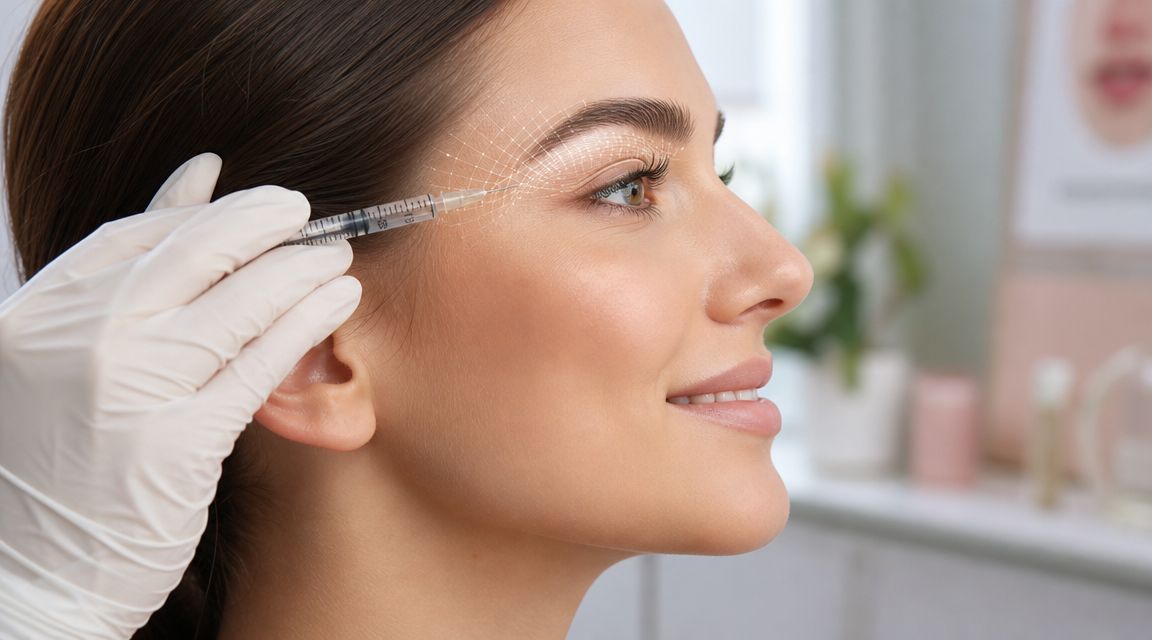
- Botox or Dysport can soften expression lines caused by repeated muscle movement.
- Dermal fillers are used when the issue is volume loss or contour, not just surface dryness.
- Microneedling can help with texture and certain types of scarring.
- PRP-based approaches are often discussed for skin rejuvenation and hair-related concerns. If you're comparing options, this overview of microneedling with PRP is a useful starting point.
A consult should answer one question clearly: is your goal a skin quality problem, a movement problem, a volume problem, or a combination? Once that's defined, treatment planning gets much cleaner.
Professional care isn't the opposite of good skin care. It's what you add when your goal is beyond what topical products can realistically do.
Your Action Plan and Final Questions Answered
The biggest mistake men make is thinking skin care has to be all or nothing. It doesn't. Start with what your skin needs now. Keep it repeatable. Add complexity only when there's a reason.
That's the whole model for smart skin care men can sustain:
- Start with cleanser, moisturizer, and sunscreen
- Add one targeted ingredient if you have a specific concern
- Refine shaving if irritation keeps undoing your progress
- Escalate to a clinician when the goal is beyond topical care
Final questions men usually ask
How long until I see results
Hydration and comfort can improve quickly. Texture, breakouts, and pigment usually take longer. The important point is consistency. A good routine works slowly and predictably.
Are expensive products always better
No. Better formulation, better tolerability, and better fit for your skin matter more than price alone. A product you use daily beats a premium product that sits in the cabinet.
Can I have a beard and still have good skin
Yes. You just have to treat the skin under the beard, not only the hair on top of it. Lightweight leave-on products usually work better there than thick creams.
What if my skin gets worse when I start
That usually means one of three things: the cleanser is too harsh, you added too many actives at once, or you're using treatment products too often. Pull back to the basics and rebuild more slowly.
If you want a routine that goes beyond guesswork, BotoxBarb offers clinical treatments, curated skin care, and practical tools that can help you build from a simple daily routine to more targeted aesthetic care with Barb N.P.’s guidance.