Article: Skin Care Serum for Oily Skin: What Actually Works

Skin Care Serum for Oily Skin: What Actually Works
You wash your face. It feels clean, almost dry. A few hours later, your forehead is shiny again, your nose looks slick, and the temptation kicks in to scrub harder, swipe on a stronger toner, or buy the most “mattifying” serum you can find.
That cycle is where a lot of oily-skin routines go wrong.
A good skin care serum for oily skin shouldn't act like paint thinner for your face. It should help regulate visible oil while keeping the barrier calm enough that your skin doesn't stay stuck in the cleanse, strip, react, repeat loop. In practice, that usually means lighter textures, smarter ingredients, and less aggression than many expect.
The Oily Skin Routine Trap
A pattern shows up again and again with oily skin. Someone gets frustrated by midday shine, starts washing more often, adds a harsh toner, and skips moisturizer because it “feels too greasy.” For a day or two, the skin may look more matte. Then the shine comes back, often with more irritation, more clogged pores, and more breakouts.
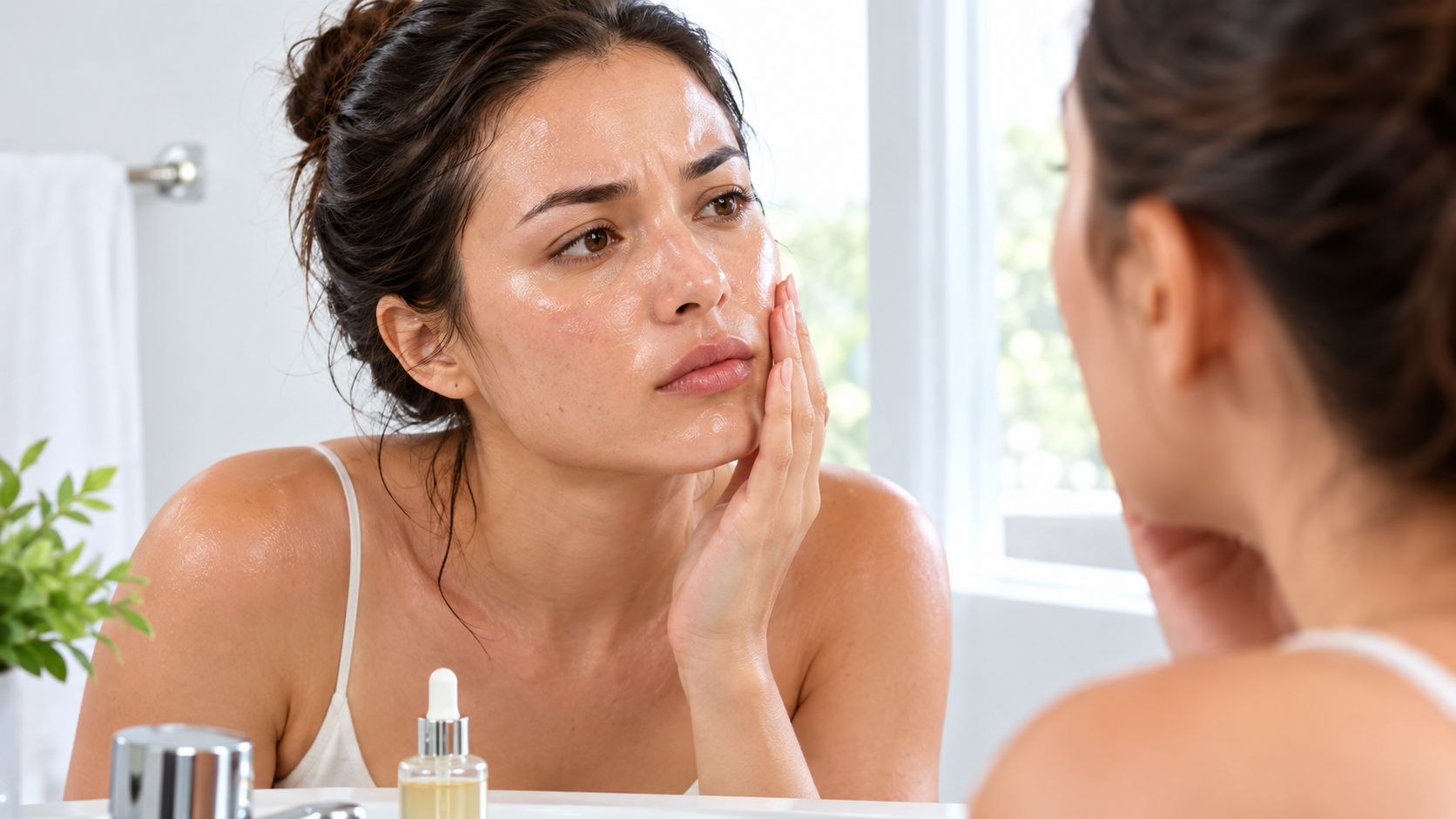
Why the matte feeling can be misleading
That tight, squeaky-clean feeling after cleansing is often mistaken for success. It usually means your routine removed more than surface oil. When skin loses too much support, it can become dehydrated and irritated, even while still looking shiny.
That's where readers get confused. Oil and hydration are not the same thing. You can have oily skin that is also water-depleted. When that happens, a routine focused only on drying the skin tends to make everything look less stable, not more controlled.
Practical rule: If your skin feels stripped right after cleansing but greasy again later, the problem often isn't “too much cleansing power.” It's poor balance.
What a failed oily-skin routine usually looks like
A harsh routine often includes a few familiar habits:
- Over-cleansing: washing repeatedly to chase a matte finish that doesn't last
- Too many strong actives at once: layering exfoliants and drying spot treatments without enough recovery
- Skipping hydration: avoiding lightweight serums or moisturizers because of fear of shine
- Judging products too quickly: expecting a serum to “de-grease” skin overnight
A better approach is regulation instead of removal. Think of sebum like the oil level in a machine. You don't fix an overactive system by scraping everything dry every few hours. You use the right controls and keep the parts from getting damaged.
That's why the most useful oily-skin serums usually aren't the harshest ones. They're the ones that help manage oil while keeping the barrier functional enough to stay calm.
Understanding What Oily Skin Really Means
A lot of products use the word “oily” loosely. Dermatology doesn't. A major review notes that oily skin is associated with sebum output above 1.5 mg per 10 cm^2 every 3 hours, while the average adult rate is about 1 mg per 10 cm^2 every 3 hours. The same review also notes that rates below 0.5 mg per 10 cm^2 every 3 hours are associated with dry skin. It also identifies androgens, especially DHT, as key regulators of sebaceous gland growth and sebum production, which is why oil control is a biologic issue, not just a cosmetic annoyance (review of sebum physiology and oily skin thresholds).
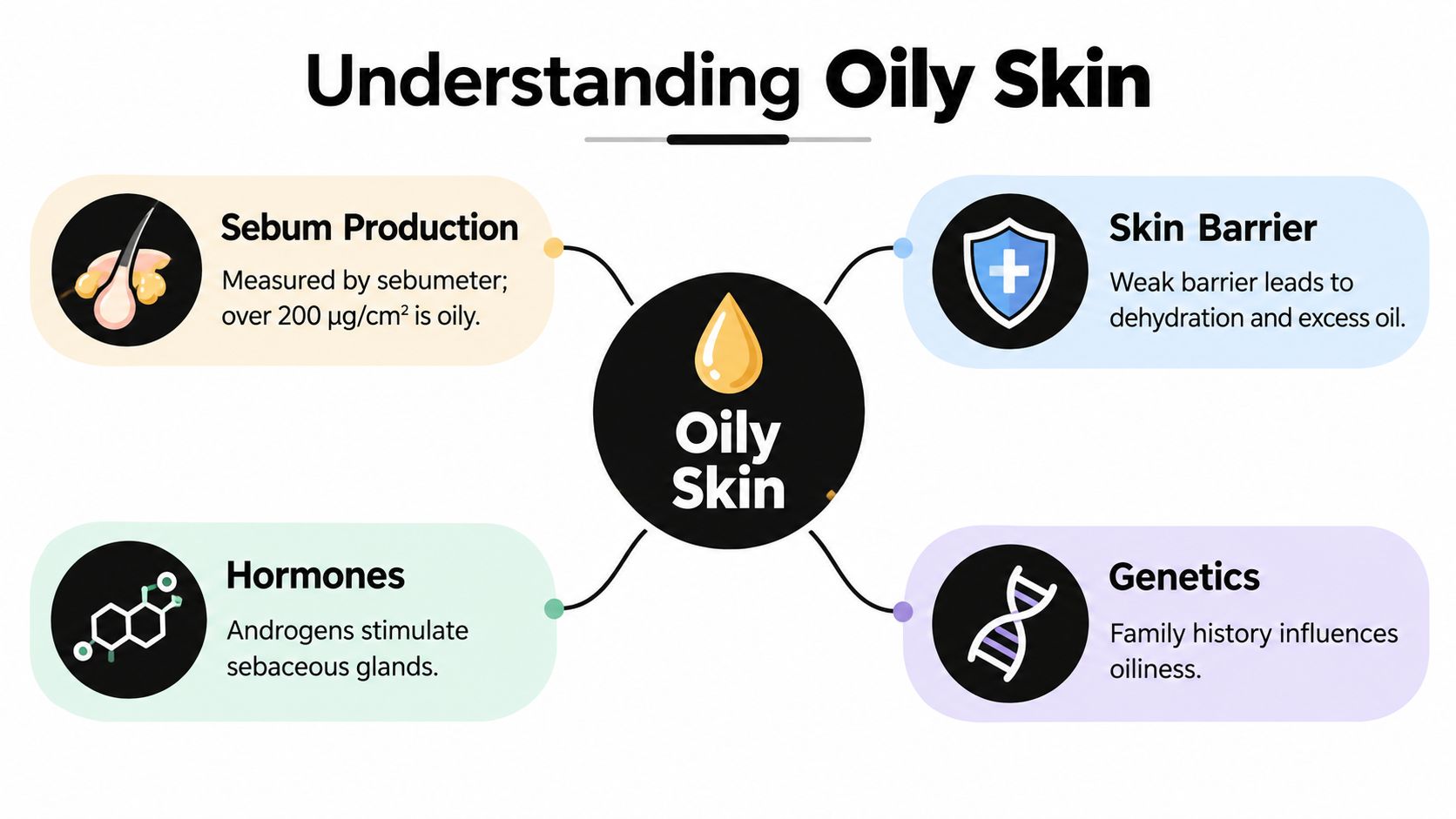
Biology matters more than marketing
That benchmark changes how you should think about a serum. The goal is not to erase all oil. Skin still needs normal physiologic lipids. The goal is to reduce excess shine and congestion without pushing skin into an over-dried state.
This is why so many oily-skin routines fail when they rely on anything labeled “oil-free” without looking deeper. Texture matters, but formulation strategy matters more. A watery or gel serum can still irritate if it is overloaded with actives, and a hydrating serum can still work well for oily skin if it absorbs cleanly and doesn't sit heavily.
True oiliness versus barrier-compromised dehydration
People often assume every shiny face is producing too much oil. That's not always what's happening. Some faces are oily by biology. Others look oily because the barrier is irritated, the skin is dehydrated, and the routine has become too aggressive.
A simple way to understand it:
| Pattern | What it often feels like | What it often needs |
|---|---|---|
| True oiliness | Shine, larger-looking pores, recurring congestion | Oil-regulating actives in lightweight textures |
| Barrier-compromised oily skin | Shine plus tightness, stinging, flaking, redness, rebound greasiness | Gentler cleansing, barrier support, slower use of actives |
Oily skin isn't “bad skin.” It's skin with a measurable tendency toward higher sebum output. The routine should work with that biology, not punish it.
That's why a smart skin care serum for oily skin usually focuses on lightweight, non-occlusive support with ingredients commonly used for shine control and calmer skin behavior.
Best Ingredients and Serums for Oily Skin
The best serum for oily skin depends on what kind of “oily” you are dealing with. Someone with clogged pores and active breakouts may need something different from someone who is shiny but also stings after cleansing. The texture should be light, but the ingredient choice does most of the work.
Niacinamide for regulation, not instant degreasing
Niacinamide gets oversimplified online. It can help, but it isn't magic. A controlled clinical study found that 2% niacinamide significantly lowered sebum excretion rates after 2 and 4 weeks in Japanese participants, while the Caucasian arm showed a significant drop in casual sebum levels after 6 weeks (clinical niacinamide study).
That timing matters. Niacinamide is often better understood as a regulator than a quick matte fix. Another review reports that 2% to 5% niacinamide can reduce sebum production, likely by decreasing sebaceous lipogenesis, and notes a dose-dependent effect tied to lower triglyceride synthesis, which matters because triglycerides are a major part of sebum (niacinamide and sebaceous biology review).
Recent evidence also adds nuance. A separate pilot study of a cosmetic serum containing niacinamide reported no significant change in sebum values after one month, which is a useful reminder that results vary by formulation and study design (pilot niacinamide serum study).
If you want a deeper plain-language explanation of where niacinamide helps most, BotoxBarb's guide on what niacinamide is good for is a useful companion read.
Salicylic acid and hydrating support
Salicylic acid is usually the better choice when oily skin comes with clogged pores. It's oil-friendly by nature, so it can work into pore lining more effectively than many water-only ingredients. It's not the same as a sebum regulator, though. Think of it as a pore-clearing partner, not a substitute for barrier support.
Hydrating serums confuse oily-skin shoppers all the time. Many assume hydration equals grease. It doesn't. A lightweight, water-based hydrating serum can make oily skin look calmer and less reactive, especially if your current routine leaves you tight and shiny at the same time.
How to choose without chasing the highest percentage
Use this simple filter:
- Choose niacinamide if your skin is oily, easily irritated, or prone to post-breakout redness.
- Choose salicylic acid if oil comes with stubborn congestion and frequent clogged pores.
- Choose a hydrating gel serum if your skin feels oily on the surface but uncomfortable underneath.
For people who want broader routine context around calming ingredients and skin comfort, HempWell USA skincare advice is a reasonable general resource.
If you want a product example, an oil-free hydrating option like SkinCeuticals B5 Gel fits well in an oily-skin routine because it adds lightweight hydration without the heavy finish that often scares off acne-prone users.
How to Layer Serums Into Your Routine
People often buy the right serum and still get poor results because the order is wrong. Oily skin usually does best with a routine that feels light, repeatable, and boring in the best way. If you pile on too many steps or layer them in the wrong sequence, you increase the chance of pilling, irritation, and that sticky finish people hate.
The order that usually works
Apply products from thinnest to thicker textures. Cleanse first. Then use the lightest serum, followed by treatment layers, then moisturizer, then sunscreen in the morning.
If your niacinamide serum is watery and your salicylic product is a treatment serum or liquid exfoliant, niacinamide often goes first. That order tends to be easier on skin that gets oily and reactive at the same time.
| Step | Product Type | Notes |
|---|---|---|
| 1 | Cleanser | Use a gentle cleanse so skin isn't stripped before treatment begins |
| 2 | Lightweight hydrating or niacinamide serum | Apply to slightly damp skin if tolerated |
| 3 | Salicylic acid serum or treatment | Use based on tolerance, not out of habit |
| 4 | Lightweight moisturizer | Helps reduce the dry-tight rebound cycle |
| 5 | Sunscreen in the morning | Essential if you're using actives |
For a brand-specific walkthrough of sequencing, BotoxBarb's article on how to layer serums breaks down common pairings in a simple way.
Small changes that improve absorption
A few technique details matter more than people think:
- Use fewer drops: More product doesn't mean more benefit. It often just means more residue.
- Give each layer a moment: Let one serum settle before adding the next so it doesn't roll off.
- Keep the routine narrow: Two well-chosen serums outperform a cluttered shelf for most oily skin.
If a routine pills, stings, and feels tacky by lunchtime, the answer usually isn't another serum. It's less overlap.
If you use prescriptions or get treatments
Go slowly if you're already using prescription acne care, retinoids, or in-office exfoliating treatments. In that setting, the gentlest serum in the routine often becomes the most important one because it helps the skin tolerate everything else.
That's where barrier-first thinking pays off. The right sequence doesn't just improve absorption. It lowers the chances that you'll quit the routine from irritation.
Common Mistakes That Worsen Oily Skin
The biggest myth in oily-skin care is that oil itself is the enemy. It isn't. The problem is imbalance. When people try to scrub away every trace of shine, they often create a face that is simultaneously oily, inflamed, and harder to manage.
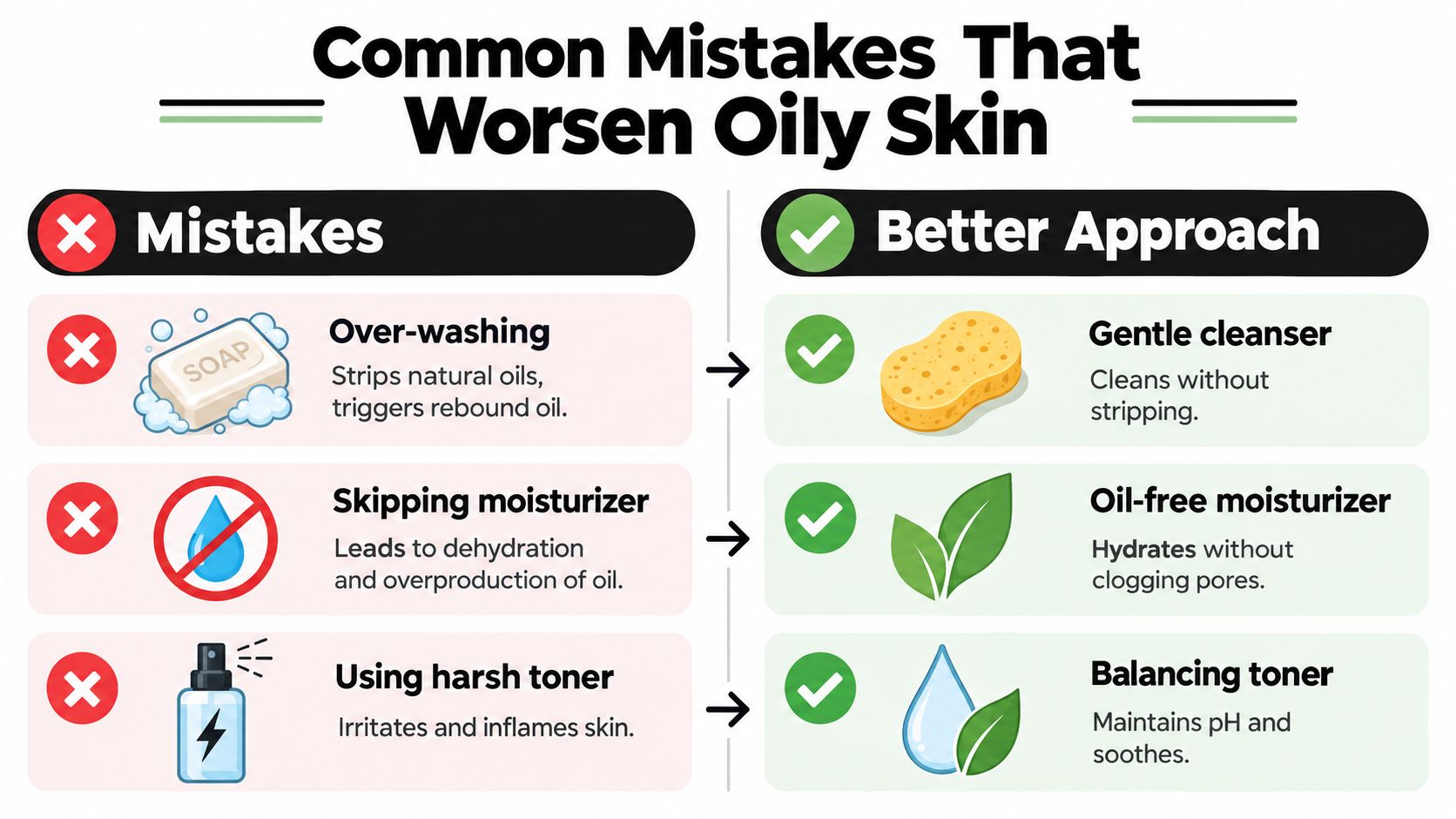
The stripping mistake
A harsh toner can feel satisfying in the moment. So can over-washing. So can using multiple exfoliants because your pores look congested. The problem is that these habits often keep the skin in a state of low-grade irritation.
That irritation can show up as redness, stinging, flaky patches around the nose, or a face that turns greasy again very quickly. People read that shine as proof they need stronger products, when it may be evidence that the routine is too aggressive.
The moisturizer mistake
Skipping moisturizer is one of the most common reasons oily skin stays unstable. Many people with shine assume moisturizer can only make things worse. In reality, a lightweight layer can help reduce that brittle, dehydrated feel that makes skin seem both oily and uncomfortable at once.
A better question isn't “Should oily skin moisturize?” It's “What texture can my skin tolerate consistently?”
The all-actives mistake
Recent clinical reporting on combinations involving salicylic acid, gluconolactone, ceramides, and niacinamide found simultaneous improvements in sebum, hydration, barrier function, redness, and acne lesions over 21 to 28 days, which supports a gentler barrier-plus-acne strategy rather than a dry-it-out approach (clinical summary on barrier-supportive acne care).
That's the point many oily-skin routines miss. If a serum helps oil control but leaves the skin too irritated to stay consistent, it's not doing enough.
A simple reset often helps:
- Cut back frequency first: Don't apply every active every day just because you own it.
- Keep one pore-focused product: Usually enough.
- Support the barrier daily: A light hydrating or soothing serum helps oily skin behave more predictably.
Shiny skin doesn't automatically need stronger treatment. Sometimes it needs less friction and better support.
Pairing Serums With LED Light Therapy
A serum routine handles one part of oily or breakout-prone skin. Light therapy can complement it, especially when you want support for acne, post-breakout redness, and overall skin recovery without adding another strong topical.
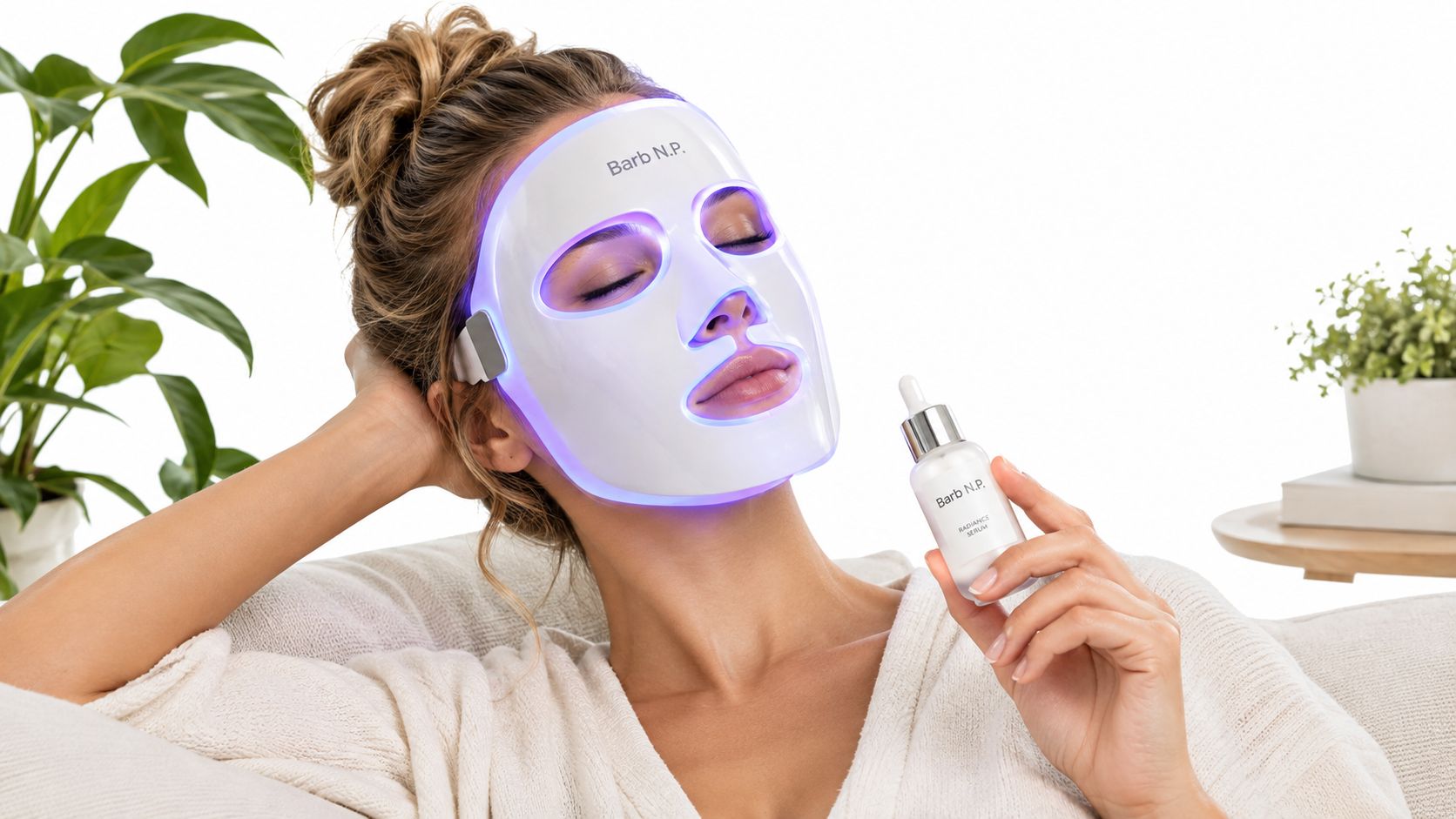
What the different light settings do
LED masks are not all doing the same thing. Their uses are tied to wavelength. Red light is commonly described as 630 to 660 nm for collagen support, near-infrared as 830 to 850 nm for deeper tissue penetration, and blue light as 415 to 470 nm for targeting acne-associated bacteria (LED wavelength guide).
For oily and acne-prone skin, blue light is the setting that gets asked about first. That makes sense when breakouts are active. But many oily-skin patients also benefit from red or near-infrared support because irritated, inflamed skin often needs calming just as much as it needs bacterial targeting.
How serum and LED can work together
The best pairing is usually simple. Use a clean, lightweight serum routine consistently, then add LED on a separate rhythm that your skin tolerates well. Heavy occlusive products right before device use usually aren't necessary.
The Barb N.P. Facial Mask is one option if you want an at-home device in this category. Its practical advantages are straightforward: it's wireless, designed for comfort on the face, and offers 3 lighting settings for different treatments, which makes it easier to match the session to acne support, skin recovery, or broader maintenance. If you want more context on where light therapy fits in skin care, this overview of LED light therapy for skin helps connect the basics.
Keep your expectations realistic. LED works best as a support tool beside a calm, consistent routine, not as a shortcut around one.
Building a Long-Term Strategy for Oily Skin
The oily-skin routines that hold up over time usually look less dramatic than the ones pushed online. They're built around a few products that your skin can tolerate every day. That matters more than chasing the strongest label in the store.
What steady progress looks like
A useful long-term plan usually has three parts.
- One regulating step: often a well-formulated niacinamide serum or another lightweight serum suited to your skin behavior
- One congestion step: used carefully if clogged pores or breakouts are part of the picture
- One barrier step: a light hydrating product or moisturizer that keeps skin from flipping into irritation
That mix tends to outperform routines that treat oily skin like a problem to scrub away.
What to remember when choosing a serum
If you're shopping for a skin care serum for oily skin, ask practical questions instead of emotional ones. Does it feel light? Can you use it consistently? Does your skin look calmer after repeated use, or just drier for a few hours?
That distinction changes everything. A serum that reduces shine for one afternoon but leaves you flaky, red, or reactive isn't helping much. A serum that supports steadier skin usually wins the month, even if it doesn't create an instant matte finish.
Oily skin responds well to patience. Not endless patience. Just enough to let a sensible routine work. When you stop fighting your skin and start regulating it, the shine usually becomes easier to manage and the breakout cycle often becomes less intense too.
BotoxBarb offers medically informed skin guidance, curated professional-grade products, and aesthetic treatments that make sense for real-world concerns like oily, breakout-prone, and barrier-stressed skin. If you want a simpler routine, targeted serum options, or supportive treatments like LED light therapy, visit BotoxBarb and explore what fits your skin instead of forcing it into another harsh cycle.