Article: After Dysport Injections Recovery Guide
After Dysport Injections Recovery Guide
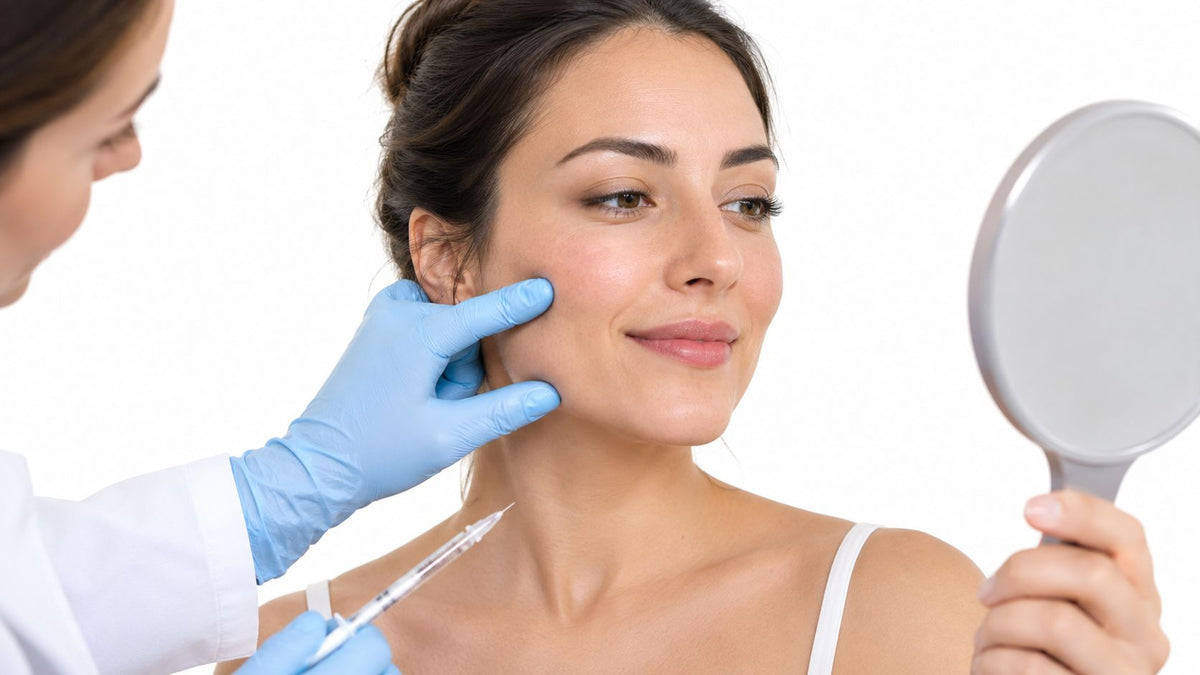
The most common advice after Dysport injections is also the most confusing. Patients are often told to stay upright, avoid exercise, skip makeup, avoid heat, and barely touch their face for hours, sometimes with little explanation of which precautions are medically important and which are merely conservative habit.
A calmer approach is more useful. Protect the treated areas from pressure, heat, and vigorous activity, but don't assume that sitting perfectly still for the rest of the day is what makes Dysport work. Immediate aftercare should focus on sensible technique, realistic expectations, and knowing which symptoms need prompt medical attention.
Rethinking Immediate Post-Treatment Restrictions
Many patients leave an injectable appointment worried that one ordinary movement will ruin the result. They avoid bending, washing their face, wearing makeup, or returning to work because they've been given a long list of restrictions. That anxiety usually comes from treating every precaution as equally important.
The most relevant immediate window may be much shorter than traditional aftercare sheets suggest. A 2025 review found evidence supporting limiting post-treatment instructions for upper-face botulinum toxin to 10 minutes, which challenges the routine practice of imposing several hours of strict restrictions. The review also highlights the gap between evidence-based care and broad rules that continue to be repeated without clearly separating proven risk from caution. Read the review of post-treatment instructions for upper-face botulinum toxin for that distinction.
What matters immediately
For the first few minutes, keep the treated skin clean and leave it alone. Don't rub, massage, press firmly, or repeatedly check the injection points in the mirror. If a small amount of bleeding occurs, gentle focal pressure applied by your injector is more useful than touching the surrounding area.
After that brief period, ordinary activity is generally reasonable. Major medical guidance says patients can usually return to normal activities immediately, while still advising them to avoid rubbing or pressure on the treated area, remain upright for about 3 to 4 hours, and avoid physical exertion for 24 hours to reduce redness, swelling, or bruising. Those recommendations are summarized by the Cleveland Clinic's guidance on botulinum toxin injections.
Practical rule: Don't turn aftercare into a test of endurance. Keep the area undisturbed, follow your injector's site-specific advice, and resume low-key daily activities without unnecessary fear.
The right protocol can vary with the injection site, dose, indication, and your medical history. A consultation resource such as Beverly Wilshire Aesthetics Botox can also help patients compare common injectable aftercare practices before treatment.
Essential Rules for the First 24 Hours
The first day calls for restraint, not bed rest. Your goal is to avoid actions that place direct pressure on the injection sites or increase facial flushing, swelling, and bruising.
Keep pressure and gravity in check
Stay upright for about 3 to 4 hours after treatment. That means sitting, walking gently, or working at a desk is fine, while lying flat immediately afterward isn't ideal. Mayo Clinic guidance also recommends not lying down for 2 to 4 hours and avoiding rubbing or massaging treated areas for 24 hours, because pressure and manipulation may encourage the toxin to affect an unintended area. You can review the Mayo Clinic explanation of Botox aftercare for the rationale.
Wash your face gently if needed. Use clean hands, lukewarm water, and a light touch. Skip facial massage, gua sha, aggressive cleansing brushes, tight headwear, and any skincare application that requires repeated rubbing over the injection points.
Reduce heat and vigorous circulation
Avoid strenuous exercise for 24 hours, along with saunas, steam rooms, hot tubs, and excessive heat. These activities can worsen visible redness, swelling, or bruising, and exercise also makes it easier to accidentally touch or manipulate the treated areas. Independent aftercare guidance discusses the same 24-hour exercise and heat precaution in its Dysport and botulinum toxin aftercare guide.
Cold is more useful than heat during the early recovery period. Apply a cold compress gently and intermittently, without pressing hard against the skin. Immediate focal pressure at the injection point and a cold compress can promote vasoconstriction and help reduce bruising. In one retrospective series of 945 patients across 4,103 abobotulinumtoxinA injection cycles, mild bruising occurred in 1.25% of patients, while broader botulinum-toxin literature summarized by NIH reports bruising rates of 11% to 25%. The figures come from different bodies of evidence, so they shouldn't be treated as a personal prediction, but they do reinforce the value of careful injection-site management. See the NIH review of botulinum toxin complications.
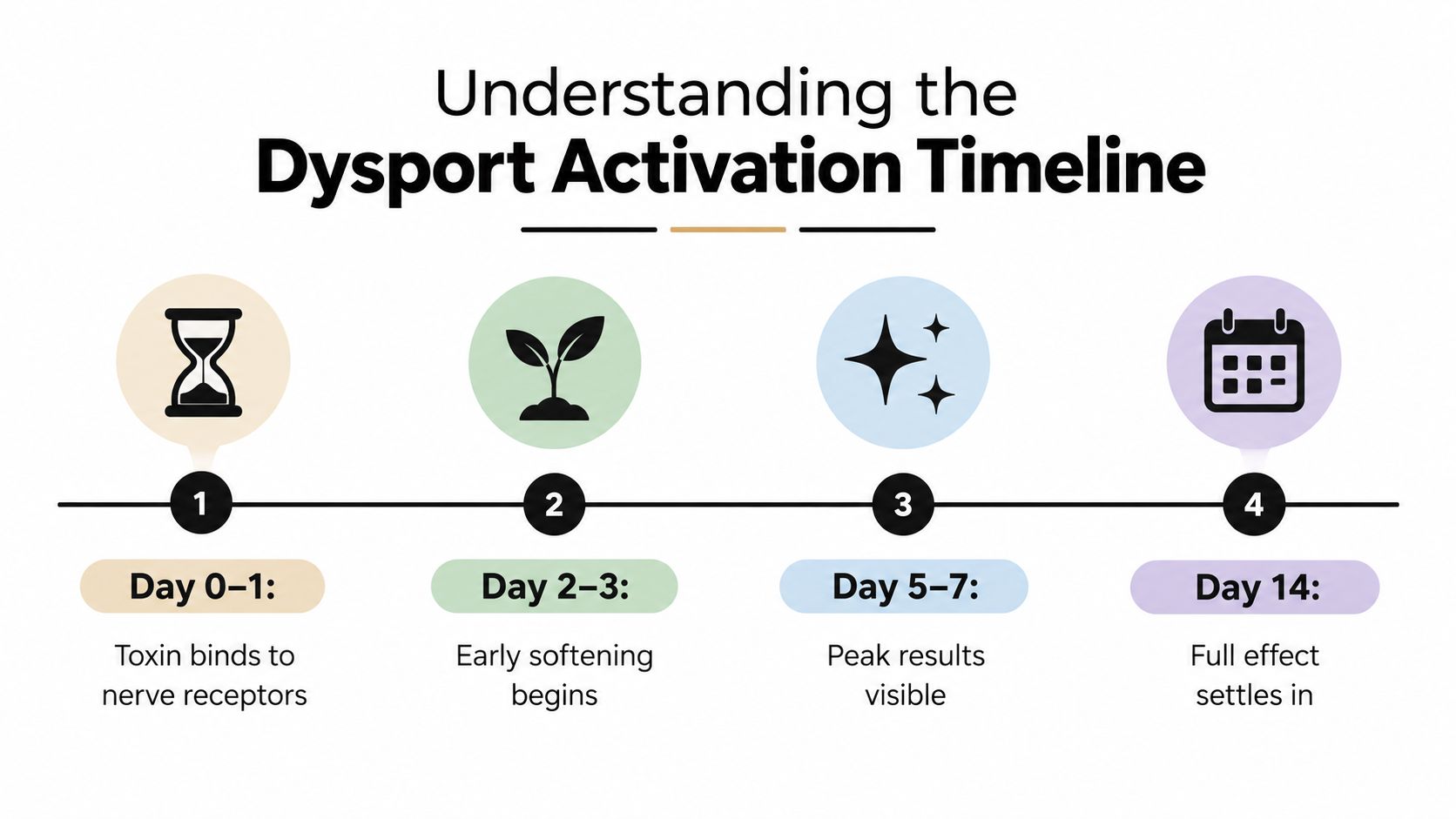
Understanding the Dysport Activation Timeline
Dysport doesn't create its final appearance the moment you leave the clinic. The injection places abobotulinumtoxinA near targeted muscles, and the treatment effect develops as the toxin interferes with nerve signaling and reduces muscle activity. That process is gradual, which is why early impressions can be misleading.
Some patients notice subtle softening before others. One person may focus on reduced movement, while another notices a feeling of tightness or heaviness as the treated muscles begin adjusting. Mild headache or a tight sensation can occur after neurotoxin treatment, but the experience varies by treatment area, dose, muscle strength, and individual sensitivity.
Read the result in context
Don't judge the outcome by comparing your face on an early day with someone else's later result. Dysport may appear uneven at first only because different muscles respond at different rates. Small residual movements also don't automatically mean the treatment failed, and early asymmetry can change as the product settles.
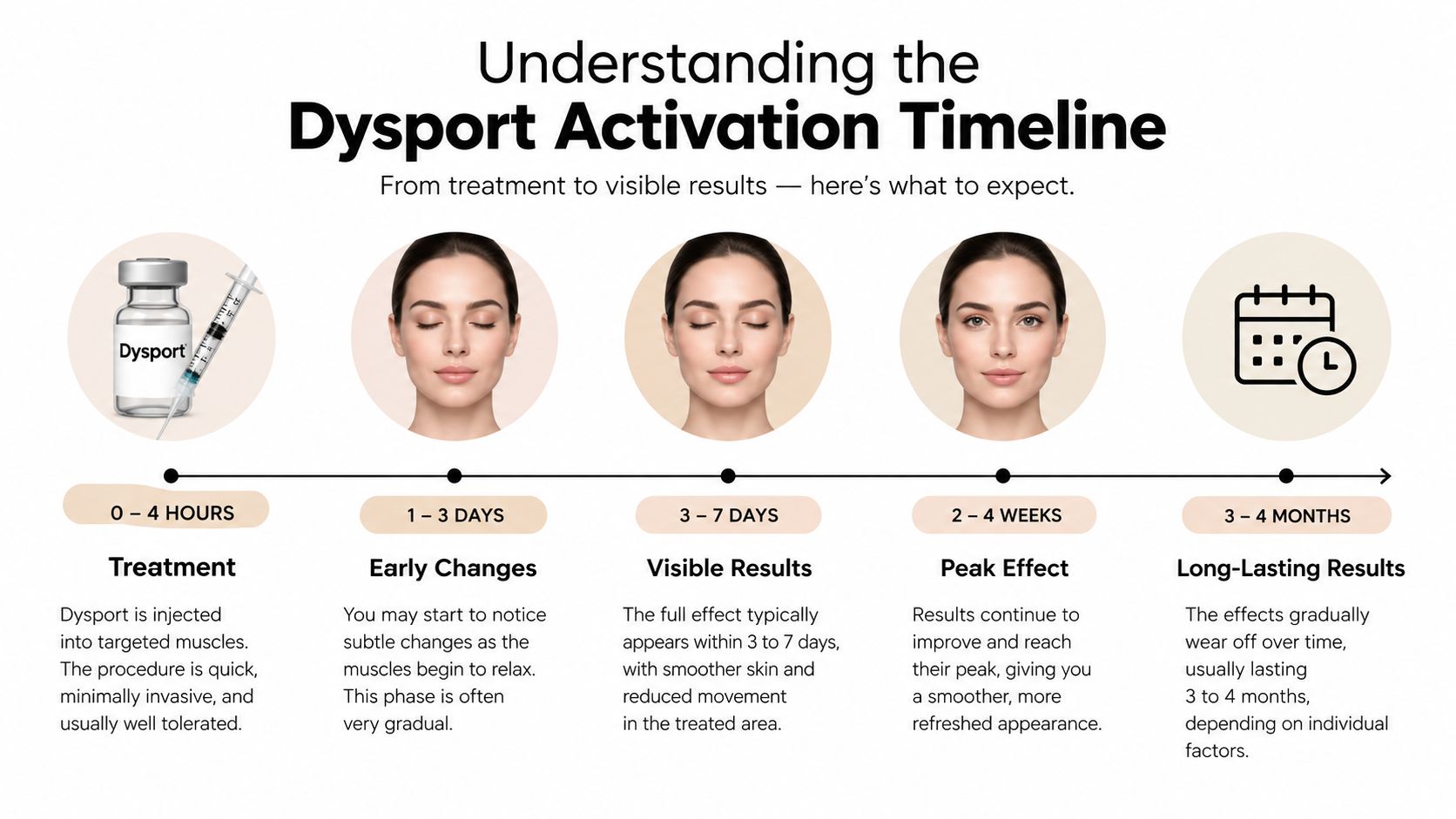
A responsible review takes place after the effect has had time to settle, not during the first anxious inspection. Your injector can assess whether the intended muscles relaxed appropriately, whether another area is contributing to a line, and whether any adjustment is clinically sensible.
Don't chase a changing result. Early tightness, a small bump, or incomplete smoothing deserves observation and communication, not impulsive rubbing or an unplanned corrective treatment.
You can also use the Dysport duration guide to understand why maintenance planning should account for the natural course of the treatment rather than a single early snapshot. If a symptom feels unusual, contact the treating clinic instead of relying on online comparisons.
Enhancing Recovery with LED Light Therapy
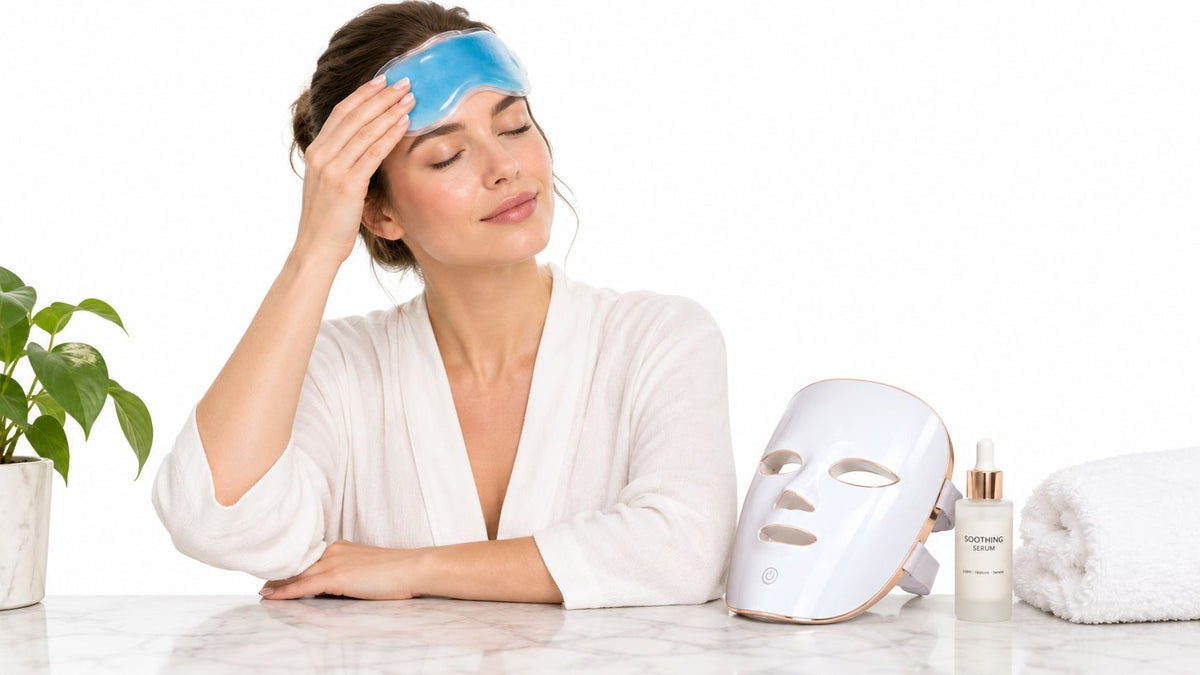
LED light therapy belongs in the recovery conversation only after the initial no-touch and no-heat period has passed, and it shouldn't be presented as a way to activate Dysport or force faster results. The treatment works at the muscle and nerve-signaling level. An LED mask is a separate, non-invasive skincare tool that may support the appearance of calm, healthy skin.
For patients who want to maintain radiance while keeping their routine gentle, the Barb N.P. Facial Mask is a practical product suggestion. Its wireless design allows use without being connected to a device, the mask is designed for a comfortable fit on the face, and it has 3 lighting settings intended for different treatment preferences. Those features matter after injectables because a device that sits securely and comfortably is less likely to tempt you into adjusting it repeatedly.
Use it as an adjunct, not a replacement
The most sensible role for an LED mask is simple. Wait until your injector's immediate restrictions have passed, place the device on clean skin without rubbing the treated zones, and stop if the skin feels irritated or overly warm. Don't use it over open injection sites, active skin reactions, or areas your clinician has specifically asked you to leave alone.
LED facial masks are commonly marketed for concerns such as temporary redness, dullness, and overall skin appearance. Claims about particular wavelengths reducing inflammation or stimulating collagen should be treated carefully unless they apply to the exact device and protocol being used. A mask can complement a gentle skincare routine, but it can't correct poor injection technique, treat a serious adverse reaction, or replace medical review.
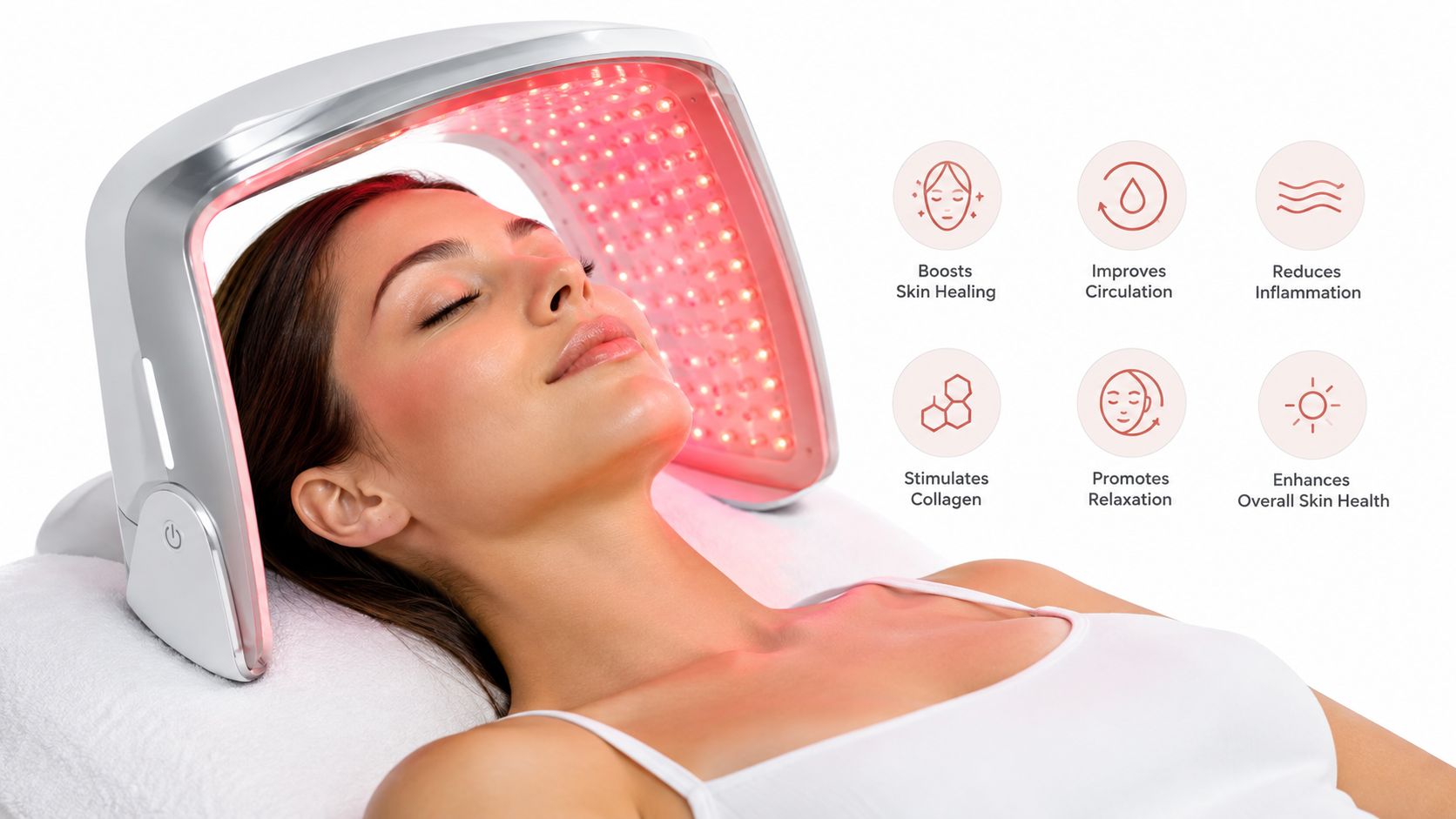
The LED light therapy benefits guide can help you decide whether this type of at-home device fits your broader skincare routine. My view is that comfort, consistent handling, and realistic expectations are more valuable than treating LED as a shortcut to a better Dysport result.
Differentiating Normal Swelling from Warning Signs
A small raised area, mild redness, tenderness, or localized swelling at an injection point can be part of an ordinary post-treatment response. Mild bruising is also possible. These findings are usually local, limited to the treated area, and manageable with a gentle cold compress and hands-off care.
The situation changes when symptoms move beyond the injection site or involve essential functions. Dysport's official safety information warns that serious spread-of-toxin effects can appear hours to weeks after injection. Symptoms can include generalized muscle weakness, double vision, blurred vision, drooping eyelids, hoarseness, trouble speaking clearly, swallowing problems, and breathing difficulty.
A practical triage distinction
Consider two different patient experiences. One patient sees a small bruise near the brow, feels mild tenderness, and notices that the area looks slightly puffy after treatment. That pattern calls for observation and appropriate local care. Another patient develops new difficulty swallowing, slurred or unclear speech, worsening weakness, or shortness of breath. That patient needs immediate medical care, not an ice pack and not a wait-and-see approach.
| Usually local and temporary | Needs urgent medical attention |
|---|---|
| Mild redness at an injection site | New trouble swallowing |
| Small, localized swelling | Breathing difficulty |
| Mild bruising or tenderness | Generalized muscle weakness |
| A small injection-site bump | Double vision, blurred vision, or drooping eyelids |
| Discomfort limited to treated skin | Hoarseness or trouble speaking clearly |
Swallowing problems may last several weeks, and severe cases can be life-threatening. The official Dysport important safety information advises patients to seek immediate medical care if swallowing, speech, or respiratory symptoms occur. Don't wait for a scheduled follow-up if one of these symptoms appears.
For a broader perspective on managing post-procedure swelling, patients may find this resource on safe care for laser swelling useful, although laser aftercare isn't identical to Dysport aftercare. For Dysport-specific questions about local reactions and adverse effects, review the BotoxBarb guide to Dysport injection side effects, then contact your own injector for individualized advice.
Long-Term Maintenance and Next Steps
Good aftercare doesn't end when the injection sites look calm. Once the immediate recovery period has passed, the most useful long-term habits are gentle cleansing, consistent moisturization, broad-spectrum SPF, and avoiding repeated irritation. Daily sun protection helps limit UV-related collagen breakdown, which can work against the smoother, healthier appearance you're trying to maintain.
Your next appointment should be based on the return of movement, your treatment goals, and your clinician's assessment. Don't automatically treat every small line as a reason for more product. A thoughtful provider reviews facial balance, muscle activity, previous response, and whether the benefit still justifies another session.
The same philosophy applies to skincare devices and active products. Use LED therapy only as a complementary routine, introduce products gradually, and tell your injector about anything that causes persistent irritation. Minimal immediate restrictions and disciplined long-term skin care are not opposing ideas, they address different parts of the result.
BotoxBarb offers in-clinic Botox, Dysport, dermal fillers, LED light therapy, and PRP treatments, along with curated skincare and sun-protection products. Visit BotoxBarb to book an appointment or explore products that can support a careful post-treatment routine.