Best Botox Alternatives: The 2026 Guide to Wrinkle Relaxers
You’re probably here because you’ve noticed the same thing many of my clients notice first. Lines across the forehead that stay a little longer after you stop raising your brows. Crow’s feet that look deeper in certain lighting. A crease between the brows that makes you look tired, tense, or annoyed when you’re not.
Botox is still a widely recognized name, and for good reason. It works well for many dynamic wrinkles. But it isn’t the only option anymore, and it isn’t always the right first move for every face, budget, or comfort level.
As Barb N.P., I look at wrinkle treatment as a matching process. The question isn’t only “What’s the best botox alternative?” The better question is, “What problem are we treating?” Muscle movement, volume loss, skin texture, collagen decline, and sensitivity all call for different tools.
Considering Your Options Beyond Botox

If you’ve been hesitant about Botox, you’re not unusual. Some people want softer results. Some want fewer appointments. Some don’t like the idea of injections at all. Others have tried Botox before and want to know whether another product or a non-injectable option would fit them better.
That curiosity makes sense because the category has expanded quickly. The global botulinum toxin market saw over 9 million Botox procedures in 2023, and the market is projected to reach $15.2 billion by 2030, reflecting demand for both classic Botox and newer alternatives with different advantages such as longer duration or better fit for people concerned about resistance, according to this market overview on botulinum toxin trends.
What people usually want when they ask for an alternative
Most readers asking about best botox alternatives are usually looking for one of these:
- Less commitment: They want a treatment plan that doesn’t require frequent touch-ups.
- A different result: They want movement preserved, not a very still look.
- No needles at all: They’d rather work with skincare, devices, or collagen-building treatments.
- A better match for their skin issue: Their lines may come from volume loss or crepey texture, not just muscle motion.
The wrong treatment can still produce a result. It just won’t produce the result you actually wanted.
Botox is one tool, not the whole category
Botox relaxes muscles. That makes it useful for dynamic wrinkles, meaning lines that deepen with expression. But plenty of people also need support for static lines, skin quality, or facial volume. In those cases, a filler, microneedling plan, RF device, PRP session, or a disciplined at-home routine may make more sense.
My advice is simple. Don’t choose based on trend alone. Choose based on the mirror test. Are your lines there only when you move, or are they visible at rest? Does your skin look folded, hollow, rough, loose, or inflamed? That’s how you start narrowing the field.
A Quick Comparison of Top Botox Alternatives

Here’s the fast overview I give clients when they want the complete view in one glance.
| Option | Main job | Best for | Downtime | What to know |
|---|---|---|---|---|
| Other neuromodulators | Relax muscle movement | Forehead lines, frown lines, crow’s feet | Minimal | Similar category to Botox, but onset, formulation, spread, and duration can differ |
| Dermal fillers | Restore volume | Smile lines, lips, cheeks, under-eye hollowing in select cases | Minimal to moderate | Better for folds and hollowness than expression-driven lines |
| PRP and microneedling | Stimulate repair | Texture, acne scars, fine lines, dull skin | Mild to moderate | Works gradually by improving skin quality |
| RF and RF microneedling | Tighten and build collagen | Laxity, crepey skin, etched lines | Mild to moderate | Good for people who want structural improvement without surgery |
| LED therapy | Support healing and collagen | Sensitive skin, redness, maintenance, prevention | None | Most useful as part of a routine, not a one-time fix |
| Topical skincare | Improve texture and support skin function | Early lines, maintenance, sensitive routines | None | Requires consistency and realistic expectations |
How I sort these categories clinically
I group them into three buckets:
-
Muscle relaxers
These are your Botox-style injectables. If movement is causing the line, this is the category that addresses the cause. -
Volume adders
Fillers don’t relax muscles. They replace structure where the face has thinned or deflated. -
Collagen builders and maintenance tools
This includes microneedling, PRP, RF-based treatments, LED, and targeted skincare.
If you want a closer look at one of the longer-lasting neuromodulator options, my article on Daxxify vs Botox is a useful next read.
Exploring Other Injectable Neuromodulators
When people ask for botox alternatives, they often mean one very specific thing. They still want an injectable wrinkle relaxer, but not necessarily Botox itself.
That’s an important distinction. Neuromodulators all work through the same broad mechanism of relaxing targeted facial muscles. But they are not identical in formulation, onset, diffusion, purification, or duration. Those details matter in practice.
Daxxify for longer spacing between visits
Daxxify gets the most attention from clients who want fewer maintenance appointments. In clinical trials, Daxxify lasted up to 6 months, compared with Botox’s usual 3 to 4 months, and that longer duration can reduce annual maintenance treatments by about 33%, based on this Daxxify and Botox comparison from GoodRx.
That matters for the client who says, “I like the result. I just don’t want to come in as often.”
Clinical takeaway: Daxxify is often worth discussing when convenience matters as much as wrinkle reduction.
It also appeals to patients who are interested in newer formulations. I look at Daxxify most often for glabellar lines and clients who are disciplined about maintenance but want less calendar management.
Xeomin for simplicity and possible resistance concerns
Xeomin is a strong option for patients who want a more purified product profile. Its “naked” formulation, meaning it lacks complexing proteins found in some other products, is one reason many clinicians consider it for people who worry about reduced response over time.
In real practice, I think of Xeomin for the patient who has either had inconsistent response to prior treatment or wants a cleaner formulation discussion. The effect profile is familiar to many injectable users, but the product choice can still make a difference in treatment planning.
Dysport for broader movement patterns
Dysport is another injectable alternative that many practices use regularly. I often think about it in broader facial areas, especially when someone has strong movement patterns across the forehead and wants softening without chasing every tiny line individually.
Its spread characteristics can make it a practical fit in the right hands and the right anatomy. Product selection always comes second to injector assessment. A well-chosen plan matters more than choosing based on brand name alone.
For readers trying to understand the category more broadly, this guide on what neuromodulators are can help clarify how these injectables differ from fillers and skin treatments. If you want a wider clinical overview before booking anywhere, it’s also useful to explore neurotoxin options and compare how different practices describe candidacy and goals.
What works and what doesn’t
What works:
- Matching the product to your priorities: Longer duration, precision, purification, or soft spread.
- Treating the right wrinkle type: Neuromodulators work best on motion-based lines.
- Starting conservatively: Especially if you’re new and worried about looking overdone.
What doesn’t:
- Using a wrinkle relaxer for volume loss: It won’t refill cheeks or folds.
- Switching brands without a treatment goal: Different isn’t automatically better.
- Expecting skincare-level maintenance from injectables: These are medical treatments and should be planned that way.
Some clients don’t need “stronger.” They need “better matched.”
When Dermal Fillers Are The Better Choice

One of the biggest mistakes I see is assuming Botox and fillers are interchangeable. They are not.
If a line appears mainly when you frown, squint, or raise your brows, a neuromodulator may be the right category. If the crease is visible when your face is fully relaxed, or if the issue is hollowness, flattening, or sagging from lost support, filler may be the better tool.
Dynamic lines versus static lines
This is the easiest way to sort the problem at home:
- Dynamic wrinkles: Show up with movement. Think forehead lines and crow’s feet that deepen when you animate.
- Static wrinkles: Stick around at rest. Think etched smile lines, marionette lines, or volume loss through the cheeks.
A filler adds structure. Botox does not. That’s why someone can love their forehead Botox and still feel like they look tired around the mouth or midface.
Situations where filler usually makes more sense
A few common examples:
- Cheek flattening: Restoring support in the midface can soften lower-face heaviness.
- Nasolabial folds: If the fold is coming from volume loss and descent, a filler plan may be more effective than relaxing nearby muscles.
- Lip definition or volume: Botox doesn’t create fullness.
- Static lower-face lines: These often need support, not muscle relaxation.
If the face looks deflated, frozen muscle won’t refill it.
Consultation is essential. Sometimes the “wrinkle” a patient points to isn’t the actual starting point. The issue may be a support problem higher on the face, and treating only the visible fold can create an unnatural look.
What fillers do well, and where people get disappointed
Fillers do well when they’re used to replace what’s missing. They can restore contour, soften folds, and improve transitions between facial zones.
People get disappointed when filler is used as a substitute for every sign of aging. It won’t improve all skin texture, and it won’t stop expressive movement the way neuromodulators do. In some clients, too much filler in the wrong place makes the face look puffy rather than rested.
That’s why I prefer a treatment conversation built around diagnosis, not product menus. If you’re trying to sort out which category matches your concern, my comparison on dermal fillers vs Botox breaks down the difference in a practical way.
Building Collagen with In-Clinic Treatments
A common consult sounds like this: “I’m not trying to look frozen. I just want my skin to look firmer, smoother, and less tired.” That is usually the point where I shift the conversation away from muscle relaxation and toward collagen-focused treatments.
These options work on skin quality and support. They are often a better fit for etched-in lines, early laxity, crepey texture, acne scarring, and that general “my face looks worn out” concern that Botox alone does not fully address. Common choices include microneedling, PRP, RF skin tightening, RF microneedling, and newer combination devices such as EmFace.
RF microneedling and structural change
RF microneedling is one of the most useful in-clinic tools for patients whose aging signs are tied to texture and mild skin looseness, not just repeated facial movement. The needles create controlled micro-injury, and the radiofrequency adds heat at depth. That combination is designed to stimulate remodeling in the dermis, where collagen support matters.
A 2021 review in the Journal of Clinical and Aesthetic Dermatology described radiofrequency microneedling as an effective option for skin rejuvenation, acne scars, and skin laxity across a range of skin types, with a favorable safety profile when performed appropriately. You can read the review here: https://www.ncbi.nlm.nih.gov/pmc/articles/PMC8330674/
In practice, the trade-off is straightforward. Results are gradual, and most patients need a series. You also need to accept a few days of redness, a sandpapery feel, and temporary swelling. For the right patient, that is a very reasonable exchange for improvement in skin texture and firmness.
EmFace and non-invasive lifting support
EmFace gets attention because it combines radiofrequency with high-intensity facial muscle stimulation. The appeal is obvious. No needles, no filler, and no true downtime.
The company’s clinical summary reports improvement in facial lifting, muscle tone, and wrinkle reduction after a treatment series, which is why this option appeals to patients with early descent who want a non-surgical approach. You can review the treatment overview from BTL here: https://btlaesthetics.com/en-US/emface
I position EmFace carefully. It may help someone with mild sagging and a tired look, but it is not a replacement for filler when volume loss is the main issue, and it is not a substitute for surgery when laxity is advanced. It fits best in the middle ground.
If your main complaint is skin looseness, rough texture, or a loss of firmness, collagen stimulation usually makes more sense than chasing every line with a neuromodulator.
PRP and classic microneedling
Standard microneedling and PRP are quieter treatments. They do not create the kind of immediate shift some patients expect from filler or wrinkle relaxers, but they can be very useful for gradual skin improvement.
I like them for patients dealing with:
- Fine lines linked to skin texture
- Post-acne marks or shallow acne scars
- Dullness and uneven skin tone
- Maintenance between other aesthetic treatments
PRP adds another variable. Some patients like that it uses their own blood-derived growth factors. Others prefer to skip the blood draw and keep the plan simpler. Both reactions are reasonable. A good plan should match your tolerance for downtime, needles, cost, and maintenance, not just your wish list.
If you are also looking at nutrition and supplementation as part of your broader skin-support plan, this comprehensive guide on collagen peptides gives a useful overview of what collagen supplements cover and where they may fit.
Who tends to do well with this category
Collagen-building treatments usually suit patients who want:
- Better skin quality, not only less movement
- Gradual improvement that looks natural
- A plan for texture, mild laxity, or early crepiness
- Treatments that can be combined with injectables later, if needed
Where people go wrong is expecting one session to reset years of collagen loss. I see the best outcomes when the treatment choice matches the actual problem, and when patients understand the timeline before they start.
Powerful At-Home Solutions and Skincare

A patient will often tell me, “I’m not ready for injections, but I want to do something.” That is usually the right time to build a smart home plan.
At-home care will not relax muscle movement the way Botox or another neuromodulator does. It can still make a visible difference in early lines, skin texture, tone, and the overall quality of the skin. It also helps patients maintain results longer after in-office treatment, which matters if you are trying to stretch your budget or keep your schedule simple.
Ingredients that earn a place in a routine
I keep this category practical. A long routine is only useful if you will follow it.
Peptides are reasonable for patients with mild expression lines or those who want maintenance between appointments. They do not stop muscle contraction, but they can support smoother-looking skin over time.
Plant-based retinol alternatives can also be useful, especially for sensitive skin. Bidens Pilosa gets attention because it targets signs of aging without the same irritation profile many people get from traditional retinoids. For patients who flush easily, peel too much, or spend a lot of time in the sun, that trade-off can matter more than chasing the strongest active.
A simple routine usually works better than an ambitious one:
- Morning: Peptide serum, moisturizer, sunscreen
- Evening: A texture-focused treatment and a barrier-supporting moisturizer
- Always: Adjust based on irritation, because inflamed skin tends to look older, not younger
LED therapy can be a strong maintenance tool
Home LED is one of the few devices I discuss regularly with patients because it is easy to use and fits into real life. The appeal is simple. No needles, little hassle, and no downtime.
Red light is commonly used in routines focused on collagen support. Blue light is more relevant for acne-prone skin. Amber light is often used in calming or recovery-focused routines. The value here is consistency. A device used several times a week is usually more helpful than a drawer full of products used off and on.
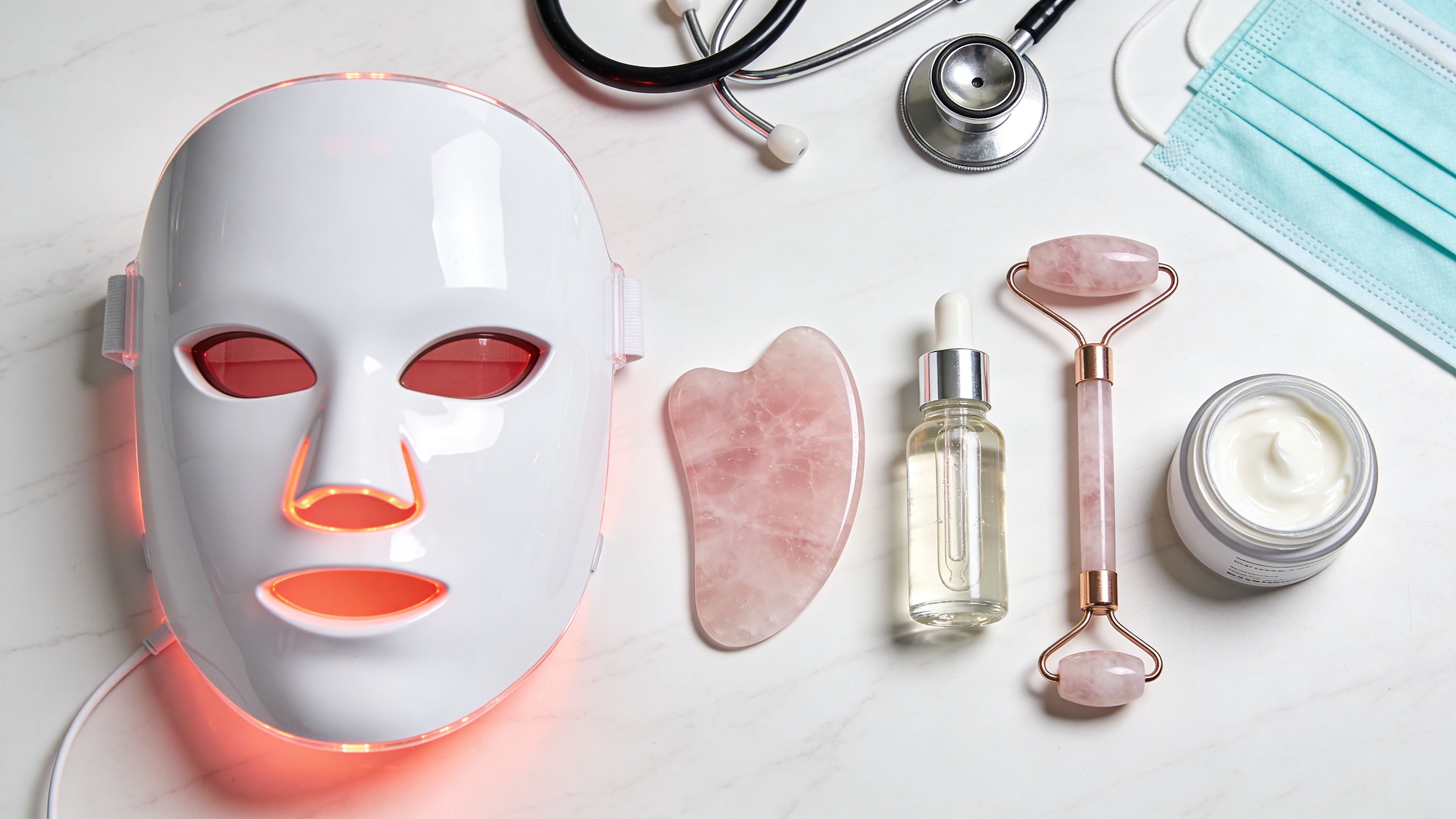
The one product I’ll mention here is the Barb N.P. Facial Mask. It is a wireless LED mask designed for hands-free use, and it includes 3 light settings for different goals: red for collagen-focused routines, blue for breakout-prone skin, and amber for healing-focused support. I like tools patients can realistically stick with, and ease of use matters more than flashy claims.
Good home care does not replace every office treatment. It often decides whether your results hold up well between visits.
How I match home care to the concern
This is the part people usually miss. The right home option depends on what is bothering you.
- Early fine lines: Peptide serum and regular LED use
- Reactive or sensitive skin: Gentle texture support, barrier repair, and a slower schedule
- Post-procedure maintenance: Hydration, sunscreen, and careful timing before restarting actives or devices
- Patients interested in broader skin support: Skincare can be paired with nutrition habits. If you want background reading on supplements, this comprehensive guide on collagen peptides is a reasonable overview of that category.
What usually fails is not the category itself. It is poor matching. If you buy five trending products, layer them all at once, and irritate your skin barrier, you can end up looking drier, redder, and more lined.
My advice is simple. Pick one or two proven categories, use them consistently, and judge progress over months, not days. That approach gives you a clearer sense of whether home care is enough for your goals or whether it makes sense to step up to in-clinic treatment later.
How to Choose The Right Botox Alternative For You
When someone sits in my chair and asks for the best botox alternative, I narrow it down by decision points, not hype. You can do the same at home before you ever book.
Start with the wrinkle itself
Ask this first. Do the lines show up mostly when you move, or are they there even at rest?
If they deepen with expression, look first at neuromodulators. If they’re etched in, paired with thinning skin, or tied to texture, start thinking about collagen-building treatments. If the area looks hollow or folded because support is missing, filler may be more relevant.
Decide what kind of result you want
Some people want a targeted fix. Others want broader skin rejuvenation.
Use this quick filter:
- You want fewer movement lines fast: Consider a neuromodulator.
- You want your skin to look firmer and healthier over time: Consider microneedling, PRP, RF, or similar collagen-focused options.
- You want a no-needle plan: Build around skincare and LED.
- You want to restore fullness: Consider filler assessment.
Your goal matters more than the product category. “Natural,” “long-lasting,” and “non-invasive” are not the same goal.
Be honest about maintenance and comfort
A treatment can be excellent and still be wrong for your lifestyle.
Think through these questions:
-
How often are you willing to come in?
Some people prefer fewer appointments even if the upfront treatment choice is different. -
How much downtime can you tolerate?
If you need to be social immediately, that narrows your options. -
Are you comfortable with injections?
If the answer is no, that doesn’t end the conversation. It just shifts the category. -
Do you want prevention or correction?
Prevention often responds well to simple routines and early intervention. Correction usually needs stronger tools.
My practical matching guide
If you want a clean starting framework, use this:
| If your main concern is | Strong starting category |
|---|---|
| Forehead movement lines | Neuromodulators |
| Frown lines with desire for fewer touch-ups | Longer-duration neuromodulator discussion |
| Hollow cheeks or deep folds | Dermal fillers |
| Crepey skin and texture | RF microneedling or microneedling-based plan |
| Early aging and sensitive skin | At-home skincare plus LED |
| Overall skin quality | Regenerative and collagen-building treatments |
The right answer is often a combination. Not all at once, and not all on day one. Just a sequence that matches your face and your priorities.
Begin Your Personalized Journey with BotoxBarb
The strongest wrinkle plan is usually not the most aggressive one. It’s the one that fits your anatomy, your timeline, and your tolerance for maintenance.
In practice, that may mean Botox or Dysport for expression lines. It may mean dermal fillers for structural support. It may mean PRP, microneedling, or LED therapy for skin quality. It may also mean starting at home with medical-grade skincare and building from there once you know how your skin behaves.
I’m a Nurse Practitioner, and I approach aesthetics the same way I approach any clinical decision. I want the treatment to match the problem. That’s how you avoid wasted money, overtreated faces, and routines that look good on paper but don’t work in real life.
If you’re unsure where to begin, start with an honest consultation and a short list of goals. Bring photos if you want. Point out what bothers you when your face is moving and when it’s relaxed. That’s often enough to separate what needs muscle relaxation, what needs volume, and what needs collagen support.
You don’t need every option. You need the right one first.
If you’re ready to build a plan that fits your skin, your comfort level, and your goals, visit BotoxBarb. You can book in-clinic services, explore skincare and self-care tools, and shop products with free shipping and 10% off.