
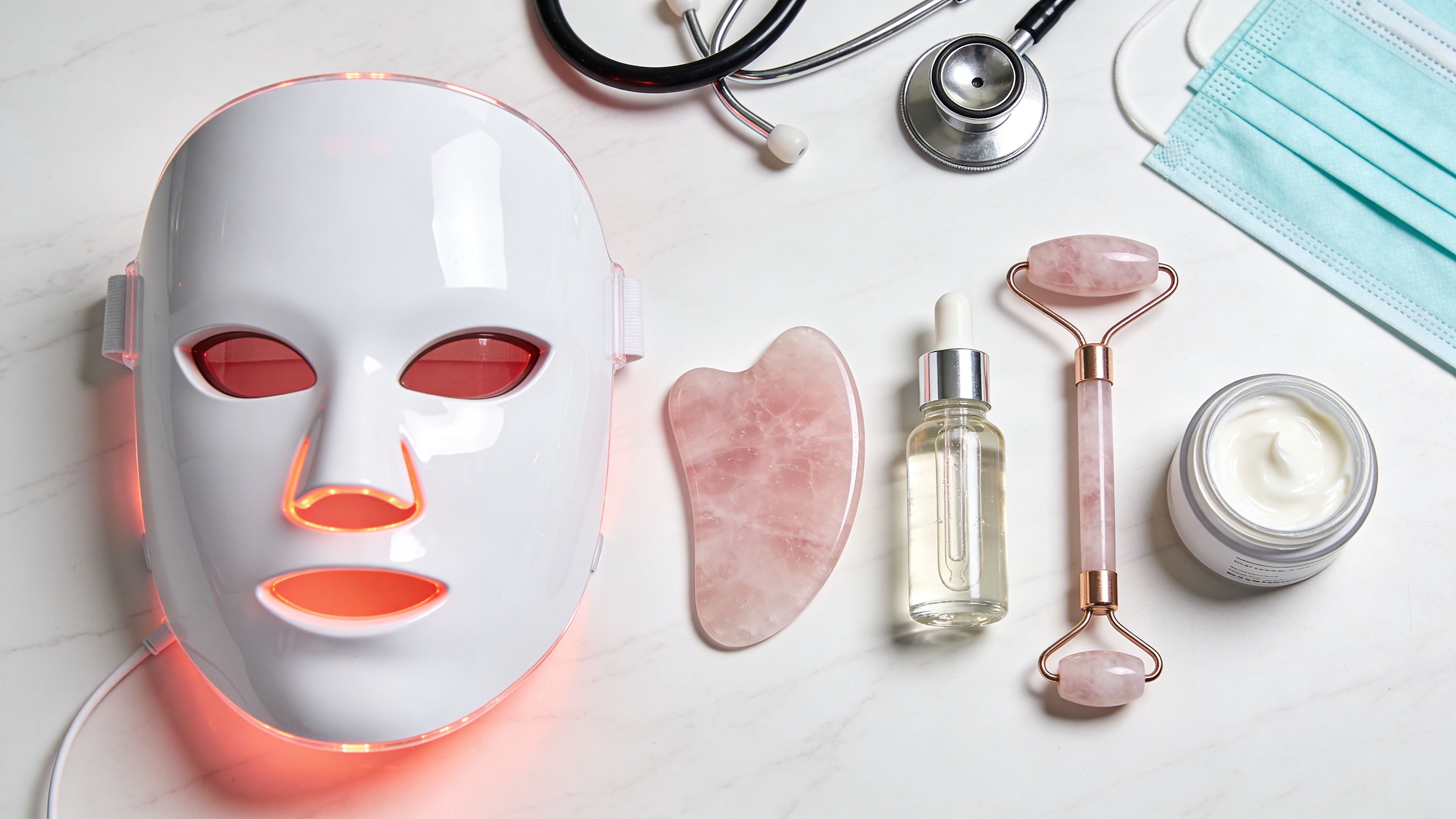
At Home Beauty Treatments: A Nurse's Guide to Safe Results
Your bathroom counter starts to look like a small lab before you even realize it. A cleanser for mornings. A stronger cleanser for breakouts. A peel you bought after seeing a dramatic before-and-after. A tool you used twice, then stopped because you weren’t sure if the warmth, tingling, or redness meant it was working or going wrong.
That confusion is normal. At home beauty treatments have become more advanced, more available, and more tempting. Global sales of at-home devices surged 18.5% year-over-year in the first half of 2025, driven by convenience and cost-effectiveness, according to Future Market Insights on at-home therapeutic beauty devices. People want treatments that fit real life. They want better skin, less downtime, and fewer appointments.
As an aesthetic nurse practitioner, I’m not against at-home care. I rely on it. The skin you live in every day responds more to consistency than excitement. The right home routine can protect your barrier, calm inflammation, support collagen, and help you maintain professional results longer. The wrong routine can leave you irritated, over-exfoliated, and chasing damage control.
That’s why I like a treatment pyramid. Build your routine from the bottom up. Daily essentials first. Weekly boosters second. Devices only after your basics are steady. If you’re also looking at other self-care categories, a resource like this practical guide to home whitening is useful for seeing the same principle in action: home treatments work better when the method is controlled and the expectations are realistic.
Your Guide to Clinic-Worthy Results at Home
Individuals often don’t need more products. They need a better order of operations.
The treatment pyramid starts with foundational care. That means cleansing, hydration, antioxidant support, targeted treatment, and sun protection. If this layer is sloppy, every advanced step on top becomes less predictable. I see this constantly in practice. Someone buys an expensive device, but their barrier is already inflamed from too many acids or harsh scrubs.
What clinic-worthy really means
Clinic-worthy at home doesn’t mean identical to an in-office procedure. It means your home routine does three things well:
- Protects skin function so you don’t trade short-term glow for long-term sensitivity
- Creates cumulative improvement through repetition and consistency
- Supports maintenance between professional visits when those visits are appropriate
That’s a very achievable goal.
A home routine can improve tone, reduce congestion, calm mild acne, support collagen remodeling over time, and help products perform more consistently. A home routine cannot safely replace injectables, deep resurfacing, or treatment plans that require diagnosis and medical oversight.
Practical rule: If a treatment depends on precision depth, aggressive heat, injectable anatomy, or high-strength acid control, it belongs in a clinic.
The pyramid in one view
Think of at home beauty treatments in three levels:
| Level | Focus | Examples |
|---|---|---|
| Base | Skin health and tolerance | Cleanser, moisturizer, vitamin C, sunscreen |
| Middle | Controlled enhancement | Enzyme exfoliation, masks, gentle acids |
| Top | Device-based support | LED, microcurrent, home RF used cautiously |
If you build the base correctly, the top becomes more effective and safer. If you skip the base, the top often becomes expensive guesswork.
Understanding the At-Home Beauty Movement
At-home beauty isn’t a niche hobby anymore. It’s a major shift in how people think about maintenance, prevention, and control over their appearance. In the United States, the home-use beauty device market is projected to grow from USD 9.3 billion in 2025 to USD 45.1 billion by 2032, according to P&S Market Research on the U.S. home-use beauty devices market.

That growth makes sense when you look at what people are buying into. They’re not only buying products. They’re buying a version of care that feels flexible, private, and repeatable.
The modern at-home toolkit
I break the category into a toolkit rather than a trend.
Daily essentials do the heavy lifting. Cleansers, moisturizers, antioxidants, retinoid alternatives or physician-guided actives, and sunscreen determine whether your skin can tolerate more.
Weekly boosters add refinement. These include hydrating masks, enzyme exfoliants, low-intensity acid products, and treatment-focused serums.
Advanced tools sit at the top. LED masks, microcurrent devices, and some radiofrequency tools are trying to mimic part of what people once sought only in a clinic. The key word is part.
Why people are leaning in
Three forces are driving at home beauty treatments:
- Convenience: Treatments fit into a real schedule instead of requiring a whole appointment cycle.
- Personalization: People like targeting acne, redness, texture, or early laxity on their own timeline.
- Technology access: Consumer devices are easier to use than older generations, so more people feel comfortable trying them.
That said, access has created a strange problem. People now have professional language without professional judgment. They know words like “collagen stimulation,” “barrier repair,” and “cell turnover,” but they don’t always know when a treatment is too much for their skin, too weak for their goal, or entirely the wrong category altogether.
The strongest home routine is usually the least dramatic one. It’s built around repeatable habits, not adrenaline.
A better way to categorize your options
If you’re deciding what belongs in your routine, ask which role a treatment plays:
-
Maintenance
Good for healthy skin habits, hydration, and preserving results. -
Enhancement
Useful for mild acne, mild texture issues, brightness, and incremental firmness. -
Correction
Usually not a home category. This includes deeper wrinkles, significant pigmentation, volume loss, and procedures that require medical evaluation.
That distinction prevents one of the most common mistakes I see. People use a maintenance tool and expect correction-level change.
Mastering Your Foundational At-Home Routine
Foundational care is where results are won or lost. Not because it’s glamorous, but because skin that’s clean, hydrated, and stable responds better to every treatment layered on top.
The most common mistake isn’t doing too little. It’s doing too much too fast. Aggressive peels are a perfect example. A 2025 dermatology review found that 68% of at-home peel users reported prolonged redness or hyperpigmentation, compared with 12% in a clinical setting, as noted in this discussion of DIY beauty routine risks. That gap tells you something important. Technique, patient selection, timing, and aftercare matter.
Step one starts with cleansing
A proper cleanse should remove sunscreen, makeup, oil, and debris without leaving the skin tight or hot.
Use a cleanser that matches your skin behavior, not your wishful thinking. If you’re dry and reactive, don’t use a foaming acne wash twice daily because you want to be less oily. If you’re congested, don’t use a heavy balm and call it nourishing if it keeps sitting in your pores.
Look for these outcomes after cleansing:
- Comfortable skin feel: Not squeaky, not stripped
- Clean product absorption: Serums should spread evenly afterward
- No rebound irritation: Redness after every cleanse is a warning sign
Exfoliation should be controlled
There’s a difference between encouraging turnover and injuring the barrier.
Safer at-home exfoliation usually comes from professionally formulated enzyme products or lower-intensity acid options used sparingly. Enzymatic exfoliants can help loosen dull surface buildup without the abrupt irritation that often follows stronger peels done without guidance. If your skin already stings when you apply moisturizer, exfoliation is not the next move. Repair is.
A practical pattern looks like this:
| Skin situation | Better option | What to avoid |
|---|---|---|
| Dry and sensitive | Gentle enzyme exfoliant occasionally | Multi-acid peels and DIY scrubs |
| Congested and dull | Low-frequency chemical exfoliation | Layering peel pads with retinoids |
| Acne-prone and inflamed | Barrier support first, then targeted treatment | Scrubs, rough brushes, prolonged peel wear |
Medical-grade matters for a reason
I’m selective about products because formulation quality changes the experience. Medical-grade options from brands such as SkinCeuticals tend to offer more reliable delivery systems, more elegant textures, and a treatment logic that fits real skin rather than trend content.
That doesn’t mean every expensive product is smart. It means some products are built with stronger attention to stability, compatibility, and tolerance.
If you have to “push through” burning, scaling, and persistent redness to use a product, it’s not discipline. It’s a mismatch.
Your foundation before any device
Before adding LED, microcurrent, or RF, get these basics steady:
- A gentle cleanser you can use consistently
- A daytime antioxidant or treatment serum that suits your goal
- A moisturizer that reduces irritation, not just feels rich
- Daily sunscreen
- One exfoliating step used carefully, not impulsively
When those five are settled, advanced tools become easier to judge. You can tell whether a device is helping because your skin isn’t already in a constant state of low-grade irritation.
Integrating Advanced Beauty Devices Safely
Once your foundation is stable, devices can make sense. Not all of them belong in every routine, and not all of them deserve the hype they get online. I like to sort home devices by what they can realistically do: support, maintain, and modestly improve.
LED sits highest on my list, given its noninvasive nature, ease of repetition, and independence from aggressive mechanical action. The evidence is especially useful for acne. A 2025 meta-analysis confirmed that red and blue light devices significantly reduce mild-to-moderate acne, which is why dermatologists recommend them as adjuncts to traditional treatment, according to this review of IPL and LED evidence.

Why LED tends to be the smartest first device
LED works through light exposure rather than abrasion, puncture, or aggressive heat. That matters because the margin for user error is lower than it is with more intense home treatments.
Different light settings serve different goals:
- Red light is typically used when the goal is collagen support and skin rejuvenation
- Blue light is commonly used for acne-prone skin
- Amber or yellow light is often chosen for redness and recovery-focused routines
For readers who want a mask format, the BARB N.P. LED Facial Mask benefits guide explains how light therapy fits into an at-home plan. The Barb N.P. Facial Mask uses a wireless design, a comfortable face fit, and 3 lighting settings for red, blue, and amber treatment goals. That kind of setup is practical for home use because people are more likely to stay consistent when a device is easy to wear and doesn’t tether them to a wall.
Device hierarchy matters
A lot of frustration comes from treating all devices as equal. They aren’t.
LED for consistency
LED is usually the easiest to maintain. It’s suitable for people who want a hands-free tool that supports acne care, redness management, and skin quality over time.
Good candidates for home LED are people who:
- want a noninvasive maintenance tool
- tolerate light exposure well
- can follow a regular schedule without overcomplicating the rest of their routine
Microcurrent for temporary toning
Microcurrent devices target facial muscle stimulation and contour support. They can be useful for short-term visible toning, but they’re highly technique-dependent. Conductive gel matters. So does hand placement. If someone wants “lift” but hates routines that require methodical gliding and repeated passes, they often stop using microcurrent.
Radiofrequency for cautious users only
Home RF is a category where expectations need tightening. The mechanism is legitimate. RF devices operate at 1MHz frequency in home-use clinical settings and rely on heat generation in the skin to trigger collagen-related activity, as detailed in this review of radiofrequency mechanisms and dosing. Guidance discussed in that review recommends 10 to 12W power outputs used every other day for 1 to 2 months to balance efficacy with safety.
That doesn’t mean every home user should rush into RF. It means the treatment has a real physiologic basis, but technique and restraint matter. Professional RF usually produces noticeable tightening sooner. At home RF tends to deliver milder firmness changes over a longer period.
A home device should fit your habits. The most sophisticated tool in your drawer does nothing if it’s too complicated, uncomfortable, or easy to overuse.
What I would skip or downplay
I’m cautious with any at-home treatment that combines multiple stressors at once. Heat plus acid. Scrub plus peel. Needling plus strong actives. Those combinations create a lot of irritation with very little upside.
I also don’t think every person needs a device. If your skin is reactive, your wins may come faster from barrier repair, consistent sunscreen, and well-formulated topicals.
A simple decision guide
| Goal | Better home option | Why |
|---|---|---|
| Mild acne support | LED with blue or red/blue use | Noninvasive and repeatable |
| Temporary facial toning | Microcurrent | Best for people who’ll use gel and follow technique |
| Mild firmness support | Home RF with caution | Slower, technique-sensitive, heat-based |
The right device should fill a gap in your routine, not become your whole routine.
Beyond the Face Hair and Body Treatments
Hair and body care is where DIY advice gets especially noisy. Kitchen remedies sound harmless because they’re familiar, but “natural” doesn’t mean predictable, and predictable matters when you’re dealing with your scalp, follicles, or body skin.

Rice water is a good example. A 2025 study in the International Journal of Trichology found 15% improvement in hair density with DIY rice water treatments compared with 42% improvement among users of clinical-grade peptide supplements, and 30% of DIY users reported scalp irritation, as summarized in this article on DIY home treatments. That’s the difference between a trend and a treatment plan.
Why hair thinning needs a broader lens
Hair concerns are rarely just about what you apply to the shaft. Thinning can connect to internal drivers such as stress, hormones, nutrient status, inflammation, or sensitivity to ingredients. That’s why I’m more interested in comprehensive support than in rinses that make hair feel coated for a day and then disappoint long term.
A smarter approach often includes:
- Clinical-grade supplementation when appropriate, such as peptide-focused hair support like Nutrafol-style options
- Scalp-friendly cleansing that doesn’t inflame or suffocate the skin
- Allergy or sensitivity consideration when itching, flaking, or irritation keeps recurring
- Professional evaluation if shedding becomes persistent, sudden, or patchy
For a deeper look at where home hair support fits and where it falls short, this guide on at-home hair growth treatments is a helpful next read.
Body treatments need the same realism
The body category includes hair removal, exfoliation, texture care, and brightening. Some of these are very workable at home when the method is controlled. Some aren’t.
Waxing is a good example of a treatment that can be reasonable for some people and a mess for others. If you’re trying to learn technique, temperature awareness, and prep for smoother body hair removal, a detailed resource like Black Coral Wax’s guide to Brazilian waxing at home is more useful than a ten-second social clip.
What tends to work better at home
- Steady body moisturizing
- Gentle chemical exfoliation for rough texture
- Careful shaving or waxing with proper prep
- Supportive hair supplements when thinning is the issue
What tends to go sideways
- Improvised scalp ferments
- Body scrubs used too aggressively
- Strong acids on large body areas without patch testing
- Treating chronic hair loss like it’s only a cosmetic styling issue
Body and hair routines do better when you remove the entertainment factor. What feels less exciting is often what works longer.
Your Safety Checklist Before Starting Any Treatment
The first question with at home beauty treatments shouldn’t be “Will this work?” It should be “Is my skin, scalp, or body ready for this without creating a new problem?”

Rule one always patch test
Patch testing sounds boring until you don’t do it.
Apply a small amount behind the ear, along the jawline, or on another discreet area based on the product instructions. Then wait and watch. This matters for acids, masks, hair products, adhesives, and device gels. Delayed irritation is still irritation.
Rule two know your contraindications
A device or active ingredient isn’t appropriate just because it’s sold online.
Before you start, think through:
- Pregnancy status
- Photosensitivity
- History of melasma or post-inflammatory pigmentation
- Pacemakers or implanted devices for electrical treatments
- Active rashes, open skin, or infection
- Recent procedures that leave skin vulnerable
DIY culture often cuts corners. The same kind of shortcut thinking shows up in other aesthetic categories. If you’ve ever seen people trying unsafe methods outside medical guidance, this article on spotting risks in alternative tattoo removal captures the larger pattern well. When people chase intensity without understanding tissue response, they usually create more work later.
Clinical mindset: Every treatment is a trade-off. Ask what benefit you want, what tissue you’re stressing, and what margin for error the method allows.
Rule three use less than you think you need
Overuse is one of the fastest ways to sabotage a routine.
If a mask says use it a few times weekly, don’t turn that into daily because your skin looked brighter once. If an acid works once weekly, stacking it on top of a scrub and retinoid won’t make you disciplined. It makes you inflamed.
A safer rhythm looks like this:
| Treatment type | Better approach |
|---|---|
| Acids and peels | Start low frequency and keep the rest of the routine bland |
| Devices | Follow the device schedule, don’t improvise intensity |
| Hair and scalp products | Introduce one variable at a time |
Rule four protect with sunscreen
This is not optional. Any routine that targets brightness, texture, breakouts, or collagen becomes less useful if UV exposure keeps re-injuring the skin.
I prefer a medical-grade sunscreen here because the texture, wearability, and consistency matter. A sunscreen you hate won’t be used enough. A sunscreen that layers well under makeup or over morning skincare has a better chance of becoming daily behavior.
If your skin is repeatedly getting red, stinging after actives, or darkening after “brightening” products, your safety checklist isn’t complete until sunscreen is essential.
Sample Routines for Common Skin Goals
A smart routine should match a goal, not just a product shelf. These sample plans keep the treatment pyramid intact. Foundation first. Then one or two supportive additions. No stacking for the sake of feeling productive.
For more ideas on building a home routine around your skin type, this overview of at-home facial treatments pairs well with the sample schedules below.
For dullness and early aging
This routine works best for someone who wants brightness, smoother texture, and gradual support for fine lines without turning every night into a procedure.
Morning
- Gentle cleanse
- Antioxidant serum such as a SkinCeuticals vitamin C
- Moisturizer if needed
- Broad-spectrum sunscreen
Evening most nights
- Cleanse
- Hydrating serum or barrier-supporting moisturizer
Two evenings per week
- Gentle enzyme exfoliant instead of your usual active
- Follow with moisturizer only
Several times weekly
- Red-light LED session for collagen-support goals
Why this works: you’re reducing oxidative stress in the morning, avoiding over-exfoliation at night, and adding a noninvasive treatment that doesn’t force your skin into repeated recovery mode.
For mild acne and post-breakout marks
This is for skin that gets congested, breaks out periodically, and often becomes worse from over-treatment.
Morning
- Gentle cleanse
- Acne-friendly treatment serum if tolerated
- Lightweight moisturizer
- Sunscreen
Evening
- Cleanse thoroughly
- Blue-light or combination LED use on the days you schedule it
- Simple moisturizer
Once weekly
- A very gentle exfoliating step if your skin barrier is calm
Avoid the temptation to combine a scrub, a peel, and a drying spot treatment in the same 24-hour period. Acne-prone skin often improves faster when the inflammation load comes down.
Keep the “acne routine” boring enough that you can repeat it for weeks. Skin responds to repetition better than to panic.
For redness-prone or sensitive skin
Sensitive skin often does worse with ambition. The goal is to reduce triggers and support resilience.
Morning
- Non-stripping cleanse or even a water rinse if appropriate
- Calming serum
- Moisturizer
- Sunscreen
Evening
- Gentle cleanse
- Barrier cream or restorative moisturizer
Weekly support
- Amber-light LED use if your skin tolerates it
- No peel if your skin is already reactive
If your skin flushes easily, stings after cleansing, or reacts to many products, don’t build your routine around exfoliation. Build it around recovery.
For body texture and self-care maintenance
Not every beauty routine has to focus on the face.
A practical body plan can include:
- gentle body cleansing
- regular moisturizer
- mild body exfoliation on a limited schedule
- careful hair removal method selection
- sun protection on exposed areas
This kind of routine doesn’t get viral attention, but it’s often what makes skin look healthier overall.
What to keep out of every sample routine
No matter your goal, be cautious with:
- layering multiple acids together
- using a peel on already irritated skin
- adding two new devices in the same week
- interpreting tingling as proof of effectiveness
- treating sunscreen as optional if the weather looks cloudy
When a routine is working, your skin should look more stable over time. Less unpredictable. Less inflamed. More even in how it responds day to day.
Knowing When to Seek Professional Care
At-home care has a real role. It helps with maintenance, prevention, and support. It can improve mild acne, help manage redness, refine texture, and maintain professional results between visits.
What it usually can’t do is correct deeper structural concerns.
If you have etched-in dynamic lines, visible volume loss, significant skin laxity, persistent pigment issues, scarring, or a condition you can’t identify clearly, it’s time to stop experimenting. A home routine won’t replace Botox for movement-related wrinkles, filler for volume restoration, or an in-clinic treatment plan for issues that need diagnosis and precision.
Professional care also matters when your skin is becoming harder to read. If every product burns, your breakouts keep changing pattern, or your scalp and hair concerns are accelerating, guessing is expensive. A customized plan often saves money because it removes the cycle of buying around the problem.
The strongest long-term strategy is usually a hybrid one. Use at home beauty treatments for what they do well. Daily consistency. Gentle support. Maintenance. Use professional treatment for what needs expertise, anatomy knowledge, stronger devices, and close follow-up.
That approach is realistic, safer, and usually more satisfying. You don’t need to choose between DIY and clinic care. You need to know where each belongs.
If you want a more personalized plan for your skin, hair, or at-home device routine, explore BotoxBarb for medical-grade skincare, hair support, wellness tools, and treatment guidance that helps bridge home care with professional aesthetics.


