Article: Botox Units Crows Feet: 2026 Dosing Guide
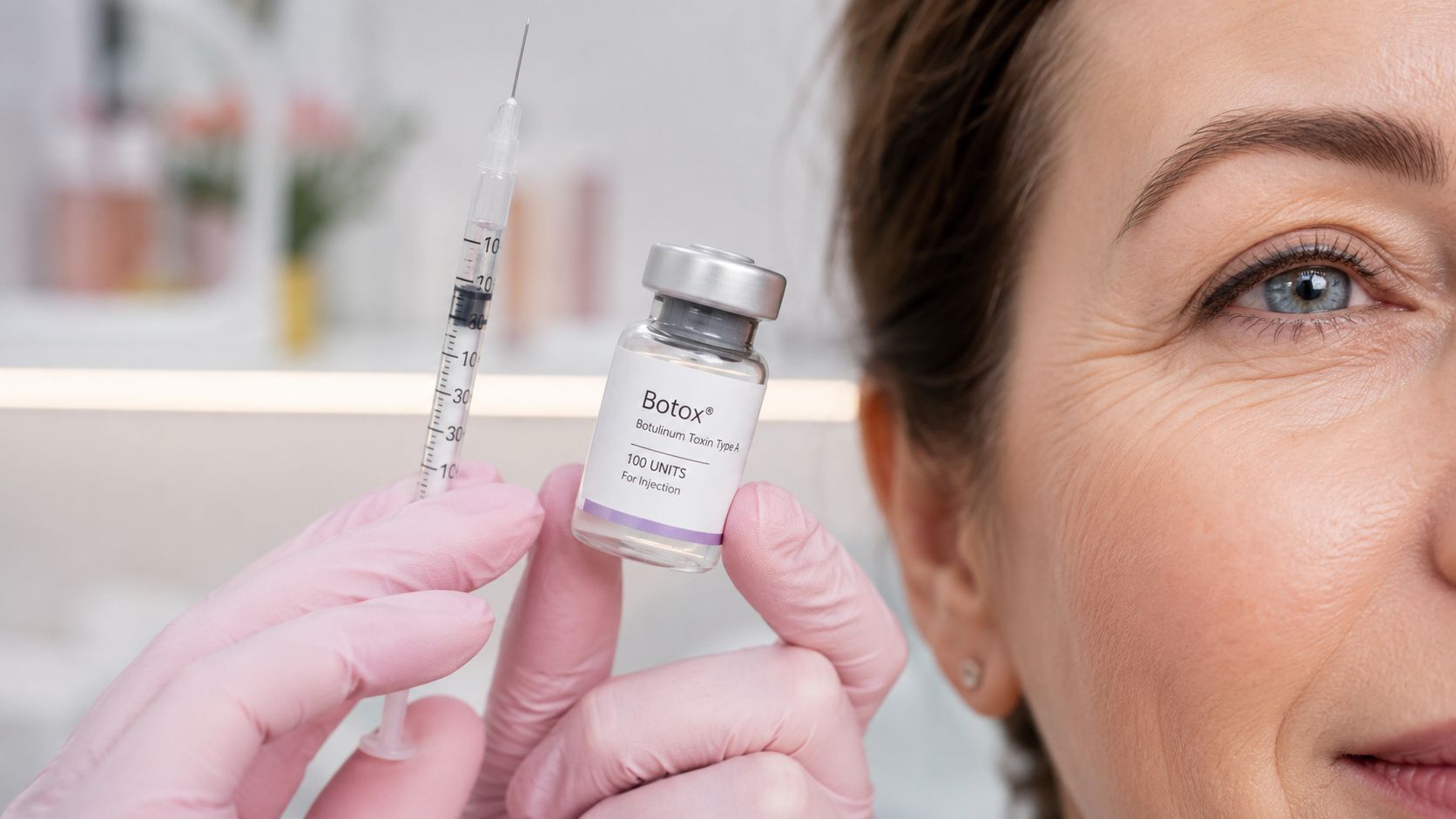
Botox Units Crows Feet: 2026 Dosing Guide
You catch it in the mirror first. Not the smile itself, but the fine lines that stay behind at the outer corners of your eyes after the smile fades. For many patients, that's the moment they start searching for answers about Botox units for crow's feet.
Crow's feet are normal. They often reflect years of laughing, squinting, smiling, and living. But it's also reasonable to want those lines softened. As a Nurse Practitioner, I tell new patients the same thing: the right treatment doesn't erase your expression. It refines it. A key question isn't only how many units are standard. It's how many units make sense for your face, your muscle strength, and your comfort level with movement.
Understanding Crow's Feet and How Botox Works
The lines at the outer corners of the eyes are called lateral canthal lines, though commonly known as crow's feet. They form because the orbicularis oculi muscle contracts every time you smile or squint. Over time, repeated folding leaves lines in the skin.
A simple way to think about it is paper. Fold a sheet once and it opens back up smoothly. Fold the same spot again and again, and eventually the crease stays. Skin behaves similarly, especially in the eye area where it's delicate and expressive.

Botox relaxes muscle, not fills wrinkles
Botox is a neuromodulator, not a filler. It works by inhibiting acetylcholine release at the neuromuscular junction, which relaxes the muscle fibers that create crow's feet when the orbicularis oculi contracts, as described in this clinical review of onabotulinumtoxinA for lateral canthal lines.
That distinction matters. If a line is caused by muscle movement, relaxing that movement can soften it. If a line is etched into the skin at rest, Botox may still help, but it won't behave like a filler or a resurfacing treatment.
Crow's feet treatment works best when patients understand that the target is muscle pull, not just the line you see in the mirror.
Why injector technique matters near the eyes
The eye area is one of the most technique-sensitive parts of the face. Placement, depth, angle, and dose all matter because the goal is to soften lines without disturbing your smile or eye shape. If you want a broader overview of where facial injections are commonly placed, this Botox injection sites face diagram can help you visualize how providers map treatment zones.
For a new patient, the takeaway is simple:
- Crow's feet are dynamic lines caused by repeated muscle movement.
- Botox reduces that movement so the skin creases less.
- Good treatment looks natural, with softer lines and preserved expression.
The Official Guide to Botox Units for Crow's Feet
If you want the official answer first, here it is. The FDA-approved benchmark for crow's feet is a 24-unit regimen, given as 12 units per side, according to this overview of recommended Botox dosing for crow's feet.
That number is important because it gives us a tested baseline. It tells us what was used to establish approved treatment standards. But in everyday practice, dosing often becomes more individualized.
What many experienced injectors do in real practice
That same dosing overview notes that many providers use 5 to 10 units per side, or 10 to 20 units total, when the goal is a more natural, relaxed appearance rather than full stillness around the eyes. This delicate balance involves the art of injecting.
Some patients walk in saying, “I want every line gone.” Others say, “I still want to look like myself when I smile.” Those are different treatment plans.
Practical rule: The official dose gives you a benchmark. The right dose comes from matching that benchmark to your anatomy and your aesthetic goal.
Crow's Feet Botox Dosing Scenarios
| Dosing Level | Total Units (Both Eyes) | Units Per Eye | Best For |
|---|---|---|---|
| Conservative softening | 10 | 5 | Fine lines, first-time patients, subtle movement preservation |
| Natural standard range | 10 to 20 | 5 to 10 | Patients who want visible softening without a frozen look |
| FDA benchmark | 24 | 12 | Patients seeking the approved standard regimen |
| Higher individualized dosing | Up to 40 | Varies | Strong muscles or more aggressive correction when clinically appropriate |
Why the same number doesn't fit every face
Clinical use can vary widely. The manufacturer-recommended average for optimum results is 24 units total, yet some patients may need as little as 5 units per side, while others with stronger muscle activity may need up to 15 units per side, as discussed in this review of how many Botox units are used for crow's feet.
Men often need more units than women with fine lines because facial muscles are frequently stronger. That doesn't mean every male patient automatically gets a higher dose. It means muscle strength matters more than assumptions.
A common mistake is thinking more units always mean better results. They don't. Too little may under-treat the area. Too much can flatten expression more than you wanted. The best injector balances smoothing with movement, especially around the eyes where warmth and animation matter.
Customizing Your Dose Factors Beyond the Standard
The number of Botox units for crow's feet should never come from a chart alone. A chart is a starting point. Your face decides the plan.

The five things I assess before choosing a dose
When I evaluate a patient for crow's feet, I'm not just looking at the lines. I'm watching how the muscle moves, how the smile lifts, and how the cheek interacts with the eye area.
- Muscle strength Some people have a very active orbicularis oculi muscle. Their lines fan out strongly when they smile, and they may need a more substantial dose than someone with lighter movement.
-
Wrinkle pattern
Fine dynamic lines respond differently than deeper lines that are already visible at rest. Botox is most predictable when movement is the main driver. -
Desired outcome
One patient wants polished but expressive. Another wants a smoother, more airbrushed result. Neither goal is wrong, but the dose won't be identical. -
Metabolism and response history
If you've had neuromodulators before, your prior response matters. Some patients hold results well. Others metabolize treatment more quickly. -
Facial balance and anatomy
The eye area doesn't exist in isolation. Brow position, cheek movement, and smile dynamics all influence how aggressively I treat crow's feet.
Injection pattern matters as much as units
For crow's feet, the licensed pattern is often 4 units per injection point at 3 points on each side, for a total of 12 units per side, with injections placed about 1 cm from the orbital rim to reduce the risk of affecting nearby eye or smile muscles, according to this clinical article on periorbital Botox technique.
That's why two patients can receive the same total units and still have different results. Placement changes outcome. A skilled injector doesn't just count units. They map movement.
If you're also comparing neuromodulators, this guide on Dysport for crow's feet can help you understand how product choice may affect treatment planning.
A natural result usually comes from restraint, precise placement, and a clear understanding of what the patient wants their smile to look like after treatment.
Your Treatment Journey What to Expect
You glance in the mirror the morning after treatment and wonder if anything happened. That is a very common first-time reaction. Crow's feet Botox is a gradual treatment, and knowing the timeline helps patients stay calm and avoid judging the result too early.

The day of treatment
The appointment itself is usually quick. I assess how your eye area moves when you smile, squint, and rest, then clean the skin and place a few precise injections. Around the eyes, technique matters. Small placement changes can affect whether the result looks soft and natural or a little too flat.
Most patients tolerate the injections well. You can have mild redness, small raised bumps for a short time, tenderness, or an occasional bruise afterward. Headache can happen too. In my practice, these effects are usually mild and temporary, but I still review them in advance so there are no surprises.
When results show up
Botox takes a few days to start relaxing the muscle. Early softening often shows up within several days, and the full result is usually judged at about 2 weeks. That is why I prefer follow-up decisions after the area has had time to settle.
I tell patients to look for progress, not perfection, in the first few days.
If one side feels a little stronger early on, that does not automatically mean something is wrong. Facial movement is rarely perfectly symmetrical to begin with, and the product has not fully taken effect yet.
How long it lasts and what it costs
Results are temporary. Crow's feet treatment commonly lasts around 3 to 4 months, although some patients notice movement returning a bit sooner and others hold their result longer. Your metabolism, dose, muscle strength, and how expressive your smile is all play a role.
Cost usually depends on how many units are used and your provider's pricing per unit. In real practice, customization matters. A patient who wants a light softening may spend less than someone treating stronger lines or combining crow's feet with other areas. The right plan is not about chasing the highest number of units. It is about using enough product to match your anatomy and your goal.
A few practical steps make the experience easier:
- Keep your hands off the treated area for the rest of the day unless your injector gives different instructions.
- Plan treatment at least 2 weeks before a wedding, photos, or another big event.
- Expect maintenance visits if you want your results to stay consistent.
- If you want better longevity between appointments, review these practical ways to make your Botox last longer.
For new patients, the biggest mindset shift is this. Botox for crow's feet is not instant, and it should not erase every bit of expression. The best result usually keeps your smile looking like you, just with less creasing at the corners of the eyes.
Enhance and Extend Your Results with At-Home Care
Botox relaxes the muscle. It doesn't replace skincare, sun protection, or healthy skin maintenance. If you want crow's feet to look better overall, skin quality still matters.
That's where supportive at-home care can make a difference. When the skin around the eyes looks calmer, brighter, and more resilient, your injectable result usually reads better.
Why LED can complement injectables
LED light therapy isn't a substitute for Botox, but it can fit nicely into a broader plan. Many patients like it because it supports skin appearance without adding downtime. In practice, I see the best routines as layered. Neuromodulators manage movement, and skincare tools support the skin itself.
The Barb N.P. Facial Mask is one example of a home device that fits this role. It's wireless, designed for comfortable wear on the face, and includes 3 lighting settings for different treatments, such as red light for anti-aging support, blue light for breakout-prone skin, and amber light for calming and recovery-focused use.

What helps and what doesn't
Some at-home habits support your investment. Others don't do much.
- Helpful: Gentle skincare, consistent sunscreen use, and skin-supportive devices like LED masks.
- Helpful: Realistic maintenance. Botox softens muscle pull, but daily habits still shape how the skin looks.
- Not helpful: Assuming one treatment fixes every cause of eye-area aging.
- Not helpful: Aggressive rubbing, harsh products, or over-treating the area at home.
If you want more practical ways to protect your result between visits, this article on how to make your Botox last longer is a useful next read.
Patients usually do best when they stop thinking in terms of one magic fix and start thinking in terms of a consistent, low-drama routine that supports the work done in clinic.
Your Pre-Consultation Checklist
A first consultation goes better when you arrive with a few clear thoughts already in mind. You don't need expert language. You just need to know what you want help with.
Before your appointment, consider the following:
- Your goal for movement. Do you want crow's feet completely minimized, or do you prefer softening while keeping a lot of expression?
- What bothers you most. Is it the lines when you smile, the etched lines at rest, or both?
- Your treatment history. Be ready to discuss any prior Botox, Dysport, filler, laser, or skin treatments.
- Your medical history. Your provider needs a full picture to treat you safely.
- Your questions. Write them down so you don't forget them once you're in the chair.
A few smart questions to ask:
- Based on my muscle strength, what dose do you recommend and why?
- Will you start conservatively or use the standard benchmark?
- How much movement should I expect to keep?
- When should I come back if I want maintenance?
- Are my lines mainly dynamic, or do I need skin-focused treatments too?
The best consultations feel collaborative, not intimidating.
Frequently Asked Questions About Crow's Feet Botox
Will my eyes look frozen or unnatural
Not if the treatment is planned well. The most natural results come from matching the dose to your muscle strength and respecting how your smile moves. Around the eyes, over-treatment is what creates that flat look patients worry about.
Does crow's feet Botox hurt
Patients generally tolerate it well. The injections are quick, and the needle used for cosmetic treatment is very small. Patients usually describe it as brief pinches rather than pain that lingers.
Can I wear makeup after my appointment
Many patients can return to normal routines soon after treatment, but I still advise being gentle with the area the same day. If you apply makeup, avoid pressing, massaging, or rubbing near the injection points.
Can I work out right after Botox
I usually tell patients to skip strenuous exercise for the rest of the day. It's a simple precaution and part of standard aftercare in many aesthetic practices.
Is preventative Botox too early in your 20s or 30s
Not always. Preventive treatment can be reasonable for patients who are starting to see early repetitive lines and want to slow how strongly those lines set into the skin. The right timing depends less on age and more on movement pattern, skin quality, and personal goals.
What if I start with too few units
That can happen, especially when someone wants a cautious first treatment. A conservative start is often appropriate for a first visit because it gives both patient and injector useful information about how your muscles respond.
Is Botox the only option for crow's feet
No. Botox is excellent for dynamic muscle-driven lines, but some patients also benefit from skincare, LED support, resurfacing treatments, or a combination approach when the skin itself needs attention.
If you're ready to discuss a personalized plan for your crow's feet, visit BotoxBarb to explore treatment options, skincare tools, and supportive products that can fit into a natural-looking aesthetic routine.