When Does Botox Start to Work? Full Timeline 2026
Botox usually starts to work within 3 to 5 days, and the full result takes 10 to 14 days to show. That gap is where most of the anxiety lives, because Botox is a process, not a light switch.
If you've just had treatment, you're probably doing what nearly every new patient does. Looking in the mirror, raising your brows, frowning a little, smiling from the side, then wondering whether it's working evenly. That waiting period can feel longer than it is, especially if one area seems softer before another.
As an aesthetic nurse practitioner, I spend a lot of time reassuring patients that this timeline is normal. The biggest mistake I see is judging Botox too early, especially in stronger facial muscles like the frown lines between the brows. Some areas respond quickly. Others take longer. That doesn't mean the treatment failed. It means the medication is still doing its job.
The Patient's Question When Does Botox Start to Work
You leave your appointment feeling excited, maybe a little tender at the injection points, and very aware of your forehead. By that evening, you're already checking for change. By the next morning, you're testing expressions in the mirror. By day three, you might be thinking, “Shouldn't I see more by now?”
That reaction is common, especially for first-time patients.
The practical answer is simple. Most patients notice the first visible softening in 3 to 5 days, and the final result settles in by day 14. That means the first week is only part of the story. If you expect instant stillness across every treated area, you'll almost always think something is wrong when it isn't.
Why the wait feels longer than it is
The emotional timeline is often faster than the clinical one. You want confirmation right away. But Botox doesn't work on your schedule. It works on a biologic schedule.
What makes this tricky is that facial areas don't all respond at the same speed. Fine, highly expressive zones may soften earlier, while stronger muscles can hold on for a bit longer. That difference is one reason patients sometimes worry too soon.
Practical rule: If it's been less than two weeks, you're still in the normal settling window.
What I want new patients to know
A good Botox experience starts with knowing what “working” looks like. It usually isn't dramatic overnight change. It's gradual reduction in movement, then softer expression lines, then a more polished result as the medication fully settles.
That's why I tell patients to think of Botox as a short journey instead of an instant reveal. Early changes are encouraging, but they aren't the endpoint. The best time to evaluate symmetry, smoothness, and whether you need any adjustment is at the end of that two-week window.
The Initial Onset What Happens in the First Few Days
Botox starts working before you can necessarily see it. The medication begins binding at the neuromuscular junction within 24 to 48 hours, but the visible relaxation usually appears more gradually, with clinical onset often occurring between 2 to 5 days as the nerve signaling process is interrupted through acetylcholine blockade and related steps described in this onset overview from Allen Medical Aesthetics.
Imagine a key turning slowly in a lock. The first turn doesn't open the door. It starts the mechanism. Botox works the same way. The medication doesn't freeze a muscle the minute it's injected. It begins a sequence that reduces muscle contraction over time.

What day 1 through day 3 usually feels like
In the very beginning, you may not see much. That's normal. Some patients notice a subtle heaviness, a tiny difference in how easily they can frown, or a slight change in how forcefully the forehead moves. Those are early signs, but they're often more felt than seen.
According to Siana Aesthetics on how long Botox takes to work, Botox typically begins showing noticeable effects within 24 to 72 hours, with most patients seeing initial visible results between 3 to 5 days and full therapeutic and cosmetic effects within 10 to 14 days.
That timeline matters because patients often expect “starts working” to mean “looks finished.” It doesn't. In the first few days, the right question isn't whether every line is gone. It's whether movement is beginning to soften.
What to watch for by day 3 through day 5
By this point, many patients notice:
- Softer expression lines: Dynamic wrinkles may start looking less etched when you raise your brows or squint.
- Less forceful movement: Muscles often don't contract with the same intensity.
- A partial result: Some spots may respond before others, especially if one side of the face is naturally stronger.
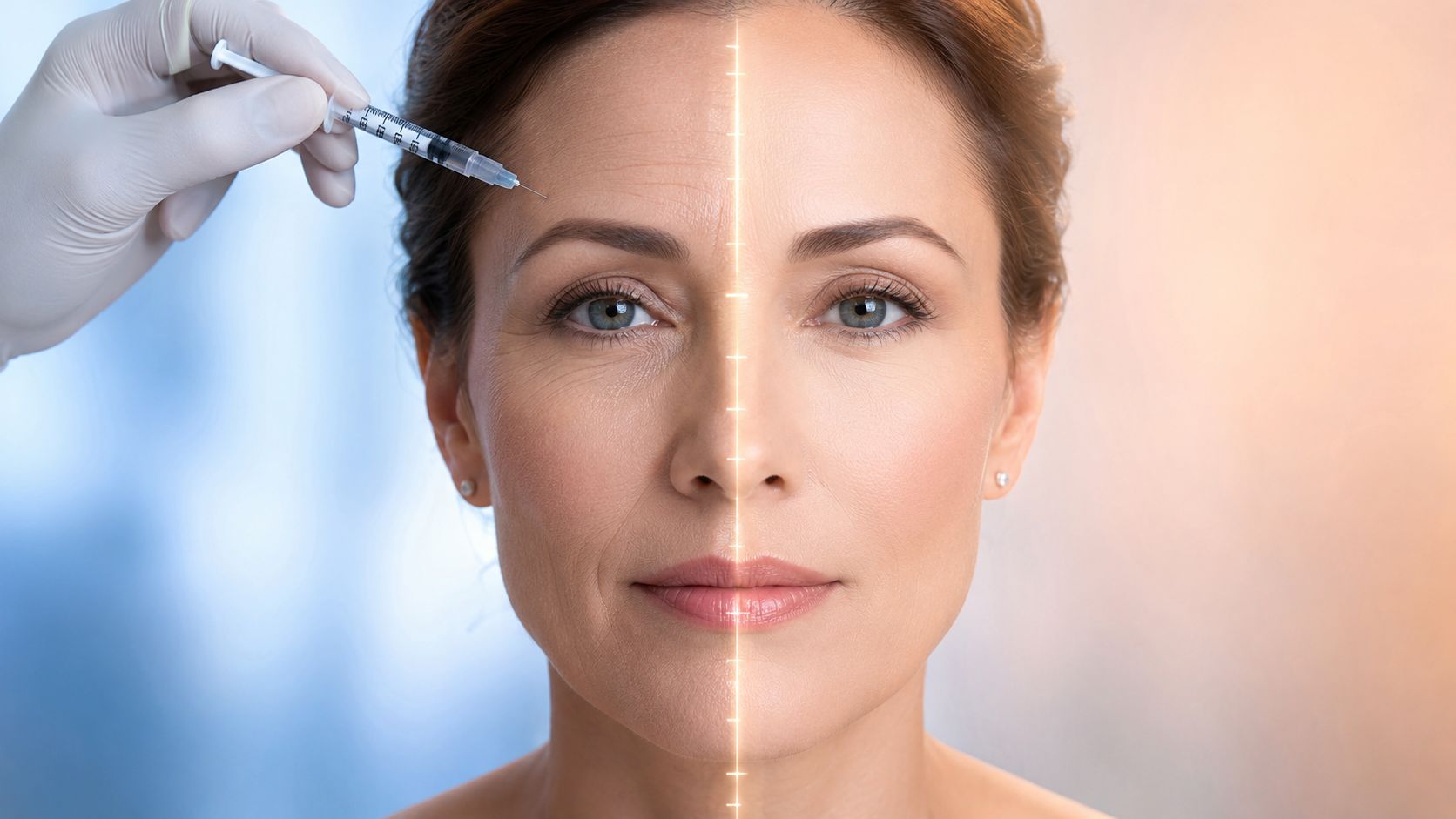
If you want a visual sense of how changes can build over time, it helps to look at Botox injections before and after examples with the understanding that the final “after” image reflects the settled result, not the first few days.
Early improvement is a good sign. Incomplete improvement is also a good sign. It means you're mid-process, not that treatment failed.
Achieving Full Results The Crucial 14 Day Milestone
The most important date after Botox isn't the day you're injected. It's day 14. That's the point when the treatment has had enough time to fully express itself, which is why experienced injectors assess touch-ups and final symmetry then, not halfway through the first week.
This is also where the delayed onset issue becomes important. A patient may see forehead movement change first and assume the frown lines should match immediately. But different muscles respond on different schedules.

Why one area softens faster than another
Treatment area significantly affects onset. Hertford Cosmetics notes that crow's feet often improve within 3 to 5 days, forehead lines by 4 to 6 days, and glabellar frown lines by 5 to 7 days, due to differences in muscle fiber density and contraction frequency.
That means the stronger vertical frown lines between the brows often lag behind finer lines around the eyes. It's one of the most common reasons first-time patients become nervous at the end of the first week. They see progress, just not the same pace everywhere.
The delayed onset patients rarely hear enough about
This is the part many generic Botox guides skip. Some muscle groups need more time to show visible relaxation. SoCal Aesthetic Surgery highlights that glabellar and masseter areas often require 5 to 7 days for noticeable softening and that 25% of patients may not feel results until after two weeks.
That's a meaningful detail for anxious first-time patients. If your frown lines are still active at day five, that can still be well within the expected window.
Don't book yourself into a panic on day 6. Stronger muscles often need more time to settle.
What day 14 is actually for
Day 14 is the right time to answer the questions that matter:
| What to assess | What it means |
|---|---|
| Symmetry | Are both sides responding evenly now that the result has settled? |
| Residual movement | Is there still targeted muscle activity that needs adjustment? |
| Line softening | Have dynamic lines improved as expected for your anatomy? |
A follow-up at this stage isn't a sign something went wrong. It's good treatment planning. Skilled Botox care includes enough patience to let the medicine finish its work before deciding whether anything needs refinement.
Why Your Botox Results Are Unique to You
Two patients can get treated in the same area on the same day and still have a different Botox journey. That isn't unusual. It's expected. Muscle strength, movement patterns, dose, metabolism, skin quality, and treatment history all shape what you see and how long it lasts.
Once Botox reaches full effect at 10 to 14 days, results typically last 3 to 4 months, with some patients seeing longevity up to 5 to 6 months, depending on factors such as treatment area, dosage intensity, and individual muscle metabolism, as outlined by Dr. John Lee Surgery's Botox timing guide.

The biggest variables I consider in practice
Some factors matter more than others when patients ask why their friend's Botox looked faster, softer, or longer-lasting.
- Muscle strength: A stronger glabella or very active forehead usually takes more finesse than a lightly expressive area.
- Dose and placement: More product isn't automatically better. A heavier dose may last longer, but if it isn't balanced well, it can reduce natural movement more than you want.
- Metabolism: Some patients just wear off faster than others.
- Skin quality: Botox relaxes muscle. It doesn't replace collagen or erase severely etched lines on its own.
- Treatment history: Patients who've had regular treatment sometimes notice a more predictable settling pattern.
Natural look versus longer hold
This is a real trade-off. A lighter treatment can preserve more expression and create a softer look, but it may not last as long as a stronger treatment plan. A more aggressive approach may extend the result, but it can also limit motion more noticeably.
The right plan depends on what you want your face to do. Some patients want movement with polish. Others want stronger line control. Neither goal is wrong, but they don't always come from the exact same dosing strategy.
Botox is customized medicine. The best result is the one that fits your face, not someone else's.
A note on supporting skin between appointments
Botox handles muscle-driven movement. Skin support is a separate category. Between injectable visits, I often recommend adding LED therapy to support overall skin appearance and radiance.
A practical at-home option is the Barb N.P. Facial Mask. It's a wireless LED device, which makes it easy to use without being tethered to a cord, and the mask is designed for comfort on the face, so treatment feels manageable instead of clunky. It also offers 3 lighting settings for different treatments, which makes it useful for patients who want one device that can fit multiple skin goals.
Botox vs Dysport Onset Time and Differences
Patients often ask whether Dysport works faster than Botox. The short answer is yes, it may for some people, but speed isn't the whole decision.
In practice, both products can produce beautiful results when they're chosen well and injected precisely. The better question is which product fits your anatomy, movement pattern, and goals.
A practical comparison
| Feature | Botox | Dysport |
|---|---|---|
| Onset | Often seen over the standard Botox settling window, with visible change building over several days | Often discussed as having a slightly faster onset qualitatively |
| Full result timing | Best judged at the two-week mark | Also typically assessed after it has fully settled |
| Longevity | Comparable in practice for many patients | Comparable in practice for many patients |
| Best choice | Depends on injector preference, treatment area, and desired look | Depends on injector preference, treatment area, and desired look |
The most-discussed difference is onset. Many clinicians and patients feel Dysport may kick in a bit earlier. But that doesn't necessarily mean one product is superior. It means the products behave a little differently.
What matters more than the label on the vial
Injector technique matters more than product hype. Placement, anatomy, dose selection, and realistic goals determine whether your result looks polished or awkward.
If you're comparing the two, this detailed guide on pros and cons of Dysport vs Botox is a useful next read.
For a first-time patient, I usually frame it this way:
- Choose expertise first: Product choice matters, but injector judgment matters more.
- Choose based on your movement pattern: Broad forehead movement, strong frown lines, and prior treatment history can all influence the best fit.
- Choose based on goals: “Natural and refreshed” and “very smooth” may call for different strategies, regardless of brand.
If you're deciding between them, don't focus only on which one might work a little faster. Focus on which one your provider uses most skillfully for your face.
How to Maximize and Extend Your Botox Results
Good Botox doesn't end when you leave the treatment chair. The early aftercare window matters, and so does what you do between appointments. Protect the placement first. Support the skin second.

What to do right after treatment
The first couple of days are about reducing the chance of unnecessary irritation and letting the treatment settle cleanly.
- Stay upright: Don't spend the immediate post-treatment period pressing your face into a pillow or massage table.
- Skip strenuous workouts: Heavy exercise right away isn't the moment to test your routine.
- Avoid rubbing the area: Aggressive facial massage, rubbing, or pressure isn't helpful after fresh injections.
- Follow your provider's instructions: Aftercare can vary slightly by injector and treatment area.
These steps aren't glamorous, but they're practical. Patients often want a trick that makes Botox kick in faster. Usually, the smarter move is not interfering with fresh placement.
How to support the result between appointments
Once the treatment has settled, shift your attention to skin quality. Botox softens dynamic movement, but healthy-looking skin helps that smoother result read better in natural light and at rest.
That's where LED can be a helpful complementary tool. The Barb N.P. Facial Mask is one of the at-home devices I'd point patients toward because it's wireless, it sits with good comfort on the face, and it has 3 lighting settings for different treatments. For someone who wants a routine they'll stick to, those details matter.
What works and what doesn't
Here's the honest version.
| Approach | Likely value |
|---|---|
| Consistent follow-up timing | Helps keep muscle activity from fully returning between sessions |
| Good skin maintenance | Supports the overall cosmetic result |
| LED therapy as a complement | Helpful for skin support, not a replacement for injectables |
| Waiting patiently for day 14 | Essential for accurate evaluation |
| Judging treatment too early | Usually creates unnecessary worry |
If you want a deeper look at maintenance strategy, read how to make your Botox last longer.
When to Call Your Provider Red Flags and Follow Ups
Most Botox concerns in the first week are not emergencies. They're timing issues. One side may move sooner. A stronger muscle may hold out longer. A line may still show while the area is settling. Those are common reasons to wait, not panic.
The right time to assess the final cosmetic outcome is after the treatment has fully settled. If a small area still has more movement than expected at that point, or if there's mild asymmetry that remains after the normal settling window, that's when a follow-up makes sense.
What's normal to watch and wait on
- Uneven early settling: One side can look faster before balance catches up.
- Partial movement reduction: Improvement can arrive in stages.
- A stubborn line at first: Deep lines often soften before they look fully improved.
What deserves a call
Some issues should never be brushed off. If something feels clearly wrong, contact your injector.
If you notice eyelid droop, signs of an allergic reaction, or anything that feels significantly outside your normal post-treatment experience, call your provider promptly.
Why follow-up matters
A two-week follow-up isn't just administrative. It's part of quality care. It gives your injector the chance to assess what your muscles did with the treatment, not what they seemed to do halfway through the process.
That's especially important for first-time patients. Your first treatment teaches your provider how your anatomy responds. A skilled follow-up turns that information into a better long-term plan.
When patients ask me the most important step for a safe, natural outcome, my answer is consistent. Choose an experienced injector, give the treatment time to work, and don't evaluate the final result before it's final.
If you're ready for expert aesthetic care or want supportive skin and wellness products at home, explore BotoxBarb. You can shop curated favorites like the Barb N.P. Facial Mask, browse medical-grade skincare, or book services with a provider who values precise treatment, natural-looking results, and thoughtful follow-up.