Exfoliating and Skin Reactions: can exfoliating cause breakouts or irritation
Yes, exfoliating can cause breakouts—but the story doesn’t end there. It’s a frustrating moment: you start a new exfoliation routine hoping for that smooth, glowy complexion, only to see new pimples pop up. While it sounds completely counterintuitive, this can sometimes be a good sign.
The key is figuring out why it's happening. Your skin could be either purging or having a true breakout, and knowing the difference is critical to getting the clear, healthy skin you’re after.
Is It Skin Purging or a Breakout? Key Differences
So, you’ve started a new exfoliant and suddenly you’re seeing blemishes. Before you toss the product, you need to play detective. Is your skin going through a necessary “spring cleaning,” or is it sending out an S.O.S.?
Skin purging is that spring cleaning. Active ingredients in your exfoliant, like AHAs or BHAs, speed up skin cell turnover. This process pushes all the underlying gunk—micro-comedones that were already forming just beneath the surface—up to the top all at once. It’s a temporary, albeit annoying, phase that’s actually clearing the way for smoother skin.
An irritation breakout, on the other hand, is a distress signal. It means the exfoliant is too harsh, you’re using it too often, or it’s just not the right match for your skin. This kind of reaction points to a damaged skin barrier, leading to angry, inflamed pimples, often in places you don’t typically break out.
This table breaks down the key differences to help you quickly diagnose what’s happening with your skin.
| Symptom | Skin Purging (Good Sign) | Irritation Breakout (Bad Sign) |
|---|---|---|
| Location | Pimples appear in your usual breakout zones (e.g., T-zone, chin). | Bumps appear in new areas where you rarely get acne. |
| Appearance | Often small whiteheads or pustules that come to a head quickly. | Red, inflamed, sore, and sometimes cystic bumps that are tender to the touch. |
| Duration | Clears up much faster than a typical pimple, usually within a week or two. | Blemishes linger for weeks and can be slow to heal. |
| Timing | Occurs after introducing a new active ingredient that increases cell turnover. | Can happen immediately or after a few uses of a product that's too harsh. |
Ultimately, purging is a sign that the product is working to clear out congestion. A breakout from irritation means the product is causing damage. Knowing which is which helps you decide whether to stick with it or stop.
Decoding the Signs: A Quick Visual Guide
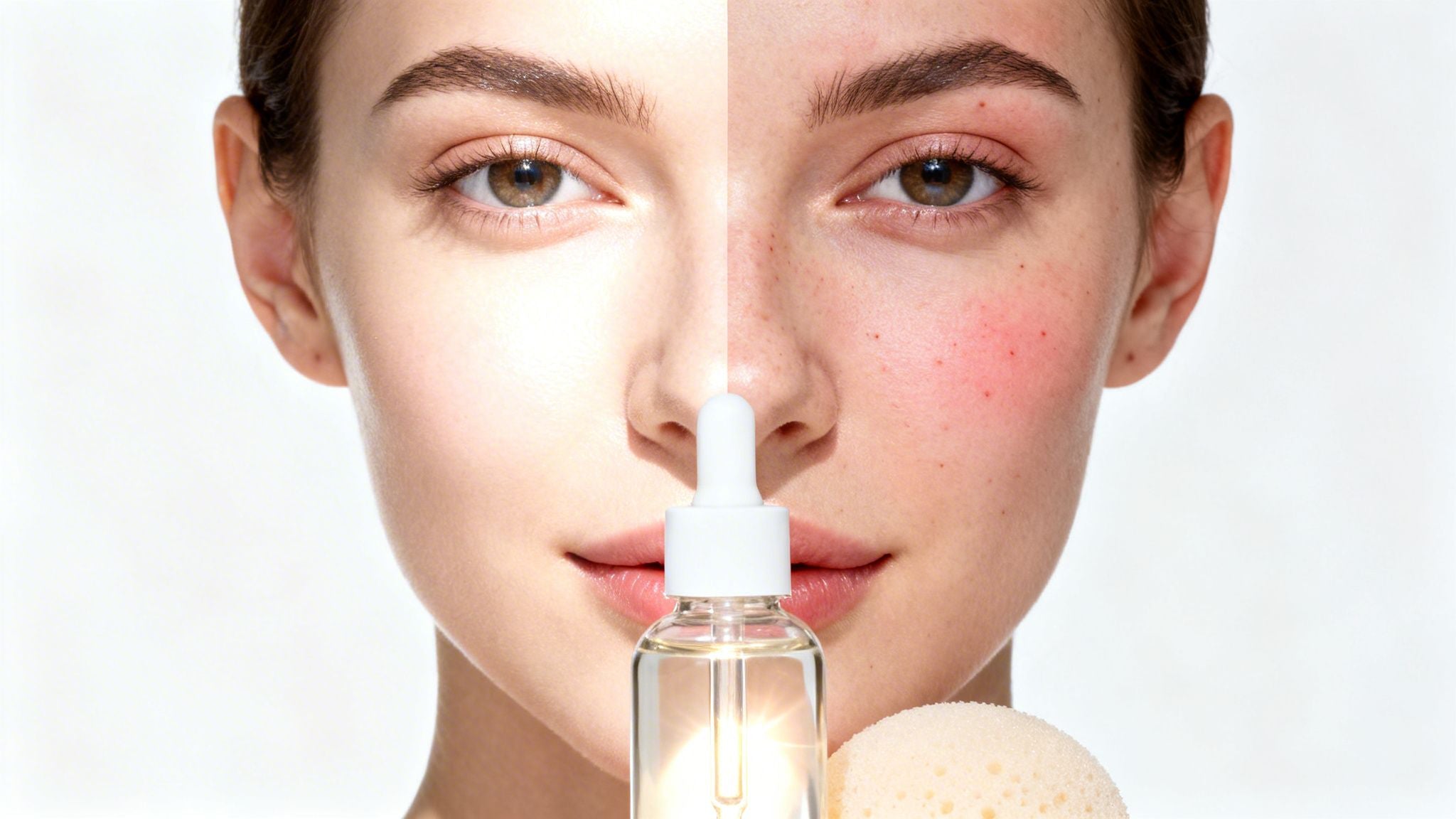
How can you tell the difference at a glance? Purging pimples tend to pop up in your usual trouble spots, but they come and go much faster than your normal acne. Irritation breakouts look different—they’re often redder, more inflamed, and stick around for what feels like forever.
This simple decision tree can help you figure out what your skin is trying to tell you.

As you can see, if new pimples show up in your typical breakout areas, it’s likely purging. But if they’re appearing in brand-new spots, your skin is probably irritated.
Key Insight: The goal of exfoliation isn’t to scrub away existing pimples. It’s to prevent future ones by keeping pores clear and encouraging healthy cell renewal. When done right, it's a preventative measure, not an aggressive spot treatment.
Overdoing it doesn’t just cause a little redness—it can trigger even more breakouts, especially if your skin is already acne-prone. When you scrub too hard or use acids too often, you strip away your skin’s natural oils and compromise its vital barrier function. This opens the door to chronic dryness, inflammation, and a weakened defense that allows acne-causing bacteria to thrive, turning what might have been a small pimple into a deep, painful cyst.
As the experts at Westlake Dermatology explain, a healthy skin barrier is your first line of defense against breakouts. Damaging it is a surefire way to make things worse, not better.
Why Dermatologists Recommend Exfoliation for Acne
It’s a fair question: if exfoliation carries risks of irritation, why do dermatologists constantly recommend it, especially for those of us with acne-prone skin? The answer requires a small but crucial shift in thinking. Effective exfoliation isn't about aggressively scrubbing away existing pimples. It’s a strategic, preventative step designed to stop breakouts before they even have a chance to form.
Think of your skin’s surface as a busy highway. When traffic flows smoothly, everything is great. But when dead skin cells and excess oil start to pile up, they create a major traffic jam right inside your pores. This is what leads to comedones—what we all know as blackheads and whiteheads.
The Preventative Power of Exfoliation
Gentle, consistent exfoliation acts like the ultimate traffic controller. By clearing away the debris that causes congestion, you prevent the initial blockage that kicks off the entire acne cycle. It's about maintaining a clear path forward, not trying to clean up a multi-car pile-up after it’s already happened. This proactive approach is fundamental to managing oily and acne-prone skin.
The professional consensus here is overwhelmingly clear. In a national survey, a staggering 88.7% of dermatologists pointed to oily and acne-prone skin as the number one reason to recommend daily gentle exfoliation. They see it as a primary tool for managing excess oil, preventing comedones, and improving overall skin texture. For a deeper dive into these expert opinions, you can explore the findings from the full dermatologist survey on Cosmoderma.org.
By regularly removing the buildup of dead cells, you’re not just chasing a temporary glow; you’re fundamentally changing your skin’s environment to make it far less welcoming to acne.
Optimizing Your Skincare with Smart Exfoliation
Adding an exfoliant to your routine also makes everything else you use work so much better. When your skin’s surface is clear of that dull layer of dead cells, your serums and moisturizers can penetrate more deeply and get to work where they’re actually needed. This means your other acne-fighting or hydrating products can deliver their full potential.
For example, a gentle chemical exfoliant can pave the way for spot treatments to target active breakouts more effectively. To take this a step further, many are now pairing their routines with advanced at-home devices to enhance their results.
A fantastic option to consider is the Barb N.P. LED Facial Mask. This device perfectly complements your exfoliation efforts with three targeted light settings.
- Blue Light: Use this setting right after exfoliating to help neutralize acne-causing bacteria on the skin’s surface, adding another layer of breakout prevention.
- Red Light: This setting is your go-to for soothing any potential irritation and calming inflammation, which promotes faster healing and skin recovery.
- Amber Light: Perfect for boosting a radiant glow and helping to reduce the appearance of dark spots left behind by old blemishes.
What really makes this mask a standout choice is its smart, user-focused design. It’s completely wireless, so you can move around freely during your treatment instead of being stuck by an outlet. Plus, it’s designed for maximum comfort, fitting securely on your face without feeling heavy or awkward. It's an easy and incredibly effective addition to any clear-skin regimen.
Physical vs. Chemical Exfoliants for Acne-Prone Skin
Not all exfoliants are created equal, especially when you're dealing with acne. This is a critical distinction because choosing the right one can be the difference between clear, glowing skin and an inflamed, irritated mess. The two main categories you'll hear about are physical and chemical exfoliants.
Think of it like this: a physical exfoliant is like using sandpaper on a piece of wood. It relies on something gritty—like sugar, crushed nut shells, or synthetic beads—to manually scrub away the top layer of dead skin.

While that scrubbing action can feel satisfying, it's often far too aggressive for acne-prone skin. Many scrubs contain sharp, jagged particles that create micro-tears in the skin. This damages your skin barrier, invites bacteria, and triggers inflammation—the very things that fuel breakouts.
Why Chemical Exfoliants Are Often Better for Acne
Chemical exfoliants take a much more sophisticated approach. Instead of physically sloughing off dead skin, they work like a solvent, dissolving the "glue" that holds those dull, dead cells together. This allows them to shed naturally and evenly, revealing the smoother, brighter skin underneath without any harsh friction.
These exfoliants use acids to get the job done, primarily Alpha-Hydroxy Acids (AHAs) and Beta-Hydroxy Acids (BHAs).
- AHAs (like Glycolic Acid): These are water-soluble, so they work their magic on the skin’s surface. They are fantastic for tackling textural issues, dullness, and fading those stubborn post-acne marks.
- BHAs (like Salicylic Acid): This is the MVP for acne. Because it’s oil-soluble, it can dive deep into your pores to dissolve the gunk—oil, dead skin, and debris—that causes blackheads and pimples.
For clients struggling with acne, I almost always recommend chemical exfoliants. They offer a much more controlled and targeted way to renew the skin. A BHA, in particular, gets to the root of the problem by decongesting the pore from the inside out, which is far more effective and less likely to cause irritation-induced breakouts.
For a gentle yet effective option, the BARB N.P. Glycolic Acid 10% Pads are a perfect example. These pre-soaked pads make it easy to incorporate chemical exfoliation into your routine. The glycolic acid sweeps away surface cells to improve clarity and texture, giving you that smooth feel without the risks of physical scrubbing.
To get a better handle on how these ingredients can transform your skin, you can read more about what chemical exfoliation is in our detailed guide. It will help you feel confident in choosing the right product for your skin’s unique needs.
Are You Over-Exfoliating? Key Warning Signs
While gentle exfoliation is a cornerstone of clear, glowing skin, it's surprisingly easy to have too much of a good thing. So, how do you know if you've crossed the line from a healthy glow to red-and-angry?
Your skin will send out clear distress signals when its protective barrier is compromised. Learning to recognize these warnings is the first step toward healing your skin and finding a balanced routine. If you spot any of the following signs, it's time to pull back on the exfoliants immediately.
Physical Signs of an Overworked Skin Barrier
When you strip the skin’s protective lipid layer, it becomes vulnerable, inflamed, and unable to hold onto moisture. This leads to a cascade of uncomfortable and visible symptoms.
You may be over-exfoliating if your skin:
- Feels Constantly Tight and Dry: Healthy skin is supple and hydrated. That tight, "squeaky clean" feeling is a major red flag that you've stripped away its natural, essential oils.
- Looks Unnaturally Shiny or Waxy: This isn't the dewy glow we're all after. A tight, shiny, almost plastic-like appearance means the skin's texture has been too smoothed, and its barrier function is severely impaired.
- Stings or Burns When Applying Other Products: When your skin barrier is damaged, even your most gentle moisturizers or trusted serums can cause a stinging sensation.
- Shows Increased Redness and Sensitivity: A healthy barrier protects you from environmental irritants. Without it, your skin becomes reactive, leading to persistent redness and flushing.
The connection between over-exfoliation and breakouts is direct. When you strip the barrier, you weaken your skin’s defenses. This leads to inflammation and creates an environment where acne-causing bacteria can flourish, turning minor issues into bigger problems.
How Often Is Too Often?
Finding the right frequency is everything. As a general rule, more is not better. While exfoliation is fantastic for clearing away dead cells, using it too often disrupts your skin's delicate natural balance.
Most experts agree that exfoliating one to three times per week is the sweet spot. Those with oily, acne-prone skin might lean toward two or three times to manage excess sebum, but daily exfoliation almost always leads to stripped oils and increased sensitivity.
If you’re seeing these warning signs, pause all exfoliation right away. For a deeper dive, you can learn more about how often you should exfoliate your face in our detailed guide. And if your skin is feeling red or uncomfortable, incorporating the soothing properties of aloe vera gel into your recovery routine can do wonders to calm the irritation.
Your Safe Exfoliation Blueprint for Clear Skin

Okay, now that we’ve covered the why and how behind exfoliation, let's build a routine that actually works for you. Getting that clear, glowy complexion isn’t about grabbing the strongest acid you can find; it’s about a smart, consistent approach that respects your skin’s natural rhythm. By sticking to a few golden rules, you can sidestep the irritation that leads to breakouts and finally get the results you want.
The most important rule I tell my clients? Start low and go slow. If you’re new to chemical exfoliants or know your skin is on the sensitive side, begin by exfoliating just once a week. This gives your skin plenty of time to adapt and lets you watch for any signs of trouble before you even think about using it more often. Honestly, rushing this part is the fastest way to a damaged skin barrier.
Building Your Gentle Exfoliation Routine
Putting together a smart exfoliation plan is more than just picking a product. It's about creating a supportive system for your skin, every step of the way.
Here’s a simple blueprint to get you started:
- Choose the Right Product: For acne-prone skin, a gentle chemical exfoliant is almost always the best bet. Look for ingredients like salicylic acid (a BHA) to get deep into pores or glycolic acid (an AHA) for smoothing surface texture.
- Start with Once-a-Week Application: Always apply your exfoliant at night after cleansing. This lets your skin focus on repairing itself overnight, away from the stress of UV rays and environmental aggressors.
- Always Follow with Hydration: This is non-negotiable. After exfoliating, slather on a soothing, non-comedogenic moisturizer to replenish hydration and support your skin barrier. If you suspect your barrier is already compromised, our guide on how to repair a damaged skin barrier has targeted steps to help.
- Prioritize Sun Protection: Exfoliation brings fresh, new skin to the surface, which is much more vulnerable to sun damage. You must wear a broad-spectrum SPF 30 or higher every single morning. No exceptions.
A professionally formulated product is a great starting point, as it’s designed for results without triggering irritation. The BARB N.P. Glycolic Acid 10% Pads are perfect for beginners. They deliver a controlled dose of AHA to gently dissolve the "glue" holding dead skin cells together, preventing the clogs that cause breakouts. Plus, they're incredibly easy to use.
This same principle of keeping follicles clear applies elsewhere, too. For instance, knowing how to prevent ingrown hairs after waxing is all about proper, gentle exfoliation.
Elevate Your Routine with LED Therapy
Ready to take your clear-skin journey to the next level? Pairing your exfoliation routine with at-home tech like LED therapy can speed up your results while minimizing common side effects like redness and inflammation.
By pairing a chemical exfoliant with targeted light therapy, you create a powerful, dual-action approach: the exfoliant clears the path, and the light therapy treats the underlying issues of bacteria and inflammation.
The Barb N.P. LED Facial Mask is an incredible tool for this. Its design is truly user-focused—it’s wireless, so you can move around freely, and it's built for superior comfort, fitting securely without feeling bulky or heavy.
You can use its specific light settings to supercharge your results:
- Blue Light Setting: Use this on the nights you exfoliate. The blue light helps neutralize acne-causing bacteria on the surface, giving you an extra layer of defense against new pimples.
- Red Light Setting: On your "off" days, the red light setting is perfect. It helps calm any lingering inflammation, soothes the skin, and promotes faster healing and recovery.
Answering Your Top Exfoliation Questions
Even when you think you've got it all figured out, exfoliation can throw you a curveball. It’s totally normal to have questions! Getting clear, straightforward answers is the key to feeling confident in your routine. Let’s tackle some of the most common questions we get, so you can troubleshoot like a pro and get back on the path to clear, radiant skin.
How Long Does Skin Purging From Exfoliation Last?
This is the big one: "Are these new pimples a 'purge,' and when will it end?" It's a great question. True skin purging happens in sync with your skin's natural renewal cycle, which is about 28 to 40 days. During this time, the exfoliant is speeding up cell turnover and pushing all that underlying gunk—the micro-comedones that were already brewing under the surface—up and out.
Think of it like a deep-cleaning service for your pores. It has to get all the junk out before you see that fresh, clear result. But here's the crucial part: if you're still breaking out just as much (or more) past the six-week mark, it’s a red flag. That’s not purging; that’s irritation. It's time to press pause on that product and figure out what’s really going on.
Can I Use Vitamin C Or Retinol With an Exfoliant?
Mixing powerful active ingredients is a bit like mixology—it requires a smart strategy. Throwing a potent exfoliant, vitamin C, and retinol into the same routine (morning or night) is almost always a recipe for a compromised skin barrier and a whole lot of irritation.
A much safer—and more effective—approach is to alternate them. This is often called "skin cycling." Here's how it might look:
- Morning: Apply your Vitamin C serum for its antioxidant shield against daily environmental stress.
- Night 1: Use your chemical exfoliant, like the BARB N.P. Glycolic Acid 10% Pads, on clean, dry skin.
- Night 2: Apply your retinol product.
- Night 3: Give your skin a night off. Focus on recovery with just a gentle cleanse and a nourishing moisturizer.
This method lets you reap the rewards of each powerhouse ingredient without overwhelming your skin and undoing all your hard work.
What Should I Do If I Have Over-Exfoliated My Skin?
If you see the tell-tale signs—that tight, shiny, almost waxy look, along with redness and stinging—your skin is sending an S.O.S. The first and most important step is to stop all exfoliating products immediately. Your only job right now is to calm your skin and rebuild its protective barrier.
Strip your routine back to the bare essentials:
- A gentle, sulfate-free cleanser that doesn't leave your skin feeling tight.
- A soothing, barrier-repairing moisturizer packed with ingredients like ceramides, hyaluronic acid, and niacinamide.
- A broad-spectrum SPF 30+ every single morning. Your skin is vulnerable, and sun protection is non-negotiable.
To really kickstart the healing process, adding LED therapy can be a game-changer. The Barb N.P. LED Facial Mask is perfect for this—it’s comfortable, wireless, and easy to use. Just 10-15 minutes with the red light setting each day will do wonders to reduce inflammation, calm redness, and support your skin’s natural repair functions.
Is It Better to Exfoliate in the Morning or at Night?
While you technically can exfoliate in the morning, almost every esthetician and dermatologist will tell you to do it at night. The logic is simple: exfoliation sloughs away dead cells, revealing a fresh, new layer of skin. This new skin is more delicate and far more susceptible to the sun's damaging UV rays.
By exfoliating in the evening, you give your skin the entire night to recover and regenerate without the immediate stress of sun exposure. This dramatically cuts down your risk of sun damage, hyperpigmentation, and irritation. Of course, this doesn't mean you can skip your morning SPF. Sunscreen is still the most critical step for maintaining healthy, youthful skin.
Ready to build your perfect clear-skin routine? At BotoxBarb, we offer clinically-backed products and expert guidance to help you achieve your goals. Discover our curated selection of medical-grade skincare, including gentle exfoliants and the advanced Barb N.P. LED Facial Mask, at https://barbnp.shop.