Clear and Brilliant vs Microneedling: Which Treatment Wins
You're sitting in the chair with two brochures in your lap, and both promises sound good. One says brighter skin and lighter downtime. The other says deeper remodeling and better scar work. If your real concern is, “Which one won't waste my money for my skin issue?”, you need a decision based on skin tone, pigment history, and the problem you're trying to fix, not marketing language.
| Criterion | Clear and Brilliant | Microneedling |
|---|---|---|
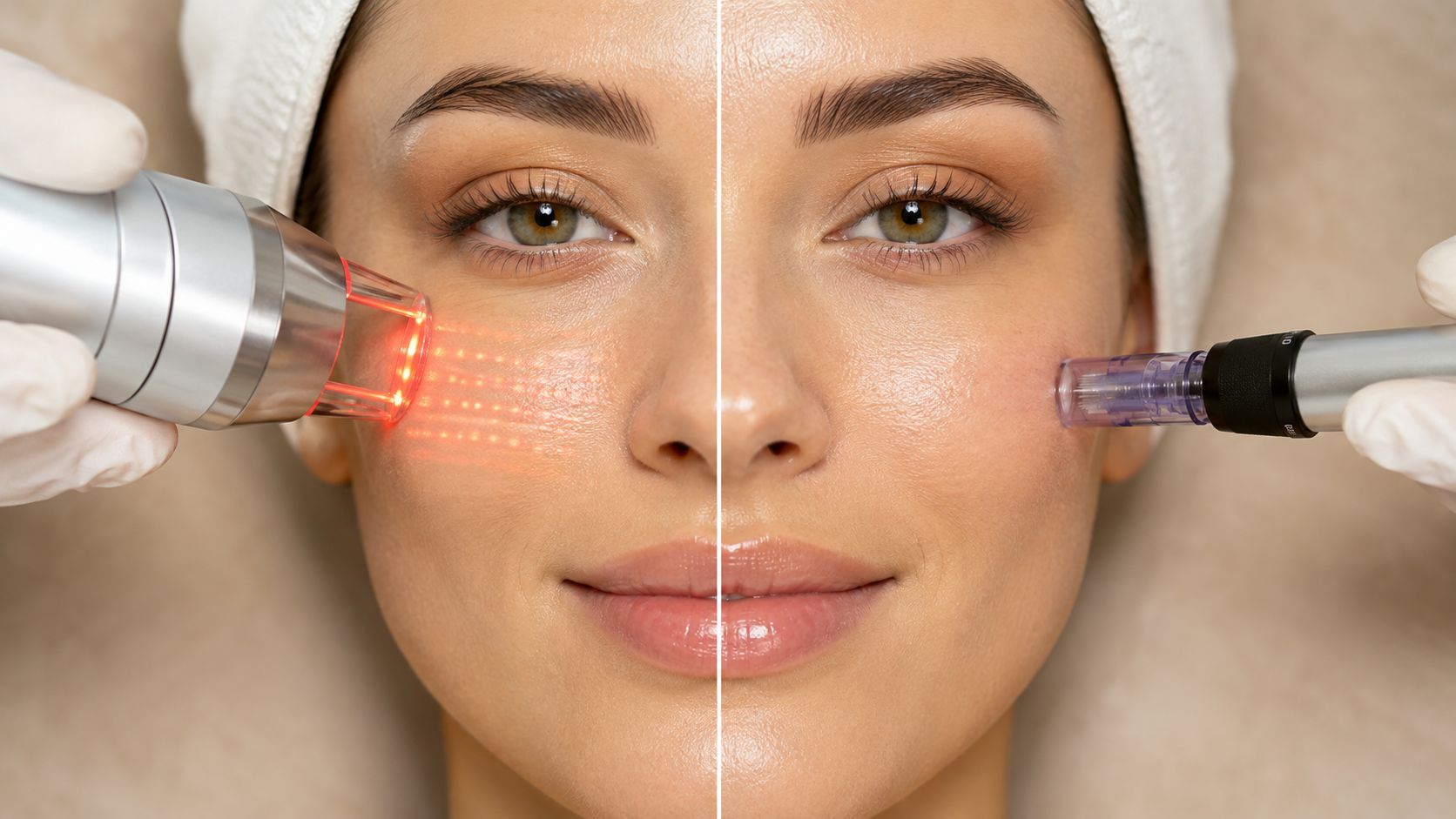
| Main mechanism | Fractional laser with controlled upper-skin micro-injury | Mechanical punctures that trigger collagen remodeling |
| Best for | Surface glow, early aging, mild discoloration | Acne scars, deeper texture, collagen induction |
| Pigment caution | More variable for melasma and pigment-prone skin | Often preferred when thermal impact is a concern |
| Downtime | Usually lighter, often just brief redness | Usually more visible recovery |
| Session pattern | Commonly used as a series | Commonly used as a series |
Choosing Between Clear and Brilliant and Microneedling
The first thing I tell patients is simple. Stop asking which treatment is “better” in the abstract and ask what your skin is asking for. Clear and Brilliant and microneedling are both collagen-stimulating treatments, but they're not interchangeable, and that matters when you're choosing where to spend your time, money, and recovery window.
Start with the concern, not the device
If your main issue is acne scars, deeper texture, or a face that still looks uneven no matter how good your skincare is, microneedling is usually the stronger starting point. If your main issue is surface dullness, early fine lines, or mild uneven tone, Clear and Brilliant makes more sense because it's positioned as a gentler fractional laser for upper-layer renewal. That difference is why these treatments keep getting separated by use case in the world.
The most useful way to think about this is by matching the tool to the layer it changes best. Microneedling creates controlled mechanical injury, which is why it tends to be the better remodeler. Clear and Brilliant uses light energy, which is why it tends to be the lighter resurfacing choice.
Use a decision frame before you book
I'd sort the decision with six questions. What's the primary concern? How much downtime can you tolerate? Do you want surface refreshment or deeper remodeling? Are you prone to melasma or post-inflammatory hyperpigmentation? What's your Fitzpatrick type or pigment history? Are you okay committing to a series instead of expecting one-and-done results?
Practical rule: if you care most about scars and texture, lean microneedling first. If you care most about glow and mild resurfacing, lean Clear and Brilliant first.
That framework keeps you from overbuying a treatment that doesn't match your problem. It also keeps you honest about pigment risk, which is where a lot of people get sold the wrong plan. For a broader patient-friendly overview of microneedling, this microneedling guide is a useful companion read after you've nailed down your concern.
How Each Treatment Actually Works on the Skin
Clear and Brilliant and microneedling both ask the skin to repair itself, but they do it through different pathways. That difference is the whole story. One uses fractional laser energy. The other uses mechanical puncture. Same destination, different route.

Clear and Brilliant is surface renewal with heat
Clear and Brilliant is a fractional laser that creates controlled micro-injuries in the upper layers of skin. The point is not to peel your face off. The point is to wake up the skin's repair response so old, dull cells are replaced with newer-looking tissue. That's why it gets talked about as a milder resurfacing option and an early-maintenance treatment rather than a deep scar tool.
Because it works through energy delivery, it behaves like a controlled thermal treatment. That's useful for brightness and superficial tone concerns. It's less useful when the problem sits lower in the skin, like tethered acne scars or deeper structural roughness.
Microneedling is collagen induction through controlled injury
Microneedling creates tiny columns of mechanical injury with needles. No heat. No laser energy. Just precise punctures that trigger wound healing and collagen signaling. That distinction matters because less thermal impact often means a different risk profile for pigment-prone patients, and it also explains why microneedling is a favorite for remodeling texture.
The evidence base supports that positioning. A review of acne-scar studies found 51% to 60% scar-depth improvement and 80% to 85% patient satisfaction after six sessions over three months Beautiful With Brains. Controlled clinical research also reported significant wrinkle improvement after four monthly treatments, with visible benefits as early as 30 days after starting therapy PMC review. That's why microneedling has earned its place for texture, fine lines, and rejuvenation.
If you want a clean mental shortcut, use this one. Laser for light resurfacing, needles for remodeling. That's the practical split, and it holds up in consult after consult.
Side by Side on Pain, Downtime, Sessions and Cost
The trade-off here is straightforward. Clear and Brilliant is usually the easier appointment to recover from, while microneedling is usually the more aggressive texture play. Neither should be framed as brutal, but they don't feel identical, and the aftercare isn't identical either.
Pain and recovery
Clear and Brilliant is commonly described as a mild treatment, often closer to warmth and prickling than pain. Microneedling usually feels more like vibration, scratching, or pressure, and topical numbing is standard because the goal is depth, not comfort theater. If you're very needle-averse, that matters. If you care more about results than a cushy session, it usually doesn't.
Downtime is where patients really feel the difference. Clear and Brilliant often gives you redness for roughly 24 hours and sometimes a sandpapery feel as the skin sheds the treated layer. Microneedling is more likely to leave visible recovery for two to three days, with tightness, redness, and a rougher healing phase.
Sessions and timeline
Clear and Brilliant is typically done as a series of four to six sessions. Microneedling is often planned as three to six sessions, depending on how deep the concern is and how much remodeling you want. That's the reason these treatments are often grouped together in “series” language. They both work better when you let them build.
The wrinkle data matters here. In clinical research summarized in a review, microneedling showed significant wrinkle improvement after four monthly treatments PMC review. That doesn't mean everyone needs four sessions, but it does tell you the timeline is measured in treatment cycles, not one dramatic appointment.
Budgeting in real life
I'm not going to pretend cost is the same everywhere. It isn't. What matters is that you budget for a series, because both treatments are usually bought that way, not as a single magic fix. If your clinic is pushing one-off thinking for either option, that's a red flag.
Bottom line: if you need a lunch-hour style refresh, Clear and Brilliant fits better. If you can handle more visible recovery for better remodeling, microneedling earns its keep.
| Criterion | Clear and Brilliant | Microneedling |
|---|---|---|
| Pain | Mild warmth or prickling | More noticeable, often numbed |
| Downtime | Often about a day of redness | Often a few days of visible recovery |
| Typical series | Four to six sessions | Three to six sessions |
| Result pace | Faster-looking surface refresh | Stronger remodeling over time |
Skin Tone, Melasma and Pigmentation Risk
This is the part too many comparison pages dodge. If you have melasma, post-inflammatory hyperpigmentation, or a history of pigment flare-ups, the choice isn't just about results. It's about how your skin reacts to heat versus mechanical stimulation.

Heat changes the equation
Heat-based fractional laser resurfacing can be more variable for pigment-prone patients. That doesn't mean Clear and Brilliant is automatically off the table. It means the margin for error is narrower when pigment is already unstable. In darker skin tones, or in skin that has a strong tendency to mark after inflammation, thermal treatments need a more careful hand.
Microneedling is often favored in that setting because it remodels collagen with less thermal impact. That lower-heat profile is one reason many clinicians reach for it when they want skin improvement without adding unnecessary pigment risk. The provided sources don't give Fitzpatrick-by-Fitzpatrick outcome numbers, so I'm not going to fake precision here. The usable rule is simpler than that.
Use caution, not fear
If your melasma is active, if you've had repeated PIH, or if your skin tends to darken after irritation, start by asking whether microneedling is the safer first conversation. If you're considering Clear and Brilliant anyway, ask about a small test area first. That's the kind of conservative move that keeps a treatment plan from becoming a pigment problem.
For readers already sorting through pigment-focused care, these melasma treatment options are worth reviewing before you commit to any resurfacing plan. You want a provider who treats pigment like a real variable, not an afterthought.
Practical rule: pigment-prone skin should default to the most conservative option that still addresses the concern. Don't chase the flashier device if your real problem is color instability.
There's also a reason consumer content on this topic feels incomplete. It keeps reducing the choice to “tone and glow” versus “acne scars,” when the question is whether your skin can tolerate heat without getting louder in response. For a more focused melasma discussion, this laser-for-melasma guide is a useful reference point.
Matching the Treatment to Your Primary Concern
If you want a clean answer, use the concern that brought you in. Not the treatment you've heard about more. Not the one your friend liked. The concern.
Acne scars and deeper texture
Microneedling wins here. That's the clearest call in the whole comparison. Acne scars are structural, which means you need collagen remodeling at depth, not just a surface polish. The scar data backs that up, with 51% to 60% scar-depth improvement and 80% to 85% patient satisfaction after six sessions over three months Beautiful With Brains.
If microneedling isn't available, Clear and Brilliant is the fallback for mild textural refinement, not true scar correction. I'd rather tell a scar patient that upfront than oversell a laser that isn't built for the job.
Early aging, fine lines and maintenance
Clear and Brilliant earns its keep. For people who want a fresher surface, fewer rough edges, and a lighter maintenance plan, it fits well. It's the better “keep me looking polished” option when the aging concern is early and superficial rather than deep or structural.
Microneedling can still help fine lines, and the clinical data shows visible wrinkle improvement after a short treatment window PMC review. But if the goal is prevention and glow more than remodeling, Clear and Brilliant is usually the cleaner first choice.
Sun damage and dullness
Clear and Brilliant is the more natural fit for this lane. The treatment is built for upper-layer renewal, which is exactly where a lot of dullness and mild discoloration live. If your skin looks tired but not scarred, and you want a brighter overall surface, this is the option I'd point to first.
Microneedling can still be useful when sun damage shows up with texture loss or enlarged pores. The difference is that its strength is still collagen remodeling, not light resurfacing. So if the complaint is mostly “my skin looks flat and tired,” Clear and Brilliant usually lands better.
One realistic alternative if the first pick is off the table
If pigment risk makes Clear and Brilliant too risky, use microneedling first. If scar depth makes microneedling too mild for your expectations, use Clear and Brilliant only as a partial improvement tool and set expectations reasonably. In real practice, the best result often comes from sequencing, not forcing one tool to do everything.
Combining Treatments with PRP, Serums and LED Light
Most good aesthetic plans aren't single-tool plans. They're layered. The base treatment does the heavy lifting, then the adjuncts help the skin recover, calm down, or hold onto the result a little better. That's where PRP, brightening serums, and LED light therapy make sense.

PRP fits naturally with microneedling
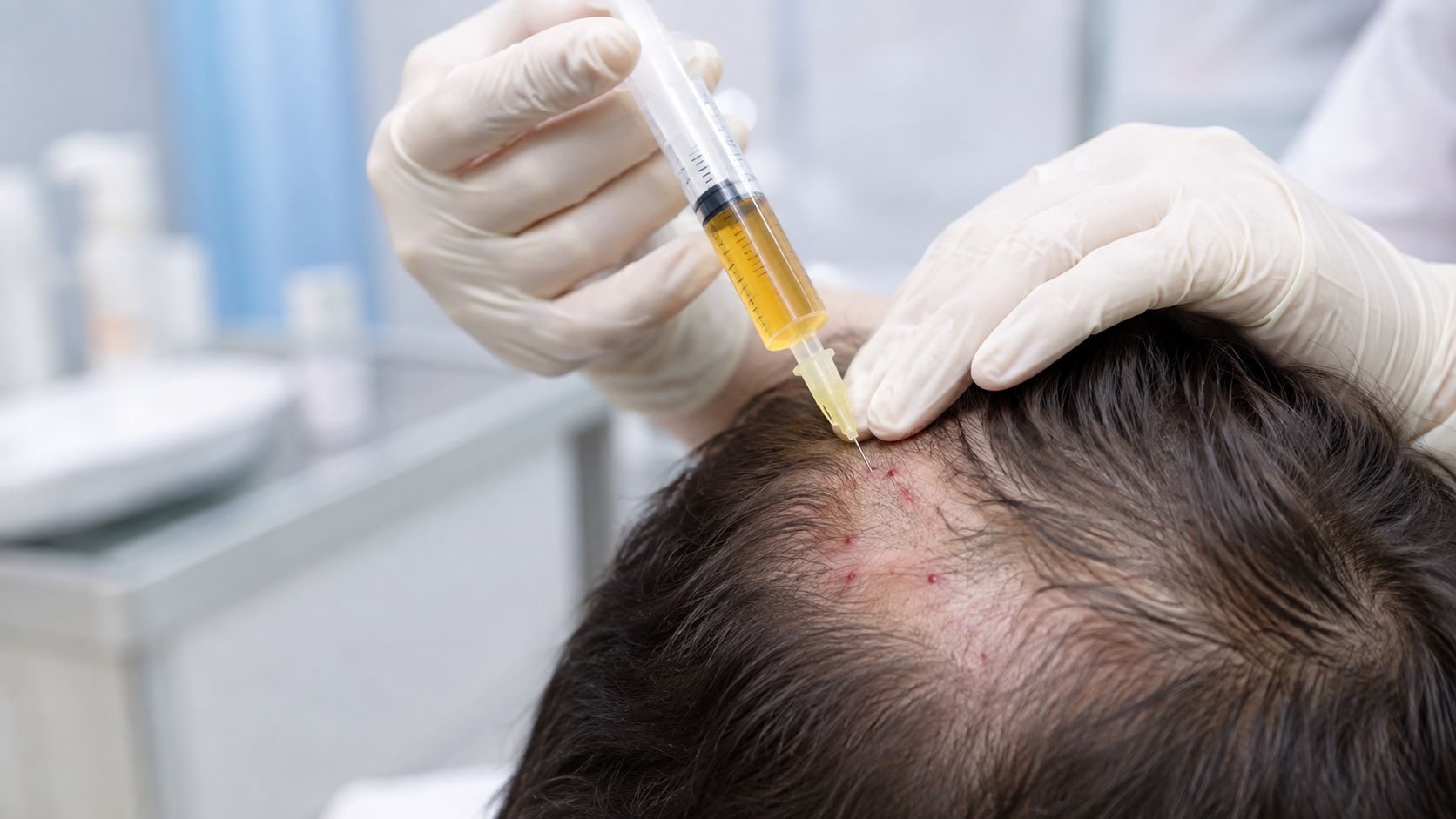
Microneedling and PRP are a logical pair because the treatment already creates channels for a healing-focused adjunct. If you want a deeper look at the therapy itself, this guide to PRP treatment gives a solid overview. Used well, PRP supports the recovery mindset of microneedling without changing the core fact that the needling is what drives the collagen signal.
I also like PRP when a patient wants to be proactive about healing quality rather than just accepting whatever the skin does after the procedure. It's not a substitute for the base treatment. It's a companion.
Serums and LED help both paths
After Clear and Brilliant, brightening serums and vitamin C are the obvious maintenance-minded add-ons because the goal is to extend the look of clarity and glow. After microneedling, I'm more interested in calming, recovery-friendly care, then gradually reintroducing active ingredients once the skin is no longer reactive.
LED light therapy is where many patients get better adherence to aftercare because it's easy to use at home. If you want an at-home option, the Barb N.P. Facial Mask is a strong fit for a recovery routine because it's wireless, designed for comfortable wear on the face, and includes three lighting settings for different treatment goals. That makes it practical for people who want to stick with a routine instead of storing another device in a drawer.
Use adjuncts to support the plan, not distract from it
Don't let a serum or LED mask become the “main event.” The main event is still choosing the right procedure for your concern and your pigment risk.
A good adjunct routine makes a good treatment easier to tolerate and maintain. A bad adjunct routine just adds clutter. If you pick the right base option first, these extras can help the result look calmer and more intentional.
A Simple Decision Flow to Pick Your Option
Start with the thing you most want fixed.

| If Your Priority Is | Go With | Watch Out For |
|---|---|---|
| Fine lines, texture, overall glow | Clear and Brilliant | Less convincing for deeper scars |
| Deep acne scars, collagen induction | Microneedling | More visible recovery |
| Hyperpigmentation, melasma, sensitive skin | Microneedling | Still needs proper technique and aftercare |
Quick checklist
- If scars are the main issue, start with microneedling.
- If glow and light resurfacing matter most, start with Clear and Brilliant.
- If your skin is pigment-prone, push the conversation toward the less heat-heavy option first.
- If downtime is tight, choose the lighter recovery path.
- If you're unsure, ask for a provider's skin-type review before booking.
That's the simplest honest shortcut. You don't need a complicated algorithm. You need the treatment that matches the problem and doesn't provoke the skin into creating a new one.
FAQs About Clear and Brilliant and Microneedling
How soon can I wear makeup again? Usually after either treatment once the skin barrier is calm enough, but follow your provider's timing if the skin is still very red or raw. Microneedling often needs a bit more caution.
Are these safe during pregnancy or while using retinoids? Pregnancy is not the time to wing it with resurfacing. Retinoid use also needs provider review before either treatment, especially if the skin is already irritated.
How long do results last? Long enough to matter, but not forever. Both are maintenance treatments, so touch-ups or repeat series are needed over time.
What if I recently had filler or neurotoxin? Tell your provider before booking. Treatment timing around injectables should be planned, not guessed.
If you're still deciding between Clear and Brilliant vs Microneedling, book the treatment you need, not the one that sounds most glamorous. BotoxBarb helps clients build smarter aesthetic plans with in-clinic services and curated skincare, so if you want a practical next step, visit BotoxBarb and choose the option that fits your skin, your downtime, and your pigment risk.