PRP Hair Treatment Side Effects: What to Know
You've just had PRP, or you're about to, and the first thing on your mind is probably simple, is this soreness normal, or did something go wrong? That question is exactly where many people land once the numbing wears off and the scalp starts to ache, especially if the forehead feels puffy or the injection sites sting more than expected.
The good news is that prp hair treatment side effects are usually local, short-lived, and predictable. The harder part is knowing what “predictable” looks like in real life, because a normal recovery can still feel uncomfortable for a day or two, and that's where clear symptom timelines matter.
What Most Patients Feel After PRP
A first-time PRP patient usually notices the change in stages. In the chair, the blood draw feels like a routine lab visit. On the way home, the scalp starts talking back, with a tight, tender, prickly feeling that can make you wonder whether you should be worried or just annoyed.
That reaction is very common because the most frequent issues are local and temporary. A 2025 safety study of PRP for hair loss reported scalp tenderness in 33.3%, localized swelling in 23.3%, and erythema in 15% of adverse events, and only 6.6% of events were classified as severe, with none requiring clinical intervention or treatment discontinuation (2025 PRP safety study).
What that usually means in plain language
Most patients feel one of two things. First, needle-trauma reactions, which are the pinch, pinpoint bleeding, and tenderness where the scalp was injected. Second, inflammatory reactions, which are the mild swelling, redness, scalp tightness, or a dull headache that can follow the procedure.
The sensation often feels like a sore scalp after a tight hairstyle, only with more pinpoint tenderness around the injection sites. The forehead can feel a little puffy, and the scalp may be sensitive when you wash your hair or rest your head on a pillow.
Practical rule: if the discomfort stays on the scalp, improves a little each day, and doesn't start spreading, it usually fits the normal recovery pattern.
For people comparing options, a clinic resource like ProMD Health Ashburn Med Spa PRP can be useful if you want to see how a practice explains the process before you book. A more detailed patient overview, including how the treatment is commonly described in clinic settings, is also available in this PRP treatment for hair loss guide. The main thing to remember is that “short-lived” doesn't mean instant, it usually means 24 to 72 hours of real sensation, then a gradual settling.
How the Procedure Creates Each Reaction
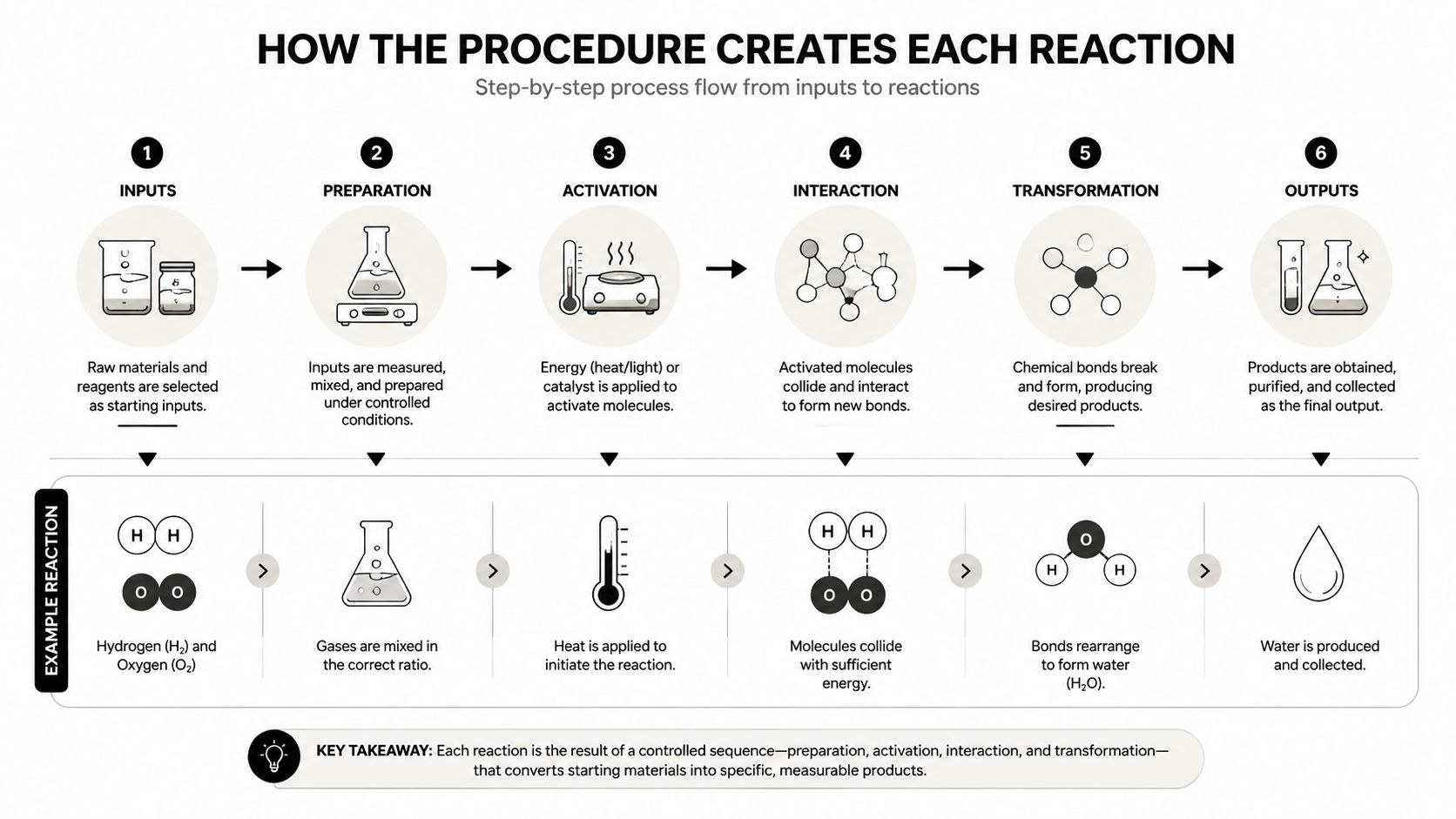
PRP begins with a blood draw, so the first thing some patients notice is a sore or bruised arm, the same kind of reaction that can happen after routine phlebotomy. The sample is then spun in a centrifuge to separate the platelet-rich portion, and that portion is prepared for scalp injection.
Why the scalp reacts the way it does
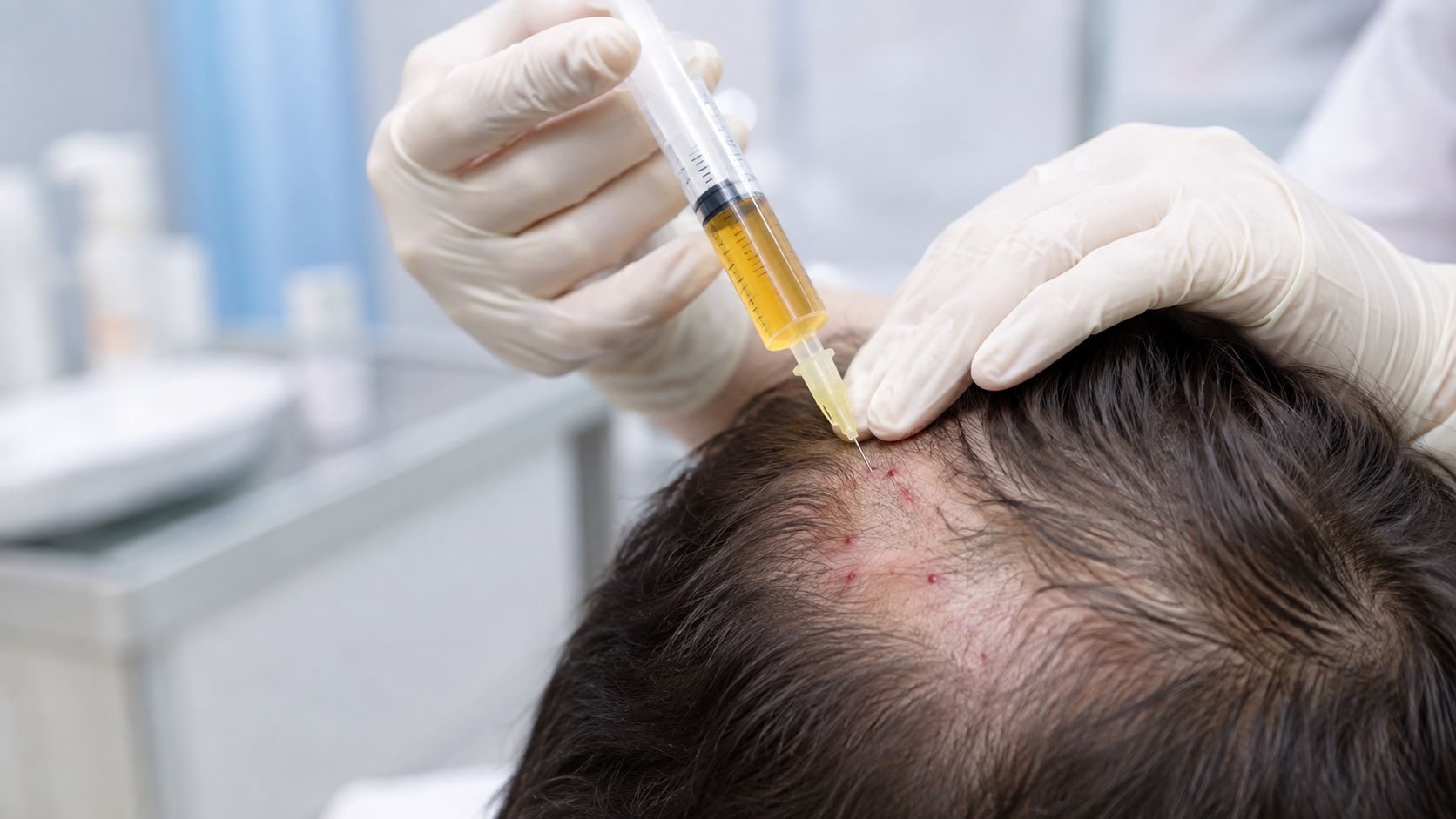
The scalp injections create most of the effects people notice. Each tiny needle pass causes microtrauma, which is why tenderness and pinpoint bleeding can appear even when the treatment is performed correctly. That reaction comes from the procedure itself, not from treatment failure.
The injected platelets then release signaling molecules that start a local healing response. That response is part of what makes PRP useful for hair restoration, but it also explains the brief swelling, redness, and warmth some patients feel afterward. A patient-facing explanation of the treatment process is laid out clearly in BotoxBarb's PRP treatment for hair loss article.
PRP is generally considered a low-adverse-event procedure because it uses autologous blood, which avoids communicable-disease transmission risk and makes serious immune reactions uncommon (clinical review). In the hair-regrowth literature discussed there, major complications such as scarring, infection, panniculitis, hematoma, or allergic reaction were not documented.
The main takeaway is simple. The side effects usually come from needle trauma and local inflammation, not from systemic drug toxicity.
Common Reactions and Their Real Incidence
The most useful way to reduce PRP anxiety is to separate expected aftereffects from true problems. In the hair-treatment literature, the usual reaction pattern is consistent, short-lived, and limited to the scalp, even though it can feel uncomfortable while it is happening.
What shows up most often
In a review of female androgenetic alopecia studies, mild headache and scalp tightness were each reported in 50%, swelling in 29%, redness in 14%, and post-injection bleeding or tingling in 7% each. Every one of those effects was still classified as mild and resolved without intervention within 24 hours (female androgenetic alopecia review).
A separate 2024 systematic review reported the same cluster of effects, headache, scalp tightness, swelling, redness, post-injection bleeding, and tingling, and found that they were mild and resolved spontaneously within 24 hours (2024 systematic review).
Incidence of Common PRP Hair Treatment Side Effects
| Side Effect | Reported Incidence | Typical Resolution |
|---|---|---|
| Mild headache | 50% | Usually within 24 hours |
| Scalp tightness | 50% | Usually within 24 hours |
| Swelling | 29% | Usually within 24 hours |
| Redness | 14% | Usually within 24 hours |
| Post-injection bleeding | 7% | Usually within 24 hours |
| Tingling | 7% | Usually within 24 hours |
What the literature does not show much of
The clinical literature does not show a meaningful pattern of scarring, infection, or allergic reaction in the hair-regrowth studies summarized in the review of adverse events (clinical review). That does not make those outcomes impossible in medicine, it means they are not part of the usual PRP hair experience when the procedure is performed correctly.
In practical terms, the expected pattern is a brief inflammatory flare, not a systemic reaction. The scalp may feel sore, tight, warm, or mildly irritated, but the evidence does not suggest that these common effects usually signal a dangerous response.
Your First 72 Hours After Treatment
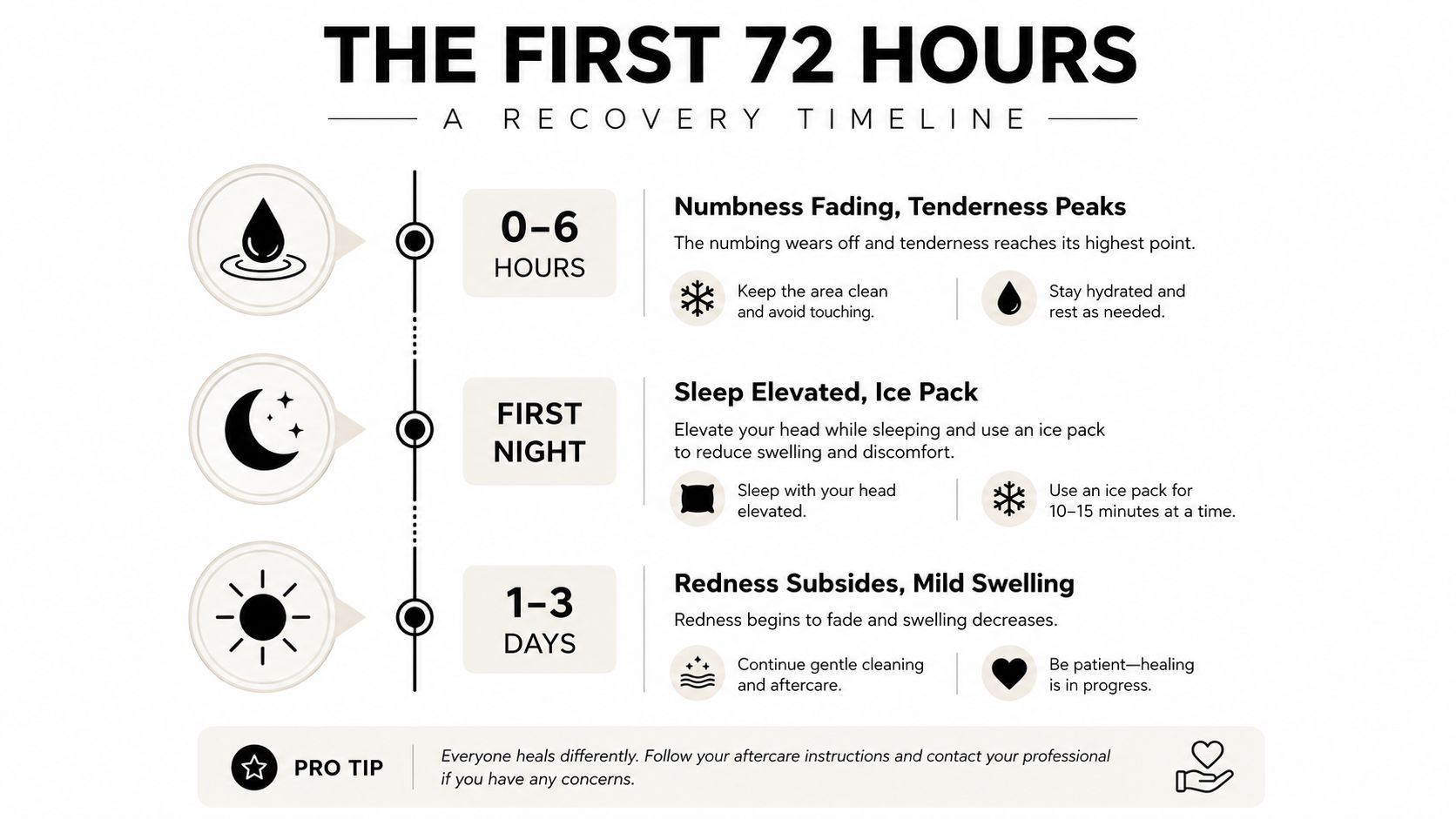
The first day usually feels the most obvious. Once the numbing wears off, the scalp can feel sore, tight, and slightly warm, and many patients notice they keep checking the mirror more than they expected.
First six hours
Tenderness is usually strongest here because the injections are still fresh and the local inflammatory response is just starting. If your provider said a cool compress is appropriate, use light pressure only. Pressing hard on the scalp can make the area feel worse.
Do: rest, drink water, and keep your head raised if that feels better.
Don't: do strenuous exercise, wear a tight hat, or rub the injection sites.
First night
The scalp can feel alert even when you are ready for sleep, and a mild headache can appear if you are tense or under-hydrated. A slightly raised pillow and no direct pressure on the treated areas usually make the night easier.
Do: keep the evening quiet and simple.
Don't: try to make up for the day with an intense workout or a hot shower right before bed.
Day two
Swelling often becomes more visible by this point, sometimes along the forehead or hairline, and itching can begin as the skin settles. As noted in the systematic review above, these reactions are generally mild and tend to settle on their own within the early recovery window, though some patients still feel residual soreness into the second day.
Do: cleanse gently, and follow your clinic's instructions on washing, including any guidance about a sulfate-free shampoo after 24 hours.
Don't: use heat styling, wear tight headwear, or scratch the treated areas aggressively.
Day three
Most patients are clearly improved by now. Redness and swelling should be easing, and hats or makeup usually feel more comfortable again if you need them.
If the symptoms are fading, staying localized, and looking calmer by day three, that fits the recovery pattern you want to see.
Call your clinic if you develop fever, spreading redness, pus, or pain that gets worse after day three instead of improving. Those changes do not match the usual recovery window.
How PRP Compares With Other Hair Loss Options
PRP is not the only hair loss treatment, so the right question is often not whether it has side effects, but how those side effects compare with the alternatives you're considering.
Side-effect trade-offs by treatment
PRP is mainly a procedure-day issue. The International Society of Hair Restoration Surgery says the principal risk is local and temporary pain at the injection sites, with temporary swelling also possible, and that makes the side-effect profile mainly procedural rather than pharmacologic (ISHRS).
Topical minoxidil can cause scalp irritation for some users, especially with daily use. Its downside is usually local rather than surgical, but the application burden never really goes away.
Oral finasteride is different because its risks are systemic, not just skin-deep. That's why conversations about sexual side effects and mood concerns matter so much before anyone starts it.
Low-level laser therapy generally has a lighter side-effect burden, but it tends to ask for patience. The trade-off is less discomfort, slower visible change.
Hair transplant surgery sits at the other end of the spectrum. It can offer more dramatic redistribution of hair, but it also carries real surgical downtime, scarring risk, and a recovery process that's more involved than PRP.
A simple decision lens
| Option | Local Side Effects | Systemic Side Effects | Downtime | Reversibility |
|---|---|---|---|---|
| PRP | Usually mild and local | Uncommon | Low | High |
| Topical minoxidil | Possible irritation | Uncommon | Low | High |
| Oral finasteride | Usually low locally | More relevant | Low | High once stopped, though effects may persist temporarily |
| Low-level laser therapy | Usually minimal | Uncommon | Very low | High |
| Hair transplant surgery | Higher procedural burden | Low | Higher | Lower because it is surgical |
If your main concern is avoiding systemic medication effects, PRP can be attractive. If your main concern is avoiding needles, it may not be your first pick. The best choice depends on whether you care more about convenience, reversibility, visible change, or the total burden of side effects.
Who Should Avoid PRP and How to Vet a Clinic
Some people hear that PRP is “natural” and assume that means it's appropriate for everyone. That's not how I'd frame it in practice, because safety depends just as much on who's treated and who's holding the needle.
People who should pause and get medical clearance
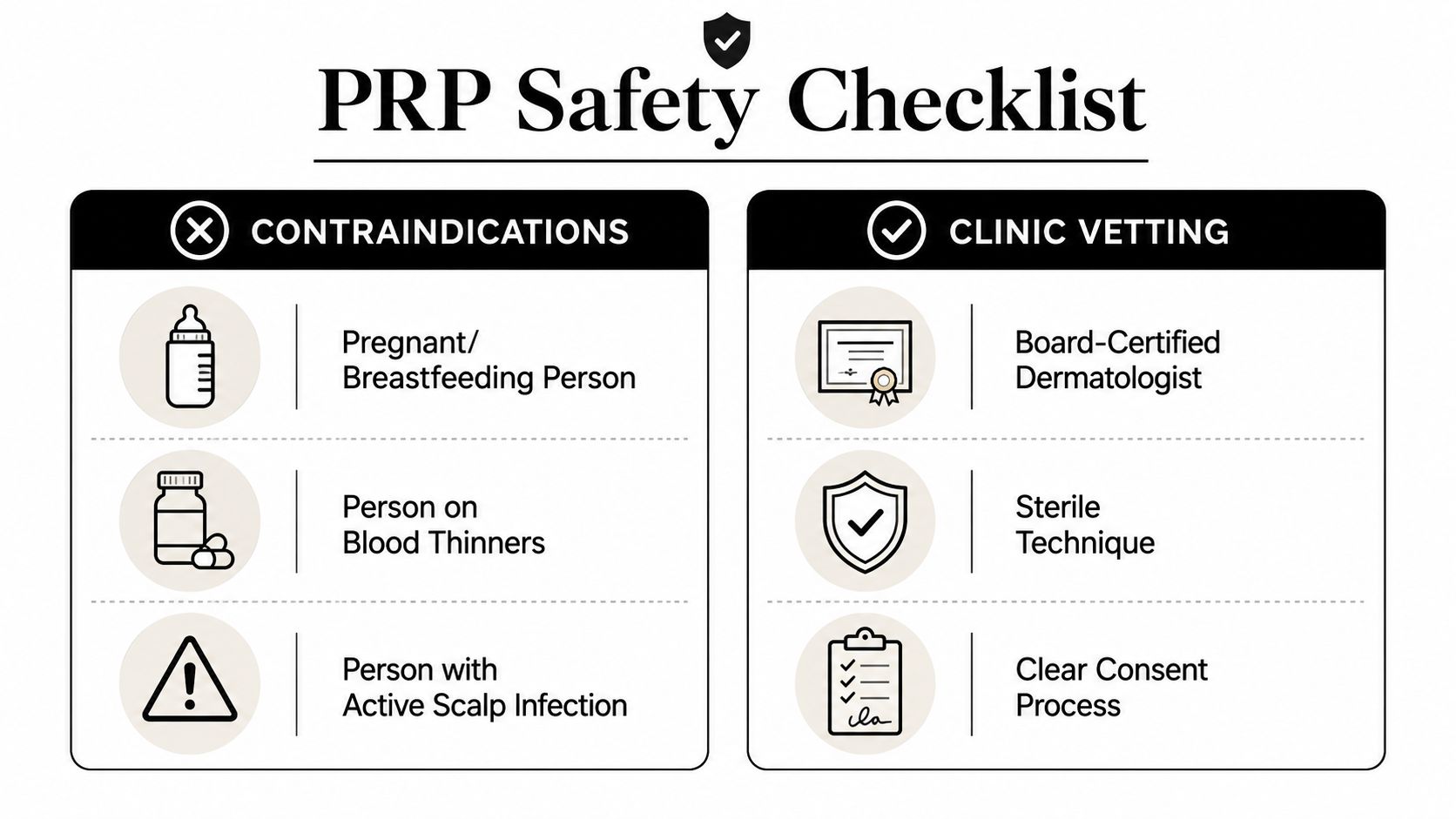
Pregnant or breastfeeding patients should discuss timing carefully with their clinician. PRP also deserves extra caution in people using blood thinners, people with active scalp infections, those in an autoimmune flare, anyone with low platelet counts, and patients with a history of keloid scarring.
A 2011 to 2012-era NIH/PMC study reported no side effects during treatment and no major adverse events in male pattern hair loss patients, and later reviews in 2021 to 2024 continued to report that serious reactions were uncommon or absent (NIH/PMC study). That historical safety trend is encouraging, but it still assumes appropriate patient selection and good technique.
How to vet the clinic
Ask who performs the injections. A medically trained clinician should be doing the procedure, not just handing it off. Ask whether they use a single-spin or double-spin protocol, whether they use an FDA-cleared kit, and how they control needle depth, volume per injection, and sterility.
Clinician rule: low risk only stays low when the person doing the procedure knows scalp anatomy and treats the injection pattern with the same care every time.
If you're comparing practices, the clinic guide at BotoxBarb's PRP hair restoration near me article is a useful place to look at how a patient-centered office frames access and expectations. The right clinic should answer your questions clearly before you ever sit in the chair.
Supporting Recovery With At-Home Care
PRP side effects are usually brief, but a calm scalp still benefits from simple, disciplined aftercare. That means gentle washing, fewer hot tools, and not turning your bathroom routine into a stress test for the injection sites.
What helps, and what doesn't
Use scalp-friendly haircare that doesn't sting or strip. Avoid heat styling for 48 hours if you can, and protect the scalp from sun and friction when you're outside. Those basics won't change the biology of PRP, but they can make the first couple of days less irritating.
For clients who like supportive wellness devices, the LED Facial Mask by Barb N.P. can be a practical at-home add-on for general skin and routine recovery support. It's wireless, designed for comfortable contoured fit on the face, and offers three lighting settings for different treatment goals.
This is an adjunct, not a treatment for PRP side effects themselves. If you have active injection-site irritation, clear any new device with your provider first, especially if the mask pressure or light use feels too stimulating for your skin.
For broader routine ideas, the article on at-home hair growth treatments can help you think about what belongs in a scalp-care plan and what doesn't. If you want a separate example of a supportive comfort product, how MEDISTIK reduces discomfort is another useful resource to review in the context of recovery-minded care.
A 2022-based consumer medical review also notes that PRP uses the patient's own blood, so there's no risk of transmitting a communicable disease, and the main short-term effects are pain during treatment, headache, itching, swelling, and temporary discoloration rather than systemic complications (consumer medical review). That's why most at-home care is about comfort and patience, not rescue.
Red Flags and a Final Safety Checklist
A normal recovery gets better, not worse. If the scalp starts moving in the wrong direction, don't wait it out just because PRP is usually gentle.
Call your provider immediately if you notice any of these
- Fever above 38°C, because PRP itself shouldn't create a systemic illness.
- Spreading redness or red streaks, which can signal infection or another escalating reaction.
- Pus or foul-smelling discharge, which is never part of routine healing.
- Pain that intensifies after day three instead of easing.
- Any hive-like rash, especially if it appears beyond the treated scalp.
Bring a short checklist to your next appointment so the conversation stays specific. Include your current medications, any recent infections, blood-thinner use, any prior keloid history, and the names of the single-spin or double-spin protocol your clinic uses.
Most PRP side effects are minor and self-limited, but the difference between routine recovery and a real problem is knowing what to watch for.
BotoxBarb offers medically informed aesthetics and wellness support, including PRP services, LED light therapy, and curated products that fit a thoughtful recovery routine. If you want a practice that values clear guidance as much as treatment quality, visit BotoxBarb to explore services and book with confidence.