Hair Growth Supplements for Women: Clinical Guide
You're probably noticing more hair in the drain, on the pillow, or around the hairline, and wondering whether a supplement can help or if it's just marketing. That frustration is real, especially when the advice online sounds confident but doesn't tell you whether you need a product, a lab workup, or both.
As a Nurse Practitioner, I look at hair growth supplements for women as one possible tool, not a default answer. The smarter starting point is figuring out why the shedding is happening, because the evidence supports a much narrower role for supplements than most ads suggest.
The Frustration of Female Hair Thinning
The first sign is often small. You notice your part looking wider, your ponytail feeling thinner, or a few extra strands clinging to the brush, and suddenly every mirror check becomes a stress test.
That pattern is common, but the emotion behind it is what many articles miss. Hair thinning can affect confidence, styling choices, and even how women interpret their overall health, which is why the conversation needs to be clinical without feeling cold.
A supplement can be part of the plan, but it shouldn't be the whole plan unless the cause fits.
In practice, that means treating the issue like a health concern first and a shopping decision second. The most useful mindset is not “What product should I buy?” It's “What's driving the loss, and what's the most efficient way to address that cause?”
That's where a practitioner-led approach matters. A useful resource for people who want a broader medical framework is LifeWorks Integrative Health, especially if you're trying to sort out whether hair thinning is part of a bigger hormonal, nutritional, or stress-related picture.
Supplements can help in the right context, but they're not a universal fix. That distinction keeps you from overpaying for blends that may not match the underlying reason your hair is changing.
Understanding Why Your Hair Is Thinning
Hair grows in cycles. The anagen phase is the active growing phase, catagen is the short transition phase, and telogen is the resting phase when older hairs shed and new growth can start.

When that cycle stays in balance, shedding is expected. When more follicles shift into telogen at the same time, women often notice telogen effluvium, a diffuse pattern of shedding that can follow stress, illness, hormonal changes, or nutritional strain.
The cycle matters because supplements only help in specific situations
A supplement may support growth, but it cannot correct every cause of hair loss. If the driver is a hormone shift, inflammation, or a nutrient deficiency, the supplement has to match that cause or the response may be minimal.
A focused evaluation matters before buying products. A practical clinical lens starts with the pattern of loss, whether the shedding is diffuse, whether the hairline is receding, or whether the loss is patchy, because those patterns often point to different causes and different treatment paths.
For a broader medical framework that explains how root-cause assessment is used in practice, LifeWorks Integrative Health is a useful reference point.
The most common triggers are often internal
Stress can push follicles out of sync. So can inadequate nutrition, postpartum changes, thyroid imbalance, and genetic thinning. In clinical practice, understanding the cycle helps women see that the problem is often physiologic rather than purely cosmetic.
A garden only grows well when the conditions are right. If the scalp is undernourished or the body is under strain, adding more products does not correct the underlying problem. The first step is identifying what is disrupting the cycle, which is why checking the cause before choosing supplements matters. For women who are considering testing, a practical discussion of food sensitivity testing accuracy can help clarify what testing can and cannot tell you.
Should You Test Before You Supplement
The strongest argument for testing first is simple. If hair loss is driven by a deficiency, a supplement may help, but if the problem is something else, you can spend months on the wrong product and see little change. Medical guidance highlights ferritin, vitamin D, and thyroid function as common places to look when women are trying to identify a root cause before buying a supplement, and it also notes that biotin has little evidence unless deficiency is present (Verywell Health).

What to ask your provider to consider
A focused workup often starts with the basics. Ferritin and iron status can matter because low stores may show up as increased shedding. Vitamin D is another common marker to review, and thyroid function belongs on the list because thyroid imbalance can change hair cycling.
Practical rule: if your shedding started after a life change, illness, pregnancy, or a major diet shift, don't guess your way through it.
That's also where hair decisions become more cost-efficient. Instead of buying several blends at once, you can match the intervention to the lab result or the clinical pattern. That's especially important with multi-ingredient products, because they're often marketed broadly while the underlying cause is highly individual.
For readers who want another example of evidence-based decision-making before choosing a product, the discussion at food sensitivity testing accuracy shows why testing quality matters before acting on a vague suspicion.
Why this approach saves time
Women often assume that a hair supplement is low-risk, so it's fine to start immediately. The problem is that low-risk doesn't mean high-yield. If hair loss is being driven by a medical issue, supplementing blindly can delay more effective treatment.
A clinician's job is to narrow the field. If labs or a scalp exam point toward deficiency-related shedding, a supplement may be reasonable. If they point elsewhere, the plan should shift instead of waiting and hoping.
Evaluating Common Hair Supplement Ingredients
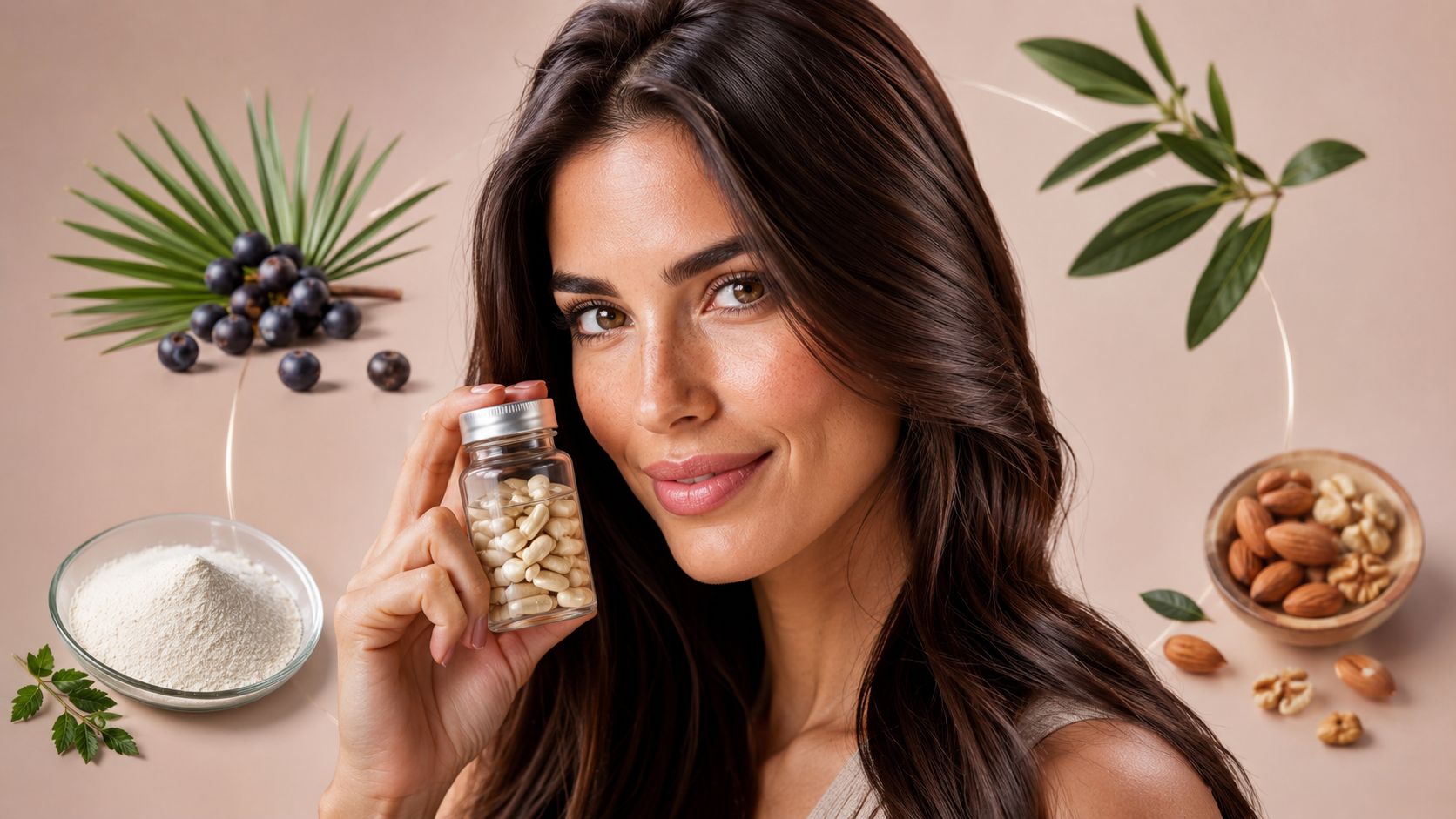
Many labels try to sound all-inclusive, but the ingredients aren't equally supported. The right question isn't whether a formula sounds advanced, it's what each ingredient is doing and whether that mechanism fits your situation.
| Ingredient | Proposed Function | Level of Evidence |
|---|---|---|
| Biotin | Supports keratin-related processes, mainly useful if deficiency is present | Limited unless deficient |
| Iron | Helps correct deficiency-related shedding | Strongest when labs show low stores |
| Zinc | Supports growth and repair pathways | Helpful mainly in deficiency |
| Vitamin D | May support follicle cycling when low | More relevant when deficient |
| Collagen | Supplies amino acids for structural support | Mixed, mostly indirect |
| Marine peptides | Intended to support hair thickness and quality | Emerging, not definitive |
| Saw palmetto | Often marketed for hormone-related thinning | Limited and product-dependent |
| Adaptogens | Marketed for stress support | Indirect, not hair-specific |
The ingredients that make the most clinical sense
Iron, zinc, and vitamin D are most persuasive when the body needs them. That's why lab testing matters so much, because a targeted correction is different from a beauty supplement strategy.
Biotin gets a lot of attention, but the evidence isn't impressive unless a deficiency exists. That's a major reason many women feel let down by over-the-counter formulas that lead with biotin as if it were a universal fix.
What collagen and blends can and can't do
Collagen is often sold as if it directly regrows hair. In reality, it's better understood as a structural support ingredient, and that's a very different claim. It may fit into a broader wellness routine, but it's not the same thing as correcting a proven deficiency or treating a specific cause of thinning.
If you're trying to compare formula styles rather than chase brand names, biotin vs collagen for hair is a useful way to think about the trade-offs. The comparison matters because many products lean on the same two ingredients while it's more important to consider whether your hair loss is nutritional, hormonal, or inflammatory.
How to read a label like a clinician
Look at the ingredient list, but also look at the logic. A formula with ten trendy ingredients isn't automatically more effective than a simpler product that matches your actual lab picture. For women in perimenopause, that distinction is even more relevant, and understanding perimenopause hair changes can help frame why a “one blend for everyone” model often misses the point.
If the label promises everything, assume it's doing less than it says until the cause is clear.
That's also why I prefer products that fit into a broader plan rather than products that claim to replace diagnosis. A supplement is only one part of the equation, and sometimes the most useful thing it does is support the body while you address the underlying driver.
What Results to Expect and How Long It Takes
The timeline is slower than most marketing suggests. Hair doesn't respond on a cosmetic calendar, it responds on a follicle cycle, which is why meaningful change usually takes months of consistent use rather than a few weeks.
In a randomized, placebo-controlled study, women with thinning hair who took a supplement saw a 10.1% increase in hair density from baseline by month 6, while the placebo group saw a 2% decrease. Improvements in shedding and hair counts were significant at both 90 and 180 days, which is a good reminder that benefits accrue over months, not days (PMC11694638).
What that means in real life
The earliest change many women notice is less shedding in the shower or on the brush. New growth is harder to judge because it comes in slowly, and the overall visual change is usually modest rather than dramatic.
That aligns with broader review data showing oral supplements can improve hair parameters, but the gains are generally modest. Patients often feel disappointed when they expect a transformation instead of a gradual improvement, so expectations need to be set clearly from the start.
When to keep going and when to reassess
A reasonable trial needs consistency. If you're going to use a supplement, it should be taken long enough to match the biology, then reassessed thoroughly against the original problem.
If there's no meaningful change after several months, the product may not be the right fit, or the cause may be something else. That's when it makes sense to revisit diagnosis, treatment goals, and whether prescription therapy or further evaluation belongs in the plan.
Clinical reality: hair supplements are better at supporting recovery than reversing every cause of hair loss.
That perspective protects you from endless product hopping. It also makes it easier to tell the difference between a supplement that's helping a deficiency-driven shed and one that's taking up space on your nightstand.
Integrating Supplements into a Complete Hair Wellness Plan

Oral supplements work best as one part of a larger plan. In women whose shedding is tied to diffuse thinning or a temporary telogen shift, they can support better nutrition, stress control, and in-office care, but they rarely solve the problem by themselves.
One clinically studied option is Nutrafol Women's Capsules. In a six-month randomized, double-blind, placebo-controlled trial, it showed statistically significant increases in terminal and vellus hairs at days 90 and 180 versus placebo, along with improved investigator ratings of hair growth and quality (PubMed 29742189). That kind of evidence does not promise a dramatic change, but it does show that some women can get measurable benefit over time.
Where supplements fit alongside other treatments
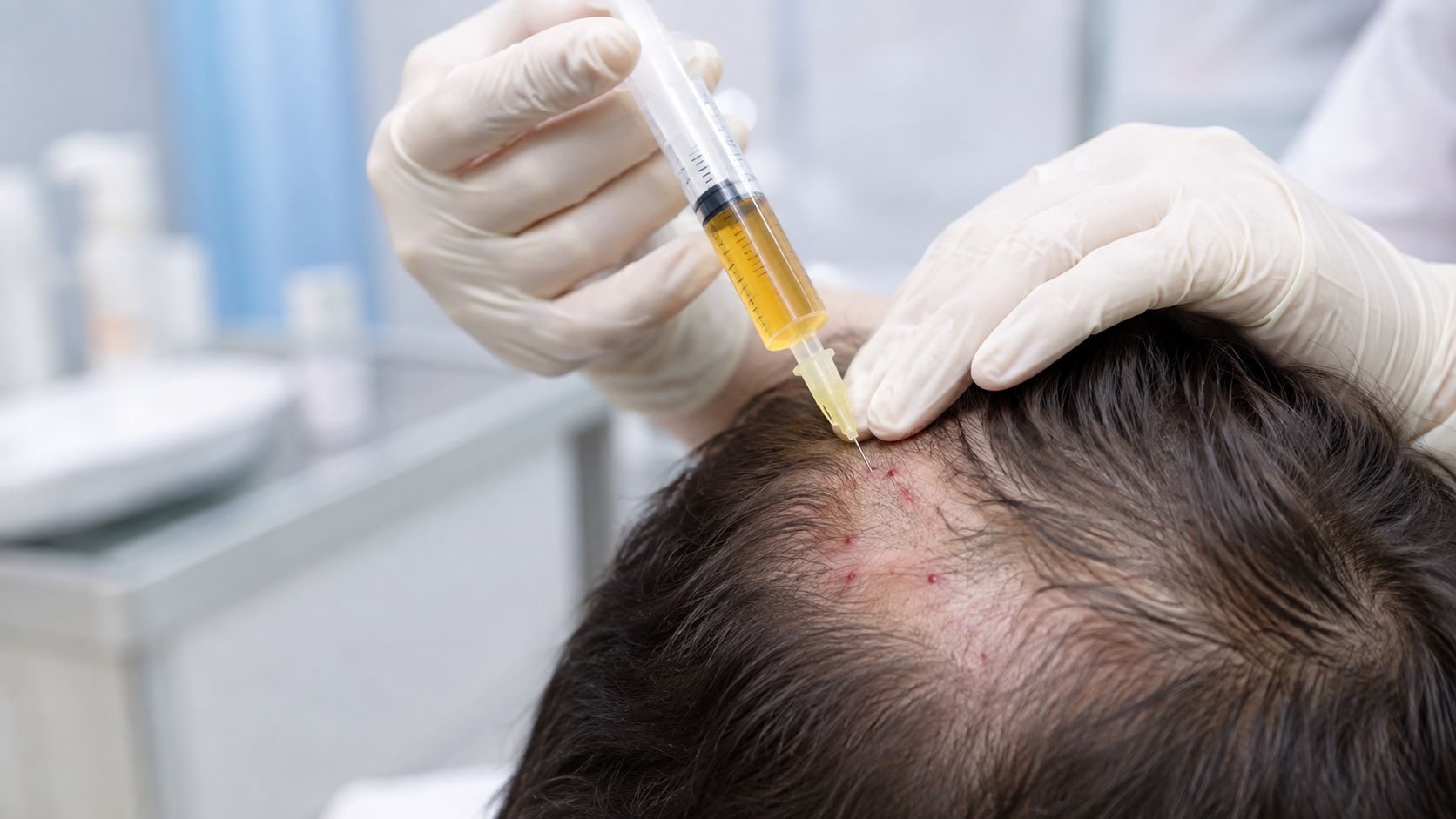
For women already using procedures such as PRP, a supplement can provide nutritional support while the scalp is being treated from the outside. That does not mean supplements replace procedure-based care. The best results usually come from matching the treatment to the cause of the hair loss.
The routine should also be viewed with the same practical mindset you'd use for skin care. If you are considering a device such as the Barb N.P. Facial Mask for scalp or skin support, keep the focus on whether it fits into the broader care plan and whether the expected benefit is realistic. For hair care, the same principle applies. Choose an oral product that supports the scalp and follicles from within rather than relying on a single topical or a passing trend.
If you are comparing formulas, compare women's multivitamins with the same questions you'd use for hair supplements. Check whether the product addresses likely deficiencies or instead adds more ingredients.
Product choice should match the goal
Nutrafol Women's Capsules can make sense for women who want a studied, multi-ingredient option and understand that improvement is gradual. BotoxBarb also carries Nutrafol Women's Vegan Growth Pack, which fits the same general category of oral hair support for women who want a plant-based format.
A broader look at hair growth solutions can help you place supplements alongside scalp care, procedures, and medical evaluation. That is the practical way to build a routine, because the most effective plan is usually layered rather than limited to one product.
Knowing When to Consult a Healthcare Provider
Some hair loss needs more than an over-the-counter supplement. Rapid shedding, patchy loss, visible scalp inflammation, itching, burning, or scaling all deserve medical evaluation because they can point to alopecia areata, inflammatory scalp disease, or another condition that shouldn't be managed by guesswork.
If you've used a supplement consistently and there's still no meaningful improvement after 6 to 9 months, it's time to reassess with a dermatologist or a qualified Nurse Practitioner. That's especially important if the shedding is getting worse, the part is widening quickly, or you're seeing eyebrow or body hair changes too.
A supplement should support a plan, not delay care. When the pattern changes or the response is absent, the next step is usually diagnosis, not another bottle.
If you're trying to figure out whether your thinning hair needs testing, a supplement, or a more complete treatment plan, visit BotoxBarb. You'll find clinical guidance, hair-growth options, and wellness tools that fit a more thoughtful approach to female hair thinning.