Allergy Testing During Pregnancy: Safety & Types
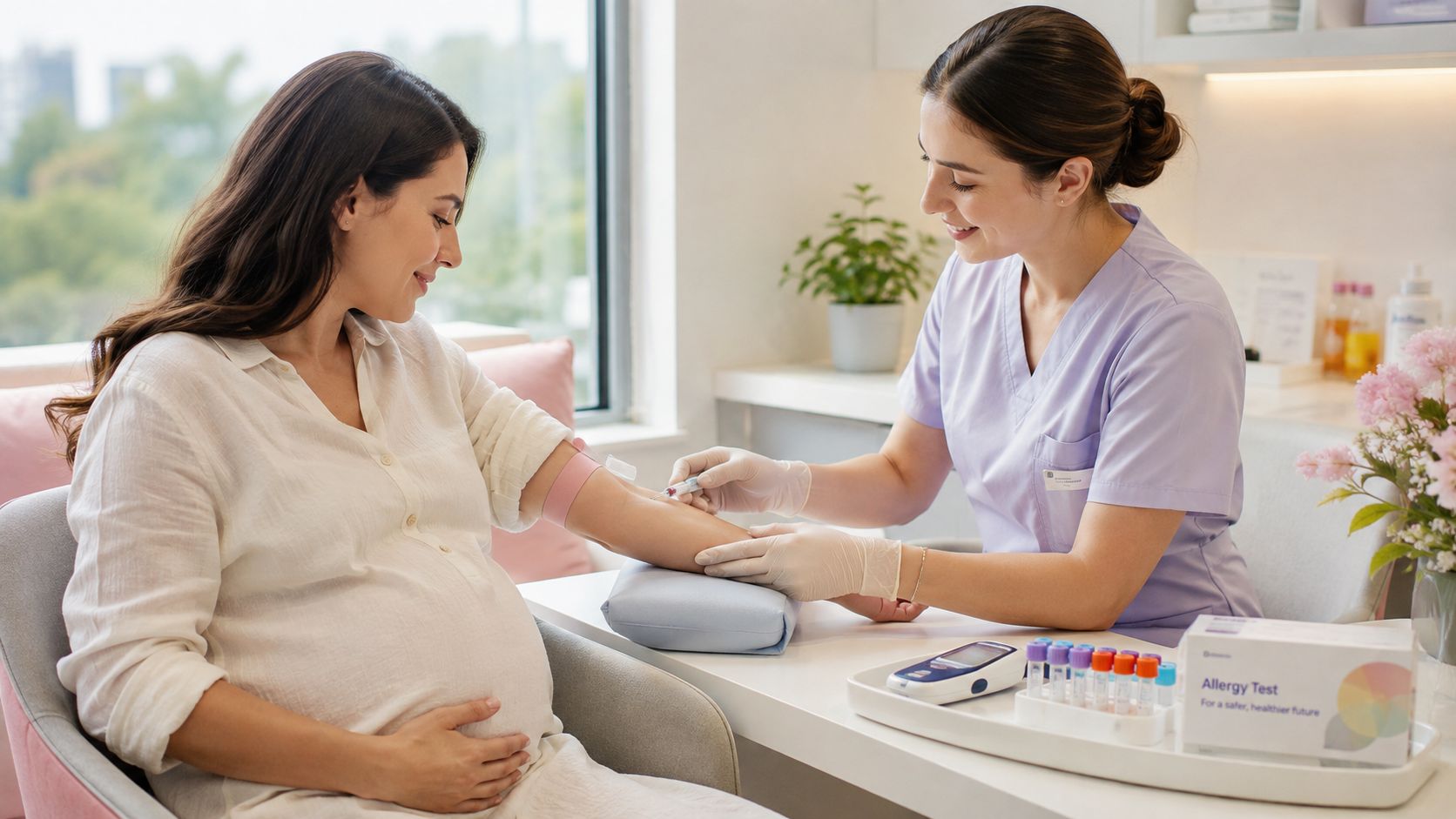
Blood-based allergy testing is generally the safest option during pregnancy because it doesn't expose you to the allergen. Skin testing and challenges are reserved for specific cases, especially penicillin allergy, and they're done under specialist supervision.
A lot of pregnant patients come in after weeks of congestion, itchy eyes, hives, or a rash that seems to flare for no clear reason. Others notice a food reaction they've never had before and worry that any test might somehow affect the baby. That worry is understandable, and it's exactly why the safest path starts with the right test, the right timing, and a clear plan for what the result will change.
In practice, allergy testing during pregnancy is less about chasing every symptom and more about choosing a method that gives useful information without unnecessary risk. Blood-based testing is often the first place to start because it avoids direct exposure, while certain specialist-led skin tests can still be appropriate, especially for penicillin allergy. If your symptoms also point to environmental triggers, you may find it helpful to review symptoms of environmental allergies alongside your clinic visit.
Why Allergy Symptoms Feel Different During Pregnancy
A patient will often sit down and say, “I've always had mild seasonal allergies, but now my nose is constantly blocked and my skin seems angrier than usual.” That story is common in pregnancy, and it doesn't automatically mean something dangerous is happening. Pregnancy changes sleep, nasal lining, skin sensitivity, and how strongly you notice symptoms, so a flare can feel bigger than the trigger itself.
The important part is sorting out what's nuisance-level discomfort from what needs formal evaluation. Around 20% of pregnant women are affected by allergies, especially rhinitis and asthma, and U.S. estimates place allergic disease in 18% to 30% of women of childbearing age (allergic burden in pregnancy). That's a large enough group that symptoms shouldn't be brushed off as “just pregnancy.”
What usually raises the question of testing
New congestion that doesn't behave like a cold, recurrent hives, a clear food reaction, or a medication history that's been vague for years can all prompt a closer look. In many homes, the trigger is also environmental, not medical. If dust is a problem, practical reduction steps matter too, and a local resource like eliminate dust mites in Birmingham can help you make the home environment less reactive while you wait for evaluation.
Practical rule: if the symptom pattern is changing, but you're not having breathing trouble or a rapidly worsening reaction, the next best step is usually a careful allergy history, not self-testing.
Blood-based testing is generally the safest route during pregnancy because it avoids direct allergen exposure. That's why so many clinicians start there when the main question is whether a true allergy is likely, rather than whether the issue is just irritation, reflux, viral illness, or pregnancy-related nasal swelling.
How Allergy Testing Works When You Are Expecting
Think of allergy testing like checking a security system. The immune system leaves clues when it's been trained to react to something, but a clue isn't the same thing as proof that the alarm will go off in real life. That distinction matters in pregnancy, because the goal isn't just to name a trigger, it's to choose a test that gives the safest, most useful answer.

Sensitization is not the same as a clinical allergy
A blood test or skin test can show sensitization, which means your immune system has seen the allergen and reacted on a testing level. That does not always mean you'll have symptoms when exposed in daily life. The German allergy information service notes this limitation clearly, because a positive blood test can show sensitization without proving the allergen is causing symptoms in the body.
That's why history still drives interpretation. If a result looks positive but your real-world exposure hasn't ever matched an allergic pattern, the result may not change management much. If the story fits, though, even a negative or borderline result has to be weighed against what you're feeling.
How accurate are allergy tests is a helpful phrase to keep in mind, because accuracy in pregnancy isn't just about a lab number. It's about whether the test answers the question your care team is asking.
The clinical logic behind the test choice
Blood testing is used when direct exposure feels unnecessary or too risky. Skin testing is more hands-on, so it's generally reserved for situations where the answer could change obstetric care, or when a specialist decides the benefit outweighs the discomfort. Patch testing looks at delayed skin reactions, so it's used for a different type of problem altogether.
Blood tests help me screen safely, but they don't replace the story you tell me in the exam room. If the timeline doesn't fit, I don't force the diagnosis.
The goal is always the same, reduce uncertainty enough to make a better treatment plan without creating avoidable risk for you or the pregnancy.
Comparing Skin Prick, Blood, and Patch Tests in Pregnancy
The three test types are not interchangeable, and that's where a lot of confusion starts. A patient hears “allergy test” and assumes every method carries the same risk. It doesn't. The right choice depends on whether the concern is an immediate reaction, a delayed rash, or a medication label that may be limiting care.
Allergy blood test vs skin test is a useful comparison to review, but the practical version is simpler. Blood tests are usually the safest starting point during pregnancy because they avoid direct exposure. Skin testing can still be appropriate in specialist hands, especially when the result may change antibiotic options, and patch testing is mainly used for delayed contact-type reactions.
| Allergy Test Types During Pregnancy | How It Works | Safety in Pregnancy | Best For |
|---|---|---|---|
| Skin prick testing | Small amounts of allergen are introduced on the skin surface, then the skin is observed for a reaction. | Used selectively under specialist supervision. Not the first choice for every pregnant patient. | Immediate-type allergy questions when the result will affect treatment. |
| Serum IgE blood testing | A blood sample checks for allergen-specific antibodies without exposing you to the trigger. | Generally considered the safest option because it avoids direct allergen exposure. | Screening when you want information with the lowest procedural risk. |
| Patch testing | Allergens are applied to the skin under patches and checked later for delayed reactions. | May be considered when the concern is delayed dermatitis rather than an immediate allergy. | Contact dermatitis and delayed skin reactions. |
What people often misunderstand
A positive blood test can still require context, because sensitization doesn't always equal clinical allergy. A skin test can be very useful, but it's not something I'd recommend casually during pregnancy if the question can be answered another way. Patch testing is also often misunderstood as a universal “safer” alternative, when in reality it answers a narrower question.
What usually changes the decision
- Medication access: If a label is blocking first-line antibiotic care, testing becomes more valuable.
- Reaction history: If you've had swelling, breathing symptoms, or a severe rash, the workup needs to be more deliberate.
- Symptom pattern: If the problem is eczema-like, delayed, or contact-based, patch testing may fit better than an immediate allergy panel.
Blood testing is often the cleanest starting point in pregnancy, but the best test is the one matched to the clinical question. That's where a thoughtful NP or allergist makes a real difference.
Timing, Indications, and the Penicillin Exception
Pregnancy does not create one uniform testing window. Some allergy evaluations are reasonable to pursue when the result will change care, and some are better postponed until after delivery, especially if the question is not time-sensitive. In clinic, the decision usually comes down to maternal symptom relief, fetal safety, and whether access to testing is realistic. For skin support during pregnancy, I also talk with patients about at-home tools like the Barb N.P. LED Facial Mask, since gentle skin care can matter when you are trying to avoid unnecessary triggers while you wait for a formal workup.

Why penicillin gets special handling
Penicillin allergy testing has a stronger pregnancy safety record than many other allergen challenges. AAAAI pregnancy guidance states that skin testing followed by oral challenge, or oral challenge with or without skin testing, can be done safely in the second-to-third trimester. The same guidance also says there are good data supporting penicillin testing, challenge, and even desensitization in the third trimester for Group B Strep management (AAAAI pregnancy guidance).
That matters because many patients still carry a penicillin label that no longer matches their current risk. In a cohort of 220 pregnant patients, evaluation was safe and was linked with less broad-spectrum antibiotic use and more first-line beta-lactam use (AAAAI pregnancy guidance). The guidance also summarizes systematic review data showing reaction rates of 1.5% for skin testing and 0% for challenge, with only one adverse pregnancy outcome (0.4%) in the reviewed cases (AAAAI pregnancy guidance, systematic review data).
Access is part of the safety discussion
Safety is only one part of the decision. Real-world access matters too, because testing that is technically appropriate but hard to schedule may never happen in time. The outpatient study on penicillin allergy testing in pregnancy found that among 127 eligible pregnant women, 74 (58%) accepted testing, 50 completed or intended to complete it, and 46 were tested. 93% of those tested had a negative result, and only 2 women (4%) had a systemic reaction consistent with anaphylaxis, with no adverse events caused by the testing itself (outpatient study).
That same study also found a practical barrier I see often in clinic. Women with public insurance had lower odds of completing testing, with an adjusted odds ratio of 0.24, which means access is not just a medical issue, it is an appointment, coverage, and logistics issue too. When a penicillin label is blocking first-line antibiotics or affecting obstetric planning, I want that conversation started early, while there is still time to get the answer without rushing.
When there is no clear management benefit, postponing some testing until after delivery is reasonable. If the result is unlikely to change pregnancy care, waiting is often the more practical choice.
From Test Results to Real Management Decisions
A result only matters if it changes what happens next. That can mean keeping a treatment that's working, avoiding an unnecessary restriction, or building an emergency plan for the rare case where a reaction occurs. It can also mean acknowledging that some symptoms are driven more by the environment than by a true immune allergy.
What testing can change in real life
If a medication allergy label comes back unsupported, your care team may be able to use a first-line antibiotic again. If a skin or blood test confirms sensitization that matches your history, then your plan shifts toward avoidance, preparedness, and tighter follow-up. If your main issue is environmental, practical home changes matter just as much as any lab.
For example, if a patient is reacting to indoor allergens, a resource like Covenant Aire Solutions allergy guide can help frame how filtration and home setup fit into a broader symptom-control strategy. That doesn't replace medical care, but it can reduce the daily trigger load while pregnancy is already making symptoms feel louder.
Immunotherapy and emergency planning
Some patients are already on allergy shots and want to know whether to continue. That decision belongs with the prescribing allergist, because pregnancy changes the risk conversation, and the dose schedule matters. If there's any history of a severe reaction, the care plan should also include a clear emergency pathway, not just a list of allergens.
If you've ever had throat tightness, wheezing, or rapid swelling, your plan needs to be written down before the next exposure happens.
Food allergies are handled differently than medication labels. You generally don't want to “test at home” by reintroducing a food on your own during pregnancy, especially if the history suggests a significant reaction. Postpartum follow-up is also worth planning, because some testing decisions are easier once delivery is behind you and the clinical picture is less complicated.
Supporting Skin Health with the Barb N.P. LED Facial Mask
Pregnancy can make the skin feel unpredictable, even when the underlying allergy picture is being handled appropriately. Some patients are dealing with acne flares, irritation, dullness, or extra sensitivity, and those problems often sit on top of the same hormonal shifts that make everything feel more reactive. A non-invasive at-home device can't diagnose an allergy, but it can support skin comfort while you're working through the medical side.
The Barb N.P. LED Facial Mask is a practical option for that kind of support. It's wireless, designed for a comfortable fit, and offers 3 lighting settings for different treatment goals. In a pregnancy-safe skincare routine, that can mean using red light when the skin feels irritated or inflamed, and blue light when breakouts are the bigger concern.
How I'd think about it in a prenatal routine
- Keep sessions short and consistent: Skin that's already sensitive usually does better with routine than with frequent product switching.
- Pair it with a simple cleanser and moisturizer: The mask works best when the rest of the routine is calm, not crowded.
- Avoid stacking too many new actives at once: Pregnancy isn't the time to experiment with a long list of unfamiliar products.
One reason I like discussing a device like this in the same conversation as allergy care is that both are about reducing stress on the skin barrier. Allergy testing answers the internal question, while light-based care can support the surface-level symptoms you see in the mirror every morning.
If you're trying to keep your routine medical, minimal, and realistic, the Barb N.P. approach fits that mindset. It's a device you can fold into a prenatal self-care plan without turning your bathroom into a lab.
When to Consult an Allergist or Nurse Practitioner
Some situations need quick specialist input, not more guessing. If you're short of breath, your lips or tongue swell, or you've had a severe reaction in the past, you shouldn't wait for a routine visit. Pregnancy raises the stakes, and the right referral can make the difference between a cautious plan and a delayed one.

What to bring to the appointment
Bring the exact name of the medication, food, or trigger you're worried about, plus what happened, how fast it happened, and how it was treated. If you've had testing before, bring those records too. The more specific the timeline, the easier it is for an allergist or NP to decide whether blood testing, skin testing, or deferral makes sense.
Five reasons to book the visit sooner rather than later
- New or worsening symptoms: Especially if the pattern doesn't fit a simple cold or dry skin.
- Immunotherapy decisions: If you're already getting allergy shots, the schedule needs review.
- Severe reaction history: Any past anaphylaxis deserves a formal plan.
- Penicillin label concerns: This can affect labor, delivery, and infection treatment.
- Medication uncertainty: If you're avoiding medicines out of caution, that needs a structured conversation.
InchBug's nut allergy guide can be a helpful starting point for families who are trying to identify warning signs, but it still shouldn't replace a pregnancy-specific evaluation when the history is concerning.
Frequently Asked Questions About Allergy Testing in Pregnancy
Can allergy testing hurt the baby? The safest answer is that blood-based testing is generally preferred because it doesn't expose you to the allergen. For some specific situations, especially penicillin allergy, skin testing or challenge may still be appropriate under specialist supervision.
How long do results take? Blood testing usually depends on the lab's turnaround, while skin testing is often interpreted during the visit itself. The timeline matters less than whether the test changes what you can safely take during pregnancy.
What if I already know I have an allergy? If the reaction was clear and significant, you may not need another test during pregnancy unless the result would change care. If the label is old, vague, or based on childhood memories, formal review can be worth it.
Is it ever better to wait until after delivery? Yes. If the testing won't change pregnancy care, postponing is reasonable. If it might change antibiotics, symptom control, or emergency planning, the conversation is worth having now.
Can I test more than one thing at once? Sometimes, but not always. The safest plan is the one that answers the most important question without adding unnecessary exposure or confusion.
If you're pregnant and trying to sort out allergy symptoms, don't guess your way through it. Book a visit with your OB-GYN, allergist, or Nurse Practitioner, bring your reaction history, and ask which test, if any, would change your care.
BotoxBarb brings together practical wellness, medical-grade skincare, and thoughtful testing options in one place, which makes it easier to keep pregnancy care simple and evidence-based. If you want support choosing the right next step for allergy concerns or skin care, visit BotoxBarb to explore the clinic and shop options that fit a calmer, more personalized routine.