What Does Cheek Filler Do? a 2026 Guide
You catch yourself in the mirror, under office lighting, or in the car at a stoplight, and the same thought shows up again. Your cheeks look flatter than they used to, the under-eye area seems a little harsher, and no skincare product is going to rebuild the part of the face that's lost support.
That's usually the reason people start asking what does cheek filler do. It isn't just about “plumper cheeks.” Done well, cheek filler restores midface structure, changes how light hits the face, and can make the whole face look more balanced. Done badly, it can look heavy, puffy, or too much for the face it's sitting on.
Why People Are Asking About Cheek Filler Right Now
A lot of people start looking into cheek filler after a single mirror moment, not after building out an aesthetic plan. The change is usually subtle at first. The midface looks flatter, the cheekbone reads less defined, or the face looks more tired than it feels, even when sleep and skincare are already in place.
That question is showing up more often because cheek filler sits at the intersection of correction and restraint. It can restore midface structure, improve how light falls across the face, and create a more balanced profile without surgery. It also has limits, and those limits matter. Cheek filler does not rebuild skin quality, and it does not fix true laxity. When people expect it to do everything, the result usually looks overfilled instead of refreshed.
The treatment has also become familiar enough that people now ask better questions before they book. They want to know whether the change they are after is true lift or just an optical lift, how much product is needed, and why adding more filler often makes the result worse rather than better. That is the right way to approach it, because cheek filler works best when the goal is precise support, not volume for its own sake.
For people comparing options, this overview of non-surgical facelift results helps show where cheek treatment fits in broader facial balancing, especially when the concern is loss of support across the midface rather than a single line or fold.
Practical rule: if the concern is hollowing or flattening, cheek filler may help. If the concern is heavy sagging, filler alone usually will not solve it.
That distinction is the reason a good consult starts with the face in motion and at rest, not with the syringe. Cheek filler can improve projection and the way the face catches light. It cannot replace surgery for major laxity, and it does not correct texture problems that live in the skin itself.
How Cheek Filler Actually Works Under the Skin
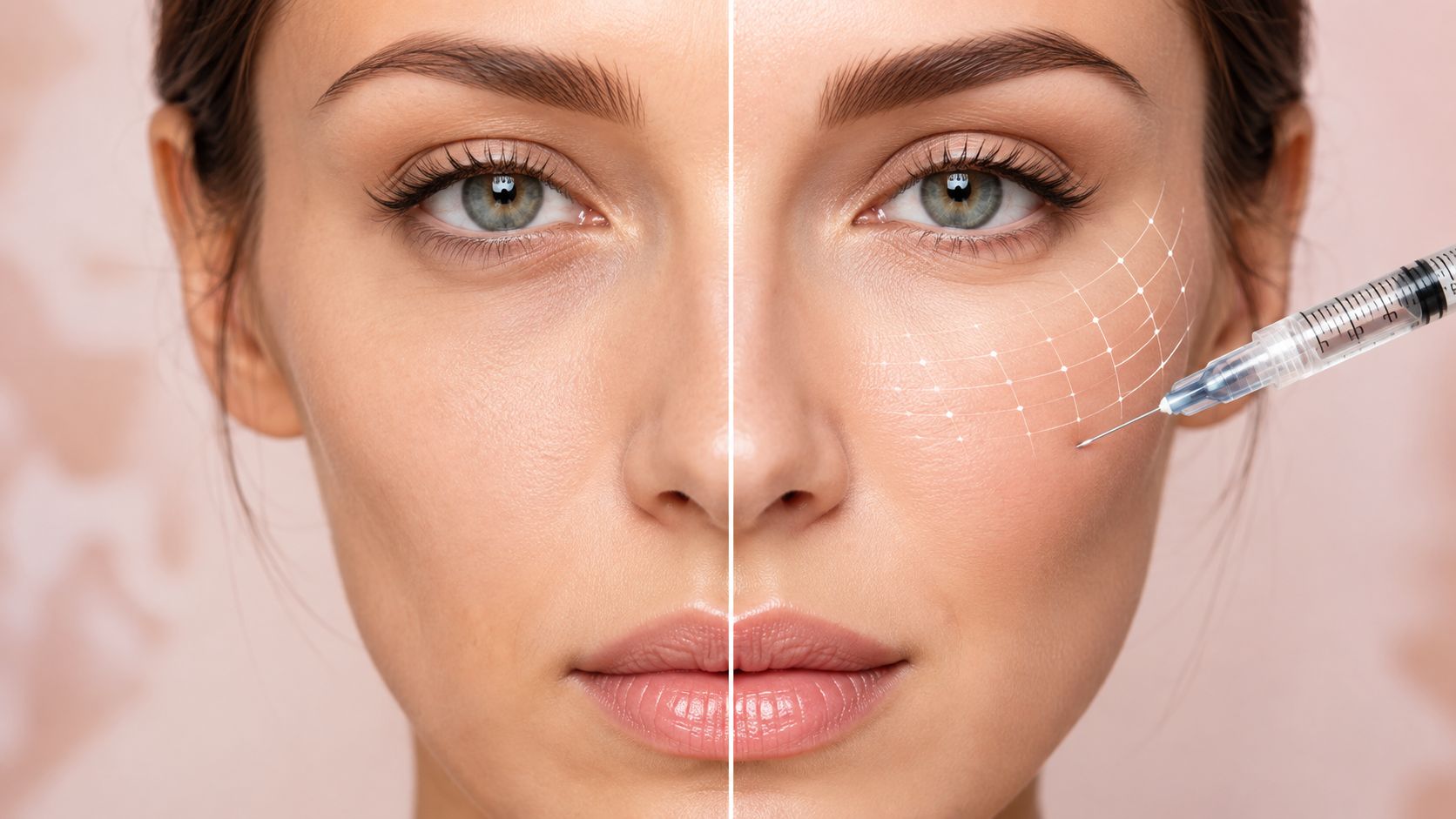
Cheek filler works by adding a small, controlled scaffold under a soft surface. The product most often used is hyaluronic acid, a gel that draws water and adds structure where support has been lost. The point is not to inflate the face. It is to restore midface support so the cheek reads as more defined and the transition into the lower eyelid looks smoother.

The volume-versus-lift distinction
The word “lift” is where people get misled. Cheek filler can create an optical lift, but it does that through volume and contour, not by physically pulling skin upward the way surgery does. A PubMed clinical analysis found that injecting 3 cc into the cheek produced a constant outward expansion pattern, but it did not create traction forces that moved skin from the cheek injection site to the nasolabial crease, and visible medial-face improvement only happened when filler was placed directly in the nasojugal transition (PubMed study).
That matters because placement drives the result. A small amount put in the right plane can sharpen the cheek and improve facial balance. A larger amount placed poorly can make the face look broad instead of sculpted, which is why more filler usually does not mean a better result.
Where the product is placed
Technical guidance shows that cheek augmentation is often done with about 1 mL per cheek, using 40 to 50 microinjections of roughly 0.02 to 0.025 mL each, spaced 1 to 1.5 cm apart, with product placed in deeper midface planes over bony support and deep fat pads (technical review). That placement is why the outcome can look more like restored structure than visible filling.
The goal is not a bigger face. The goal is a better-built midface.
Experienced injectors talk about contour, reflectance, and facial balance for a reason. When deeper support is restored, the face can look less hollow under the eyes and more even from cheek to lower lid, without looking overdone. For how long that support tends to last in practice, this cheek filler duration guide is a useful reference.
What Results Cheek Filler Delivers
Cheek filler can do three things well when the anatomy and placement are right. It can restore midface projection, soften the visual transition under the eye, and change how light falls across the face. Those changes are subtle, but they are often the reason patients feel less tired, less flat, or less heavy in the midface.
A multicenter randomized study of hyaluronic acid cheek fillers found that 92.8% of patients rated their cheek volume as improved or much improved at 6 months, and 79.0% still did at 2 years. In the same study, 89.8% were more satisfied with their facial appearance at 6 months, and 75.8% still were at 2 years. Those numbers fit what I see in practice. Patients usually do not describe the result as “filled.” They say they look more like themselves again, just less depleted.
What a good result looks like
Good cheek filler does not call attention to itself. It restores a soft curve to the midface, supports the under-eye area, and helps the face read as more rested and balanced. It can also improve the cheek-to-lower-lid transition, which is why some people notice they look less tired even when they cannot explain the change.
Technique matters more than volume. A well-placed small amount can sharpen contour and support the midface without changing the character of the face. Too much product, or product placed too superficially, can widen the face and blur the natural cheek line. That is the trade-off patients need to hear early. More filler usually means a heavier result, not a better one.
What to expect over time
Durability matters because cheek filler is not just a quick cosmetic tweak. Many patients still like the result well after the swelling settles, but the face does not look identical the entire time. The product softens, integrates, and gradually fades at a pace that depends on the filler type, where it was placed, and how much movement that area sees.
For a practical breakdown of maintenance timing, the guide to how long fillers last is useful alongside a consult. It helps frame whether you are looking for a one-time refresh or a maintenance plan.
Some patients want structure without surgery. Others want a more permanent change and start comparing filler with implants. In that discussion, Georgia Plastic cheek implants is a useful reference point for the difference between injectable support and a surgical option.
Types of Cheek Fillers and How They Compare to Alternatives
The cheeks can be treated with different filler families, but the choice depends on the goal. Hyaluronic acid is the most flexible option because it adds volume, can be adjusted, and can be dissolved if needed. Other injectables can last longer or behave a bit differently in tissue, but the trade-off is usually less immediate reversibility.
For cheek structure, the decision is often whether you want a conservative, adjustable result or a more permanent structural change. If you're comparing injectables to surgery, Georgia Plastic cheek implants is a useful reference point for understanding what a permanent implant option means compared with filler.
Cheek Augmentation Options at a Glance
| Option | Typical Longevity | Reversible | Best For |
|---|---|---|---|
| Hyaluronic acid filler | Months, often maintained with touch-ups | Yes | Subtle contour, facial balancing, first-time patients |
| Calcium hydroxylapatite | Longer-lasting than HA in many cases | Not easily dissolved like HA | Patients wanting more structure |
| Poly-L-lactic acid | Gradual, collagen-building effect | No easy reversal | Diffuse volume restoration |
| Cheek implants | Permanent | No | Structural, surgical augmentation |
| Fat grafting | Variable | No | Patients wanting their own tissue, accepting more recovery |
Matching the tool to the goal
If you want a conservative first step, hyaluronic acid is usually the easiest place to start. If you want permanent structural change, implants are a different category altogether. Fat grafting sits in the middle in theory, but the result is more variable and recovery is longer than filler.
Skincare and devices sit in a different lane. A product like the BARB N.P. dermal filler range can support facial-volume goals within an aesthetic plan, but no topical product or light device can replace a well-placed cheek syringe. For more product-specific context, the best fillers for cheeks guide is a good companion read.
What Happens During a Cheek Filler Appointment
A solid appointment starts with observation, not product. I want to see the face at rest, while speaking, and from a few angles, because cheek filler is about balance and support as much as it is about adding volume. That consult is where the plan gets set, whether the goal is a small lift, a clearer contour, or a different treatment altogether.

The injection portion is usually straightforward and fairly quick. In practice, the focus is on placing small amounts where the cheek can use support, rather than flooding the area with product. Less product usually gives a cleaner result, because the midface can look heavy fast if the filler sits too high, too low, or in the wrong plane. That is why careful placement matters more than chasing a bigger number of syringes.
What the chair experience feels like
Most clinics use topical numbing, and many cheek fillers already include lidocaine, so patients usually feel pressure, pinching, and short stings instead of sharp pain. The visit tends to feel like a series of small, measured placements, with pauses to check symmetry and contour as the face starts to respond.
There is a practical difference between a true lift and an optical lift, and patients usually notice it during the appointment. A true lift comes from placing filler where it supports the midface structure, while an optical lift comes from creating light reflection and contour that make the cheek look fresher without dramatic change. Good technique uses enough product to improve shape, then stops before the face starts to look overfilled.
For patients who want a broader patient-facing overview, the Botox and fillers guide for Tampa patients is a useful comparison point for how injectable visits are usually organized.
Recovery support that fits real life
After the appointment, calm aftercare matters more than dramatic routines. The side effects and aftercare guide for dermal fillers is a helpful reference for the kinds of short-term reactions people can expect and the signs that deserve attention. A BARB N.P. LED Facial Mask can also be a practical at-home companion because it is wireless, made for comfortable wear, and offers three lighting settings, including red, blue, and near-infrared. Used reasonably, it fits the first few days when people want something low-effort that supports a quiet recovery routine.
Good aftercare is simple. Keep it gentle, keep it consistent, and avoid doing too much too soon.
Recovery Timeline, Side Effects, and When to Worry
Most cheek filler side effects are temporary and local. A review of adverse events for hyaluronic acid dermal fillers found lumpiness in 43%, tenderness in 41%, swelling in 34%, bruising in 29%, pain in 28%, and redness in 26% of cases, and these reactions were generally mild and reversible (adverse event review). Another long-term cheek-filler study reported that the common treatment-site responses were tenderness, swelling, firmness, and lumps or bumps, and most lasted 2 weeks or less.

What normal recovery looks like
The first few days are usually the messiest. Swelling and bruising can make the cheeks look fuller than the final result, and that's one reason people get nervous too early. A calm timeline is more useful than a dramatic one.
Early recovery often includes a little unevenness, mild tenderness, and a firmer feel where the product was placed. That does not automatically mean something is wrong. The filler still has to settle, the swelling has to drop, and the face has to show the actual contour rather than the post-injection puffiness.
By the time the early swelling settles, the face starts showing the actual contour. The result continues to refine as the filler settles, and the final look is often clearer after the early healing period than it is on the first day. I usually tell patients to judge the result with patience, because the first look is rarely the final one.
What should trigger concern
The rare event that deserves special attention is vascular occlusion, estimated at 0.01% to 0.05% (adverse event review). That's uncommon, but it's the reason injector skill and facial anatomy knowledge matter so much.
Seek urgent care if you have severe pain, blanching skin, or vision changes. Those are not normal post-treatment symptoms, and they need immediate assessment.
For a plain-English breakdown of what's typical versus what isn't, the dermal filler side effects guide is a useful read before or after treatment. It helps patients separate ordinary swelling from signs that need action.
A wireless LED facial mask can be a comfortable recovery companion during the first two weeks, especially for people who prefer a simple at-home routine. The key is gentle support, not overhandling the area.
Who Is a Good Candidate and How to Choose the Right Provider
Cheek filler works best for adults with midface volume loss, flattened cheek contour, or facial asymmetry that comes from lost support rather than loose skin alone. It can also help people who want more definition without surgery. It's a poor fit when the main issue is skin texture, fine lines unrelated to volume loss, or heavy sagging in the lower face and neck, which may need a surgical solution instead (Glamour cheek filler discussion).

What to look for in an injector
A good provider should show actual cheek work, not just lip filler or generic before-and-afters. They should explain why they're placing product where they are, and they should be willing to say that less is enough.
Use this quick checklist in consult:
- Medical credentials: Choose someone trained to inject facial anatomy, not someone learning on the fly.
- Cheek-specific experience: Look for before-and-after photos that show midface work from multiple angles.
- Conservative planning: Ask how they decide when to stop, not just how much they can place.
- Emergency readiness: They should know how they handle complications, including vascular events.
- Anatomy-led approach: The plan should fit your face, not a template.
A provider who talks only about “more volume” is missing the point. Cheek filler is about proportion, support, and restraint.
Cheek Filler FAQ and Final Takeaways
Cheek filler usually lasts long enough to matter, but it's still temporary, especially compared with implants or surgery. If the result is wrong, hyaluronic acid filler can be dissolved, which is one reason it's often chosen first. Makeup is usually fine once the skin is calm and the injection sites are settled, and many people plan an event only after the early swelling has had time to ease.
The biggest takeaways are simple. Anatomy matters more than volume, because the best result comes from precise placement, not excess product. Injector skill matters more than brand, because the same syringe can look elegant or overdone depending on depth and map. And conservative first sessions beat aggressive ones, because you can always add more later, but you can't easily undo an overfilled midface without extra steps.
BotoxBarb offers practical aesthetic care, including injectables, dermal fillers, and LED light therapy, so it fits naturally for someone comparing facial balancing options and recovery support. If you want a clinic and boutique that keeps the focus on measured results and at-home support, visit BotoxBarb to explore options that fit your face and your timeline.