CO2 Cool Peel: The Ultimate Patient Guide for 2026
You’ve probably had this moment already. You catch your skin in bathroom lighting or the front camera and notice that it looks rougher, duller, or more uneven than it used to. Your skincare may be solid. You use good serums, sunscreen, maybe even retinoids. But the texture still sits there. Fine lines start showing around the eyes. Old sun damage keeps surfacing. Makeup looks less smooth, not more.
That’s usually when patients start asking about resurfacing, but many stop at the same concern. They want real improvement, not a spa facial effect, but they don’t want to disappear for a week or more while their skin heals.
That’s where co2 cool peel stands out. It sits in a very useful middle ground. It’s more meaningful than topicals alone, but it doesn’t ask for the same social downtime as older fully ablative CO2 treatments. For the right patient, that makes it a practical treatment, not just an interesting one.
As an aesthetic nurse practitioner, I look at CoolPeel as a skin-quality treatment. It’s for people who want smoother texture, brighter tone, softer lines, and healthier-looking skin without putting life on hold. The treatment matters, but the plan around it matters too. Good candidate selection, smart settings, disciplined aftercare, and long-term maintenance make the difference between “my skin looks a little fresher” and “my skin looks decidedly better.”
Your Guide to Flawless Skin Begins Here
A common patient story goes like this. She’s consistent with skincare, careful with sun exposure now, and still bothered by rough texture across the cheeks, lingering acne marks, or fine creases that makeup settles into by midday. She doesn’t want an aggressive procedure, and she definitely doesn’t want a long recovery that keeps her homebound.
That’s exactly the kind of situation where co2 cool peel becomes worth discussing. It gives patients a resurfacing option that feels modern. The appeal isn’t just that it’s lighter than traditional CO2. It’s that it can fit into a normal life more realistically while still targeting visible skin concerns.
Why patients ask about it now
Those seeking CoolPeel are not chasing one dramatic overnight change. They want skin that reflects the effort they already put into it. They want to wear less makeup, feel better in bright lighting, and stop relying on heavy coverage to blur texture.
CoolPeel tends to fit patients who notice:
- Persistent roughness: Skin feels uneven even when it’s well moisturized.
- Early lines: Fine lines around the eyes, mouth, or neck are starting to linger.
- Sun-related changes: Tone looks mottled, tired, or less clear than before.
- Post-acne texture: Old breakouts are gone, but the skin surface never fully bounced back.
Healthy-looking skin isn’t only about wrinkle depth. Texture, tone, and reflected light change how youthful skin reads.
That practical lens matters. Patients don’t live in before-and-after photos. They live at work, at dinner, on Zoom, in daylight, and under makeup. A treatment has to perform there too.
What makes this guide useful
Patients often hear one of two versions of laser resurfacing. One version makes it sound effortless. The other makes it sound intimidating. Neither is helpful.
The useful conversation is more balanced. Co2 cool peel works well for the right concerns. It won’t replace surgery for laxity. It won’t erase very deep etched wrinkles in one visit. It also doesn’t need to. Its role is to improve skin quality in a controlled, repeatable way with a recovery window many people can tolerate.
What Is a CO2 CoolPeel and How Does It Work
A CO2 CoolPeel is a fractional resurfacing treatment for patients who want smoother, clearer skin without the prolonged recovery that came with older full-face CO2 laser treatments. In practice, it targets skin quality. Texture, fine lines, sun-related roughness, and shallow acne scarring tend to respond best.

Why it’s called CoolPeel
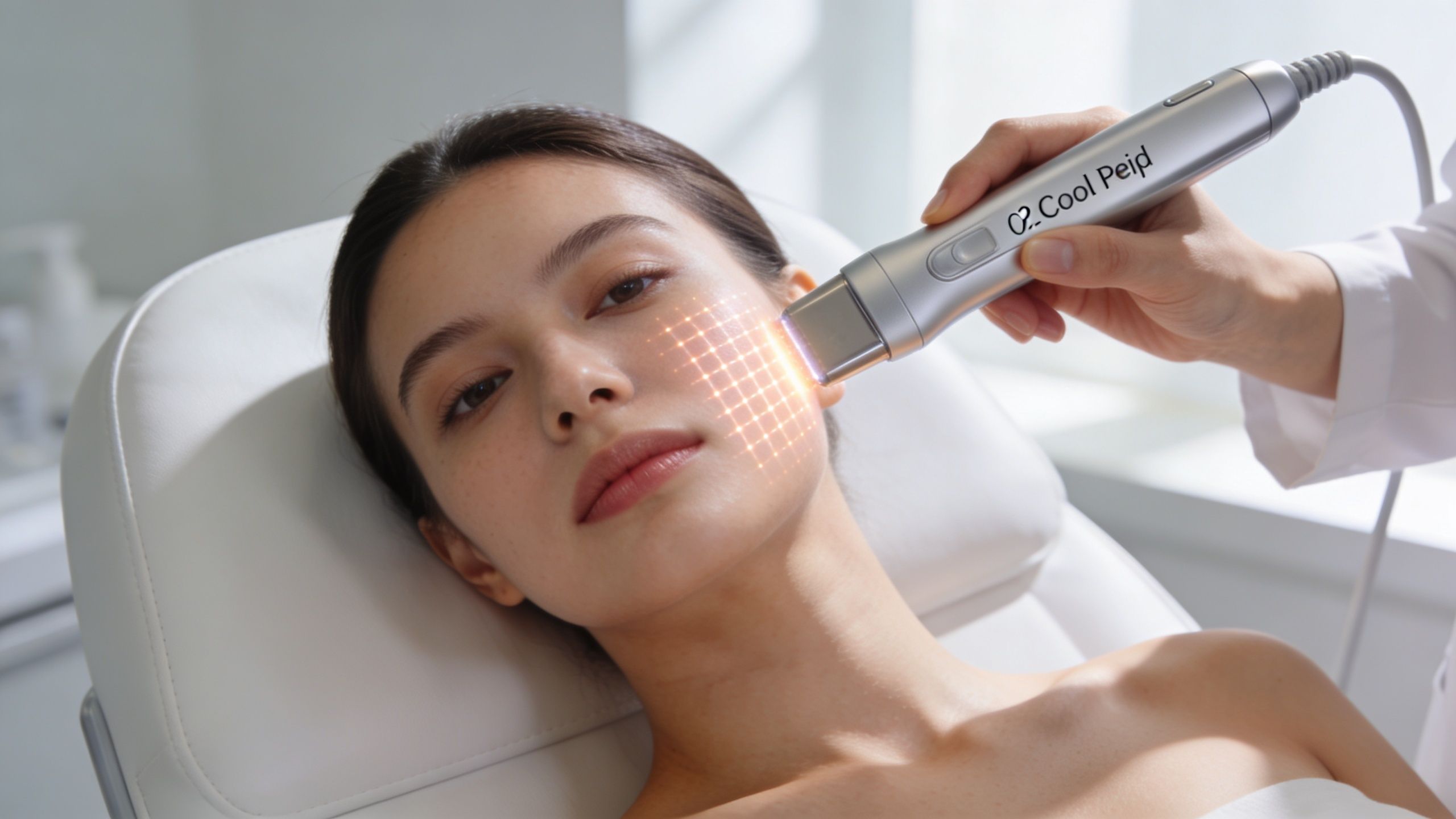
The name refers to controlled heat, not a cold device. CoolPeel is performed on the Tetra PRO CO2 laser, which uses H-Pulse technology to deliver very short bursts of energy with less residual heat in surrounding tissue. According to Cartessa’s Tetra PRO technology overview, that design supports treatment times of about 5 to 15 minutes and a shorter recovery window than traditional fully ablative CO2 resurfacing.
That distinction matters more than the name. With any laser, the skin responds to both the intended treatment and the heat left behind. Less unnecessary thermal injury usually means less swelling, less lingering redness, and an easier recovery plan. From a clinical standpoint, that makes the treatment easier to repeat and easier to combine with good long-term skin maintenance.
What the laser is doing in the skin
CO2 lasers work by targeting water in the skin. The laser energy ablates microscopic columns of tissue at the surface, which triggers a wound-healing response and collagen remodeling beneath it. The Cleveland Clinic’s overview of laser skin resurfacing explains that ablative lasers remove thin layers of skin and stimulate new collagen growth as the area heals.
Patients usually notice the early improvement first. Skin often looks brighter and feels smoother once the rough outer layer sheds. The longer-term benefit takes more patience because collagen remodeling continues after the surface has healed. That is one reason aftercare matters so much. A well-supported recovery can help protect the result you just created.
Why the fractional pattern helps
CoolPeel does not treat every millimeter of skin in one continuous pass. It creates a pattern of tiny treatment zones with untreated skin left between them. Those intact areas help the skin repair itself faster and more comfortably than older, more aggressive resurfacing methods.
For patients, that usually translates to a few practical advantages:
- More controlled resurfacing: The treatment focuses on texture and superficial damage in a measured way.
- Faster healing support: Surrounding healthy tissue helps with re-epithelialization.
- A recovery many patients can plan around: Redness and roughness are still expected, but the downtime is generally more manageable.
I tell patients to judge CoolPeel by fit, not hype. A deeper treatment can produce a bigger result, but it also brings more downtime and more inflammation. CoolPeel works well when the goal is meaningful refinement with a recovery period that fits real life and a skin plan that can be maintained over time.
What it treats well
CoolPeel is most useful for mild to moderate resurfacing concerns:
| Concern | How CoolPeel helps |
|---|---|
| Fine lines | Softens superficial etched lines |
| Uneven tone | Improves overall clarity and brightness |
| Sun damage | Resurfaces weathered, dull skin |
| Acne scars | Helps refine shallow textural irregularities |
| Enlarged pores and roughness | Smooths the skin surface |
It improves the surface of the skin. It does not tighten lax skin the way surgery or energy-based tightening treatments can, and it will not fully correct deeper folds caused by volume loss. For many patients, the best plan is not a single treatment in isolation. It is a thoughtful combination of resurfacing, disciplined aftercare, and maintenance strategies such as LED support, pigment control, and collagen-focused skincare.
Who Is the Ideal Candidate for a CoolPeel Treatment
A common consult starts with someone saying, “I look tired even when I feel fine.” The skin usually is not dramatically aged. It is showing early texture change, sun wear, enlarged pores, faint lines, or old acne marks that make the surface look less clear and less even.
The best CoolPeel candidates are patients who want visible refinement in skin quality and can commit to aftercare that protects the result. In practice, that means mild to moderate textural concerns, realistic expectations, and a willingness to support healing with strict sun protection, gentle skincare, and sometimes add-ons like LED therapy. CoolPeel works best as part of a plan, not as a one-time rescue treatment.
Signs you’re likely a good fit
You’re usually a strong candidate if the main goal is smoother, brighter, more even skin rather than lifting loose skin or replacing lost volume.
That often includes:
- Fine creasing: Crow’s feet, upper cheek lines, or early lines around the mouth.
- Sun-related texture: Skin that feels rough, looks weathered, or has a dull, uneven finish.
- Shallow acne scarring: Superficial textural irregularities that soften with resurfacing.
- Visible pores and roughness: Skin that does not reflect light evenly.
- Maintenance-minded patients: People who want to improve collagen support and keep their skin looking fresher over time.
If you want a realistic sense of who tends to respond well, these CoolPeel CO2 laser before and after examples are useful because they show different starting points, not just ideal outcomes.
What it does not do especially well
Honest screening matters. CoolPeel can improve surface texture, but it has limits.
It is usually not the best standalone option for:
| Concern | Better framing |
|---|---|
| Deep static wrinkles | Often needs a stronger resurfacing plan or combination treatment |
| Significant skin sagging | Usually responds better to lifting or tightening strategies |
| Major volume loss | Filler or biostimulatory treatment may matter more |
| Severe scar remodeling | Often needs a staged, multimodality approach |
This is also the point where skin type, pigmentation history, active acne, rosacea, recent tanning, and medication use need careful review. A patient can be interested in CoolPeel and still need pretreatment first. In my practice, that may mean calming inflammation, controlling breakouts, stopping irritating actives for a period, or delaying treatment until sun exposure is under control.
Lifestyle matters too
Schedule matters more than people expect. Patients with work meetings, parenting demands, travel plans, or limited tolerance for a visible recovery often prefer a treatment that improves texture without requiring a long stretch at home.
That said, a shorter recovery window does not mean casual aftercare. The patients who get the best results usually treat the week after laser very seriously. They protect the skin barrier, avoid heat and sun, stay consistent with healing products, and use maintenance tools such as LED support or pigment-safe skincare if that fits their goals.
If you want a single aggressive treatment to correct deeper aging changes, CoolPeel may feel too light. If you want controlled resurfacing that fits real life and supports long-term skin health, it is often an excellent match.
Your CoolPeel Journey at BotoxBarb Step by Step
The treatment day usually feels much less intimidating than patients expect. Most anxiety comes from not knowing what the sequence looks like. Once people understand the flow, the experience becomes a lot easier to picture.

Consultation first, settings second
A proper CoolPeel appointment starts with skin assessment, not with the handpiece. The consultation matters because the same laser can be too light for one patient and too aggressive for another depending on skin sensitivity, texture, pigmentation history, active breakouts, and recent sun exposure.
That visit is where goals get narrowed down. Some patients care most about pores and texture. Others are focused on fine lines or old acne marks. A plan only works when the target is clear.
If you want to see how outcomes can vary by starting point and treatment goals, review these CoolPeel CO2 laser before and after examples.
What happens during the appointment
On treatment day, the skin is cleansed thoroughly and prepared. Depending on the plan, topical numbing may be used to improve comfort. During the procedure, patients often describe the sensation as heat, prickling, or quick snaps across the skin rather than sharp pain.
The laser itself works through a fractional “pixelated” pattern that divides energy into microthermal zones while preserving healthy tissue between them, which helps trigger controlled healing with less inflammation and a lower risk of post-inflammatory hyperpigmentation than traditional methods, as described by Aurae Med Spa’s CoolPeel technology overview.
Immediately after treatment
Right after the session, skin usually looks flushed, similar to a mild sunburn. It can feel warm and tight. That response is expected. Patients are usually more surprised by how manageable the immediate post-treatment period feels than by the treatment itself.
Common same-day instructions focus on:
- Gentle skin contact: No scrubbing, rubbing, or picking.
- Barrier support: Use bland, hydrating products approved for post-procedure skin.
- Sun avoidance: Freshly treated skin needs careful UV protection.
- Heat restraint: Avoid activities that drive unnecessary flushing early on.
Most patients leave understanding exactly what normal healing looks like. That clarity prevents overreaction to expected redness and helps them avoid the common mistake of doing too much, too soon.
The CoolPeel Recovery Timeline and Expert Aftercare
Recovery is where good results are protected. This is also where patients can sabotage their own outcome if they panic at normal texture changes, restart active products too early, or underestimate inflammation control.

What healing usually feels like
The early recovery phase is usually straightforward. Skin often looks pink to red at first, then may shift into a dry, slightly rough texture. Many patients describe it as a fine sandpaper feel before the skin smooths out again.
For sensitive skin, nuance matters. Milia or prolonged erythema can occur in 10 to 15 percent of cases, and careful pre- and post-care, including possible LED therapy for inflammation control, is important according to House of Bloom Med’s review of CoolPeel recovery considerations.
A simple recovery timeline
| Phase | What you may notice | What helps |
|---|---|---|
| Early healing | Warmth, redness, tightness | Cool compresses if advised, gentle hydration |
| Texture shift | Dryness, rough feel, light flaking | Leave skin alone, keep routine bland |
| Surface renewal | Smoother look, brighter tone emerging | Continue SPF and barrier support |
Patients often make recovery harder by chasing exfoliation. Don’t. If the skin feels rough, that doesn’t mean it needs help being “scrubbed off.” It means it needs time.
Practical rule: The more your skin feels like it’s healing, the less creative your skincare should become.
The aftercare routine that tends to work best
A disciplined post-laser routine usually looks boring on purpose. The skin barrier needs calm, hydration, and protection.
Focus on:
- A gentle cleanser: Use a non-stripping wash that removes sunscreen and debris without friction.
- Barrier-first hydration: Reach for simple, replenishing moisturizers rather than acids, retinoids, or strong brighteners.
- Daily sunscreen: Freshly resurfaced skin needs consistent UV protection, even when you’re mostly indoors.
- Inflammation control: Some patients benefit from supportive options such as LED under provider guidance.
- A skin-soothing mist: If you like a refreshing step during recovery, this guide to a purifying mist for skin explains why hypochlorous acid sprays can fit into a calm, low-irritation routine.
Where LED can add value
LED doesn’t replace laser. It supports recovery around it. Used appropriately, it can be a useful adjunct when the skin feels reactive, warm, or easily flushed.
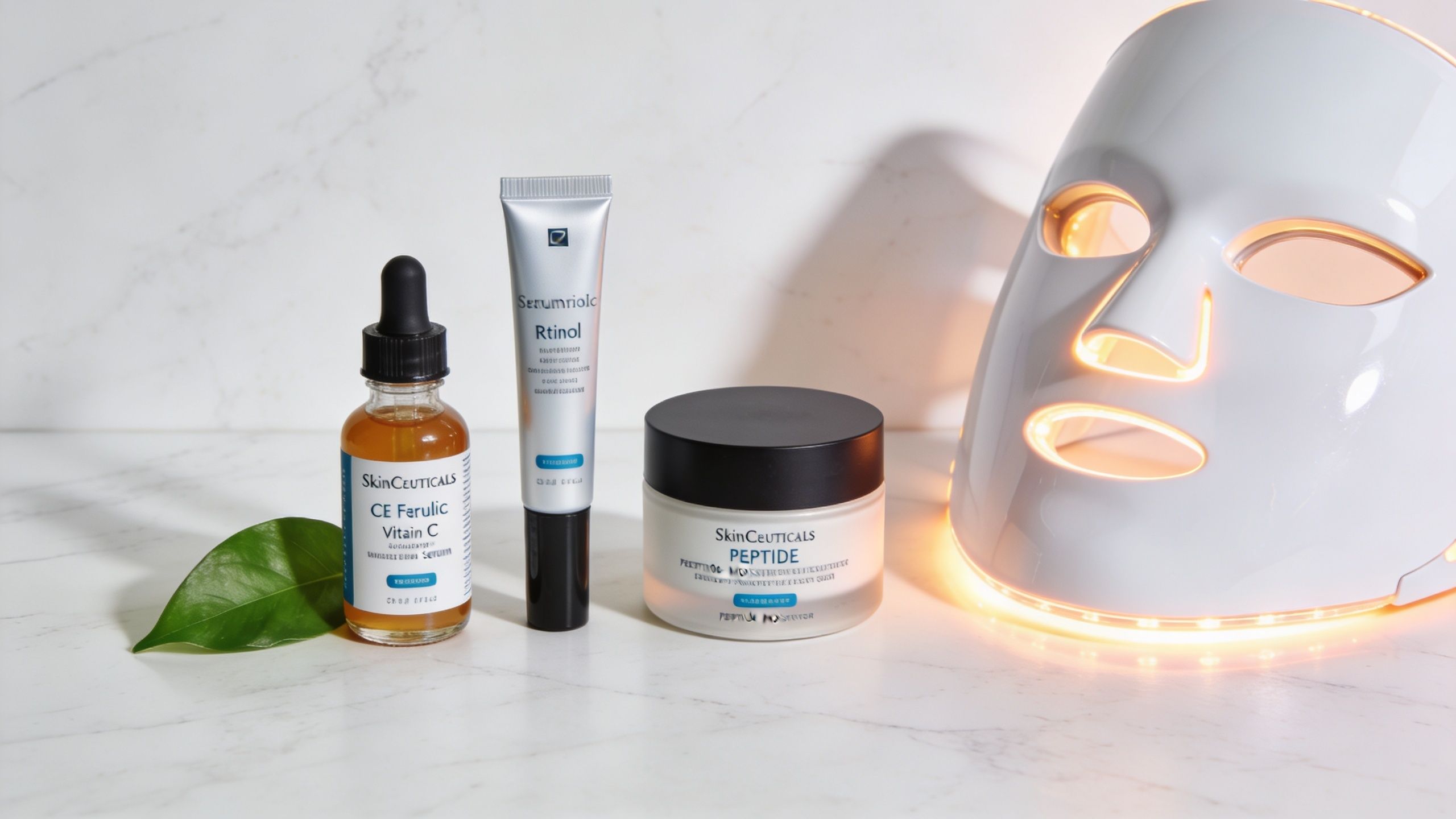
The Barb N.P. Facial Mask is one at-home option that fits naturally into this kind of plan because it’s wireless, sits comfortably on the face, and includes three light settings for different treatment goals. In post-procedure routines, patients often value that ease of use more than anything else. If a device is awkward or uncomfortable, they stop using it.
What not to do
This matters as much as what to do.
- Don’t pick or peel: That can prolong redness and disrupt healing.
- Don’t restart actives too early: Retinoids, exfoliating acids, and strong pigment products can sting and inflame freshly treated skin.
- Don’t overheat your face: Intense workouts, saunas, and hot environments can worsen redness early in recovery.
- Don’t assume all redness is a complication: Some pinkness is expected. Persistent or worsening symptoms deserve provider review.
A good CoolPeel result isn’t only created by the laser pass. It’s protected in the days that follow.
How CoolPeel Compares to Other Resurfacing Treatments
Choosing resurfacing isn’t about finding the “strongest” treatment. It’s about matching the tool to the problem, your tolerance for recovery, and how quickly you need to be socially present again.

The defining advantage of CoolPeel is recovery. Traditional CO2 laser resurfacing typically requires 1 to 2 weeks of downtime with significant redness and peeling, while CoolPeel usually involves 1 to 3 days of mild redness, which is why it appeals to patients with active lifestyles, as noted by The Formula Med Spa’s comparison of traditional CO2 and CoolPeel.
Skin resurfacing at a glance
| Treatment | Primary Target | Downtime | Sessions Needed | Pain Level |
|---|---|---|---|---|
| CoolPeel | Texture, tone, fine lines, superficial scars | Short | Often a series | Mild to moderate |
| Traditional ablative CO2 | Deep wrinkles, advanced sun damage, deeper scar correction | Longer | Often fewer sessions | Higher |
| Microneedling | Mild texture, pores, maintenance | Low | Usually a series | Mild |
| Medium-depth chemical peel | Tone, pigment, surface roughness | Variable | Depends on peel strength | Mild to moderate |
| Microdermabrasion | Surface dullness and light exfoliation | Minimal | Repeated maintenance | Mild |
Where CoolPeel sits in the lineup
CoolPeel is often the middle lane. It’s more of a resurfacing treatment than microdermabrasion or a light peel, but it doesn’t usually ask for the same commitment as a stronger ablative CO2 session.
That makes it a fit for patients who say:
- “I want more than a facial.”
- “I can manage some redness, but not a major recovery.”
- “My concern is texture and early aging, not severe sagging.”
Traditional ablative CO2 still has a place. If someone has deep etched wrinkles or substantial textural damage and can tolerate longer downtime, a stronger treatment may be more efficient. But that doesn’t make it the better treatment for everyone. It makes it the better treatment for a different problem set.
If you’re comparing fractional options more broadly, this Fraxel vs CO2 laser guide helps frame those trade-offs in a useful way.
A treatment isn’t “worth it” in the abstract. It’s worth it when the result, recovery, and lifestyle trade-off all make sense for you.
Your CO2 CoolPeel Questions Answered
How many sessions do most people need?
That depends on the concern and the endpoint. Patients treating early aging changes or general texture often do well with a series approach. Someone treating more visible acne scarring or more established sun damage may need a longer plan and stronger maintenance habits afterward.
A common mistake is expecting one session to do the work of a broader skin-rebuilding strategy. CoolPeel tends to reward consistency more than intensity.
How long do results last?
This is one of the most important questions, and patient literature doesn’t answer it well enough. Traditional CO2 has published wrinkle reduction data of 50 to 70 percent at 12 months, but comparable long-term longitudinal data for the gentler CoolPeel isn’t widely published, according to SB Plastic Surgeon’s discussion of CoolPeel vs CO2.
That doesn’t mean CoolPeel doesn’t work. It means we should be honest about what’s well documented and what still needs better long-range data. In practice, longevity depends heavily on skincare, sun behavior, whether you smoke, and whether you maintain results with repeat treatments or combination care.
Can I combine CoolPeel with Botox, fillers, PRP, or skincare?
Often yes, but timing matters. Combination planning should be deliberate, not stacked casually. Skin resurfacing, neuromodulators, filler, PRP, and medical-grade skincare can complement each other when sequenced properly.
Patients often do best when they think in layers:
| Goal | Common category used in a plan |
|---|---|
| Relax movement lines | Botox or Dysport |
| Improve texture and tone | CoolPeel |
| Support collagen and healing | PRP or recovery-focused care |
| Maintain clarity and brightness | Medical-grade skincare |
That kind of planning is usually more effective than relying on one procedure to do everything.
What about cost?
Pricing varies by treatment area, provider expertise, device settings, and whether the plan involves a single session or a series. Because packages and treatment plans differ, cost should be discussed in consultation rather than guessed from generic online ranges.
If you want a more practical breakdown of what affects pricing, this CoolPeel laser cost guide is a helpful starting point.
Is it safe for everyone?
Not automatically. Recent sun exposure, certain medications, impaired healing, active skin irritation, and a history of abnormal pigment response all matter. Sensitive skin can still be treated in some cases, but that doesn’t mean every patient should be treated the same way.
The safest laser patients are not the ones who push through every contraindication. They’re the ones who are screened well, prepped properly, and willing to follow instructions after treatment.
Begin Your Journey to Radiant Skin Today
Co2 cool peel earns its place because it solves a real problem. Many patients want more than skincare alone can deliver, but they don’t want the disruption that comes with older resurfacing methods. For the right concerns, CoolPeel offers a useful balance of visible refinement, manageable recovery, and collagen support.
The best outcomes don’t come from the laser alone. They come from proper consultation, realistic goal setting, thoughtful settings, and disciplined aftercare. That includes protecting the skin barrier, using the right maintenance products, and treating long-term skin health as part of the plan instead of an afterthought.
If your skin feels dull, uneven, rough, or less polished than it used to, this is the point where a personalized evaluation helps. The right resurfacing plan should fit your skin, your schedule, and your broader aesthetic goals.
If you’re ready for a personalized plan, book with BotoxBarb to discuss whether CoolPeel, combination treatment, and the right aftercare routine make sense for your skin.