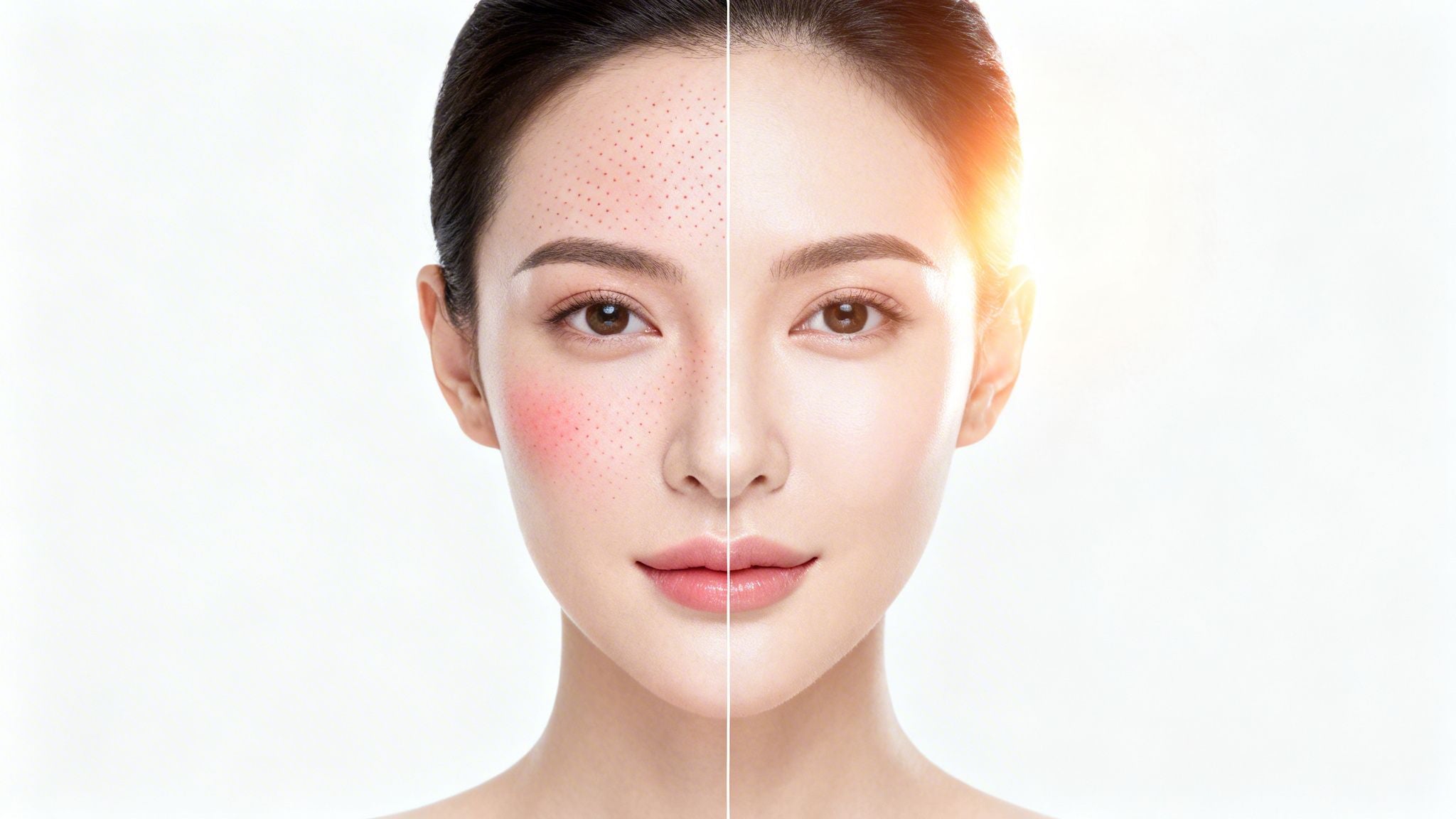
Fraxel vs CO2 Laser Choosing The Right Skin Resurfacing in 2026
When it comes to laser skin resurfacing, two names constantly come up: Fraxel and CO2. While both promise to revitalize your skin, they are far from interchangeable. The choice isn't about which laser is "better" in general, but which one is right for you, your skin concerns, and your lifestyle.
At its core, the difference boils down to intensity and the commitment required. Think of Fraxel as a series of targeted tune-ups for moderate rejuvenation, while a CO2 laser is a powerful, deep overhaul for more significant skin issues.
A Practical Comparison of Fraxel vs CO2 Laser
Navigating the world of advanced laser treatments can feel overwhelming. You know you want smoother, clearer, more youthful skin, but the technology sounds complex. Let's cut through the noise and directly compare Fraxel and CO2 lasers, so you can confidently decide which path aligns with your goals.
We’ll break down how each one works, the results you can realistically expect, and what the recovery process actually looks like. This is about making an informed decision that leads to skin you feel incredible in. If you're specifically struggling with scarring, our guide on the best laser treatments for acne scars offers even more targeted advice.

Key Differences At a Glance
To give you a quick snapshot, this table lays out the most important distinctions between Fraxel and CO2 laser treatments. It's the perfect starting point for understanding their primary uses and what to expect during recovery.
| Comparison Point | Fraxel Laser | CO2 Laser |
|---|---|---|
| Primary Goal | Moderate rejuvenation, texture improvement | Deep resurfacing, significant correction |
| Best For | Fine lines, sun damage, mild acne scars | Deep wrinkles, severe scarring, major sun damage |
| Technology Type | Fractional (treats a fraction of skin) | Ablative (removes the entire outer skin layer) |
| Downtime | 3-7 days (mild redness and peeling) | 10-21 days (significant swelling, crusting) |
| Number of Sessions | Typically 3-5 sessions for optimal results | Often 1-2 sessions for dramatic change |
| Discomfort Level | Mild to moderate, managed with topical numbing | Moderate, requires topical numbing & other measures |
The choice really comes down to this: Fraxel offers a gradual path to improvement with less life interruption, spread across several treatments. CO2 is a single, powerful leap that delivers dramatic change but demands a serious commitment to healing.
Both technologies are incredible tools in the hands of an experienced practitioner. The right one for you is a personal decision, best made after a thorough consultation where we can assess your skin's condition and discuss your ultimate aesthetic goals.
Understanding How Each Laser Resurfaces Skin
To feel confident choosing between Fraxel and a CO2 laser, you first need to know how they actually work. While both use targeted light to jumpstart your skin’s renewal process, their approaches are worlds apart. Let's break it down with a simple analogy.
Think of Fraxel as a sophisticated lawn aerator for your skin. It creates thousands of microscopic, targeted treatment channels deep into the dermis, intentionally leaving the surrounding tissue untouched. This fractional approach is key—it triggers a powerful healing response from the inside out.

The healthy, untouched skin surrounding each micro-channel acts like a natural bandage, dramatically speeding up recovery. This process kicks your collagen and elastin production into high gear, gradually smoothing texture and evening out tone with minimal downtime.
The CO2 Laser’s Ablative Approach
The CO2 laser, on the other hand, is fully “ablative.” If Fraxel is aerating the lawn, a CO2 laser is like removing the entire top layer of old, damaged turf to lay down fresh, new sod.
This laser works by vaporizing the whole outermost layer of skin (the epidermis) across the entire treatment area. It’s an incredibly powerful reset that removes widespread surface damage in a single session, forcing your body to grow a completely new, healthy, and uniform layer of skin.
Both Fraxel and CO2 lasers ultimately work by stimulating the deep-dwelling fibroblasts in skin, which are the tiny cellular factories responsible for creating firming collagen.
Key Takeaway: Fraxel treats tiny “fractions” of skin for gradual improvement and quick healing. A CO2 laser removes the entire surface for a dramatic transformation that demands a more intensive recovery period.
To support your skin’s healing after a laser treatment and maintain those beautiful results, integrating at-home care is essential. The Barb N.P. LED Facial Mask is a fantastic tool to complement your professional procedure, with a comfortable, wireless design that makes consistent use effortless.
The mask offers three powerful light settings:
- Red Light: This is your go-to for post-laser recovery. It helps calm inflammation and supports new collagen production, accelerating the healing process.
- Blue Light: Perfect for managing and preventing acne-causing bacteria.
- Amber Light: Helps reduce lingering redness and promotes an even, glowing skin tone.
Using the red light setting a few times a week after you’ve healed from your laser session is a brilliant way to extend its rejuvenating effects. This proactive step helps keep your skin looking smooth, firm, and radiant long after you’ve left the clinic.
A Realistic Look at Downtime and Recovery
Let’s be honest: the single biggest deciding factor between Fraxel and CO2 often comes down to recovery. The intensity of the laser directly dictates your downtime, and you have to be realistic about what your life can accommodate.
Fraxel’s recovery is much more manageable. Think of it like a moderate sunburn that lasts for the first 24 to 48 hours. You’ll be red and feel a bit warm, but you can usually go about your day. This is followed by a few days of light peeling as the old skin makes way for the new. Most people are completely back to normal within 3 to 7 days, making it a great option if you can’t press pause on your life.
The CO2 Laser Healing Process
A fully ablative CO2 laser, on the other hand, is a serious commitment. This is not a "weekend" treatment—you need to clear your calendar. Be prepared for a true healing period of 10 to 21 days where you’ll need to be at home, away from social or professional obligations.
The first few days are the most intense, with significant swelling, redness, and oozing as your skin begins its deep repair process. This is normal and expected. Crusting will follow, which protects the fresh, new skin forming underneath. This phase requires meticulous aftercare, including special cleansing routines and applying prescribed ointments to keep everything moist and protected.
The downtime isn't just a suggestion; it's a requirement for a good outcome. Fraxel lets you get back to life quickly. A CO2 laser demands a multi-week, dedicated healing period at home. Being honest with yourself about what you can handle is absolutely key.
A Clinical Perspective on Recovery
When you look at the clinical evidence, it confirms what we see in practice. An extensive review of laser procedures, which you can read more about at dermatologist-nyc.com, found that patients treated with Fraxel for lower eyelid concerns had no major complications. Side effects were minor and resolved completely.
While a CO2 laser packs a more powerful punch for results, its recovery is much more involved, often involving visible rawness and even dressings in the initial stages. It requires a lot of patience.
To help your skin heal beautifully and lock in those long-term results, I often recommend incorporating at-home LED therapy once the initial peeling and sensitivity have passed. The Barb N.P. LED Facial Mask is a fantastic tool for this. It's wireless and comfortable, so you’ll actually use it.
The mask features three light settings, but for post-laser care, the red light is your best friend.
- Red Light: Once you're healed, using this setting a few times a week is brilliant for calming any lingering inflammation and giving that new collagen a boost.
- Blue Light: This helps manage acne-causing bacteria for overall clearer skin.
- Amber Light: Works to fade any residual redness and promote a more even tone.
Think of it as the perfect way to support and maintain the beautiful, smooth skin you just invested in with your professional laser treatment.
Comparing Results for Specific Skin Concerns
When you're weighing Fraxel against CO2, the real question is simple: which one will actually fix my specific skin issue? The answer isn't about which laser is "better" overall, but which one is the right tool for the job.
Let's break down how they stack up against the most common concerns I see in my practice, from wrinkles and scars to sun damage.
For more widespread issues like fine lines, a rough or dull texture, and moderate sun damage, Fraxel is a fantastic, highly effective choice. Its fractional approach is brilliant for stimulating new collagen over a series of sessions. Think of it as a tool for progressive refinement—it gradually improves your skin's overall quality, smoothness, and glow.
Deep Wrinkles and Severe Scarring
Now, when we're talking about correcting deep, etched-in wrinkles or significant scarring (like from severe acne), the CO2 laser is the undisputed champion. Its ablative power lets it completely remodel the skin's surface in a way Fraxel simply can't. By vaporizing the damaged outer layers, it triggers a powerful healing response that builds brand-new, smoother, and tighter skin.
- For Deep Wrinkles: A CO2 laser can take years off your appearance. It dramatically softens those deep-set lines around the mouth, eyes, and forehead that other treatments can't touch, often in just a single session.
- For Severe Acne Scars: For atrophic or "pitted" acne scars, CO2 is the gold standard. It essentially planes down the sharp edges of the scars while stimulating deep collagen production to lift the depressions from within, creating a much more uniform skin surface.
The decision between Fraxel and CO2 for scarring really comes down to severity. Fraxel can definitely improve mild, rolling scars over several treatments. But for deep ice-pick or boxcar scars, you need the dramatic resurfacing power of a CO2 laser to see a significant correction.
Sun Damage and Uneven Tone
Both lasers work wonders on sun damage, but again, the choice hinges on how extensive the damage is. For moderate sun spots and general blotchiness, Fraxel works beautifully to fade discoloration and even things out. You can learn more about how lasers tackle this in our guide to laser for age spots removal.
However, for that leathery texture and widespread, stubborn pigmentation that comes from years of sun exposure, a CO2 laser provides a total reset. It removes that accumulated damage in one comprehensive treatment, revealing the healthier, more even-toned skin that’s been hiding underneath.
To protect your investment and continue improving your skin's health at home, integrating LED therapy is a fantastic strategy. The Barb N.P. LED Facial Mask is an excellent companion to professional treatments. Its wireless design and comfortable fit make it easy to use regularly. The mask features three different light settings to target various concerns, helping you extend the beautiful benefits of your laser procedure right at home.
Who Is an Ideal Candidate for Each Treatment?
Choosing between Fraxel and a CO2 laser isn't just about the technology—it’s about matching the right tool to your unique skin, lifestyle, and goals. Your specific concerns, skin type, and even your age play a huge role in finding the perfect fit.
This decision path helps simplify things by connecting your main concern—whether it's moderate or more severe—to the best laser for the job.

As you can see, moderate issues like fine lines and initial texture changes point toward Fraxel, while more advanced concerns like deep-set wrinkles or scarring are a better match for the power of a CO2 laser.
The Ideal Fraxel Candidate
Fraxel is the go-to choice for anyone just starting to notice the first signs of aging or dealing with moderate texture and tone issues. Think of it as a proactive step—a "pre-rejuvenation" treatment to keep your skin ahead of the curve.
You're a perfect candidate for Fraxel if you:
- Have mild-to-moderate concerns like fine lines, sun spots, or uneven texture.
- Are looking for gradual, real improvement with very little disruption to your schedule.
- Have a lighter skin tone (Fitzpatrick types I-III), as Fraxel carries a lower risk of post-inflammatory hyperpigmentation.
- Are in your 30s or 40s and want to actively manage the aging process.
The Ideal CO2 Laser Candidate
A fully ablative CO2 laser is reserved for those who need a significant skin reset and are ready for a more involved recovery. This is a powerful treatment designed to correct advanced skin damage in a single session.
You’re a strong candidate for a CO2 laser if you:
- Struggle with deep, etched-in wrinkles, extensive sun damage, or severe acne scarring.
- Want the most dramatic results possible from one treatment.
- Can commit to a 10-21 day recovery period at home, away from work and social commitments.
- Understand and are comfortable with the higher risk profile that comes with more intensive lasers.
Crucial Contraindications: Neither laser is a safe option if you have active skin infections, have used Accutane within the last six months, or have certain autoimmune disorders. A thorough, honest consultation with a professional is essential to ensure your safety.
To support your skin's health and enhance your results after either procedure, I highly recommend integrating at-home light therapy. The Barb N.P. LED Facial Mask is a fantastic tool for maintenance. It’s wireless and designed for comfort, making it easy to use consistently. The red light setting is especially beneficial post-laser to help calm the skin and boost new collagen production.
How to Enhance and Maintain Your Laser Results
Getting a Fraxel or CO2 laser treatment is a fantastic way to reset your skin, but the real magic happens in the weeks and months that follow. Protecting that investment is just as important as the procedure itself. Think of your at-home care not as an afterthought, but as the essential second half of your treatment plan for keeping skin smooth, clear, and radiant for the long haul.
Once your skin has fully healed, a medical-grade skincare routine is non-negotiable. I always tell my clients to start with a potent antioxidant serum. A product like SkinCeuticals C E Ferulic is a gold standard for a reason—it helps shield those fresh, new skin cells from the environmental damage that causes premature aging.

Just as critical is your daily sun protection. Skipping SPF is like letting all that hard work and money go right out the window. If you're unsure where to start, our guide on how to choose the right sunscreen breaks it all down for you. Beyond lasers, a holistic view of skin health is key for lasting results, and you can explore other skin care topics for a wider perspective.
Elevate Your Maintenance with At-Home Technology
To really amplify and extend the incredible results from a Fraxel or CO2 laser, bringing smart at-home technology into your routine can make a huge difference. The Barb N.P. LED Facial Mask is the perfect partner for this. It’s designed to complement your professional treatments with easy, effective care you can do on your own couch.
Its wireless, comfortable design means you’ll actually use it—no complicated setups or being tethered to a wall. While the mask has three different light settings for various concerns, one is particularly brilliant for post-laser maintenance.
The red light setting is your secret weapon for making your laser results last. It works on a cellular level to calm low-grade inflammation and kickstart new collagen production. This is what helps maintain that firm, even texture you worked so hard to get at the clinic.
Using the mask just a few times a week is a simple but powerful strategy to protect your investment and keep your skin looking refreshed and vibrant long after you’ve left the office.
Your Top Questions About Laser Resurfacing
When you’re weighing Fraxel against a CO2 laser, it’s natural to have a few final questions. I hear these all the time from my clients, so let's clear them up and get you closer to making a confident decision.
How Many Sessions Will I Need?
This really comes down to your skin’s starting point and your ultimate goals. A CO2 laser is a powerhouse treatment; it's so effective that many of my clients achieve the dramatic, long-lasting results they want in just a single session.
Fraxel, on the other hand, is designed to be a less intensive treatment. To tackle concerns like sun damage, texture, or fine lines, we build results gradually. A typical plan involves a series of 3-5 treatments, usually scheduled about a month apart to allow your skin to heal and regenerate.
Are Laser Treatments Painful?
Both treatments involve some sensation, but your comfort is my top priority. We always start by applying a potent topical numbing cream to the treatment area to minimize any discomfort.
During a Fraxel treatment, most people describe the feeling as a "prickling heat." For the more powerful CO2 laser, we'll talk through additional comfort options to make sure the experience is manageable. Afterward, your skin will feel a lot like a sunburn, but this is easily soothed with the aftercare plan we'll provide.
Can I Get Botox or Fillers with Laser Treatments?
Absolutely. In fact, combining injectables with laser resurfacing is a fantastic way to achieve a full-face refresh, but the timing is everything. My standard rule is to schedule Botox or filler appointments at least two weeks before or two weeks after your laser session.
This waiting period is crucial. It gives any swelling from one procedure time to fully subside before we move on to the next, which is key for getting the precise, beautiful results you’re investing in. For maintaining your skin's health and glow at home, I often recommend adding an LED mask to your routine. The Barb N.P. LED Facial Mask is a perfect at-home tool, with a comfortable wireless design and three light settings to help you extend the benefits of your professional treatments.
At BotoxBarb, my philosophy is built on creating personalized treatment plans that deliver real, beautiful results. Whether Fraxel, a CO2 laser, or a combination approach is right for you, my goal is to guide you to the perfect solution for your unique skin. You can explore my curated skincare and at-home devices in the shop. Find your path to radiant skin at barbnp.shop.