Dermal Filler Between Eyebrows: Expert 2026 Guide
You catch your reflection on a video call, in the car mirror, or under bright bathroom lighting. The first thing you see is that vertical crease between your brows. Maybe it makes you look irritated when you're not. Maybe you already tried Botox and the movement improved, but the line still sits there at rest.
That's the moment many patients start asking about dermal filler between eyebrows. They're not trying to change their face. They want the expression on their face to match how they feel.
I'm Barb N.P., and this is one of those treatments that deserves a careful, honest conversation. Filler in the glabella, the area between the eyebrows, can work very well for the right patient. It can soften a stubborn etched-in line that muscle relaxers alone won't fully erase. But this is also a high-risk injection area, which means the injector matters more here than almost anywhere else on the face.
A good plan starts with one question. Is the problem mostly movement, mostly a static crease, or both? If your “11 lines” appear only when you frown, filler usually isn't the first answer. If the crease stays visible when your face is relaxed, filler may have a role. For many patients, the most natural result comes from a combination approach rather than forcing one treatment to do everything.
Erasing the Lines That Aren't You
One patient described it perfectly. “I'm not angry. I just look angry.” That's what glabellar lines often do. They create a fixed expression that doesn't match your mood, your personality, or your energy.
Those lines usually begin as motion lines. You concentrate, squint, or frown, and the skin folds. Over time, the fold starts to stay behind. At that point, skincare can help the skin look healthier, but it usually won't lift an established indentation on its own.
When the crease becomes part of your resting face
Patients frequently misunderstand this aspect. Botox or Dysport can reduce the repeated muscle pull that formed the line. But if the crease has become stamped into the skin, relaxing the muscle may not flatten it completely.
That's where filler enters the conversation. Instead of weakening movement, it supports the skin from underneath so the dent looks less etched. Used properly, it doesn't create a puffy forehead. It aims to make the transition between the brows look smoother and more relaxed.
Practical rule: If a line disappears when your face is fully relaxed, filler usually isn't the first tool. If it stays visible at rest, filler may help, but only after a careful anatomy assessment.
Why patients need more than a quick yes or no
Blanket advice doesn't help much here. “Never fill the area” is too simplistic. “It's totally fine” is careless. The truth sits in the middle.
The right patient for dermal filler between eyebrows usually has a persistent static crease, realistic expectations, and anatomy that can be treated conservatively. The wrong patient is someone who wants aggressive correction in one visit, has mostly dynamic movement, or is being treated by someone who doesn't fully understand the vascular anatomy of the area.
That distinction matters. This procedure can be effective. It just shouldn't be casual.
How Filler Lifts Frown Lines from Within
Think of a sheet of paper that's been folded over and over. At first, it opens flat again. After enough folding, a crease remains even when the paper is unfolded. Frown lines behave the same way.
Dynamic lines are the active fold. They show when the brow muscles contract. Static lines are the leftover crease that remains when your face is at rest.
Botox slows the folding. Filler lifts the crease.
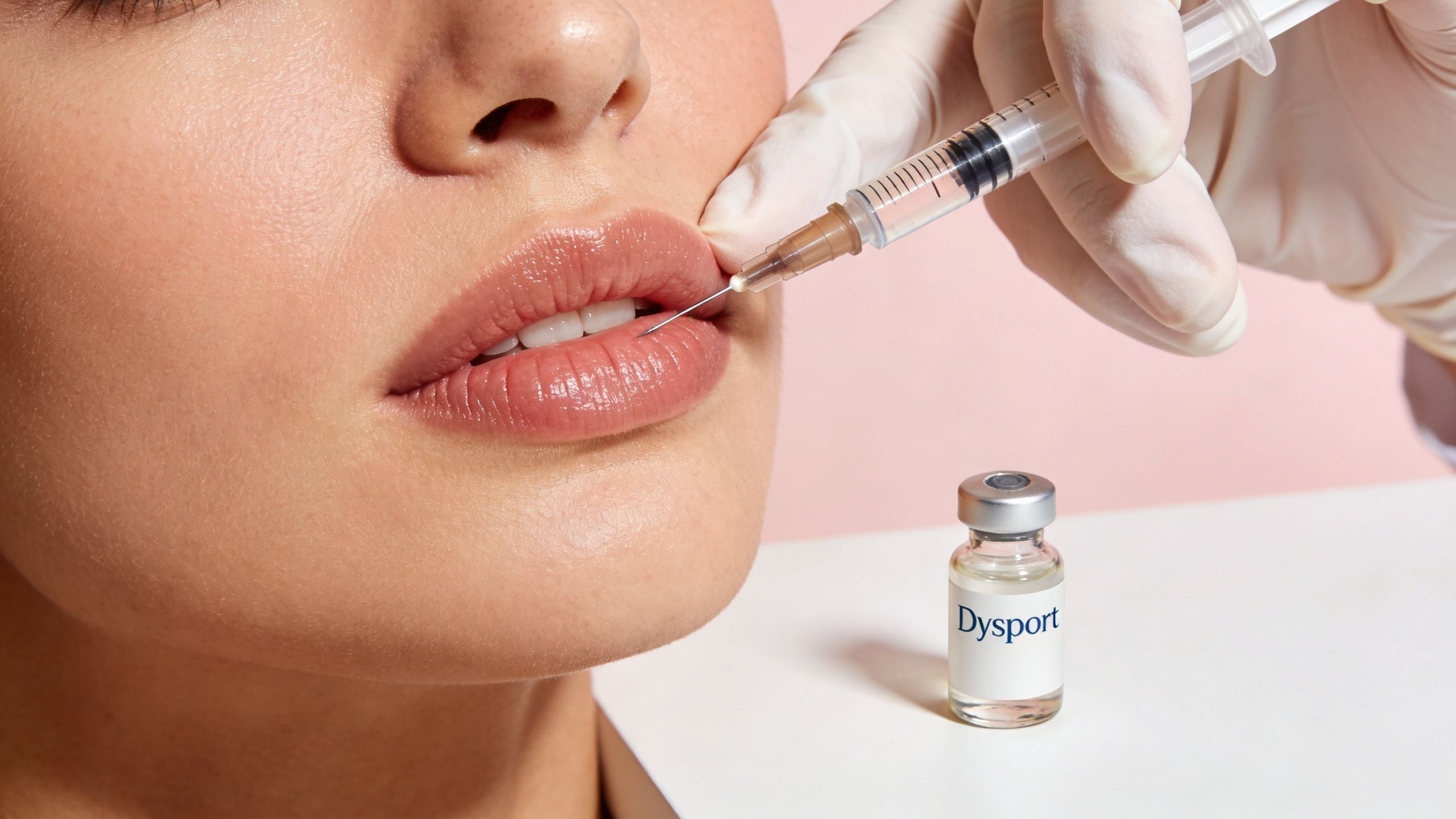
Botox and Dysport reduce the muscle action that keeps pressing that fold into the skin. Filler does a different job. It adds support beneath the crease so the indentation can sit closer to the level of the surrounding skin.
Most fillers used in this conversation are hyaluronic acid fillers. HA is a gel that integrates into tissue and is used to restore shape and soften lines. In the glabella, that doesn't mean piling in product. It means using very small, carefully placed amounts in the correct plane.
If you want a broader primer on product behavior in tissue, this guide on how dermal fillers work gives the basic mechanics.
What filler can and can't do
Filler can help with a line that has become indented. It can't stop muscle motion by itself. That's why patients who rely on filler alone for a strong frown pattern often end up disappointed or overfilled.
A more useful way to think about it is this:
- For movement-driven lines: neuromodulators do the heavy lifting.
- For etched-in creases: filler may refine what toxin alone can't.
- For mixed cases: combination treatment is often the most logical path.
A natural result doesn't look “filled.” It looks like the crease isn't catching light the way it used to.
The role of tissue quality
Skin quality also changes the result. Thin, sun-damaged, or heavily creased skin may still need texture-focused treatments such as resurfacing or collagen-stimulating care. Filler helps with contour and depth. It doesn't replace every other tool in aesthetics.
That's why consultations matter. The right answer isn't just “filler or no filler.” It's whether the line is caused by motion, volume loss, skin thinning, or a combination of all three.
Your Glabellar Filler Procedure Step by Step
The consultation is the procedure before the procedure. I'm looking at your face in motion and at rest, your brow shape, skin thickness, prior injectable history, and how the line behaves under animation. If your crease mostly appears when you frown, I may steer you away from filler. If it remains visible at rest, then filler may be worth discussing.

Step one is deciding if you're a candidate
This area is not one where I treat everyone who asks. I'm evaluating whether the line is static enough to justify filler and whether a conservative plan can improve it safely.
I also look for habits that keep the line active. Strong squinting, heavy corrugator pull, and chronic brow tension often mean you'll get a better result if muscle activity is addressed as part of the treatment plan.
What happens during the appointment
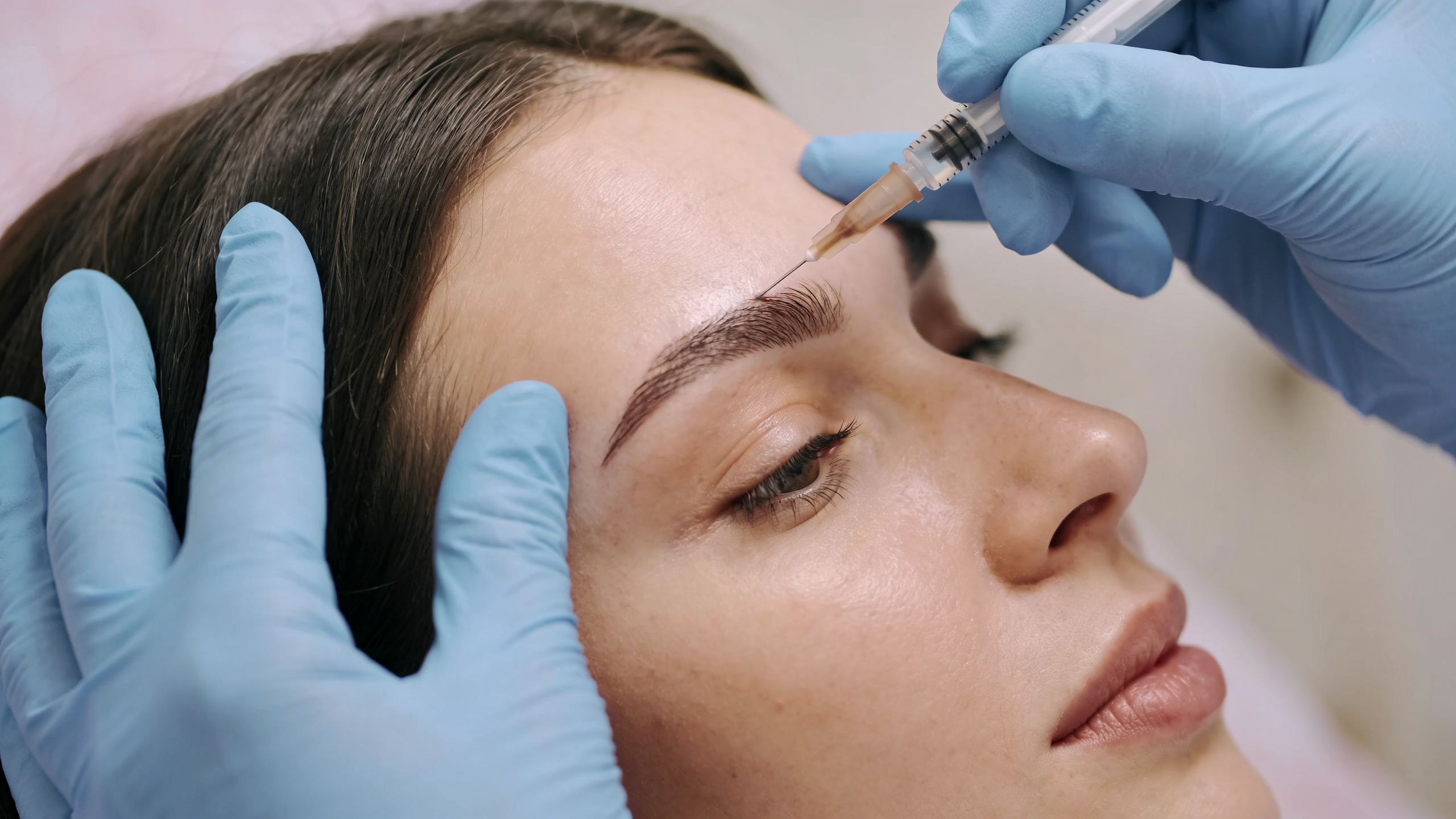
Most patients use a topical numbing cream first. The treatment itself is quick, but quick doesn't mean rushed. In the glabella, precision matters more than speed.
Clinical protocols describe a “sandwich” technique that combines superficial placement for fine etched lines with deeper placement for support. Those protocols recommend approximately 0.3 cc of hyaluronic acid gel per side for bilateral glabellar treatment, with results appearing within 48 to 72 hours and lasting 6 to 12 months depending on product and patient factors, as outlined in this clinical overview of glabella and central brow treatment.
That depth strategy matters because placing the wrong amount in the wrong plane creates the problems patients fear. Too superficial, and you can see lumps or a bluish cast. Too much in one spot, and the area can look obvious instead of refreshed.
What I want the filler to do
I'm not trying to erase every trace of human expression. I'm trying to soften the shadow and indentation so your face looks less tense at rest.
A conservative glabellar filler plan usually aims for:
- Less depth in the vertical crease
- A smoother transition between the brows
- No bulky look when you animate
- Enough correction to look rested, not altered
Small amounts placed well usually outperform larger amounts placed aggressively.
Why some patients combine filler with Botox
A static line and an active frown pattern often live together. In those cases, combining filler with a neuromodulator can make the result look smoother and hold up better, because one treatment softens the crease while the other reduces the repeated folding action.
That's also why follow-up matters. The first visit is not about chasing perfection. It's about treating a difficult area cautiously, reassessing how the tissue settles, and deciding whether anything else is needed.
Understanding Risks and Finding a Safe Injector
The glabella is considered high-risk for one specific reason. Its blood supply is connected to arteries that communicate with the eye area. If filler enters a vessel, the consequences can be severe.
That's the “why” behind the warnings patients hear. Not all parts of the face carry the same vascular concern, and this one deserves respect.

Why anatomy matters so much here
The area between the brows is supplied by vessels including the supratrochlear, supraorbital, and dorsal nasal arteries. Those connections are the reason experienced injectors approach this region with a very different mindset than they would a lower-risk treatment area.
The FDA emphasizes that filler injections in the face carry a risk of unintentional injection into blood vessels. In the glabella, the issue isn't just bruising or swelling. It's that vascular compromise can affect tissue and vision. The FDA also stresses the need for injector skill, anatomy knowledge, and emergency readiness, including access to hyaluronidase, in its guidance on dermal filler safety and provider selection.
The real safety question
Patients often ask, “Is it safe?” The more useful question is, “Safe for whom, with what anatomy, using which product, by what technique, and with what emergency plan?”
That's not fear-based. It's responsible decision-making.
A safer consultation includes questions like these:
- How often do you treat the glabella with filler? Experience in this exact area matters.
- What makes me a candidate or not a candidate? A good injector should be comfortable saying no.
- What product would you use and why? In this area, conservative product choice matters.
- Do you keep hyaluronidase in office? For HA fillers, emergency preparedness is imperative.
- How would you manage a vascular event? You want a clear answer, not hesitation.
If you want a broader overview of warning signs and expected reactions, this article on dermal filler side effects can help you separate normal recovery from reasons to contact your injector promptly.
The safest injector isn't the one who promises perfection. It's the one who understands limits, explains trade-offs clearly, and knows when not to inject.
Who tends to be a better candidate
A stronger candidate often has an etched-in line at rest, understands that improvement may be partial rather than absolute, and is open to pairing filler with a neuromodulator if needed.
A weaker candidate may have mostly dynamic lines, unrealistic expectations, a desire for full correction in one pass, or anatomy that makes the area less suitable for treatment. In those cases, I'd rather redirect the plan than force a risky injection.
Filler vs Botox for Frown Lines
Patients often frame this as a choice. In practice, it's often a sequencing issue. Botox and filler solve different parts of the same problem.
A survey of 687 aesthetic patients found that 72% chose Botox for glabellar lines, and about 70% of Botox-treated respondents also opted for dermal filler treatment, which shows how common combination therapy is in real-world facial rejuvenation plans, according to this ASAPS-related patient survey summary.
Glabellar Lines Treatment Comparison
| Feature | Dermal Filler | Botox / Dysport |
|---|---|---|
| Primary target | Static crease that remains at rest | Muscle movement causing the frown line |
| How it works | Supports the indentation from below | Relaxes the muscle activity creating the fold |
| Best for | Etched-in “11” lines | Dynamic lines that deepen with expression |
| Result style | Smoother contour in the crease | Softer movement and less repetitive folding |
| Limitation | Won't stop strong muscle pull by itself | Won't fully lift a stamped-in crease by itself |
| When combined | Helps refine static depth | Helps prevent the line from being pressed back in |
When filler is the better tool
If the line is still there when you're completely relaxed, filler may be the more useful addition. It treats the depression itself. This matters most in mature skin or in patients who've had strong glabellar movement for years.
When Botox or Dysport should come first
If the line appears mainly with expression, neuromodulators are usually the cleaner answer. They reduce the motion that creates the crease, and they do it without adding volume.
That's why overfilling a movement problem rarely looks elegant. The muscle is still folding the area. You've just added product into a crease that is still being compressed.
Why combination treatment often looks most natural
The best outcomes often come when each tool stays in its lane. Botox or Dysport quiets the repeated folding. Filler softens what's already been etched in.
For some patients, I'll also talk about texture-focused treatments such as microneedling, laser, or medical-grade skincare. Those don't replace injectables for a deep glabellar crease, but they can improve the skin quality around it. If you're weighing your options, this comparison of dermal fillers vs Botox lays out the distinctions clearly.
If your line is caused by motion, treat motion. If the line is stamped into the skin, then add structure carefully.
Your Results Timeline and Aftercare
After treatment, expect the area to look a little reactive before it looks refined. Mild swelling, pinpoint redness, or tenderness can happen. That early stage doesn't tell you the final result.
Most glabellar filler results start to declare themselves over the next couple of days as the product settles and surface swelling eases. If Botox is part of the plan, that timeline is separate, and the full picture develops as each treatment does its part.

How long results may last
Longevity varies by product, placement, metabolism, and how much movement the area still has. In a five-year case series of 20 patients treated with hyaluronic acid fillers in the eyebrow and periorbital region, repeat injections occurred at a mean interval of 14 months, which supports the idea that results are lasting but not permanent, as reported in this five-year follow-up study on brow-region HA fillers.
That study looked at the broader brow region rather than only a single glabellar line, but it's still useful for setting expectations. Maintenance is normal. One treatment doesn't freeze time.
Aftercare that protects your result
The first days matter. I want patients to be gentle with the area and avoid anything that increases unnecessary irritation. Good aftercare is simple:
- Keep skincare calm: Use gentle products and avoid aggressive exfoliation until the skin feels settled.
- Protect from UV exposure: Daily sunscreen matters because sun damage makes etched lines look worse over time.
- Watch the area closely: If something feels off rather than just tender, contact your injector.
- Think long-term: If muscle movement is strong, maintenance may include more than filler alone.
For home support, some patients like LED after aesthetic treatments. The Barb N.P. Facial Mask is one option for that kind of routine. It's a wireless LED mask designed for comfort on the face and includes 3 lighting settings for different treatment goals, which can make it easier to use consistently at home alongside a simple skincare plan. I also commonly recommend pairing procedures with broad-spectrum SPF and medical-grade hydration serums from the clinic's skincare selection.
What “good” healing looks like
A successful outcome usually doesn't announce itself. Friends may say you look less tired or less tense without knowing why. That's the standard I prefer.
If the result looks obvious, heavy, or unnatural in a high-expression area like the glabella, too much was likely asked of the filler.
Common Questions About Glabellar Fillers
Does filler between the eyebrows hurt
Most patients say it's tolerable. Topical numbing helps, and the treatment is quick. The bigger issue isn't pain. It's choosing someone who injects this area cautiously.
How much does dermal filler between eyebrows cost at BotoxBarb
Cost depends on the product used, how much is appropriate, and whether your plan includes Botox or another treatment. I don't like quoting this area casually without seeing the line in motion and at rest, because the safest plan is often the most individualized one.
Why should I trust BotoxBarb for this treatment
Because this isn't a treatment I treat casually. The glabella demands anatomy knowledge, restraint, and emergency readiness. A good consultation should include candidacy, alternatives, risk discussion, and a conservative plan. If you're not a fit, that should be said clearly.
Will filler erase my 11 lines completely
Sometimes the answer is partial improvement, not total erasure. That's especially true with deep etched lines. Natural-looking softening is the goal.
What should I do next
Book a consultation if the line stays visible when your face is relaxed and you want an honest opinion about whether filler, Botox, or a combination makes the most sense for your anatomy.
If you're considering treatment for a persistent frown line, schedule a consultation through BotoxBarb. You can also browse in-clinic aesthetic services, LED light therapy options, and medical-grade skincare that supports your results at home.