Article: Dermal Fillers Lips: A Complete Patient Explainer
Dermal Fillers Lips: A Complete Patient Explainer
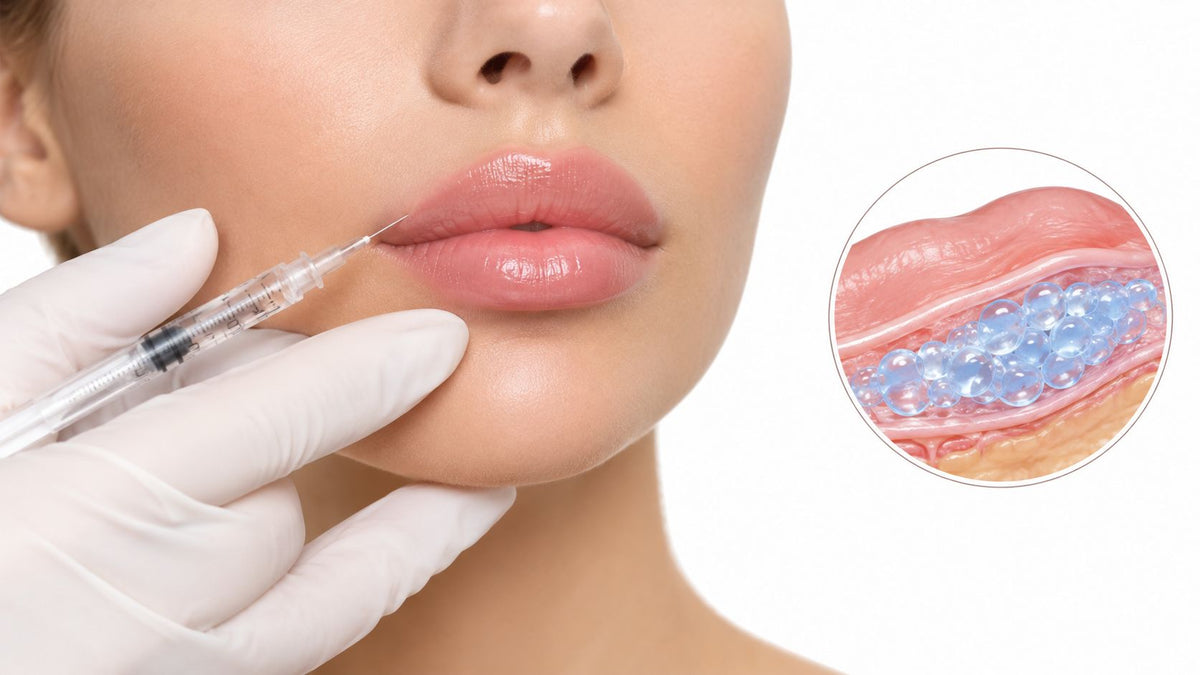
Hyaluronic acid dermal fillers for lips are temporary, reversible gels that add volume and shape, and they're the modern default because they can be adjusted or dissolved if needed. In clinical follow up, 60.0% of patients treated with one hyaluronic acid gel and 57.7% treated with another still showed improved lip fullness at 6 months.
That distinction matters if you're sitting with a calendar open, trying to decide whether to book before a wedding, reunion, photoshoot, or milestone birthday. You want your lips to look like yours, just a little fuller and more balanced, and you don't want a result you have to live with if your taste changes. A good consultation should give you clear answers on product, amount, recovery, and safety before anyone picks up a syringe.
Why People Choose Lip Fillers and What to Expect
A common first visit starts with a phone photo and a simple complaint. Lipstick bleeds into fine lines, the upper lip disappears when you smile, or one side has always sat lower than the other. You're not asking for a different face. You're asking for a small change that still reads as natural in person and on camera.
Hyaluronic acid lip fillers are injectable gels made from a water attracting substance your body already produces, and they're the current standard for dermal fillers lips treatment because the result is temporary and can be reversed with an enzyme if there's a problem. That reversibility changes the conversation. It doesn't make treatment casual, but it does make conservative planning possible.
The Reasons Patients Actually Give
Most requests fall into a few practical categories, and they're usually more modest than social media suggests.
- Subtle volume: Restoring fullness that's thinned with age, or adding a small amount to naturally thin lips.
- Symmetry and shape: Balancing left and right sides, defining the cupid's bow, or supporting a border that's lost definition.
- Hydration and texture: Improving the look of persistent dryness and fine vertical lines so lip products sit better.
- Proportional balance: Bringing upper and lower lips into better relationship with each other and with the rest of the face.
What filler won't do is just as important. It won't lift a downturned mouth the way surgery can, it won't erase deep perioral lines on its own, and it won't fix a gummy smile. Those concerns need different tools, and an honest injector will say so at consultation rather than adding more gel.
What a Realistic Expectation Looks Like
Expect enhancement, not transformation. Expect swelling that makes day one an unreliable guide to your final result. Expect to discuss your medical history, prior filler, cold sores, dental work, and timing around events. If a clinic skips those questions and moves straight to price and syringe count, that's information too.
A natural result is usually the one nobody can pinpoint. People notice you look rested or that your lipstick suits you, not that you've had filler.
Timing deserves the same honesty. Book well ahead of any event that matters, not the week before. First time patients don't know yet how much they bruise or swell, and there's no reliable way to predict it from someone else's photos. Leave room for a follow up assessment and, if needed, a small adjustment.
The sections that follow cover how these gels work, which product families you'll hear about, what the appointment involves, how long results tend to last, which symptoms are routine and which aren't, and how to choose an injector. Read the safety material as carefully as the results material. Both are part of the same decision.
How Lip Fillers Actually Work
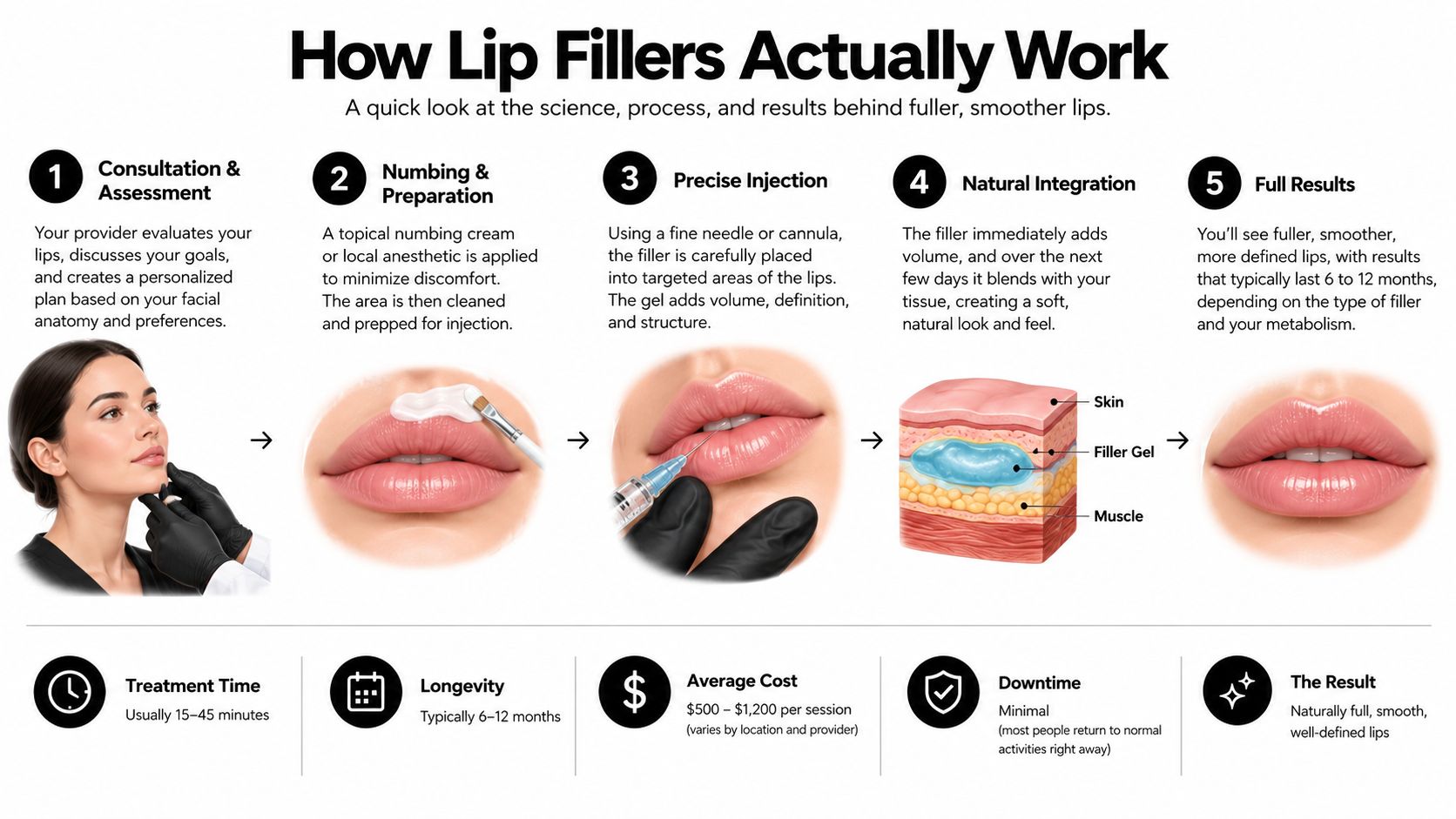
Hyaluronic acid, often shortened to HA, is a sugar molecule found naturally in skin and connective tissue. Its useful property is simple. It attracts and holds water, so a small amount of gel placed in the lip creates volume partly from the product itself and partly from the water it draws in. Think of it as a sponge that's been engineered to hold its shape inside tissue instead of dispersing immediately.
Manufacturers control that behavior through cross linking, which bonds HA chains together. Lightly cross linked gels feel soft and spread easily. More heavily cross linked gels hold structure and resist deformation. A useful analogy is cushioning grades. A soft gel behaves like a memory foam topper that smooths and hydrates, while a firmer gel behaves like a denser cushion that defines an edge. Neither is better in isolation. Each suits a different anatomical job.
The Regulatory History Behind Modern Products
HA fillers became a major option after the FDA approval history for Restylane in 2003 and Restylane Silk in 2015, with Restylane Silk the first HA filler specifically approved for lip augmentation and perioral wrinkles in patients aged 21 and older. That progression matters. Early products were approved for general wrinkle correction, while later ones were studied and labeled for specific anatomy like the lip.
FDA approval evaluates a defined indication and the safety data submitted for it. It doesn't guarantee your individual outcome, and it doesn't compensate for poor technique. Product, placement depth, volume, and your tissue all interact. If you're weighing neuromodulators against gels for the mouth area, a clear explainer on the difference between Botox and fillers helps separate muscle relaxation from volumizing, since the two do entirely different jobs.
| Family / Example | Typical feel | Most often chosen for |
|---|---|---|
| Soft HA gel | Smooth, flexible | Hydration, fine lines, subtle fullness |
| Balanced HA gel | Soft with some structure | Overall shape and moderate volume |
| Structured HA gel | Firmer, shape holding | Border definition and contour |
Depth on the underlying mechanism, including how gels integrate and break down, is covered in our guide to how dermal fillers work in tissue.
Why Reversibility Is the Defining Advantage
HA can be broken down by hyaluronidase, an enzyme that dissolves the gel. That's the safety feature older permanent materials didn't offer. If filler is misplaced, lumpy, or compromising blood flow, there's a corrective tool available. Reversibility isn't a reason to be casual about placement. It's a reason HA became the default while permanent lip products largely fell out of favor.
Common Filler Types and Brands You Will Hear About
You'll hear brand names before you hear anything useful about them. Restylane, Juvéderm, Revanesse. Each is a family, not a single product, and within each family the gels differ in firmness, water attraction, and how they move with the lip. Choosing by brand loyalty is backwards. The right sequence is anatomy first, goal second, product third.
Three Categories That Matter in Practice
Soft hydrating gels sit at the subtle end. They're chosen when the goal is smoothness, light hydration, and softening of fine vertical lines rather than visible size increase. Patients who say they want their lips to look healthier rather than bigger often land here. The trade off is limited structural support, so these gels won't build a border that isn't there.
Balanced gels do most of the everyday work in lip augmentation. They add noticeable but controlled volume, support shape, and still flex when you talk and smile. For a first treatment aimed at modest fullness with natural movement, this category is the usual starting point. Too much of even a well chosen balanced gel still looks overdone, which is why amount matters as much as product.
More structured gels hold an edge. They're used sparingly for border definition, cupid's bow shaping, or correcting asymmetry where the tissue needs support. In mobile lip tissue, firmness is a double edged quality. Used well it creates definition. Used heavily it can feel stiff, look shelf like above the border, or become palpable when you press your lips together.
Practical rule: If an injector recommends a product before examining your lips and asking what bothers you, the recommendation is about inventory, not anatomy.
Product selection also depends on your tissue quality. Thin, tight lips accept volume differently from lips with existing fullness and loose tissue. Prior filler changes the picture too, because old product may still be present even when you think it has worn off. Sometimes the correct first step is dissolving what's there and starting clean, not layering new gel on top of migrated material.
What to Avoid and Why
Be wary of needle free high pressure devices marketed for at home or salon lip filler. They aren't a validated route for injecting filler, they don't control depth or placement the way a needle or cannula does, and they can't be paired with the anatomical judgment this area requires. Be equally wary of anyone who can't tell you exactly which product they're using, show you the sealed syringe, or explain whether that use is on label. Off label use by an experienced clinician is a normal part of medicine, but it should be disclosed and reasoned, not hidden.
Who Is a Good Candidate
Good candidates are healthy adults with specific, modest goals they can describe. You want a little more upper lip show. You want the left side to match the right. You want lipstick to stop feathering. Those are workable targets. Vague dissatisfaction with your whole face isn't something a syringe of lip gel can resolve, and treating it as if it could leads to escalating volume and disappointment.
You'll also need to accept maintenance. HA filler is temporary, so keeping a result means repeat visits over time. If that commitment doesn't suit your budget or temperament, that's a legitimate reason to decline.
- Postpone treatment if: You have an active cold sore, skin infection, or irritation in or around the lips.
- Not appropriate if: You're pregnant or nursing, or you have a known allergy to filler components or to lidocaine when the product contains it.
- Disclose and discuss: A history of keloid scarring, autoimmune conditions, bleeding issues, prior permanent filler, previous reactions to injectables, and any medications or supplements that increase bruising.
Cold sore history deserves a specific mention even if you don't have an active lesion. Injections around the mouth can trigger a recurrence in susceptible people, so your injector may recommend preventive antiviral medication. That's a routine precaution, not a cause for alarm, but it only happens if you mention the history.
Timing around dental work, vaccinations, illness, and big events should come up at consultation. Dental procedures involve pressure and bacteria exposure around the mouth, and your injector will usually want separation between dental appointments and filler. Give yourself a generous social buffer before photographs or travel, particularly for a first treatment when your personal swelling pattern is unknown. If your schedule can't accommodate that buffer, reschedule the filler rather than gamble.
The Lip Filler Procedure Step by Step
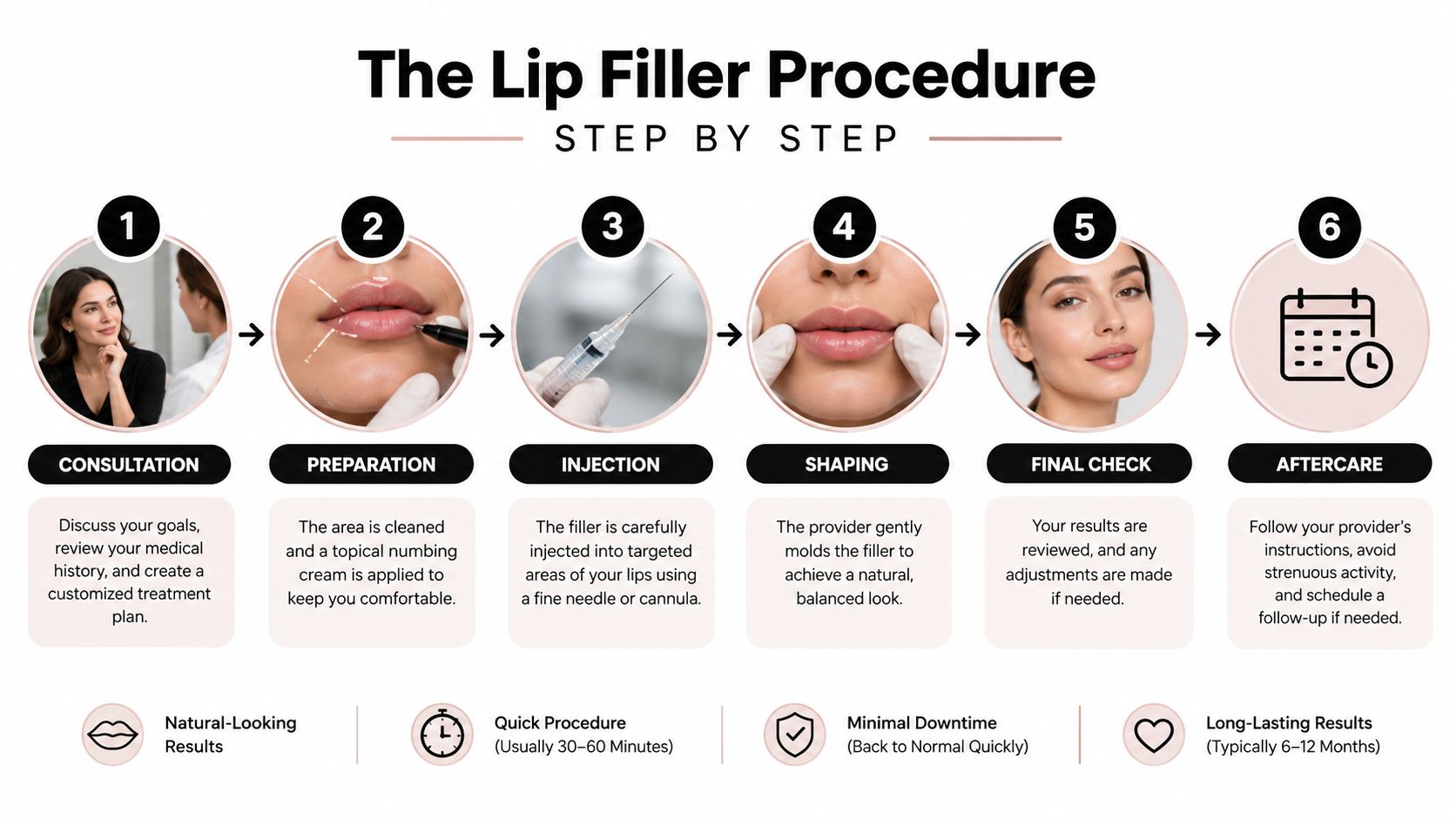
The appointment begins with conversation, not injection. Your injector reviews medical history, allergies, prior treatments, and medications, then examines your lips at rest and in motion. Photographs are taken for your record, consent is discussed in plain language, and you agree on a plan that states product, approximate amount, and what you're deliberately not treating yet.
Numbing and Comfort
The lips are sensitive, so comfort measures are standard. Topical anesthetic cream is applied and left to take effect, ice helps before and after, and some injectors use vibration distraction near the injection site. Many modern HA fillers also contain lidocaine mixed into the gel, so the area typically becomes more comfortable as treatment progresses. You'll feel pressure and brief stinging rather than sharp sustained pain. Tell your injector if you're lightheaded or anxious. Pausing costs nothing.
Needle, Cannula, and Why Anatomy Drives the Choice
A fine needle gives precise placement in small aliquots and works well for border definition and detailed shaping. A cannula is a blunt tipped tube inserted through a small entry point, and it can cover a broader area with fewer punctures. Neither instrument is automatically safer. What matters is depth, plane, speed, volume per pass, and the injector's knowledge of lip vasculature.
That knowledge is not academic. The superior and inferior labial arteries can run close to the vermilion borders, and anatomical reviews on vascular risk at the vermilion border identify deep subdermal injection there as high risk for vascular injury. Vascular compromise can show as blanching or livedo reticularis, a mottled pattern, and it requires immediate occlusion response treatment including high dose hyaluronidase when HA filler is suspected. Conservative aliquots, controlled pressure, and constant visual checking of the tissue are how careful injectors reduce that risk.
- Assess and mark: Landmarks, asymmetries, and injection points are identified with you upright.
- Inject slowly: Small amounts are placed, with pauses to check color, capillary refill, and shape.
- Mold and review: The injector gently shapes the gel and hands you a mirror for feedback before adding more.
The First Ten Minutes After
Your lips will look bigger than planned. That's swelling and anesthetic effect, not the settled result. Mild redness at entry points and a feeling of fullness or tightness are expected. You'll usually sit briefly with ice while the injector confirms color and symmetry, reviews aftercare, and tells you exactly who to contact after hours. Leave with that contact route written down, not memorized.
Results, Longevity, and When to Plan a Top-Up
Lip filler is an enhancement with variable durability, not a permanent correction. In a 12 month evaluator blinded comparison of two HA lip gels, 60.0% of participants treated with one gel and 57.7% treated with another still showed improved lip fullness at 6 months. Read that carefully. It also means a substantial share of patients no longer showed measured improvement at that point.
Lips are a high movement area. You talk, eat, drink through straws, and press them together constantly, so gel here tends to break down faster than gel in a quieter part of the face. Product properties, your metabolism, injection pattern, and how much was placed all influence duration. Anyone promising you an exact number of months is selling certainty that doesn't exist.
Volume and Satisfaction Are Not the Same Measurement
This is the part most explainers skip. A 2025 prospective study combining 3 D imaging with patient reported outcomes found lip volume declined substantially during follow up while satisfaction and psychological benefit remained comparatively high. Longer term respondents reported satisfaction persisting beyond measurable fullness, and cost rather than dissatisfaction was the main reason some avoided repeat treatment.
Less volume on a scan doesn't automatically mean a failed result. If your lips still look balanced and you still like them, the treatment is still doing its job.
That finding has a practical consequence. Chasing the exact fullness of week two with repeated top ups can gradually overfill the lip, because residual gel often remains after the obvious plumpness fades. Layering on a fixed calendar schedule is how lips slowly lose their natural border and start to look heavy. For a useful perspective on pacing maintenance, see the discussion of natural-looking filler results at ProMD Health, which frames longevity around appearance rather than a stopwatch.
What Fading Looks Like and When to Reassess
Ordinary fading is gradual and symmetrical. Definition softens, lipstick starts feathering again, and photographs look closer to your pre treatment baseline. Nothing hurts, changes color, or feels newly lumpy. Some patients prefer that gentle return and choose not to retreat at all. That's a valid outcome, not a failed one.
Plan reassessment by looking at current photographs against your baseline, checking facial balance and lip function, and deciding whether you'd repeat the same amount. If the answer is yes, a conservative top up makes sense. If you're unsure, waiting is free and reversible in a way that extra gel is not. Persistent lumps, inflammation, discoloration, or pain aren't signs of normal fading, and they belong in the next section rather than in a maintenance plan.
Side Effects, Complications, and What Is Not Normal
Generic reassurance isn't useful at midnight when your lip looks wrong. What you need are decision points. Some symptoms are expected and self limiting. Others need a phone call the same day, and a small number need urgent in person assessment.
The FDA overview of dermal filler risks identifies accidental injection into a blood vessel as the most serious risk, with potential tissue necrosis, vision abnormalities including blindness, or stroke. The same guidance notes that common effects occur soon after treatment and generally resolve within days to weeks, while delayed problems can appear much later.
Expected Versus Urgent
Usually normal: Swelling that's fairly even on both sides, mild to moderate bruising, tenderness when you press the lip, small firm areas that soften over the following days, and temporary unevenness while swelling settles at different rates. Bruising in particular can look dramatic against pale skin and still be entirely routine.
Call urgently, don't wait and watch:
- Color change: White blanching, mottled or lacy patterning, dusky blue or grey areas, or skin that feels cool compared with surrounding tissue.
- Pain out of proportion: Pain that's severe, escalating, or clearly worse on one side rather than improving.
- Visual symptoms: Any change in vision, eye pain, or weakness on one side. Treat these as an emergency.
- Signs of infection: Spreading redness, increasing warmth, drainage, fever, or red streaking.
- Blistering or skin breakdown: New sores, crusting, or areas that look like they're losing surface skin.
Vascular compromise is time sensitive because tissue that's starved of blood flow deteriorates. That's why your injector's emergency protocol matters more than their Instagram grid. Ask before treatment whether hyaluronidase is stocked on site and how after hours concerns are handled. A clinician who welcomes that question is demonstrating competence, not inviting doubt.
Delayed Problems Worth Knowing About
Not every complication appears in the first week. A systematic review of delayed lip nodules and granulomas after augmentation screened 2,954 articles and included 28 studies describing 66 cases, with nodules appearing an average of 35.2 months after treatment. In that review, 31 cases, or 47.0%, were confirmed as delayed onset foreign body granulomas, and published estimates of granulomatous reactions after HA injections range from 0.02% to 0.4%.
Those figures come from reported cases, and uncomplicated treatments rarely get published, so they don't give you a personal risk percentage. Their value is awareness. A new firm lump appearing months or years later isn't something to squeeze, massage aggressively, or ignore. It needs assessment, and management differs depending on whether it's residual product, infection, or an immune reaction. Keep a record of what was injected and when. That information is useful to whoever evaluates you later.
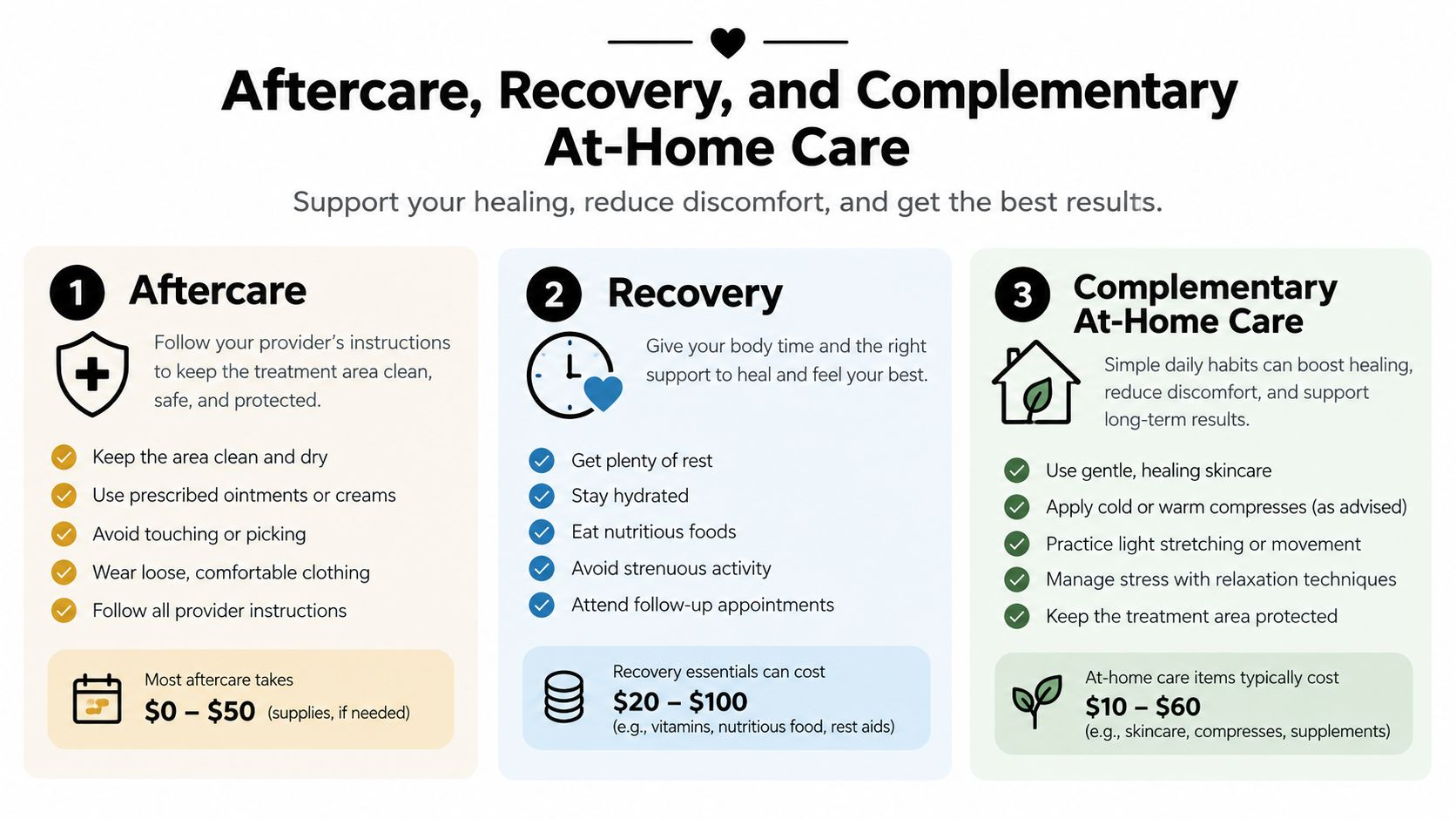
Aftercare, Recovery, and Complementary At-Home Care
Aftercare is mostly about not interfering. Your lips have had multiple small punctures and a gel placed into tissue that swells readily, so the first day sets the tone for how the week goes.
A Day by Day Framework
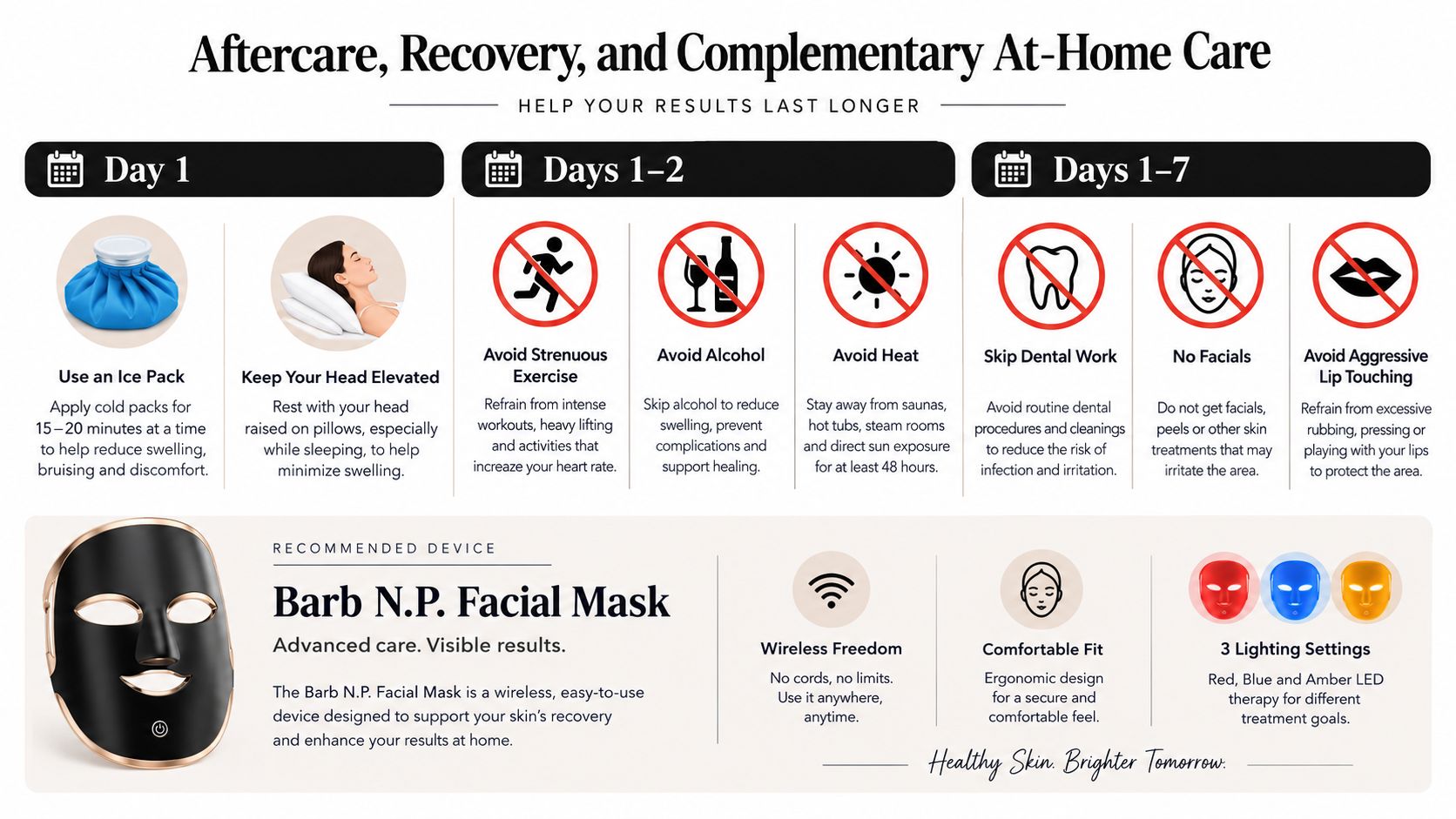
First night: Apply cold compresses intermittently rather than continuously, and sleep with your head raised to limit overnight swelling. Keep the area clean, skip lipstick until entry points have closed, and avoid pressing or massaging unless your injector specifically instructed you to.
First two days: Skip strenuous exercise, alcohol, saunas, and very hot showers. Heat and exertion increase blood flow to the face, which worsens swelling and bruising. Drink normally, eat soft foods if chewing is uncomfortable, and be gentle with straws and wide yawning.
First week or two: Postpone dental work, facials, waxing around the mouth, and aggressive lip products such as scrubs or plumping glosses with irritants. Our detailed walkthrough of lip filler recovery time and milestones maps out what typically changes day by day. For a complementary clinical perspective, the dental spa filler aftercare recommendations from Ultra Smile DentalSpa cover similar ground on protecting the area while it settles.
If a small bruise appears, leave it alone. Cover it with makeup once the skin surface is intact and let it fade. If you feel a small lump, note when you noticed it and whether it's tender, red, or growing. A soft, painless irregularity in the first days is commonly swelling or gel that hasn't integrated yet. A lump that's painful, enlarging, or accompanied by color change is a phone call, not a home remedy.
Where LED Light Therapy Fits
At home LED therapy is a reasonable complement to in clinic treatment for general skin quality around the mouth and face, provided you follow device instructions and keep pressure off freshly treated lips until your injector clears you. A systematic review of at home LED facial light studies found sessions of 3 to 21 minutes, two to seven times weekly, for four to 12 weeks, with red light in the 620 to 750 nm range appearing in 88% of studies and improvements reported in wrinkles, skin texture, elasticity, and periorbital lines.
The Barb N.P. Facial Mask is a wireless, hands free option designed to sit comfortably on the face, with 3 lighting settings intended for different treatment goals. Wireless design matters in practice because a device you'll use several times a week beats a more elaborate one that stays in a drawer. Comfort matters for the same reason.
Be clear about the limits. LED care supports skin quality and your overall routine. It doesn't dissolve misplaced filler, treat infection, or restore blood flow. If something looks wrong, the mask stays in its case and you contact your injector.
If You Dislike the Result
HA filler can be dissolved with hyaluronidase in clinic. That's appropriate for persistent lumps, migration above the border, or a result that doesn't suit you after swelling has fully settled. Wait until the early swelling resolves before judging, because dissolving a lip that's mostly swollen wastes product you might have liked. Your injector should explain that dissolving can take more than one session and that your natural tissue may look temporarily deflated afterward.
Cost, Choosing an Injector, and Your Next Step
Lip filler is usually priced per syringe, and the total depends on product, region, injector experience, and how much your plan requires. Any honest quote should state what's included, whether a follow up review is part of the fee, and what dissolving or complication management would cost if you needed it. Cost is a legitimate factor in deciding whether and when to retreat, and a clinic that pressures you to prepay for multiple syringes hasn't earned your trust.
Cheapest is rarely cheapest in the end. Correcting migrated or poorly placed filler takes additional appointments, dissolving sessions, and time with lips you're unhappy about. You're paying for anatomical judgment and complication readiness as much as for gel.
How to Evaluate an Injector
- Licensure and training: A nurse practitioner, physician, or dentist with specific aesthetic injectable training, who can explain their qualifications without deflecting.
- Real patient evidence: Before and after photographs of their own patients, including results that look like the subtlety you're asking for.
- Safety infrastructure: Hyaluronidase stocked on site, a written vascular occlusion protocol, and a clear after hours contact route.
- Consultation quality: They examine you, discuss contraindications, and will talk you out of volume you don't need.
- Product transparency: Sealed, in date syringes from legitimate supply, with the product name recorded in your chart.
If you're comparing local options, our guidance on finding lip filler near me and what to check first outlines the questions worth asking before you book.
Four Questions First Time Patients Ask
How much filler is typical to start with? One syringe with conservative, anatomy based placement is the common first time plan rather than aggressive volume. You can always add at review. Removing excess is more involved.
How soon does swelling resolve? FDA guidance on dermal filler do's and don'ts notes that common effects such as swelling and bruising generally occur soon after treatment and often resolve within days to weeks. Judge your result after that settling period, not on day two.
Is it reversible? Yes, for HA products. Hyaluronidase can dissolve the gel, which is a central reason HA is preferred for lips.
What should I bring to a consultation? A list of medications and supplements, your history of cold sores and prior injectables including product names if you know them, reference photos of lips you like and lips you don't, and your calendar so timing around events and dental work can be planned realistically.
Your next step isn't booking an injection. It's booking a consultation where you're free to leave without treatment. Write down your three most important questions, ask them directly, and pay attention to whether the answers are specific to your anatomy or generic sales language. That difference tells you most of what you need to know.
If you're ready to talk through whether lip filler fits your anatomy and goals, BotoxBarb offers personalized injectable consultations alongside medical grade skincare and at home devices that support your result between visits. Book a consultation to get a conservative, anatomy based plan, or browse the curated shop to build the routine that keeps your skin looking its best long after your appointment.