Dysport for Masseter: Jaw Slimming and Bruxism Relief
You wake with a sore jaw, a dull headache, or teeth that feel tender after another night of clenching. Then you see a side-profile photo and notice that your lower face looks broader than it used to. The same muscle may be responsible for both complaints, especially when the masseter has become enlarged and overactive through repeated clenching or grinding.
Dysport for masseter treatment can address two different concerns with one targeted approach. By reducing masseter contraction, it may ease the force behind bruxism and some muscular TMJ symptoms. Over time, the same reduction in activity can decrease muscle bulk and soften a wide or square jawline. Those outcomes aren't identical, however. Pain relief and cosmetic slimming follow different timelines, require different clinical reasoning, and carry different long-term considerations.

Why Your Jaw Might Be Working Against You
A patient may describe waking with tightness around the cheeks, pressing the tongue against the teeth during stressful meetings, or noticing that the lower face looks square when they clench. Often, they've already tried a night guard, massage, stretching, or stress-management techniques. Those measures can help, but they don't always reduce the muscle's underlying force enough to change the pattern.
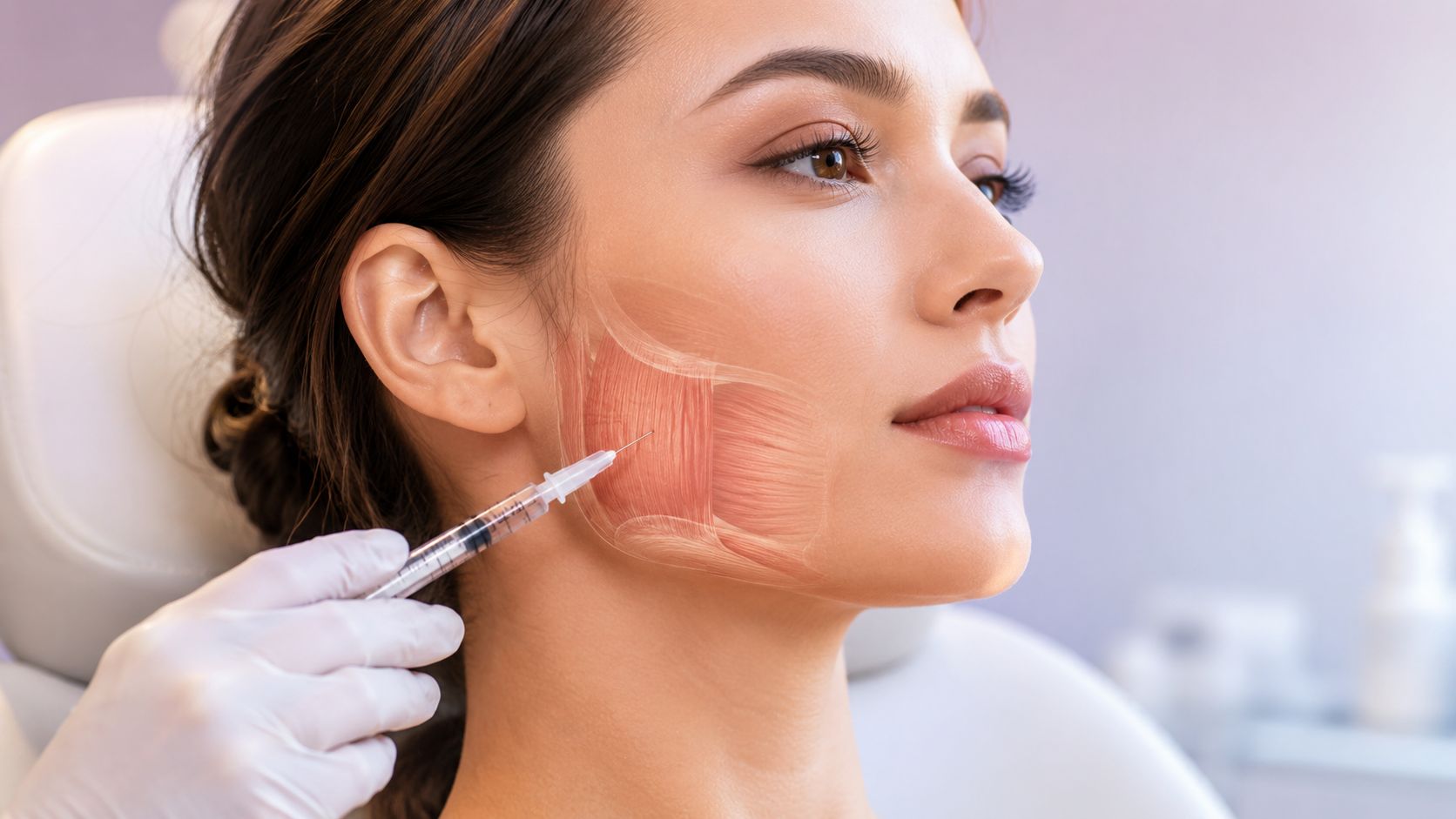
The masseter is the thick jaw-closing muscle you can feel just in front of the angle of the mandible. It contracts when you chew, bite, clench, or grind. If it stays active for long periods, the muscle can become more prominent, creating a fuller lower face while contributing to soreness, tension headaches, tooth loading, and discomfort around the jaw joint.
Practical distinction: A wider jawline isn't automatically caused by a large masseter, and jaw pain isn't automatically a masseter problem.
During a consultation, I assess whether the visible width is muscular, skeletal, or a combination. I also ask when symptoms appear, whether there's nighttime grinding, whether the jaw locks or clicks, and whether pain is located in the muscle or directly at the joint. That distinction matters because Dysport relaxes muscle. It won't narrow mandibular bone or correct every cause of TMJ dysfunction.
Where Dysport fits
Dysport, also known as abobotulinumtoxinA, is injected into selected areas of the masseter to reduce contraction strength. The intent may be functional, cosmetic, or both. For a patient whose main problem is clenching, the priority is reducing force without making chewing uncomfortable. For someone seeking facial slimming, the plan focuses on controlled weakening that allows the bulky muscle to gradually reduce in size.
If headaches seem connected to nighttime grinding or daytime jaw tension, a resource on how to stop jaw clenching headaches can help you understand the broader behavioral and sleep-related contributors. Dysport may manage the muscular component, but it shouldn't replace dental assessment, a properly fitted night guard when indicated, or evaluation of sleep and stress factors.
The strongest recent evidence is more useful than anecdotal before-and-after photos, but it still has limits. A 2026 meta-analysis included five randomized controlled trials with 536 participants and found consistent reductions in masseter thickness and higher patient satisfaction, while also reporting substantial heterogeneity and insufficient evidence to define one universally optimal dose relationship (PubMed analysis). That's why a safe plan begins with anatomy and goals, not a fixed unit number copied from another face.
How Dysport Works Inside the Masseter Muscle
The masseter has a straightforward job, but its anatomy isn't flat or uniform. It originates from the zygomatic bone and zygomatic arch and inserts on the inferior ramus of the mandible. An anatomical review describes three layers, which means a superficial injection pattern may not distribute evenly through the muscle (masseter anatomy review).
Think of the muscle as a compact engine that has been over-trained. Years of clenching can make it stronger and bulkier, much like repeated resistance work changes another muscle. Dysport doesn't remove the muscle. It temporarily reduces the nerve signal that tells the muscle to contract with full force.
The neuromuscular sequence
At the neuromuscular junction, nerves communicate with muscle fibers through chemical signaling that includes acetylcholine. AbobotulinumtoxinA interferes with acetylcholine release, producing temporary chemodenervation. The muscle remains present and functional, but its maximum contraction force decreases.
That change can reduce the intensity of clenching and grinding. The muscle can still support speaking and ordinary chewing when the dose and placement are appropriate. As activity remains lower, the masseter may become thinner, which creates the gradual contour change patients associate with jaw slimming.
The response depends on more than total units. Layered and compartmental anatomy can cause uneven spread, and inaccurate depth or placement may contribute to asymmetry, paradoxical bulging, diffusion-related weakness, or an uncomfortable change in bite mechanics. A topographic anatomy paper describes an injection zone approximately 5 cm below the occlusal or midline reference line, extending 1 cm anterior and posterior to the vertical line, and emphasizes staying above the periosteum to reduce nerve-injury risk (masseteric nerve anatomy).

Why architecture matters
An anatomical review recommends a three-point injection strategy to better match the masseter's structure. In practice, the exact pattern may vary with muscle thickness, the location of the strongest contraction, facial symmetry, and whether the treatment is intended for slimming or force reduction.
Dose-response evidence supports restraint. A randomized, triple-blinded trial found that a single low-dose botulinum toxin A treatment produced both subjective and objective improvement, supporting the use of conservative dosing when appropriate (clinical trial). More product isn't automatically a better result. The goal is enough relaxation to achieve the intended outcome while preserving comfortable chewing and balanced facial movement.
For a patient-friendly explanation of the product itself, what Dysport injection means provides useful background before a consultation.
Cosmetic Jaw Slimming Versus Functional Bruxism Relief
The same injection area can serve two different purposes, and confusing them creates unrealistic expectations. Cosmetic jaw slimming targets visible masseter bulk and facial contour. Functional treatment targets excessive muscle force associated with clenching, grinding, pain, or restricted opening.
A cosmetic patient may have a strong masseter that becomes obvious when they bite down but little or no pain. The clinical priority is gradual reduction in bulk, with careful attention to symmetry and lower-face proportions. A functional patient may care less about facial width and more about waking without soreness, reducing bite force, or making daily jaw activity more comfortable.
Two goals, different decisions
The treatment plan should reflect what you want to improve first.
- For contour: The provider evaluates whether the jaw width comes from masseter hypertrophy. If the width is primarily skeletal, relaxing the muscle may produce limited visible change.
- For bruxism: The provider reviews clenching patterns, dental wear, headache symptoms, existing appliances, and whether other muscles, including the temporalis, may contribute.
- For TMJ pain: The provider distinguishes muscular tenderness from joint symptoms such as locking, disc-related problems, or pain that doesn't follow the muscle.
- For combined goals: The dose and injection architecture must balance force reduction with a natural facial contour and comfortable chewing.
An independent UK commissioning document states that botulinum toxin for masseteric hypertrophy is recommended when symptoms create functional problems and conservative measures have failed, rather than for cosmetic use alone (UK commissioning guidance). That distinction can affect referral pathways, payer decisions, and whether a treatment is considered medically justified.

A dental evaluation remains valuable when grinding or tooth damage is involved. Guidance on managing bruxism with Inspire Dental can help clarify the role of dental protection alongside muscle-directed treatment. Dysport reduces contraction force, but it doesn't correct every bite issue or remove the neurologic habit of grinding.
Questions to bring to the consultation
Ask whether your width is muscular or skeletal, which symptoms are expected to improve, whether the temporalis needs assessment, and how the provider will protect chewing function. Also ask what happens if the first dose is too strong, how follow-up will be handled, and whether a night guard or physical therapy belongs in the plan.
The practical difference is simple. Cosmetic treatment is judged by contour and proportion. Functional treatment is judged by symptoms, muscle force, dental protection, and jaw movement. You can have both goals, but the injector shouldn't treat them as interchangeable.
For more on the functional rationale, Dysport for jaw clenching offers additional context.
What Happens During Your Dysport Masseter Treatment
A careful appointment starts with assessment, not a syringe. The provider observes your face at rest, asks you to clench, palpates the masseter, compares both sides, and reviews pain, grinding, dental history, medications, and previous toxin exposure. Photos may help document baseline contour, while a symptom history helps separate muscle tension from joint pathology.
Published clinical sources report a median Dysport dose of 40 units, described as 12 units per side in one source, while noting that some patients may require 45 to 90 units depending on anatomy and goals (published dosing source). Other published guidance describes broader ranges, including 60 to 120 units per side, with dose adjusted for muscle thickness, and another clinical source describes an initial range of approximately 35 to 60 Dysport units while recommending no more than 0.5 mL per injection site (Dysport dosing guidance). These differences show why unit ranges shouldn't be treated as universal prescriptions.
The appointment itself
Masseter treatment commonly uses several small injection points on each side, often in a three-point pattern adapted to the muscle's anatomy. The skin is cleansed, the provider identifies the thickest and safest treatment zones, and a fine needle delivers the product into the planned compartments. Most appointments are brief, but precision matters more than speed.
Afterward, you can usually return to ordinary activities, subject to your clinician's instructions. Avoid rubbing or pressing firmly over the injection sites, and follow the provider's guidance about strenuous exercise, alcohol, facial treatments, and heavy chewing during the first day. Don't schedule dental work or aggressive facial massage immediately afterward without discussing timing with the treating clinician.

How the result develops
Functional improvement generally appears before visible slimming. Many patients notice reduced jaw tension as the muscle's contraction weakens, while the contour changes later as the muscle becomes smaller. The visible result should be assessed progressively rather than judged in the first few days.
A long-term retrospective study followed 121 patients treated for more than 1 year and recorded average masseter thickness declining from 13.32 mm at baseline to 9.94 mm at the last visit. Patients received between 2 and 8 injections, and the study reported greater volume reduction with more injections (long-term masseter study). Those findings support measurable anatomical change, but they don't establish one schedule for every patient.
Contact your provider promptly if you develop marked weakness, worsening asymmetry, difficulty swallowing, or significant problems chewing. A routine review allows the clinician to evaluate symptom response, contour, and whether future dosing should be reduced or repositioned.
Dysport Compared to Botox and Alternative Treatments
Dysport and Botox both use botulinum toxin type A, but their units aren't interchangeable. Clinical studies of abobotulinumtoxinA for masseter hypertrophy have used conversion ratios around 2.5:1 to 3:1 compared with onabotulinumtoxinA, and a split-face study directly compared the products in 25 patients (comparative study). A unit count only makes sense when you know which product it refers to.
Dysport may diffuse somewhat more broadly, which can be helpful when the target is a large muscle but becomes a liability when the injector places product too close to neighboring structures. Botox may offer a more localized pattern in some hands, although placement, dilution, anatomy, and injector technique remain major determinants of outcome.
| Feature | Dysport | Botox |
|---|---|---|
| Active product | AbobotulinumtoxinA | OnabotulinumtoxinA |
| Unit relationship | Often discussed at approximately 2.5:1 to 3:1 versus Botox | Units can't be directly substituted for Dysport units |
| Spread profile | May diffuse somewhat more broadly | Often selected when a more localized pattern is preferred |
| Masseter purpose | Can reduce contraction force and muscle bulk | Can reduce contraction force and muscle bulk |
| Cost comparison | Depends on unit price, dose, and clinic | Depends on unit price, dose, and clinic |
| Main safety variable | Accurate depth, placement, and total dose | Accurate depth, placement, and total dose |
Cost per treatment can't be compared responsibly without a clinic's current pricing, because providers may charge by unit, area, vial, or treatment plan. A lower price per unit doesn't necessarily mean a lower total cost when the products use different unit systems. Compare the complete plan, including assessment, follow-up, product, and correction policy.
Alternatives and complements
Surgical masseter reduction is a different category of intervention and carries a different risk profile because it changes tissue directly rather than temporarily reducing nerve-to-muscle signaling. It may be considered only after a specialist evaluates whether muscle bulk is the true source of facial width.
At-home devices won't reproduce the muscle-relaxing mechanism of Dysport. They may still support adjacent concerns. The Barb N.P. Facial Mask, a wireless LED facial mask, is designed for comfortable wear and offers three lighting settings for different treatment approaches. LED therapy may complement skin quality, but it doesn't shrink the masseter or treat the force of bruxism.
For a broader product discussion, Dysport versus Botox pros and cons can help you prepare for a more informed product conversation.
Long-Term Effects of Repeated Masseter Treatments
One treatment may soften the masseter temporarily. Repeated treatment raises a different clinical question: how will ongoing weakening affect chewing, bite force, facial balance, and the muscles that help close the jaw? The answer depends heavily on the goal. Cosmetic slimming usually calls for restraint, while muscular bruxism or TMJ-related symptoms may justify treatment only when conservative care has not provided enough relief.
Retrospective evidence described earlier found progressive reduction in masseter size after repeated injections. That may suit someone with genuine masseter hypertrophy, but smaller is not automatically better. Chewing fatigue, an unfamiliar bite sensation, temple discomfort, or facial imbalance can outweigh the aesthetic benefit.
The adaptation patients rarely hear about
The temporalis helps close and stabilize the jaw. A 2024 study reported that repeated botulinum toxin A injections for masseter hypertrophy can alter the temporalis muscle, with greater changes after multiple sessions (temporalis study). A 2025 review also described pain relief and aesthetic benefits lasting several months, while raising concerns about structural and functional changes with repeated injections.
This does not mean every patient will develop a complication. It does mean maintenance should include symptom review, palpation, facial comparison, and questions about chewing efficiency. If eating becomes tiring, your bite changes, temple pain appears, or asymmetry develops, the next appointment should involve reassessment rather than an automatic dose increase.
The safest long-term strategy is usually the minimum effective dose, reassessed at every visit.
Short intervals and aggressive dosing may produce more persistent thinning than a conservative schedule with adequate time between sessions. A 2024 clinical report also warned that repeated injections may reduce masticatory performance and muscle activity. That trade-off matters particularly in elective cosmetic slimming. Functional treatment for severe muscular pain requires a different risk-benefit discussion, especially when symptoms have not improved with conservative care.
Some clinicians use treatment breaks to assess how much strength and bulk return. Others treat again when symptoms recur, adjusting the dose to the current muscle rather than the original baseline. No single worldwide protocol applies to every patient, and a 2026 meta-analysis found insufficient evidence to define an optimal formulation-adjusted dose-response relationship.
Long-term planning should focus on measured maintenance, not routine retreatment. Record the baseline, monitor symptoms and function, and delay or reduce treatment when the muscle remains adequately relaxed.
Candidacy and Preparing for Your Appointment
You may be a reasonable candidate if you have palpable masseter hypertrophy, confirmed bruxism with muscular symptoms, or jaw discomfort that appears to come from overactive closing muscles. You may be a poor fit if your facial width is primarily skeletal, your symptoms come mainly from the joint, or your expectations include permanent slimming from a temporary neuromodulator.
Pregnancy, neuromuscular disorders, active infection at the injection site, previous serious reactions to botulinum toxin, and certain medications require careful medical review. Tell the provider about all prescriptions, supplements, allergies, dental appliances, prior injectables, swallowing problems, and any history of facial weakness. Don't stop prescribed medication without guidance, and ask which products or activities your clinician wants you to avoid before treatment.
A practical preparation checklist
- Clarify the target: Decide whether pain relief, reduced clenching, facial slimming, or a combination matters most.
- Bring your history: Note headaches, morning soreness, tooth wear, jaw locking, clicking, and previous TMJ care.
- Review medications: Discuss anticoagulants, muscle-affecting drugs, antibiotics, and supplements before the appointment.
- Avoid self-treatment changes: Don't begin aggressive massage, intense chewing exercises, or a new dental appliance immediately before assessment.
- Plan follow-up: Arrange a review so the provider can assess function and symmetry before repeating treatment.
After treatment, follow the individualized instructions rather than relying on generic social-media advice. Avoid strenuous chewing while the muscle is settling, sleep in the position your clinician recommends, and report difficulty chewing, swallowing, or opening the mouth normally. Gentle lifestyle measures, including stress reduction and dental protection when indicated, address contributors that Dysport alone can't remove.
For people interested in noninjectable facial-care practices, an overview of gua sha massage for Swiss pharmacies may be useful, but massage won't replace evaluation of a painful or overactive masseter. It also shouldn't involve forceful pressure over fresh injection sites.
A consultation at BotoxBarb can include assessment of muscle bulk, treatment goals, product selection, and a conservative injection plan informed by Barb N.P.’s background in interventional spine and orthopedic care. Clients can also explore medical-grade skincare and the Barb N.P. LED Facial Mask at barbnp.shop to support skin quality alongside injectable results.
BotoxBarb offers Dysport consultations focused on both jawline contour and muscular bruxism symptoms, with treatment planned around your anatomy rather than a copied unit template. Visit BotoxBarb to review appointment options and explore complementary medical-grade skincare and LED facial-care products.