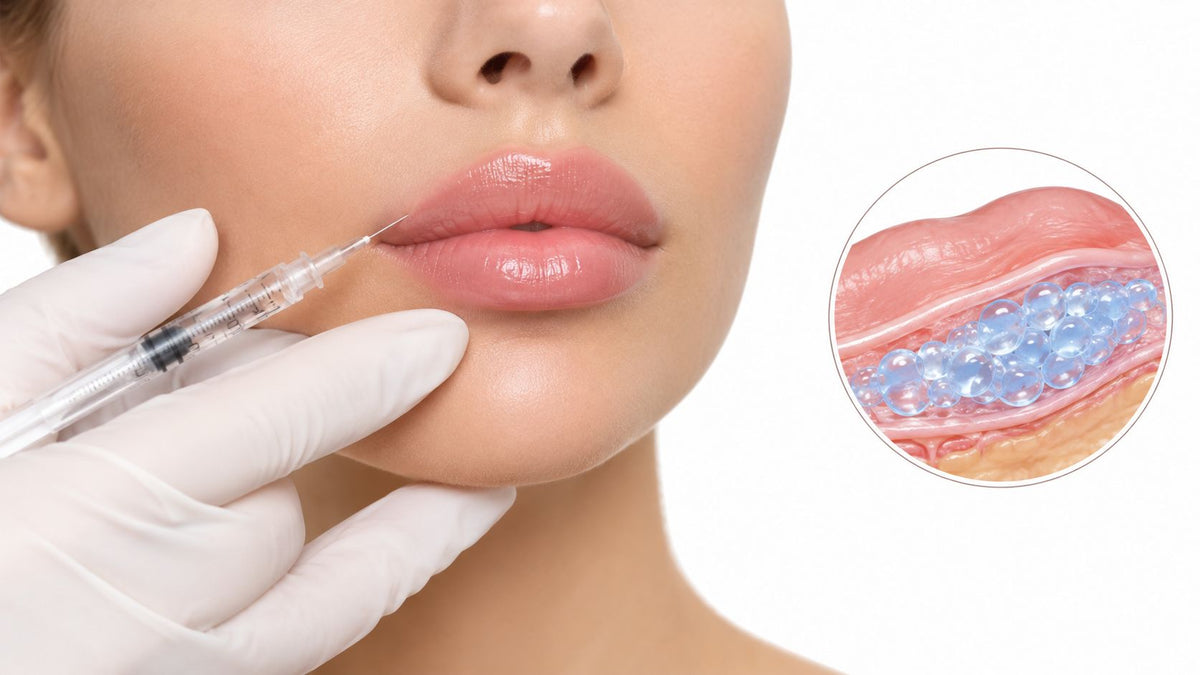
Article: Dysport Injections Explained: A 2026 Patient Guide
Dysport Injections Explained: A 2026 Patient Guide
You're looking at the lines between your eyebrows and wondering whether you look more worried than you feel. You've heard that Dysport injections can soften them, but you want straight answers before booking: Will you still look like yourself? When will you see a change? And what happens if you don't like the result?
Those are consultation questions, not shopping questions. A good treatment decision starts with your medical history, the way your face moves, and what you'd consider a worthwhile improvement.
Why Patients Ask About Dysport Injections
Patients often arrive with a brand name in mind before they've identified what they want to change. They may point to a photograph, describe looking tired during video calls, or ask whether Dysport is less expensive than Botox. Those are useful starting points, but they don't establish which treatment fits.
The first distinction is between a line that appears with expression and a crease that remains when your face is resting. Ask your injector to examine both. A treatment plan based only on a still photograph can miss the movement that matters to you.
Start with the outcome, not the syringe
A productive consultation gives your injector something more specific than wanting fewer wrinkles. Explain which expression bothers you and how much movement you'd like to retain.
- Name the concern: Point out whether it's the frown itself, the resting crease, or a sense of heaviness.
- Describe your preference: A softened expression and a very restricted expression aren't interchangeable goals.
- Discuss your schedule: Mention important events before choosing a treatment date.
- Ask about the whole plan: Include follow-up, possible adverse effects, and the total proposed cost.
A useful question is whether the proposed treatment addresses your actual concern. If you're seeking a change in facial volume or overall skin texture, ask whether an injectable muscle treatment belongs in the plan at all.
Consultation rule: Don't accept a treatment recommendation until you can explain, in your own words, what it's intended to change and what it won't change.
Dysport's medical background also deserves attention. It isn't a beauty service with a familiar brand name. The injector should discuss eligibility and risk with the same care they use to discuss appearance.
Cost matters, and so does convenience. Neither should replace an explanation of the treatment area, the intended result, and the process for getting help afterward. You should leave the consultation knowing what you're agreeing to, not just what you're paying.
What Dysport Is and How It Works
Dysport is abobotulinumtoxinA, a botulinum-toxin medicine. Its U.S. regulatory history includes FDA approval on April 29, 2009, for adult cervical dystonia, followed by adult upper-limb spasticity approval in 2015 and adult lower-limb spasticity approval in 2017; its reviewed indications also include pediatric spasticity and cosmetic glabellar lines, according to the FDA's Dysport safety review.
That history matters because the cosmetic appointment involves a medicine with neurologic effects, not a product that sits beneath a wrinkle. Anatomy, dose selection, medical screening, and informed consent belong at the center of treatment.
A temporary change in muscle signaling
AbobotulinumtoxinA acts inside presynaptic cholinergic nerve terminals, where it cleaves SNAP-25 and temporarily inhibits acetylcholine release at the neuromuscular junction, as described in this review of abobotulinumtoxinA's mechanism and clinical effects. In plain language, the treated muscle receives fewer signals telling it to contract.
A dimmer switch is a useful analogy, provided you don't take it at face value. The objective is a controlled reduction in the movement contributing to the line, not an indiscriminate shutdown of facial expression.
For context on the therapeutic use of botulinum toxin outside aesthetics, Midwest Pain & Wellness's Botox pain relief guide is a relevant companion resource. It shouldn't be used as a Dysport dosing guide or as evidence that different products are interchangeable.
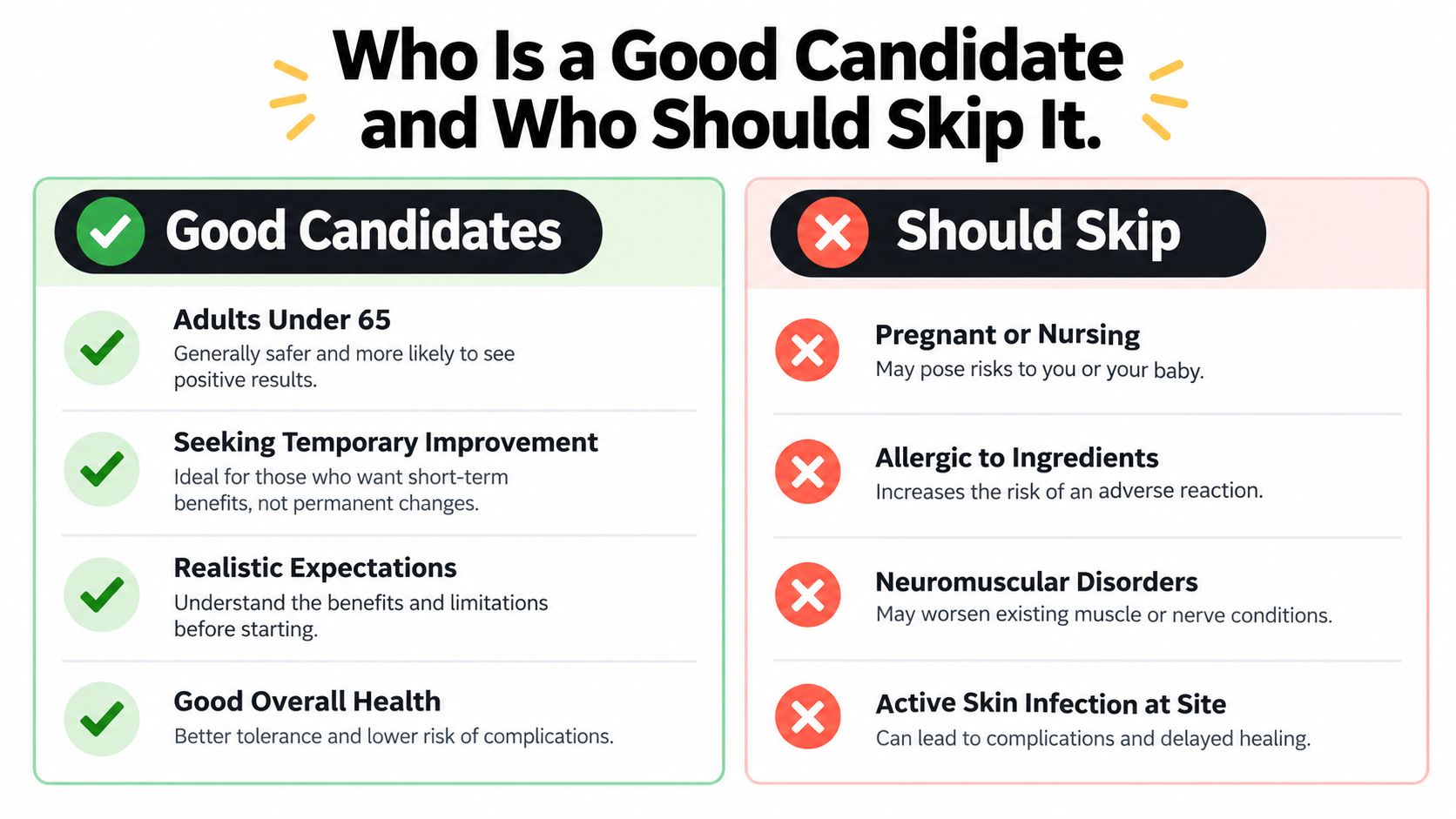
The eligibility checklist below is a conversation starter, not a substitute for clinical screening.
Know the limits before choosing treatment
Dysport isn't a volume-replacement treatment, and you shouldn't approach it as a way to erase every resting crease. Its clinical purpose in this setting is temporary improvement of expression-related glabellar lines, not permanent restructuring of the face.
That distinction changes how you judge success. A softer frown with some remaining skin creasing may represent a useful outcome rather than a failed treatment. Your injector should explain that possibility before you consent.
Who Is a Good Candidate and Who Should Skip It
A good candidate needs more than a visible frown line. The concern must fit the treatment, the medical history must support proceeding, and the patient must understand the limits.
For the cosmetic indication discussed here, Dysport is intended for temporary improvement of moderate-to-severe glabellar lines in adults younger than 65, as described in the official Dysport indication and safety information. That doesn't mean every person in that category should receive it.
Separate contraindications from precautions
The FDA identifies hypersensitivity to a botulinum-toxin product or formulation ingredient, cow's-milk protein allergy, and infection at the proposed injection site as contraindications in its Dysport prescribing information. These aren't details to omit because an appointment has already been booked.
Other issues require a careful discussion rather than a quick checkbox:
- Neuromuscular conditions: Tell the injector your diagnosis and any existing weakness, swallowing problems, or breathing concerns.
- Previous reactions: Describe what happened after earlier injections, including the product if you know it.
- Pregnancy or breastfeeding: Raise this before scheduling elective treatment rather than assuming cosmetic use makes it inconsequential.
- Medications and supplements: Bring an updated list and let the treating clinician assess it. Don't stop prescribed medicines on your own.
The earlier eligibility graphic simplifies these distinctions. A neuromuscular condition requires individualized medical assessment; it shouldn't be treated as equivalent to an injection-site infection or an established ingredient allergy.
Make screening a conversation
Good overall health isn't a replacement for a detailed history. A patient who feels well may still have information that changes the recommendation.
This appointment overview shows where that review belongs in the process.
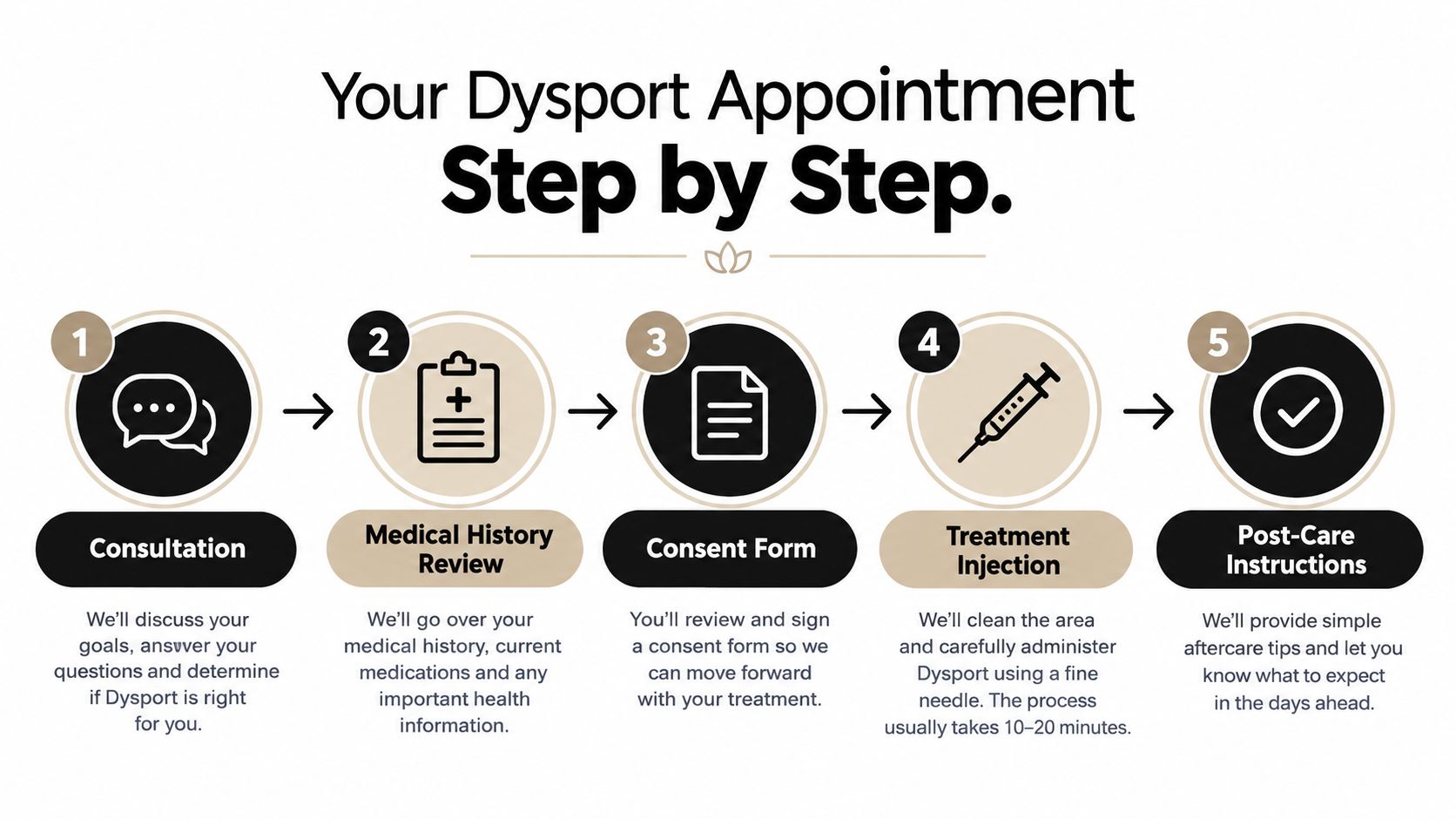
Ask what would make the injector postpone treatment or recommend something different. A clinician who can explain when not to inject is giving you information just as valuable as a treatment proposal.
If your expectations require complete wrinkle elimination, the next step is further discussion, not a larger dose.
What Happens During and After a Dysport Appointment
The appointment should begin with assessment, not skin preparation. Expect a discussion of your goals and medical history, examination at rest and during expression, and consent that includes alternatives and potential complications.
Baseline photographs can help make later comparisons more useful. Ask how the practice stores them and whether consent for clinical photography is separate from permission to use images publicly.
What happens in the treatment chair
For adult glabellar lines, the FDA-approved regimen is 50 units total, divided into five equal 10-unit intramuscular injections into the procerus and corrugator muscle areas, according to the FDA's 2023 Dysport label. That is a specific regimen for a specific indication, not a template for every facial area.
The injector should explain the intended sites before proceeding. You should also know how to contact the practice if something feels wrong after you leave.
- Before injection: Confirm the product, area, proposed dose, and agreed goal.
- During treatment: Tell the clinician if you feel unwell or need a pause.
- Before leaving: Obtain written aftercare instructions and a follow-up plan.
Aftercare should be specific
Follow the treating clinician's instructions about touching or rubbing the area, pressure, lying flat, strenuous exercise, and when to resume your usual routine. Ask how long each restriction applies rather than relying on conflicting social-media advice.
The practice's guidance on care after Dysport injections is a useful reference to review alongside your own discharge instructions. Don't add massage, facial treatments, or home devices without checking whether they fit your immediate post-treatment plan.
The graphic below provides a visual orientation, but its later milestones shouldn't be read as individualized predictions.
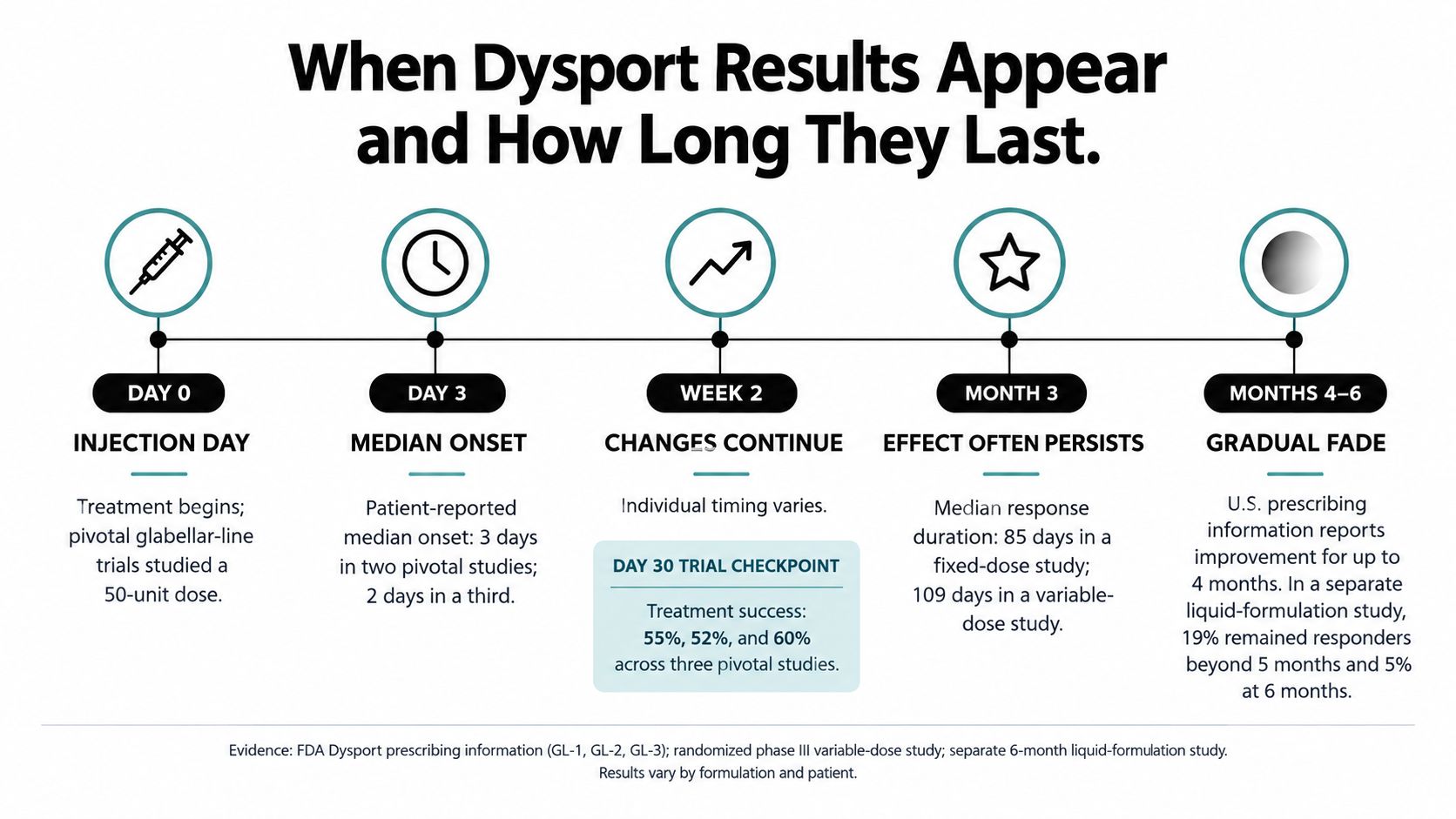
In particular, don't use the graphic's peak-effect or extended-fade labels to schedule treatment. Rely on the clinical evidence, the applicable prescribing information, and your injector's assessment.
Before leaving, agree on when routine progress will be reviewed. Early cosmetic uncertainty and a concerning medical symptom need different responses, so make sure you understand which contact pathway to use.
When Dysport Results Appear and How Long They Last
Onset isn't the same as the final appearance. Noticing a change tells you the medicine has begun to act; it doesn't establish that every treated area has reached a stable result.
Published phase 3 evidence reports investigator-assessed median onset at about three days, improvement sometimes within 24 hours, and day-one responses ranging from 13.4% to 32.5%; a separate trial reported median investigator-assessed duration of 137 days, approximately 4.5 months. These findings come from the clinical review linked in the mechanism discussion, and they describe study outcomes rather than a promise for an individual patient.
What the evidence can and can't promise
The labeled expectation is up to four months, and treatment shouldn't be repeated more frequently than once every three months, according to the Dysport prescribing information on DailyMed. A study's median duration and the label's duration wording answer different questions, so they shouldn't be combined into a guaranteed appointment interval.
Anatomy, muscle strength, dose distribution, metabolism, movement patterns, and the way benefit is measured can affect the apparent duration. The discussion in how long Dysport lasts can help you prepare questions about your own treatment.
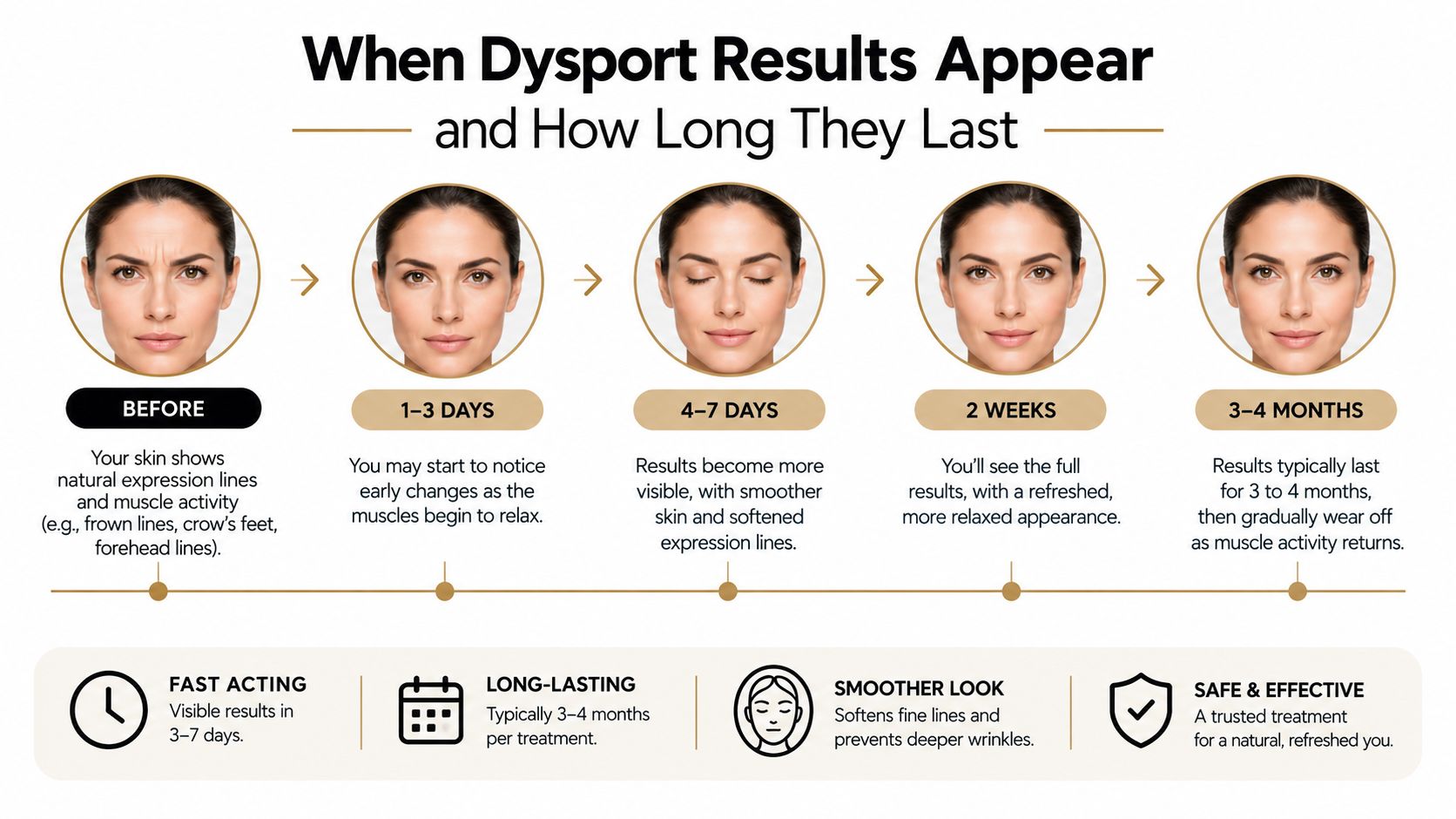
A return of some movement isn't, by itself, proof that treatment failed or that you need an immediate top-up.
Agree on a wear-off plan
Compare similar expressions under similar lighting rather than checking repeatedly throughout the day. Record whether you're noticing returning movement, a more visible resting crease, or a difference between sides.
- For uneven early change: Contact the injector and use the agreed review schedule rather than demanding immediate additional treatment.
- For returning movement: Describe what has changed and how much it bothers you.
- For repeat treatment: Have the clinician confirm the applicable interval and reassess the original goal.
If you're considering longevity advice, the tips from Skin Perfection on Botox offer another reading resource. Treat extension claims cautiously; skincare purchases shouldn't come with a promise that they'll prolong Dysport's pharmacologic action.
Dysport Side Effects and How to Triage Them
The most useful safety discussion tells you what to do, not just what might happen. Mild localized discomfort and new difficulty swallowing don't belong in the same wait-and-see category.
The FDA boxed warning describes possible spread of toxin effects beyond the injection site, with symptoms appearing hours to weeks after treatment; swallowing or breathing difficulties can be life-threatening, as stated in the FDA's Dysport boxed warning and adverse-reaction information.
Match the response to the symptom
| Situation | What to do |
|---|---|
| Mild localized tenderness or a limited injection-site reaction without other symptoms | Follow your discharge instructions and monitor. Contact the practice if it worsens or concerns you. |
| Persistent or worsening headache, injection-site pain, eyelid swelling, or eyelid drooping | Contact the treating clinician promptly for assessment. Don't attempt a cosmetic correction yourself. |
| New double or blurred vision, marked generalized weakness, or speech changes | Seek urgent medical assessment rather than waiting for a routine cosmetic review. |
| Trouble swallowing or breathing | Seek emergency medical care immediately. |
Eyelid drooping illustrates why context matters. It is a known adverse effect, but drooping accompanied by visual symptoms, generalized weakness, or swallowing problems needs a different level of urgency than an isolated cosmetic concern.
Make your contact plan before treatment
Save the practice's contact details and ask how after-hours concerns are handled. For urgent symptoms, a message through social media or a routine appointment request isn't an adequate plan.
- Describe the symptom: Explain what changed, when you noticed it, and whether it's progressing.
- Identify the treatment: Tell the evaluating clinician that you recently received a botulinum-toxin injection.
- Don't delay emergency care: You don't need the injector's permission to seek help for breathing or swallowing difficulty.
Safety priority: A symptom doesn't have to look dramatic to deserve assessment. If function is affected, especially breathing, swallowing, speech, or vision, treat it as a medical concern.
A side-effect discussion should leave you informed, not frightened. The practical distinction is between a limited local reaction that can be monitored and a new or worsening symptom that needs professional evaluation.
Dysport vs Botox and What Actually Sets Them Apart
A higher unit count isn't a stronger treatment by definition. Dysport units are product-specific and aren't interchangeable with Botox units, as the prescribing information linked earlier explains.
That makes simple price-per-unit comparisons misleading. The useful comparison is between complete treatment proposals for the same goal, including the product, planned area, total dose, follow-up, and total fee.
Dysport vs Botox at a Glance
| Factor | Dysport | Botox |
|---|---|---|
| Formulation | AbobotulinumtoxinA | A different botulinum-toxin formulation, not a substitute vial |
| Unit math | Uses its own potency assay | Don't interpret its unit count as equivalent to Dysport |
| Onset | Discuss the Dysport evidence above | Ask for product-specific expectations rather than borrowing Dysport's timeline |
| Diffusion or spread claims | Require context about dose, placement, and anatomy | A brand name alone doesn't predict your result |
| Duration and retreatment | Follow its applicable label and clinical assessment | Review its own prescribing information |
| Cosmetic treatment areas | Confirm whether the proposed use is approved or off-label | Check the proposed indication separately |
| Cost | Compare the complete plan | Compare the complete plan |
Choose a plan, not a winner
The Dysport onset evidence doesn't, by itself, establish that it's universally better than Botox. Nor should an injector describe broader perceived spread as automatically beneficial or automatically unsafe without explaining the treatment context.
The practical pros and cons of Dysport versus Botox can help organize your consultation questions. Prior treatment response, your movement pattern, and the clinician's proposed technique deserve more attention than a brand ranking.
If you're comparing care internationally, Yoyime Clinic's information about facial injectables in Dubai is another consultation resource. Don't transfer a treatment interval or dosing convention from one country, indication, or product to another.
Ask the injector to identify the prescribing information that governs your proposed treatment. If different interval advice appears online, have them resolve that discrepancy before booking a repeat appointment.
Cost, Results, and Booking Your Dysport Consult
Ask for a written estimate that identifies the treatment area, proposed product, total fee, and follow-up arrangements. Whether the practice quotes by unit or by area, you should understand what is included and what could lead to an additional charge.
The cheapest-looking quote may not describe the same service. Compare like with like, and don't assume that a larger numerical dose means a more thoughtful plan.
Bring a decision checklist
A consultation is worthwhile when it helps you make a clear decision, including the decision to wait.
- Confirm the goal: Describe the change you want and the movement you hope to retain.
- Verify eligibility: Disclose your history and ask whether anything requires postponement or further review.
- Clarify the proposal: Ask why that product, area, and dose fit your concern.
- Plan follow-up: Know when results will be assessed and how concerns will be handled.
- Budget for ongoing care: Treat repeat appointments as future clinical decisions, not an automatic subscription.
Keep home care in its own lane
For patients who want a convenient home device, the Barb N.P. Facial Mask is an option to consider for its wireless design, comfortable facial fit, and three lighting settings for different treatments. Confirm its technical specifications and the purpose of each setting before choosing it for a particular concern.
LED photobiomodulation research uses defined wavelengths, intensity, dose, and exposure schedules, as illustrated by this clinical research on facial LED protocols. Evidence for a studied protocol shouldn't be treated as proof of equivalent performance from an unspecified device.
An LED mask can sit alongside an at-home skincare routine, but it isn't a replacement for an injectable and shouldn't be promised to extend its effects. Ask when you may resume device use after treatment.
BotoxBarb offers Dysport consultations, in-clinic aesthetic services, and curated skincare to help you build a practical treatment and home-care plan. Visit BotoxBarb to book a consultation, discuss your goals and medical history, and decide whether Dysport injections fit the result you want.