Hair Thinning in Women: Causes & Treatments
You run your fingers through your hair while washing it and pause. There's more in the drain than usual. Your part looks a little wider in bathroom lighting. The ponytail you've worn for years suddenly feels thinner in your hand.
That moment can feel surprisingly personal. Many women don't talk about it right away. They change the part, buy a volumizing shampoo, take a random supplement, and hope it passes. Sometimes it does. Often, it doesn't.
Hair thinning in women is emotional because it changes how you see yourself before anyone else notices. It can also feel confusing because “hair loss” gets blamed on everything from stress to age to hormones, and the advice online is all over the place.
I want to make this simpler. Hair thinning is a symptom, not a personality flaw and not something you have to guess your way through. In practice, the women who do best are the ones who stop chasing generic fixes and start with a real diagnosis. That's especially important because one of the most commonly missed causes is also one of the most treatable: iron deficiency.
That First Alarming Sign of Hair Thinning
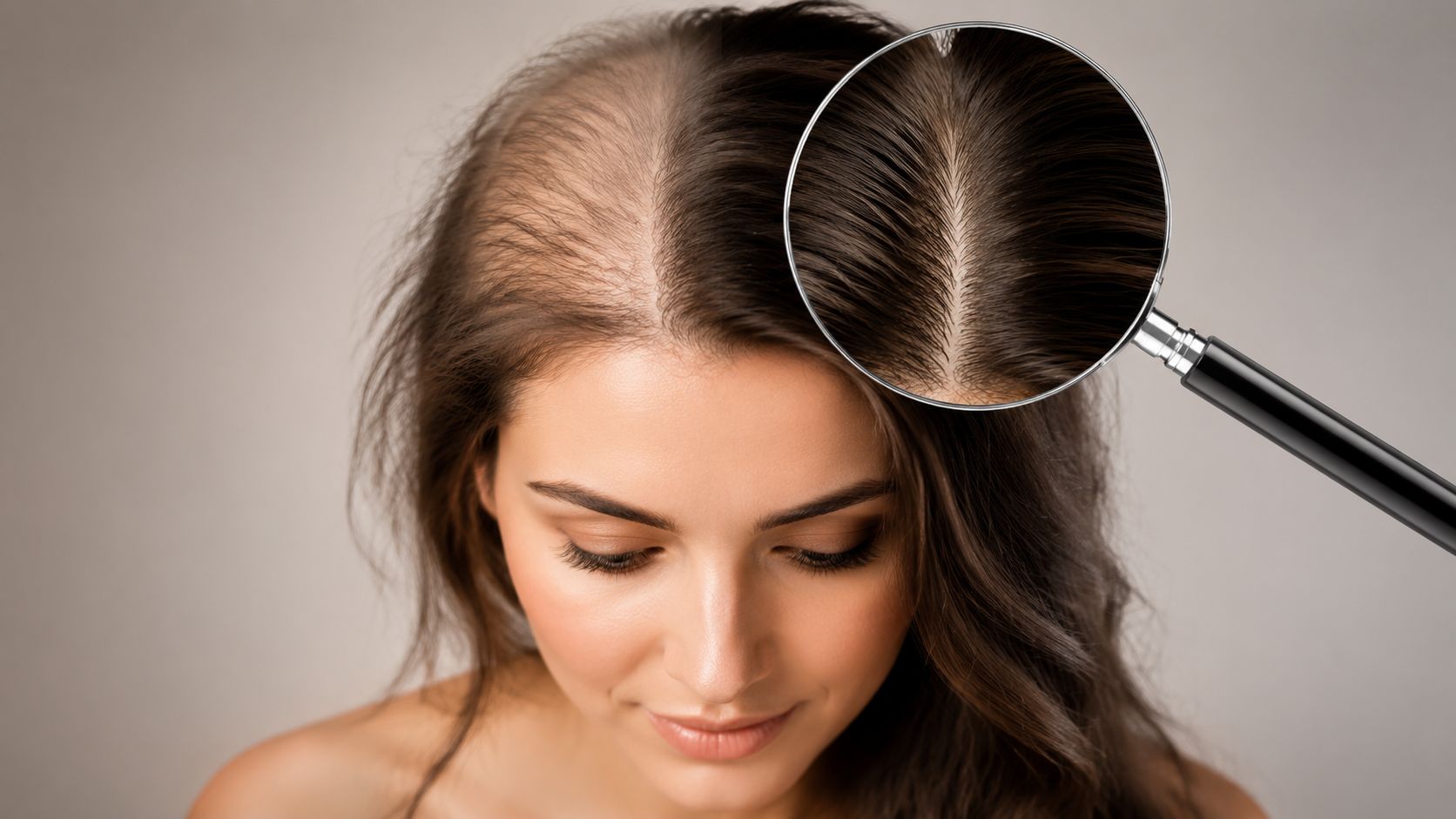
For many women, the first sign isn't a bald patch. It's subtle. More hair in the brush. More strands on a sweater. A scalp that starts showing through at the part or around the temples. It can happen gradually enough that you question yourself for months before admitting something has changed.
I hear the same worry in different words. “Am I imagining this?” “Is this just aging?” “Did stress do this?” Those are reasonable questions, but they can keep you stuck in waiting mode. The better move is to treat hair thinning like any other medical concern. Notice it, document it, and get it evaluated.
This isn't rare. Approximately 12% of women aged 15 to 29 experience thinning hair, and this rises to over 50% by age 65. The most common cause, female pattern hair loss, affects roughly 40% of women by age 50, according to Meditresse's overview of the increasing incidence of hair loss in women.
Hair thinning can feel isolating, but it's common and often manageable when you identify the cause early.
What matters most in the beginning is resisting the urge to self-diagnose from a handful of symptoms. Two women can describe “my hair is shedding and thinning” and have completely different underlying problems. One may have inherited female pattern hair loss. Another may have low iron. Another may be dealing with temporary shedding after illness or hormonal change.
That's why the first alarming sign shouldn't push you into panic. It should push you into clarity. When you know what's driving the change, your options get much better.
Understanding Why Female Hair Thinning Happens
Hair thinning starts at the follicle level. The pattern you see in the mirror reflects what is happening inside the hair growth cycle, your hormone environment, your nutrient stores, and sometimes your immune system.

The normal hair cycle
Each follicle rotates through four stages.
- Anagen is active growth.
- Catagen is the brief transition phase.
- Telogen is the resting stage.
- Exogen is when the hair sheds.
That cycle is the foundation for understanding why one woman sees extra hair in the shower, while another notices a wider part with very little visible shedding. Some conditions push more hairs into telogen too early. Others shorten anagen, so strands never grow as thick or as long as they once did. In inherited thinning, the follicle itself gradually shrinks and produces finer hairs over time.
Female pattern hair loss
The diagnosis I see most often is female pattern hair loss, also called androgenetic alopecia. It usually shows up as reduced density through the part line, crown, and top of the scalp rather than sudden bald patches.
The mechanism is well established. Genetically susceptible follicles become more sensitive to androgen signaling, and over time those follicles miniaturize. A miniaturized follicle still makes hair, but the strand is thinner, shorter, and less durable. That is why many women tell me their hair has not disappeared completely. It has changed quality first. The frontal hairline is often preserved, while the central scalp slowly looks more see-through, a pattern described by the Cleveland Clinic's overview of female pattern hair loss.
The commonly missed cause: low iron
This is the part many women never hear early enough.
Female pattern hair loss is common, but undiagnosed iron deficiency is one of the most overlooked and treatable contributors to hair thinning in women, especially in those with heavy periods, a history of dieting, postpartum depletion, vegetarian or vegan diets, GI absorption issues, or endurance training. A normal hemoglobin does not rule that out. I have seen women told their labs were “fine” because they were not anemic, while ferritin was never checked or was technically normal but too low to support healthy hair growth.
Low iron does not always create one neat pattern. It can show up as diffuse shedding, poor regrowth, brittle strands, or thinning that overlaps with inherited loss. That overlap matters, because treating miniaturization without correcting low iron often leads to disappointing progress. If you want a plain-language overview of the main categories, Barb N.P. also breaks them down in this guide on what causes female hair loss.
Other causes that can look similar
Several conditions can mimic each other at first glance.
- Telogen effluvium causes increased shedding after triggers such as illness, surgery, rapid weight loss, medication changes, hormonal shifts, or low iron.
- Alopecia areata is an autoimmune condition that often creates smooth, defined patches.
- Traction alopecia comes from repeated tension from tight hairstyles, extensions, or frequent styling practices that pull on the follicle.
- Perimenopause and menopause-related thinning often develops alongside hormonal changes and may overlap with inherited thinning. If that timing fits your experience, this guide on support for hair loss in perimenopause is a useful read.
Hair thinning is a sign. The diagnosis depends on the pattern, the timeline, and what your body has been dealing with in the background. That is why a woman with “stress-related shedding” may have low ferritin, early female pattern hair loss, thyroid disease, scalp inflammation, or more than one issue at the same time.
How a Clinician Diagnoses the Root Cause
Good treatment starts with good detective work. When women tell me they've “tried everything,” they often haven't tried the one thing that would've saved time and money first: a structured evaluation.

What a real assessment includes
A useful consultation usually has three parts.
First, the history. I want to know when the thinning started, whether the change was sudden or gradual, where you see it most, whether you've had illness, surgery, medication changes, menstrual changes, or major stressors, and whether family members have similar patterns.
Second, the scalp exam. During this, pattern matters. A widening part and finer hairs across the top suggest something different than round patches, breakage along the hairline, or generalized shedding. The scalp itself also gives clues. Inflammation, scaling, tenderness, and broken hairs point in different directions.
Third, lab work when indicated. Many women often receive incomplete answers during this stage.
The ferritin issue that gets missed
One of the biggest mistakes in female hair loss care is ordering broad labs but skipping the one marker that often changes the entire plan. Ferritin reflects iron stores, and it matters a great deal for hair growth.
A critical gap in care is overlooking iron deficiency, found in roughly 70% of women with hair loss. This is often missed until a specific ferritin test, with a target of 40 to 60 ng/mL, is performed, according to Dr. Mary Claire Haver's discussion of the hair loss and ferritin connection.
Practical rule: If iron deficiency is driving the problem, adding scalp treatments without fixing iron status is usually frustrating and incomplete.
This is one of the reasons generic advice falls flat. A woman can buy minoxidil, scalp serums, collagen powders, and “hair vitamins” and still feel stuck if her iron stores are low. The issue isn't that she didn't try hard enough. The issue is that the root cause wasn't addressed.
Why guessing wastes time
Self-treatment often misses the distinction between shedding and miniaturization. Those aren't interchangeable. If your diagnosis is wrong, your expectations and product choices will be wrong too.
A clinician's job isn't just to name the condition. It's to separate what's reversible, what's manageable, what needs monitoring, and what needs combination treatment. That clarity is worth far more than another month of random internet advice.
Foundational At-Home Hair Growth Strategies
Once the cause is identified, home care becomes much more effective. At-home treatment shouldn't be a pile of disconnected products. It should be a simple routine built around what has evidence and what you'll stick with.

Minoxidil and supplements are not the same tool
The two at-home categories women ask me about most are topical minoxidil and oral hair supplements. They can both have a place, but they do different jobs.
Here's the practical comparison:
| Option | What it does | Trade-off |
|---|---|---|
| Topical minoxidil | Works directly at the scalp to support follicles and prolong growth | Requires consistency and patience |
| Oral supplements | Support the body's nutritional environment for growth | Only help if they address a real gap or broader support need |
Topical minoxidil is the first-line FDA-approved therapy. It has been shown to stop hair loss and induce regrowth in approximately 60% of women who use it, and consistent use of 5% minoxidil can increase terminal hair count by 18% after 48 weeks, based on the RACGP review of female pattern hair loss treatment.
How to use minoxidil without sabotaging results
Minoxidil works best when expectations are realistic. It isn't a one-week fix. It's a long game.
According to Harvard Health's guidance on treating female pattern hair loss, its effect typically peaks around four months, but women should allow six to 12 months to judge whether it's helping. It should be applied twice daily to dry scalp in every area that's thinning, massaged in gently, with no shampooing for at least four hours afterward.
Women often stop too early because they expected instant fullness. That's a mistake. Consistency is the treatment.
Where supplements fit
Supplements are supportive, not magical. A basic biotin gummy won't solve hormonally driven follicle miniaturization, and no supplement can override uncorrected iron deficiency.
Still, a well-formulated product can make sense when your plan includes nutritional support. One option in this category is Nutrafol, which many women use as part of a broader routine rather than as a stand-alone answer. Barb N.P. also shares practical options for home care in this guide to at-home hair growth treatments.
If you prefer a simpler support product, BARB N.P. Hair & Nails Gummy is another option designed to provide vitamins and amino acids for hair and nail support. I see these products as helpers, not heroes. They work best when the diagnosis is already clear and the rest of the plan makes sense.
The women who get the most out of home treatment usually have a routine they can repeat for months, not a cabinet full of half-used products.
Advanced Medical and Procedural Treatments
Home care has a ceiling. I see that clearly in women who have done the right basics for months, yet their part keeps widening or their ponytail keeps shrinking. Once that happens, treatment needs to match the cause and the stage of loss.

A practical point comes first. Procedures can support follicles that are weakened but still alive. They do far less for follicles that have been inactive for a long time, and they cannot overcome missed iron deficiency, thyroid disease, or another untreated trigger. That is why the women who do best with in-office treatment usually had the diagnosis clarified first.
PRP for women who need a stronger stimulus
Platelet-rich plasma, or PRP, uses a sample of your own blood that is processed so the platelet-rich portion can be injected into the scalp. The goal is to support follicles that are miniaturizing but still capable of producing thicker hair.
In practice, PRP often fits women with early to moderate thinning who want more than topical care alone. It also works well as part of a layered plan. I am careful not to oversell it. It involves a series of treatments, maintenance matters, and results are usually gradual rather than dramatic.
If you want a clear walk-through of candidacy, treatment steps, and recovery, Barb N.P. explains that in this guide to PRP treatment for hair loss.
Low-level light therapy and prescription support
Low-level laser therapy, or LLLT, is a non-drug option that uses specific wavelengths of light on the scalp. Some women choose it because they want a home device with a favorable side effect profile. Others use it alongside minoxidil or PRP.
The trade-off is simple. LLLT is low effort physically, but high effort behaviorally. It only helps if the device is designed for scalp use and the schedule is followed consistently for months. Irregular use usually leads to frustration, not fuller hair.
Women also ask about oral prescription treatment. Spironolactone is commonly used when female pattern hair loss has an androgen-sensitive component, especially when thinning affects the crown or part line and minoxidil alone has not been enough. It requires medical screening, medication review, and follow-up because dose, side effects, pregnancy considerations, and blood pressure all matter. In the right patient, it can be very useful. In the wrong patient, it is the wrong tool.
A useful comparison of advanced options
| Treatment | Best fit | Main consideration |
|---|---|---|
| PRP | Women who want an in-office treatment to support still-active follicles | Requires a treatment series and maintenance |
| LLLT | Women who prefer a non-drug option or want to add home support | Device quality and regular use determine value |
| Spironolactone | Women with androgen-sensitive female pattern hair loss | Needs screening, follow-up, and pregnancy precautions |
The strongest plan is not the busiest one. It is the one that fits the diagnosis, the timeline, and what you will realistically continue.
For broader context on available clinic options, women outside my area sometimes look at practices offering solutions for hair loss in Tysons Corner to compare how different providers structure treatment plans.
Where the LED facial mask fits
Scalp-directed light devices and facial LED masks do different jobs. A cap or comb is built to target follicles on the scalp. A facial mask is built for facial skin support.
The Barb N.P. Facial Mask falls into that second category. It is wireless, designed for comfort on the face, and includes 3 lighting settings for different treatments. I mention it for women who want broader skin-focused recovery support as part of their routine. It does not replace a scalp treatment plan for hair thinning.
Building Your Supportive Hair Wellness Routine
A good treatment plan can stall if your daily habits keep irritating the scalp, shorting your nutrition, or putting repeated tension on fragile hairs. I tell patients to make their routine easier on the follicle and easier to sustain. That matters more than collecting five new products.
Food, iron, and protein
This is the section many women underestimate.
If iron deficiency is contributing to thinning, shampoo will not fix it. Neither will collagen gummies. Follicles need enough iron and protein to stay in an active growth phase, and low iron is one of the most commonly missed, treatable reasons I see for ongoing shedding and poor regrowth.
Food may not fully correct a true deficiency, especially if ferritin is low for months or there is heavy menstrual blood loss, poor absorption, or a restrictive diet. Still, your day-to-day intake affects how well your body supports hair growth.
A practical framework:
- Build meals around iron-containing foods: red meat, lentils, beans, spinach, and other iron-rich choices that fit your diet and medical history.
- Include protein consistently: hair fiber is built from protein, and intake that is too low often shows up as breakage, reduced fullness, or slower recovery.
- Use supplements for a confirmed need: iron, vitamin D, zinc, and other nutrients can help when testing shows a deficiency. More is not better. The wrong supplement can cause side effects and distract from an accurate diagnosis.
- Ask why a deficiency happened: heavy periods, postpartum depletion, GI issues, dieting, and absorption problems all change the plan.
That last point is easy to miss. Correcting the number on a lab report helps, but preventing it from dropping again is what protects long-term progress.
Stress and styling habits
Stress can play a role in shedding. It is also blamed far too often, far too early. I do not like seeing women told to "reduce stress" when no one has checked iron stores, thyroid function, hormones, medications, or the scalp itself.
What helps at home is usually simple and repetitive:
- Keep a regular sleep schedule so recovery is not constantly disrupted.
- Reduce tension styling such as tight ponytails, braids, extensions, and clips that pull on the same areas every day.
- Handle the scalp gently by washing often enough to keep buildup down, using fingertips instead of nails, and avoiding harsh processing if shedding is active.
- Limit avoidable heat and breakage if the hair shaft is already fragile.
Your routine should protect the hairs you still have while treatment works on the hairs you want back.
Scalp massage can be part of that routine if it is gentle. It may improve product spread and help you pay closer attention to scalp changes. It does not replace a diagnosis, and it will not overcome iron deficiency, androgen-driven thinning, or an inflammatory scalp condition.
The same goes for satin pillowcases, better brushes, and cleaner styling habits. Useful? Sometimes. Curative? No. I want women to know the difference, because that is how you spend your time and money wisely.
Your Next Steps Toward Hair Restoration
If you've been trying to solve this alone, the next step is not buying three more products. It's getting specific about the cause.
Hair thinning in women can come from inherited follicle sensitivity, hormonal shifts, temporary shedding states, traction, autoimmune causes, and nutritional problems. Those paths can look similar in the mirror and require very different treatment plans. That's why some women respond beautifully to minoxidil, others need spironolactone or PRP, and others don't move forward until iron deficiency is finally identified.
The most useful shift is to stop asking, “What's the best hair loss treatment?” and start asking, “What is my diagnosis?” Once that answer is clear, the treatment plan usually becomes much more straightforward.
If your thinning is new, worsening, or not improving, book a consultation with a qualified provider who will look at the full picture. You want someone who will ask about timing, pattern, medical history, hormones, and nutrition, examine the scalp carefully, and order targeted testing when needed. That's how you avoid wasting months on the wrong approach.
Results also require patience. Hair treatment asks for consistency more than intensity. Some changes happen slowly because follicles respond slowly. That can be frustrating, but it's also why a calm, structured plan works better than constant switching.
You don't need to accept thinning as something you just have to live with. You also don't need to treat it blindly. The most confident action is a precise one.
If you're ready to move from guessing to a more organized hair and wellness routine, explore the treatment and product options available through BotoxBarb. The shop includes clinical wellness and beauty tools, including hair-support products and self-care devices, so you can build a routine that matches your actual needs instead of chasing trends.