Postpartum Hair Loss: Causes, Timeline & Help
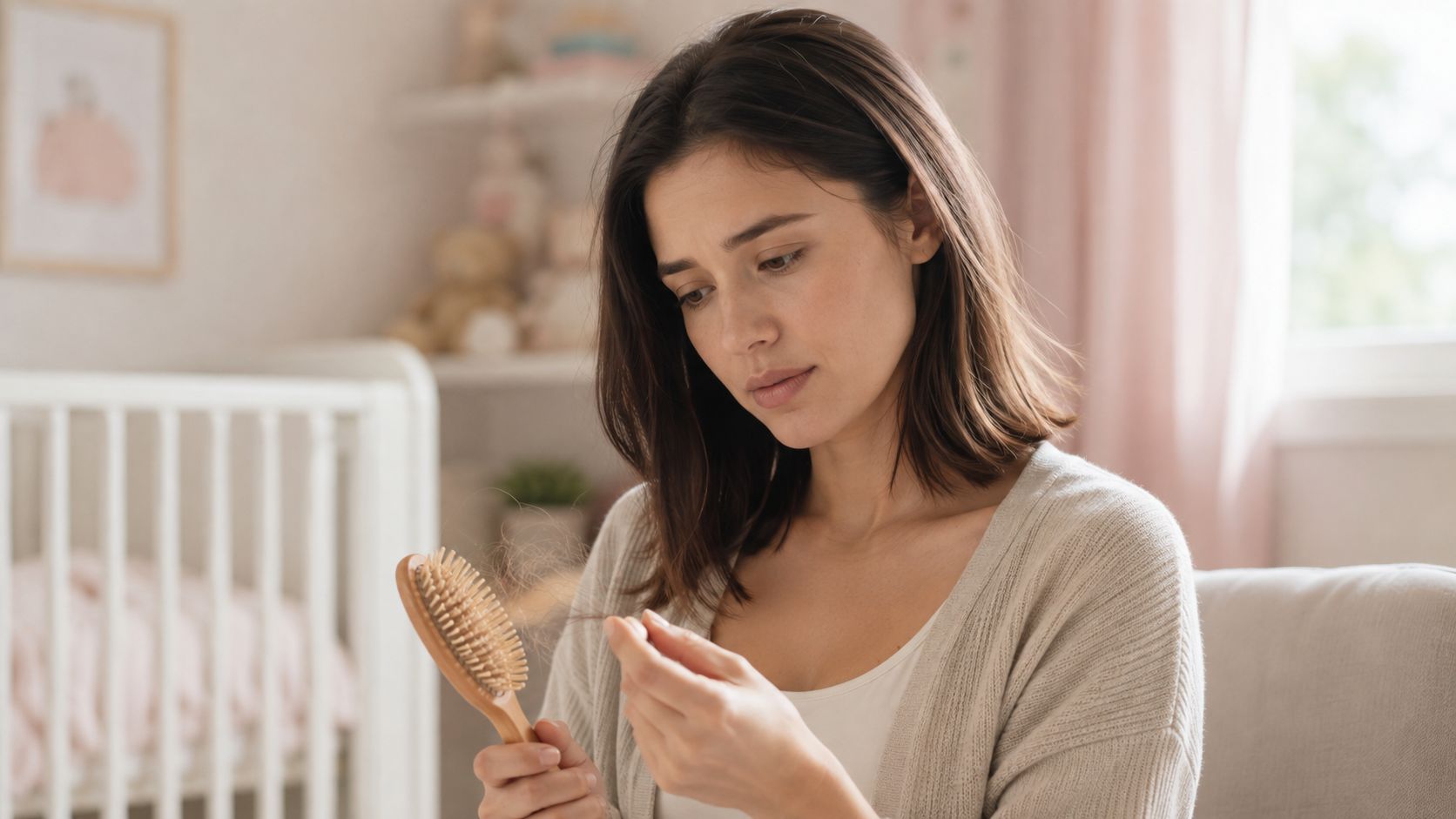
You're standing at the bathroom sink with one hand full of hair and the other holding your newborn. The brush looks fuller than it did yesterday, strands collect on the pillow, and the shower drain seems to clog faster each time. It's easy to wonder whether pregnancy changed your hair permanently, especially when you're already tired and emotionally stretched.
Postpartum hair loss is common, but “common” doesn't mean insignificant. A 2023 study of 331 women found that 304 women, or 91.8%, reported postpartum hair loss, and 73.1% of those women felt anxiety or stress about it (clinical study). The right response isn't blind reassurance or a cabinet full of supplements. It's understanding the expected timeline, protecting the hair you have, and recognizing when shedding may be revealing another condition.
The Moment You Notice the Shedding
You may first notice the change while washing your hair, with strands caught between your fingers. A few days later, hair gathers around the drain, lies across the pillowcase, and fills the brush more quickly than usual.
Photographs often reveal the change before the shower does. In clinic, new mothers commonly describe a normal-looking ponytail in person, then point to thinner temples or a wider part in a phone photo taken under bright light. That contrast matters. Diffuse shedding can look dramatic in the drain, while early pattern loss may show more clearly along the hairline or part.
You might begin checking the bathroom floor, counting strands, or avoiding certain hairstyles while caring for a baby who needs you constantly. That response deserves respect. Hair is closely tied to identity, femininity, and the physical memory of pregnancy, so reduced density can feel like another unfamiliar change in your body.
Your distress is valid: Postpartum hair loss can be temporary and still be emotionally difficult.
Most shedding after childbirth follows a temporary hormonal shift, but the episode can also expose androgenetic alopecia, traction from tight styles, or a nutritional gap. The pattern gives useful clues. Notice whether loss is spread evenly, concentrated at the temples or part, associated with scalp discomfort, or accompanied by fatigue or other changes.
The amount in one shower cannot diagnose the cause. Record a few consistent photographs, avoid tight pulling and aggressive brushing, and arrange an assessment if the pattern looks focal, the scalp seems unhealthy, or shedding continues beyond the expected course. A clinician can then distinguish a self-limited phase from a problem that needs targeted treatment.
What Postpartum Hair Loss Actually Is
Hair follicles cycle through growth, rest, and release. Under ordinary conditions, they change phases at different times, so daily shedding stays gradual rather than arriving in one obvious wave.
Pregnancy shifts that timing. Higher estrogen helps keep more follicles in the growth phase, which can make hair look fuller or thicker. After delivery, estrogen falls, and many follicles enter the resting phase within a similar period. The visible loss comes later, when those resting hairs release.
That delay often makes the process feel unrelated to childbirth. The hormonal shift occurs around delivery, while shedding may not become noticeable until weeks or months afterward. Diffuse loss linked to this synchronized cycle change is called postpartum telogen effluvium.
Why the shedding looks dramatic
Ordinary postpartum shedding usually does not destroy the follicles. Follicles that remained in growth mode longer than usual are returning to their regular cycle. Because many make that transition around the same period, the overall loss looks sudden even though each hair is following a normal biological sequence.
A dermatology review describes postpartum telogen effluvium as diffuse shedding that generally begins 2 to 4 months after childbirth and often resolves fully, although it may last longer. The review also describes a molt-like pattern in about 20% of women 2 to 3 months after delivery.

Why “normal” still needs context
The label should not replace an assessment. A review of postpartum telogen effluvium found no statistically significant evidence proving that postpartum women shed more hair than pregnant women, and described the condition as poorly defined with unknown incidence.
That uncertainty matters clinically. Postpartum shedding can coincide with androgenetic alopecia, traction alopecia from tight styles, or nutritional gaps. Diffuse loss may fit a temporary cycle shift, while widening at the part, temple recession, scalp symptoms, or persistent thinning deserves closer evaluation. LED light therapy and supplements may have a role in selected recovery plans, but neither should substitute for identifying the underlying pattern.
The Typical Timeline Month by Month
A timeline helps distinguish an expected pattern from a recovery that is losing momentum. In a survey of 331 women, shedding began at an average of 2.9 months after delivery, reached its peak at 5.1 months, and ended at 8.1 months (survey of 331 women). These averages describe a pattern, not a deadline for your scalp.
Johns Hopkins places the usual recovery window at 6 to 12 months postpartum, while the American Academy of Dermatology reports that most women regain their usual fullness by their child's first birthday (Johns Hopkins overview). A broader clinical reference notes that visible regrowth may continue until about 15 months (dermatology review).
A month-by-month guide
- Month 1: Dramatic shedding is not always visible yet. The hormonal shift has occurred, but follicles release hairs on different schedules.
- Month 2 to 3: Hair in the shower, brush, or drain may become noticeably heavier. The average onset was 2.9 months, so this is a common point for concern.
- Month 4 to 6: Shedding may look most intense during this interval. A full ponytail or thicker pregnancy hair can make the change appear especially abrupt, even when the process remains diffuse.
- Month 6 to 9: The active shedding often starts to slow. Short regrowth may appear along the hairline, although new growth does not immediately restore lost density. The survey's average resolution was 8.1 months.
- Month 9 to 12: Coverage can gradually improve after the heaviest shedding has passed. The usual endpoint remains broad, so compare monthly photographs rather than individual wash days.
- After month 12: Continued thinning, marked asymmetry, or little evidence of recovery warrants clinical review instead of indefinite reassurance. Regrowth can continue later, with some references describing fuller recovery by about 15 months.

Why baby hairs don't always mean shedding is over
Fine hairs at the temples can appear as early as 4 to 8 weeks postpartum while significant shedding continues later. Follicles do not change cycles together, so early regrowth in one area can overlap with delayed shedding elsewhere.
Track the direction of change. Fewer hairs over several washes, stable scalp coverage, and steadily increasing short growth are more useful than one unusually heavy or light wash day. If the part keeps widening despite new hairs, treat that pattern as a reason to assess more than a temporary hormonal shift.
When Shedding Is Not Just Hormonal
A new mother may notice diffuse shedding after delivery, then see a widening part or thinner temples as pregnancy-related fullness fades. That pattern deserves more than automatic reassurance. Postpartum shedding can be temporary, but it can also reveal a condition that was less visible during pregnancy.
Pregnancy-related density may disguise androgenetic alopecia, the inherited pattern of thinning that commonly affects the part and crown. As fullness recedes, the underlying pattern becomes easier to see. The same period can expose traction alopecia when tight ponytails, buns, braids, extensions, or repeated tension have stressed the follicles. A case-series review described postpartum telogen effluvium revealing underlying traction alopecia (case-series review).
Contributors worth checking
A clinician may assess several overlapping factors:
- Iron or other nutritional gaps: Blood loss, restricted intake, and recovery demands can affect hair production. Iron status, vitamin D, zinc, and protein intake should be reviewed in context, rather than treated blindly with supplements.
- Thyroid dysfunction: Thyroid changes can affect hair, energy, mood, temperature tolerance, and other aspects of recovery. The symptom pattern matters alongside the scalp findings.
- Stress-related telogen effluvium: Sleep disruption, illness, emotional strain, and the physical stress of delivery can add another shedding trigger.
- Pattern hair loss: A widening part, reduced crown density, or progressive miniaturization may indicate androgenetic alopecia rather than a temporary diffuse shed alone.
A survey found that longer breastfeeding and preterm labor were independent predictors of postpartum hair-loss duration, although the association does not prove causation. The finding supports a more careful interpretation. Estrogen physiology matters, while lactation patterns and physical stress may also influence recovery.
Environmental exposure is another developing research area. A 2026 experimental study in postpartum mice found that particulate matter exposure increased inflammatory cytokines, promoted apoptosis and fibrosis, and reduced progesterone-receptor and hair-follicle stem-cell markers (experimental postpartum mouse study). This does not establish the same effect in humans, but it gives researchers a possible mechanism to investigate.
For a broader review of possible contributors, see this guide to what causes female hair loss. The practical rule is straightforward: a postpartum onset does not prove that every thinning pattern will resolve on its own. A widening part, persistent traction pattern, or likely nutritional gap may need a targeted assessment rather than a supplements-only plan.
Red Flags That Need a Clinician
Diffuse shedding without scalp symptoms often fits the usual postpartum pattern. A different pattern, ongoing progression, or symptoms outside the hair should change your next step.
Arrange an assessment if you notice
- Patchy loss: Round or sharply defined bare areas can suggest alopecia areata, traction injury, or another localized disorder rather than ordinary diffuse shedding.
- Scalp pain or inflammation: Burning, tenderness, intense itching, redness, scaling, or visible inflammation deserves an examination. A healthy scalp usually doesn't hurt just because hair is shedding.
- Severe shedding beyond 12 months: Continued loss after the usual recovery window warrants evaluation for nutritional, thyroid, inflammatory, traction-related, or pattern-loss contributors.
- Eyebrow or body-hair loss: Loss outside the scalp changes the differential diagnosis and should be discussed with a healthcare professional.
- Fatigue, cold intolerance, or mood changes: These symptoms can accompany thyroid or iron-related problems, although they can also overlap with ordinary postpartum recovery. Testing helps separate the possibilities.
- Significant emotional distress: You don't have to wait for a visible bald spot before asking for help. Anxiety about hair can affect daily functioning, confidence, and mood.

Test before supplementing
High-dose biotin is a popular internet response, but it isn't a universal solution for postpartum shedding. More isn't automatically better, and supplements can complicate the interpretation of certain laboratory tests.
Start with your medical history and appropriate testing. Depending on your symptoms and examination, a clinician may consider blood work for iron status, thyroid function, vitamin D, or other nutritional concerns. Continue a prenatal or postnatal supplement only as advised by your healthcare professional, especially while breastfeeding or taking other medications.
Safe order of operations: Identify a deficiency first, then replace what you actually need.
At-Home Care and Prevention That Actually Helps
You can't completely prevent the hormonal hair-cycle shift, but you can reduce avoidable breakage and traction while follicles recover. Treat the hair as fragile material, not as something to scrub, pull, or aggressively style back into place.
Protect the strand and the follicle
Use a wide-tooth comb and detangle from the ends upward. Choose loose hairstyles, avoid tight ponytails and buns, and reduce heat styling when possible. During heavier shedding, aggressive brushing won't remove the problem at its source. It can add breakage and make the hair appear thinner.
A simple routine works well:
- Wash the scalp regularly: Clean the scalp according to oil, sweat, and product buildup rather than avoiding washing out of fear. Shed hairs may appear more noticeable on wash day because several already-released hairs leave at once.
- Detangle gently: Apply conditioner to the lengths, use a wide-tooth comb, and work slowly through knots.
- Reduce tension: Rotate hairstyles and avoid anything that causes scalp soreness.
- Limit high heat: Allow hair to air-dry when practical, and use lower heat when you need a dryer.
- Track the pattern: Take occasional photos in similar lighting instead of inspecting every drain.
Nutrition should be individualized, but protein, iron, vitamin D, and zinc are reasonable areas to discuss with a clinician. A balanced diet supports the building blocks of hair, while testing can show whether supplementation is appropriate. High-dose biotin shouldn't replace evaluation.
For additional practical ideas, this resource on hair regrowth tips for new moms offers a useful starting point for gentle routines. If you're considering supplements, review this guide to supplements for hair growth before adding products to your regimen.
Where LED therapy fits
LED devices aren't a substitute for diagnosing iron deficiency, thyroid disease, traction alopecia, or pattern hair loss. Their evidence is stronger for cosmetic skin goals than for proving that a home mask reverses postpartum shedding.
The BARB N.P. Facial Mask is a practical option for clients who want an at-home LED device with wireless operation, a comfortable fit, and three lighting settings. Its red-light setting is around 630 nanometers, near-infrared is around 830 nanometers, and blue light is around 465 nanometers. Peer-reviewed and dermatology sources describe red and near-infrared light as modestly useful for fine wrinkles, texture, and mild redness, while blue light can be used as an adjunct for mild-to-moderate acne by targeting acne-causing bacteria (LED mask evidence).
For a new mother, wireless use can make the device easier to wear during a nursing session, provided your healthcare professional has cleared the routine and you follow the manufacturer's directions. The practical role is supportive skincare and convenience, not a guaranteed hair-regrowth treatment.

Clinician-Led Options Worth Considering
Professional care should answer a specific question. Are you supporting recovery, treating a confirmed deficiency, addressing a scalp disorder, or investigating thinning that pregnancy made more visible?
At a clinic, options may include Nutrafol supplementation, Epicutis topical support, in-office LED sessions, platelet-rich plasma, and diagnostic panels for nutritional concerns or food and environmental allergies. These tools aren't interchangeable. A supplement may support nutritional coverage, while PRP requires a procedure and a suitable diagnosis. LED sessions may fit someone seeking a noninvasive adjunct, while testing is more useful when symptoms or history suggest a correctable contributor.
| Option | Best For | Typical Course | Realistic Result |
|---|---|---|---|
| Nutrafol, including postpartum formulas | Nutritional and stress-related support after clinical review | Ongoing use over a sustained recovery period | Supportive care, not an instant reversal |
| Epicutis topical support | Scalp-focused skincare and a simplified topical routine | Consistent home application | Improved routine quality and scalp comfort when appropriate |
| In-office LED light therapy | Noninvasive adjunctive care | A planned series determined in consultation | Supportive treatment, with results varying by diagnosis |
| PRP treatments | Selected patients with persistent thinning after assessment | A clinician-designed treatment series | Potential support for density, not a guarantee |
| Allergy and nutritional testing | Identifying potentially modifiable contributors | Testing followed by targeted changes | More precise care instead of indiscriminate supplementation |
Cost and time matter, especially with a newborn. At-home care should form the foundation, while clinic interventions can serve as targeted upgrades when the pattern, examination, or testing supports them.
If you're unfamiliar with the process, this overview of how to begin hair restoration therapy can help you understand the evaluation mindset before choosing a treatment. For PRP-specific considerations, review PRP treatment for hair loss and discuss suitability with a qualified clinician.
Meaningful visible regrowth often falls between 6 and 15 months postpartum, depending on the cause, the duration of shedding, and whether another disorder is present. The most dramatic change usually becomes easier to see after active shedding settles, not while follicles are still releasing hairs.
Realistic Expectations and Next Steps
Postpartum shedding often settles on its own, but recovery may be gradual and uneven. Early priorities are gentle scalp care, less traction and breakage, correction of confirmed deficiencies, and tracking the pattern instead of starting aggressive treatment without a diagnosis.
Should shedding improve by 4 to 8 weeks? Not necessarily. Early baby hairs can appear while other follicles continue a delayed shedding cycle, so short-term changes do not always reflect the final outcome.
How long is too long? Severe shedding, or ongoing loss beyond 12 months, warrants clinical assessment, especially when density keeps declining. Persistent thinning can reveal androgenetic alopecia, traction injury, nutritional gaps, or thyroid-related changes rather than a hormonal phase alone.
Does breastfeeding affect the timeline? Longer breastfeeding was associated with more prolonged cases in the survey. That association does not show that breastfeeding caused the longer duration, as noted earlier.
Can it happen after another pregnancy? Yes. Each pregnancy can shift the hair cycle, and closely spaced pregnancies may leave less time for density to return to baseline.
Arrange a consultation for patchy, painful, progressive, or emotionally overwhelming loss. Bring notes about shedding, diet, symptoms, styling tension, and postpartum timing. A scalp examination can determine whether observation, testing, LED support, or another treatment fits the cause.
BotoxBarb offers consultations, LED light therapy, PRP treatments, medical-grade haircare, Nutrafol, Epicutis, and diagnostic allergy and nutritional resources. Visit BotoxBarb to book an assessment and build a plan around your scalp pattern and symptoms.