Article: PRP Hair Treatment Women: Does It Work and Who Qualifies
PRP Hair Treatment Women: Does It Work and Who Qualifies
In a 2025 systematic review and meta-analysis in Dermatology and Therapy of 1,198 participants across 24 studies, PRP increased hair density by a mean difference of 19.6 hairs per measured unit versus baseline or control conditions. That's a real signal, but it isn't a promise that you'll see the same change, grow hair where follicles are gone, or get thicker individual strands.
That's the distinction this guide keeps returning to with PRP hair treatment for women. There's enough clinical research to take PRP seriously as a possible adjunct for some types of thinning. There isn't enough consistency to treat it as guaranteed restoration. You'll learn how to read the numbers, which diagnoses fit, what a session involves, when to judge results, and which questions to ask before you pay for a course.
Don't judge a PRP claim by before and after photos alone. Ask what diagnosis was treated, how density was measured, and when the follow-up photo was taken.
Does PRP Hair Treatment Work for Women
For women with thinning hair, the research points to a possible improvement in density, but not a predictable result for every patient. A 2021 systematic review and meta-analysis of 42 studies involving 1,569 total cases, including 776 women, included 16 randomized controlled trials and 26 observational studies. PRP was associated with better hair density than control treatments, although the pooled odds ratio was 1.61, with a 95% confidence interval of 0.52 to 2.70.
That wide interval signals uncertainty: the true effect may be smaller or larger than the estimate. In comparisons with participants' own baseline, the pooled odds ratio was 1.11, with a 95% confidence interval of 0.86 to 1.37. Results across studies therefore do not establish how much benefit an individual woman should expect.
Key PRP Studies for Female Hair Loss
| Study | Scope | Participants | Main finding |
|---|---|---|---|
| 2021 systematic review and meta-analysis | 42 studies, 16 RCTs and 26 observational | 776 women (1,569 total) | Density better than controls, pooled OR 1.61 (95% CI 0.52 to 2.70) |
| 2023 review of randomized trials | 9 studies | 238 patients | Density gains vs placebo at 3 and 6 months, no serious adverse events |
| 2024 systematic review and meta-analysis | 21 randomized trials | 628 women | Density and thickness improved overall, mild and temporary side effects |
| 2025 systematic review and meta-analysis (Dermatology and Therapy) | 24 studies | 1,198 participants | Mean density increase of 19.6 hairs per measured unit vs baseline or control |
Why Clinics Get Different Results
PRP protocols vary. Clinics may use different preparation methods, platelet concentrations, activation approaches, injection schedules, and follow-up measures. So a clinic's claim about PRP may describe a different treatment from the one studied in a trial.
When weighing a clinic's promise, ask what outcome it measures and how results are compared. Density, hair thickness, and reduced shedding are different outcomes. Baseline photographs taken in consistent lighting and from the same angles can help you assess change without relying on memory or promotional images. PRP may help some women, but the evidence does not support a guaranteed result.
How PRP Works on Thinning Hair
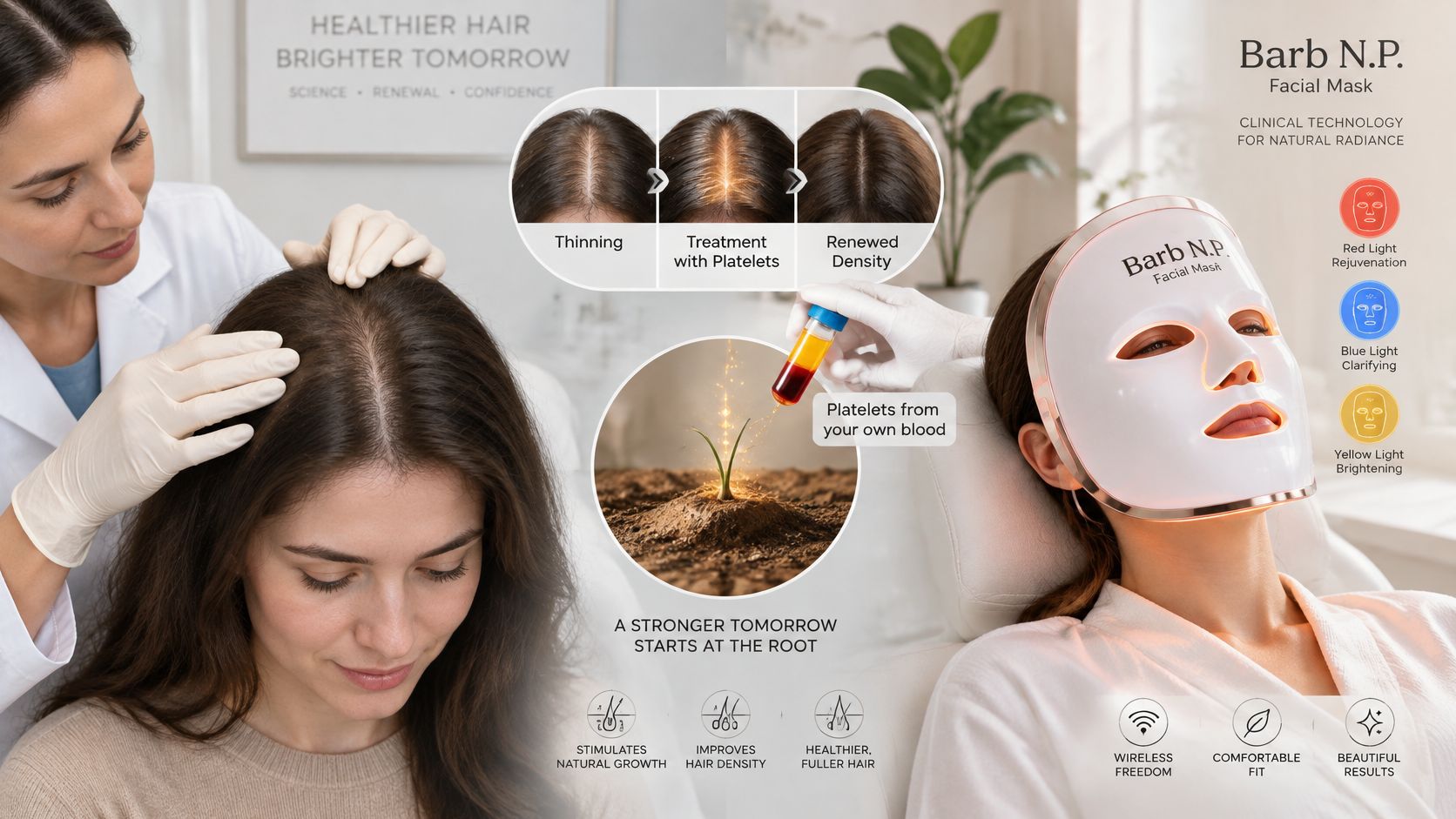
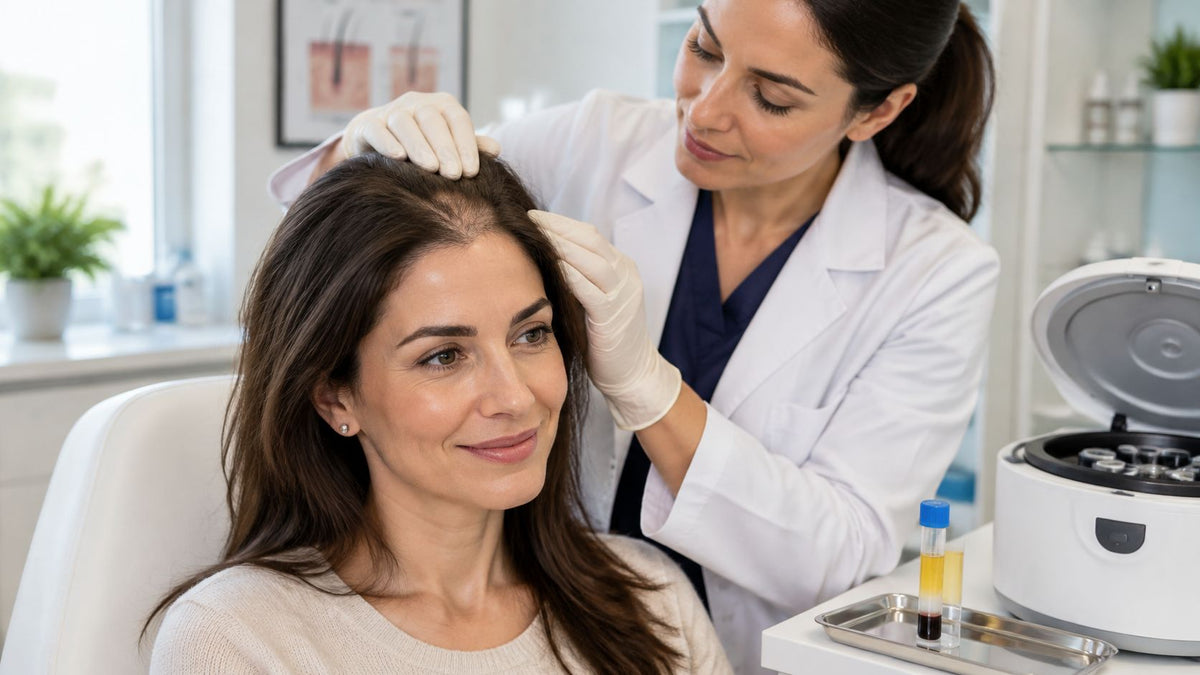
Platelet-rich plasma (PRP) is made from a sample of your own blood. A clinician separates the plasma and platelets, then injects the concentrate into areas of scalp with thinning hair. The aim is to deliver signals that may support existing follicles, not to create new ones.
PRP works more like a signal to a struggling plant than a new seed: it may support a living follicle, but it cannot replace one that is gone.
What Happens at the Follicle
- Activation: Platelets release their contents after they are activated. This may happen during injection or through an added activator.
- Growth factor release: Signals such as VEGF and PDGF may support local blood supply and cells around the follicle.
- Possible cycle effects: Researchers propose that these signals may encourage follicles to enter the growth phase or remain in it longer.
In female pattern hair loss, follicles gradually shrink and produce finer, shorter hairs. PRP does not change hormone levels, so it is sometimes used alongside other treatments rather than as a complete replacement.
The proposed mechanism is based partly on laboratory research, and clinical evidence is still developing. A diagram of growth-factor pathways explains a theory, not a guaranteed result. LED light therapy is a separate skin adjunct, not a substitute for scalp PRP.
One useful distinction is the pattern of loss: gradual thinning as follicles shrink differs from sudden, heavy shedding. The cause helps determine which treatment to consider first.
Who Qualifies and What to Confirm Before Booking
PRP isn't a universal fix for female hair loss. Confirm the diagnosis before any injection. A 2024 systematic review and meta-analysis of 21 randomized controlled trials involving 628 women found that PRP improved hair density and thickness overall, with generally mild and temporary adverse effects. That still doesn't establish that PRP works equally well for every diagnosis or outperforms standard options, and PRP may be less effective than minoxidil for female androgenetic alopecia.
Female pattern hair loss is the most common fit, usually when follicles are still present and PRP is used as an adjunct. Sudden shedding after stress, illness, or childbirth often follows a different course and may recover without injections. Patchy loss, pain, scaling, or rapid loss needs medical evaluation first. If you're still sorting patterns, start with our guide to what causes female hair loss before comparing treatment packages.
PRP Suitability by Diagnosis
| Diagnosis | PRP a reasonable option? | Check or treat first |
|---|---|---|
| Female pattern hair loss | Yes, often as an adjunct | Confirm the pattern with examination or trichoscopy, topical minoxidil is an established option |
| Telogen effluvium (stress, illness, postpartum) | Usually not first, shedding often recovers on its own | Lab work and observation, reassess after 3 to 6 months |
| Alopecia areata | Limited evidence, not a standard primary treatment | Dermatology evaluation, as treatments differ |
| Nutritional deficiency or thyroid disease | Not a substitute | Correct the deficiency or thyroid level first |
| Scarring alopecia | Not a suitable primary treatment | Dermatology evaluation, with biopsy if needed |
What to Confirm at Consultation
Ask for an examination or trichoscopy rather than a diagnosis based only on a quick look under bright lights. Bring recent results if you have them, and ask whether ferritin and thyroid tests are needed. Low iron stores and thyroid problems can drive shedding, and injecting PRP without correcting them can leave the main cause untouched.
Record your starting point on the same day. You need standardized photographs, the same parting and lighting you'll use later, and ideally a hair count or thickness measurement in a defined target area. Then agree in writing what success means at your review, such as stabilized shedding, a measured density increase, or no further widening at the part.
Practical rule: If a clinic can't name your diagnosis, its PRP preparation method, and your review date, don't buy a multi-session course yet.
Cost needs the same clarity because PRP for hair loss is usually self-pay and often not covered by insurance. Ask for the price per session, number of sessions in the initial course, maintenance schedule, and annual total. A low first-session price can become expensive once maintenance is added.
Our aesthetic services include microneedling with PRP, microneedling, PRP for hair regrowth, and Neogen plasma skin resurfacing laser, but service availability doesn't decide candidacy. Bring this checklist to any consultation.
- Confirmed diagnosis: Ask, "Which type of hair loss do I have, and how did you confirm it?"
- Baseline record: Ask, "Will you take standardized photos and measure a target area today?"
- Documented protocol: Ask, "How do you prepare PRP, how often will you inject, and how will you follow up?"
- Backup plan: Ask, "If progress is slow, will we add minoxidil, repeat labs, or refer me for medical evaluation?"
Say you're losing more hair in the shower two months after a major illness. You might be looking at telogen effluvium, not shrinking follicles. Observation and lab work could be smarter than immediate PRP, even if a clinic has an opening this week.
PRP Session, Safety and Aftercare
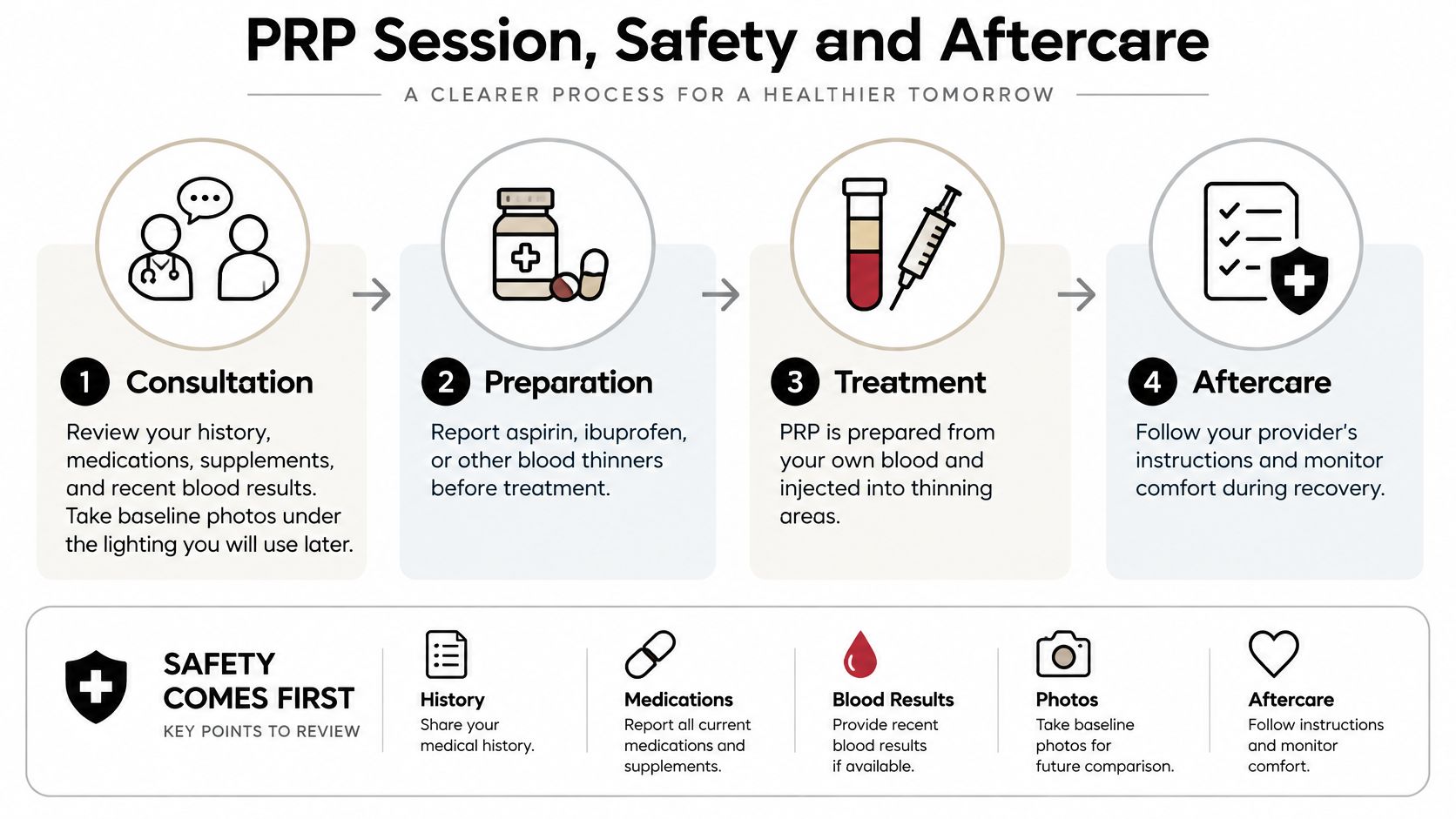
In-office PRP hair restoration uses your own platelets to support follicles. Because the material comes from your blood, the risk of an allergic reaction is lower, but injections still carry risks. Clean technique, medication screening, and clear aftercare instructions matter. Review how to prepare for a PRP appointment before your visit so you know what to ask.
What Happens During a Session
- Consultation: Your clinician reviews your health history, medications, supplements, and recent blood results. Baseline photos taken in consistent lighting make later comparisons more useful.
- Preparation: Tell the clinician if you take aspirin, ibuprofen, or other blood thinners. These medicines can affect platelet function. Pause them only if your clinician says it is safe, and follow any instructions about washing your hair on treatment day.
- Blood draw: A small sample is taken from your arm to prepare the PRP. Your clinician may ask about hydration or a recent illness.
- Centrifugation: The blood is spun to separate platelet-rich plasma from red cells. Spin settings and collection systems can affect the platelet concentration.
- Activation: Some clinics add calcium or thrombin to prompt growth factor release; others do not. Ask which approach the clinic uses.
- Injection: After numbing cream, PRP is injected into thinning scalp areas or applied after microneedling. The appointment usually takes 30 to 60 minutes.
Safety Points Women Often Miss
Trials mainly report mild, temporary soreness, swelling, bruising, or headache. Infection is a more serious concern because injections break the skin, even when the material comes from your own blood. Ask about clean technique and single-use equipment, and promptly report worsening redness or fever.
Pregnancy calls for caution. A review of dermatologic procedures in pregnancy lists PRP as not indicated during pregnancy and notes potential infection concerns. Controlled evidence for elective scalp PRP during pregnancy or breastfeeding is lacking.
Postpone elective PRP during pregnancy. If you are breastfeeding, discuss timing with your clinician rather than assuming that treatment using your own blood is proven safe. Postpartum shedding can be temporary, so treatment started immediately may coincide with natural recovery. Seek medical evaluation if shedding is patchy, your scalp is painful or scaly, or shedding persists rather than gradually settling.
Autologous means the PRP came from you. It does not establish safety during pregnancy, eliminate infection risk, or guarantee a response.
Hair texture can also affect how fullness looks. Fine strands versus thinning hair describes two different features: fine hair refers to strand width, while thinning refers to how many active follicles cover an area.
Aftercare for the First Two Days
- Protect the scalp: Unless your clinician advises otherwise, avoid heat styling, harsh scalp products, and vigorous exercise for 24 to 48 hours.
- Expect tenderness: Mild soreness or swelling can occur. Ask before restarting any medicine or supplement your clinician flagged.
- Watch for warning signs: Report spreading redness, increasing swelling, significant pain, discharge, or fever promptly.
How your scalp feels that evening reflects recovery, not whether follicles have responded.
Timeline and Results You Can Expect
Judge PRP over months, not weeks. A 2023 meta-analysis of 9 randomized controlled trials involving 238 patients found statistically significant density gains versus placebo at both 3 and 6 months. Improvements in hair count and shaft diameter weren't consistently superior to placebo, and only 2 of 7 studies reporting adverse effects identified reactions, with no serious adverse events found.
A common starting course is about three sessions roughly 4 to 6 weeks apart, followed by maintenance chosen by your clinician. Protocols vary, so your schedule should be documented before you begin rather than sold one visit at a time without an end point.
Expected Timeline and What to Measure
| Milestone | What to expect | How to measure |
|---|---|---|
| Baseline, before first session | Starting density and shedding pattern | Standardized photos and trichoscopy or hair count |
| Weeks 4 to 6 | Early phase, little visible change expected | Repeat photos with the same lighting and angle |
| Month 3 | Density gains reported in trials | Compare with baseline photos and count |
| Month 6 | Measured gains are most often reported by this point | Reassess density and decide on maintenance |
| Month 12 and beyond | Maintenance sessions often needed, gains can fade without them | Repeat measurement every 3 to 6 months |
How to Measure Without Fooling Yourself
Use the same photograph angle, lighting, camera distance, hairstyle, and parting at every checkpoint. Wet hair, darker dye, volumizing powder, and overhead light can all make density look different without any biological change. A defined target-area hair count or trichoscopy gives you something firmer than asking friends whether your part looks better.
Density is the most reliable expectation. Individual shaft thickening is less certain, and new hair can't be expected where follicles are gone. Few trials separate female from male outcomes cleanly, so set your target as stabilized or increased density, not guaranteed regrowth.
Decision rule: If there's no measurable change by 6 months, review the diagnosis and protocol before buying more sessions.
That review might mean repeating labs, checking whether shedding has another cause, adding an established treatment, or stopping PRP. Continuing indefinitely because you've already spent money isn't a clinical plan.
PRP Compared with Minoxidil and Transplants
Topical minoxidil has the stronger evidence base for female pattern hair loss. PRP is a moderate-evidence option that's often used alongside it, not a proven replacement. If you want a broader view of hair loss solutions for women, compare diagnosis, effort, and evidence rather than starting with the newest procedure.
PRP and Other Hair Loss Treatments Compared
| Option | How it works | Evidence strength | Effort or downtime | Best used for |
|---|---|---|---|---|
| Topical minoxidil | Prolongs the growth phase and enlarges follicles | Well established for female pattern hair loss | Daily or twice-daily application, ongoing | First-line option for female pattern hair loss |
| PRP alone | Growth factors from your own platelets stimulate follicles | Moderate, protocols vary between clinics | Scalp injections over a series of sessions | Adjunct, or an option when topicals are not enough |
| PRP with microneedling | Microneedling may improve delivery of PRP into the scalp | Limited, fewer and smaller studies | Redness for a few days, sessions repeated | Clinician-led combined plan |
| Hair transplant | Moves follicles from a donor area to thinning zones | Strong for suitable candidates, grafts are permanent | Surgery plus recovery of days to weeks | Stable, localized loss with adequate donor hair |
A transplant belongs in a different category because it moves follicles rather than trying to support miniaturized ones. It suits stable, localized loss with adequate donor hair, but diffuse female thinning can make donor selection harder. Surgery also carries recovery, cost, and the possibility that native hair around grafts continues to thin.
Related platelet treatments shouldn't be treated as interchangeable. The American Hair Loss Association summary reported at 24 weeks average target-area hair-count increases of approximately 14.5% with PRP, compared with 26.5% for injectable platelet-rich fibrin and 27.1% for concentrated growth factors. Those are study averages at roughly six months, not promises for your scalp.
Combining treatments can make sense when each one has a defined job. Guidance on matching hair loss treatment to cause is useful here because the best combination for pattern thinning won't fix untreated thyroid disease or scarring loss. Your choice should reflect diagnosis, budget, time, tolerance for injections, and whether you'll maintain a daily topical.
Frequently Asked Questions
Does PRP Hurt
Numbing cream is applied first, but you'll still feel pressure and small pinches. Many people describe scalp tenderness afterward, often for a day or two. Ask how the clinic manages discomfort and which pain relievers you may use, since some medicines affect platelets and may be restricted around treatment.
Can PRP Regrow Hair Where Follicles Have Gone
No. PRP can only support follicles that are still present. It can't create hair in a smooth area where follicles have disappeared or scarred. That's why earlier pattern thinning is a more plausible target than long-standing bald areas.
Can I Combine PRP with Minoxidil
Often, yes, as a clinician-led combined plan. Ask when to pause or resume topical treatment around injections and how each treatment's effect will be judged. Starting everything on the same day can make it harder to know what's helping, but sequencing is a clinical decision based on your diagnosis and tolerance.
Why Do Quotes Differ Between Clinics
Platelet concentration, activation method, injection schedule, and follow-up measurement aren't standardized. One quote may cover a single session without trichoscopy, while another covers a course, photographs, and a six-month review. Compare documented protocols and total annual cost rather than headline prices.
How Will I Know If It Is Working
Judge at about 6 months using the same photographs, lighting, parting, and target-area counts from baseline. Reduced shedding can be encouraging, but it's subjective unless you track it consistently. If measurements show no change, ask for a diagnostic review instead of automatically purchasing maintenance.
What Should I Bring to a Consultation
Bring a medication and supplement list, recent lab results, and dated photos showing when thinning changed. Ask whether a diagnosis visit is included before treatment is sold. A careful clinician should welcome those records because they make the treatment decision clearer.
Book a consultation with BotoxBarb to discuss whether your pattern of thinning fits PRP, what baseline measurements should be recorded, and whether microneedling with PRP or another plan makes more sense for you. Bring your medication list, recent labs, and dated scalp photos so your first visit can focus on a real decision. Visit BotoxBarb to book and prepare your questions before you commit to a course.