Choosing Skin Care Lines: Your Expert Guide for 2026
You search skin care lines because you want one clear answer. Instead, you get two different conversations at once. Half the results talk about product brands. The other half talk about the fine lines around your eyes, mouth, and forehead.
That confusion is reasonable. In practice, both meanings matter. The product line you choose affects whether your facial lines soften, stay stable, or slowly deepen because your routine never addressed the underlying problem.
As an aesthetic nurse practitioner, I see this often. Someone comes in with a shelf full of products from different brands, but no real plan. They've bought a “clean” serum, a trendy moisturizer, an exfoliating toner, and a retinol they use only when they remember. Then they ask why their skin still looks dull, irritated, or lined. Usually the issue isn't effort. It's that they were sold products, not a strategy.
A good routine starts by separating two questions. First, which skin care line makes sense for your skin. Second, which ingredients and treatments help facial lines. Once those are clear, the noise drops away.
The Search for Better Skin Care Lines
A common scenario goes like this. You type “skin care lines” into a search bar because you want products that work. Then you click one article about wrinkle creams, another about luxury brands, and a third about “medical-grade” skin care. After ten minutes, it feels like everyone is answering a different question.
That's because they are.
Some people use skin care lines to mean a family of products from one brand. Others use it to mean the visible lines on the face that come with sun exposure, repetitive movement, dehydration, collagen loss, irritation, or just time. If you don't separate those meanings, you end up buying products based on branding when your real concern is crow's feet, forehead lines, acne marks, uneven tone, or barrier damage.
I usually tell clients to pause before buying anything and ask three practical questions:
- What am I trying to treat: fine lines, pigmentation, dryness, acne, sensitivity, or all of the above?
- What kind of routine will I follow: a simple one, or a layered one?
- Do my products work together: or am I combining actives that leave my skin red and inconsistent?
Practical rule: A routine you'll use consistently beats an ambitious routine you abandon after a week.
Better skin rarely comes from chasing the newest launch. It usually comes from matching the right product line to the right skin concern, then sticking with a routine long enough for the skin to respond. That's especially true if your real goal is smoother texture and softer facial lines, not just a prettier bottle on the counter.
Brands vs Wrinkles Decoding Skin Care Lines
When professionals talk about skin care lines, context matters. The same phrase can refer to a brand line of products or to wrinkles and creases on the skin. You need to know which conversation you're in before any advice becomes useful.
Skin care lines as brands
Think of a skin care line like a publisher. The publisher is the brand. The individual books are the products. A cleanser, vitamin C serum, retinoid, and moisturizer may all belong to the same line because they were designed around a shared philosophy, ingredient style, or treatment goal.

This idea isn't new. Branded skincare has deep roots. Cosmetic houses such as Pond's, Guerlain, and Rimmel expanded through mass advertising in the mid-to-late 1800s, and the formation of the FDA in 1906 helped shape modern regulation for cosmetics. A later milestone came in 1931, when Almay was established as the first hypoallergenic brand, reflecting a shift toward clinically considered skin care lines for sensitive skin, as noted in this history of skincare milestones.
That history still affects how brands position themselves now. Some lines are science-forward. Some emphasize simplicity. Some build around sensitive skin. Some rely heavily on texture, packaging, and lifestyle appeal.
If you want a practical way to sort through options, this guide on how to choose skincare products is a useful place to start.
Skin care lines as wrinkles
The second meaning is literal. These are the lines you see on the face. Forehead creases, frown lines, lip lines, smile lines, and fine crinkling around the eyes all fall into this category.
Here's the easy distinction:
| Meaning | What it refers to | Example |
|---|---|---|
| Skin care line | A brand family of products | A cleanser, serum, and moisturizer from one company |
| Skin lines | Visible creases or wrinkles | Fine lines near the eyes or deeper expression lines |
A brand line can help skin lines, but only if the ingredients and treatment approach match the problem. A pigment-focused line won't do much for movement-related forehead creases. A richly hydrating line may make fine dehydration lines look better, but it won't replace collagen support or sun protection.
The phrase is confusing because it points to both the toolkit and the problem.
That's why I don't tell clients to shop by brand alone. I tell them to shop by goal, tolerance, and evidence of function.
Evaluating Medical-Grade Skin Care Product Lines
A lot of clients ask whether medical-grade or professional skin care is actually different, or whether it's just better marketing. The short answer is that some professional lines do offer meaningful advantages, but only when you choose them for the right reason.
What usually separates professional lines
Professional skin care lines are typically differentiated by higher concentrations of active ingredients and advanced delivery systems, which can improve target engagement in the stratum corneum and produce more measurable changes in concerns like acne, pigmentation, and photoaging. Their testing also often relies on standardized expert grading scales for texture, redness, dark spots, and fine lines rather than subjective consumer feedback alone, as described in this overview of professional skincare lines and clinical validation.
That doesn't mean every expensive product is superior. It means you should look for signals that the brand is built around treatment performance rather than trend language.
Here's what I look for when reviewing a line with a client:
- Active ingredients with a job to do: retinoids, pigment regulators, barrier-support ingredients, antioxidants, or acne-directed actives.
- Formulation logic: products that can be layered without creating unnecessary irritation.
- A realistic role in a routine: not five serums doing the same thing.
- Professional fit: whether the routine works alongside procedures such as injectables, peels, laser, or LED therapy.
What doesn't impress me
A long ingredient list doesn't equal potency. “Natural” doesn't automatically mean gentle. “Clinical” on the label doesn't tell you whether the formula is well designed.
I'm also cautious when a line tries to solve everything with one hero ingredient. Skin usually needs more than one function addressed. You may need UV protection, collagen support, hydration, pigment control, and barrier repair at the same time, just not all in one harsh routine.
If a product line leaves your skin constantly tight, flaky, or reactive, it's not advanced. It's mismatched.
When the higher price is worth it
Sometimes the price difference reflects thoughtful formulation, delivery technology, and a better fit for treating stubborn concerns. Sometimes it reflects packaging and branding. Your job is to tell those apart.
A simpler comparison helps:
| Question | Mass-market line | Professional line |
|---|---|---|
| Primary goal | Broad appeal | Targeted treatment |
| Texture and scent | Often optimized for feel | Often secondary to function |
| Guidance needed | Lower | Higher, especially with actives |
| Best use | Basic maintenance | Concern-driven routines |
If your skin is stable and you only need cleansing, moisturizing, and sunscreen, a mass-market routine can be enough. If you're trying to address persistent acne, discoloration, fine lines, or post-procedure support, professional lines usually make more sense.
The Best Ingredients for Treating Fine Lines and Wrinkles
When clients want help with facial lines, I don't start with brand names. I start with ingredient categories. That's because the same wrinkle can have different drivers. One person's under-eye crinkling is mostly dehydration. Another person's forehead lines are mostly repeated muscle movement. Someone else has texture damage from years of sun exposure.
Protection first
The single most important anti-aging category is sunscreen. Dermatologist guidance consistently prioritizes mineral sunscreens with zinc oxide or titanium dioxide for ultraviolet protection and wrinkle prevention. In one dermatologist survey, mineral sunscreen and retinoids were each recommended by 96.8% of respondents for fine lines and wrinkles, showing unusually high agreement on their value, according to Northwestern Medicine's review of top dermatologist-recommended skin care ingredients.
If you skip sunscreen, you're trying to fix skin while also exposing it to the same stress that keeps breaking it down.

Repair and renewal
Retinoids remain foundational because they support cell turnover and help improve the appearance of fine lines, acne, and uneven tone. They aren't glamorous, but they're reliable when used consistently and tolerated well.
Peptides can be useful as support players. I don't rely on them alone for established wrinkles, but I do like them in routines where the skin can't tolerate stronger actives every night.
A practical approach looks like this:
- Retinoids at night: useful for fine lines, acne, and discoloration. Start slowly if your skin is reactive.
- Peptides in a serum or moisturizer: helpful when you want a gentler support product.
- Antioxidants in the morning: often paired with sunscreen for daytime protection.
If you want a broader breakdown of high-value actives, this page on best anti-aging ingredients is worth reviewing.
Hydration and barrier support
Some facial lines aren't true structural wrinkles. They're made worse by dehydration and barrier disruption. In those cases, plumping the skin and reducing irritation can make a noticeable visual difference.
Dermatologist guidance often prioritizes ceramides, petrolatum, and hyaluronic acid for dry or compromised skin. These ingredients don't replace retinoids or sunscreen, but they make those stronger products easier to tolerate.
I often explain it this way:
| Ingredient type | What it helps with | Best for |
|---|---|---|
| Hyaluronic acid | Water binding and temporary plumping | Dehydration lines |
| Ceramides | Barrier support | Dry, irritated, sensitive skin |
| Petrolatum | Sealing moisture | Very dry or compromised skin |
Pigment and inclusivity matter too
For many people, especially those prone to post-inflammatory hyperpigmentation, “aging” concerns aren't just about lines. They're about a mix of fine lines, uneven tone, acne marks, and irritation. In darker skin tones, the wrong routine can create more discoloration while trying to treat texture.
That's why I pay close attention to niacinamide and other pigment-conscious options when the skin is easily marked after acne or irritation. The right anti-aging routine should improve skin quality without creating a cycle of inflammation.
For clients dealing with facial volume changes from weight loss, skin support matters too, but expectations need to stay grounded. If that's part of your concern, this resource on how to prevent Ozempic face gives helpful context on supporting skin and facial appearance while understanding the limits of topical care.
Use fewer actives well. Most people get better results from a calm routine than from an aggressive one.
Building Your Daily Anti-Aging Routine
Once the ingredient list makes sense, the routine should become simpler, not more complicated. Individuals generally don't need a ten-step plan. They need a repeatable morning routine for protection and an evening routine for repair.
Morning routine
The morning routine should defend the skin against daily exposure and keep the barrier comfortable.

A solid AM routine often looks like this:
-
Gentle cleanse if needed
If your skin is dry, you may not need a full cleanse in the morning. A rinse can be enough. Oily or acne-prone skin may prefer a true cleanser. -
Antioxidant serum
A vitamin C product often fits here. It's useful for daytime support and pairs well with sunscreen. -
Moisturizer
Pick based on skin behavior, not trends. Gel textures suit oilier skin. Cream textures suit dry or compromised skin. -
Mineral sunscreen
This step matters most. Apply enough, and reapply if you're outdoors.
If you spend a lot of time outside, it helps to review broader practical sun safety methods beyond what your facial SPF covers.
Evening routine
Night is where treatment products usually do their heaviest work.
A simple PM plan:
- Cleanser first: remove sunscreen, makeup, and the day's residue.
- Treatment next: retinoid on the nights your skin can handle it.
- Moisturizer after: buffer dryness and support the barrier.
If your skin gets irritated easily, don't stack multiple strong actives on the same night. Alternate. One night might be retinoid. Another might be hydration and barrier repair only. Sensitive skin often improves faster when you stop trying to force progress.
Where devices fit
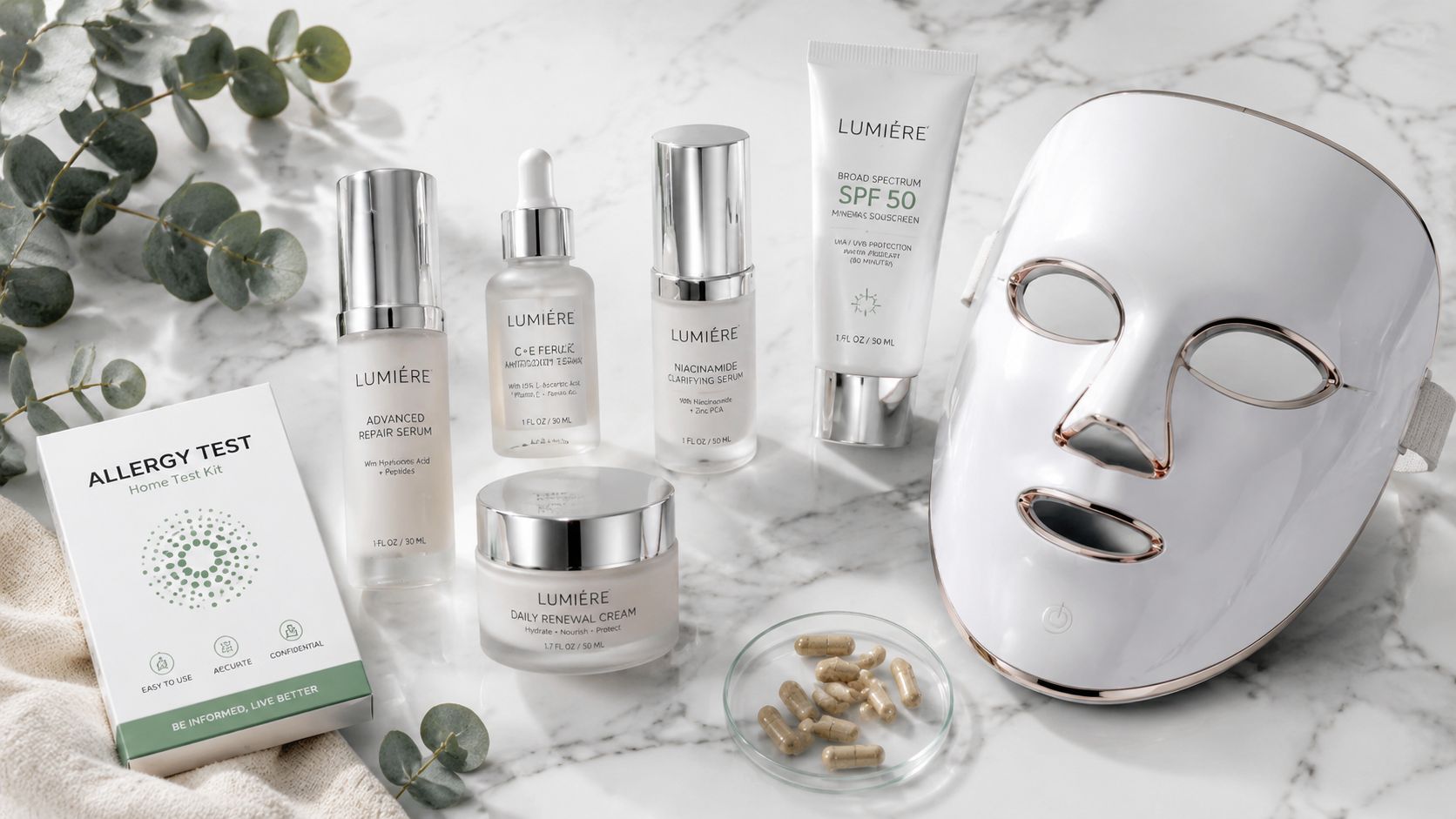
LED can be a useful supporting step for people who want to bridge home care and in-office treatments. The Barb N.P. Facial Mask is one example of an at-home LED device that fits into this type of routine. It's wireless, designed for comfort on the face, and has 3 light settings for different treatments. That makes it easier to use consistently than devices that feel heavy, awkward, or tethered to a wall.
I like LED best as an addition, not a substitute. It won't replace sunscreen, retinoids, or injectables when those are indicated, but it can support a steady home routine.
When to Combine Topicals with Professional Treatments
Topical skin care can do a lot. It can improve texture, support the barrier, brighten tone, and soften superficial lines. But once lines become deeper, etched, or tied to repeated facial movement, home care usually needs help.
What topicals do well and where they stop
A serum can't relax a muscle. A moisturizer can't replace lost facial volume. A retinoid can improve surface quality, but it won't act like a neuromodulator.
That's why many people eventually combine home care with procedures. This isn't overkill. It's using the right tool for the right mechanism.

The broader market has moved in this direction too. The global skincare market grew from US$28 billion in 1990 to US$150 billion in 2023, reflecting strong demand for routines that combine daily prevention with more advanced clinical care, as described in this review of skincare market growth and history.
Matching treatments to the problem
Here's how I frame it for clients:
| Concern | Topicals help with | Professional options often considered |
|---|---|---|
| Fine surface lines | Texture, hydration, gradual smoothing | LED therapy, resurfacing approaches |
| Expression lines | Skin quality around the area | Botox or Dysport |
| Volume loss and folds | Supportive skin health | Dermal fillers |
| Overall rejuvenation | Daily maintenance | PRP and other in-office plans |
For light-based treatments, expectations matter. If you're comparing device-based options or curious about what photo-based treatments can and can't realistically do, this guide can help you understand realistic IPL outcomes.
Building a combined plan
A combined strategy usually works best when it stays simple:
- Use topicals daily: sunscreen, targeted treatment, moisturizer.
- Add procedures for what products can't do: movement lines, volume loss, stronger rejuvenation goals.
- Support recovery: choose products that calm the skin instead of provoking it right after treatment.
The best plans are specific. A client with forehead lines and stable skin texture may benefit most from neuromodulators plus sunscreen and a retinoid. A client with dullness, acne marks, and sensitivity may do better with pigment-conscious skin care, barrier repair, LED, and a slower procedural schedule.
For a broader overview of treatment categories, this guide to best anti-aging treatments can help frame the options.
Frequently Asked Questions About Skin Care Lines
Can I mix products from different skin care lines
Yes. You don't need to stay loyal to one brand. What matters is whether the products work together. I'd rather see a thoughtful mixed routine than a full brand lineup that duplicates steps or irritates the skin.
The key is balance. Don't combine too many strong actives at once unless your skin is already accustomed to them.
How long does it take to see results
Hydration changes can show up fairly quickly. Pigment and texture improvement take longer. Fine lines also depend on what kind of line you're treating. Dehydration lines may soften fast. Deeper expression lines usually need more than topical care.
Consistency matters more than intensity. Skipping around between routines is one of the biggest reasons people think “nothing works.”
Is medical-grade skincare worth it
Sometimes yes, sometimes no. If your goals are basic cleansing, moisturizing, and daily SPF, you may not need a professional line for every step. If you're dealing with acne, discoloration, photoaging, or a post-procedure routine, professional products often make more sense.
Worth is about fit, not hype.
Do men need different skin care lines
Usually they need different guidance, not completely different science. Men and gender-diverse shoppers are often underserved by beauty marketing, which tends to default to women-focused routines. In practice, the important questions are skin type, shaving habits, sensitivity, acne tendency, pigment risk, and how simple the routine needs to be.
What if I have darker skin and I'm worried about marks more than wrinkles
That changes product selection. You need a routine that treats aging concerns without triggering irritation and post-inflammatory hyperpigmentation. I'm usually more conservative with exfoliation in this group and more attentive to barrier support, pigment management, and sunscreen consistency.
Start with the concern your skin shows most clearly, not the one marketing tells you to chase first.
If you want a more targeted plan, BotoxBarb offers in-clinic aesthetic services and a curated online shop with medical-grade skin care, sun protection, LED options, and treatment support products that can help you build a routine around your actual skin concerns rather than guesswork.