Best Self Care Products: A Guide to Medical-Grade Results
You're probably here because “self care” has started to feel like a shopping problem. One person says you need a 10-step routine. Another says all you need is a face oil, a scalp serum, a gua sha, a supplement stack, and a weekly mask. Then your bathroom fills up, your skin gets irritated, and you still don't feel like you've built a routine that works.
That's where a clinical approach helps. The best self care products aren't the ones with the loudest packaging or the biggest trend cycle. They're the products that solve a specific problem, fit your real life, and hold up over time with consistent use.
As an aesthetic nurse practitioner, I look at self-care a little differently. I want products that support barrier health, ingredient transparency, long-term skin quality, and routines patients can maintain without burnout. That usually means fewer products, better formulations, and clearer reasons for every step.
Navigating the World of Self Care

Self-care has become a huge category, and that scale is part of the problem. The global personal care products market was valued at USD 401.57 billion in 2025 and is projected to reach USD 733.96 billion by 2034, while skin care accounted for 31.92% of global share in 2026 according to Fortune Business Insights on the personal care products market. A large market creates options, but it also creates noise.
The difference between comfort and results
There's nothing wrong with comfort-based self-care. A body wash you love, a candle, a hair mask on a Sunday night, those things matter. But if your goal is brighter skin, calmer redness, fewer breakouts, stronger hair, or better aging support, a pampering routine and a corrective routine aren't the same thing.
That distinction matters because many people buy for mood and expect clinical change.
Practical rule: If a product doesn't have a clear role in your routine, it usually becomes clutter, not care.
The most useful way to think about the best self care products is this. Each item should either cleanse, correct, protect, support recovery, or make consistency easier. If it doesn't do one of those jobs, you probably don't need it.
Why less often works better
I see better outcomes when people stop layering random trends and start using a tight routine with high-performance basics. Skin tends to respond well to rhythm. Hair does too. That means products need to be compatible, tolerable, and easy enough to use even when life gets busy.
A “less but better” routine usually has three advantages:
- Better adherence because you'll maintain the routine
- Lower irritation risk because you're not combining too many active formulas
- Cleaner troubleshooting because we can identify what's helping and what isn't
This is also where a medical-grade mindset helps. Medical-grade doesn't mean harsh. It means thoughtful formulation, evidence behind safety, and ingredients chosen for function instead of trend appeal.
What I recommend patients focus on first
Before you buy anything else, narrow your routine to a few high-value categories:
- A reliable cleanser that doesn't leave skin tight or stripped
- One treatment product matched to your main concern
- A moisturizer or barrier-support formula that your skin tolerates well
- Daily sun protection
- One hair or wellness support product if hair thinning, shedding, or scalp stress is part of the picture
Barb N.P. puts it: “You don't need more products. You need the right products used consistently.”
That's the philosophy behind a sustainable routine. Self-care isn't a pile of items on your counter. It's a system that supports your skin, hair, confidence, and daily life.
First Understand Your Skin and Hair Goals
The typical starting point remains “I have dry skin” or “I have oily skin.” That's not enough to build a strong plan. Skin type matters, but goals matter more. The product that helps post-inflammatory pigment isn't the one I'd choose first for barrier breakdown, and the serum for early fine lines won't be my first pick for reactive redness.
Consumer behavior reflects that shift toward more intentional buying. In a survey of U.S. consumers, 74% said they prioritize self-care and wellness in their beauty rituals, and 65% want a clear ingredient list according to BeautyMatter's coverage of self-care through beauty. People want products that feel good, but they also want to know what they're using and why.
Start with the concern, not the category
When I guide a patient, I usually ask them to identify the one or two outcomes they care about most. Not five. Not ten.
A better self-assessment looks like this:
-
Pigment and uneven tone
You notice lingering marks after acne, sun spots, or a dull overall look. -
Texture and lines
Your skin feels rough, makeup doesn't sit well, or you're focused on smoothing and refinement. -
Sensitivity and redness
Products sting easily, your skin flushes often, or your barrier seems fragile. -
Breakouts and congestion
You need oil control, pore maintenance, and fewer inflammatory lesions without over-drying the skin. -
Hair thinning or shedding
You're seeing reduced density, widening of the part, more hair in the shower, or breakage that wasn't there before.
Don't ignore possible triggers
Not every skin issue is topical. Sometimes recurrent irritation, facial inflammation, or scalp disruption has an internal or environmental component. That's why diagnostics can matter. If someone's skin keeps “reacting to everything,” I think beyond moisturizer and ask whether hidden triggers are contributing.
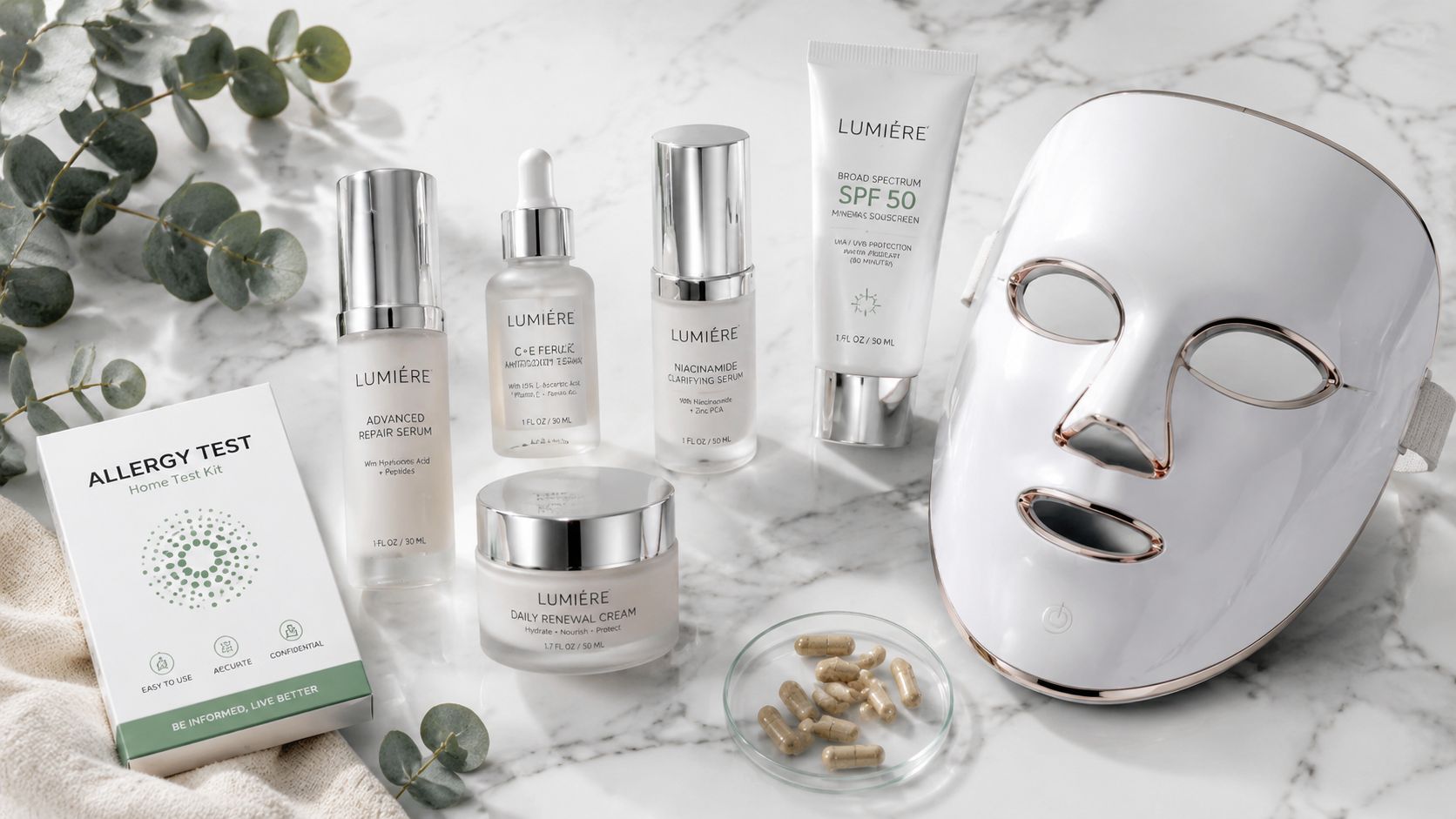
For some patients, structured testing can be useful. If your symptoms are persistent and hard to explain, services like food and environmental allergy panels can add context instead of guessing your way through product changes.
The routine only works when it matches the cause of the problem, not just the visible symptom.
Hair is another place where this comes up often, especially in hormonal transition. If thinning has become more noticeable around midlife, Lila's perimenopause hair advice offers a practical primer on the broader factors that can shape shedding and density changes.
Build your plan around one primary goal
Once you know your main concern, every product needs a purpose. That's the point where spending gets smarter.
A simple framework:
- Keep products that support your main goal
- Pause products that duplicate the same function
- Remove products that regularly sting, peel, or leave your skin unpredictable
- Add only what fills a real gap
If you need help organizing the basics, this guide on how to build a skincare routine is a helpful way to map products in the right order without overcomplicating things.
The best self care products start making sense once your goals are clear. Without that step, even good products become expensive guesses.
Building a Routine with High-Performance Products
A good routine should feel repeatable on your busiest week, not just on your most motivated day. That's why I prefer a small number of high-impact products over an elaborate shelf. Practical coverage of self-care shopping often points toward multi-use and simplified routines, and that lines up with what I see in clinic. Consistency with fewer strong choices usually beats a crowded routine that falls apart after a week, as noted in this discussion of multi-use and simplified personal care habits.

The routine I'd build first
I like to anchor self-care around four pillars. Not every patient needs every trend, but almost everyone benefits from these categories.
Cleansing
Cleansing should remove sunscreen, oil, debris, and makeup without disrupting the barrier. If your face feels squeaky after washing, that's usually not a win. That stripped feeling often pushes skin toward rebound oiliness or irritation.
For many patients, a gentle cleanser used consistently works better than rotating between exfoliating washes and harsh acne foams.
Corrective treatment
The routine becomes personal. A targeted serum or treatment should address your actual concern, not a vague idea of “anti-aging.”
Examples of smart corrective categories include:
- Vitamin C formulas for brightening support and environmental stress exposure
- Retinoid products for texture, tone, and visible aging support
- Peptide-based formulas when firmness and recovery are priorities
- Barrier-support treatments when sensitivity is limiting everything else
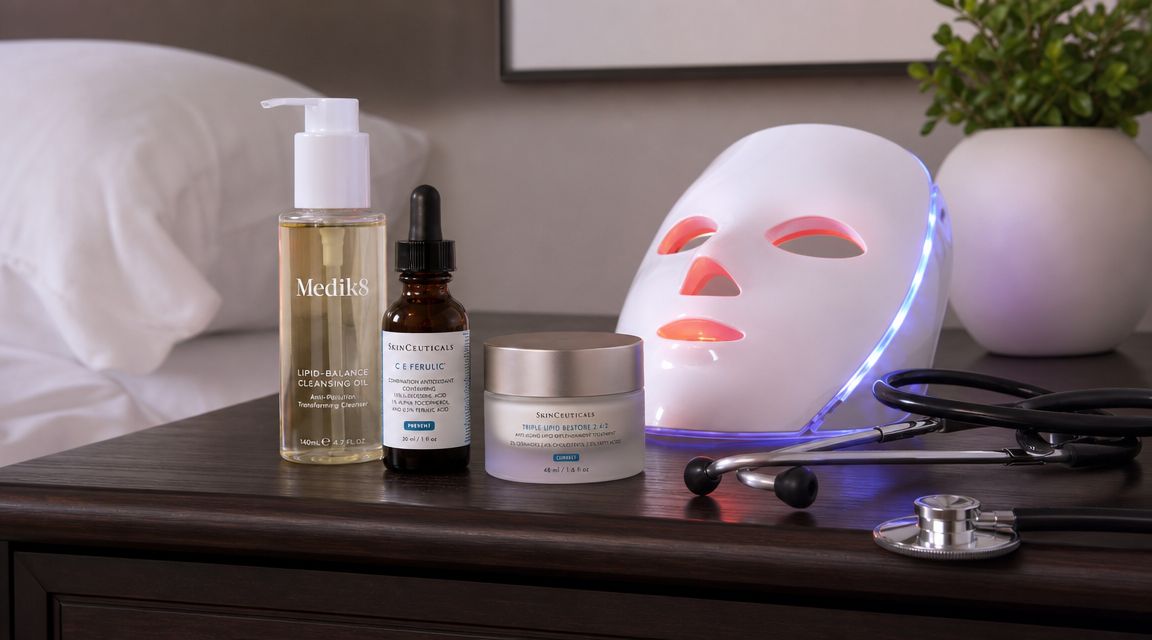
This is also where product curation matters. I'd rather see one well-chosen SkinCeuticals serum in a routine than three trend-driven actives fighting each other.
Protection and internal support
Daily protection is one of the least glamorous parts of self-care, and one of the most important. Sun exposure can undermine the progress you're trying to make with nearly every corrective product. If you're investing in pigment control, smoother texture, or visible rejuvenation, sun protection isn't optional.
For hair, internal support can play a useful role when topical care alone isn't enough. In practice, a supplement like Nutrafol may fit for someone focused on thinning, stress-related shedding, or long-term density support.
Good routines don't just target improvement. They prevent backsliding.
Sleep also belongs in a serious self-care conversation. If your skin looks inflamed, dull, or depleted, and your recovery feels poor, nighttime habits may be part of the picture. For readers trying to improve that foundation, a clinically dosed sleep solution can be a useful resource to evaluate alongside topical care.
At-home enhancement
At-home devices can be worth including if they support consistency instead of creating friction. I like tools that complement a routine rather than replace it.
Here's what I mean by useful versus not useful:
| Category | Often works well | Often disappoints |
|---|---|---|
| Cleansing tools | Simple, non-abrasive support | Aggressive scrubbing devices |
| Treatment devices | LED used consistently | Gadgets with no clear role |
| Hair support tools | Scalp-focused tools used gently | Tools that tug or overheat hair |
If you're trying to make your routine more intentional, this guide on how to choose skincare products can help you decide what belongs in your lineup and what doesn't.
The best self care products aren't necessarily the most numerous. They're the ones that create a routine you can sustain, tolerate, and trust.
How to Identify Truly Effective Ingredients
A good label tells you more than a marketing headline ever will. If you want better results, read products with a clinician's mindset. Ask what the ingredient does, whether the formula is likely to keep it stable, and whether the brand gives you a reason to trust the product beyond buzzwords.
One of the most important safety principles comes from the FDA position summarized in this review of cosmetic safety substantiation and third-party certification. Cosmetic safety should be supported by evidence, and claims like “natural” or “organic” don't automatically make a product safer. That's an important correction because many people still equate soft branding with low risk.
What to look for on the label
I tell patients to scan a formula in layers.
First, identify the main active. Is it a vitamin C product meant for brightening, a retinoid for turnover, a peptide formula for support, or a barrier-focused cream built to calm and replenish?
Then ask whether the rest of the formula makes sense:
- Does the product fit the goal? A brightening serum and a barrier cream should not read the same.
- Does it disclose enough? Clear labeling matters. Ingredient transparency reduces guesswork.
- Is there a quality signal? Third-party standards can help, especially when you care about sourcing or ethics.
Useful certification markers may include USDA Organic, Ecocert COSMOS Organic, Leaping Bunny, or Non-GMO. These don't replace formulation quality, but they can reduce uncertainty.
Why formulation matters as much as the hero ingredient
Many “viral” products fall short. An ingredient can be excellent on paper and still underperform if the formula is unstable, irritating, or poorly designed.
That's why I pay attention to:
-
Tolerance
If a treatment causes frequent stinging, flaking, or rebound irritation, patients stop using it. -
Compatibility
Strong actives stacked without a plan often create more inflammation than improvement. -
Support ingredients
A good treatment product usually includes a broader formulation strategy, not just a single flashy active.
A strong ingredient in a weak formula is still a weak product choice.
Marketing language that should make you pause
Some wording sounds reassuring but doesn't tell you much.
| Claim on front label | Better question to ask |
|---|---|
| Natural | Is it well formulated and safe for my skin? |
| Clean | What does that mean for this brand specifically? |
| Medical-grade | What is the actual formulation logic? |
| Organic | Is there certification, and is the product appropriate for my concern? |
This same critical approach also helps when you look beyond skin care into supplements and wellness support. If you want a broader framework for evaluating claims, this guide to true science-backed nutrition is a useful companion read.
My practical standard in clinic
I don't choose products because the branding feels aspirational. I choose them because they answer a question clearly.
For example:
- If the concern is pigment, I want a formula built for brightening support and daily use.
- If the concern is lines and texture, I want a treatment the patient can tolerate long enough to see change.
- If the concern is sensitivity, I want fewer variables and more barrier support.
- If the concern is hair density, I want a plan that includes both scalp and internal considerations where appropriate.
That's how you narrow the field. The best self care products don't need dramatic claims. They need a clear job, a thoughtful formula, and a reason to earn space in your routine.
Bringing Clinical Technology Home with the Barb NP LED Mask
Topicals do a lot of the heavy lifting, but some patients want an at-home tool that supports consistency between treatments. LED therapy is one of the few categories I think can make sense in a real-world routine when expectations are reasonable and the device is easy to use.

Why device quality still depends on skin care fundamentals
Even when you add technology, the basics still matter. For water-based products like serums and lotions, preservative systems and formulation pH are major quality variables. High-performing products are often formulated below about pH 5.5 to support stability and microbial control, as explained in this technical guide to preservatives and pH in cosmetic formulations. In plain terms, your device can support your routine, but it can't rescue weak or poorly matched skin care.
That's why I see LED as an amplifier, not a substitute.
What makes an at-home LED mask useful
A device only helps if people use it. In practice, the biggest barriers are inconvenience, poor fit, and unclear treatment goals. If a mask is heavy, awkward, or tethered in a way that disrupts normal life, adherence drops quickly.
Barb N.P. recommends the Barb N.P. Facial Mask as one at-home option because it addresses those common usability problems with a wireless design, a comfortable fit on the face, and 3 lighting settings that let users match treatment to concern.
For readers who want more context on where LED fits in a treatment plan, the overview of benefits of LED light therapy offers a practical starting point.
“A device should make your routine easier to repeat, not harder to maintain.”
Barb N.P.
Matching the light setting to the goal
The treatment value depends on using the right setting consistently and pairing it with realistic expectations.
| Barb N.P. LED Mask Light Therapy Settings | Primary Benefit | Best For |
|---|---|---|
| Red | Supports skin rejuvenation and collagen-focused care | Fine lines, loss of firmness, overall rejuvenation goals |
| Blue | Targets acne-focused routines | Breakout-prone or congested skin |
| Amber | Helps calm the look of redness and uneven tone | Sensitive-looking skin, visible redness, pigmentation-focused support |
Where this fits in a routine
I'd place LED after cleansing on clean skin, then follow with the rest of your routine based on tolerance and product type. Keep the surrounding routine simple. If you're already using corrective products, the mask should support consistency, not tempt you into adding five more things.
A reasonable at-home approach looks like this:
- Use the mask consistently instead of in sporadic bursts
- Choose one main goal for the current phase of treatment
- Keep your topicals steady so you can tell what's helping
- Avoid overcomplication with too many actives at once
The best self care products often include one smart tool that helps you stay engaged with your routine. LED can be that tool when the device is comfortable, practical, and easy to repeat.
Your Long-Term Path to Radiant Self Care
The people who get the best long-term results usually aren't the ones chasing every launch. They're the ones who understand their own patterns, use products that match their goals, and stay consistent long enough to let the routine work.

A better way to think about self-care
Self-care isn't just a reward purchase. It's maintenance. It's prevention. It's also a way to reduce the cycle of trying something random, reacting to it, and starting over.
The strongest routines usually share three traits:
-
They're specific
Each product has a clear role. -
They're realistic
The routine fits normal life, not an idealized version of it. -
They're consistent
Progress comes from repetition, not intensity.
What changes over time
Your routine shouldn't stay frozen forever. Skin changes with age, climate, stress, hormones, sleep, and treatment history. Hair goals change too. What worked during a breakout-heavy phase may not be the right routine once sensitivity or pigment becomes the bigger issue.
That's why long-term self-care works best when we reassess instead of endlessly adding. Sometimes the right move is upgrading one serum. Sometimes it's simplifying. Sometimes it's recognizing that home care has built a strong foundation and you're ready for in-clinic support.
Good self-care creates the baseline. Professional treatments build on that baseline.
For some people, that next layer may include neuromodulators, filler, PRP, or in-office LED treatments. Not because at-home care failed, but because home care and clinical care do different jobs. The products you use every day protect your progress and improve skin quality. In-clinic treatments can address concerns that topicals alone won't fully change.
Keep the standard high and the routine calm
If you remember only one thing, let it be this. The best self care products are the ones you can justify clearly. You know why they're there. You know what they're supposed to do. You know your skin or hair is better with them than without them.
That's a much more stable definition of self-care than trend participation.
When patients build around targeted products, transparent labels, barrier support, and one or two meaningful upgrades like LED, they usually feel less overwhelmed and more in control. That confidence matters. Looking better and feeling better often start with the same decision: choosing a routine that makes sense.
If you want to build a more focused routine with medical-grade skin care, hair care, wellness support, and curated self-care essentials, explore BotoxBarb. It's a practical place to start if you're ready to choose fewer, better products with expert guidance behind them.