Skin Care Wholesale: 2026 Guide to Growth and Sourcing
You're probably already seeing the pattern. A client gets Botox, filler, PRP, or LED therapy. They love the result, then ask what they should use at home. If your answer is a vague list of products they can buy anywhere, you leave control of the outcome on the table.
That's where skin care wholesale becomes more than a purchasing decision. It becomes part of treatment planning, patient retention, and margin protection. In an aesthetic practice, retail should support procedures, reduce confusion, and keep clients from mixing your recommendations with random consumer products that weren't selected for compromised, reactive, or post-procedure skin.
New clinic owners often make one of two mistakes. They either overbuy trendy retail that doesn't fit their treatment mix, or they stay so cautious that they never build a real home-care program. The stronger path sits in the middle. Carry fewer products, buy smarter, and source lines that make clinical sense for the patients you already treat.
Why Skin Care Wholesale Is Your Next Growth Engine
Aesthetic patients don't want more options. They want better curation.
When someone sees you for injectables or skin treatments, they assume your retail shelf reflects the same level of judgment as your treatment room. If it doesn't, the disconnect is obvious. They notice when your service feels medical but your take-home recommendations feel like general beauty retail.
The business case is strong too. The U.S. skincare market reached about $24 billion in annual revenue by 2025 and is projected to reach $32 billion by 2032, according to this U.S. skincare market overview. That matters because it shows the category is large, durable, and still expanding. Clinics aren't adding retail as a side hobby anymore. They're building it into the care model.
What wholesale changes inside a clinic
Wholesale gives you control over three things that matter every day:
- Consistency in outcomes. You can align cleanser, antioxidant, moisturizer, and SPF choices with the procedures you perform.
- Better inventory economics. Buying through professional channels protects margin compared with sending patients to retail websites.
- Stronger client loyalty. When clients reorder through your practice, they stay connected to your recommendations instead of drifting into trial-and-error buying.
That last point gets underestimated. A patient who follows a simple, supported home regimen is easier to manage than one who rotates through influencer products between appointments.
Clinical treatments create the opening. Home care protects the result.
What works and what usually doesn't
What works is a tight retail assortment built around your core services. If you do a lot of Botox and filler, lead with barrier-friendly moisturizers, antioxidant support, gentle exfoliation where appropriate, and daily sun protection. If you do microneedling or PRP, stock recovery-minded products and clear post-care kits.
What doesn't work is treating wholesale like a treasure hunt. More SKUs don't make a better program. In most clinics, they create dead stock, staff confusion, and weak recommendation habits.
A solid skin care wholesale strategy starts with a practical question: what does this product help my patient do better at home after they leave my chair? If you can't answer that quickly, it probably doesn't belong in your opening assortment.
Navigating Wholesale Supplier Types
Before you place a single order, you need to know who you're buying from. In skin care wholesale, the supplier model affects your margins, your risk, and how much control you have over the final product.

Think of the market in three layers
A simple analogy helps.
Direct manufacturers are the farm. They make the formula, control production, and can often support custom development or bulk filling.
Authorized distributors are the supermarket. They give you access to established brands through an approved channel, usually with easier ordering and cleaner logistics.
Wholesale brokers are the middlemen who know a lot of growers and stores. They may open doors to more products, but they also add complexity. You need to verify authenticity, storage, and chain of custody carefully.
Comparison of Skincare Wholesale Supplier Types
| Supplier Type | Best For | Typical MOQ | Pricing | Key Advantage |
|---|---|---|---|---|
| Direct manufacturers | Clinics building private label or buying stock base formulas | Often higher than distributor ordering, but can be manageable for stock formulas | Best margin potential | More control over formula, packaging, and scaling |
| Authorized distributors | Practices carrying established professional brands | Usually lower and easier to test | Moderate | Authenticity and official brand access |
| Wholesale brokers | Resellers seeking variety across brands | Varies widely | Varies widely | Broad product access when direct accounts aren't available |
Where each model shines
If you're a new clinic, authorized distributors are often the safest place to begin. You get known brands, fewer formulation decisions, and less operational burden. Staff can learn the products faster because the brand already built the education and positioning.
Direct manufacturing becomes more attractive when you know exactly what your patients buy repeatedly. That's where private-label basics can make sense. Cleanser, moisturizer, recovery balm, and SPF are the usual starting points. Going custom too early is where many owners get burned. They chase branding before they've proven demand.
Brokers can help in edge cases, especially if you're trying to source multiple categories quickly. But they require more due diligence. If a product is temperature-sensitive, close-dated, diverted, or poorly documented, your margin disappears fast.
Practical rule: If you can't clearly trace where the product came from, don't stock it in a medical aesthetic setting.
A good starting point for most practices
For most clinics, the order of operations should look like this:
- Open professional accounts with approved brands or distributors for your core treatment-support products.
- Test reorder behavior before adding more SKUs.
- Use direct manufacturing later for a narrow private-label line once patient demand is predictable.
That sequence protects cash flow and keeps your retail shelf aligned with patient need instead of owner enthusiasm.
How to Source and Vet Medical-Grade Brands
Many new owners waste time. They search “wholesale skincare,” find endless consumer-focused suppliers, and assume that's the same thing as sourcing clinical-grade inventory. It isn't.
A major gap in the market is that most wholesale guidance centers on general consumer products, while clinical-strength skincare is growing at 18% year over year, and practices can often secure 40% to 50% below retail through direct NP-led professional partnerships, as described in this discussion of wholesale supplier gaps for clinical skincare. That gap is exactly why so many clinics end up buying the wrong products from the wrong channels.
Start with licensure and brand access
Many professional brands don't want their products floating through open marketplaces. They want accounts tied to licensed practices because those products are meant to be recommended in context. If you're an NP, MD, PA, or clinic owner working with a licensed medical director, use that structure to open legitimate professional accounts.
Ask the brand or distributor what they require for approval. Typical requests include business credentials, professional licensure, resale documentation, and practice information. If access seems too easy, pause. Professional channels rarely operate like open consumer checkout pages.
For clinics building education around retail, a practical reference point is this guide to best skin care products online, which shows how product selection should stay tied to skin goals rather than trend chasing.
Questions that separate real suppliers from risky ones
When you speak with a supplier, don't lead with price. Lead with control.
Ask questions like these:
- Is this account direct or sub-distributed? You need to know whether the seller is officially authorized.
- How do you handle product diversion? Clinics should hear a clear policy, not a vague answer.
- What documentation is available for each SKU? Think SDS, batch records where appropriate, and storage guidance.
- What are the shipping conditions? Heat-sensitive products shouldn't move through careless fulfillment.
- What is the shelf-life policy on shipped inventory? Close-dated stock can destroy patient trust.
A good supplier answers these quickly. A bad one gets defensive or slippery.
Watch the red flags around custom products
Private-label skin care can be smart, but only after your quality process is tight. If you're considering custom development, pay attention to manufacturing controls, ingredient handling, and the environment used for formulation work. Teams evaluating build quality and lab standards often look at resources on fume hoods for Utah cosmetic labs because clean production infrastructure tells you a lot about whether a partner takes cosmetic manufacturing seriously.
If a supplier can describe their branding options in detail but can't speak clearly about storage, testing, or documentation, you're talking to a packaging seller, not a clinical partner.
The best vetting mindset is simple. Buy as if every product could end up linked to a patient complaint. That standard keeps your sourcing decisions disciplined.
Mastering MOQs Pricing and Negotiation
MOQ means minimum order quantity. In practice, it determines whether a wholesale relationship feels accessible or cash-hungry.
For stock formulas from direct manufacturers, MOQs can be as low as 10 gallons per SKU, and moving into custom batches of 25 gallons or more can reduce per-unit costs by 20% to 40% through scale, according to RainShadow Labs direct-buy information. Those numbers are useful because they explain why some suppliers seem flexible at the beginning but much more rigid once you ask for custom work.

What MOQ really means for a small clinic
A low MOQ on a stock formula can be a smart test. It lets you trial a cleanser or moisturizer without committing to a full custom launch. A custom formula is different. You're paying for development, production coordination, packaging decisions, and the operational friction that comes with being more original.
That's why owners shouldn't negotiate only on unit cost. A cheaper bottle isn't automatically a better deal if the supplier forces oversized opening orders or rigid payment terms.
What to negotiate besides price
Use this checklist in supplier conversations:
- Opening order flexibility. Ask whether the first order can be smaller than standard if you're testing demand.
- Payment terms. Cash flow matters more than a tiny per-unit discount.
- Shipping structure. Freight and rush fees can erase margin quickly.
- Lead times. If reorders take too long, your shelf will go empty at the worst moment.
- Returns and damaged goods policy. You need written clarity before inventory arrives.
A better way to think about margin
New owners often focus on markup alone. Experienced owners focus on sell-through.
A product that costs a bit more but reorders consistently is better than a bargain item that sits untouched. In aesthetics, recommendation confidence drives sales. If your injector, NP, or front desk team can explain exactly why a product belongs after filler, peel prep, acne management, or barrier repair, it moves. If they can't, even the “best-priced” inventory becomes expensive.
Negotiate for simplicity. Predictable terms, clean documentation, and reliable restocks usually beat a flashy discount.
One more caution. Don't build your opening retail assortment around products you personally like. Build it around products your patient base understands, needs, and will repurchase with minimal coaching.
Ensuring Compliance and Product Safety
In an aesthetic clinic, safety paperwork isn't administrative clutter. It's part of patient care.
When you source wholesale skin care, you're responsible for more than whether the packaging looks polished. You need to know how the formula behaves, how it should be stored, and whether the documentation supports the claims your team will make in treatment planning.

Why SDS review matters
Safety Data Sheets, especially Section 9, tell you about pH, solubility, and other physical properties that affect formulation stability and use. That matters because deviating from an active ingredient's optimal pH by just 0.5 units can cause a 30% to 50% loss in efficacy, based on this review of bulk skin care ingredient safety and SDS use. In plain language, a product can look fine on the shelf and still underperform because the chemistry wasn't controlled well.
For a clinic owner, that changes how you vet suppliers. You're not just asking, “Is this ingredient in the formula?” You're asking whether the formula gives that ingredient a realistic chance to work.
Documents worth requesting before you reorder
Ask for these early, not after a problem appears:
- Current SDS files for finished goods or key ingredients where appropriate
- Certificates of Analysis to confirm the batch meets its specification
- Manufacturing standards information, including GMP practices if available
- Storage and handling guidance for products with stricter requirements
If your practice offers multiple beauty services, it helps to review adjacent safety documentation too. Even outside skin care, resources like these professional brow lamination safety guides are useful reminders that every product category in an aesthetic setting needs documentation discipline.
Compliance builds trust faster than branding
Clients won't ask to see your SDS binder. They will notice when your recommendations feel coherent, your staff answers product questions confidently, and your post-treatment instructions don't contradict what's on your shelf.
That's one reason I'm cautious with trend-heavy inventory. A product can be popular online and still be a poor fit for a procedure-based practice. Teams should also be clear on what not to pair with active treatment plans, especially if a client arrives with a crowded home routine. A practical reference like skincare ingredients to avoid can support staff education and client conversations.
Safety is marketable, even when you never market it directly. Patients feel the difference when your recommendations are precise.
If you want your retail program to feel professional, document it like a professional operation.
Integrating Advanced Devices and Complementary Products
Good retail in aesthetics doesn't stop at serums and moisturizer. The strongest clinics build a support system around the treatment result.
That's where devices and adjacent wellness products come in. If a client already believes in non-invasive improvement, home-use technology often makes sense as a continuation of care rather than a separate purchase category.

Why LED belongs in the conversation
The global anti-aging market is expected to reach $60 billion by 2025, according to Market Research Future's skincare market coverage. That kind of demand supports more than cream-based retail. It supports tools that help clients stay engaged with their regimen between appointments.
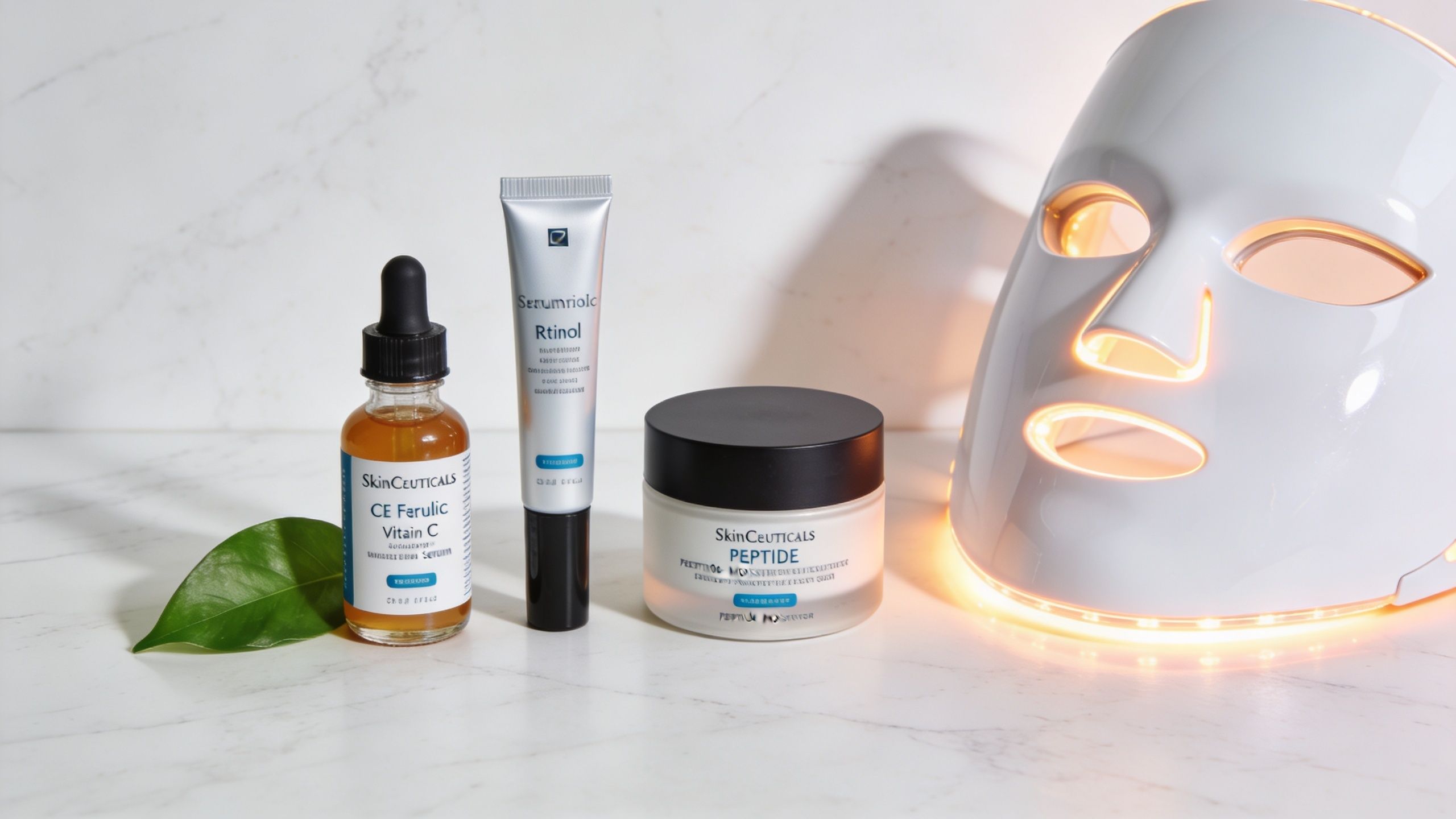
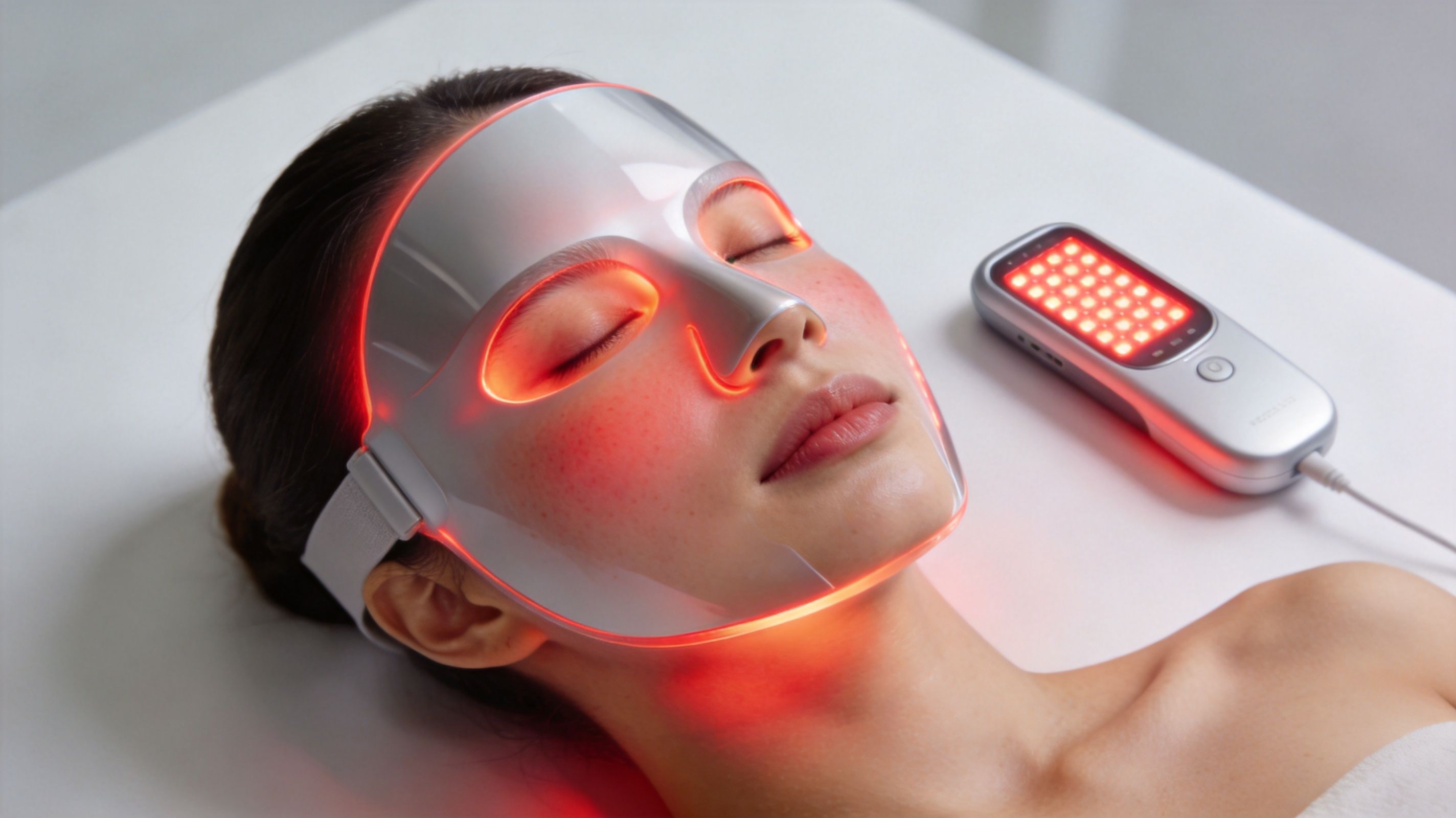
A strong example is the Barb N.P. Facial Mask, which fits naturally into a clinic retail mix because it's designed for actual home use, not just shelf appeal. The practical features matter:
- Wireless design so clients can move around instead of sitting tethered to a cord
- Comfortable facial fit that makes repeat use more realistic
- Three lighting settings for different treatment goals, including anti-aging support, blemish-focused care, and recovery-minded use
Those details sound small until you watch how people behave at home. Devices only help if clients will use them.
For clinics that want more background before adding LED into retail recommendations, this guide on LED light therapy for skin is a helpful overview.
Bundles outperform isolated products
A single product often feels optional. A bundle feels purposeful.
Consider combinations like:
- Post-treatment recovery set with a gentle cleanser, barrier-support moisturizer, and LED mask
- Pigment or tone support set with antioxidant serum, daily SPF, and a home-use device
- Acne maintenance set with a carefully chosen active, non-stripping moisturizer, and blue-light option
The best bundle is the one your staff can explain in one sentence. If it takes a five-minute monologue, it's too complicated.
Where clinics get this wrong
They add devices as impulse retail. That usually fails.
A device should connect to a treatment pathway. If someone starts injectables, microneedling, or skin rejuvenation services, you can explain where LED supports the broader plan. That's a stronger sale and a better patient experience than placing a flashy mask near checkout and hoping curiosity does the work.
Practical FAQs for Clinic and Spa Owners
Can a small clinic start wholesale without overcommitting
Yes, if you start narrow.
Pick one core skin category for each major patient need. Usually that means a cleanser, an antioxidant or corrective serum, a moisturizer, and sunscreen. Add recovery support if you do more intensive procedures. A smaller launch is easier to train on, easier to restock, and much easier to evaluate clearly.
Small clinics get into trouble when they buy like a large medspa before they've built the patient volume or reorder habits to support it.
What documentation should I require from a supplier
At minimum, ask for current product documentation, storage guidance, and batch-level quality information where appropriate. You want enough paperwork to show that you didn't source blindly and that the supplier can stand behind the inventory.
If you're evaluating the entire patient experience, don't ignore physical setup either. Comfort, workflow, and clinical presentation shape retail conversion more than many owners realize. This is one reason articles like Why upgrade your medspa seating are useful. They remind owners that trust is built through the whole environment, not just the product shelf.
How should I bundle retail with services
Attach products to care plans, not promotions.
That means:
- Botox and filler patients usually respond well to simple barrier support, daily antioxidants, and SPF.
- Microneedling and PRP patients often need a cleaner recovery pathway with fewer variables.
- Acne or pigment clients need consistency more than novelty.
Packages work best when the client understands why each item is included and when to use it. Keep instructions tight. One printed card is better than a long speech they won't remember.
Is there a real opportunity in haircare and supplements
Yes, especially in practices that already treat skin and wellness together. An emerging trend is bundling skin care with wholesale haircare supplements. The med-grade segment grew 35% from 2025 to 2026, and 25% of aesthetic clients also seek help for hair thinning, according to this overview of wholesale natural body care and related trends. That makes sense clinically because many clients don't separate skin, scalp, stress, and inflammation into different categories.
If your practice already discusses nutrition, stress load, hormones, or allergy-related triggers, hair support products can fit naturally. The key is to position them as part of a broader plan, not as a random add-on at checkout.
Should I join group buys or shared purchasing arrangements
Only if the logistics are clean.
Group buying can help smaller clinics access better pricing, but it only works when one party controls ordering, payment, storage expectations, and documentation. If ownership of inventory gets fuzzy, disputes follow quickly. I'd rather see a clinic buy less through a clean channel than chase a better price through a messy one.
How do I know a product deserves shelf space
Ask three questions:
- Does it support a service you already perform?
- Can staff explain it clearly in under a minute?
- Would you feel comfortable recommending it to a reactive post-procedure patient?
If the answer is no to any of those, keep it off the shelf for now.
If you're ready to build a smarter retail program around clinical treatments, explore the curated skin care, haircare, LED, and wellness collection at BotoxBarb. It's a practical place to see how a treatment-aligned aesthetic boutique can support injectables, skin health, and long-term client care.