Best Skin Care Products Online: A Buyer's Guide (2026)
You open one tab for cleanser, another for vitamin C, another for sunscreen, and twenty minutes later you’re staring at five versions of the same promise. Brighter skin. Fewer lines. Clearer pores. Better texture. Then the algorithm adds one more problem. It starts feeding you influencer clips, flash-sale bundles, and “medical-grade” products from sellers you’ve never heard of.
That’s where the process often stalls.
Shopping for the best skin care products online isn’t just about finding a popular serum. It’s about figuring out what your skin needs, separating real formulation quality from marketing language, and making sure the bottle that arrives at your door is authentic. That matters even more if you get Botox, filler, LED therapy, or other in-clinic treatments and want your home routine to support those results instead of working against them.
Navigating the World of Online Skincare
Online skincare is no longer a side channel. It’s where many people discover, compare, and buy their products. In 2024, skincare e-commerce worldwide is projected to generate over $30 billion in revenue, and social media referrals from platforms like TikTok and Instagram account for approximately 10% of all website visits to skincare e-commerce sites according to Statista’s skincare e-commerce overview.
That shift created convenience, but it also created noise.
A new patient usually comes in with one of two issues. Either they’re using too many products because online advice pushed them into trend-chasing, or they’re using expensive products that don’t match their skin condition at all. Both problems lead to the same result. Irritated skin, wasted money, and no clear plan.
What usually goes wrong online
People often buy based on one of these shortcuts:
- A single viral ingredient: They see retinol, peptides, or niacinamide trending and assume more is better.
- A social media testimonial: Someone with different skin, a different climate, and different goals gets treated like a universal template.
- A price drop that looks irresistible: That’s where counterfeit and diverted products enter the picture.
- A “luxury” label: Packaging says premium. The formula may still be poorly matched to your needs.
Practical rule: Don’t start with the product. Start with the problem you want to solve and the condition of your skin barrier today.
A smarter way to shop
The right online routine usually comes from four questions:
- What is my baseline skin type?
- What is my current concern?
- Do I need foundational care or targeted correction?
- Am I buying from a seller I’d trust with my skin after a procedure?
Those questions cut through most of the clutter. They also make it much easier to decide when a simple cleanser and sunscreen are enough, and when you’d benefit from a higher-performance serum, a richer barrier cream, or an at-home device.
First Understand Your Skin's True Needs
Skin is often described with one word. Oily. Dry. Sensitive. Acne-prone. That’s too simple to guide good buying decisions.
Your skin type is your baseline. Your skin condition is what’s happening right now. You can have oily skin and still be dehydrated. You can have dry skin and also be breakout-prone. You can have resilient skin most of the year and then become highly reactive after overusing exfoliants or after a procedure.

Start with the wash-and-wait test
Use a gentle cleanser at night. Don’t apply anything after. Wait a bit and pay attention to how your skin behaves.
Look for these patterns:
- Oily skin: Shine returns quickly, especially through the forehead, nose, and chin.
- Dry skin: Your face feels tight, rough, or uncomfortable.
- Combination skin: The T-zone gets shiny, but the cheeks feel normal or dry.
- Balanced skin: You don’t see much shine or feel much tightness.
That’s your baseline. Now layer in your active concerns.
Build a simple skin blueprint
Use this checklist and choose one primary concern plus one secondary concern.
| Concern | What you usually notice | What often helps |
|---|---|---|
| Breakouts and congestion | clogged pores, inflamed blemishes, rough texture | gentle cleansing, non-comedogenic hydration, strategic actives |
| Sensitivity and redness | burning, stinging, flushing, easy irritation | barrier repair, fewer actives, fragrance caution |
| Dehydration | dullness, tightness, fine creasing, makeup clinging | humectants, richer moisturization, less over-cleansing |
| Uneven tone | post-breakout marks, sun spots, dull patches | antioxidants, pigment-focused treatment, daily sunscreen |
| Aging and loss of firmness | lines, creasing, less bounce, dryness | retinoids, peptides, growth-factor style support, UV protection |
One detail many people miss is texture preference. If you hate thick creams, you won’t use them consistently. If your skin burns when you apply strong actives, a highly concentrated formula won’t become effective just because it’s expensive. It will just sit on your shelf.
For people exploring facial oils, especially if they’re acne-prone and worried oils will automatically clog pores, this guide to best oils for acne-prone skin is a helpful companion because it frames oil choice around skin behavior, not fear.
Don’t confuse damage with sensitivity
A lot of “sensitive skin” is barrier disruption. That’s different. True sensitivity can be long-standing. Barrier damage is often created by routine mistakes like stacking acids, overusing retinoids, or cleansing too aggressively.
If your skin suddenly stings with products that never bothered you before, flakes while still looking shiny, or feels hot after a simple moisturizer, barrier support should come first. This practical guide on how to strengthen your skin barrier is worth reading before you buy one more active.
If your skin is reactive, the fastest path to better results is often subtraction, not addition.
Match products to your real life
Your skin doesn’t live in a vacuum. Climate, sleep, stress, workouts, travel, and post-treatment care all matter. Someone in a dry indoor environment may need a cream moisturizer even if they used to do fine with a gel. Someone who gets injectables may need a calmer, simpler routine around treatment days than they use the rest of the month.
That’s the point of identifying true needs first. You stop shopping for what sounds impressive and start buying what your skin needs.
Clinical Grade Versus Over the Counter Explained
“Medical-grade,” “clinical,” and “dermatologist-recommended” often get thrown around as if they all mean the same thing. They don’t.
The easiest comparison is this. Think of mass-market skincare as the general aisle and clinical-grade skincare as the professionally curated shelf. Both can have useful products. But the second category is usually built with more attention to ingredient stability, delivery, and testing standards.
What makes clinical-grade different
The difference isn’t always that a product contains a magical ingredient no one else has. More often, the difference is how well the formula is built.
Here’s the side-by-side view:
| Category | Over the counter | Clinical grade |
|---|---|---|
| Formulation focus | broad appeal, trend responsiveness | efficacy, tolerability, ingredient performance |
| Delivery systems | varies widely | often designed for better penetration and stability |
| Testing expectations | can be limited or marketing-led | more likely to be tied to professional recommendation and protocol use |
| Where you see them | mass retailers, marketplaces, trend-heavy sites | practices, authorized retailers, professional channels |
La Roche-Posay and SkinCeuticals are cited as brands whose authority is tied to dermatologist recommendation and rigorous clinical testing, and medical-grade formulations typically invest 15 to 25% more in clinical trial infrastructure than mass-market alternatives according to Derm On Demand’s review of dermatologist-recommended skincare brands.
That added investment matters because skincare results often depend on more than the ingredient list. Stability changes performance. So does pH. So does the way the product is packaged. A vitamin C serum in an elegant bottle isn’t automatically a well-designed antioxidant.
When the higher price is worth it
I usually tell patients to pay more in two situations.
First, when they need a treatment product that’s meant to change something specific, like pigmentation, visible aging, or post-procedure support. Second, when their skin is reactive and they need a formula that’s less likely to create collateral irritation.
Clinical-grade products can be worth the premium when you need:
- Reliable antioxidant support: Especially if you’re trying to address dullness or uneven tone.
- Post-procedure compatibility: Skin after treatments usually tolerates carefully built formulas better than trend-driven active stacks.
- Barrier-conscious correction: Strong enough to work, but less chaotic in execution.
What clinical-grade does not mean
It does not mean every expensive product is superior. It does not mean your routine needs to be all one category. And it definitely does not mean more steps will give better results.
A strong routine usually has one or two high-value treatment products, not six competing actives.
A well-chosen over-the-counter cleanser can work beautifully. A basic moisturizer can be all you need in one slot. The place to be selective is where formulation quality changes outcomes most. That’s usually antioxidants, retinoid systems, pigment-correcting serums, and recovery-focused moisturizers.
Building Your Foundational Skincare Routine
Most good skin comes from boring consistency, not shopping excitement. Before adding advanced tools or stronger serums, get your core routine right.
That matters because the products people use most are the same ones that hold a routine together. Cleansers are used regularly by 72% of consumers and moisturizers by 68%, while detailed surveys show moisturizers at 93%, cleansers at 85%, and sunscreens at 83% according to Market.us skincare statistics.

Cleanse without stripping
A cleanser should remove what needs to come off and leave the barrier intact. That’s it.
If your skin feels squeaky after washing, your cleanser is probably too aggressive. If makeup, sunscreen, or oil still sits on the skin, it may be too weak for your evening routine.
Choose by skin behavior:
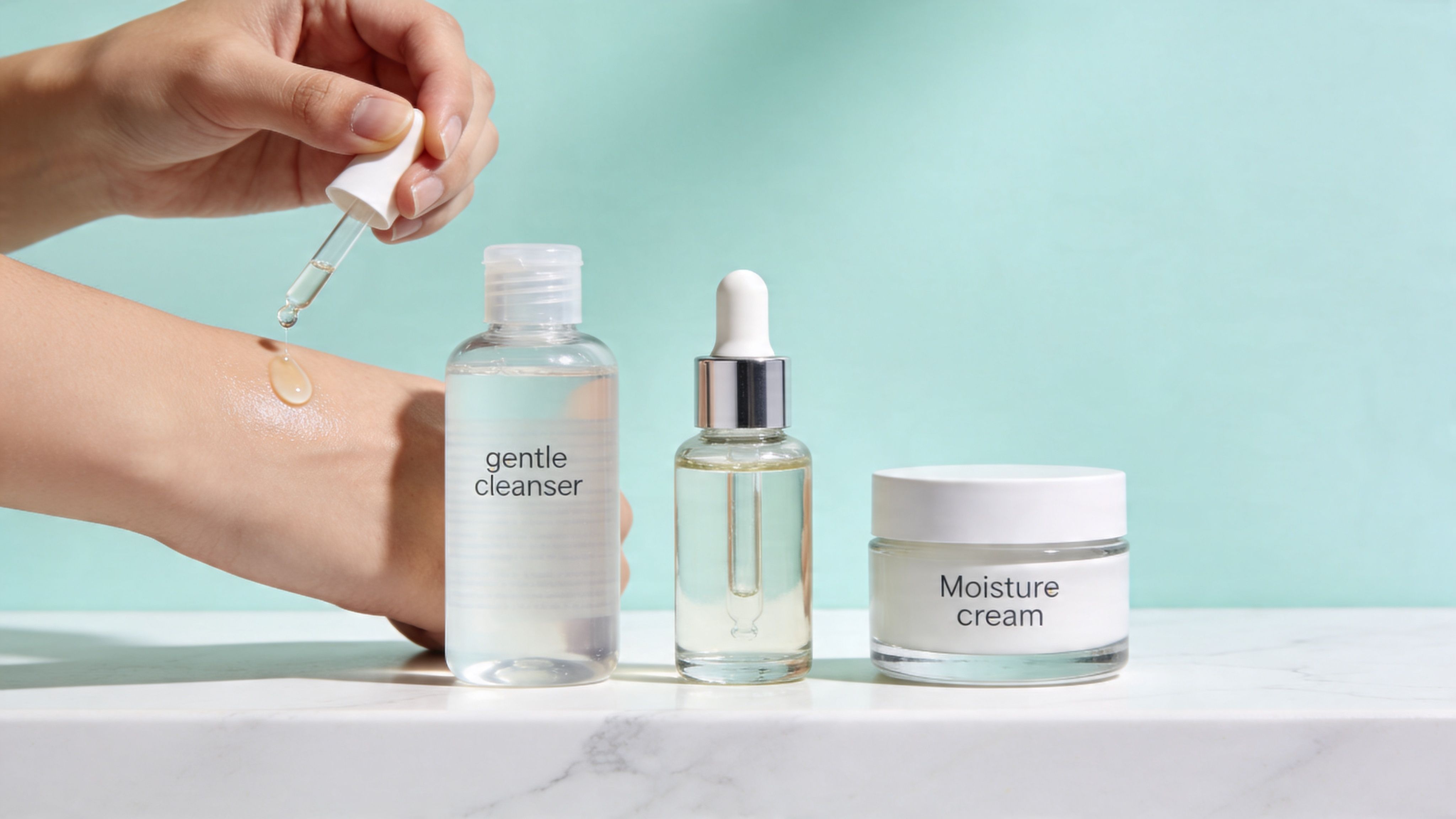
- Dry or sensitive skin: Look for cream or lotion cleansers.
- Combination skin: A gentle gel or low-foam cleanser often works well.
- Oily or congestion-prone skin: Gel textures can be useful, but avoid turning cleansing into overcorrection.
Treat with intention
Your routine becomes personalized. These treatment products include antioxidants, retinoids, pigment serums, peptide formulas, and calming support products.
Don’t treat every issue at once. Pick one main target.
Examples of smart pairing:
- Uneven tone plus dullness often responds well to an antioxidant in the morning.
- Fine lines and rough texture usually do better with a nighttime correction product.
- Red, reactive skin often needs calming and barrier support before stronger actives.
If you need a practical framework for sequencing products, this guide on how to build a skincare routine lays out the order clearly.
Hydrate according to feel, not trend
Hydration isn’t just about adding water. It’s about helping skin keep what it has.
One person does well with a lightweight lotion. Another needs a richer cream because their skin loses comfort quickly. The mistake is assuming a gel moisturizer is automatically better for oily skin or that a heavy cream is always too much for acne-prone skin. Texture should match tolerance, climate, and barrier condition.
Use this quick filter:
| Skin situation | Better texture choice |
|---|---|
| Tight, flaky, post-treatment | cream or balm-leaning moisturizer |
| Balanced to slightly dry | lotion or cream |
| Oily but dehydrated | lightweight lotion or gel-cream |
| Hot climate with low tolerance for heavy layers | fluid moisturizer or gel-cream |
Clinic habit: If a patient says, “My skin is oily but feels tight,” I usually think dehydration or barrier disruption before I think excess oil needs stronger stripping.
Protect every morning
Sunscreen is the step people skip and then try to replace with expensive serums. That never works.
If you’re investing in brightening products, retinoids, peels, or injectables, daily UV protection is part of the treatment plan. The right sunscreen is the one you’ll reapply and not resent wearing. That might be a fluid, a cream, or a tinted formula. What matters is consistency.
A simple starter routine
For most new patients, this is enough:
- Morning: gentle cleanse if needed, antioxidant or simple hydrating serum, moisturizer, sunscreen
- Night: cleanse, one treatment product, moisturizer
That foundation does more for long-term skin quality than a cluttered shelf ever will.
Supercharge Your Results with Advanced Treatments
A strong basic routine gets you stable skin. Advanced treatments help with concerns that don’t fully respond to cleanser, moisturizer, sunscreen, and one active alone.
These are the add-ons I think of as performance tools. Not necessary for everyone. Useful for the right person. Especially helpful when someone wants to support firmness, post-acne clarity, or a smoother overall look without making their routine harsher.

Where advanced care actually helps
Advanced products and devices tend to fit three situations:
- Stubborn concerns: Fine lines, uneven tone, recurring congestion, or lingering post-breakout marks.
- Maintenance between appointments: Especially for people who get injectables or in-office rejuvenation treatments.
- Patients who’ve already nailed the basics: If your barrier is unstable, advanced care usually backfires.
What doesn’t work is stacking aggressive serums and hoping intensity equals progress. The skin rarely rewards that strategy.
LED can be a useful at-home step
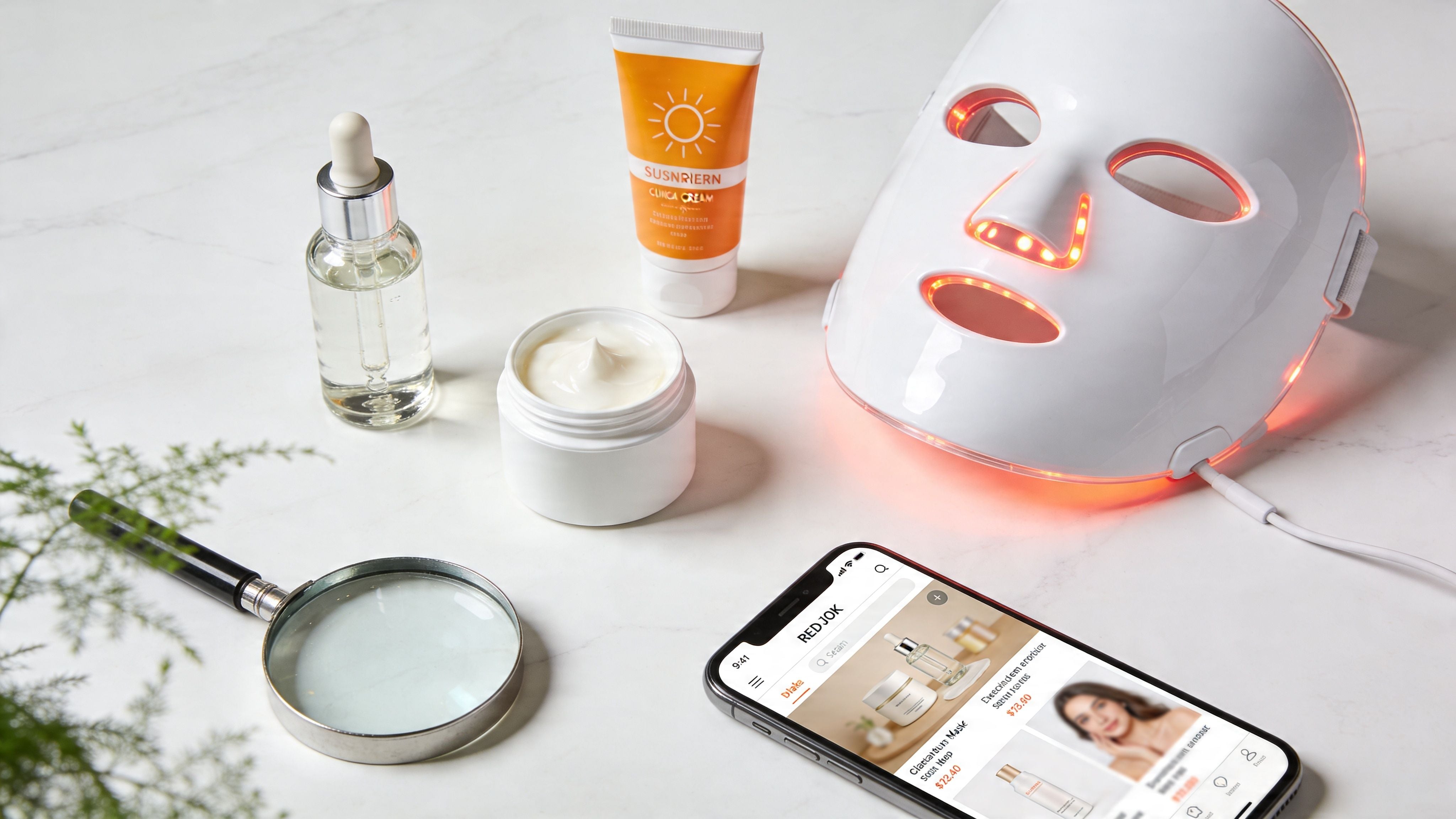
One at-home tool I do think can earn its place is an LED Facial Mask when it’s used consistently and paired with a calm, well-built routine.
The Barb N.P. Facial Mask is a strong example of what to look for in a device because it’s wireless, designed for comfort on the face, and includes 3 lighting settings for different treatments. That matters more than people think. If a device is bulky, awkward, or annoying to wear, it won’t become part of real life.
Those three settings make practical sense:
| Light setting | Best fit | Why people use it |
|---|---|---|
| Red light | visible aging support | often chosen to support a firmer, more revitalized look |
| Blue light | blemish-prone skin | often used when breakouts and oil imbalance are the priority |
| Yellow light | redness-prone or stressed skin | often chosen for a calmer-looking complexion |
A mask like this works best when your expectations are realistic. LED is not a replacement for sunscreen, a good moisturizer, or a smart treatment serum. It’s a support tool. Used regularly, it can complement a routine rather than complicate it.
Pair devices with the right topicals
If you’re using LED or a higher-performance serum, choose products that support the goal instead of competing with it.
For example:
- A hydrating or peptide-based serum tends to layer well on days you use LED.
- A barrier cream is often the better follow-up if your skin gets dry from other actives.
- A strong exfoliant on the same night as several other advanced steps is usually a bad trade.
If you’re researching peptide-based options more thoroughly, this overview of peptides for skin beauty is a useful place to compare how peptide-focused products are positioned for skin support.
Use advanced care to make a good routine better. Don’t use it to rescue a bad routine.
The layering rule that saves skin
On any given night, pick one main “push” and one “support.”
A push might be an antioxidant treatment in the morning or a corrective serum at night. A support might be LED, a hydrating serum, or a richer moisturizer. Once people understand that, they stop overloading the skin and start seeing steadier results.
How to Safely Purchase Skincare and Vet Brands Online
A lot of shoppers still assume the best online deal is the smartest buy. For medical-grade skincare, that assumption can go wrong fast.
The FDA reported a 35% rise in counterfeit skincare seizures in 2025, with brands like SkinCeuticals being primary targets, and tools like INCIDecoder can help with ingredient analysis when vetting products according to this review of online skincare retailer risks and counterfeit concerns.
That matters because counterfeit skincare doesn’t just waste money. It can also expose skin to poor storage, altered formulas, contamination, and products that don’t perform the way the authentic version should.
Red flags that should stop a purchase
If I’m helping a patient evaluate a seller, I tell them to pause if they see any of the following:
- A discount that feels disconnected from reality: Premium products usually don’t appear at extreme markdowns from random storefronts.
- Missing seller identity: No clear business information, no support details, no return structure.
- Marketplace ambiguity: The listing says the product name, but not whether the seller is authorized.
- Inconsistent packaging photos: Stock images only, no lot detail, no seal information, no close-up of the actual item.
- Damaged-box reviews: Repeated comments about leakage, missing seals, or odd smell.
What to verify before you click buy
Use a short verification checklist:
- Check whether the retailer appears to be authorized. Professional channels matter more with medical-grade brands.
- Look closely at packaging once it arrives. Seals, print quality, batch details, and consistency all matter.
- Compare the ingredient list. If something looks off, use a tool like INCIDecoder to review the INCI list structure and naming.
- Keep the receipt and order confirmation. If you need to report a problem, documentation helps.
- Stop using the product if the texture, smell, or skin response seems clearly wrong.
For a broader decision framework on what separates a trustworthy product from a risky buy, this guide on how to choose skincare products is a strong reference.
Vet the brand, not just the bottle
A polished website doesn’t mean much on its own. Better signals include educational depth, clear product categorization, transparent ingredient communication, and consistency across packaging, support, and fulfillment.
Here’s a practical brand-vetting table:
| What to check | Better sign | Concerning sign |
|---|---|---|
| Retail channel | professional or clearly curated seller | third-party listing with unclear sourcing |
| Product info | full ingredient list, directions, brand story | vague claims, sparse details |
| Customer support | clear policy and contact path | hard to find or missing |
| Packaging consistency | seals, labels, batch markings align | sloppy print, odd spacing, damaged seals |
If you wouldn’t want that seller handling your post-procedure skincare, don’t trust them with your everyday routine either.
What works better than deal hunting
The safest online skincare buying habit is simple. Buy fewer products, buy better products, and buy them through channels that treat authenticity like part of patient care.
That’s especially important for antioxidant serums, retinoid systems, growth-factor style products, and post-procedure moisturizers. Those are the categories where formula integrity matters most, and where a fake or mishandled product can create the biggest gap between expectation and reality.
Expert Picks Curated by Barb N.P.
Most patients don’t need more options. They need a narrower, smarter shortlist.
That’s especially true for people pairing skincare with injectables. A 2025 American Academy of Dermatology survey found that 42% of patients actively seek at-home skincare products that work synergistically with in-clinic injectable treatments, a need that generic retailers often leave unanswered according to the cited AAD-related reference.

For dullness and environmental stress
If your skin looks flat, tired, or uneven, I usually think first about antioxidant support and daily sun protection.
A product from SkinCeuticals often makes sense in this category because the brand is widely associated with clinical-grade positioning and is commonly selected when someone wants a more serious treatment step rather than a trend product. In this context, I’d advise spending more, because antioxidant performance depends heavily on formulation quality and stability.
Best fit:
- someone trying to brighten the look of skin
- someone maintaining results after professional treatments
- someone who wants one strong morning treatment instead of several mediocre ones
For barrier repair and treatment recovery
If your skin feels irritated, dry, hot, or just less resilient than usual, a simpler approach wins. In such cases, Epicutis stands out as the kind of brand I’d look toward for a recovery-minded moisturizer or barrier-support product.
Good candidates:
- skin that’s over-exfoliated
- post-treatment skin that needs calm support
- patients who mistake barrier damage for “sudden sensitivity”
The trade-off is that these products may feel less dramatic at first because they aren’t built to tingle or “work hard.” That’s exactly why they’re useful.
For visible aging and texture support
When a patient wants smoother-looking skin and a more refined texture, I look for a focused corrective serum rather than a dozen anti-aging products.
A strong approach here is:
- one well-formulated corrective serum
- one moisturizer that keeps the barrier stable
- sunscreen every morning
For some people, peptide-focused care can be a useful complement, especially if they want supportive topicals without jumping immediately to the most aggressive active profile.
For acne-prone skin that’s also easily irritated
This group gets bad advice online. They’re often told to dry the skin out, exfoliate more, and use harsh spot products. That usually creates a cycle of inflammation and rebound oiliness.
A better online product mix is:
- a gentle cleanser
- a lightweight but real moisturizer
- a breakout-focused treatment used strategically
- sunscreen that doesn’t feel heavy
Facial oils aren’t automatically off-limits, but they need to be selected carefully and introduced thoughtfully.
For patients who get Botox or filler
Product selection should become more intentional for injectable patients, who usually do best with skincare that supports skin quality, hydration, barrier function, and overall tone without causing unnecessary irritation around treatment windows.
What tends to work:
- antioxidant support in the morning
- a barrier-respecting moisturizer
- sunscreen without fail
- a targeted night product only if the skin is stable
What usually doesn’t:
- trying three new actives the week of treatment
- over-exfoliating because skin looks “dull”
- buying from random discount sellers
For at-home support, the Barb N.P. Facial Mask is a practical add-on because it combines convenience with a treatment experience people can stick with. The wireless design, comfortable fit, and 3 lighting settings make it easier to use regularly than rigid, inconvenient devices.
For a more holistic beauty routine
Some patients want skin support that fits into broader wellness goals, especially if they’re also dealing with thinning hair, post-stress shedding, or a general “I want to look more refreshed” concern. That’s where a curated approach can include skincare plus supportive categories such as Nutrafol for hair wellness.
The best skin care products online are rarely the ones with the loudest marketing. They’re the ones that fit your skin, your goals, and your treatment plan.
A good routine doesn’t need to be huge. It needs to be coherent.
If you want a more curated way to shop for authentic, treatment-aligned skincare and wellness products, explore BotoxBarb. The boutique brings together medical-grade options, at-home support tools, and personalized aesthetic insight so you can build a routine that makes sense for your skin, not just your cart.