LED Light Therapy Rosacea: 2026 Guide to Calmer Skin
Some mornings, rosacea announces itself before you've even had coffee. Your cheeks look hot, your skin feels tight, and the product that felt fine last week suddenly stings. By midday, you're checking mirrors, adjusting makeup, and wondering what triggered it this time.
That cycle is exhausting. It also makes many people over-treat their skin. They scrub, switch products too fast, or chase harsh solutions that leave the barrier even more reactive. In practice, I see the best results when patients stop trying to fight rosacea aggressively and start calming it consistently.
Tired of Rosacea Redness Controlling Your Life?
You wake up with calm skin, then a warm room, a workout, or one new product sets your cheeks on fire by lunch. That unpredictability is what wears patients down. Rosacea affects how the skin looks, but just as often it affects comfort, confidence, and how willing you are to try anything new.

In clinic, I hear the same pattern over and over. Skin starts reacting to heat, stress, wind, exercise, alcohol, active ingredients, or even a long shower. Patients often respond by doing more, switching products, adding exfoliants, or chasing quick fixes. For rosacea, that usually backfires.
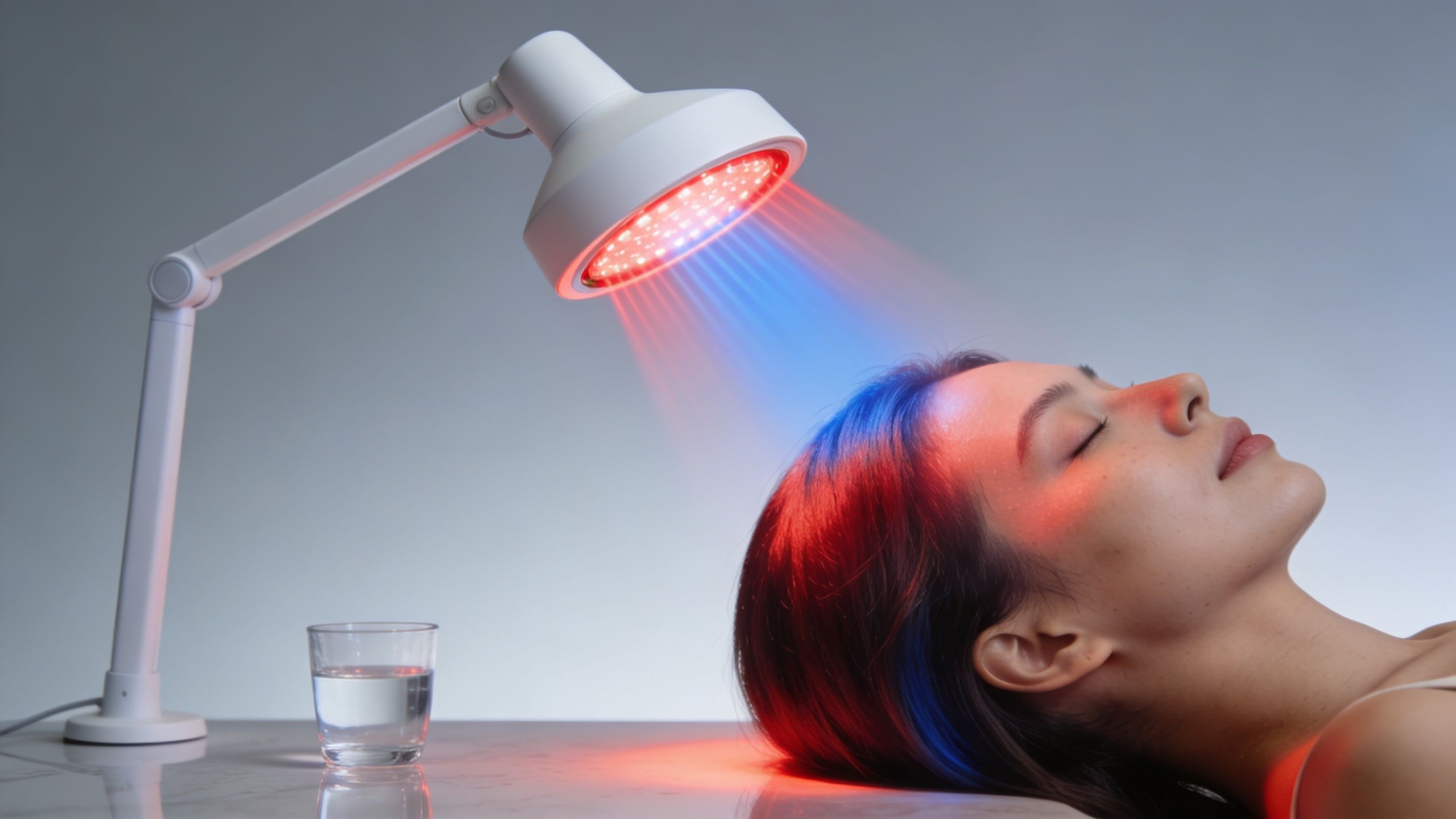
LED light therapy gives us a gentler lane. Instead of heating, scrubbing, or peeling the skin, it supports calmer function over time. If you want the science behind the treatment, this guide on how LED light therapy works in the skin explains the mechanism in plain language.
The reason I recommend LED so often is practical. It fits into a broader rosacea plan without adding much irritation risk. In the right patient, I may pair LED with barrier-first medical-grade skincare, azelaic acid, trigger management, and later, selected in-office treatments such as vascular laser, calming facials, or even injectables when redness is not the only concern. Good rosacea care is rarely one treatment by itself.
What patients usually need most
The goal is steadier skin that can tolerate daily life with fewer setbacks.
- Less reactivity: Fewer flares from routine triggers.
- Less discomfort: Burning, stinging, and itching need attention, not just visible redness.
- A routine you can stick with: Sensitive skin does better with fewer variables.
- Support between appointments: Home care is what keeps office treatments working.
If your skin feels irritated even outside of a flare, simple barrier support helps. A useful companion read is how to soothe irritated skin with aloe, especially if you're trying to strip your routine back to the basics.
Rosacea responds best to consistency, not intensity.
LED is not a cure, and it will not replace every other treatment. What it does well is lower the amount of stress your skin has to manage, which makes the rest of your plan work better and feel more tolerable.
How Light Therapy Works to Calm Rosacea
Think of LED therapy as a way to recharge stressed skin cells. Rosacea-prone skin often behaves like a low battery under constant strain. Specific light wavelengths act like a clean power source, giving those cells energy so they can repair, regulate inflammation, and function more normally.

What happens inside the skin
With rosacea, we care less about “glow” marketing and more about cellular behavior. Red and near-infrared wavelengths are used because they can influence inflammation without physically abrading the skin.
Red (633 nm) and near-infrared (830 nm) LED therapy reduce rosacea inflammation by stimulating ATP production in mitochondria, and this process can downregulate pro-inflammatory cytokines such as TNF-α and IL-6 by 20-40% while increasing collagen synthesis by up to 30% (CurrentBody review of LED for rosacea).
That sounds technical, but the practical takeaway is simple. Better cellular energy helps the skin do its job better. For rosacea patients, that usually means calmer skin, improved tolerance, and a stronger barrier over time.
Why that matters clinically
Rosacea isn't only a redness issue. It's also an inflammation issue and a barrier issue. If the skin barrier stays weak, even good products can feel irritating.
That's why I like LED as part of a treatment plan. It supports the skin without adding friction. If you want a deeper look at the mechanism, this overview on how LED light therapy works breaks the process down well.
Clinical takeaway: The best LED candidates are often patients who say, “My skin is too sensitive for everything else.”
What LED does not do
LED won't cure rosacea. It also won't cancel out daily trigger exposure if your skin is constantly getting overheated, over-exfoliated, or left unprotected in the sun.
It works best when you use it as a signal, not a rescue. That means steady sessions, a gentle routine, and realistic expectations. Done that way, it becomes one of the most useful low-irritation tools in aesthetic skin care.
Choosing the Right Light for Your Rosacea Symptoms
A common mistake I see in practice is using the wrong wavelength for the wrong rosacea pattern. A device can be well made and still disappoint if the light setting does not match what your skin is doing.

Match the wavelength to the problem
For persistent redness, flushing, and skin that feels hot or easily overstimulated, I usually start with red light and near-infrared. Those settings are the best fit for patients who need calming support and better recovery after triggers, skincare irritation, or in-office treatments.
If your rosacea includes acne-like bumps and pustules, blue light can have a place. I do not use blue light as a standalone answer. I use it as part of a broader plan that may also include anti-inflammatory skincare, trigger control, and sometimes prescription treatment. As noted earlier in the article, a small clinical report found that combined blue and red LED improved papulopustular rosacea symptoms after a series of treatments, with good tolerability.
Yellow light comes up often in device marketing. In real practice, I consider it a secondary option. Some protocols use it for surface redness, but it is not the setting I rely on first when a patient has classic rosacea sensitivity.
LED Light Wavelengths for Rosacea Treatment
| Wavelength | Primary Target | Key Benefits for Rosacea |
|---|---|---|
| Red light | Inflammation and visible redness | Helps calm skin and support barrier recovery |
| Near-infrared light | Deeper tissue repair | Supports healing and skin resilience |
| Blue light | Papulopustular activity | Useful when bumps are part of the flare pattern |
| Yellow light | Surface redness | May help soothe visible flushing in some protocols |
A practical way to choose
Start with your dominant symptom, not the device with the most color options.
- If you flush easily: Choose a device centered on red light.
- If your skin stings, burns, or feels fragile: Near-infrared is often a helpful addition because it supports recovery.
- If you get bumps along with redness: A blue-plus-red combination usually makes more sense than blue alone.
- If your main concern is cosmetic redness before events or photos: Ask how a yellow setting is intended to be used, but do not treat it as the main decision point.
This is also where a nurse practitioner-guided plan matters. I often pair LED with barrier-repair skincare, trigger reduction, and, when appropriate, professional treatments such as vascular-focused care or injectables for the right candidate. LED works best as one part of a larger plan, not as a single-device fix. If you are comparing devices for home use, this guide to at-home beauty treatments for sensitive skin goals can help you sort through the options more realistically.
Barrier health matters here too. Rosacea and eczema are different conditions, but both involve irritation, inflammation, and skin that reacts too easily. These ImuPro Australia eczema microbiome insights give useful context for why barrier support and microbiome-friendly care can improve treatment tolerance.
Choose the light that fits the symptom pattern. That is what gets better results.
At-Home vs Professional LED Which Is Right for You
This is the decision patients ask about most. Should you book in-clinic sessions, buy a mask, or do both? The honest answer depends on your severity, your budget, and whether you'll be consistent at home.

What professional treatment does better
Professional devices are stronger. According to guidance summarized by Lumara Systems, professional LED panels deliver 100-200 mW/cm², while quality at-home masks are often in the 20-50 mW/cm² range. The same source notes that device quality matters because poor LED spacing can create uneven treatment, while better-designed devices focus on more uniform coverage (professional vs at-home LED comparison).
That difference matters most when someone has frequent flares, more obvious redness, or papulopustular activity that needs a stronger start. In clinic, you also get treatment selection, skin assessment, and a chance to adjust the plan if your skin is reacting to products, weather, or procedures.
Where at-home devices shine
Home use wins on one thing. Consistency.
A patient can get a great in-office result and still lose momentum if there's no maintenance plan. A good mask makes it easier to stay regular, especially for people who don't want another appointment on the calendar every week.
For rosacea, the best at-home device is the one you'll use without irritating your skin or making your routine complicated. I generally tell patients to look for comfort, even light distribution, and settings that fit more than one skin goal.
What I'd look for in a home mask
A practical device should offer:
- Comfortable fit: If the mask pinches, slides, or feels claustrophobic, people stop using it.
- Wireless design: This matters more than people expect. Convenience improves adherence.
- Simple settings: Too many modes can confuse patients. A few useful settings are better.
- Even coverage: Hot spots and poor spacing make treatment less predictable.
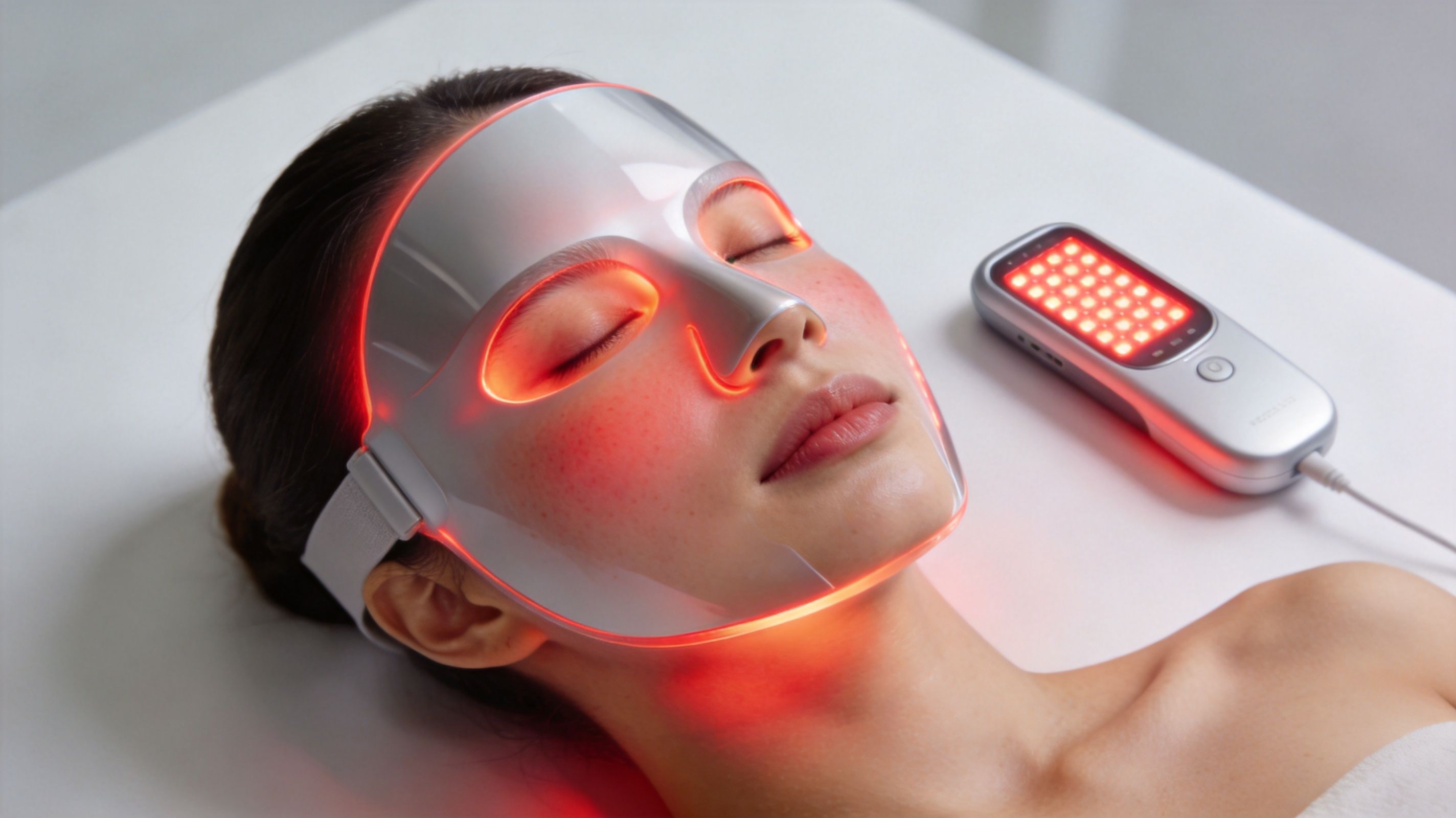
The Barb N.P. Facial Mask is a strong example of what I'd recommend in this category because it's wireless, comfortable on the face, and offers 3 lighting settings that let users adapt treatment to redness, breakout-prone phases, and overall skin recovery. Those features solve the most common problems I see with home devices, which are poor compliance and overcomplication.
My practical recommendation
If your rosacea is active, start with professional guidance. If your skin is relatively stable and you want maintenance, a solid home mask can be enough to support your routine. Many patients do best with both: clinic treatment to get control, home treatment to keep it.
If you're building a broader self-care plan, this guide to at-home beauty treatments is a good reference for deciding what's worth doing at home and what should stay in a clinical setting.
The strongest device isn't automatically the best choice. The best choice is the one your skin tolerates and you'll use regularly.
Integrating LED Therapy Into Your Complete Skincare Routine
LED works best when it's part of a calm, boring, highly consistent routine. That's a compliment. Rosacea skin usually improves when we remove drama.
Your routine around LED
On treatment days, I prefer a simple sequence:
- Cleanse gently. Use a non-stripping cleanser and lukewarm water.
- Use LED on clean, dry skin. Skip strong actives right before treatment unless your clinician tells you otherwise.
- Apply hydration after. A bland moisturizer or barrier-support serum helps seal in comfort.
- Protect during the day. Mineral sunscreen matters because sun exposure can keep the skin in a constant flare cycle.
Medical-grade skincare can fit in very well here. SkinCeuticals is one brand many patients already know, and in rosacea-prone skin I usually lean toward the gentlest hydrators and barrier-supportive products rather than aggressive resurfacing formulas.
Combining LED with injectables and procedures
Rosacea patients often want more than one treatment. That's reasonable, but timing matters.
Expert clinical guidance suggests waiting 48-72 hours after Botox before using LED therapy, and using LED 24 hours after fillers may help accelerate healing and reduce inflammation (clinical timing guidance for LED with Botox and fillers).
For PRP, I think of LED as supportive rather than primary. For filler and neuromodulator patients, I'm careful about sequence because the skin may be more reactive right after treatment, and we want to respect the procedure first.
A simple rosacea-friendly framework
- Morning: Gentle cleanse, barrier-support serum, moisturizer, mineral SPF.
- Evening on non-LED nights: Cleanse, your tolerated prescription or calming product, moisturizer.
- Evening on LED nights: Cleanse, LED, then moisturizer or a soothing serum.
- Procedure week: Keep everything simpler than usual.
If you want extra ideas for low-irritation care, these gentle skincare rituals for facial redness align well with the “less but better” approach I use with sensitive patients. For a more structured skin plan, this guide on a skincare routine for redness can help you build the rest of the regimen around LED.
What Results to Expect and When You Will See Them
Expectations need to stay honest regarding results. LED is not usually a one-session transformation for rosacea. It's a cumulative treatment.
Most users notice initial improvement, such as calmer skin, within 4-6 weeks of consistent use at 3-4 sessions per week, according to the iRESTORE review. The same source cites the American Academy of Dermatology, noting that light therapies can reduce visible blood vessels by 50-75% after 1-3 treatments (rosacea LED results timeline).
What progress usually looks like
Early change often feels better before it looks dramatically different. Patients may notice less stinging, less heat after washing, or fewer “my face is angry today” days.
Later, the visible changes become easier to appreciate. Makeup may sit better. The background pink tone may look less intense. Skin often appears less blotchy and more settled.
What affects your results
Results vary because rosacea varies. Your subtype, trigger load, skincare routine, prescription use, and device quality all matter.
A few patterns are common:
- Consistent users do better: Skipping sessions weakens momentum.
- Barrier support matters: If you keep over-exfoliating, LED has to work against you.
- Trigger management still counts: Heat, alcohol, stress, and sun can keep inflammation active.
- Some concerns need combination treatment: Visible vessels may need office-based laser or light procedures in addition to LED.
Don't judge LED by one good day or one bad flare. Judge it over several weeks of consistent use.
Frequently Asked Questions About LED Therapy for Rosacea
Can LED light therapy make my rosacea worse
It can if you overdo it, use the wrong setting for your skin, or combine it with a harsh routine. Usually the problem isn't the light itself. It's using too much treatment on already reactive skin. Start conservatively and watch how your skin responds.
Is it safe with metronidazole or azelaic acid
Often, yes, but timing and skin tolerance matter. The published clinical report on papulopustular rosacea used LED alongside 15% azelaic acid in its treatment approach, which supports the idea that combination care can work in the right patient. If you're on prescription topicals, ask your dermatologist or clinician whether to separate application from LED sessions.
Does LED feel hot
A properly designed LED treatment should feel gentle. If your skin feels overheated, the fit, duration, or device quality may not be right for you. Rosacea skin usually prefers calm exposure, not intensity.
How should I clean an at-home mask
Follow the manufacturer's instructions. In general, keep the mask clean, dry, and free of residue from skincare. Don't put it away with product buildup on the surface because that can irritate skin and shorten device life.
Who should check with a clinician first
Talk with a clinician before starting if you have highly reactive skin, uncertain redness that hasn't been diagnosed, recent procedures, eye symptoms, or you're using medications that may increase light sensitivity. Rosacea can overlap with other conditions, and a quick professional review can save you months of guessing.
If you're ready to build a rosacea plan that includes professional guidance, medical-grade skincare, and at-home support, explore BotoxBarb. You'll find treatments like LED light therapy, injectables, PRP, and curated skin essentials, including options like the Barb N.P. Facial Mask, all selected to support calmer, stronger skin.