LED Light Therapy Lamp: Science, Benefits, Safety
You can usually tell when skincare has hit its ceiling. You're using the vitamin C, the retinoid, the growth factor serum, the sunscreen. Your skin may look better than it did a year ago, but healing is still slow, inflammation still flares, and texture or acne keeps returning the moment life gets busy.
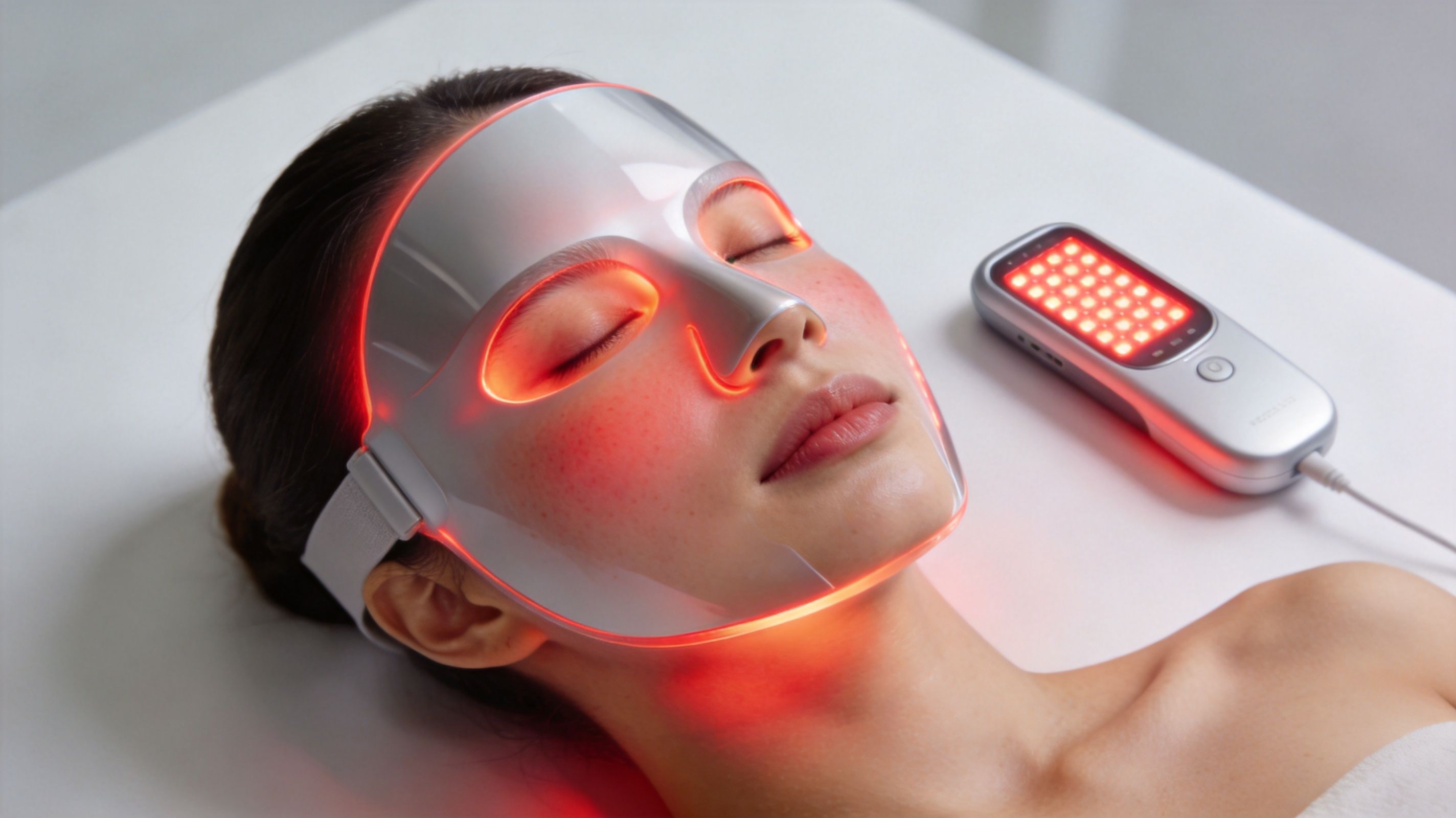
That's the point where many patients start asking about a led light therapy lamp. Not because they want another gadget, but because they want a treatment that works with skin biology instead of just sitting on top of the skin. In practice, that's the right question. LED therapy belongs in the category of supportive, non-invasive treatments that can strengthen results from both home care and in-clinic procedures.
Beyond Serums The Next Step in Skin Health
A common pattern in aesthetic practice looks like this. Someone comes in with a good routine and realistic expectations. They're not looking for aggressive resurfacing, but they are tired of lingering redness, breakouts that heal slowly, or skin that never quite looks as rested as it should.
That's where light therapy starts to make sense. It offers a way to support skin repair without adding exfoliation, friction, or thermal injury. For patients who want to stay consistent with skin health between Botox, fillers, PRP, or facials, that matters.
Why LED therapy has real medical roots
LED therapy isn't a social media invention. Modern phototherapy has a long clinical history. In 1903, Niels Ryberg Finsen received the Nobel Prize for pioneering modern light therapy, using concentrated artificial light to treat skin tuberculosis with up to 98% success, which helped establish phototherapy as a scientifically validated medical practice, according to this history of LED therapy.
That history matters because it changes how you should think about treatment. Light isn't just cosmetic ambiance. In the right wavelength and dose, it's a therapeutic tool.
Good LED care usually starts when a patient stops asking, “Does light do anything?” and starts asking, “Which light, how close, and how often?”
Who tends to benefit most
In my clinical view, LED therapy fits especially well when someone wants more than topical skincare but isn't trying to turn every concern into an aggressive procedure.
It's often useful for:
- Post-treatment support when skin feels reactive after in-office care
- Acne-prone routines that need calming, not more stripping
- Early collagen support for patients noticing dullness, fine lines, or slower recovery
- Long-term maintenance between professional visits
A led light therapy lamp works best when you see it as part of a system. Skin care products prepare the tissue. In-office treatments create a targeted change. Light therapy helps support recovery and consistency.
How Light Energizes Your Skin Cells
Think of LED therapy this way. Plants use sunlight to support energy production. Skin cells use specific wavelengths of light to support cellular activity. The comparison isn't perfect biology, but it helps patients understand the concept quickly.
When the wavelength is appropriate, skin cells can respond by increasing activity tied to repair and recovery. That's why the details matter. A random bright lamp is not the same thing as a therapeutic LED device.

Wavelength matters more than color alone
For skin treatment, the relevant question isn't just whether the device looks red or blue. It's whether it delivers the right wavelength. Clinical red light therapy efficacy depends on precise wavelength selection, with the 630nm to 850nm spectrum showing distinct tissue penetration depths. Within that range, 660nm targets surface collagen synthesis, while 850nm penetrates deeper to reduce inflammation and edema, as outlined in this overview of LED wavelength specifications.
That's why a good device is built around therapeutic wavelengths, not just brightness.
If you want a broader overview of collagen-supportive skin habits beyond light alone, the ProMD Health Ashburn Med Spa skin guide is a useful companion read. For a deeper look at treatment mechanics, BotoxBarb also has a clear explainer on how LED light therapy works.
LED wavelengths and their targeted benefits
| Wavelength (Color) | Penetration Depth | Primary Target | Best For |
|---|---|---|---|
| Red, around 660nm | More superficial | Fibroblast activity and collagen support | Fine lines, texture, post-treatment recovery |
| Near-infrared, around 850nm | Deeper tissue penetration | Inflammation and edema support | Swelling, healing support, deeper tissue recovery |
| Blue | More surface-focused | Acne-focused skin support | Oily, blemish-prone skin |
What the skin is doing during treatment
A led light therapy lamp should feel uneventful during use. No burning. No abrasion. No forced peeling. That's one reason it works so well in combination with treatments that already challenge the skin barrier.
The practical sequence looks like this:
-
Light reaches the skin at a defined wavelength.
The tissue response depends on both wavelength and dose. -
Cells increase activity related to repair.
Red and near-infrared light are used when the goal is collagen support and calmer recovery. -
Skin responds gradually.
Patients usually benefit from repeated exposure over time rather than one dramatic session.
The most common mistake is treating LED as mood lighting. Therapeutic light needs the right wavelength, the right distance, and repeated use.
Evidence-Based Benefits for Skin and Hair
The strongest reason LED therapy has stayed relevant is simple. It isn't limited to one cosmetic concern. In aesthetic practice, it can support healing, improve the look of inflamed skin, and fit into both facial and scalp routines.
That range is why patients often keep using it after the novelty wears off. It solves practical problems.
Healing support after inflammation and procedures
NASA's research in the early 2000s confirmed that red LED light enhanced cell growth by 40 to 60% in oxygen-deprived tissues. The same source reports that red and near-infrared LEDs in the 660 to 850 nm range promoted skin cell proliferation by 150 to 200% and accelerated healing, according to this history and efficacy timeline for red light therapy.
In clinic terms, that matters because many aesthetic treatments create controlled inflammation. You want that response, but you also want the tissue to settle well. LED can support that recovery period.
If you want another consumer-friendly overview of the research, this guide to red light therapy efficacy is a reasonable place to compare general claims with what devices are designed to do. BotoxBarb also covers common use cases in this review of the benefits of LED light therapy.
Skin concerns that respond well
In practice, the most sensible uses are often the least flashy:
- Recovery support after procedures that leave skin warm, pink, or slightly swollen
- Acne-prone skin care when breakouts are tied to both oil and inflammation
- Texture and tone maintenance for patients trying to keep skin looking steadier between appointments
- Redness-prone routines where strong actives can only be tolerated a few nights a week
LED usually doesn't replace core skin care. It makes the rest of the plan work better.
Hair and scalp applications
Hair restoration is one of the most interesting areas because patients often need a long-term strategy, not a one-time fix. Light-based support pairs naturally with broader hair plans that may also include scalp health, nutritional support, and products such as Nutrafol.
Historically, light's relationship to hair growth isn't new. The same red light therapy timeline notes that Hungarian scientist Endre Mester observed hair regrowth effects in shaved mice, which helped shape early low-level light therapy research in tissue repair and hair-related applications. That doesn't mean every home device will deliver the same result, but it does explain why light keeps showing up in scalp care discussions.
Hair patients do best when they stop chasing one miracle intervention and start building a repeatable routine that supports the scalp over time.
Creating Your At-Home Treatment Protocol
Most disappointing home LED experiences come from one of three problems. The device is weak, the user is inconsistent, or the lamp is held too far away to deliver a meaningful dose.
That's why protocol matters as much as product choice.

Start simple and make it repeatable
For home use, the right routine is the one you'll maintain. I usually favor a quiet, boring setup. Clean skin. Consistent timing. The same position each session. No guessing.
A useful home protocol should include:
- A fixed place so your distance from the device stays consistent
- A set schedule that fits mornings or evenings without friction
- Clean skin first so heavy sunscreen, makeup, or residue doesn't complicate the routine
- A treatment goal such as calming acne, supporting healing, or maintaining collagen-focused care
If you're also using strong topicals, don't pile everything on at once. Simpler routines are easier to tolerate and easier to judge.
Distance changes the dose
Many at-home users struggle with this specific challenge. Light intensity drops as distance increases, so moving a lamp farther away can make a treatment much less effective. Industry discussions around beam angle and home setup repeatedly point to this trade-off, especially for users trying to replicate clinic-style consistency without clinic equipment.
For skin therapy, people often focus on lux because they've seen it on bright light lamps. That can be misleading. The clinical gold standard of 10,000 LUX is primarily for Seasonal Affective Disorder, while for skin therapy the key metric is power density (mW/cm²). Medical-grade devices also emphasize 100% UV filtration and flicker-free operation for safety and consistency, as explained in this comparison of therapeutic lamps and regular lamps.
So if a led light therapy lamp is marketed only as “very bright,” that doesn't tell you what your skin is receiving.
Personalize for skin tone and treatment history
One of the biggest gaps in home guidance is personalization. Existing content often skips over how individual characteristics affect LED efficacy. Darker skin tones, for example, may require different wavelengths or longer exposure times due to melanin absorption, as discussed in this light positioning and usage guide.
That matters in real life. A patient with reactive fair skin and a recent peel should not approach LED the same way as someone with deeper skin tone, post-inflammatory pigmentation history, and no recent procedures.
Consider these variables before building a routine:
- Skin tone and melanin level because absorption changes how light interacts with the tissue
- Recent treatments such as Botox, filler, PRP, microneedling, or peels
- Current actives including retinoids or exfoliating acids
- Primary concern because acne support and post-procedure recovery don't always call for the same setup
A home plan should feel measured, not aggressive.
Choosing the Right LED Therapy Device
Shoppers often compare devices as if they all do the same job. They don't. A large panel and a wearable mask create different user experiences, and that difference affects compliance more than people expect.
The right device is often the one you'll use correctly, repeatedly, and without turning treatment into a production.

Panel lamps versus wearable masks
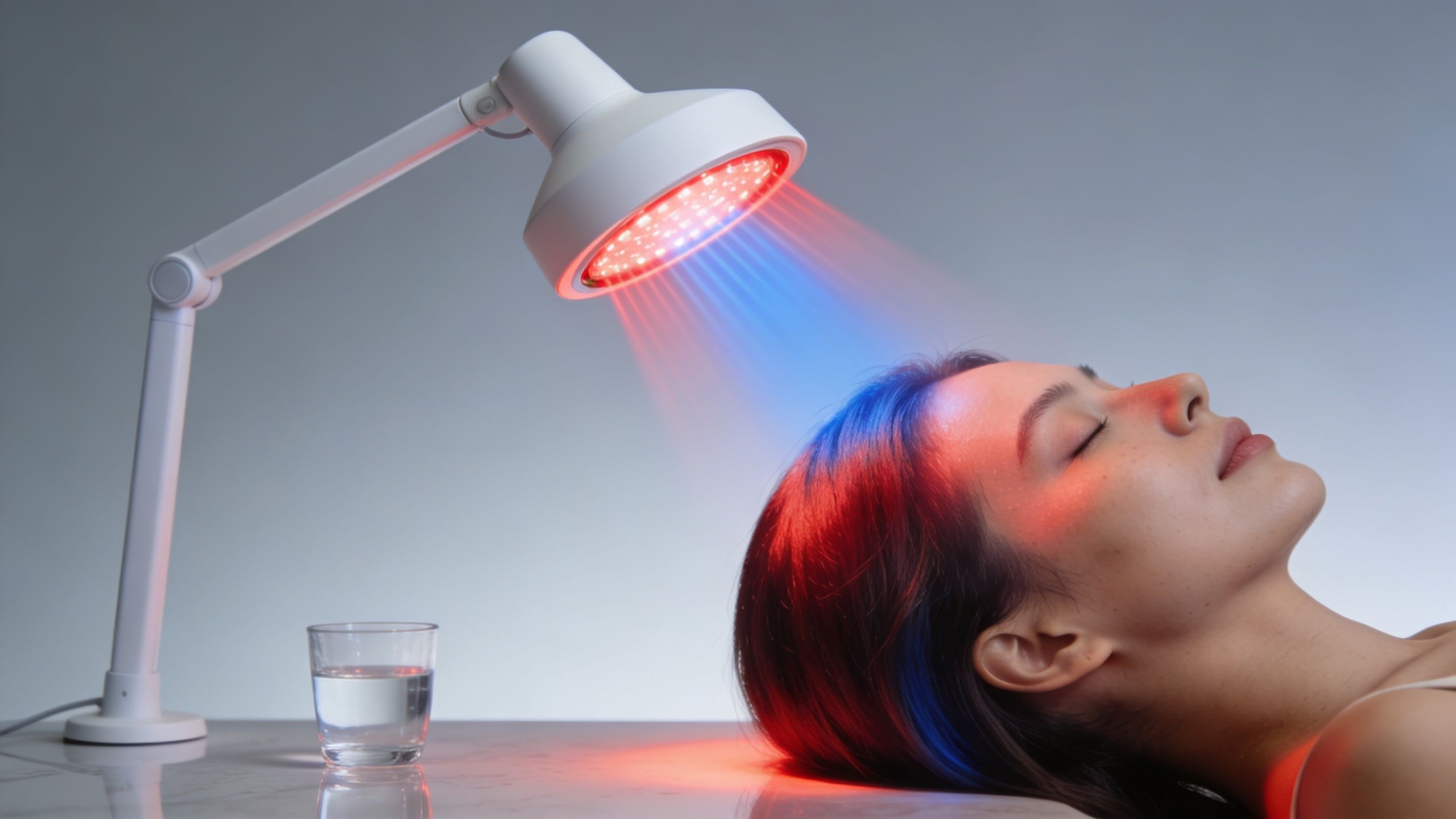
A panel-style led light therapy lamp can make sense when you want broader treatment coverage. It may be useful for face, neck, chest, or even body areas, but it usually requires more attention to positioning and distance. If your setup changes each time, your dose changes too.
A mask creates a different advantage. The treatment area is fixed, contact is more consistent, and the routine often feels easier to repeat.
Here's the trade-off in plain terms:
| Device type | What it does well | Where it can fall short |
|---|---|---|
| Panel lamp | Covers larger areas and can be versatile | User has to control distance and positioning carefully |
| Wearable mask | Improves consistency for facial treatment and daily use | More limited treatment area compared with a large panel |
What to check before you buy
For facial skin therapy, I tell patients to ignore flashy language and focus on a short checklist.
- Therapeutic wavelengths that match the concern you're treating
- Safety features such as UV filtration and flicker-free operation
- Clear instructions about how the device should be positioned and used
- A form factor you'll tolerate because the most advanced device still fails if it stays in a drawer
If you're building out an overall routine, BotoxBarb has a helpful round-up of at-home beauty treatments that puts LED in context with other supportive tools.
One practical mask option
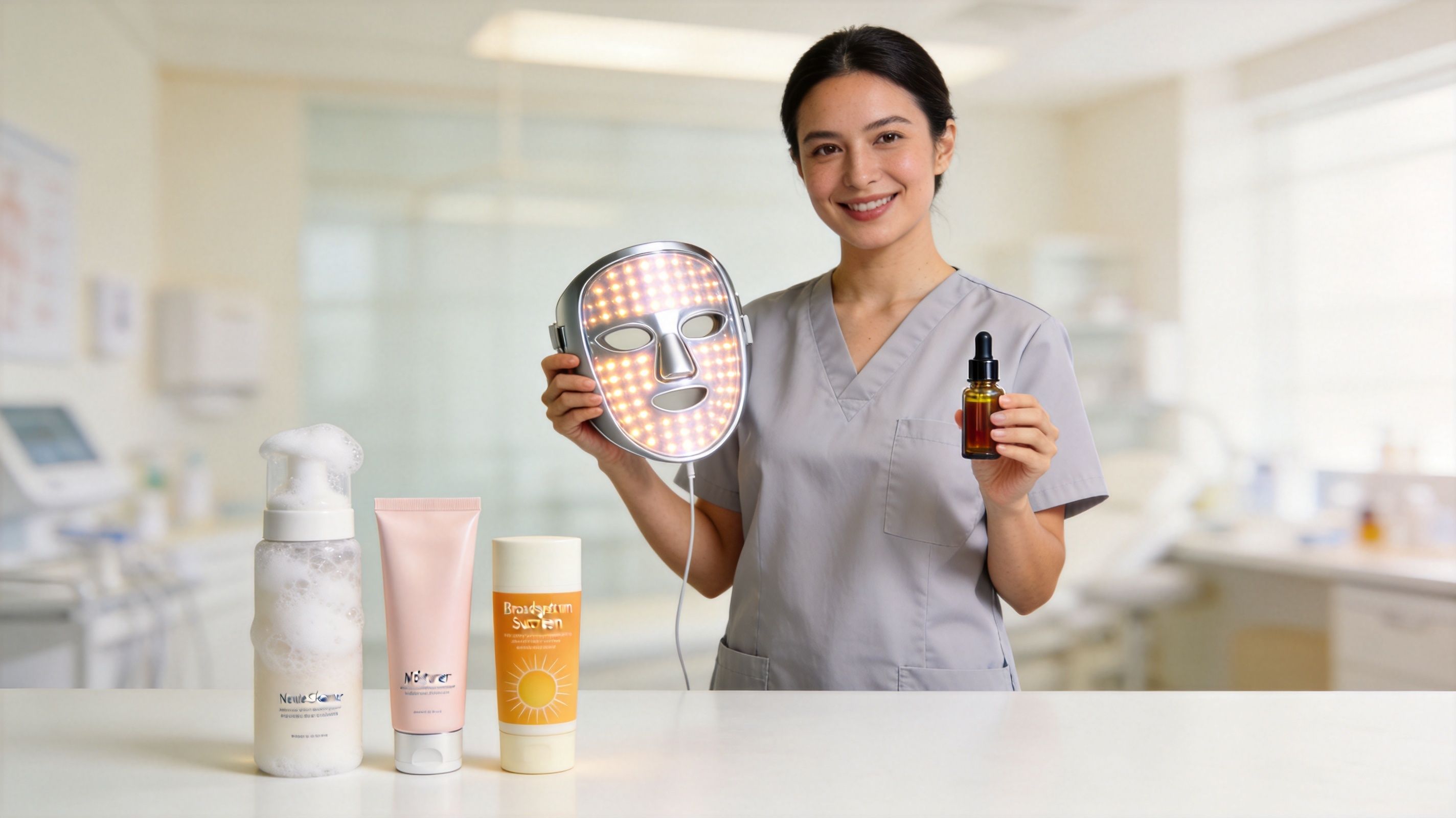
For patients who want a facial device rather than a stationary lamp, the Barb N.P. LED Facial Mask is one relevant option. It's designed for at-home complexion support, includes wireless use, a comfortable fit on the face, and 3 lighting settings for different treatment goals. That format tends to suit patients who want a routine that feels simple enough to maintain without constantly adjusting distance from a panel.
Buy for compliance first. Most people get better results from a device they'll use consistently than from a stronger device they use twice and abandon.
Amplifying Results with In-Clinic Treatments
Home LED works well on its own, but it becomes more useful when it supports a professional treatment plan. That's where patients usually get the most value from it. Not as a replacement for injectables or regenerative treatments, but as a way to protect and extend what they're already investing in.

Where LED fits after procedures
After Botox, fillers, PRP, or collagen-focused treatments, the skin doesn't need chaos. It needs support. Red and near-infrared light are useful in that setting because the goal is usually to calm the tissue, reduce visible post-treatment irritation, and help the skin settle more smoothly.
This is especially relevant for patients who stack treatments over time. Someone may rotate injectables, skin maintenance, medical-grade topicals, and hair support within the same season. A home LED routine can serve as the low-friction piece that keeps recovery and maintenance on track between visits.
Better synergy than substitution
LED should not be framed as “instead of” Botox, filler, or PRP when those treatments are clinically appropriate. It works better as “alongside.”
That combination approach can help in several ways:
- After injectables by supporting calmer recovery when tissue feels puffy or tender
- After PRP or collagen-focused work by reinforcing a longer-term skin health plan
- Between appointments by giving patients something active to do at home without over-treating the skin
- During maintenance phases when the goal is steadier skin behavior, not another major intervention
The smartest aesthetic plans usually aren't built around one hero treatment. They're built around layering the right tools at the right time.
Illuminate Your Path to Healthier Skin
A led light therapy lamp makes sense when you want a treatment that's grounded in skin biology, easy to repeat at home, and useful between professional appointments. The details matter. Wavelength matters. Device quality matters. Consistency matters most.
Used well, LED therapy can support clearer skin, calmer recovery, and a stronger long-term plan for both face and scalp. When it's paired thoughtfully with in-clinic care such as Botox, fillers, or PRP, it becomes more than a gadget. It becomes part of a disciplined maintenance strategy that helps you keep your results looking smooth, healthy, and intentional.
If you're ready to build a more complete at-home and in-clinic skin plan, explore the curated treatment and product options at BotoxBarb. You'll find aesthetic services, skincare, haircare, and self-care tools selected to support healthier skin over time.