Skincare Routine with Vitamin C: A Medical-Grade Guide
The popular advice is simple: apply any vitamin C serum in the morning, add sunscreen, and wait for brighter skin. That advice leaves out the detail that determines whether the serum is still active when it reaches your face. A skincare routine with vitamin C can fail because of the formula, its pH, its packaging, or its storage, even when your application order is perfect.
Vitamin C has been tied to skin health since the 1930s, when its role in correcting scurvy connected the nutrient with collagen hydroxylase activity and skin structure. Modern dermatology uses topical vitamin C for antioxidant defense, neocollagenesis, photoprotection, visible aging concerns, and uneven tone, but the ingredient works best when the product and routine match your skin.
Why Most Vitamin C Routines Fail Before They Start
A vitamin C routine can fail before the serum touches your skin. The deciding factors are often the formula's acidity, packaging, exposure to air and light, and whether your skin can tolerate repeated use. A bottle labeled “vitamin C” does not guarantee equivalent performance, so choosing by ingredient name alone can waste money and trigger irritation.
The clinical rationale is sound when the formulation fits the goal. A randomized trial using 5% topical ascorbic acid for 6 months on photoaged skin found significant improvements in global clinical scores, skin microrelief density, and deep furrows, with results visible after 3 and 6 months of daily use. The findings are documented in this clinical review of topical vitamin C. That timeline sets a realistic expectation. Vitamin C is not an overnight treatment, and a serum weakened by oxidation cannot be expected to perform like a fresh, well-formulated product.
The molecule matters
Pure L-ascorbic acid has the most established topical evidence, particularly in acidic formulas. Useful formulations are commonly described around pH 2.8 to 3.5, while concentrations from 3% to 10% used for at least 12 weeks have been associated with reduced wrinkling and roughness and increased collagen production, as reported in this review of vitamin C in dermatology.
Acidic L-ascorbic acid can sting when the barrier is dry, inflamed, recently exfoliated, or sensitized by retinoids. A stabilized derivative may produce better practical results if it feels comfortable enough for consistent use. The trade-off is straightforward: low-pH formulas may offer stronger delivery support, while stabilized systems can be easier to tolerate and less demanding in daily use.
Practical rule: The strongest formula on paper is not useful if irritation makes you stop using it.
Results require patience and protection
Controlled research supports a longer evaluation window. In a randomized, double-blind trial of 66 healthy Chinese women, a 10% vitamin C serum used for 12 weeks was associated with measurable changes in antioxidant activity, inflammatory markers, skin yellowness, redness, and glycation-related markers, as reported in the published trial. A separate double-blind half-face study also found statistically significant wrinkle and photoaging improvements after 12 weeks.
A reliable routine therefore depends on four choices: select a form your skin accepts, use a compatible pH and concentration, limit oxidation through sensible storage, and apply the product in an order that supports sunscreen rather than replacing it. Storage is part of treatment quality, not an afterthought. A costly serum cannot compensate for poor handling or a formula your skin rejects.
Choosing the Right Vitamin C Form for Your Skin Type
Choosing a vitamin C form comes down to two practical questions: can your skin tolerate it, and will the formula stay active during regular use? Low-pH L-ascorbic acid has the clearest record for direct topical performance. Stabilized systems may be easier for sensitive skin and less demanding to store.
Pure L-ascorbic acid versus stabilized formats
L-ascorbic acid generally needs an acidic environment for meaningful penetration. Reviews commonly place its useful range around pH 2.8 to 3.5. A formulation benchmark found the ingredient most stable at pH 3.5 and least stable at pH 5.5, as discussed in the vitamin C stability review. Lower pH can support delivery, but it may also increase tingling or burning.
Stabilized derivatives and buffered systems use a different formulation strategy. Recent research examined a stabilized 12% vitamin C serum at pH 6 in a 2025 in vivo study, described in this published formulation study. These formats can suit people who react to acidic products, need simpler layering, or live in a hot climate where storage is harder to control.
| Vitamin C Form | Ideal Skin Type | pH Range | Best Paired With | Shelf Stability |
|---|---|---|---|---|
| L-ascorbic acid | Normal, resilient, or experienced active users | Around 2.8 to 3.5 | Moisturizer and sunscreen | More vulnerable to air, light, heat, and pH changes |
| Stabilized derivative | Sensitive, dry, or reactive skin | Often higher or buffered | Barrier-supporting moisturizer and sunscreen | Generally more forgiving, depending on the formula |
| Buffered vitamin C system | Skin that needs a balance of tolerability and activity | Formulation-dependent | Simple routines and barrier care | Can be improved through buffering and supportive antioxidants |
Match the product to your behavior
Low-pH L-ascorbic acid makes sense when your skin already tolerates active ingredients, you can follow storage instructions, and you want the form with the strongest traditional evidence. A stabilized derivative is often the more workable choice when stinging, redness, frequent travel, heat, or a complicated retinoid routine makes strict acidic-serum use difficult.
For uneven tone, brightening with Beverly Wilshire Aesthetics offers a broader way to consider professional guidance alongside a home routine. Vitamin C can support brightening, while persistent pigmentation may require an individualized assessment.
Read the label for the vitamin C form, concentration, packaging, and storage guidance. A higher percentage alone does not determine performance. Tolerance, stability, and consistent use are part of potency.
Building Your Morning and Evening Application Order
A reliable morning sequence is uncomplicated. Clean skin, vitamin C, moisturizer when needed, then sunscreen. The technique matters because acidic serums can become irritating when applied over a compromised barrier or combined carelessly with other strong actives.
The morning sequence
- Cleanse gently. Remove overnight oil and residue without leaving the skin tight or squeaky.
- Pat dry and pause. For a low-pH L-ascorbic acid serum, apply 3 to 5 drops to clean, dry skin. Product guidance commonly recommends allowing a few minutes for absorption before the next layer, as outlined in this vitamin C application guide.
- Apply vitamin C first. Press the serum over the face and, if tolerated, the neck. Avoid mixing it directly into sunscreen. Mixing changes the texture and can make it harder to apply an even protective film.
- Moisturize if needed. Use a barrier-supporting moisturizer after the serum has settled. If your skin is oily, you may need less moisturizer. If it's dry or reactive, this step can reduce tightness.
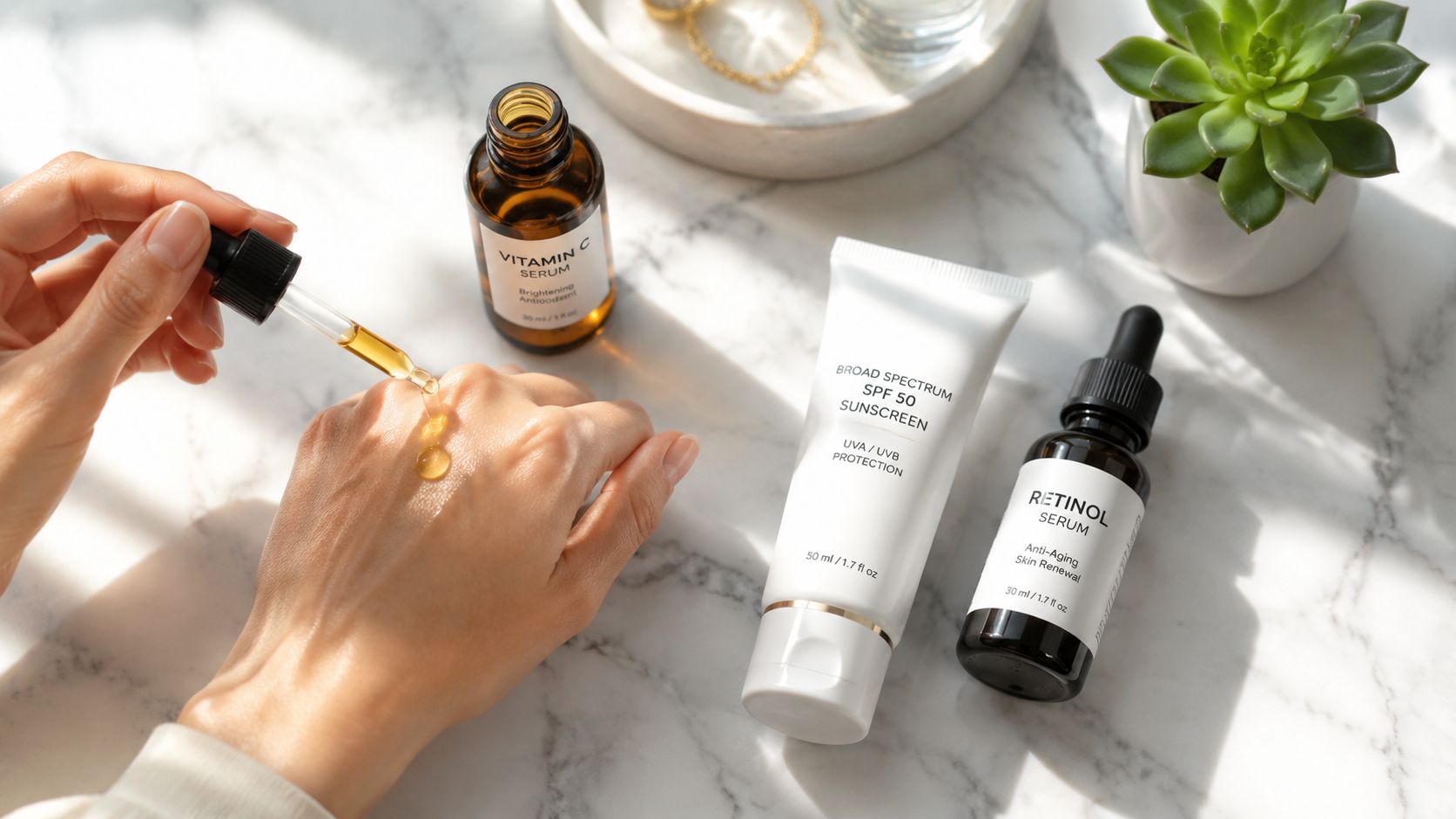
- Finish with broad-spectrum SPF 30+. Sunscreen remains the final morning step. Dermatology guidance from the Cleveland Clinic places vitamin C before moisturizer and sunscreen, while dermatology guidance on vitamin C and sunscreen explains the complementary roles. Vitamin C helps neutralize free radicals, while sunscreen blocks or absorbs UV energy.

For a more detailed explanation of whether moisturizer should precede or follow serum, see vitamin C before or after moisturizer.
Keep evenings calmer
Vitamin C can be used at night, but morning use gives its antioxidant role practical relevance during daytime exposure. I usually keep evening routines simpler when a client is also using retinol or exfoliating acids. Place retinol or an exfoliant in the evening on a separate schedule, particularly if the morning serum causes stinging.
Niacinamide can generally fit beside vitamin C, especially in a well-tolerated stabilized formula. Introduce one active at a time, though. If redness appears, separating products makes it easier to identify the cause.
Layering rule: Vitamin C goes on first, moisturizer follows when needed, and sunscreen is always last in the morning.
The Storage and Stability Rules That Protect Your Investment
A vitamin C routine can fail before the serum reaches your skin. Storage is part of the treatment. Light, heat, air, humidity, and an unsuitable pH can reduce a formula's performance, so packaging and daily handling matter as much as the ingredient list.
Independent vitamin C stability testing found that dark glass and opaque airless pumps protected formulas more consistently than clear bottles and open droppers. Open-dropper products were advised for use within about 8 weeks of opening. Orange or brown discoloration usually means the serum has moved beyond its useful life.
Read the bottle before the marketing
Choose packaging that limits light and oxygen exposure. Dark glass is preferable to clear glass, while an opaque airless pump reduces repeated contact with air. An open dropper can work, but it requires quicker use and careful handling.
Keep the bottle in a cool, dry place away from windows, radiators, hot countertops, and steamy showers. Close the cap immediately after dispensing. Do not leave the dropper exposed while finishing the rest of your routine, because every unnecessary exposure adds air, heat, or moisture.
For practical guidance on protecting active serums, review these Buy Me Japan skincare storage tips. A bathroom may be convenient, but it is often too warm and humid for long-term storage.

Know when to stop using it
Color changes vary by formula, yet orange or brown discoloration is a clear warning sign for many L-ascorbic acid serums. Do not apply extra drops to compensate for oxidation. The product may deliver less benefit and may irritate the skin more easily.
People investing in medical-grade products, including SkinCeuticals serums available through BotoxBarb, should apply the same storage discipline. This medical professional's guide to how long SkinCeuticals C E Ferulic lasts offers product-specific context, but the principle applies across brands. A fresh serum in protective packaging is a better investment than an expensive formula left in heat and sunlight.
Troubleshooting Sensitivities and Common Routine Mistakes
A client may describe “tingling” after applying vitamin C, but that word covers several different reactions. Brief, mild tingling can occur with low-pH L-ascorbic acid. Persistent burning, redness, itching, swelling, peeling, or worsening dryness suggests that the skin barrier isn't tolerating the formula or that another product is contributing.

When the skin stings
Stop layering other irritants until the skin feels comfortable. Use a bland cleanser and moisturizer, then reintroduce the serum every other morning rather than daily. If the reaction continues, a stabilized derivative may be a better long-term option than repeatedly forcing a low-pH product.
Applying acidic vitamin C to damp skin can increase penetration and may increase irritation for reactive users. In clinical practice, I prefer clean, dry skin for clients who sting easily, even though some gentler formulas may be designed for slightly damp application. The product's instructions and the skin's response should guide the choice.
When makeup pills or breakouts appear
Pilling often comes from using too much serum, applying the next layer before the first has settled, or combining textures that don't sit well together. Return to 3 to 5 drops, press rather than rub, and give each layer time to absorb. Mixing vitamin C into sunscreen is another common shortcut that can compromise application consistency.
Unexpected breakouts need a broader review. Check whether the serum is oxidized, whether a new moisturizer or sunscreen was introduced at the same time, and whether the product is being rubbed into already irritated skin. Benzoyl peroxide and strong exfoliating products can add irritation when paired carelessly with acidic vitamin C, so separate them until the routine is stable.
Set a realistic review point
Don't judge a vitamin C serum after a few applications. Controlled evidence has measured meaningful changes over 12 weeks, including improvements in visible photoaging, wrinkle scores, antioxidant activity, inflammation, redness, and yellowness, as shown in the 12-week randomized vitamin C study. If your skin remains comfortable, evaluate tone and texture at that point rather than chasing daily changes in the mirror.
Stop and reassess: Ongoing burning isn't proof that a serum is working harder. It's information that the formula, frequency, or surrounding routine needs to change.
Enhancing Results With LED Therapy and Medical-Grade Products
A well-chosen serum is the foundation, but some people want to add an at-home device. LED facial masks are commonly used alongside skincare routines, and product-focused guidance suggests they may help enhance absorption of ingredients such as vitamin C. Device instructions and skin tolerance still matter, particularly when the barrier is irritated.
The Barb N.P. Facial Mask is a wireless LED mask designed for comfortable wear over the face and offers 3 lighting settings for different treatments. Use it as a complementary step rather than a replacement for sunscreen, moisturizer, or a stable vitamin C formula. Guidance on professional LED light therapy treatments can help you understand how in-clinic and at-home approaches differ.
For product selection, a medical-grade option such as SkinCeuticals C E Ferulic® provides 15% L-ascorbic acid, while a stabilized derivative may make more sense for a sensitive client or someone who struggles with storage. The important match is between formulation, tolerance, packaging, and daily behavior. BotoxBarb offers clinical skincare alongside services and guidance, rather than treating a single serum as a complete plan.

For a broader look at how LED may fit into skincare and wellness routines, review the benefits of LED light therapy for skin and wellness. The core principles remain straightforward: choose a form you can tolerate, protect it from oxidation, apply it before moisturizer and SPF, and give the routine enough time to show measurable change.
BotoxBarb offers medical-grade skincare, including SkinCeuticals serums and sun protection, along with LED light therapy guidance and aesthetic services. Visit BotoxBarb to explore products that fit your vitamin C routine and choose a more deliberate approach to formulation, storage, and daily use.