Sun Exposure After Botox: Safety Rules and Aftercare Tips
The most popular advice about sun exposure after Botox is also the least precise: “The sun will cancel your Botox.” Ordinary daylight doesn't deactivate botulinum toxin under your skin. The practical concern is more immediate and visible. Heat can increase blood flow near fresh injection sites, making redness, swelling, and bruising look worse while your skin is settling.
That distinction matters because avoiding a brief walk outside isn't the same as lying on a hot beach, using a tanning bed, or attending hot yoga. Your aftercare should reduce unnecessary heat and ultraviolet stress without creating unrealistic anxiety about normal daily life.
The Real Truth About Sunlight and Botox Results
Botox moved from therapeutic medicine into mainstream cosmetic use over time. The U.S. FDA first approved Botox in 1989 for strabismus and blepharospasm, while its first aesthetic indication followed on April 12, 2002, for temporary improvement of moderate-to-severe glabellar lines in adults under 65. That transition occurred within about 13 years (history of cosmetic botulinum toxin).
The history helps explain why the treatment is often discussed with more certainty than the aftercare evidence supports. Botox isn't a surface product that sunlight can wash away. It's injected into targeted muscles, and ordinary sunlight isn't generally identified in clinical guidance as a factor that deactivates the product under the skin.
What sunlight can change
The more credible short-term issue is heat-induced vasodilation. When skin temperature rises, nearby blood vessels can expand. Around recently treated areas, that extra circulation may make pinpoint bleeding, erythema, edema, or bruising more noticeable.
That's why I'm more concerned about a tanning bed, sauna, hot outdoor workout, or prolonged beach exposure than a short, shaded walk to your car. Guidance commonly recommends limiting direct sun for at least 48 hours, while some aesthetic recommendations extend caution to about one week, particularly if you're avoiding tanning and strong midday sun (sun exposure after Botox guidance).
Practical rule: Don't treat every ray of daylight as an emergency. Do treat intense heat, tanning, and prolonged direct UV exposure as avoidable during early recovery.
The myth and the useful version
The myth says sunlight “kills” Botox. The useful version says that early heat and UV exposure can aggravate the skin around injections, while intense ultraviolet exposure may raise a more specific concern about treatment performance.
For individualized reminders about cleansing, touching your face, and protecting treated skin, keep your provider's instructions alongside BotoxBarb's post-procedure skin-care guidance. Your injector's advice should take priority when your treatment area, skin type, or medical history calls for a different approach.
How UV Radiation and Heat Affect Fresh Injection Sites
Fresh injection sites have been mechanically disturbed by the needle, even when the treatment looks clean and uncomplicated. Mild redness or a small bruise can appear without any sun exposure. Heat doesn't create every side effect, but it can make existing inflammation more visible.
Heat is the immediate aftercare concern
Increased skin temperature encourages vasodilation, meaning the vessels near the treated area widen. That can increase the appearance of swelling and edema, and it may make bruising stand out more clearly. Independent post-care guidance recommends avoiding direct sun and other heat exposure during the first 24 to 48 hours for this reason (aesthetic post-treatment instructions).
That same hospital instruction sheet advises limiting sunlight or UV lamps for 24 hours and continuing to avoid them until persistent redness or swelling settles. In some cases, that visible recovery can take 5 to 7 days (hospital aftercare sheet). This is why a patient with no redness may return to ordinary outdoor routines sooner than someone whose injection sites remain warm, swollen, or bruised.
UV-B is a separate question
Visible daylight and ultraviolet radiation aren't interchangeable. A randomized trial found that UV-B irradiation reduced botulinum toxin A effect by about 30%, supporting caution around intense UV exposure or sunburn during the early post-treatment period (randomized UV-B and botulinum toxin trial).
That result shouldn't be translated into “normal daylight cancels Botox.” It supports avoiding concentrated UV stress, especially tanning beds, deliberate sunbathing, and any exposure severe enough to burn the skin. The practical risk is both local irritation and the possibility that intense UV-B behaves differently from casual, incidental daylight.

Climate can influence treatment planning
Sun exposure may also matter over the longer term. One peer-reviewed study found that patients receiving glabellar botulinum toxin in high-sun climates required a higher mean total dose for maximal paralysis than patients in lower-sun climates, 29.2 units versus 27.3 units, with a statistically significant P value of 0.0031 (glabellar botulinum toxin study).
That finding doesn't mean you need more Botox after one sunny afternoon. It suggests that cumulative environmental conditions can be relevant when an experienced injector plans treatment and assesses muscle response.
Your Hour-by-Hour Sun Avoidance Timeline
Aftercare is easier when you convert general warnings into decisions you can make during the day. The timeline below is a practical framework, but your injector's instructions should override it if you had extensive treatment, unusual bruising, or another procedure at the same visit.
Leaving the clinic through four hours
Keep your head upright and avoid direct heat as much as possible. A short walk to your car is usually very different from sitting outdoors in full sun, but use shade, a hat, or an umbrella when available.
During this period:
- Stay cool: Avoid saunas, hot tubs, heat lamps, hot yoga, and intense outdoor activity.
- Protect without rubbing: Don't massage or press the injection sites. If your provider recommended cool packs, use them exactly as directed.
- Plan your route: Choose an indoor destination rather than adding errands in direct sun.
- Keep your face elevated: Avoid lying down or placing pressure on the treated areas.
The aim is to keep the early injection sites calm. You don't need to panic over incidental daylight, but you should avoid turning the first few hours into a heat exposure session.

Four to 24 hours
Use strict sun and UV avoidance where you can. If you must go outside, make the trip brief, stay in full shade, and use physical protection such as a wide-brimmed hat. Don't use tanning beds or schedule a hot outdoor workout.
Sunscreen timing depends on your skin and the condition of the injection sites. If the skin is still tender, visibly punctured, or swollen, don't rub product over it. Ask your provider when gentle application is appropriate, and use clean hands with a patting motion once you've been cleared.
24 to 48 hours
Continue minimizing direct exposure and heat. If redness or swelling persists, extend your caution rather than treating the clock as a guarantee. Gentle walking may be reasonable when you feel well and can stay cool, but postpone strenuous outdoor exercise until your provider's guidance allows it.
For broader beauty-maintenance questions that involve delicate facial care, you may also find this aftercare FAQ for lash extensions useful. It isn't a Botox protocol, but it reinforces the same principle: avoid unnecessary friction and follow product-specific aftercare.
The first week
Daily sun protection becomes the routine, not a temporary response. Keep avoiding tanning beds and prolonged direct sun, especially if your skin remains visibly red or swollen. Some people can resume normal outdoor plans after the early window, while others need longer because their skin shows more inflammation.
Building a Post-Botox Sun Protection Routine
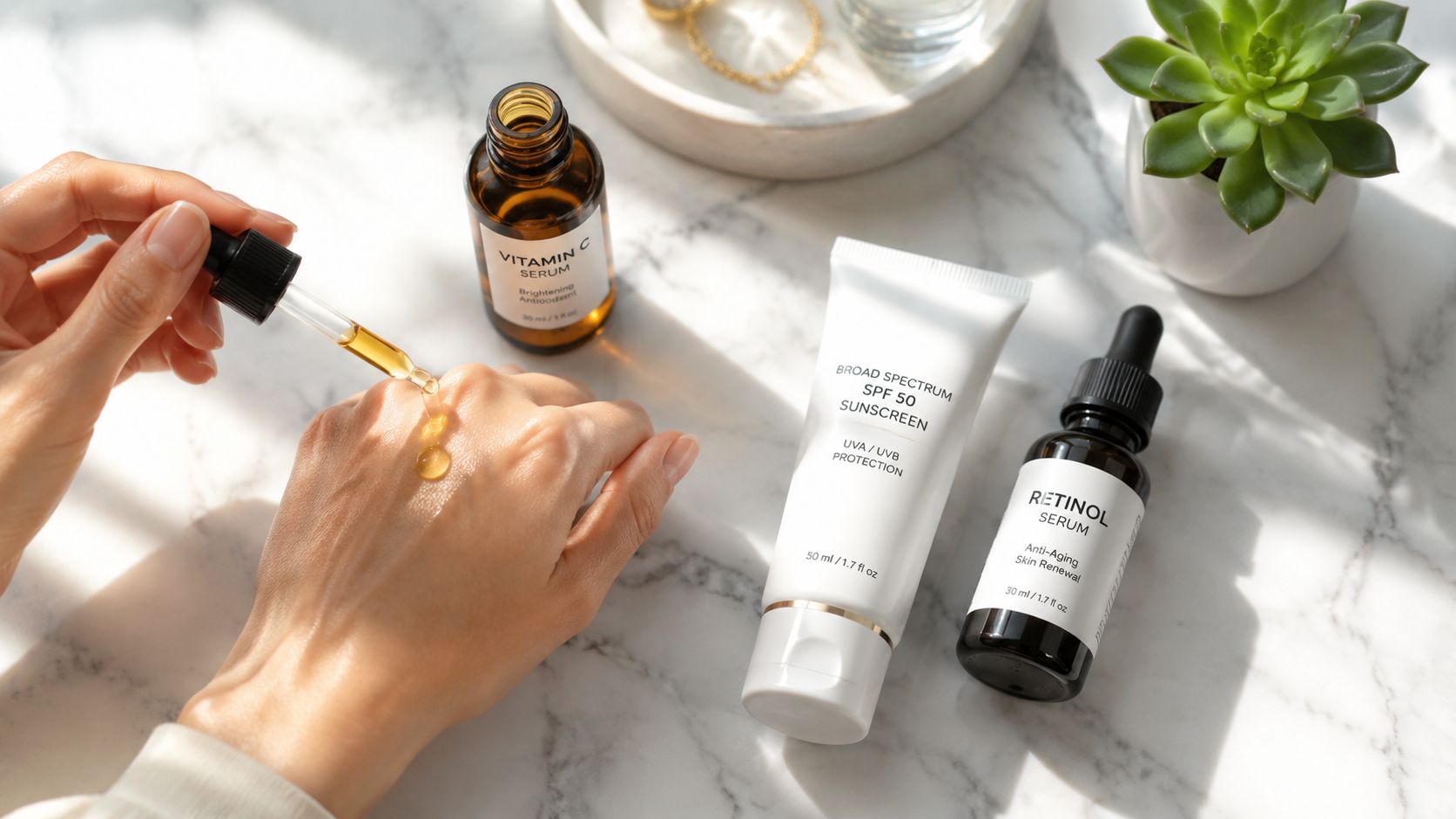
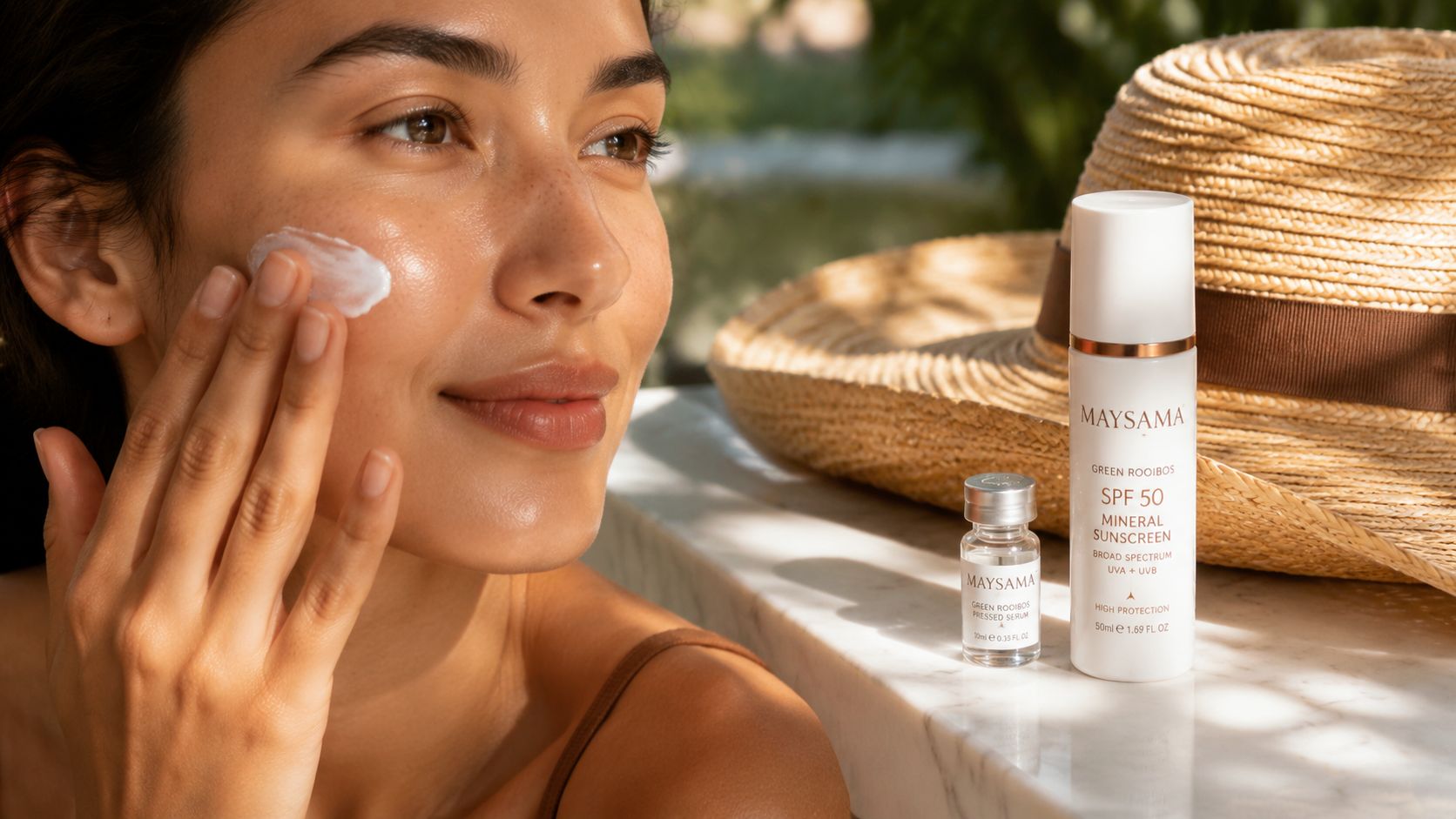
A good routine protects your skin without disturbing the areas you've just treated. Choose a broad-spectrum SPF 50 product for regular outdoor exposure, and favor physical barriers such as shade, hats, and UPF clothing rather than relying on sunscreen alone.
Apply with control
Once your provider says sunscreen is appropriate, don't drag your fingers across the injection sites. Place small amounts on the skin and pat gently until distributed. Mineral formulas containing zinc oxide or titanium dioxide are often practical after procedures because they sit on the skin and can be less irritating for some people. Chemical sunscreens can also work well when your skin tolerates them, but freshly treated or reactive skin may prefer a simpler formula.
BotoxBarb's aftercare guidance recommends finishing your routine with a mineral-based sunscreen of SPF 30 or higher before going outside. For product-selection details, use BotoxBarb's sunscreen guide and compare texture, ingredients, and comfort rather than choosing by marketing language alone.
Build protection around your schedule
A medical-grade option such as SkinCeuticals Advanced Brightening UV Defense Sunscreen SPF 50 may suit patients who want high-level UV protection alongside ingredients including tranexamic acid and niacinamide. It's still important to patch-test products and avoid introducing a new active if your skin is already irritated.
Use a wide-brimmed hat for direct exposure, sunglasses for eye-area comfort, and UPF-rated clothing when you'll be outside for an extended period. Schedule walks and exercise during cooler portions of the day, choose shade, and carry sunscreen so reapplication doesn't depend on getting back home.

Application insight: A sunscreen you can apply gently and consistently is more useful than a theoretically ideal formula that stings, pills, or makes you rub the skin repeatedly.
Keep the rest of your routine uncomplicated during early recovery. Mild cleansing, a bland moisturizer if approved, and physical sun protection usually make more sense than adding exfoliating acids, scrubs, or multiple new serums.
Navigating Real-World Scenarios After Treatment
A beach vacation the week after Botox doesn't automatically require cancellation. It does require planning. If you control the appointment date, avoid scheduling treatment immediately before a day centered on tanning, prolonged beach time, or intense outdoor activity.
For a vacation, pack a wide-brimmed hat, mineral sunscreen, sunglasses, and a shade option you can use without improvising. Spend the first part of the trip in shaded areas, avoid deliberate tanning during early recovery, and keep your face cool. Sunless color may be a more practical cosmetic choice than UV tanning, but wait until the injection sites have settled and don't rub or massage the treated areas during application.
An outdoor wedding calls for the same strategy with better logistics. Arrive with sunscreen already applied if your provider has cleared it, choose a shaded seat, use a hat between photographs, and avoid standing beside heaters or in unusually hot areas. A short appearance in daylight is not equivalent to hours of continuous heat exposure.
Your commute may be unavoidable. Use a hat or umbrella where practical, walk on the shaded side of the street, and keep sunscreen in your bag for later use. If your commute includes cycling or running, reduce intensity during the early recovery period and move the activity indoors or to a cooler time of day.
Planning rule: Protect the first two days most carefully, then let the condition of your skin determine whether you need to extend precautions through the first week.
Warning Signs That Require Provider Attention
Mild pinpoint redness, tenderness, or bruising at injection sites can occur after Botox. Heat may make those changes look more obvious, but appearance alone doesn't always indicate a complication. Monitor the direction of change. Skin that is gradually calming is different from redness that keeps spreading or swelling that continues to increase.
Contact your provider when
- Redness spreads: Increasing redness that moves beyond the injection sites deserves a clinical review.
- Warmth persists: Unusual warmth with worsening swelling or tenderness should prompt a call.
- Swelling escalates: A small, stable area of edema is less concerning than swelling that becomes progressively larger.
- Pain changes character: Increasing or severe pain isn't something to dismiss as routine bruising.
- Your recovery feels abnormal: If you're unsure whether a reaction is expected, send your provider a clear photo and describe the timing, heat exposure, and products used.
Persistent redness or swelling can sometimes take 5 to 7 days to subside in some patients, according to hospital aftercare guidance (post-treatment recovery guidance). That doesn't mean you should wait that long when symptoms are worsening. Your provider can distinguish normal local irritation from a reaction that needs treatment.

Seek urgent medical attention for difficulty breathing, swallowing, or speaking, or for a rapidly developing serious reaction. Don't stop prescribed medications on your own to prevent bruising, and don't try to treat a concerning reaction with more sunscreen or home devices.
Extending Your Results with LED Therapy and Smart Skincare
Sun protection remains the foundation of long-term skin care after Botox. A consistent sunscreen routine, shade, hats, and sensible outdoor timing help limit the environmental stress that contributes to visible aging and post-treatment irritation.
LED facial masks offer a different kind of at-home light therapy. They're commonly designed with multiple wavelengths or settings, and the goal is controlled light exposure rather than the heat and UV stress associated with tanning or intense sun. They shouldn't replace sunscreen, and they shouldn't be used over fresh injection sites unless your provider says it's appropriate.
The Barb N.P. Facial Mask is one product option to consider. Its listed positioning includes a wireless design, a comfort-focused fit, and three lighting settings intended for different treatment goals, although an independent source didn't verify a specific model or those features (LED mask and post-Botox discussion). Use any LED device according to its product directions, keep the mask clean, and stop if your skin feels hot or irritated.
For a broader explanation of how LED therapy can fit into a skincare routine, review BotoxBarb's guide to LED light therapy. Pair professional treatments with gentle skincare and reliable sun protection, rather than expecting one device or procedure to offset repeated UV exposure.
If you're planning Botox, traveling, exercising outdoors, or choosing products for recovery, visit BotoxBarb for appointment booking, medical-grade skincare, sun protection, and LED light therapy options. Bring your schedule and current routine to your consultation so Barb N.P. can help you create practical aftercare that fits your skin and lifestyle.