PRP Treatment Before and After Results You Can Trust
You're scrolling through PRP treatment before-and-after photos late at night, comparing fuller hairlines and brighter faces from one clinic gallery to the next. One image looks convincing, but you can't tell whether the hair was wet in the “before,” whether makeup changed the skin texture, or whether the lighting is doing most of the work.
That uncertainty is reasonable. PRP results are gradual, protocol-dependent, and indication-specific. A hair restoration result must be judged differently from facial rejuvenation, and neither should be evaluated from a single carefully posed photograph.
This guide uses a practical three-to-six-month framework instead. You'll see what PRP can realistically deliver, how hair and facial outcomes differ, what preparation and recovery involve, where the treatment disappoints, and how LED light therapy may complement a sound clinical protocol. If you're comparing clinic galleries, this resource on PRP hair growth results can provide another reference point, but your own photos should still be taken under consistent conditions.
What You Actually Want to Know About PRP Before and After
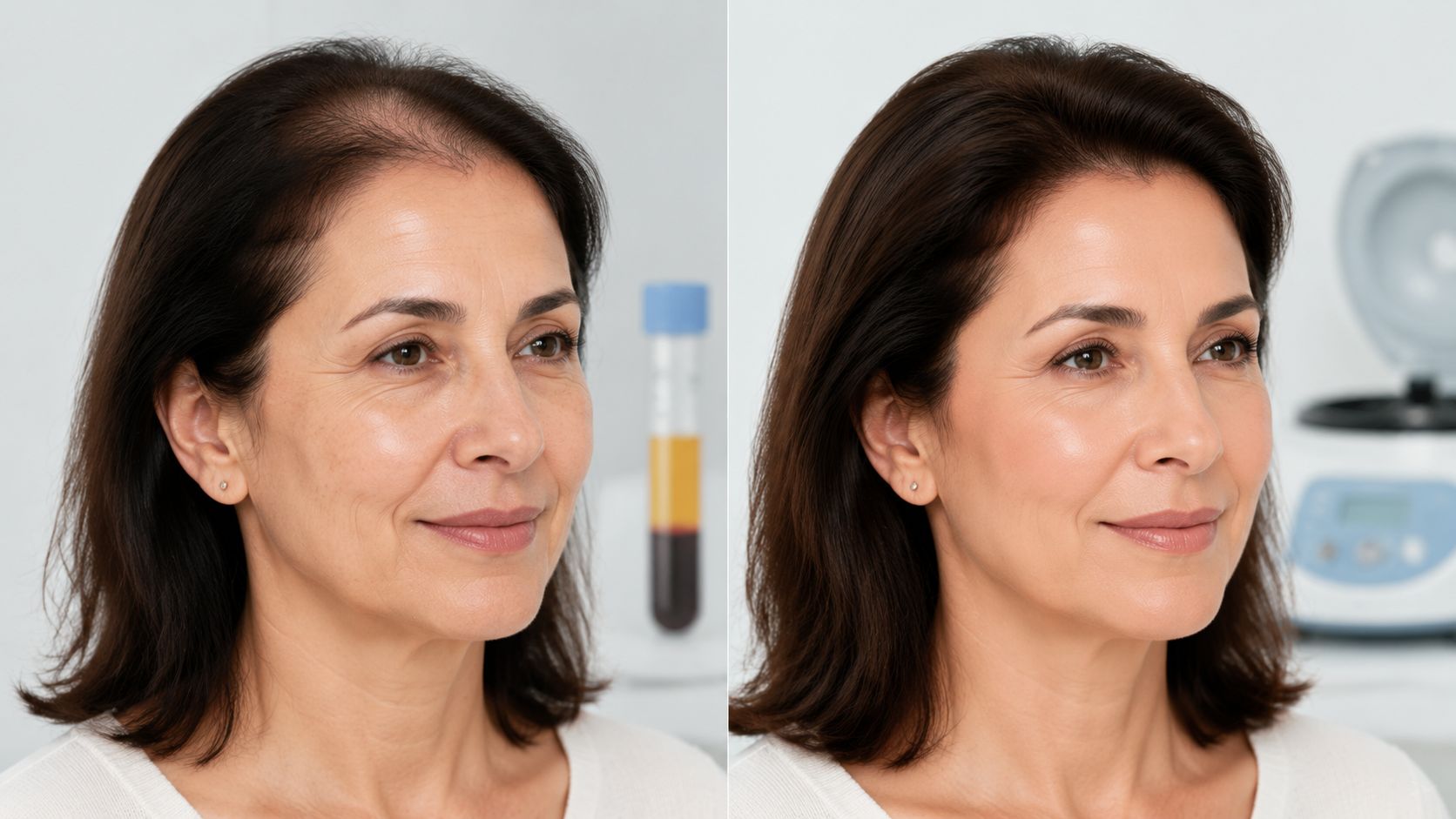
A credible before-and-after comparison starts with consistency. The same camera distance, angle, lighting, hair condition, facial expression, and styling should be used each time. Hair photos can change dramatically when hair is wet, blow-dried, parted differently, or coated with a styling product. Facial photographs can look smoother after makeup, strategic lighting, relaxed expression, or simple changes in hydration.
A photograph is evidence, not a diagnosis
When a patient shows me a gallery image and asks whether they'll get the same result, I look for information the photograph may not show. Was the patient treated for androgenetic alopecia or another cause of shedding? How many sessions were performed? Was PRP used alone, or with medication, microneedling, laser treatment, or a surgical procedure? Was the image taken at a meaningful follow-up point?
A single image answers none of those questions. It also doesn't show whether new hair is denser, whether individual shafts are thicker, or whether facial texture improved while volume stayed unchanged.
Practical rule: Treat before-and-after photography as one part of assessment. Pair it with the diagnosis, treatment protocol, baseline images, and objective follow-up measurements.
Your calendar matters more than the gallery
Hair follicles need time to move through their growth cycle. Facial skin also needs time for collagen remodeling, so an early glow shouldn't be confused with a completed result. In both cases, the treatment may look underwhelming before it looks useful.
For a meaningful comparison, take baseline photographs before treatment and repeat them at the same angle and under the same light. Hair should be dry and styled consistently. Facial skin should be photographed without makeup, with identical skincare immediately beforehand.
The sections ahead cover how PRP works, the realistic timeline, hair versus facial indications, preparation, recovery, candidacy, risks, complementary LED therapy, and booking questions. The aim isn't to persuade you that PRP is right for everyone. It's to help you decide whether the expected change is worth the time, cost, discomfort, and commitment.
What PRP Really Is and Why It Took a Century to Catch On
Think of PRP as a concentrated repair signal made from your own blood. A clinician draws blood, separates the platelet-rich portion, and places it into the target tissue. Platelets carry biological signals that can influence repair, but PRP doesn't create a new follicle or instantly rebuild aged skin.
The medical story is older than the current aesthetic trend. In 1910, W.W. Duke reported that transfusing platelet-rich plasma into a young man with severe thrombocytopenia was effective, as described in this systematic review of PRP history and evidence. Modern reviews describe PRP as having existed in medical practice for roughly four decades, with broad popularity arriving mainly during the last 10 to 15 years. Its use has expanded across orthopedics, dermatology, wound healing, and fertility care.

The preparation determines the product
A typical aesthetic protocol involves a blood draw, one or two centrifugation steps, and separation of the platelet-rich layer. The final product may be leukocyte-rich or leukocyte-poor, and the clinician should be able to explain which preparation is being used and why it suits the treatment area.
For facial soft-tissue injection, an expert guideline recommends a final concentration of 1.0 to 1.5 million platelets per microliter, with a first spin at 100 to 300 g for 5 to 10 minutes and a second spin at 400 to 700 g for 10 to 17 minutes. The same guideline states that activation isn't required for soft-tissue injection, according to this facial rejuvenation review and guideline.
The important point isn't how much blood was drawn. Concentration, platelet quality, processing method, injection technique, and tissue selection all matter. PRP is autologous, meaning it comes from you, which reduces concern about allergy to a donor substance. That doesn't make it risk-free, and PRP isn't an FDA-approved drug for hair or skin indications, even though certain centrifuge devices may have regulatory clearance.
Mechanism alone doesn't guarantee a visible result. Platelets must remain viable, the tissue must respond, and the treatment plan may require repeated sessions. Those conditions explain why realistic before-and-after assessment belongs on a calendar, not in a same-day mirror check.
The Realistic 3 to 6 Month PRP Timeline for Hair and Skin
The most useful PRP timeline separates early sensations from measurable change. Hair density and shaft thickness should be assessed with consistent photography or trichoscopy. Facial improvement should be judged by texture, wrinkle severity, dermal density, hydration, and patient experience, while remembering that subjective glow is especially vulnerable to lighting and placebo effects.
A review of PRP outcomes across 12 studies reported an overall success rate of 54.8%, where success meant relief of more than half of symptoms after therapy. The review also identified Level I evidence supporting PRP for several musculoskeletal conditions, while hair-specific evidence follows a different measurement model. For androgenetic alopecia, pooled data from seven studies favored PRP for hair density, with a mean baseline-linked increase of 30.35 and a 95% confidence interval of 1.77 to 58.93, as reported in this systematic review of PRP for androgenetic alopecia.
How to read the calendar
Hair may look unchanged, or occasionally less impressive, during the early period. In facial treatment, pinpoint swelling can temporarily make skin appear fuller before the actual remodeling process begins.
| Time point | PRP hair restoration | PRP facial rejuvenation |
|---|---|---|
| Early period | Tenderness or temporary shedding may occur, but density changes aren't yet reliable | Redness, swelling, and temporary plumping can obscure the baseline |
| Around one month | Follicular changes remain difficult to judge visually | Early texture and tone changes may begin, but collagen remodeling is still developing |
| Around three months | Trichoscopy can begin to show meaningful density or thickness changes | Texture, hydration, and luminosity may be easier to assess |
| Months four to six | A more useful window for judging pooled density and thickness benefits | Fine texture and wrinkle changes may continue to mature |
| Later maintenance | Ongoing planning depends on diagnosis and response | Touch-up timing depends on the individual response and treatment plan |
For women with hair loss, a meta-analysis of 21 studies involving 628 participants reported significant improvements in hair density and thickness, a reduction in hair-pull counts, mild and transient adverse effects, and no meaningful difference in pain or discomfort versus control. The review's risk ratio for pain or discomfort was 1.01, with a 95% confidence interval of 0.87 to 1.18, from the same source above.
The honest checkpoint is not “Did I look better the next morning?” It's whether standardized density, thickness, texture, or wrinkle measures have changed at an appropriate follow-up point.
A facial trial reported a decrease in mean Wrinkle Severity Rating Scale from 2.90 ± 0.91 before treatment to 2.10 ± 0.79 after eight weeks, showing that objective change can appear earlier than a six-month endpoint. That result shouldn't be treated as a promise for every patient. It illustrates why the treatment area and measurement method matter.
Hair Restoration vs Facial Rejuvenation Comparing the Two Paths
Hair PRP and facial PRP share a blood-derived starting material, but the clinical goals are different. Hair treatment targets follicular miniaturization, while facial treatment targets the dermis and the visible qualities of aging or scarring skin.
For hair, the useful outcomes are density, shaft caliber, and the balance between terminal and vellus hairs. A clinician may use trichoscopy to examine those changes rather than relying only on a broad photograph. The strongest response is generally more plausible when viable, miniaturized follicles remain. PRP can't restore a follicle that no longer exists.
Facial rejuvenation is judged through skin texture, tone, elasticity, wrinkle severity, dermal density, hydration, and luminosity. The goal usually isn't immediate volume. PRP may improve the quality of the skin gradually, but it isn't a replacement for a structural filler when the primary concern is significant volume loss.
The protocols aren't interchangeable
Injection depth, volume, platelet preparation, and delivery pattern change according to the treatment area. Scalp PRP may involve multiple injection points across thinning regions. Facial treatment may use superficial placement, targeted injection, or microneedling channels, depending on the indication and clinician's approach.
| Factor | Hair restoration | Facial rejuvenation |
|---|---|---|
| Primary target | Miniaturized follicles | Dermis and superficial skin quality |
| Main measurements | Density, shaft thickness, terminal-to-vellus balance | Texture, wrinkle severity, hydration, luminosity, elasticity |
| Visible window | Usually gradual, with objective assessment around three to six months | Early texture changes may appear sooner, with remodeling continuing afterward |
| Delivery | Scalp injections across affected areas | Targeted injections or microneedling-based delivery |
| Combination options | May sit alongside a broader hair-loss plan | May be paired with microneedling, while fillers and energy devices require careful sequencing |
| Maintenance | Based on diagnosis and response | Based on skin findings and the durability of improvement |
The evidence in androgenetic alopecia is encouraging but not transformational for everyone. The systematic review cited earlier found no serious treatment-related adverse events, but a favorable safety profile doesn't mean every patient will see a dramatic cosmetic change.
For a focused overview of scalp protocols and treatment expectations, review this PRP treatment for hair loss guide. Facial PRP can be worthwhile when the patient wants gradual improvement in skin quality and understands that the result may be subtle. It's less suitable when the patient expects a lifting effect, immediate contouring, or filler-level volume.
Preparation, the Injection Day, and Week by Week Recovery
Preparation should be individualized by the treating clinician, especially when you take anticoagulants, have a bleeding disorder, or use prescription medication. Don't stop a prescribed medication on your own. Your clinician needs to weigh platelet function, bleeding risk, and the reason the medication was prescribed.
Arrive hydrated, with clean skin, and disclose recent sun exposure, active irritation, infection, supplements, and medication changes. For facial treatment, avoid arriving with a sunburn or a compromised skin barrier. The clinic should also review whether your diagnosis supports PRP before collecting blood.
What happens in the room
The clinician draws blood, processes it through one or two centrifugation steps, and separates the intended platelet-rich layer. The facial guideline cited earlier describes specific centrifugation ranges for soft-tissue preparation, but protocols vary by system and treatment goal.
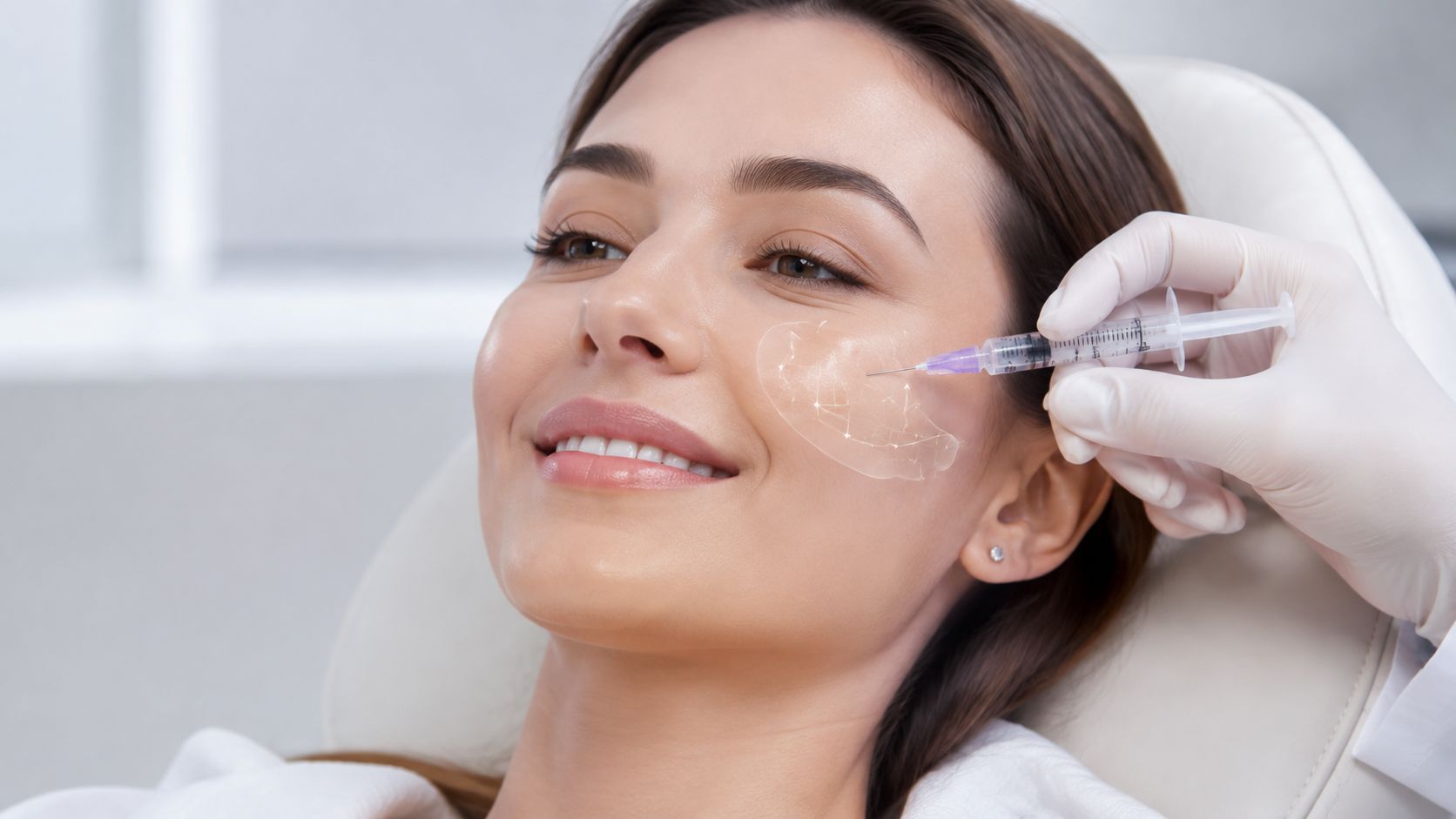
Delivery may involve nappage, retrograde threading, targeted injections, or microneedling channels. A topical anesthetic may be used for facial procedures, and scalp comfort measures should be discussed beforehand. The treatment itself is not the whole protocol. Injection depth, sterile technique, tissue selection, and aftercare all influence the experience.

A practical recovery sequence
For musculoskeletal PRP, one clinical timeline describes an inflammatory phase in week 1, proliferative changes during weeks 2 to 4, remodeling during weeks 4 to 8, and maximal benefit around weeks 8 to 12, with some tendon benefits continuing through months 3 to 6, according to this PRP recovery timeline. Cosmetic recovery is often shorter on the surface, but biological remodeling still takes time.
- Days 1 to 3: Use gentle cleansing and follow the clinic's icing instructions. Avoid makeup directly over facial injection sites until the skin has sealed.
- Days 4 to 7: Reintroduce basic skincare and mineral sunscreen when the skin is intact and your clinician approves it.
- Weeks 2 to 4: Consider LED therapy after the pinpoint bleeding and acute irritation have resolved. Red light around 633 nm and near-infrared light around 830 nm are commonly studied wavelengths, as described in this LED mask and PRP timeline resource.
Contact the clinic if pain worsens rather than settles, redness spreads, fever develops, or sudden swelling appears after the first 48 hours. Those findings deserve clinical assessment rather than online reassurance.
Candidacy Risks and Where PRP Quietly Disappoints
PRP tends to make more sense for patients with a defined problem, viable target tissue, and realistic expectations. In hair restoration, that often means early or moderate androgenetic thinning rather than a completely smooth area with no visible follicular activity. In facial treatment, patients with mild to moderate photoaging, textural change, or selected acne scars may be more reasonable candidates than someone seeking a facelift effect.
Where the treatment can fall short
PRP is a poor fit when the diagnosis hasn't been established. Diffuse shedding can have multiple causes, including medical or hormonal contributors, and injecting the scalp without investigating the cause may delay more appropriate care. A clinician should consider the medical history, scalp examination, and relevant laboratory evaluation before promising a cosmetic outcome.
Facial PRP also has a ceiling. It may improve skin quality, but it won't reproduce the contouring effect of a filler or the contraction associated with certain energy-based treatments. Incremental improvement is the realistic category. If you need a dramatic, rapid change, PRP may not match your priorities.
Common short-term effects include injection-site redness, swelling, tenderness, and bruising. Infection is uncommon, but no injection is risk-free, and rare nodules or inflammatory reactions can occur.
A treatment can be biologically plausible and still be a poor personal investment if the expected change is smaller than the change you want.
The evidence also contains useful caution. A 2019 meta-analysis of chronic Achilles tendinopathy found no significant difference in VISA-A scores between PRP and placebo at 12 weeks, with follow-up data also reported at 24 weeks, according to this review of PRP healing stages and Achilles evidence. That doesn't settle every cosmetic question, but it shows why patient-reported improvement can't stand alone as proof that PRP caused the change.
For a practical discussion of possible scalp reactions, review PRP hair treatment side effects before booking. A responsible consultation should include alternatives, not just a consent form.
Stacking Results with Skincare and LED Light Therapy
PRP works within a biological remodeling window, so the routine between appointments should protect the skin rather than constantly challenge it. Gentle cleansing, barrier support, antioxidant care, and consistent sun protection are usually more useful than adding multiple aggressive actives.
Once the injection sites have closed and your clinician approves, a simple facial routine may include a leave-on vitamin C product, peptides, a clinician-selected growth factor serum, and mineral sunscreen. Pause retinoids and exfoliating acids for the post-injection period specified by your provider, often 5 to 7 days, because irritation can make it harder to distinguish normal recovery from a compromised barrier.
LED as a supporting tool
LED light therapy can be a sensible at-home complement when the device fits correctly, feels comfortable, and is used consistently. The best-studied cosmetic wavelengths commonly include 633 nm red light and 830 nm near-infrared light. Start only after pinpoint bleeding has resolved, commonly around day 3 to 5, and follow the device manufacturer's instructions rather than assuming every mask has the same output.
The Barb N.P. Facial Mask is one product option for this type of routine. Its relevant features include wireless operation, a face-contoured design intended for comfort, and three lighting settings for different treatment approaches. It should be viewed as an adjunct to appropriate PRP, skincare, and sun protection, not as a substitute for diagnosis or injection technique.

Use the mask or another suitable FDA-cleared device according to its instructions. A consistent routine across the 90-day remodeling window is more sensible than using an LED device intensely for a few days and abandoning it. The same principle applies to post-care gels and growth factor serums. They may support comfort and skin maintenance, but they can't compensate for an unsuitable PRP indication.
If you're considering microneedling as part of facial treatment, read this microneedling with PRP explanation and ask whether combining the procedures fits your skin condition and recovery tolerance.
Questions Patients Ask Before Booking a PRP Session
How far ahead should I book?
Three weeks is a practical planning window at many med-spas. A consultation should come first, followed by the initial session once your diagnosis, medications, treatment goals, and preparation plan have been reviewed. Some practices schedule the first treatment one to two weeks after consultation, but availability varies.
Can PRP be combined with microneedling, filler, or laser?
PRP is commonly combined with microneedling when the clinician believes the added injury channels are appropriate. Filler requires more caution because the procedures have different placement goals, and ablative laser treatment creates a heat and barrier-recovery environment that may not be suitable in the same visit. Your provider should determine sequencing rather than treating every modality as automatically compatible.
How many sessions should I expect?
Many aesthetic protocols begin with three sessions spaced four to six weeks apart, followed by reassessment. Hair and facial treatment plans aren't identical, so the correct number depends on the diagnosis, baseline photographs, objective measurements, and response. Maintenance should be discussed after the initial series instead of promised before you've demonstrated benefit.
Is PRP worth comparing with minoxidil, finasteride, or skin boosters?
That depends on the indication, severity, contraindications, tolerance for daily treatment, and your preference for an injectable procedure. For hair loss, PRP may be more reasonable when miniaturized follicles remain, while medication may offer a different mechanism and schedule. For facial concerns, skin boosters, energy-based treatment, microneedling, or conventional skincare may better match the primary goal.
Book a consultation that includes a diagnosis, standardized baseline photographs, a clear protocol, and an honest alternative plan. BotoxBarb offers consultations and aesthetic services including PRP, microneedling with PRP, LED light therapy, injectables, and medical-grade skincare, so you can discuss whether your desired before-and-after change is realistic before committing to treatment. Visit BotoxBarb to review available services and products.