Medical Grade Skincare: What It Is and Why It Works
Medical-grade skincare isn't a legally defined or FDA-regulated category. The market was valued at USD 112.64 billion in 2025 and is projected to reach USD 198.74 billion by 2032, but the label itself still doesn't guarantee that a product is safer, stronger, or more effective.
That's the part many popular skincare recommendations leave out. “Choose medical grade” sounds like a complete answer, yet it tells you very little until you examine the ingredients, concentrations, delivery system, testing, and professional guidance behind the product.
As a practitioner, I look for evidence rather than prestige packaging. A well-formulated serum can support visible improvements in pigmentation, texture, dehydration, or fine lines, while an expensive product with vague claims may add little beyond a pleasant feel. The most reliable approach combines targeted topical products, daily sun protection, realistic expectations, and, when appropriate, technologies such as LED light therapy.
Is Medical Grade Skincare Actually Regulated
The most important fact is also the most misunderstood: “medical grade skincare” is a marketing term, not a regulated quality tier. In the United States and most global markets, the FDA or another major authority doesn't award a formal medical-grade designation that guarantees potency, safety, or superior results. Companies control how they use the phrase, which means two products carrying the same label can have very different formulations and evidence.

Why the label became popular
The category grew out of a broader shift from general cosmetic care toward clinically tested topical therapies. Dermatology-focused brands increasingly built products around retinoids, antioxidants, acids, and barrier-supportive ingredients, often positioning them alongside procedures and professional assessment. A peer-reviewed study of cosmetic medicine patients also examined a four-product “stackable” medical-grade routine, illustrating how modern care frequently combines several targeted formulations rather than relying on one all-purpose cream. The market analysis discussing this evolution and clinical routine model also cites a survey across 27 European countries in which 43% of adults reported at least one dermatological condition within the previous 12 months.
The commercial scale is substantial. One independent estimate values the medical-grade skincare market at USD 112.64 billion in 2025, with a projection of USD 198.74 billion by 2032 and an 8.44% compound annual growth rate. A separate forecast places the market at USD 121.78 billion in 2026, reinforcing that this is an established segment of the personal care and dermatology economy rather than a passing salon trend. The independent medical-grade skincare market estimate provides those projections.
What you should evaluate instead
Treat the label as an invitation to investigate, not proof of quality. A credible product should make it possible to understand:
- Active ingredients: Does the formula contain ingredients relevant to your concern?
- Concentration and stability: Does the company disclose enough information to assess strength and shelf stability?
- Delivery system: Can the formula protect and release the active ingredient effectively?
- Clinical evidence: Are the claims supported by a meaningful study rather than only testimonials?
- Professional fit: Does the product make sense for your skin type, current treatments, and tolerance?
Practical rule: “Medical grade” can help you find professional products, but it can't replace reading the formula or getting appropriate guidance.
That distinction matters at BotoxBarb because clinically positioned skincare should support a plan, not become a shopping category based on price alone.
How Medical Grade Skincare Differs From OTC Products
Medical-grade and over-the-counter products can share the same ingredient names. The meaningful difference usually appears in how the ingredient is formulated, protected, delivered, and tested, not just in whether the bottle comes from a clinic.
An OTC moisturizer may focus mainly on comfort and surface hydration. That can be entirely appropriate for someone with uncomplicated skin. A professional formula may instead combine a targeted active with a delivery system designed to improve contact with the skin, maintain stability, or support the barrier during treatment.
Three formulation questions matter
First, examine the active. Retinoids, vitamin C, niacinamide, acids, and pigment-supporting ingredients can appear across price points. A higher concentration may increase potential activity, but it can also increase irritation, so “stronger” isn't automatically better.
Second, look at delivery. Penetration enhancers may help an ingredient move through the outer skin layer, but they can also negatively affect barrier function. In a human skin-barrier study, lamellar lipid-structured systems improved barrier properties and increased hydration, while some penetration enhancers had unfavorable effects. Moisturizers also changed measurements including transepidermal water loss, skin capacitance, irritant susceptibility, and biological processes associated with the outer skin layer. The published skin-barrier research explains why formulation architecture deserves as much attention as the headline ingredient.
Third, ask what was measured. A product claim becomes more useful when a study evaluates defined endpoints such as roughness, dehydration, pigmentation, pore appearance, scarring, or visible vascular changes.
What this looks like on skin
In a retrospective study of a four-product medical-grade regimen, participants showed improvements across skin roughness, dehydration, pigmentation, scar appearance, visible pore size, and vasculature. Those outcomes don't mean every medical-grade routine produces the same result. They do show how a structured regimen can be assessed through multiple skin-quality measures rather than a vague promise of radiance. Read the peer-reviewed study on the four-product regimen.
| Evaluation point | Useful consumer question |
|---|---|
| Active ingredient | Is it relevant to my concern? |
| Formula design | Is it stable and compatible with my barrier? |
| Delivery system | Does the product explain how the active is delivered? |
| Evidence | Were visible or measurable endpoints assessed? |
| Guidance | Can someone qualified help me adjust use? |
The distinction isn't that every OTC product is ineffective. Some drugstore and prestige products contain the same actives found in professional lines. The advantage of a carefully selected medical-grade product is the opportunity to match formula design and evidence to a specific skin objective. If you want another practical perspective before choosing a line, you can browse medical grade skincare and compare how professional products are positioned.
Clinically Proven Ingredients to Look For
A useful ingredient checklist starts with your concern, not a brand tier. Before buying, identify whether you're addressing photoaging, uneven pigmentation, acne, dehydration, sensitivity, or a combination. Then choose one primary treatment active and introduce it gradually.
Retinoids and antioxidants
Retinoids support cell turnover and are commonly used in routines addressing texture, fine lines, and acne. Prescription retinoids require clinician oversight, while cosmetic retinol products vary widely in strength and tolerability. The most practical choice is the strongest formula your skin can use consistently without persistent irritation.
Vitamin C helps provide antioxidant support and can complement a morning routine focused on environmental exposure and uneven tone. Stability matters because poorly protected vitamin C can degrade before it delivers meaningful activity. A well-designed serum should explain its form, packaging, and storage expectations.
Tranexamic acid is often selected for stubborn discoloration and uneven tone. It works differently from a retinoid because the goal is pigment regulation rather than primarily encouraging turnover. Use it with daily sunscreen, because no brightening serum can compensate for ongoing ultraviolet exposure.
For a broader ingredient reference when comparing options, BotoxBarb's guide to the best anti-aging ingredients is a useful starting point.
Barrier support and visible skin quality
Niacinamide can support the skin barrier and help a routine feel more balanced, particularly when stronger actives cause dryness. It's often easier to tolerate than aggressive exfoliation, but concentration still matters. A higher percentage isn't automatically necessary if a lower-strength product already supports comfortable, consistent use.
Peptides are short chains used in formulas aimed at supporting the appearance of firmness and skin quality. Their performance depends on the specific peptide, the surrounding formula, stability, and how the study was conducted. Don't treat the word “peptide” as a guarantee of collagen stimulation.
SkinCeuticals P-Tiox Serum is one example of a product BotoxBarb carries for a peptide-focused approach to visible expression lines and skin texture. Discoloration Defense Serum is another relevant example for people concentrating on uneven tone. These products shouldn't be layered indiscriminately with every other active. A practitioner can help decide whether one addresses your priority or whether the routine is becoming unnecessarily complicated.
How to read the label in practice
Look for a complete ingredient list, clear directions, packaging suited to the active, and claims that identify what was evaluated. Be cautious when a product provides a dramatic promise but no meaningful information about formulation or testing.
What works: A targeted formula used consistently, introduced at a tolerable pace, and paired with sunscreen.
What doesn't: Buying several strong products at once, assuming irritation proves efficacy, and changing the routine before you can assess it.
Drugstore products can be suitable when they offer a transparent formula and meet your needs. Medical-grade selection becomes most valuable when the product's delivery system, concentration, and clinical rationale justify the added cost and guidance.
Boosting Results With LED Light Therapy Devices
Topical skincare and LED therapy work through different pathways, which is why they can complement each other. Serums and creams deliver chemical ingredients to the skin. LED devices deliver specific wavelengths of light without adding another exfoliant or retinoid to the routine.
Home-use LED masks fall within an FDA-cleared device category regulated under 21 CFR 878.4810. Device listings include intended uses such as full-face wrinkle reduction and mild-to-moderate acne treatment. One FDA submission describes a wearable light-based device for those purposes. Review the FDA device listing and intended uses.
What the clinical evidence shows
Red and near-infrared light are used in protocols designed to support visible skin quality, elasticity, and inflammation management. In a 7-week study of an FDA-cleared LED device for acne, inflammatory and noninflammatory lesions decreased significantly, and 86% of patients achieved at least a one-grade reduction in IGA scores. The published phototherapy study gives the treatment a stronger basis than marketing language alone.
Anti-aging outcomes have also been measured. A clinical validation of a face-fitting LED mask reported significant improvements in elasticity, sagging, and wrinkles across six facial areas, including up to a 340% improvement in deep skin elasticity of the perioral area compared with a conventional LED mask group. See the published LED mask validation.
A separate study using 630 nanometer and 850 nanometer light described treatment as effective, safe, well tolerated, and painless. Another home-use device study using 637 and 854 nanometer light reported improved elasticity at 6 and 8 weeks, with no adverse reactions or pain recorded. The red and near-infrared phototherapy findings support the importance of consistent protocols and tolerability.
The Barb N.P. Facial Mask is designed as a home-maintenance option with a wireless design, a comfortable fit intended to make wear easier, and three lighting settings for different treatments. Its role is complementary, not a replacement for diagnosis, prescription care, or in-clinic procedures. If you're comparing at-home use with clinic-based options, this overview of skin rejuvenation with clear light offers useful context about how light treatments may fit into a broader aesthetic plan.

For a device-selection checklist, BotoxBarb's guide to the best LED light therapy device can help you compare intended use, fit, wavelength information, and comfort. The device only helps if you'll use it as directed, so comfort and convenience are clinical considerations, not minor extras.
Building Your Morning and Evening Skincare Routine
A strong routine is usually simpler than a crowded one. The order matters because thin, water-based products generally go before creams, while sunscreen finishes the morning routine. LED therapy should follow the device directions and normally be used on clean, dry skin before products that could block light from reaching the face.

Morning routine
- Cleanser: Use a gentle cleanser that removes overnight oil without leaving tightness. If your skin feels stripped, the cleanser is working against the rest of the routine.
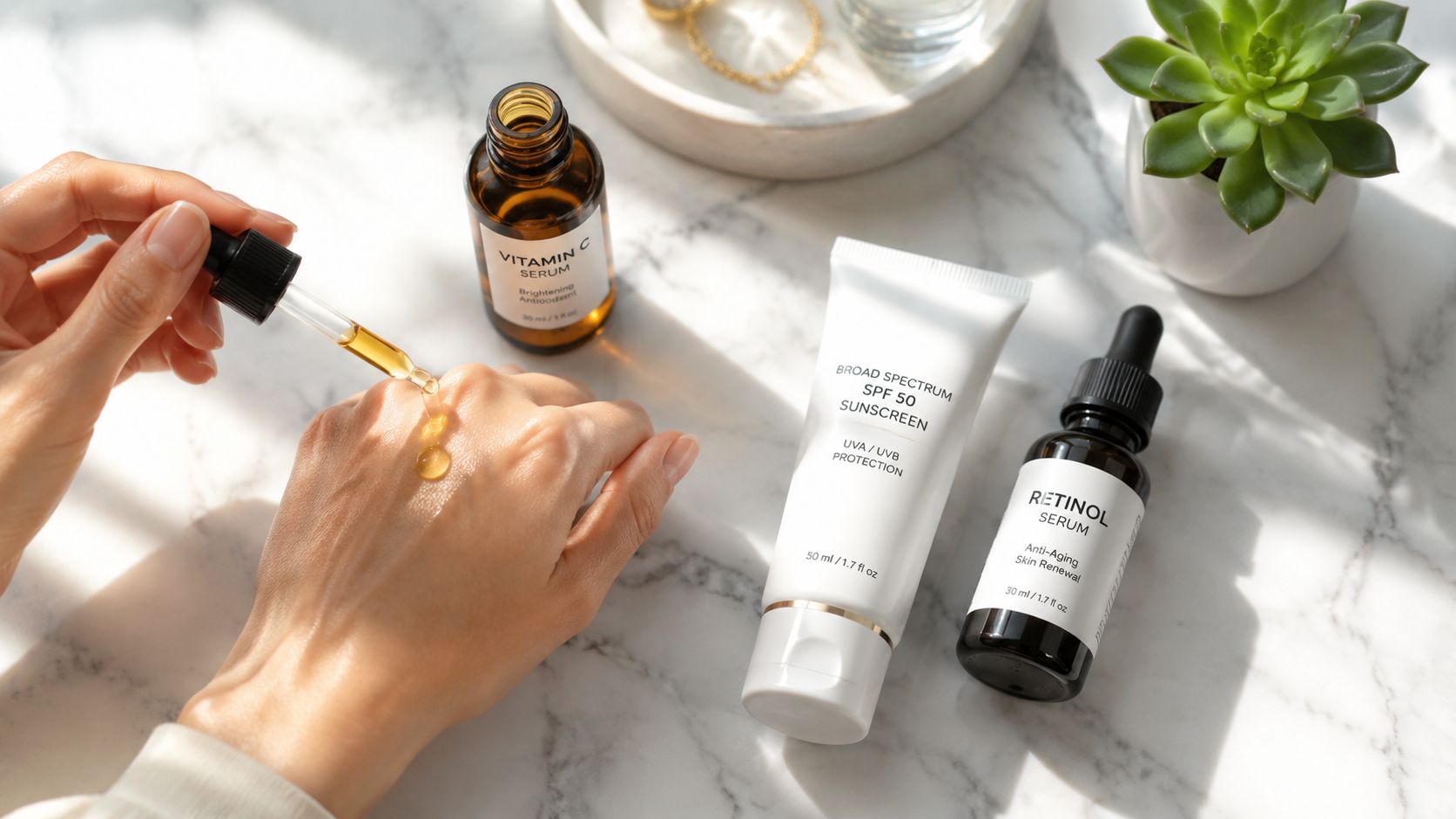
- Antioxidant serum: Apply a vitamin C or other antioxidant formula to clean, dry skin. Give it a brief moment to settle rather than rubbing several products together.
- Moisturizer: Choose a barrier-supportive cream or lotion suited to your skin's oil level. If you're dry or reactive, this step can be more important than adding another active.
- Sunscreen: Finish with broad-spectrum sun protection and reapply according to your exposure. Pigment and photoaging routines can't perform well without consistent protection.
Evening routine
Remove makeup and sunscreen thoroughly. If you wear substantial makeup or water-resistant sunscreen, a first cleansing step followed by a gentle second cleanse may be appropriate.
After cleansing, apply your treatment serum. This may be a retinoid for texture and aging concerns, a pigment-focused formula for discoloration, or a carefully selected acne treatment. Follow with moisturizer or a barrier cream. Use your LED mask on clean, dry skin before these products when the device instructions call for direct skin contact.
You can explore a more detailed luxury skincare routine, but the same principle applies: a premium routine should still be purposeful, tolerable, and easy to follow.
Adjusting for your skin
- Sensitive skin: Start one active at a time and use it less frequently. Avoid combining multiple exfoliants or retinoids until your barrier is stable.
- Acne-prone skin: Keep the cleanser gentle, choose non-comedogenic supporting products, and seek assessment if breakouts persist or become painful.
- Aging skin: Prioritize sunscreen, a tolerable retinoid or peptide-focused product, hydration, and consistency rather than constantly switching formulas.
If burning, persistent redness, scaling, or swelling develops, pause the newest active and return to gentle cleansing and barrier support. Consult a practitioner when symptoms continue, when pigmentation changes rapidly, or when you're unsure whether a product reaction is normal. At BotoxBarb, routines are matched to skin type and concerns rather than prescribed as a one-size-fits-all stack.
When to Consult a Clinician and Choose BotoxBarb
Home skincare has limits. Persistent pigmentation may need evaluation for its cause, hormonal acne may require more than topical maintenance, and premature aging concerns can benefit from a plan that considers skin quality, movement, volume, and sun exposure together. Post-procedure skin also deserves specific guidance because the wrong active at the wrong time can increase irritation.
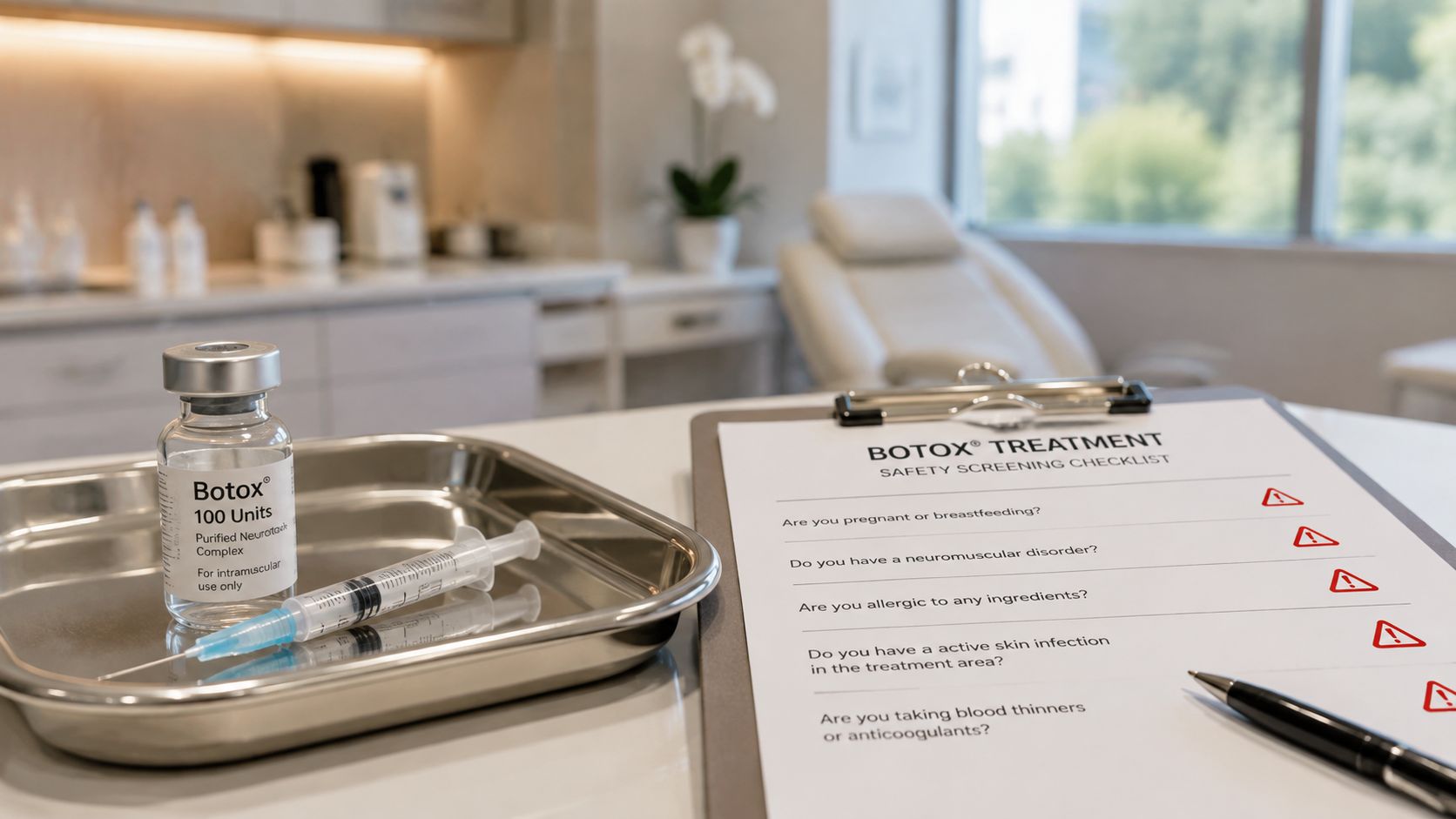
A clinician can help determine whether you need a topical adjustment, LED facial, prescription treatment, or an in-clinic procedure. BotoxBarb offers Botox, Dysport, dermal fillers, PRP treatments, and LED facials, along with curated medical-grade skincare through its online boutique.
Barb has been a Registered Nurse since 2011 and earned her Nurse Practitioner credentials in 2015. She has collaborated with physicians across Florida and California, bringing a clinical perspective to aesthetic planning rather than treating products or injectables as isolated purchases.
A professional relationship should continue between appointments. That may mean refining a serum, adjusting LED use, preparing skin before treatment, or protecting results afterward. For readers comparing approaches to anti-wrinkle care, this explanation of facial aesthetics and anti-wrinkle injections provides additional general context.
The goal is healthy, confident skin that fits your life. A thoughtful routine, evidence-based products, appropriate LED therapy, and timely clinical guidance can work together without relying on the unregulated “medical grade” label.
BotoxBarb offers personalized aesthetic consultations, LED facials, injectables, PRP treatments, and clinically positioned skincare selected for specific skin concerns. Visit BotoxBarb to explore the boutique or book guidance for a routine that combines medical-grade topicals with practical at-home LED maintenance.