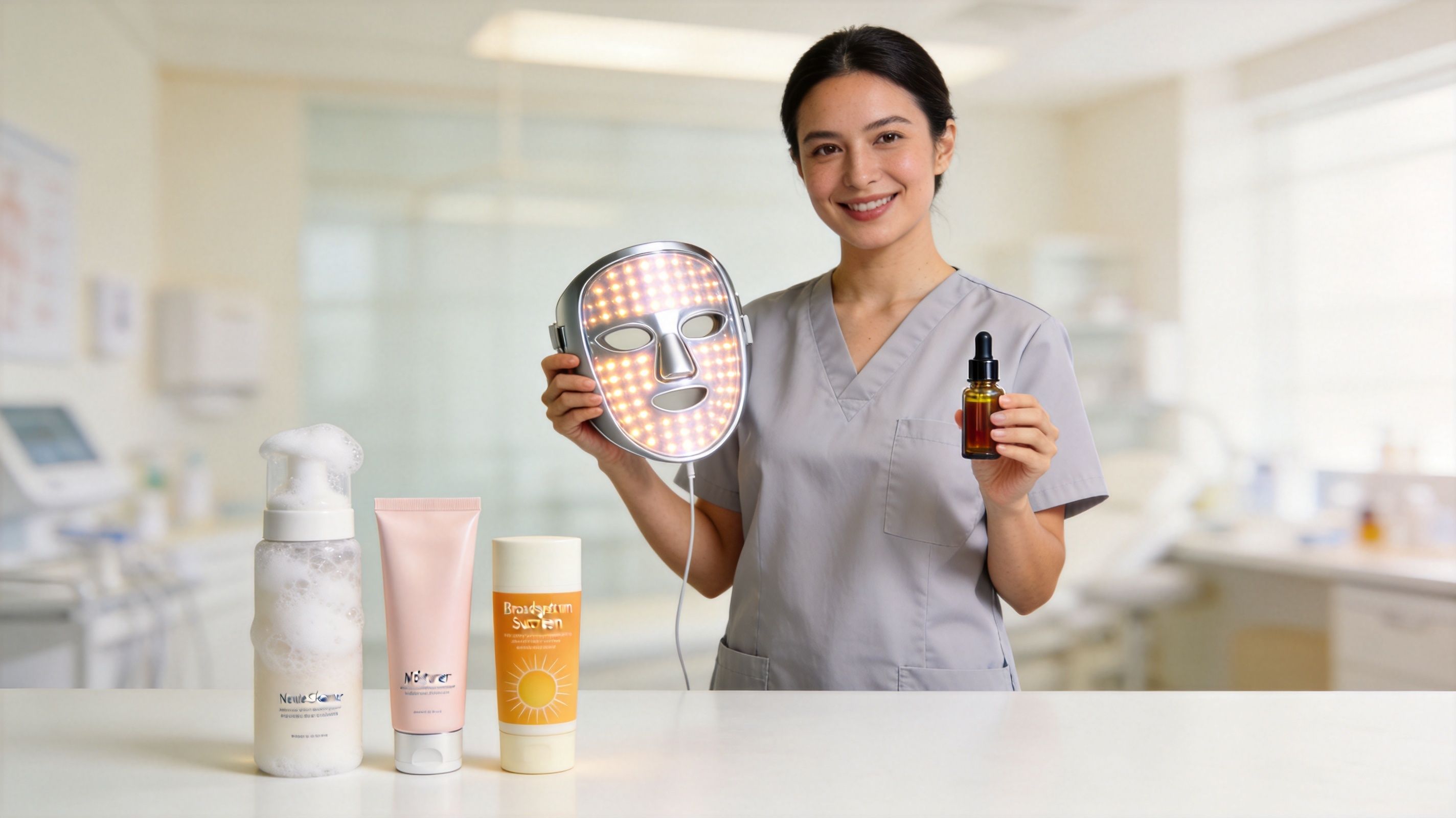
Finding the Best LED Light Therapy Device for You in 2026
If you're shopping for the best led light therapy device, you're probably seeing the same pattern everywhere. One brand promises spa-level results. Another pushes a long list of colors without explaining what any of them do. A third looks sleek but tells you almost nothing about wavelength, output, or whether the mask will even sit comfortably on your face.
That confusion is normal. At-home LED therapy sits in the space between skincare and medical aesthetics, so the marketing often runs ahead of the science. Patients ask me about it all the time because they want brighter skin, fewer breakouts, softer lines, and a way to support results between appointments without jumping straight into another procedure.
LED can absolutely have a place in a smart skin plan. The key is choosing a device built around the right wavelengths, realistic treatment routines, and a form factor you'll use consistently.
Your Guide to At-Home LED Light Therapy

LED therapy isn't a gimmick when the device is designed correctly. In the current market, devices using 630 to 660 nm red light and 820 to 840 nm near-infrared light stand out for collagen support, inflammation reduction, and concerns like acne, wrinkles, and dark spots, as noted in Women's Health's review of LED face masks.
What matters most is matching the device to your goal. A patient managing early fine lines needs something different from a patient dealing with frequent inflammatory breakouts. Someone recovering from fillers or Botox also has a different use case than someone who wants more glow.
Where LED fits in a real routine
I think of home LED as a bridge treatment. It sits between serums and in-office procedures.
- For maintenance: It can support skin quality between appointments.
- For prevention: It gives patients a noninvasive option before they're ready for injectables.
- For combination care: It pairs well with professional treatment plans when timing and skin condition are appropriate.
LED works best for patients who want gradual, cumulative change and who are willing to stay consistent.
What the best device should do
A good device should make treatment easy enough that you won't skip it. That means practical design matters almost as much as technical specs.
Look for a device that offers:
- Comfortable wear: If it pinches, slides, or feels heavy, you won't stick with it.
- Relevant wavelengths: More colors aren't automatically better.
- Simple treatment flow: The best device is the one you can use without turning it into a project.
The Science Behind How LED Light Rejuvenates Skin
Skin responds to light in a wavelength-specific way. The simplest way to think about it is this: each wavelength acts like a different key, and each key opens a different biological response. That process is called photobiomodulation.

For facial rejuvenation, the most relevant ranges are 630 to 680 nm for red light and 800 to 850 nm for near-infrared. Red light reaches about 2 to 3 mm into skin and has been linked to 20 to 30% collagen production support through mitochondrial activity, while near-infrared can reach 5 to 10 mm and is associated with ATP support and inflammation reduction, according to this wavelength guide for red light therapy devices.
The wavelengths that matter most
Red light is the workhorse for patients focused on skin quality. It supports fibroblast activity, which is why it shows up in anti-aging protocols aimed at firmness, texture, and overall skin resilience.
Blue light has a narrower but useful role. It matters most for acne-prone skin, especially when breakouts are active and inflammatory. If acne is your main concern, this practical guide to therapy for acne is a useful companion resource because it puts light-based care into the larger acne-treatment picture.
Near-infrared goes deeper. It isn't there for surface glow. It's the category I pay attention to when a patient wants support for visible redness, recovery, or deeper tissue calming.
| Wavelength (Color) | Primary Benefits | Best For |
|---|---|---|
| Red | Collagen support, firmer-looking skin, smoother texture | Fine lines, early aging changes, dullness |
| Blue | Helps target acne-related skin concerns | Breakout-prone skin |
| Near-infrared | Deeper tissue support, calming inflammation | Recovery-focused routines, redness-prone skin |
Why multi-mode devices can be useful
Patients often assume that more color options mean better results. Usually, that's not true. What matters is whether the color offered has a real purpose for your skin.
A focused device with red and near-infrared can be more useful than a flashy mask loaded with extra settings you'll never use. If you want a more detailed breakdown of how these wavelengths function in skin, BotoxBarb's article on how LED light therapy works gives a good clinical overview in plain language.
Practical rule: Buy for your main concern, not for the longest feature list.
How to Evaluate LED Device Specifications
Most shoppers focus on looks first. That's understandable, but the specs tell you far more than the product photos do.

The two numbers I care about most are irradiance and LED count. According to Project E Beauty's discussion of LED mask buying considerations, device effectiveness is strongly influenced by irradiance above 30 to 80 mW/cm² and LED density. That same analysis notes that masks with 800 to 1600 LEDs can produce four times the output of competitors with 66 to 417 LEDs, and sparse coverage can create cold spots that reduce efficacy by up to 50%.
What irradiance actually means
Irradiance is power delivered to the skin. For patients, the practical takeaway is simple: stronger, well-designed output usually means more efficient sessions. Weak output often means longer sessions, less consistency, and more disappointment.
That doesn't mean the highest number always wins. A device still has to be comfortable, well-distributed, and appropriate for facial use. If a brand gives you a big output claim but doesn't explain distance, treatment time, or wavelength, I'd treat that as a caution sign.
Why LED count matters
LED count isn't just a bragging point. On a face mask, density affects coverage.
A low-density mask can leave uneven treatment zones across the forehead, cheeks, jawline, and chin. That's one reason some patients say they used a device for weeks and felt like only parts of the face were getting meaningful exposure.
- Higher density helps coverage: More evenly spaced LEDs usually give a more uniform facial treatment.
- Sparse layouts create gaps: Those gaps matter most around curved facial contours.
- Coverage affects habit: If patients don't trust the mask is doing much, they stop using it.
Form factor trade-offs
Different device types solve different problems.
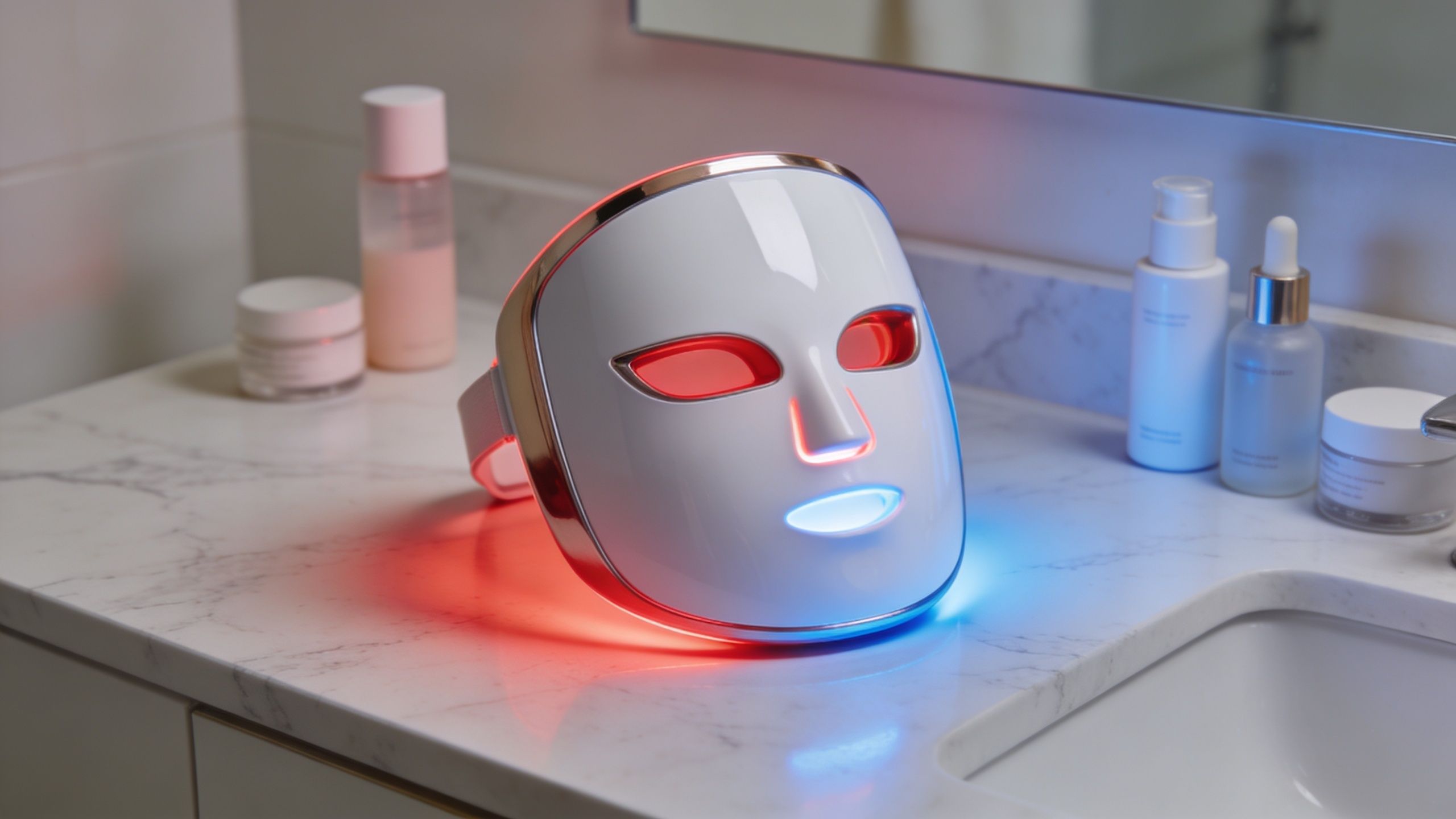
- Masks: Best for hands-free facial use and routine consistency.
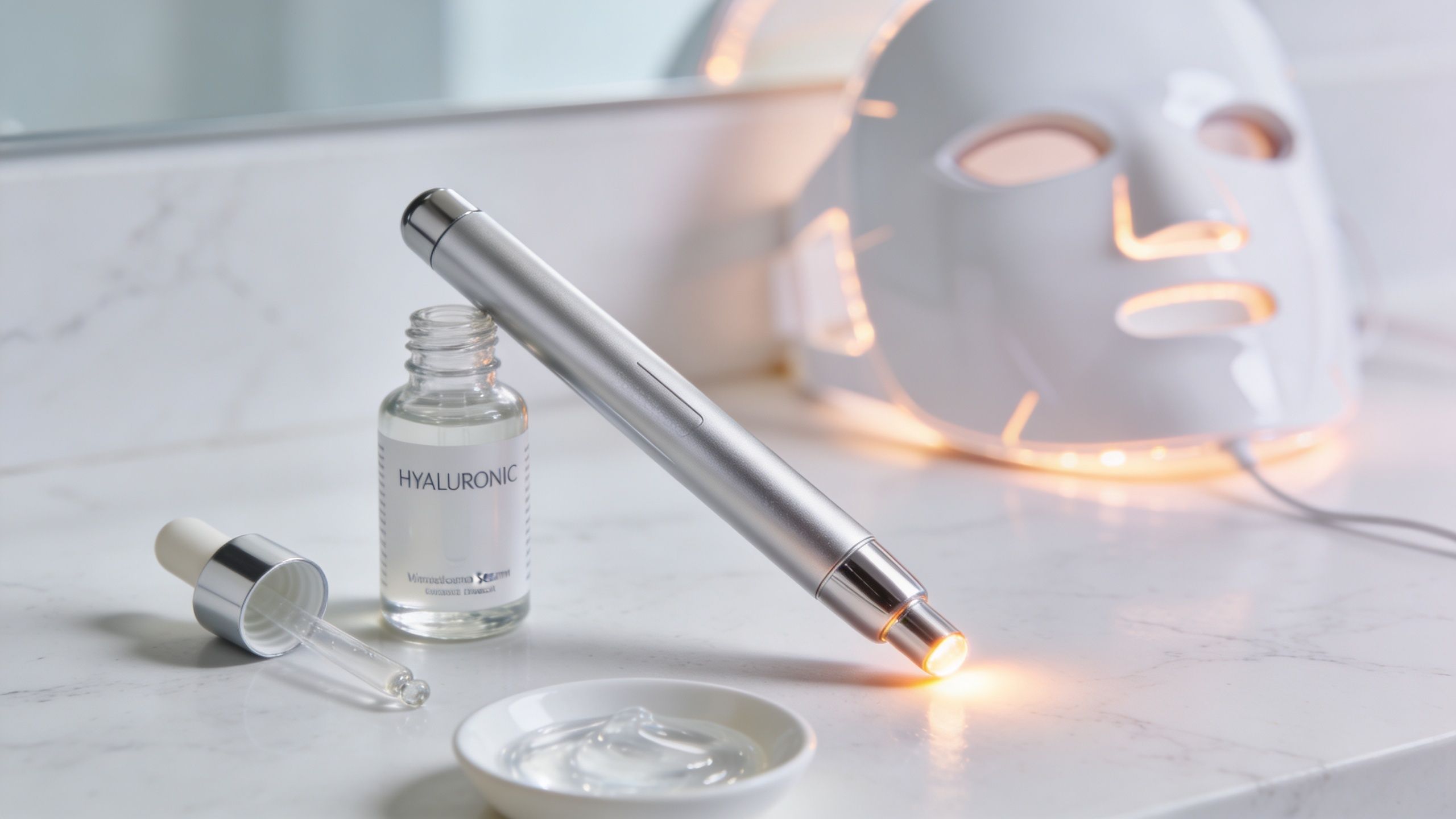
- Wands: Useful for very targeted spots, but they require patience.
- Panels: Better for larger areas and flexibility, though less convenient for someone who only wants facial care.
If you're also thinking about active ingredients to pair with a rejuvenation-focused routine, this round-up of more from Karin Herzog gives helpful context on ingredient selection without overcomplicating the regimen. For a closer look at one of the other common formats, BotoxBarb also has a practical guide to the LED light therapy lamp.
Most patients don't need the most complicated device. They need one they'll use on schedule, with verified specs and even coverage.
Introducing the Barb N.P. LED Facial Mask
When patients ask me what kind of at-home device makes the most sense for facial use, I usually steer them toward a wireless silicone mask over a rigid shell or a small handheld wand. Convenience wins more often than people expect.

A mask in the Barb N.P. LED Facial Mask category solves several common problems at once. It offers a wireless design, a soft and more face-conforming fit, and three lighting settings so the treatment can be matched more closely to goals like anti-aging support, acne-focused care, or general skin revitalization.
Why this style of mask works well at home
Rigid masks can feel clinical, but they don't always feel wearable. If a mask presses too hard across the nose bridge, lifts away from the chin, or forces you to stay perfectly still, compliance drops fast.
A flexible mask changes that experience.
- Wireless use adds freedom: Patients are more likely to finish sessions when they aren't tied to an outlet.
- Soft facial contact improves comfort: A silicone-style mask tends to sit better along facial contours.
- Three settings keep it practical: You don't need a dozen modes. You need options that align with real skin concerns.
How to use it well
Results with LED come from routine, not from one long session after you've ignored the mask for a week.
A simple home protocol usually works best:
- Start with clean skin. Remove sunscreen, makeup, and heavier residue first.
- Choose the setting that fits the goal. Use the mode intended for aging support, blemish care, or overall rejuvenation.
- Keep the schedule realistic. Short, repeatable sessions matter more than inconsistent overuse.
- Apply the rest of your routine afterward if the product directions allow. Keep the routine simple when you're starting.
Consistency beats intensity with home LED. The patients who do best are the ones who make it part of a normal week.
Who gets the most value from a mask like this
This type of device is a strong fit for someone who wants to support smoother-looking skin, manage mild breakouts, or maintain professional results between visits. It's also useful for the patient who isn't ready for injectables but wants a visible step above topical skincare alone.
What it doesn't replace is judgment. If someone has significant laxity, etched lines at rest, deeper pigment issues, or active inflammatory skin that needs diagnosis, I wouldn't tell them to rely on a mask alone.
Understanding Clinical Evidence and Safety
A home device should be easy to use, but it still deserves the same respect you'd give any treatment that changes how skin functions. The biggest mistakes I see are poor candidate selection, inconsistent use, and skipping basic safety habits.
What the clinical evidence supports
A 2020 randomized controlled trial on a home-use LED device found progressive facial rejuvenation improvement over time. In that study, 37.5% of subjects reported good improvement at week 4, 41.7% at week 8, 58.3% at week 12, and 62.5% at the 16-week follow-up, with no adverse reactions or pain recorded, according to the PubMed study on home-use LED facial rejuvenation.
That pattern matters clinically. It tells patients not to judge the device too early. LED is cumulative. Skin usually rewards steady use more than aggressive expectations.
Basic safety screening
Most healthy patients tolerate LED well, but I still advise a quick check before starting.
- Protect the eyes when directed: Follow the device instructions exactly.
- Review your medications: Some drugs can increase photosensitivity.
- Pause if skin is highly reactive: If you're irritated from peels, retinoid overuse, or barrier damage, calm skin first.
- Ask your clinician if you're unsure: Especially if you're pregnant, managing a medical condition, or using prescription acne medications.
What safe use looks like in practice
The safest routine is usually the boring one. Clean skin. Correct mode. Recommended session length. Repeat on schedule.
If a patient thinks more is always better, that's where problems start. Home LED should feel controlled and comfortable. It shouldn't feel hot, painful, or like you're trying to force a faster result.
At-Home Device or In-Clinic Treatment Which is Right for You
Patients often frame this as an either-or decision. It usually isn't. The better question is what role each treatment should play.
Choose at-home LED when your goal is maintenance
At-home devices are a good fit when you want gradual support for tone, mild texture issues, or breakout management. They also make sense for patients who like structure and are willing to use a device regularly.
Home LED is especially useful when you want to maintain momentum between appointments. That's where many patients get the most value. It gives them something active to do for their skin without escalating immediately to another procedure.
Choose in-clinic care when you want stronger correction
In-office treatment is the better path when you need assessment, customization, or more visible intervention. That includes deeper wrinkles, more advanced volume loss, persistent pigment concerns, or acne that may scar.
A clinic visit also matters when the issue isn't just skin surface quality. Neuromodulators, fillers, PRP, and other professional services address concerns that an at-home mask can't fully touch.
Where LED and injectables work together
This is the part many product reviews miss. LED can support a broader aesthetic plan instead of competing with it.
A 2025 study in the Journal of Cosmetic Dermatology found that using red LED light therapy after Botox improved muscle relaxation outcomes by 25% and reduced bruising by 40% over 8 weeks, as summarized in Fortune's coverage of red light therapy panels. That's why I see home LED as a useful companion for the right patient after professional treatment, not just a standalone beauty gadget.
If you're deciding how much of your routine should happen at home versus in the office, BotoxBarb's overview of at-home beauty treatments is a practical place to compare those roles.
Use home LED for support and continuity. Use in-clinic care when you need diagnosis, precision, or a bigger shift.
Frequently Asked Questions About LED Therapy
Can I use my regular skincare products with an LED mask
Usually, yes, but keep it simple. Start with clean skin and avoid piling on products that can increase sensitivity right before treatment unless your device instructions specifically allow them. If you're using prescription topicals or strong exfoliants, ask your clinician how to time them.
How long does it take to see visible results
Most patients need patience. Home LED is not a one-night treatment. Early changes tend to be subtle, and the visible payoff usually comes from regular use over time rather than dramatic day-to-day shifts.
Can you overuse an LED device
Yes. More sessions don't automatically mean better skin. Overusing a device can irritate skin, especially if your barrier is already stressed from acids, retinoids, or recent procedures. Follow the manufacturer schedule instead of improvising.
Is a mask better than a wand
For most facial users, yes. A mask is usually easier to use consistently because it covers the whole face hands-free. A wand can be useful for a small target area, but it asks more of your time and attention.
Should I get a facial instead of buying a device
That depends on your goal. If you want hands-on treatment, professional assessment, and a more customized plan, a facial can be the better starting point. If you're comparing home maintenance with professional skin services, this overview of ProMD Health Bethesda facial specialists is a helpful example of what clinical facial care can offer.
When should I skip home treatment and book an appointment
Book an appointment if your concern is changing quickly, causing inflammation, leaving marks, or not responding to basic home care. New pigmentation, persistent acne, rosacea-like flushing, or post-procedure questions deserve a professional eye.
If you're ready to build a smarter at-home routine or pair LED with professional aesthetic care, explore BotoxBarb for curated skin and wellness options, including LED-focused support and in-clinic treatments designed around real patient goals.