
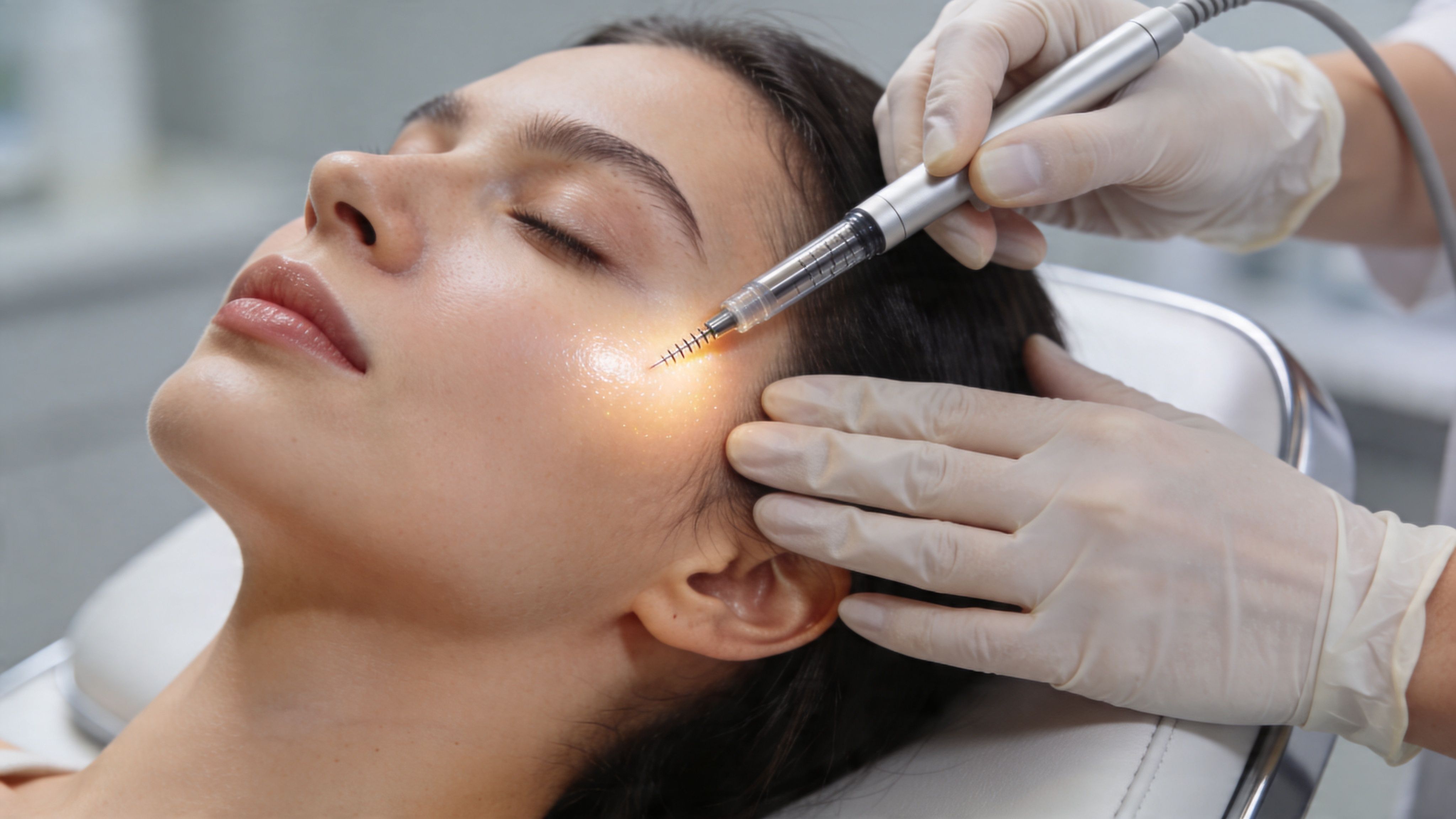
What Is Collagen Induction Therapy? Your Complete Guide
You’ve probably had this moment already. Your bathroom counter is full of expensive serums, peptide creams, and “collagen boosting” products, yet the acne marks still catch the light, the fine lines still show up around your mouth, and your skin texture still doesn’t look as smooth as you want it to.
Topicals matter. I recommend them every day in practice. But some concerns live deeper than the surface. When the issue is scarring, crepey texture, enlarged pores, or early laxity, you often need a treatment that tells the skin to rebuild itself, not just temporarily hydrate the top layer.
Beyond Serums The Quest for Deeper Skin Renewal
For many clients, the frustration isn’t a lack of effort. It’s that they’ve been doing all the “right” things and still aren’t getting structural change. They’re cleansing, using vitamin C, applying sunscreen, maybe even investing in growth factors or retinoids. Their skin may look a little brighter, but the deeper concerns stay put.

That’s where collagen induction therapy, often called CIT or microneedling, becomes important. It’s not another surface-level fix. It’s a minimally invasive treatment that creates controlled micro-injuries in the skin so your body starts a repair response from within. Over the past two decades, CIT has become a cornerstone treatment for scars, wrinkles, and skin laxity, with adoption accelerated by a 2007 study that clarified its cellular-level mechanisms, as described in this dermatology overview from Taylor & Francis.
Why clients start asking about CIT
Often, clients don’t come in asking, “What is collagen induction therapy?” They say things like:
- “My skin looks tired even when I’m rested.”
- “My acne is gone, but the marks and texture are still there.”
- “I want improvement without looking overdone.”
- “I’ve hit a ceiling with products.”
Those are good reasons to look at CIT. It works in a different lane than injectables. Botox relaxes movement. Fillers restore volume. Skincare supports skin health. CIT helps rebuild the skin’s framework.
If you’re comparing options, a practical outside overview of microneedling benefits for skin can help clarify where this treatment fits and where it doesn’t.
Why deeper renewal matters
A lot of “glow” treatments make skin look fresher for a short window. CIT aims for something more durable. The goal is healthier tissue quality over time. That’s why I often explain it as a foundational treatment, not a one-time event.
CIT makes sense when your goal is not just brighter skin today, but stronger skin architecture over time.
Some clients do beautifully with a simple skincare reset. Others need a more active collagen strategy. If you’re trying to support your skin from both angles, this guide on how to boost collagen production naturally is useful alongside in-office treatment planning.
The Science of Skin Regeneration How CIT Works
Collagen induction therapy works by creating tiny, controlled channels in the skin, which signals your natural repair system to rebuild tissue from below. That controlled injury is the whole point. We are not scraping the surface for a temporary glow. We are asking the skin to produce fresher, healthier support where texture, scarring, and early laxity originate.

In practice, professional CIT uses fine sterile needles, often in the 1 to 1.5 mm range for many facial concerns, to create uniform micro-injuries at a chosen depth. Depth matters. So does device quality, skin prep, and technique. A home roller cannot give the same precision, safety profile, or treatment planning as an in-office procedure.
The three phases your skin moves through
Inflammation phase
This is the first repair signal. Blood flow increases, inflammatory messengers are released, and immune cells move into the area to start cleanup and coordination.
Clients usually notice redness, warmth, and mild swelling during this window. That response is expected. It shows the skin has received the message to begin repair.
Proliferation phase
Next, the skin starts rebuilding. Fibroblasts produce fresh collagen, elastin, and other matrix components that help improve firmness, texture, and resilience over time.
The outer layer also recovers quickly, which is one reason many clients prefer CIT over more aggressive resurfacing. Downtime is real, but it is usually manageable when the treatment is performed correctly and aftercare is followed closely.
Remodeling phase
This is the long game. The collagen laid down early in healing gets reorganized, strengthened, and integrated into the skin’s support structure over the following weeks and months.
That timing matters because CIT is cumulative. One treatment can start the process, but a series usually gives more meaningful change, especially for acne scarring, crepey texture, and etched-in fine lines.
CIT works because it uses your own wound-healing response to improve skin quality, rather than trying to create a cosmetic effect that fades in a few days.
Why that matters for real skin goals
Clients often ask why CIT can help with acne scars, enlarged pores, and rough texture in the same treatment plan. The answer is tissue remodeling. By stimulating repair in the dermis, CIT can improve the skin’s underlying framework, not just its surface appearance.
A few practical points shape results:
- Barrier disruption is controlled: CIT creates microchannels without removing broad sections of skin, so recovery is often easier than with ablative resurfacing.
- Depth can be adjusted: Different areas of the face, and different concerns, call for different settings.
- Results build gradually: Skin often looks brighter first, while texture and scar changes continue developing after a series.
- Combination treatment can improve outcomes: In my practice, CIT often works best as part of a larger plan that may include PRP, targeted skincare, and light-based recovery support.
That last point is where many clients finally get better traction. CIT is the engine, but support matters. Pairing treatment with the right recovery products and regenerative topicals can improve healing quality and help the skin make better use of the stimulus. For clients comparing those options, this guide on finding the best growth factors for skin explains where they fit.
Collagen and elastin are not the same
They work together, but they do different jobs.
- Collagen gives skin structure and firmness.
- Elastin helps skin stretch and return to shape.
That distinction matters in treatment planning. A client with acne scarring may need stronger collagen remodeling. A client with early laxity may need a plan that also supports elasticity and recovery. This is one reason I rarely frame microneedling as a one-time appointment. The best results come from matching the treatment depth, the interval, and the home routine to the actual problem.
At BotoxBarb, I often build CIT into a full rejuvenation system that includes in-office guidance, strategic add-ons such as PRP when appropriate, and at-home recovery support like the Barb N.P. LED Mask. That combination does not replace collagen induction. It supports it, which is how we move from a treatment that looks promising on paper to skin that feels stronger, smoother, and healthier in real life.
CIT Variations Unlocking Personalized Results
Not all collagen induction therapy is the same. This disparity leads to many people getting mixed messages online. They hear “microneedling” and assume every treatment produces the same outcome. It doesn’t. Device type, depth, treatment goals, and what you pair with the procedure all change the plan.
For one client, a standard treatment may be the right level of stimulation for texture and pore appearance. For another, adding PRP can make more sense because the goal is stronger regenerative support. For someone focused on laxity, radiofrequency-based microneedling may be the better fit because you’re trying to address both surface quality and tightening.
Standard microneedling
This is the baseline CIT treatment generally referenced. A device creates controlled microchannels in the skin to stimulate collagen and elastin production.
I like standard microneedling for clients whose main concerns are:
- Mild acne scarring
- Rough texture
- Early fine lines
- Overall skin refresh
It’s often the most straightforward entry point into collagen stimulation. It also pairs well with a smart skincare plan when you want steady improvement without escalating immediately to more aggressive devices.
CIT with PRP
This is one of the most useful upgrades when regeneration is the main goal. Platelet-rich plasma, or PRP, uses your own concentrated growth factors as an adjunct to treatment. In plain language, it acts like a biologic support layer for the healing response.
CIT can improve topical absorption by up to 80%, and adding PRP can amplify the wound-healing cascade for concerns such as acne scars and stretch marks, according to this collagen therapy overview.
Clinical perspective: PRP isn’t magic. It works best when the indication is right, the skin is properly prepped, and the treatment series is realistic.
This option often fits clients who want more than a glow treatment. It’s especially attractive when the skin looks depleted, healing has been sluggish, or the goal is a more robust rejuvenation plan. If you want a dedicated breakdown of the pairing, this guide on what is microneedling with PRP is a practical next read.
Microneedling with radiofrequency
RF microneedling combines mechanical injury from needles with heat energy delivered into the skin. That heat changes the treatment. It can be useful when skin tightening is a larger part of the goal.
I don’t present RF as “better” across the board. It’s different. It may be more appropriate when:
- laxity is a major complaint
- the jawline or lower face needs tightening support
- textural correction alone won’t satisfy the client
The trade-off is that these treatments can feel more intense and usually require a stronger discussion around downtime, comfort, and candidacy.
Collagen Induction Therapy Compared
| Therapy Type | Best For | Key Benefit | Downtime |
|---|---|---|---|
| Standard microneedling | Texture, pores, mild lines, superficial acne scarring | Collagen stimulation with a gentler profile | Usually mild redness and temporary sensitivity |
| Microneedling with PRP | Acne scars, depleted skin, recovery-focused rejuvenation, selected hair and scalp protocols | Adds autologous growth factors to support healing response | Typically similar to standard microneedling, though aftercare still matters |
| RF microneedling | Laxity, deeper remodeling goals, texture plus tightening | Combines needling with thermal energy for added tightening | Often more noticeable recovery than standard CIT |
What works and what doesn’t
Some practical truths get lost in marketing.
- What works: Matching the modality to the problem. Scars, laxity, dullness, and thinning skin don’t all respond best to the same setup.
- What doesn’t: Chasing the most aggressive option just because it sounds advanced.
- What works: A series done at proper intervals with medical-grade aftercare.
- What doesn’t: One treatment, random home device use, and then assuming CIT “didn’t work.”
The best protocol is the one your skin can tolerate consistently and safely.
Who Is an Ideal Candidate for Collagen Induction Therapy
The right candidate for CIT usually isn’t looking for dramatic overnight change. They want healthier skin quality, smoother texture, softer scars, and a fresher look that still looks like them.
That includes a wide range of people. Some are in their twenties and dealing with lingering acne scars. Others are noticing the first signs of collagen loss around the cheeks, mouth, or under-eye area. Some are less worried about lines and more bothered by enlarged pores, uneven tone, or that dull, rough look makeup never quite fixes.

Skin concerns that commonly respond well
CIT is often a strong option for clients with:
- Acne scars, especially shallow to moderate textural irregularity
- Fine lines that don’t require volume replacement
- Enlarged pores and uneven skin texture
- Mild skin laxity
- Post-acne roughness that leaves skin looking uneven in certain lighting
A good candidate also understands that CIT is a process. If someone wants immediate volume, fillers may be more appropriate. If someone wants movement reduction in the forehead or crow’s feet, Botox or Dysport is the clearer tool. CIT is about tissue quality.
An overlooked candidate group includes hair restoration clients
CIT isn’t just for the face. One of the more important emerging uses is the scalp.
When combined with PRP, microneedling has shown 200-300% improvement in hair density in recent trials involving androgenetic alopecia, according to this collagen induction therapy market report. That’s why this treatment can make sense for clients who are noticing thinning at the part line, recession, or reduced density but aren’t interested in surgery.
This works best in a professional setting. Scalp protocols require depth control, sterile technique, and realistic expectations. Home rollers are not a substitute for an actual hair restoration plan.
Hair restoration with CIT is less about “trying a trend” and more about deciding whether your scalp needs a structured regenerative protocol.
Melanin-rich skin needs thoughtful planning
This is an area where provider judgment matters. CIT can be a very useful treatment for deeper skin tones, but technique matters because post-inflammatory hyperpigmentation is a real concern when skin is overtreated or treated carelessly.
That doesn’t mean melanin-rich skin should avoid CIT. It means the plan should be adjusted. In practice, that often means being more conservative with intensity, respecting skin reactivity, choosing pre- and post-care carefully, and spacing sessions appropriately.
Clients with melanin-rich skin often do very well when the goal is texture refinement, acne scar support, or gentle rejuvenation. The mistake is assuming one protocol fits everyone. It doesn’t.
When I would pause or say no
A responsible practice should screen out the wrong candidates. CIT isn’t for every person on every day.
I’d hold treatment or rethink it if you have:
- Active skin infection
- Active inflammatory flare in the treatment area
- A skin barrier that’s already compromised
- A history that suggests abnormal scar risk
- Pregnancy, depending on the overall treatment plan and what adjuncts are being considered
Sometimes the best move is treating the acne first, calming inflammation, repairing the barrier, or addressing pigment control before needling begins. Good outcomes usually come from timing as much as technique.
Your Treatment Journey What to Expect Before During and After
A new client usually asks me some version of the same question. “What will my face look and feel like after this, and how much time do I need to recover?” That is the right place to start, because a good CIT plan is not just about the procedure. It is about timing, skin prep, realistic downtime, and what we pair with it to get better skin quality over time.

Before your appointment
The visit should begin with a real assessment. I look at your skin history, current products, healing pattern, pigment risk, acne activity, and whether your priority is scars, fine lines, enlarged pores, dullness, or overall texture. The treatment settings, number of sessions, and any add-ons depend on those details.
Preparation is usually straightforward. If your skin is irritated, over-exfoliated, or inflamed, I would rather stabilize it first than push into treatment too early. In practice, that may mean pausing retinoids or acids for a short period, simplifying home care, and making sure the barrier is calm before the appointment.
That step matters.
Clients often want to know if CIT is a “lunchtime treatment.” Sometimes it can be mild enough for a short recovery. A stronger session for acne scars or texture usually needs more planning. I would rather set honest expectations than promise an unrealistically easy recovery.
During the procedure
Most clients use a topical numbing cream first, which makes the session far more comfortable. Once the skin is cleansed and prepared, the device is passed evenly across the treatment area using depth and technique that match the goal and the location. Cheeks, forehead, under-eye skin, and scarred areas do not all get treated the same way.
The sensation is manageable for many clients. People often describe it as prickly, scratchy, or similar to light sanding in the more sensitive zones. The forehead, nose, and around the mouth usually feel sharper than the cheeks.
Provider judgment matters here. More intensity is not automatically better. Overtreating raises inflammation, extends redness, and can increase the risk of post-inflammatory pigment issues, especially in reactive or melanin-rich skin. A controlled session usually gives better long-term results than an aggressive one.
In some treatment plans, I may combine CIT with PRP to support healing and improve the overall regenerative response. That is one reason I frame CIT as part of a system, not a one-time event.
After treatment and when results show
Right after CIT, skin usually looks pink to red and feels warm, tight, or mildly swollen. That early response is expected. By the next day or two, the skin may feel dry, sandpapery, or a little rough before it starts to settle.
For acne scarring and texture concerns, improvement comes in stages. Some clients notice a healthier surface glow once the initial healing phase passes, but the more meaningful change comes later as collagen remodeling develops over the following weeks and months. I tell clients to judge CIT the way they would judge a fitness program, not a single workout. The process builds on itself.
A typical recovery pattern looks like this:
- First 24 hours: Redness, warmth, tightness, and a freshly treated look
- Days 2 to 4: Dryness, rough texture, and mild flaking for some clients
- Following weeks: Skin starts to look smoother, brighter, and more even
- Following months: Gradual improvement in texture and scar appearance continues as remodeling progresses
CIT gives progressive change. It does not create the instant shift you get from filler or the muscle relaxation you get from Botox.
How it compares with other treatments
CIT works in a different lane than injectables and facials. It helps improve skin quality. It does not replace volume loss correction, and it does not soften muscle-driven expression lines. If those are part of your concerns, I may recommend combining CIT with neuromodulators, filler, PRP, or targeted skincare rather than expecting one treatment to do everything.
That is also where BotoxBarb’s treatment planning makes a difference. A client working on acne scars or crepey texture may do a series of CIT sessions, use calming recovery products, and add the Barb N.P. LED Mask at home to support the healing window between visits. A client with early aging changes may pair CIT with wrinkle relaxers for movement-related lines and use medical-grade skincare to maintain brightness and barrier health.
The best results usually come from the full plan, not from a single appointment.
Maximizing Your Results Aftercare and Long-Term Strategy
A strong treatment can be wasted by weak aftercare. Consequently, many outcomes drift off course. People leave the office glowing, then go home and use the wrong cleanser, restart actives too early, skip sun protection, or treat the recovery window like it doesn’t matter.
Your skin is vulnerable after CIT. It’s also highly responsive. What you do in that window can either support the healing process or irritate it.
Immediate aftercare that actually helps
Keep the first phase simple.
- Cleanse gently: Use a non-stripping cleanser and lukewarm water. Don’t scrub.
- Support the barrier: Reach for calming, fragrance-free hydration instead of active exfoliants.
- Protect from UV exposure: Daily sunscreen matters even more after a collagen-induction procedure.
- Pause harsh actives: Retinoids, acids, and strong exfoliating products can wait until your provider clears them.
- Keep hands off the skin: Picking, rubbing, and over-handling slow recovery.
One product I commonly like in the recovery conversation is SkinCeuticals Phyto Corrective Gel because it fits the “calm and support” goal rather than the “do more” mindset.
Where LED therapy fits
LED can be a smart support tool after CIT because the goal is not to replace the treatment, but to complement recovery and help the skin stay on track.
The Barb N.P. LED Facial Mask is one at-home option that fits naturally into this type of plan. It’s wireless, designed for comfortable wear on the face, and includes 3 lighting settings for different treatments. For clients who want a simple home device after in-office procedures, those features matter because convenience usually determines whether people use the device consistently.
I tend to like LED most for clients who want to support post-treatment calm, maintain routine compliance, and add a non-invasive step between appointments.
Practical rule: The right home device should make your routine easier to follow, not more complicated.
Long-term strategy beats one-off treatment
CIT works best as part of a system. That system usually includes in-office care, supportive skincare, and maintenance based on your skin’s actual behavior.
A smart long-term plan may include:
- Antioxidant support: A morning formula such as SkinCeuticals C E Ferulic can help support environmental defense.
- Daily sunscreen: This protects the collagen work you’re investing in.
- Growth factors or recovery-focused serums: These can fit well when chosen for your skin, not because they’re trending.
- Hair support when appropriate: If thinning is part of the picture, a broader protocol may include PRP and hair-growth support such as Nutrafol.
- Periodic maintenance visits: Skin doesn’t stop aging because you had one good series.
What doesn’t work is treating CIT like a single event and then going back to a random routine. Good skin quality usually comes from repeated good decisions.
What I tell clients who want the best outcome
Don’t chase too many treatments at once. Don’t over-exfoliate because you think more activity means more results. Don’t compare your healing to someone else’s skin on social media.
Do this instead:
- Choose the right indication first. CIT is excellent for texture and collagen remodeling. It is not the answer to every complaint.
- Commit to the series. The treatment builds on itself.
- Protect the result. Sun exposure and irritation can undo progress quickly.
- Use products that support healing. This is not the moment for aggressive experimentation.
When clients do those four things, the skin usually responds much better than if they keep jumping from one trend to another.
If you’re ready to build a treatment plan that goes beyond surface-level skincare, explore professional services and recovery-support products through BotoxBarb. The right collagen strategy is rarely just one appointment. It’s a coordinated plan for stronger skin, better texture, and results that keep improving with time.


