Your Guide to when to get allergy testing
So, when is it really time to get tested for allergies? The answer often comes down to a simple question: are your symptoms getting in the way of your life? If you’re constantly dealing with unexplained sniffles, itchy skin, or digestive woes, it’s probably time to stop guessing and start getting real answers.
Your Guide to Recognizing Allergy Symptoms
Do you find yourself writing off a constant runny nose as a "cold that just won't quit"? Or maybe you dismiss recurring rashes as just "sensitive skin." So many of us put up with these low-grade, chronic issues without ever thinking they could be caused by an underlying allergy. But these aren’t just small annoyances—they're important clues your body is sending that something isn't right.
Learning to spot these signs is the first step toward feeling like yourself again. Think of it like a detective gathering evidence. A random sneeze is just a sneeze. But if you start sneezing every time you're near a cat or after eating a specific food, you're building a case against a specific culprit. This is why tuning into your body’s signals is so critical.
Beyond the Obvious Sneezes and Itches
While itchy, watery eyes and a stuffy nose are the classic signs we all know, allergies can show up in some surprising ways. Knowing the full range of symptoms can help you decide if it's finally time for testing.
To make it easier, here’s a quick checklist of common symptom patterns that often point toward an allergy.
Symptom Checklist: When to Consider Allergy Testing
| Symptom Category | Common Signs to Watch For | When It Might Be an Allergy |
|---|---|---|
| Respiratory | Persistent dry cough, wheezing, or chest tightness that won't go away. | These symptoms often get mistaken for a lingering cold or bronchitis, but they can be your airways reacting to an allergen. |
| Skin Reactions | Unexplained hives, eczema flare-ups, or general redness and puffiness. | Your skin is a major window into your immune health. These reactions can be triggered by both environmental and food allergens. |
| Digestive Issues | Regular bloating, stomach cramps, diarrhea, or other discomfort after eating. | If you notice a pattern of feeling unwell after certain meals, a food allergy or sensitivity could easily be the root cause. |
| Chronic Congestion | Constant stuffiness or facial pressure that never fully clears, no matter the season. | This might not be a sinus problem at all but rather your body's ongoing response to an airborne allergen you're breathing in. |
If you're nodding along to any of the respiratory symptoms, you can learn more by reading our guide on the symptoms of environmental allergies.
This isn't a niche problem, either. The World Health Organization has noted that allergies affect a huge portion of the population, and those numbers are climbing every year due to changes in our environment. This growing prevalence is exactly why testing has become so important for anyone whose quality of life is being impacted.
Key Insight: Persistent, unexplained symptoms are your body's way of asking for help. Instead of just masking the symptom (like taking an antihistamine for hives), allergy testing helps you find the root cause so you can get lasting relief.
When Symptoms Cross the Line
So, how do you know when your symptoms have gone from annoying to a real problem? The tipping point is different for everyone, but it usually happens when they start to mess with your daily routines, sleep, work, or social life.
If you find yourself dreading spring, struggling to focus because of brain fog, or just feeling worn out all the time, those are strong signals that it’s time to get answers. Allergy testing isn't just about confirming a hunch; it's a proactive step toward creating a targeted plan to finally feel better.
Getting Clear Answers: What Kind of Allergy Test Do You Need?
So, you’ve decided those relentless sniffles, itchy eyes, or mysterious hives are disrupting your life enough to finally get some answers. That’s the most important step. But what comes next? Choosing an allergy test can feel overwhelming, but it’s really about finding the right tool to investigate what’s triggering your body’s over-the-top reactions.
Think of it this way: you’re moving from just suspecting a problem to collecting real data. This information is what you and your provider will use to build a smart, effective plan to get you feeling better.
This simple decision tree can help you see the path forward.

As you can see, the main question is whether your symptoms are consistently getting in the way of your well-being. If the answer is yes, then testing is the logical next step.
Skin Prick Test (SPT): The Gold Standard in an Allergist's Office
The most well-known method is the Skin Prick Test (SPT), and for good reason. It’s typically done in an allergist’s office and gives you answers on the spot. A clinician applies tiny, controlled droplets of common allergens—things like pollen, mold, or pet dander—onto your skin, usually your back or forearm. Then, they make a very light scratch through each drop.
If you’re allergic, your immune system fires back within 15 to 20 minutes. You’ll see a small, raised, itchy red bump (called a wheal) that looks a lot like a mosquito bite. The size of that bump gives your provider a good idea of how sensitive you are. It’s fast, accurate, and considered the gold standard for identifying many environmental and food allergies.
IgE Blood Test: The Lab-Based Alternative
But what if a skin test isn’t an option for you? Maybe you have a skin condition like eczema that would make the results hard to read, or you can’t stop taking an antihistamine. That’s where the Immunoglobulin E (IgE) blood test comes in.
Think of it as getting a detailed intelligence report from your immune system. A small blood sample is drawn and sent off to a lab. There, it’s analyzed for the specific IgE antibodies your body produces in response to allergens. High levels of IgE antibodies to, say, cat dander or peanuts, give a clear signal of what your body is fighting. We dive deeper into the pros and cons in our guide to allergy blood tests versus skin tests.
At-Home Allergy Test Kits: Your Convenient First Step
In recent years, at-home allergy testing has become a game-changer for people wanting to take control of their health. These kits are a powerful, convenient way to get preliminary data right from the comfort of your home. The process couldn't be simpler.
How it works:
- Order Your Kit: A comprehensive panel, like the Food & Environmental Allergy/Sensitivity Panels offered by Barb N.P., is delivered right to you.
- Collect Your Sample: The kit gives you everything you need for a simple, nearly painless finger-prick blood sample.
- Mail It Back: You just pop the sample into the provided prepaid mailer and send it off to a certified lab.
- Get Your Report: In a few weeks, you’ll receive a detailed report showing your body’s reaction to a huge range of common food and environmental triggers.
It’s crucial to understand that these kits aren't a final diagnosis. Instead, they are an incredibly valuable data-gathering tool. You can walk into your next appointment with a provider armed with specific information, ready to have a much more focused and productive conversation about your next steps.
The Power of At-Home Allergy Testing
Imagine finally getting real health insights without stepping foot outside your door. This is the new reality in healthcare—one where you’re empowered to take the first steps in understanding your own body. At-home allergy testing has become a key part of this shift, offering a level of convenience, privacy, and access we've never had before.

For anyone who’s tired of wondering if their chronic symptoms are “just in their head,” these tests give you a concrete place to start. Instead of waiting weeks for an appointment, you can begin the investigation on your own time.
How At-Home Testing Works
The entire process is designed to be incredibly straightforward. It’s all about putting the power of data collection right into your hands, a world away from the complex medical procedures many of us picture when we think about getting health answers.
Modern kits, like the Food & Environmental Allergy/Sensitivity Panels from Barb N.P., have simplified everything. Here’s a quick look at what to expect:
- Get Your Kit: The test is shipped directly to your house with everything you need inside.
- Collect a Small Sample: Using a simple finger-prick method, you’ll collect a tiny blood sample. The whole thing is quick and minimally invasive.
- Mail It Back: You just pop your sample into the provided prepaid mailer and send it off to a certified lab.
- Receive Your Report: In a few weeks, you get a detailed report that outlines your body’s reactivity to a huge range of potential triggers.
This simple process removes many of the old barriers that used to stop people from figuring out when to get allergy testing, making it a practical first step.
A Strategic Tool for Smarter Healthcare
It's really important to understand what these tests are for. They aren't meant to give you a final diagnosis all on their own. Instead, think of them as an incredibly effective data-gathering tool that provides a list of potential culprits behind your symptoms.
Your at-home test results are the first chapter of your story, not the final word. They provide the essential clues needed to have a much more focused and productive conversation with a healthcare professional.
For example, your results might show high reactivity to dust mites, mold, and a couple of specific tree pollens. Armed with that information, you can approach a provider like Barb N.P. with a solid foundation. Your conversation shifts from, "I feel unwell, but I don't know why," to, "My test shows potential sensitivity to these specific things; what should our next steps be?"
This data-driven approach allows for a much more targeted plan. It helps your provider zero in on the real issues, saving you time, money, and a whole lot of frustration. It turns guesswork into a clear, strategic path forward based on real information about your body. For those looking to pinpoint environmental triggers from home, exploring an air quality home test kit can also be another valuable step in identifying sources of irritation.
How to Prepare for Your Allergy Test
Getting accurate allergy test results starts long before you ever step into a clinic or open an at-home kit. To get clear answers, you need to set the stage properly. Think of it like a detective investigation—you have to remove any interference to see the real clues your body is leaving.
This prep work isn't complicated, but it’s absolutely essential. The main goal is to temporarily pause anything that might suppress or mask your body's natural allergic reactions. Failing to do so can lead to a false negative, leaving you with the same frustrating symptoms and no real answers. This applies whether you're doing a skin prick test or an at-home blood panel.
The Most Important Step: Medication Management
The single biggest factor in getting an accurate allergy test is managing your medications. It sounds simple, but it’s the most common reason for inconclusive results. Many everyday over-the-counter and prescription drugs are designed to block the very reactions we’re trying to measure.
Specifically, antihistamines are the main medications to watch out for. This includes common brands like Zyrtec, Claritin, Allegra, and Benadryl. They work by blocking histamine—the chemical your body releases during an allergic reaction—which is what causes symptoms like itching, hives, and a runny nose. Taking one before your test is like trying to measure rainfall while holding an umbrella over the gauge.
Crucial Reminder: You have to temporarily stop taking certain medications before an allergy test. It’s the number one reason for inaccurate results. Always get a specific timeline and approved list from your provider first.
Your provider will give you an exact schedule, but as a general rule, you’ll need to stop taking oral antihistamines for 3 to 7 days before your test. This window gives your body enough time to clear the drug from your system so your immune response can be measured correctly.
Your Pre-Test Checklist
To make it easy, here’s a simple checklist to follow for both in-clinic tests and at-home panels.
- Consult Your Provider: Before you stop any prescribed medication, talk to your doctor or a provider like Barb N.P. to make sure it’s safe.
- Review All Medications: Make a list of everything you take—prescriptions, OTC drugs, and even supplements. Some unexpected medications, like certain antidepressants or heartburn remedies, can also interfere with allergy tests.
- Follow the Timeline: Mark your calendar with the date you need to stop taking your antihistamines. A phone reminder can be a lifesaver.
- Stay Hydrated: This is especially important for at-home blood tests. Being well-hydrated makes a finger-prick sample collection much smoother and easier.
- Keep Your Skin Clear: If you’re having a skin prick test, don’t apply any lotions, creams, or oils to the test area (usually your forearm or back) on the day of your appointment.
Understanding Your Results: What They Really Mean
Once the prep work is done and your test is complete, the next step is interpreting the results. A "positive" result doesn't automatically mean you have a severe, life-changing allergy. It’s just one piece of a much larger puzzle.
Your test results—whether from a clinical test or a comprehensive panel like the Barb N.P. Food & Environmental Allergy/Sensitivity Panel—show that your immune system has created IgE antibodies to a certain substance. This is known as sensitization. But here's the key: sensitization does not always equal a clinical allergy. The most critical part is connecting these lab findings with your real-world experience.
For instance, your test might show a sensitization to eggs. But if you eat eggs for breakfast every day with zero issues, you almost certainly don't have a true egg allergy. On the other hand, if your test comes back positive for dust mites and you find yourself sneezing uncontrollably every time you clean, that's a very strong connection. This is exactly why professional interpretation is non-negotiable—it turns raw data into a meaningful action plan and helps you avoid unnecessary anxiety or drastic dietary changes.
Soothing Allergy-Related Skin Issues
That relentless itch, the sudden patch of red, inflamed skin—it’s more than just a bad skin day. Often, it's your body's way of shouting that it’s fighting an internal battle with an allergen. When your immune system goes on high alert, it can trigger a cascade of reactions that show up right on your face as eczema, hives, or stubborn irritation.
This is your immune system releasing chemicals like histamine to neutralize a perceived threat. As a result, blood vessels leak fluid into the skin, causing those telltale signs: redness, swelling, and an itch you can’t seem to satisfy. While allergy testing is crucial for finding the root cause, you also need a plan to calm these frustrating flare-ups.

Calming Skin From the Outside In
As you work with your provider to pinpoint your triggers, giving your skin some direct relief is key to feeling better. So many things can aggravate sensitive skin, from seasonal pollen to the everyday products you use. For instance, choosing the best laundry detergent for sensitive skin can make a huge difference in reducing contact irritation.
Beyond just avoiding irritants, targeted therapies can offer powerful relief. This is where a non-invasive treatment like LED light therapy becomes an indispensable tool for managing reactive skin. These devices use specific wavelengths of light to help soothe irritation and support your skin’s natural healing process.
Introducing the Barb N.P. LED Facial Mask
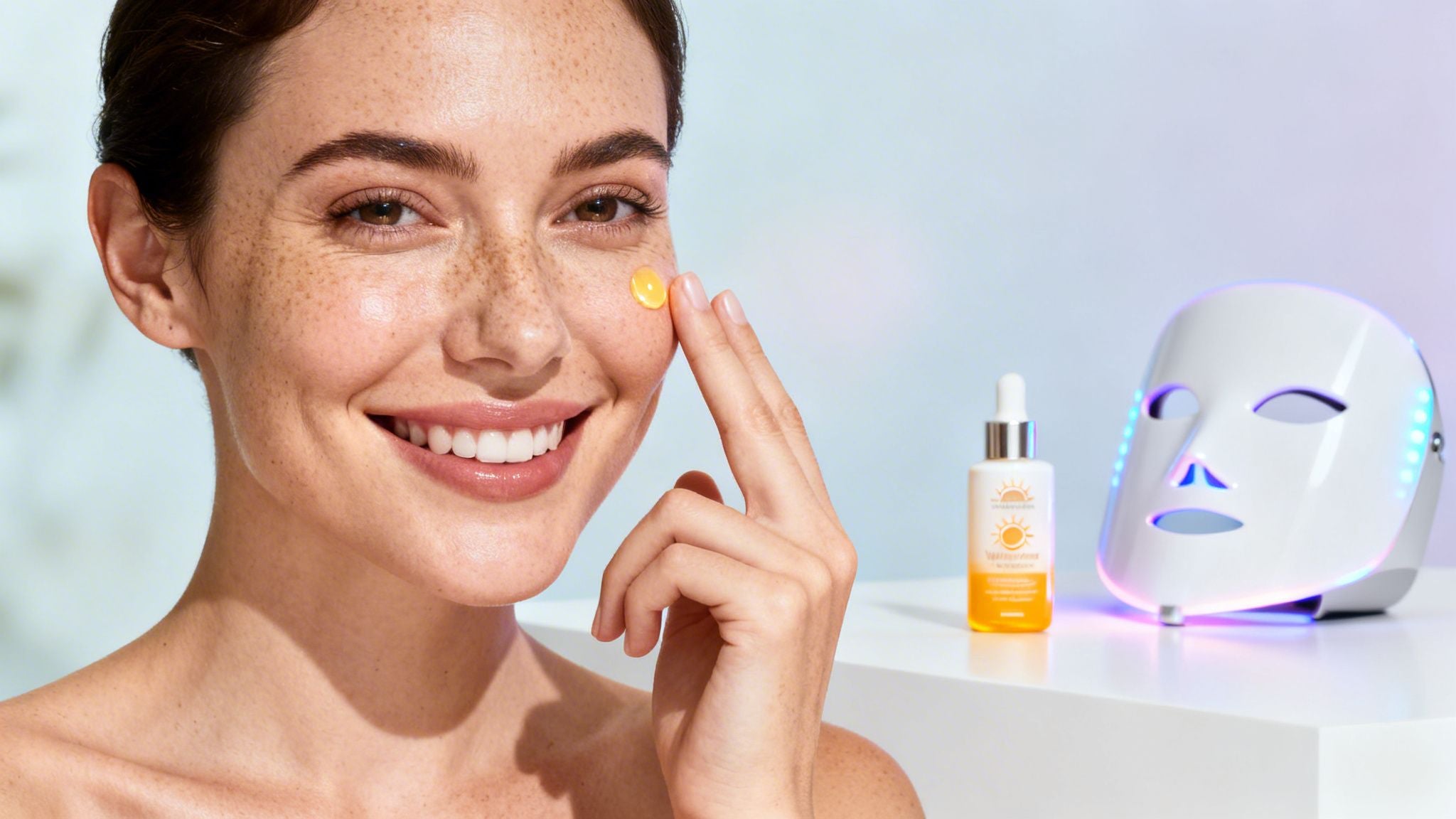
One of the most effective ways to manage skin flare-ups and build resilience at home is with the Barb N.P. LED Facial Mask. While not a cure for allergies, it's a powerful, non-invasive therapy designed to calm irritated skin and reduce the visible symptoms that allergies leave behind.
It’s built for real life. The completely wireless design means you have the freedom to wear it while relaxing, reading, or moving around your home. Plus, it’s crafted for comfort on your face, ensuring it won’t add extra pressure to already angry, sensitive skin.
Key Benefit: The Barb N.P. LED Facial Mask empowers you to take an active role in managing your skin’s health, providing a soothing, therapeutic experience at home while you address the root causes of your allergies.
The mask features three targeted light settings, each addressing a common concern linked to allergic reactions and skin sensitivity:
- Red Light: This wavelength penetrates deeper into the skin to help calm inflammation and boost collagen production. This is essential for strengthening the skin barrier and promoting healing.
- Blue Light: If your allergic skin issues are complicated by breakouts, blue light is your go-to. It works by destroying acne-causing bacteria on the skin’s surface, helping to clear blemishes without harsh chemicals.
- Amber Light: Designed specifically to soothe redness and calm a reactive complexion, amber light is perfect for managing flushing and irritation. Think of it as your immediate support after an allergic flare-up.
By adding a tool like the Barb N.P. LED Facial Mask to your routine, you’re not just waiting for allergies to clear up—you’re proactively supporting your skin. It helps you manage the uncomfortable symptoms on the surface, so you can look and feel your best while you and your provider do the important work of identifying your specific triggers.
What to Do After Your Allergy Test
Alright, your test results are in. You’re holding a piece of paper that finally gives names to the triggers that have been making you feel miserable. This is a huge step, but it's not the finish line. Think of these results less as a final diagnosis and more as your personal roadmap to feeling better.
Now comes the important part: turning that data into a real-world plan. It’s not about frantically avoiding every single thing on the list. A smart, effective strategy is about making targeted changes that fit your life, managing symptoms when they pop up, and sometimes, considering a more permanent fix.
Step 1: Targeted Avoidance of Triggers
This is your first line of defense and the most direct path to relief. If your Barb N.P. Food & Environmental Allergy/Sensitivity Panel flagged a high reaction to dust mites, for example, you know exactly where to start. You can take action today by zipping allergen-proof covers on your mattress and pillows, washing your bedding in hot water every week, and getting a HEPA filter for your bedroom.
The same goes for food. If a certain food lit up on your results, you can begin a professionally guided elimination diet. This isn’t about saying goodbye to your favorite meals forever. It’s a strategic process: you remove the potential trigger, pay close attention to how you feel, and then carefully reintroduce it to see if symptoms come back. It’s detective work for your own body.
Step 2: Smart Symptom Management
Let's be realistic—you can't always avoid every trigger 100% of the time, especially when it comes to things like seasonal pollen. That’s where having a good symptom management plan comes into play. This is all about having the right tools ready to go for when flare-ups happen.
Your Symptom Relief Toolkit Might Include:
- Over-the-Counter Medications: Non-drowsy oral antihistamines and nasal steroid sprays can be lifesavers for controlling sneezing, congestion, and itchy eyes.
- Supportive Therapies: For skin reactions like redness and inflammation, a device like the Barb N.P. LED Facial Mask can offer serious calming benefits. Its wireless design and comfortable fit make it easy to use, while the different light settings—red for inflammation, blue for bacteria, and amber for redness—soothe reactive skin from the outside in.
- Lifestyle Adjustments: Small changes can have a big impact. Getting into the habit of checking daily pollen counts and keeping your windows closed on high-pollen days can make a world of difference.
Step 3: Exploring Long-Term Solutions
For some people, especially those with severe or year-round allergies, just managing day-to-day symptoms isn't enough. If you’ve tried avoiding triggers and using medications but still feel like your quality of life is compromised, it might be time to talk to a provider about a long-term strategy.
One of the most effective long-term treatments out there is immunotherapy, which you might know as allergy shots. The process is fascinating: your body is exposed to tiny, gradually increasing doses of your specific allergen. Over time, this helps retrain your immune system to be less reactive, which can significantly reduce or even get rid of your symptoms for good.
The Most Important Step: Your test results are powerful data, but they are most effective when interpreted by a professional. True progress comes from turning those results into a personalized plan.
This is where expert guidance is absolutely key. The real goal isn't just to know what you’re allergic to; it's to build a life where those allergies don't call the shots anymore. Transforming that raw data into a clear, manageable plan is a team effort.
Your next step is to book a consultation with a provider like Barb N.P. to go over your results. Together, you can build a personalized management plan that gives you the confidence to navigate lifestyle changes, treatments, and supportive care so you can finally get control over your symptoms and feel like yourself again.
Frequently Asked Questions About Allergy Testing
Thinking about allergy testing often brings up more questions than answers. Is it accurate? Can you really develop new allergies as an adult? It's easy to feel overwhelmed.
Let's clear up the confusion. Here are the answers to the most common questions I hear from clients, so you can move forward with confidence.
How Accurate Are Allergy Tests?
The truth is, accuracy depends on the test type and, most importantly, how the results are connected to your real-life symptoms. In-office Skin Prick Tests (SPTs) are the classic standard for environmental triggers, giving you an immediate, visible answer.
IgE blood tests are also incredibly accurate for spotting sensitization. The key thing to remember is that they can sometimes show a sensitivity to something that doesn't actually cause a reaction for you. That's why pairing data with your experience is everything.
At-home panels, like the ones from Barb N.P., are an amazing first step. They use the same certified labs and IgE technology as a clinical blood test, giving you a broad set of data to start your investigation.
Can You Develop New Allergies as an Adult?
Absolutely. It’s surprisingly common to develop new allergies later in life, even if you had a completely allergy-free childhood. There are a few key reasons this can happen.
- A new environment: Moving to a different city or state can expose your body to a whole new world of pollens and molds it's never seen before.
- Immune system shifts: Our immune systems aren't static. Hormonal changes, stress, and age can cause them to suddenly become reactive to things that never bothered you before.
- More exposure: Sometimes, all it takes is repeated exposure to a new potential trigger, like getting a cat or dog, to finally push your immune system over the edge.
What's the Difference Between At-Home and Clinical Tests?
The biggest differences really come down to convenience and context. At-home tests provide unmatched accessibility. You collect your sample on your own time, from your own home, and get a wide-ranging report without needing a doctor’s appointment first. They are a fantastic tool for gathering that initial, crucial information.
Clinical tests, on the other hand, happen in a medical office, usually after a practitioner has already reviewed your symptoms and health history. While they might test for fewer things at once than a broad at-home panel, you get to discuss the results with a specialist right away, who can give you an official diagnosis and plan.
Think of it this way: an at-home test is your starting point for investigation. A clinical test is often the step you take with your provider to confirm those findings and create a formal treatment plan. Both are valuable parts of the same journey to wellness.
Finding the root cause of your symptoms is the first, most empowering step toward feeling better. Once you have that clarity, you can explore supportive therapies to manage any lingering flare-ups.
For allergy-related skin issues like redness and inflammation, the Barb N.P. LED Facial Mask offers a calming, non-invasive way to soothe reactive skin. Its comfortable, wireless design and three targeted light settings are perfect for taking down irritation and restoring balance.
Ready to get answers? Explore our at-home allergy testing options and supportive skincare at barbnp.shop.