Article: Best Sunscreen Without White Cast That Actually Works
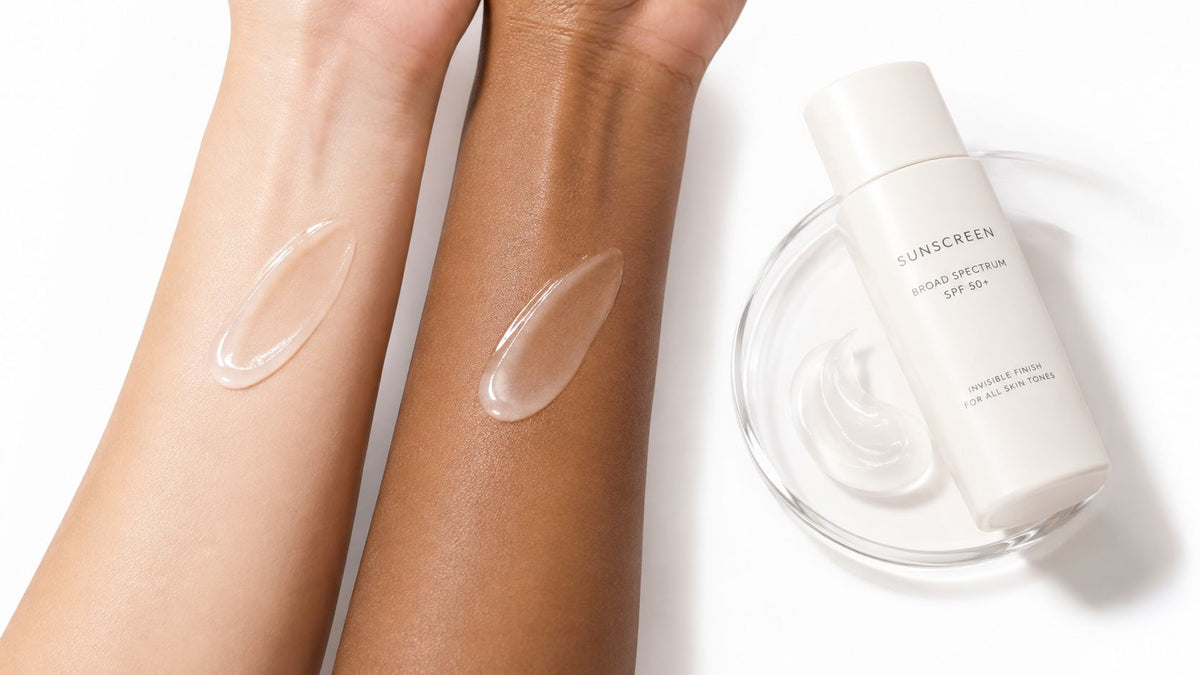
Best Sunscreen Without White Cast That Actually Works
You're probably here because you've had this exact moment: you apply sunscreen, glance in the mirror, and your face looks gray, chalky, or strangely dusty under makeup. By the time you add concealer or blush, the finish pills, streaks, or sits on top of the skin. It's frustrating, especially when you're trying to do the right thing for your skin every day.
The reassuring part is that white cast isn't a flaw in your skin, and it doesn't mean sunscreen “just doesn't work” for your tone. It's a formulation issue. Once you understand what causes it, you can get much closer to finding the best sunscreen without white cast for your skin tone, texture preferences, and daily routine.
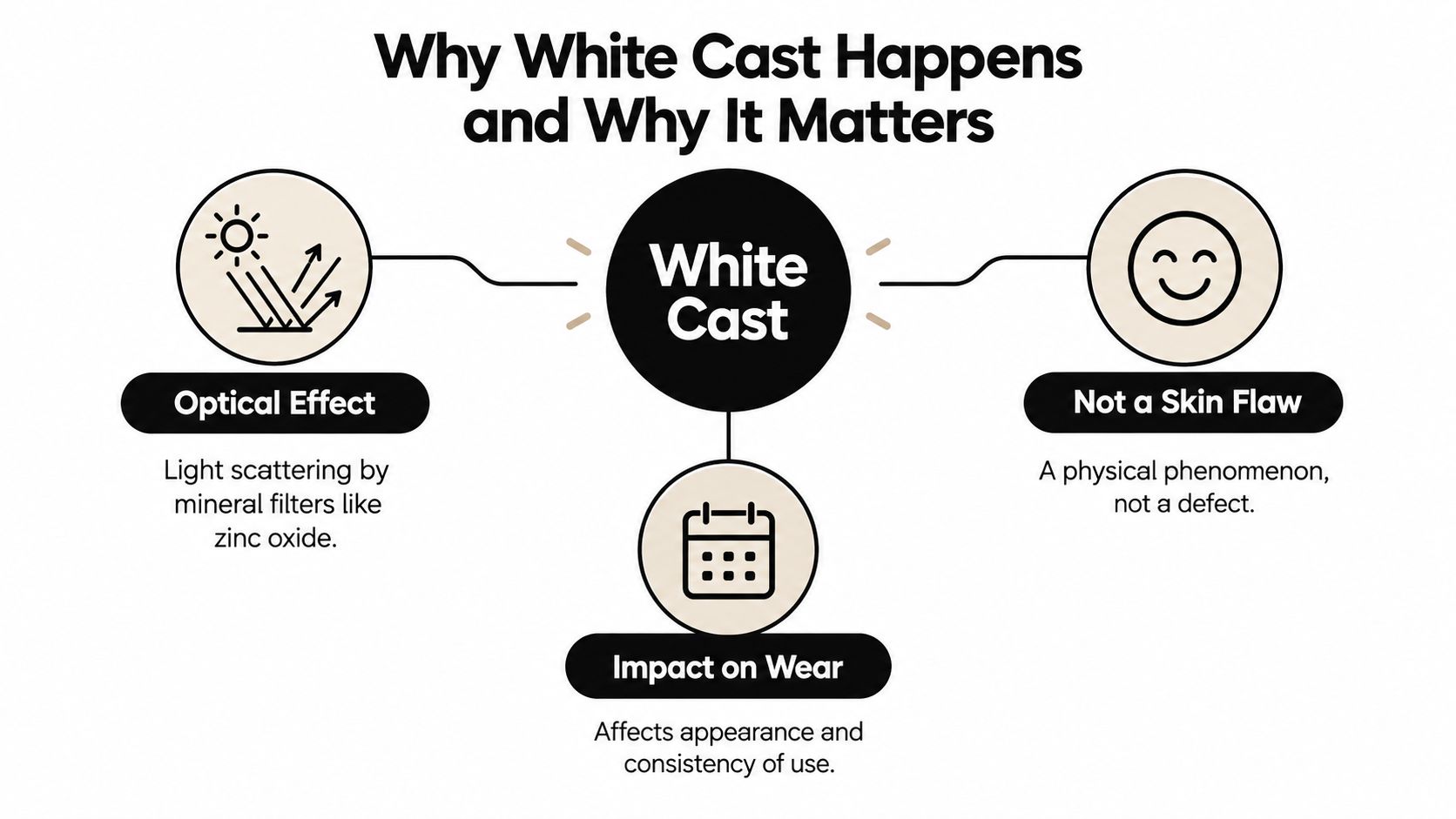
Why White Cast Happens and Why It Matters
White cast starts with optics. Mineral UV filters, especially zinc oxide and titanium dioxide, can scatter visible light. When those particles are larger or clumped together, they behave a bit like powdered sugar on a countertop. You can see every grain. When particles are engineered smaller and dispersed evenly, the finish can look much less obvious, more like sugar fully stirred into tea.
That's why white cast isn't just a vague beauty complaint. It's a measurable, formulation-driven problem. A major review on mineral sunscreen science explains that larger, agglomerated particles scatter visible light more strongly, which is why formulas can look chalky, and it also notes newer work standardizing white-cast measurement and exploring particle engineering to reduce it without sacrificing protection. That same review describes a UCLA-linked innovation in 2026 using a tetrapod zinc oxide structure that kept SPF around 30 in test formulas while appearing warmer and closer to natural skin tones than conventional zinc oxide products, and it places the mineral sunscreen category at about USD 1.174 billion in 2025, up from USD 898 million in 2020, or roughly 31% growth over five years (ACS mineral sunscreen review).
Why it feels so personal
If white cast shows up strongly on your skin, it can feel like the product was never made with you in mind. I hear that often from patients with medium, tan, olive, and deep skin tones. The sunscreen may protect well on paper, but if it leaves a visible film, many people won't reach for it every morning.
Practical rule: If a sunscreen makes you avoid sunscreen, it's not the right formula for your real life.
This is one reason I like giving patients a simple science explanation rather than blaming application technique alone. Your skin isn't “rejecting” the product. The filter particles, the base, and the way they're dispersed are shaping what you see.
Why it matters beyond appearance
This topic sits right at the intersection of skin health and daily habits. The more wearable a sunscreen feels, the more likely you are to use it consistently. If you like reading broadly about skin habits and product choices, this beauty and skin guide is a useful general resource alongside more sunscreen-specific education.
For a closer look at why zinc oxide matters in sunscreen formulas, BotoxBarb's overview of zinc oxide sunscreen benefits gives helpful background on why this ingredient is so common, even though it can be tricky cosmetically.
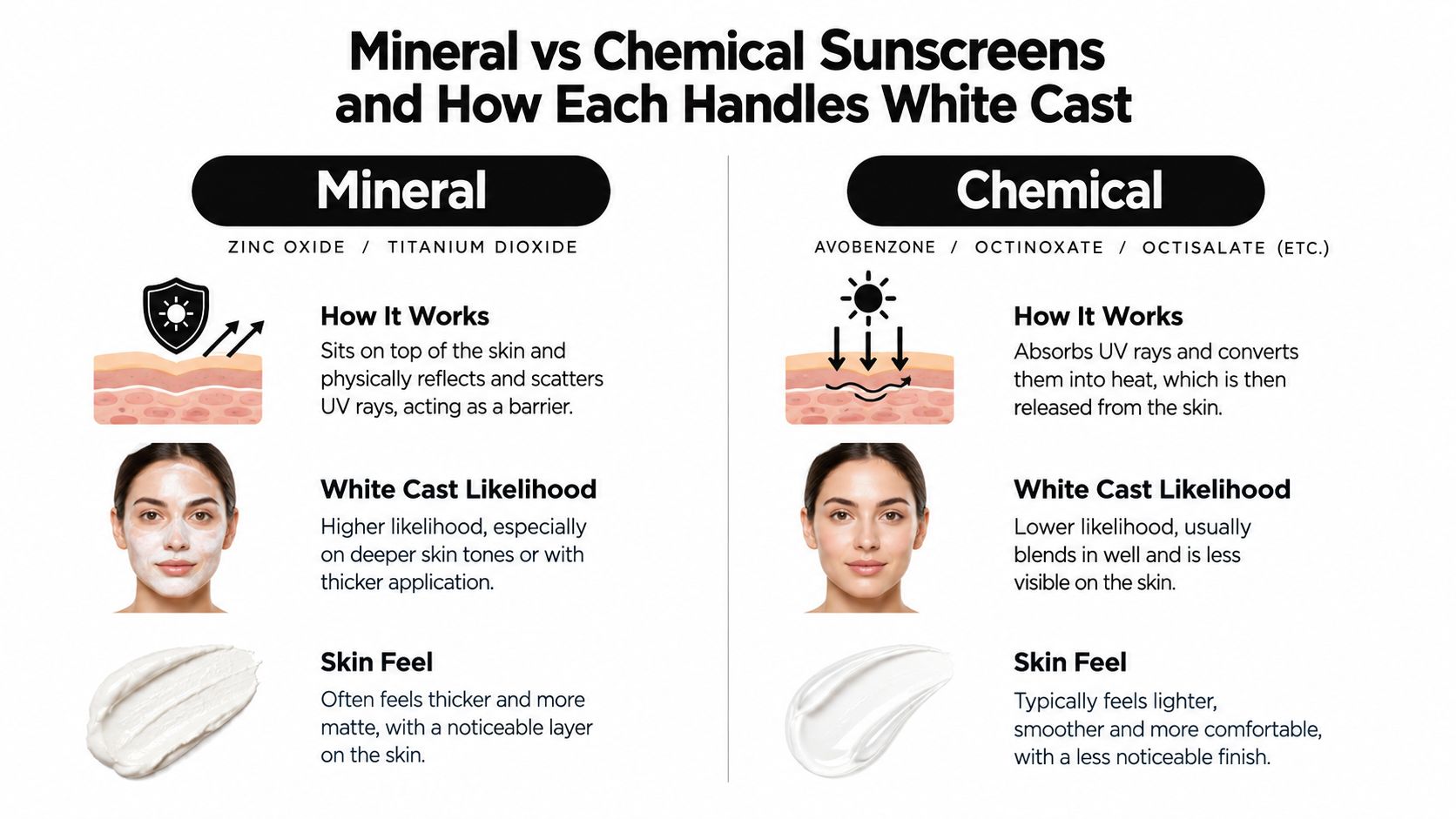
Mineral vs Chemical Sunscreens and How Each Handles White Cast
If you've ever wondered why one sunscreen disappears and another sits on the skin like stage makeup, the filter family is often the first clue.
Mineral sunscreens usually rely on zinc oxide, titanium dioxide, or both. Chemical sunscreens use organic UV filters that are designed to absorb UV energy. In plain language, mineral formulas are more likely to leave a visible veil, while chemical formulas usually blend more transparently.
A simple way to picture the difference
Think of these formulas like window treatments.
A chemical sunscreen often behaves more like a clear window film. It's present, it's doing a job, but visually it tends to disappear. A mineral sunscreen can act more like frosted glass. Light still moves through the system, but you can see the effect of the material itself.
That doesn't mean mineral is bad. It means mineral requires better engineering if your goal is an invisible finish.
Where usage habits come in
The business case for no-white-cast formulas is strong because appearance affects whether people will wear sunscreen. A market report cited consumer behavior showing that only 13% of people apply sunscreen to their body regularly, while 53% use it occasionally and 34% rarely or never use it. The same analysis said about 25% of users avoid mineral sunscreens specifically because of visible white cast, and it also projected mineral sunscreen growth from about USD 980.19 million in 2024 to USD 1.431 billion by 2030, while another estimate projected USD 1.4 billion in 2025 to USD 2.35 billion by 2035 (Grand View Research mineral sunscreen market report).
That tells you something important. White cast isn't a side complaint. It changes buying behavior and daily compliance.
How I guide the choice
Here's the practical version I use in clinic:
- If your top priority is invisibility, chemical or hybrid formulas are often easier to wear.
- If your skin is reactive or you prefer mineral filters, look for modern mineral formulas with strong attention to texture and particle engineering.
- If you want middle ground, hybrid sunscreens can soften some of the heaviness and cast associated with older mineral formulas.
Some people don't need “mineral versus chemical.” They need “what will I actually wear every day without dreading the mirror.”
If you want a straightforward side-by-side breakdown, BotoxBarb's guide on mineral sunscreen vs chemical is a useful companion when you're deciding which family of filters fits your skin and routine.
What to Look For in a Truly Invisible Formula
Once you stop looking only at SPF and start reading for formulation clues, you can predict a lot more about whether a sunscreen will leave a cast. Shopping gets easier.
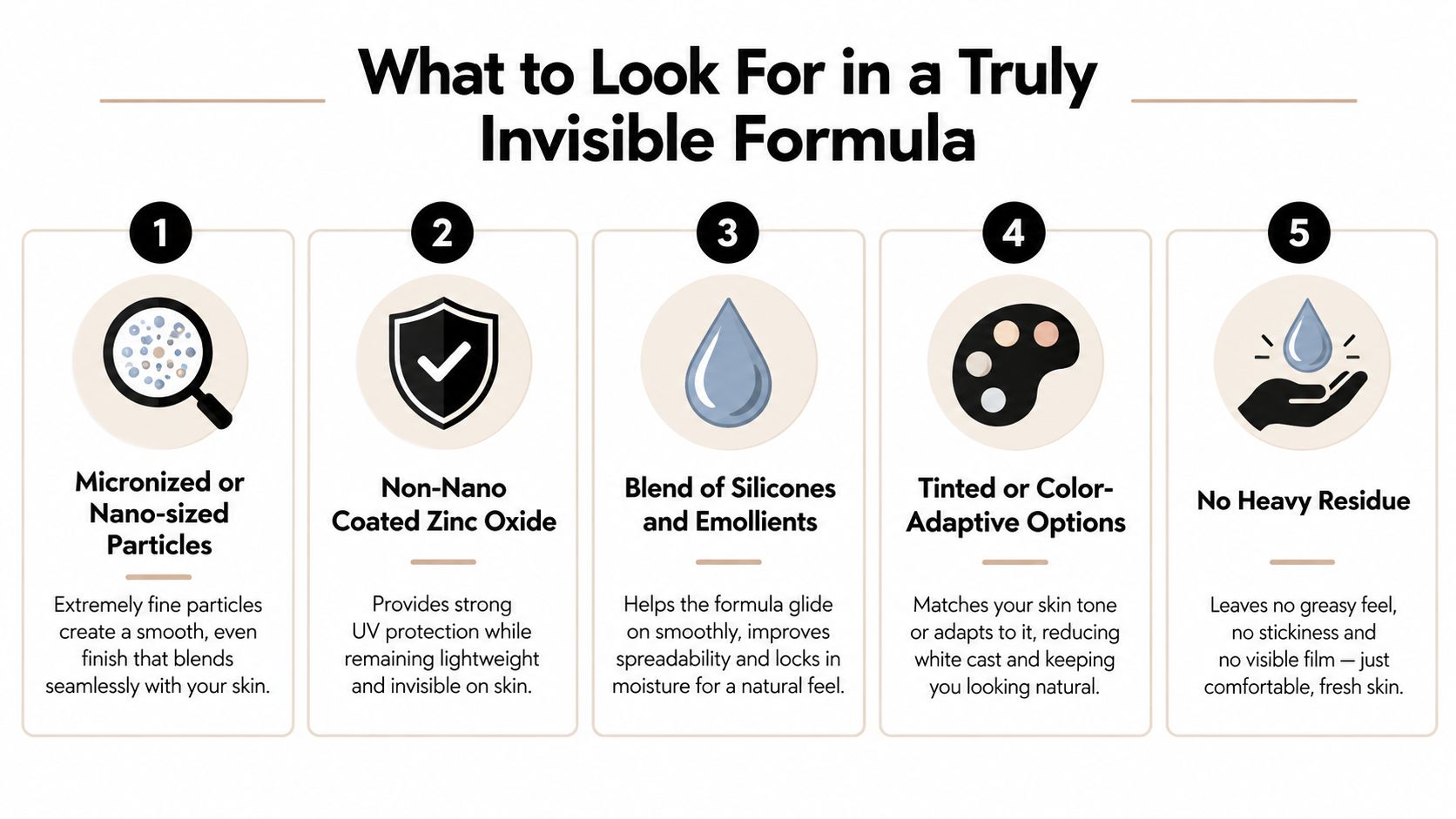
The biggest clue is particle size. Expert sources explain that standard mineral particles in roughly 0.1 to 10 µm scatter visible light strongly, while much smaller particles become more transparent on skin. The same source notes that titanium dioxide can become far less visible at about 10 to 20 nm, and zinc oxide also looks less chalky when engineered into nanoscale or micronized systems. It also points shoppers toward label language like micronized, micro, nano, or sheer as practical signs the formula is designed to reduce visible residue (white cast and particle size explainer).
Label clues that matter
When you're scanning a product page or box, I'd focus on these cues:
- Micronized or sheer language. This often signals smaller particles and better optical blending.
- Fluid or serum-like texture. Thin, elegant bases usually spread particles more evenly than dense pastes.
- Tinted versions. A tint can help offset the whitening effect, especially on medium to deep skin.
- Hybrid filter systems. These often lower the visible burden of mineral solids.
- Thoughtful finish claims. Terms like radiant, invisible, or no-residue aren't guarantees, but they can hint at a more cosmetically refined base.
Texture tells you a lot
As a nurse practitioner, I tell patients to pay attention to how a formula moves before it fully dries. If it drags, skips, or forms opaque streaks right away, it may be harder to wear invisibly. If it glides in a thin, even film, you're often dealing with better dispersion.
A good comparison from haircare shopping also applies here: ingredient literacy matters. If you already read labels in other parts of your routine, this guide to what to avoid in shampoos and conditioners is a nice reminder that product feel usually starts with formula design, not marketing language.
Quick Filter to Spot Invisible-Finish Sunscreens
| Feature to Check | What Indicates Low White Cast | What Indicates Higher White Cast |
|---|---|---|
| Texture description | Fluid, milk, gel-cream, serum-like, sheer | Thick cream, paste, dense balm |
| Particle wording | Micronized, micro, nano, sheer | No texture clues and a visibly dense mineral base |
| Finish type | Transparent, radiant, skin-like, tinted | Opaque, matte but heavy, visibly coating |
| Filter family | Chemical or hybrid, or refined mineral | Traditional mineral with a thick feel |
| Application photos | Blends evenly across varied skin tones | Looks pale, gray, or streaky on application |
Clinic note: Don't assume a high-SPF mineral sunscreen has to look heavy. The base and particle engineering matter as much as the active filter list.
One product option that fits this conversation is SkinCeuticals Clear Daily Soothing UV Defense Sunscreen SPF 50, available through BotoxBarb. It's relevant here because readers looking for less visible residue often do better with lighter-feeling daily formulas rather than dense traditional pastes.
How to Apply and Test Sunscreen for Different Skin Tones
A good formula can still look bad if it's applied in one thick swipe. Technique won't fix a poor formulation, but it can reduce residue and help you judge a product fairly.
Recent work has pushed this conversation forward by treating white cast as something measurable across skin tones. A 2025 preprint proposed a standardized scoring method and reported that zinc oxide concentration was strongly tied to visible cast. It also highlighted a 2026 randomized trial in which whitening was significantly more pronounced on darker skin tones, and controlled application of mineral sunscreens still led to notable whitening (preprint on sunscreen whitening and measurement).
A better way to apply it
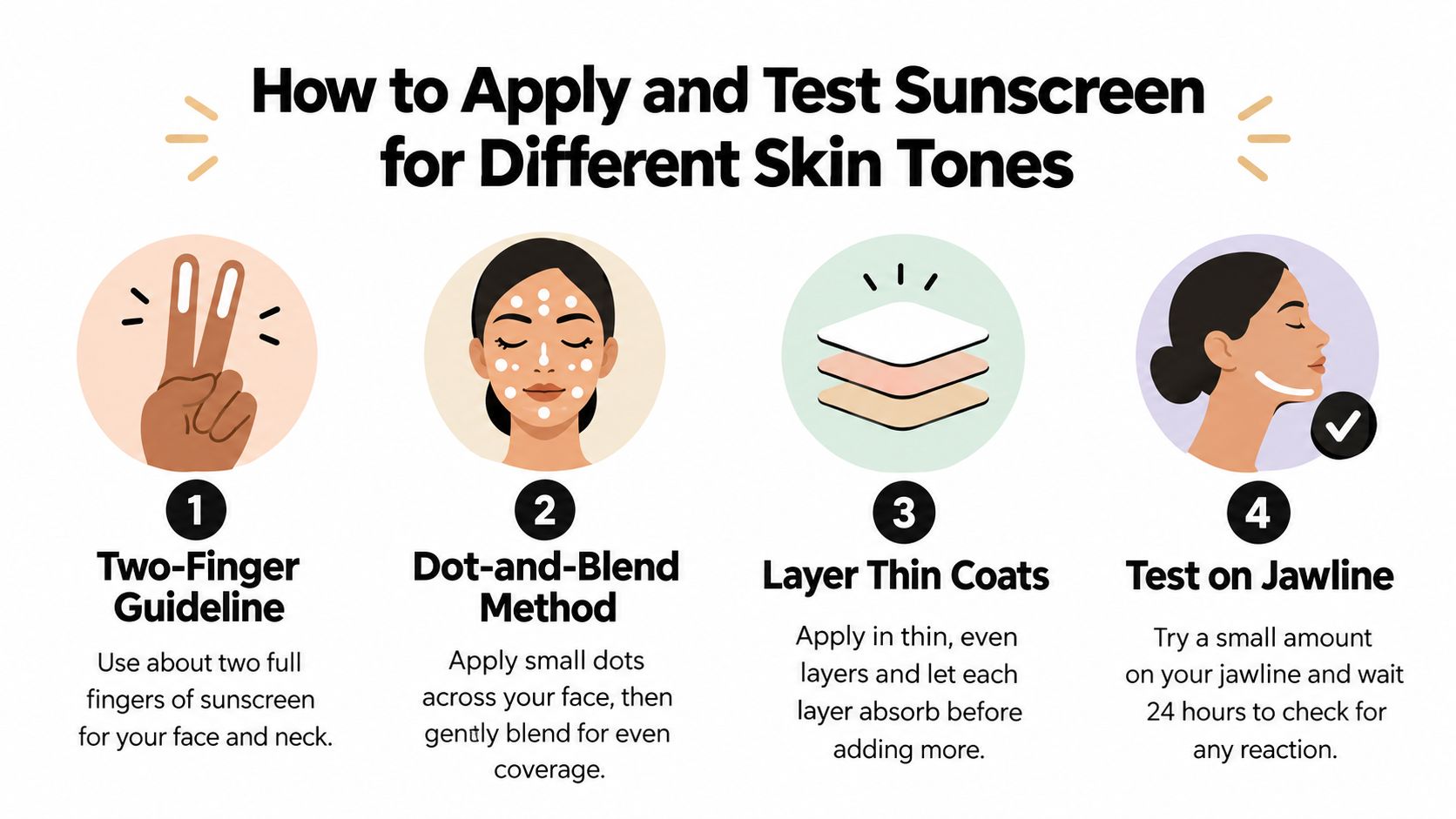
I usually suggest this sequence:
-
Prep the skin lightly
If your skin is dry, apply a simple moisturizer first and let it settle. Dry patches grab pigment and mineral particles unevenly. -
Use the two-finger guideline for face and neck
Dispense your sunscreen along two fingers, then divide that amount into small dots. This helps you get enough product without dropping one thick blob in the center of the face. -
Dot, spread, then press
Spread from the center outward, then lightly press over the skin rather than aggressively rubbing. The pressing step helps smooth edges around the nose, jawline, and hairline. -
Let one layer settle before judging
Some formulas look whiter in the first moments, then soften as the film evens out.
How to test before you commit
Don't rely on the back of your hand alone. Test where the product will live.
- Jawline test shows whether the formula flashes pale against the face.
- Side-of-face test lets you compare one half with sunscreen and one half bare in daylight.
- Natural light check matters more than bathroom lighting, which can hide grayness.
- Reapplication test is essential. A sunscreen that looks acceptable once may pill or whiten after the second layer.
Try a sunscreen on a normal morning, not a rushed one. The right product should fit your real routine, not a perfect testing scenario.
If you're specifically shopping for mineral options designed for facial use, BotoxBarb's guide to the best physical sunscreen for face can help narrow down what to test first.
Common Mistakes That Make White Cast Worse
Some white cast comes from the formula. Some comes from habits that amplify it.
The first common mistake is applying too much all at once and trying to grind it into the skin. That creates an uneven film and makes mineral particles bunch together visibly. Thin, even distribution usually looks better than a single heavy smear.
Small fixes that make a visible difference
-
Skipping moisturizer on dry skin
Dry areas catch sunscreen unevenly. A light moisturizer can create slip so the formula spreads more smoothly. -
Rubbing too hard
Vigorous rubbing can lift product into streaks. Use gentle spreading, then press the remaining film into place. -
Ignoring the edges
Hairline, brows, jawline, and around the nose are where residue collects. Feather those edges before the product sets. -
Choosing the wrong finish for your complexion
On deeper skin tones, a dense untinted mineral can look ashy even if the protection is solid. A tinted or more fluid option may wear better.
Mixing layers too quickly
Another issue is layering sunscreen over wet skincare or under makeup before it has settled. When products mix on the surface, they can pill or turn patchy, which makes cast look worse than it is.
A better routine is simple. Let your skincare sink in. Apply sunscreen in a measured layer. Give it a moment to form an even film. Then move to makeup if you wear it.
You don't need a perfect application to get into the habit. You need a repeatable one that looks good enough that you'll keep doing it.
Your Daily Protection Plan and Complementary Skin Support
The most useful way to think about sunscreen is this: invisible protection is often the protection people keep using. That's why the search for the best sunscreen without white cast matters so much. It connects optics, comfort, skin tone, and adherence.
If your skin is sensitive or acne-prone, it's tempting to reduce the conversation to “mineral is always safest.” The better question is how to balance protection, appearance, and daily wear. UCLA researchers highlighted this shift in 2026 when they reported an engineered zinc oxide tetrapod structure that reduced white cast while maintaining strong UV protection, pointing the conversation toward particle engineering and better texture rather than a simple mineral-versus-chemical debate (UCLA report on reduced white cast mineral sunscreen).
A simple morning routine that works
Try this order if you want a smoother finish:
- Cleanse if needed based on your skin type.
- Apply treatment products sparingly so the skin isn't overly wet.
- Use moisturizer where needed, especially if you get dry around the cheeks or mouth.
- Apply sunscreen evenly using the dot-and-blend method.
- Check in daylight before leaving home.
Supporting skin without replacing SPF
Sunscreen is the essential daytime step. Devices and treatments can support the skin, but they don't replace UV protection.
For readers who like a broader skin-health routine, the Barb N.P. Facial Mask can fit in as a complementary at-home device. It's wireless, sits comfortably on the face, and includes 3 lighting settings for different treatments, which makes it practical for people who want LED support without adding a complicated step. If you're curious about how LED care fits around daytime sun protection, this guide on combining red light therapy with SPF gives a helpful routine perspective.
The goal isn't a flawless sunscreen experience on day one. It's finding a formula and method that you'll repeat tomorrow, next week, and next season.
At BotoxBarb, you'll find sunscreen guidance, curated skincare options, and aesthetic support designed for real daily wear, including formulas people often seek when they want protection without a heavy cast. If you want help building a routine that balances skin tone, sensitivity, and a polished finish, visit BotoxBarb to explore the shop and care options.