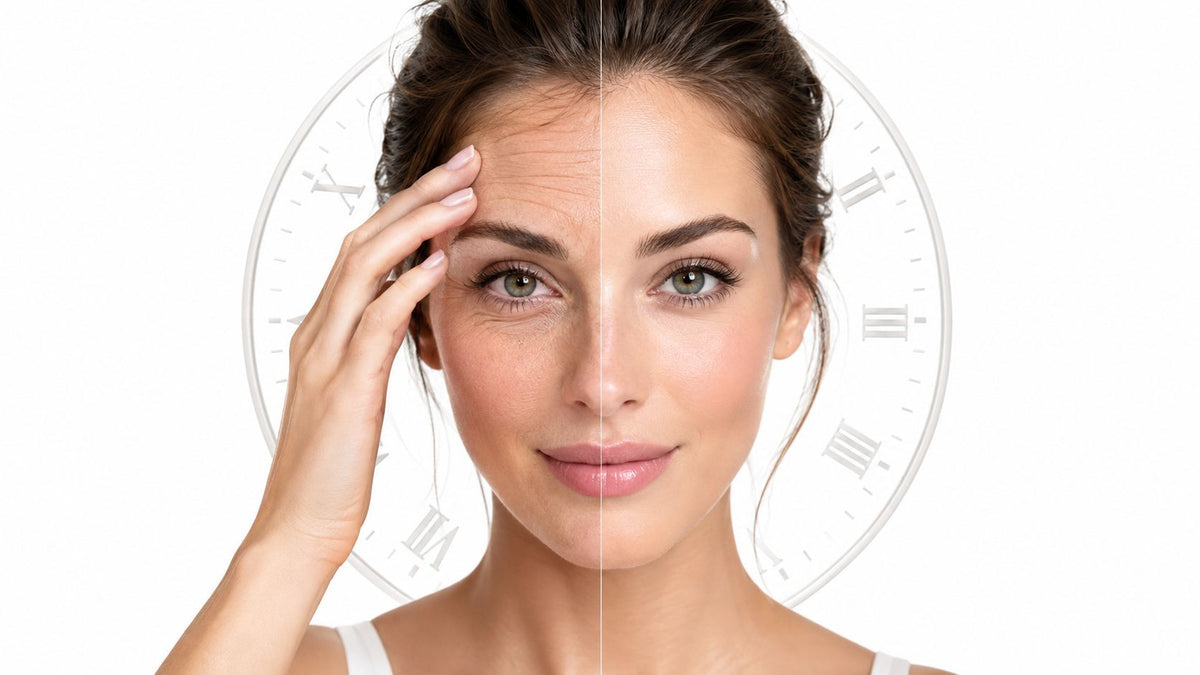
Botox for Neck Bands Before and After
You notice it in the least flattering place, a candid photo from below, your jaw clenched, neck turned, and two thin vertical cords suddenly stealing the frame. Many don't spot their platysma bands in a mirror, they catch them when they laugh, sing, read a menu, or tense their neck without thinking. That moment is usually what sends someone searching for botox for neck bands before and after, because the actual question isn't whether the bands exist, it's what they'll look like after treatment and when.
What Platysma Bands Look Like Before Treatment
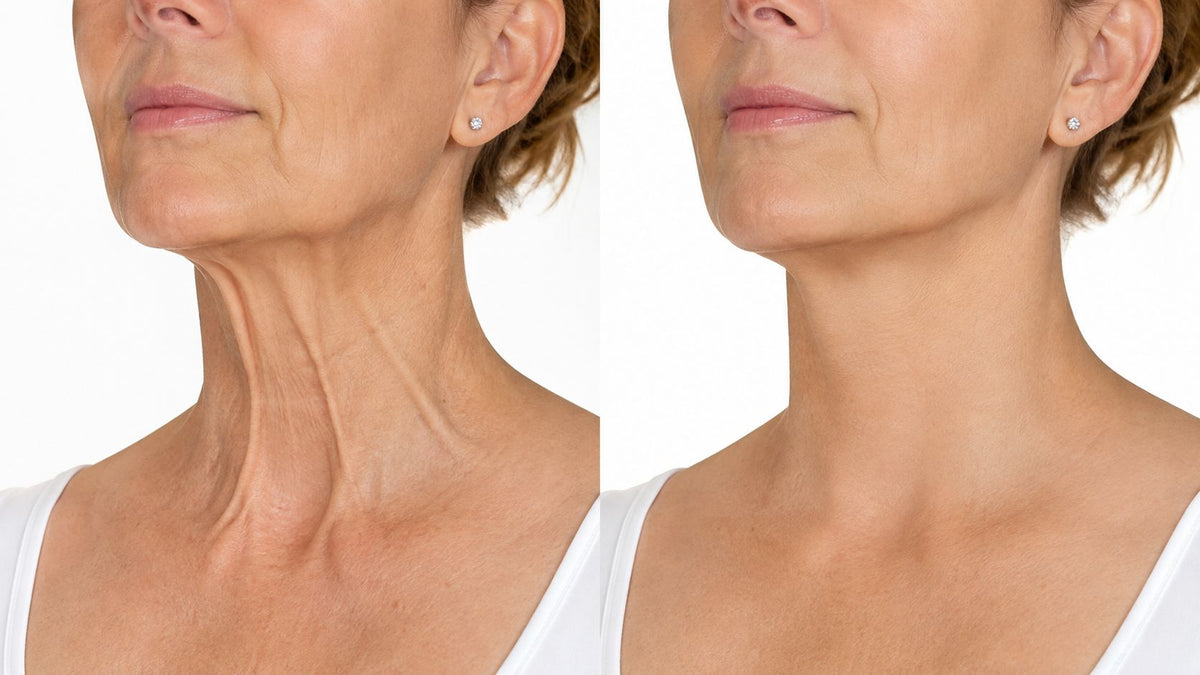
The platysma is a broad, thin neck muscle that tightens every time you grimace, clench, or pull your jaw down and back. When it becomes more visible, it usually shows up as two vertical cords that stand out during movement, not as a permanent scar-like line at rest. That distinction matters, because dynamic bands behave differently from loose skin or the horizontal creases that run across the neck.
The moment patients usually notice it
A patient will often describe the same scene in different words. The cords show up in a side profile photo. They stand out while looking down at a phone. They pull harder when the chin lifts or the mouth opens wide.
Practical rule: If the neck band disappears or softens when the muscle relaxes, it's more likely to respond well to Botox than a fixed crease or generalized laxity.
That's why the before picture matters so much. It tells you whether the problem is muscle activity, skin laxity, fat, or a mix of all three. Botox works best when the visible issue is the muscle pulling, not when the skin itself has lost support.
A candid before photo should include both rest and animation. Rest shows what's there all the time. Animation shows what happens when the platysma contracts, which is usually when the cords become most obvious. That visual contrast is what makes the eventual after photo meaningful.
How Botox Softens Neck Bands
Botox softens neck bands by interrupting the nerve signal that tells the platysma to contract. A simple way to think about it is like loosening a guitar string so it stops vibrating as hard. The muscle is still there, but the force pulling the band into view is reduced.
Why that matters for the neck
The visible band isn't just a skin issue. It's a motion issue. When the platysma keeps firing strongly, the neck looks more corded, the jawline can look less defined, and every expression exaggerates the effect. Once the signal is softened, the cords don't disappear instantly, but they stop announcing themselves so loudly during movement.
That mechanism is now backed by a major regulatory milestone. In October 2024, the U.S. Food and Drug Administration approved BOTOX Cosmetic for the temporary improvement of moderate-to-severe platysma bands in adults FDA label. That approval reflects a progression from early studies into large randomized trials, which is important because neck treatment deserves the same seriousness as any other injectable area.
The neck is not a place for guesswork. Good results depend on relaxing the platysma just enough to soften the band while keeping the rest of the face and neck balanced.
If you want a plain-language refresher on the wrinkle mechanism more generally, this overview of how Botox works on wrinkles is a useful companion read. The core principle is the same, the medicine reduces muscle movement so the surface looks calmer.
Realistic Before and After Timeline
The most useful way to judge botox for neck bands before and after is by time, not by hope. The neck does not change in the chair, and it does not look finished the next morning. Results build in stages, and those stages are what tell you whether treatment is behaving normally.
Day 0 to day 3
Right after treatment, the cords may look unchanged. Tiny injection marks, mild swelling, or a slightly “worked on” feeling can happen, but that is not the end result. The muscle relaxation is only beginning.
Day 3 to week 2
Patients often start to notice the first real softening here. The bands do not need to disappear for the result to matter, they just become less obvious when the neck moves. Photos can look smoother, and the line from jaw to neck may look a little cleaner.
That timing fits what patients are usually told about when Botox starts to work. A 2019 systematic review of 3 studies involving 78 patients found that around 14 days, 93.7% of evaluable patients, 45 of 48, showed at least a one-point improvement, with an average improvement of 2.0 points study review. Two-week photos are often the clearest early comparison.
Month 3 to month 4
By 3 months, the effect can still be measurable. The same review reported a mean improvement of 1.2 points and a response rate of 86% at that point study review. The neck may not look exactly as it did at week 2, but the improvement can hold for a meaningful stretch.
Maintenance planning often starts here. Some people are happy to wait and watch, while others begin thinking about the next visit. If you are judging your own outcome, use the two-week mark for the clearest early read and the three-month mark to judge how well the change is holding.
What Actually Happens During the Appointment
The appointment is usually shorter and more practical than people expect. The consultation comes first, and a skilled injector looks at the neck both at rest and during movement so the active bands can be mapped accurately. Good markings matter, because the goal is to treat the bands, not scatter product into places that don't need it.
The treatment room details patients ask about
The dose strategy in clinical studies helps frame the conversation. One randomized phase 2 program used 26, 31, or 36 Units in a lower-dose group and 52, 62, or 72 Units in a higher-dose group, with placebo as the comparator JCD trial. That doesn't mean everyone should expect the same number, but it does show that the neck can be treated at different dose levels depending on anatomy and goals.
The injection itself is usually a quick series of small pinches. Some clinicians offer numbing cream, some rely on technique and speed, and many patients find the discomfort brief either way. Photos are often taken before treatment, then again later for comparison, because the difference is easier to judge when the neck is seen from the same angles.
- Ask where the bands are most active: That helps confirm the treatment plan matches your actual movement pattern.
- Ask how the injector avoids over-weakening nearby muscles: Precision is what keeps the result subtle instead of awkward.
- Ask when follow-up photos will be taken: A baseline and a later comparison make the outcome easier to evaluate.
If you leave with a clear plan, you should know what was treated, when to expect change, and what would count as a normal response.
What Botox Can and Cannot Fix in the Neck
A patient with prominent neck bands often wants one clear answer, but the result depends on what is actually causing the change. Botox relaxes dynamic vertical bands and can soften platysmal pulling that pulls the lower face out of balance. It does not tighten loose skin on its own.
Where the improvement is strongest
The improvement is strongest when muscle movement is the main problem. If the cords stand out during speaking, swallowing, or other neck motion, Botox can make them look softer and less distracting. If the neck concern is mostly crepey laxity, sun damage, or fullness, the result is usually more limited unless those issues are addressed separately.
That distinction matters in consultation. A neck can have active banding and skin quality loss at the same time, so the treatment plan should match the dominant problem rather than promise one injection will fix everything. In practice, I explain that Botox is best for motion-driven banding, while skin support belongs to a different part of the plan.
For patients comparing options, this guide on how to improve skin elasticity helps show why muscle relaxation and skin quality are related but not interchangeable. The best before-and-after photos show softer cords and a calmer neck line, while looser skin usually needs additional care.
This is the trade-off patients should expect. Botox can smooth the movement that makes neck bands stand out. It cannot firm thin, lax skin by itself.
Side Effects, Recovery, and When to Call
Bruising is the most common annoyance after treatment, and the evidence reflects that reality. In one systematic review, complications were reported in 12 of 78 patients, or 15.2%, with bruising or hematoma the most common issue and no complication requiring additional intervention study review. That sounds more dramatic than it usually is in practice, because the events were generally limited and temporary.
What's expected and what isn't
Most patients see small red bumps, mild tenderness, or light bruising. Those findings are routine and usually settle on their own. If weakness develops, swallowing feels difficult, or facial movement looks uneven in a way that was not expected, the issue needs more caution.
The first 24 hours still matter. Do not rub the area, do not lie flat right away, and skip intense exercise until the product has settled. Those steps lower the chance of toxin spreading into nearby muscles.
For a plain-language overview of common reactions, see this guide to Botox side effects. Neck treatment deserves extra attention because the anatomy is tighter and the margin for error is smaller.
Contact the clinic if you notice worsening weakness, trouble swallowing, or soreness that feels clearly out of proportion to the injection sites. Most patients do fine, but the neck is one area where early follow-up is better than waiting.
Complementary LED Aftercare With the Barb N.P. Facial Mask
LED isn't a replacement for Botox in dynamic platysma bands, but it can be a sensible add-on for skin quality while the injector's result settles. The Barb N.P. Facial Mask fits that role well as a wireless, comfortable at-home device with 3 lighting settings for different treatment goals. It's the kind of option patients like when they want a simple routine that doesn't feel medical or fussy.

What the LED research actually shows
The most relevant trial design used a mask with 92 red LEDs at 660 ± 10 nm, and compared treatment three times weekly, twice weekly, and simulated treatment over 4 weeks LED protocol. That matters because LED results depend on the specifics, wavelength, schedule, duration, and control conditions, not just the fact that the device glows red.
That's also why the right expectation is supportive care, not a miracle. A mask can be part of a recovery and skin-maintenance routine, especially for patients who like doing something consistent at home while their injectable treatment reaches its full effect. It should never be sold as a substitute for treating platysma contraction.
Use LED as a complementary ritual, not a competing therapy. Botox changes the muscle behavior. LED supports the skin environment around it.
Deciding If Neck Band Botox Is Right for You
The best candidates are usually the people whose neck bands are most obvious when they animate, but still have enough skin quality to benefit from muscle relaxation alone. They want improvement, not perfection, and they're comfortable judging results over weeks rather than hours. That mindset usually leads to happier before-and-after comparisons.
Who should pause before booking
Some people need a different plan. If skin laxity is the main concern, if there's significant swallowing history, or if a neuromuscular condition is part of the medical picture, the conversation changes. Pregnancy is also a reason to hold off.
A sensible first treatment is often conservative. Photograph the neck at rest and during animation, then compare those images at follow-up instead of relying on memory. That keeps the decision grounded in what changed, not in a hallway glance or a single selfie.
Maintenance is usually straightforward once the first response is known. Some patients repeat treatment when movement starts to return, while others prefer to wait longer and reassess with their provider. The right cadence depends on anatomy, goals, and how much softness you want to preserve in the jawline and neck.
BotoxBarb offers in-clinic injectables, LED light therapy, and curated skincare that fit neatly around this kind of treatment plan. If you're comparing neck band options and want a practical place to start, visit BotoxBarb to explore the approach and book a consultation.