Can You Exercise After Getting Botox? a Clear Guide
Yes, light walking is usually fine right away after Botox, but strenuous workouts should wait about 24 hours to lower the risk of bruising and possible product migration. If you've just left an appointment and your evening workout is approaching, the safest choice depends on intensity, heat, body position, and your injector's specific advice.
A quick Botox visit can create an awkward scheduling problem. You may have finished a few forehead and crow's-feet injections during lunch, only to notice that your spin class starts in ninety minutes. The question usually comes out before you've reached the parking lot: “Can I just go straight to the gym?”
They aren't trying to ignore aftercare. They're trying to protect their results without disrupting a carefully planned training routine. The practical answer isn't a blanket ban on all movement. A calm walk and ordinary daily activity are different from heavy lifting, intense cardio, hot yoga, or an inverted workout.
The reason clinicians separate those activities is precautionary. Increased blood flow and pressure may raise bruising risk, while strenuous movement creates a theoretical concern that the toxin could spread before it fully stabilizes. The evidence for an exact exercise interval is limited, but a widely used cosmetic-practice standard has developed around waiting about 24 hours for strenuous exercise. Cleveland Clinic's Botox aftercare guidance notes that physical activity has little evidence of changing how Botox settles, while also explaining why exercise may increase blood pressure and bruising soon after treatment.
Why Patients Wonder About Exercise on Treatment Day
A patient recently finished a short appointment involving the forehead and outer eye area. She felt well, had only mild redness, and was already mentally moving on to the rest of her day. Then she checked the time and realized her evening spin class was less than two hours away.
She asked the question I hear often in aesthetic practice: “Can I just go straight to the gym?” It's a reasonable concern because Botox appointments are usually brief and frequently fit into a lunch break, before work, or between errands. The treatment may feel easy, but the aftercare window still matters.
The appointment may be quick, but the decision is individual
Feeling normal doesn't mean every activity has the same risk. A gentle walk home keeps your circulation close to its usual baseline. A hard cycling class can raise your heart rate, facial blood flow, body temperature, and blood pressure at the same time.
That's why I ask patients to think in terms of workout intensity rather than exercise versus no exercise. The relevant questions are:
- How hard will you work? A relaxed walk is not equivalent to sprint intervals.
- Will you generate significant heat? Saunas, hot yoga, and heated Pilates add vessel dilation.
- Will your head be below your heart? Inversions can increase facial pressure.
- Will anything press against the treated area? Helmets, tight headbands, goggles, and face-down positions create additional mechanical pressure.
Practical rule: If the activity makes you flushed, sweaty, breathless, strained, overheated, inverted, or face-down, postpone it.
The familiar 24-hour recommendation aims to reduce bruising, swelling, and a theoretical risk of diffusion while the product settles. It isn't a guarantee that exercising earlier will cause a problem, and it isn't a claim that walking is dangerous. It's a conservative way to protect a precise treatment when the upside of skipping one demanding session is usually greater than the downside.
How Botox Settles and Why Movement Matters Early On
Botox is placed into specific facial muscles, and the first phase after injection is about letting it stay where it was intended to work. In plain terms, the goal is to keep the product localized while it begins binding at the neuromuscular target.
Rubbing, pressure, heat, and strenuous activity matter most during that early window.
The comparison I use with patients is wet paint. Touching it can smear it, leaning on it can leave a mark, and pushing air or heat across it changes how it dries. Botox is not paint, but the comparison explains why the first hours after treatment are treated with more caution.
Three factors drive that caution:
- Heart rate and blood flow: Hard exercise raises circulation and can widen blood vessels. Clinicians worry that this may make it easier for product to move before it has settled.
- Blood pressure and bruising: Straining, especially during heavy lifting, can raise pressure and make bruising or a small hematoma more likely at needle sites.
- Position and facial pressure: Bending forward, lying face-down, or holding an inversion can increase pressure and congestion in the face. Those positions do not guarantee a problem, but they add stress most providers prefer to avoid right after injections.
A gentle walk usually causes only a modest change from baseline. A hard workout combines high heart rate, more blood flow, exertion, heat, and sometimes downward pressure. That mix is why strenuous movement is treated more cautiously than normal daily activity.
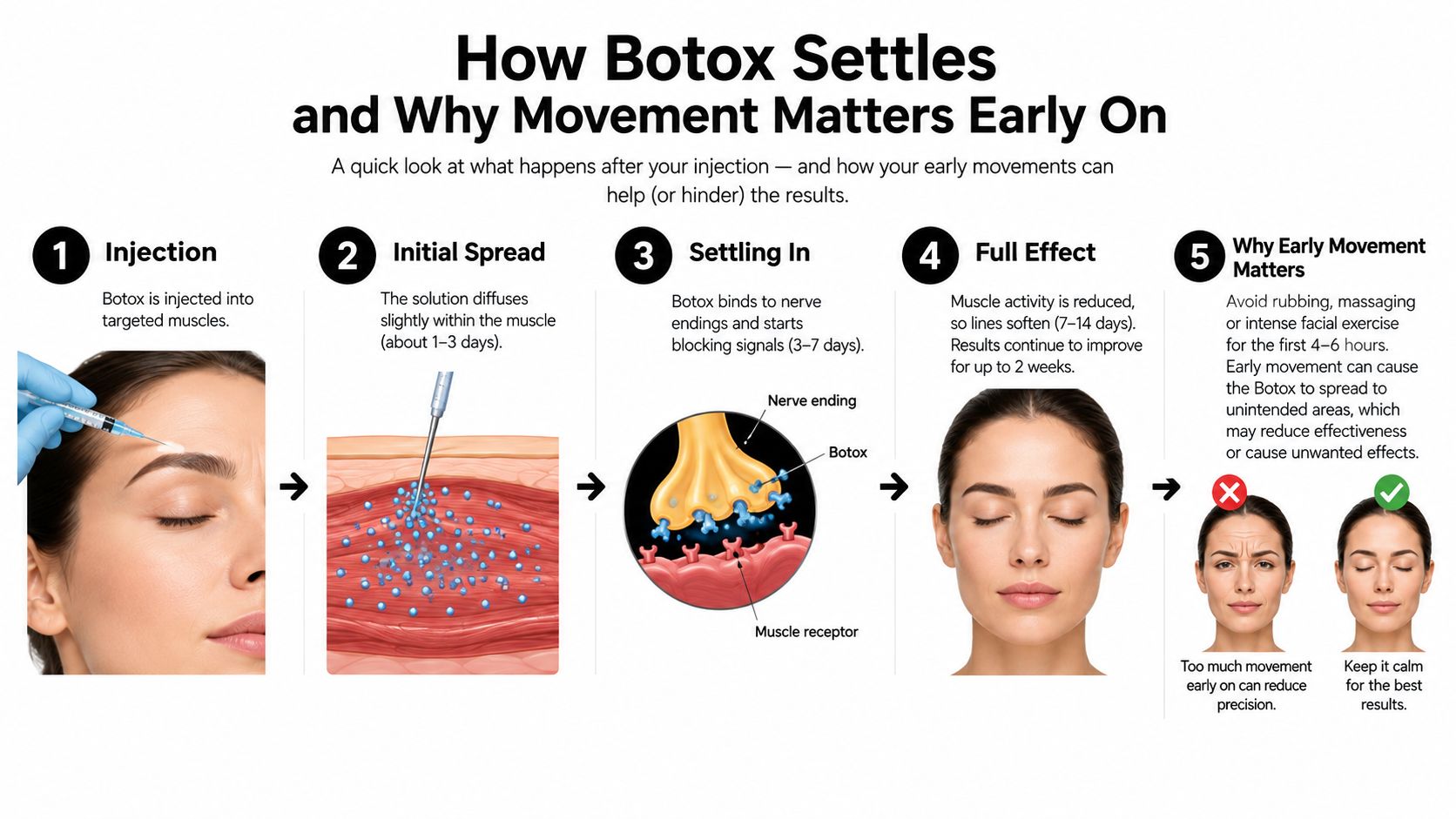
Clinical overviews acknowledge limited evidence that activity changes settling, but the conservative aftercare approach remains common because bruising and swelling are visible, uncomfortable, and avoidable concerns. If you want a broader explanation of onset and early changes, see when Botox starts to work.
The practical takeaway is straightforward. Early concern is not that every facial movement will undo treatment. It is that a high-intensity workout creates several temporary conditions clinicians would rather not combine with fresh injection sites.
Workout Types and How Long to Wait Before Each
I use an intensity ladder when patients ask how soon they can train. The less an activity raises heart rate, heat, facial pressure, and blood pressure, the less concern it generally creates. Your treatment area, injection depth, dose, bruising tendency, and provider's technique still matter.
| Workout Type | Recommended Wait | Primary Risk |
|---|---|---|
| Light walking and casual errands | Same day is usually acceptable | Minimal increase in circulation |
| Moderate cardio, such as jogging or cycling | About 4 to 6 hours, once initial redness has settled | Bruising and swelling |
| Heavy lifting, HIIT, and CrossFit-style training | At least 24 hours | Blood-pressure spikes and possible migration |
| Hot yoga, hot Pilates, saunas, and steam rooms | 24 to 48 hours | Heat-related vessel dilation and swelling |
| Inversions, including downward dog | Avoid the same day | Facial pressure and possible migration |
| Contact sports or activities with helmet pressure or impact | 48 hours | Pressure, impact, bruising, and swelling |
The shorter window for moderate cardio reflects a more permissive approach used by some clinicians. It doesn't replace the common conservative standard. Medical News Today's review of exercise after Botox describes the variation in guidance, including advice ranging from a short pause to the more common cosmetic-clinic recommendation of 24 hours.
Match the activity to the risk
A casual walk is usually the easiest same-day choice. Keep the pace comfortable and avoid turning it into a power walk in hot weather. Normal desk work, gentle errands, and calm household activity are also generally compatible with early aftercare.
Jogging and upright cycling sit in the middle. If your face is still red, swollen, or tender, wait longer. If your provider gives you a different interval, follow that advice because they know exactly where and how they injected.
Heavy lifting, HIIT, and CrossFit-style sessions deserve the full pause because straining can produce sharp pressure changes. Hot yoga and heated Pilates add temperature and vessel dilation, while inversions add facial pressure even when the class feels gentle. If facial movement is part of your training interest, a practical men's facial exercises guide can help you distinguish deliberate facial exercises from high-intensity full-body training.
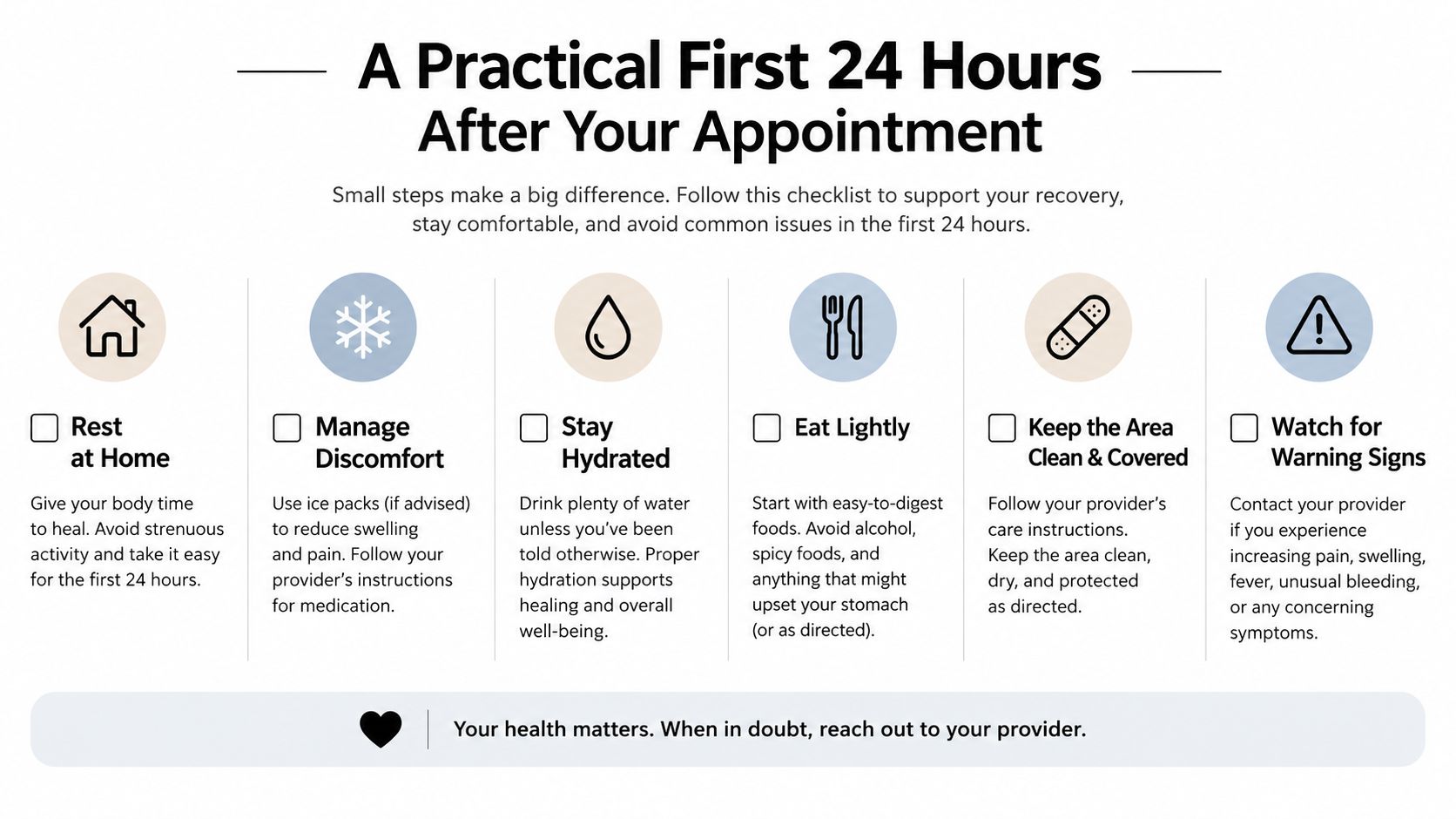
A Practical First 24 Hours After Your Appointment
The first day is easier when you plan for it before leaving the clinic. You don't need bed rest, but you should remove activities that create heat, pressure, friction, or significant exertion.
Keep the evening low-key
Normal desk work and a calm walk home are generally fine. Skip strenuous exercise, saunas, steam rooms, hot yoga, tanning beds, and very hot showers for the first day. Heat and exertion can increase circulation, facial flushing, swelling, and bruising around injection sites.
Avoid alcohol the same evening when possible. Alcohol can make bruising more noticeable, so removing it from the treatment-day routine is a sensible precaution, particularly if you already bruise easily.
Protect the injection sites
Don't massage, press, or repeatedly inspect the treated areas. The urge to rub a small bump or smooth a tender spot is common, but mechanical pressure adds an avoidable variable.
If you develop a small bruise, use a cool, gentle compress rather than pressing firmly. Sleep on your back that night if you can, rather than placing your face against the pillow. Your provider may give you more specific instructions, and BotoxBarb's aftercare guidance can serve as a useful general reference.
A quiet evening doesn't mean you must avoid every expression or conversation. It means avoiding the combination of vigorous exercise, heat, pressure, and unnecessary handling while the treatment area settles.
Does Working Out Outlast Botox Make It Wear Off Faster
Many frequent exercisers worry that a high training load makes Botox disappear quickly. The honest answer is that the long-term evidence remains mixed and limited, so I don't tell patients to abandon exercise or assume their results will definitely fade faster.
A Northwestern Medicine study involving a very small sample of 22 women found that facial exercise after injections sped visible wrinkle reduction by about one day. The finding is interesting, but it addresses early visible change, not proof that regular full-body workouts shorten Botox longevity. Northwestern Medicine's report describes that specific observation.
More recent reporting has discussed a 2023 clinical trial suggesting that highly active people may experience faster fading over three months, but experts still say there isn't enough evidence to recommend changing exercise habits to preserve Botox results. That distinction matters. A possible association is not the same as a universal rule for every runner, lifter, cyclist, or recreational athlete.
What I look for in practice
I pay attention to patterns rather than making assumptions based on fitness alone. A patient who feels Botox fades quickly may be noticing one of several different issues:
- Muscle strength: Strong, frequently used muscles may create a different visual impression as movement returns.
- Treatment goals: Softening a line is not the same as eliminating every expression.
- Dose and placement: Small changes in injection strategy can affect perceived duration.
- Baseline movement: Some people monitor their face closely and notice subtle motion earlier.
- Training style: Repeated facial tension during effort may influence how results are perceived, even when the underlying duration is uncertain.
Keep a simple record of when movement returns, where lines reappear, and how your training looks during that period. Bring those observations to your injector. That conversation is more useful than reducing a complex question to “exercise makes Botox wear off faster.”
Supporting Recovery with the LED Facial Mask
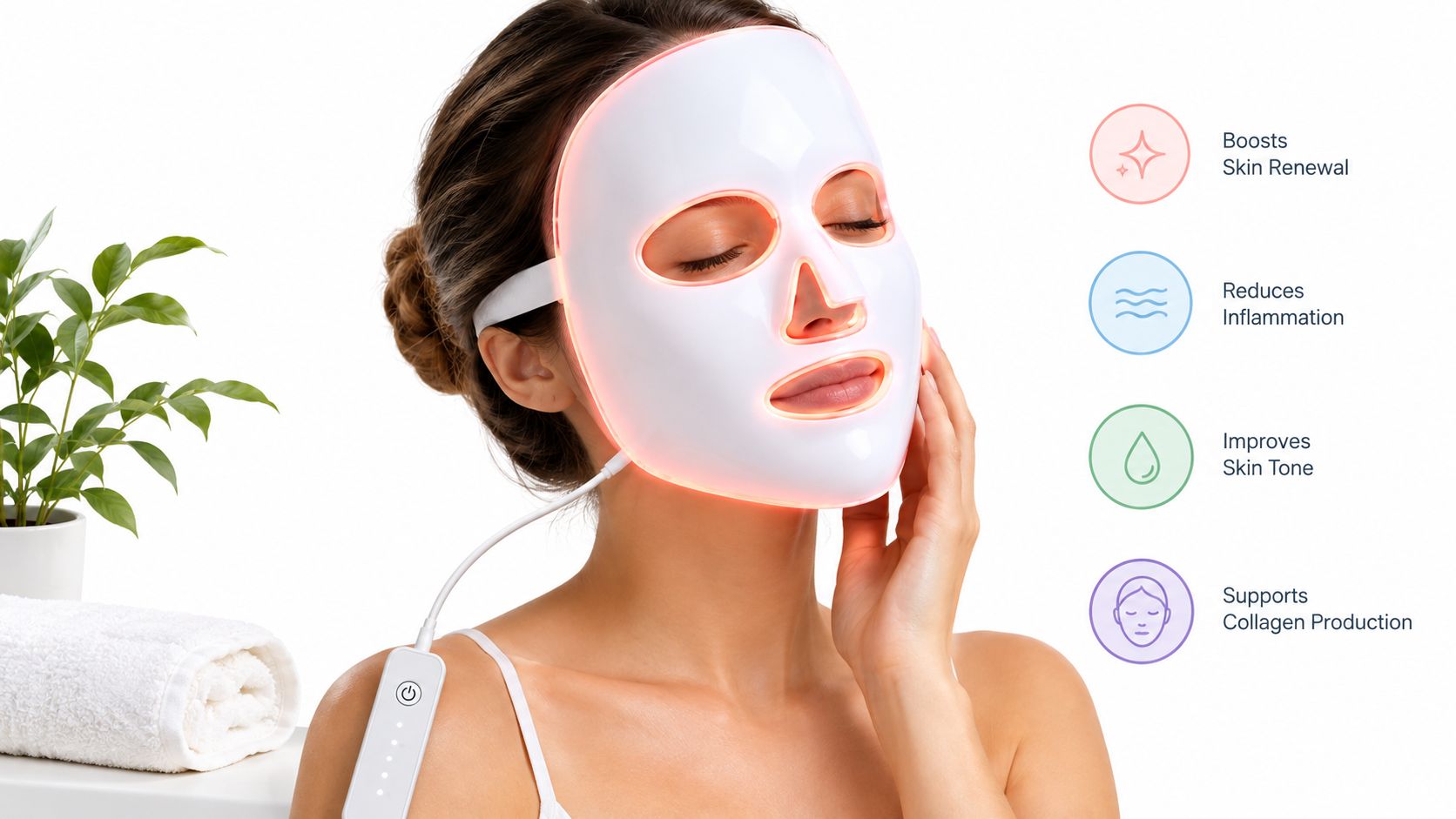
A patient who schedules Botox around a training routine often wants something constructive to do during the exercise pause. I commonly discuss an LED facial mask as a complementary at-home skincare tool, not as a replacement for injection aftercare or medical assessment.
The Barb N.P. Facial Mask has a wireless, hands-free design and a soft silicone fit intended to sit comfortably against the face without requiring the user to hold it. It offers three lighting settings, red, near-infrared, and blue, so the setting can be matched to the person's broader skincare routine.
Use it as a calm recovery ritual
Once the initial post-treatment wait has passed and your injector confirms that LED use is appropriate, red and near-infrared settings may support a calmer-looking complexion and recovery-focused skincare routine. Blue light is often chosen by people who also deal with mild blemish concerns, although it shouldn't be treated as a solution for every breakout or post-injection reaction.
The important practical point is timing. Don't press a mask onto fresh injection sites if the area is tender, swollen, or irritated, and don't use a device to replace instructions from your provider. Review the benefits of LED light therapy for broader skincare context, then follow the device directions and your clinic's recommendations.
People comparing different approaches to facial aging may also find it useful to read about how to prevent Ozempic face with collagen. That topic involves wider skincare, nutrition, and volume considerations, while an LED mask is a topical, noninvasive addition to a routine. Neither changes the need to respect the early Botox aftercare window.
Resuming Your Normal Training Routine Safely
The morning after treatment, many individuals can return to training with a little more judgment than usual. A cautious restart is more useful than trying to prove that you can tolerate a maximum-effort session.
Start with the basics:
- Prepare the night before. Hydrate normally, arrange a lower-intensity session, and avoid planning a sauna or heated class immediately after.
- Arrive with clean skin. This reduces the need to scrub or manipulate the face around the appointment.
- Respect the first day. Keep strenuous exercise and significant heat out of the initial 24-hour period unless your injector has given you different instructions.
- Follow facial instructions precisely. If your provider recommends gentle expressions such as frowning or raising your eyebrows during the first hour, follow that specific advice. Don't add vigorous facial massage.
- Sleep on your back. This limits direct pressure on treated areas during the night.
- Begin moderately. Your first session back should be familiar and controlled, not a personal-record attempt.
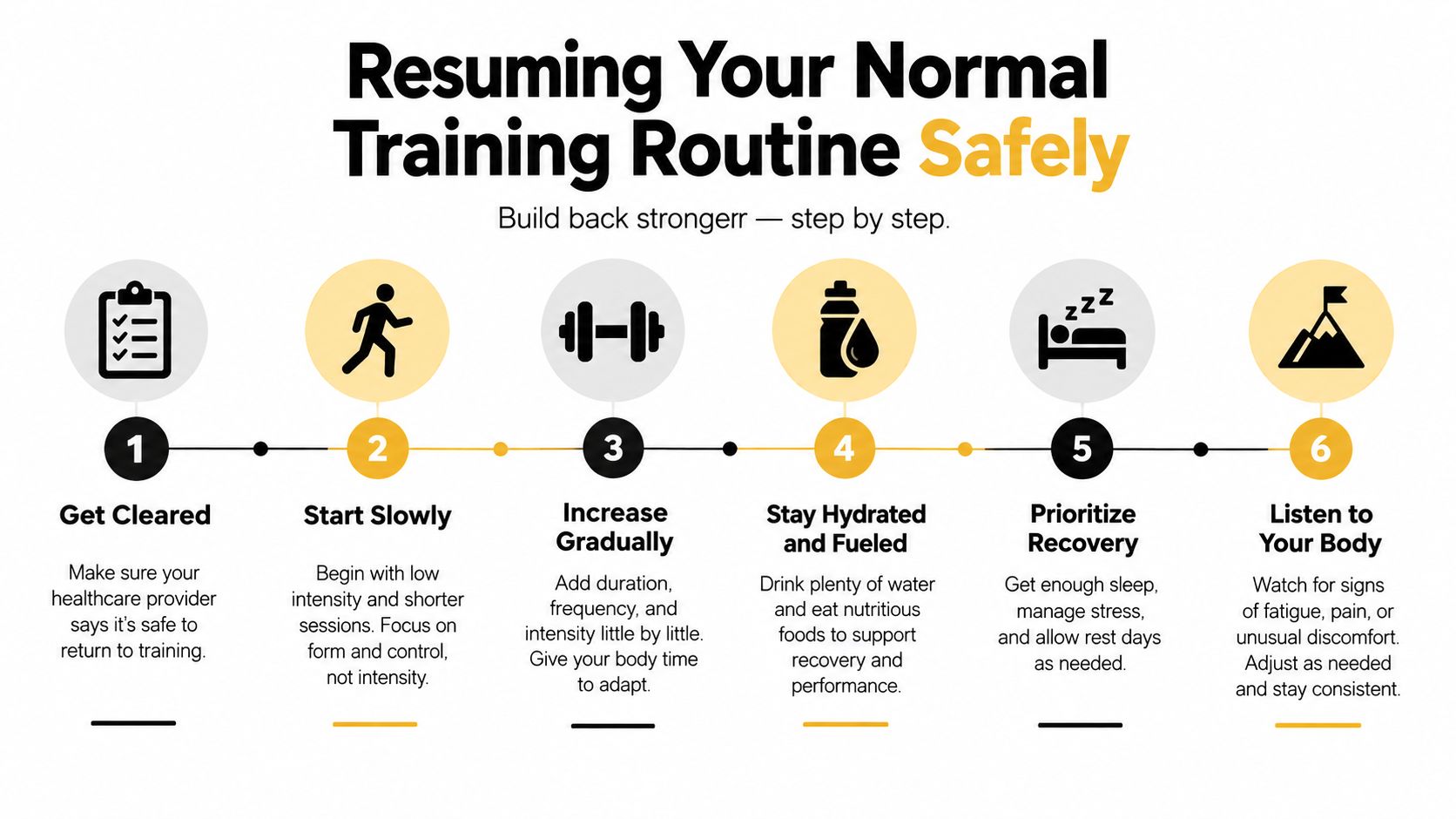
During that first workout, notice more than your performance. Watch for new facial swelling, an unusual headache pattern, or a change in expression that becomes apparent while cooling down. Stop if the forehead feels unusually tight or uncomfortable, and contact your provider if symptoms concern you.
A short training log can help. Note the workout type, perceived effort, facial sensations, and whether symmetry looks different when you make familiar expressions. Keep hot environments, saunas, and deep-tissue face-down facial massage out of the plan until the 48-hour checkpoint, especially if you remain bruised or swollen.
Common Questions Patients Ask at the Front Desk
Does sweat from a hot commute count?
Mild perspiration from walking through a warm environment usually isn't the same as dripping sweat from a run. Sweat itself isn't the central concern. The issue is the exertion, heat, and circulation that usually accompany intense sweating.
If you arrive home flushed and uncomfortable, cool down naturally and avoid adding a hot shower, sauna, or workout. Let your face settle rather than rubbing it dry.
Can I lie face-down for a back massage?
Avoid lying face-down for the first 4 hours after treatment. Later, a massage may be possible with a well-padded face cradle, but don't let the treated areas press directly against a table, and tell the massage therapist that you've recently had injections.
Can I combine Botox, a workout, and a facial or peel on the same day?
I recommend staggering a workout and facial or chemical peel rather than stacking treatments around fresh injections. A practical separation is 24 to 48 hours, depending on the procedure and your injector's advice. Heat, exfoliation, pressure, and vigorous exercise can make it harder to identify what caused new redness or swelling.
Clinics building injectable services should also establish clear aftercare workflows before they add Botox to their service line. Patients benefit when every member of the team gives consistent, treatment-specific guidance.
What if my forehead feels tight during a heavy lift?
Stop the set. Sit upright, cool down, and avoid pressing or massaging the area. If the sensation persists, becomes painful, or is accompanied by unusual swelling or visual symptoms, contact your injector promptly.
Do blood thinners or easy bruising change the timeline?
They can. Patients who take blood-thinning medication or bruise easily may be advised to wait longer, often 48 hours, before demanding exercise, with a brief provider check-in. Don't stop prescribed medication without speaking with the clinician who manages it.
BotoxBarb offers Botox, Dysport, dermal fillers, LED light therapy, PRP treatments, and medical-grade skincare with guidance suited to your treatment and routine. If you want practical advice about exercising after injections or choosing supportive skincare, visit BotoxBarb to explore services and book your consultation.