
Article: 8 Skincare Routine Before and After Case Studies
8 Skincare Routine Before and After Case Studies
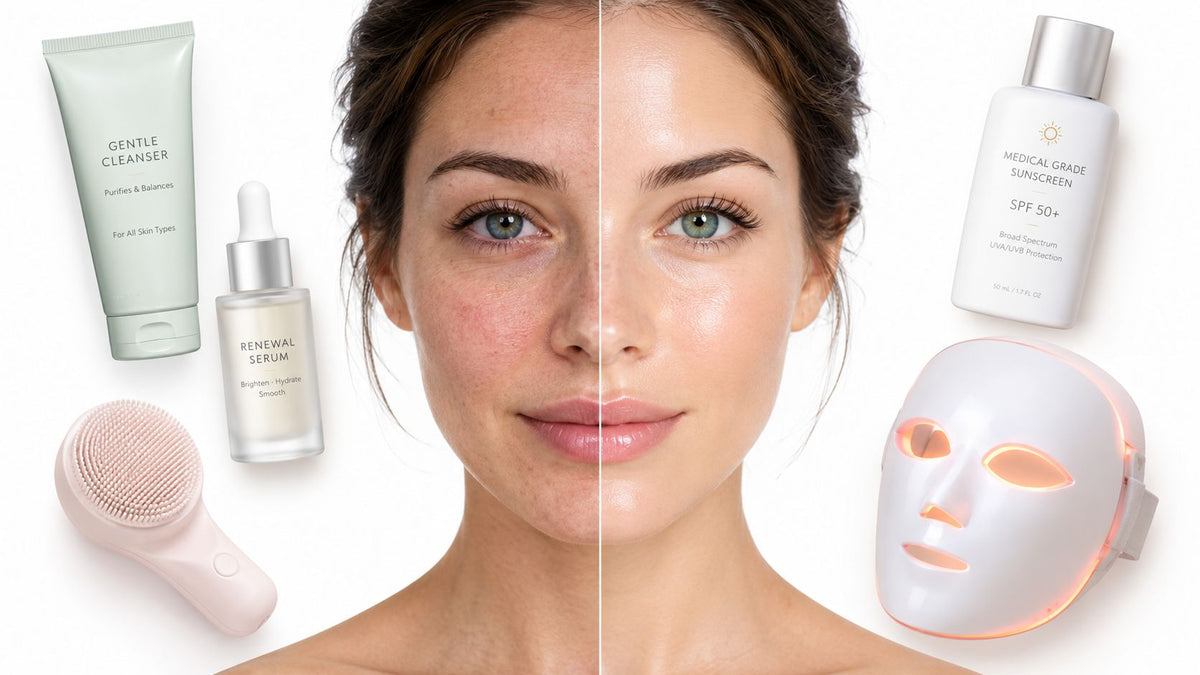
You compare two photos and see the same face, but not the same skin. In one image, the complexion looks dull, congested, reactive, or uneven. In the later photo, the texture appears calmer and the tone more consistent. The natural question is simple: which step created the difference?
A credible skincare routine before and after story isn't a promise that everyone will get identical results. It's a map of skin context, consistency, timing, product selection, professional support, and realistic expectations. The most useful transformations don't come from adding every available active. They come from matching a manageable routine to the problem in front of you.
The eight examples below move from a simple baseline to targeted protocols for aging, acne, pigmentation, sensitivity, sun damage, redness, and multiple concerns at once. They also show where LED therapy, in-clinic treatments, medical-grade products, and professional assessment can fit. BotoxBarb's curated selection includes brands such as SkinCeuticals, and the Barb N.P. Facial Mask offers a practical home option when LED therapy suits the concern.
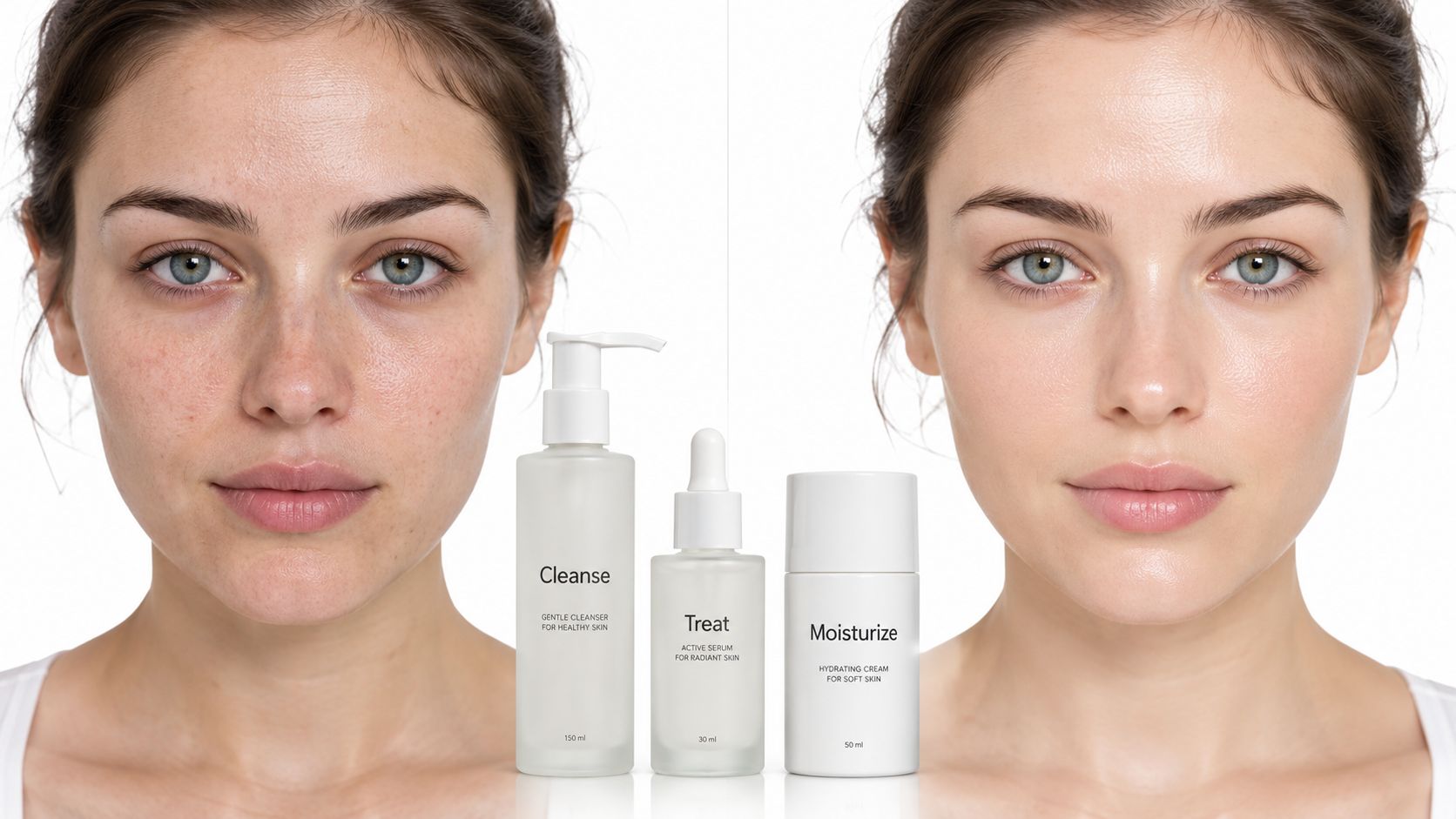
1. The Classic 3-Step Routine Cleanse Treat Moisturize
A three-step routine often creates the clearest first comparison because it removes confusion. Before the change, skin may feel tight after washing, look flat by midday, or show congestion because cleansing, treatment, and hydration happen inconsistently. After a steady routine, the complexion can look more comfortable, smoother, and less burdened by product overload.
Start with a gentle cleanser and lukewarm water. A cleanser should remove sunscreen, makeup, sweat, and excess oil without leaving the face squeaky or stripped. BotoxBarb's guide to the benefits of using a cleanser explains why this first step matters, particularly when later products need clean, balanced skin.
AM and PM
Morning
- Cleanse: Use lukewarm water, never hot water.
- Treat: Apply a targeted serum selected for congestion, dullness, or dehydration.
- Moisturize: Choose a texture that supports comfort without feeling heavy.
- Protect: Finish with broad-spectrum sunscreen.
Evening
- Cleanse: Remove makeup and sunscreen thoroughly.
- Treat: Apply the serum your skin tolerates consistently.
- Moisturize: Seal in hydration soon after the treatment step.
Medical-grade SkinCeuticals cleansers and serums can be useful for people moving from a random drugstore assortment to a more deliberate regimen. They aren't automatically better for every person, however. A well-tolerated, simpler product used regularly is more useful than a stronger formula that causes stinging and gets abandoned.
Practical rule: Product quantity doesn't determine progress. A small, repeatable routine usually beats a crowded shelf.
Give this baseline several weeks before judging it. If congestion continues, the next step isn't automatically another serum. Check cleansing consistency, sunscreen removal, moisturizer compatibility, and whether the active is appropriate for the concern. That foundation can also help patients maintain comfortable skin after Botox or filler, while those seeking to transform your skin with medical grade care may benefit from practitioner-guided product selection.
2. Anti-Aging Protocol Vitamin C Retinol and LED Light Therapy
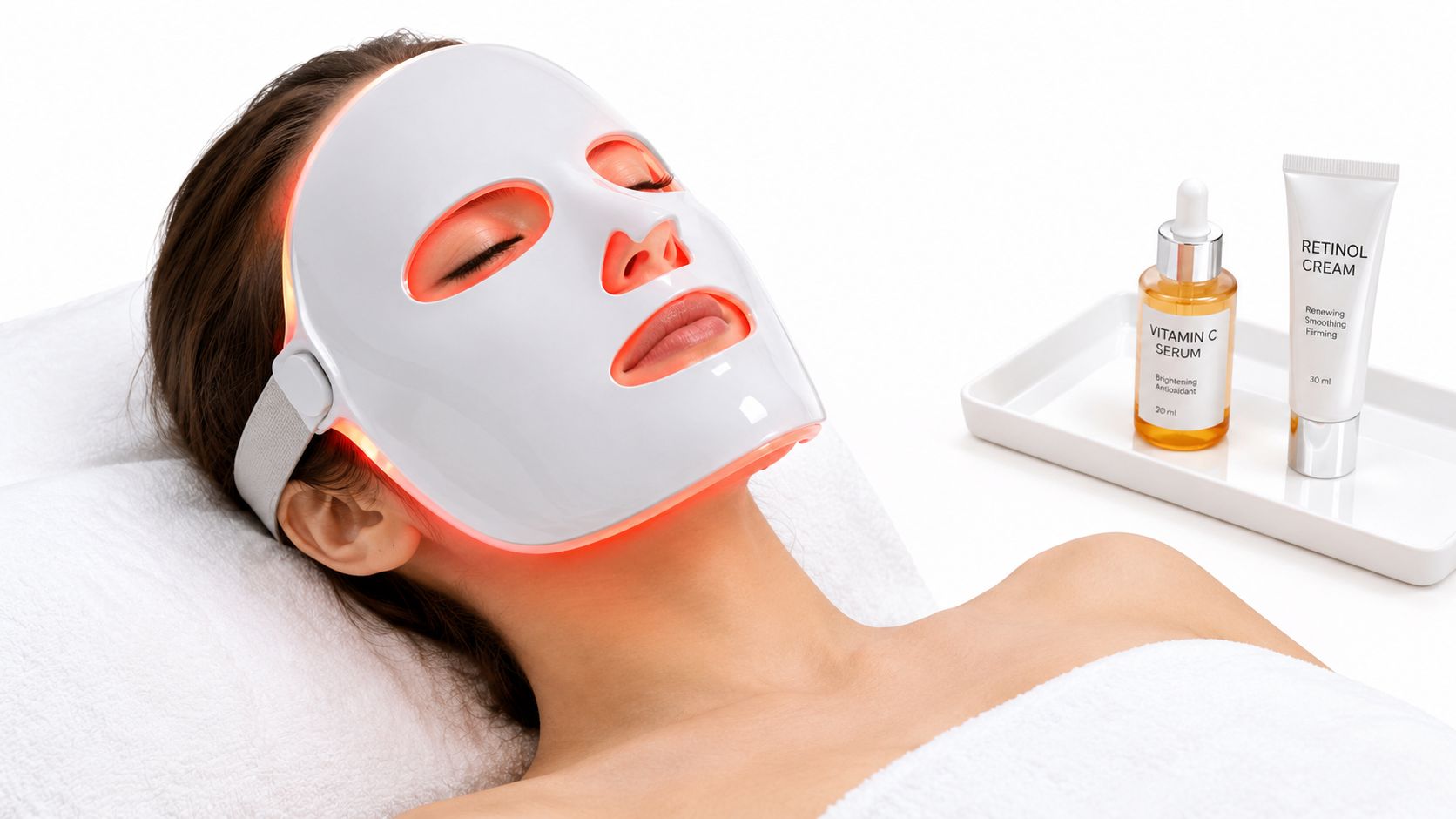
Fine lines, reduced firmness, dullness, and uneven tone need a protocol, not a single miracle product. A practical morning routine pairs antioxidant protection with moisturizer and sunscreen. At night, retinol can address texture and visible aging over time, while LED therapy may complement the broader plan.
Build tolerance before intensity
AM
- Cleanse: Keep the first step gentle.
- Antioxidant: Apply vitamin C to clean, dry skin.
- Moisturize: Use a barrier-supportive formula.
- Protect: Apply broad-spectrum SPF 30 or higher as the final daytime step, as described in this skincare routine with vitamin C.
PM
- Cleanse: Remove sunscreen and makeup.
- Retinol: Begin two or three evenings weekly, then increase only as tolerance allows.
- Moisturize: Use a richer layer if dryness appears.
Retinol should go on completely dry skin when irritation is a concern. You don't need to force nightly application, and you shouldn't combine it with every exfoliating active because the calendar says it is an “anti-aging night.” Daily sunscreen matters even more when retinol is part of the routine.
For LED support, the Barb N.P. Facial Mask is a relevant device because it is wireless, designed for close facial contact, and intended to remain comfortable during a session. Its three lighting settings allow different treatment goals, including red light for collagen-oriented care, blue light for clarifying support, and near-infrared for deeper tissue-focused use. A comfortable mask is more likely to become a consistent habit than a device that feels cumbersome.
Evidence supports measured expectations. A 12-week anti-aging regimen reported improvements in elasticity, wrinkles, surface roughness, pigmentation, erythema, and pore size, with the largest reported change in surface roughness at 41% and histology showing increased new dermal collagen and elastin fibers (clinical study). That doesn't mean every routine will reproduce those findings. It does show why before-and-after comparisons should consider texture, tone, and firmness together rather than focusing only on lines around the eyes.
3. Acne-Prone Skin Transformation Salicylic Acid Niacinamide and Blue LED
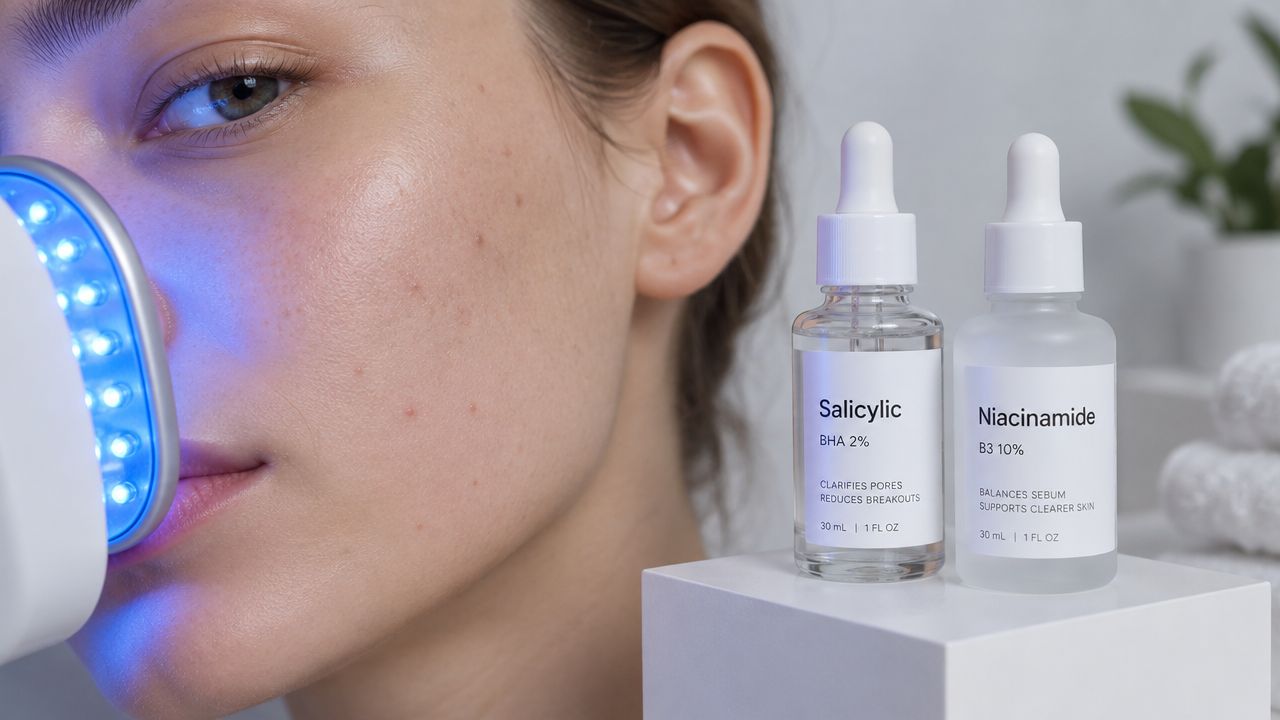
Congested, oily skin often gets worse when the response is aggressive cleansing followed by multiple drying products. A better before-and-after plan separates pore care from barrier care. Salicylic acid can address buildup, niacinamide can support a more balanced appearance, and blue LED can serve as an adjunct for acne-prone skin.
A focused routine
Use salicylic acid cautiously at first, applying it on selected evenings rather than layering it with retinol. Follow with niacinamide and a non-comedogenic moisturizer. On separate evenings, keep the routine basic. This rotation reduces the temptation to treat every breakout with a new active.
AM
- Cleanse: Use a mild gel or cream cleanser.
- Balance: Apply niacinamide if it doesn't sting.
- Moisturize: Choose an oil-free, non-comedogenic option.
- Protect: Use sunscreen to reduce the contrast of post-acne marks.
PM
- Acid nights: Cleanse, apply salicylic acid, then moisturize.
- Recovery nights: Cleanse, moisturize, and leave the skin alone.
- LED nights: Use the blue setting on clean, dry skin according to the device directions.
The Barb N.P. Facial Mask's blue setting may fit people who want a home LED option alongside topical care. It isn't a replacement for acne diagnosis, prescription treatment, or professional extraction when those are appropriate. Persistent, painful, scarring, or rapidly worsening acne deserves clinical assessment rather than an increasingly complicated home routine.
The practical result to track isn't only the number of visible spots. Note whether new lesions appear less often, whether oil feels more manageable, and whether marks fade without constant peeling. Change one variable at a time, and keep pillowcases, phones, makeup tools, and hands from becoming overlooked sources of irritation.
4. Hyperpigmentation and Uneven Tone Vitamin C Alpha Arbutin and Microneedling
Pigmentation rarely responds well to impatience. Dark spots, melasma, and post-inflammatory marks develop for different reasons, and deeper skin tones can be especially vulnerable to lingering discoloration after inflammation. The before image may show scattered marks and an uneven complexion. The after image should be judged by gradual blending, not by expecting every area to disappear at once.
Topicals protect the progress
Apply vitamin C in the morning, followed by moisturizer and sunscreen. At night, alpha arbutin can be used as a targeted brightening step if the skin tolerates it. The essential protection step is broad-spectrum sunscreen, because continued UV exposure can work against the routine and encourage recurrence. Guidance on how to use face cream with SPF can help connect moisturization with daily protection, but a separate sunscreen may still be preferable depending on the formula and exposure.
Professional microneedling can add controlled stimulation when a qualified practitioner determines that the skin is a suitable candidate. The trade-off is downtime, post-treatment sensitivity, and the need to follow aftercare precisely. Microneedling isn't a casual add-on for active infection, uncontrolled inflammation, or a poorly understood pigment disorder.
A sensible sequence looks like this:
- Morning: Cleanse, vitamin C, moisturize, sunscreen.
- Evening: Cleanse, alpha arbutin, moisturize.
- Between appointments: Avoid experimenting with strong exfoliants or picking at treated skin.
- If the marks persist: Ask whether the diagnosis is melasma, post-inflammatory hyperpigmentation, a medication effect, or another condition.
The visible timeline is gradual. Topical consistency may improve luminosity before stubborn spots look substantially different. If pigment continues to deepen, professional assessment matters more than increasing the concentration or frequency of every brightening product.
5. Sensitive and Compromised Barrier Repair With a Hydration-First Approach
When skin burns, flakes, feels tight, or reacts to products that once seemed harmless, adding another active usually makes the before-and-after comparison worse. A compromised barrier needs fewer demands. The initial target is comfort, not rapid resurfacing.
AM and PM reset
For both morning and evening, cleanse only as needed with a mild formula and lukewarm water. Apply a hydrating serum such as hyaluronic acid to damp skin, then use a moisturizer containing barrier-supportive ingredients such as ceramides. If dryness is severe, an occlusive layer can reduce water loss. People looking for a gentle framework to restore skin barrier gently should prioritize tolerance over a long ingredient list.
Pause retinoids, exfoliating acids, scrubs, and strong brightening combinations during the repair phase. Sunscreen remains important in the morning, but choose a product that doesn't sting and remove it gently at night. After Botox, fillers, laser treatments, or other procedures, follow the treating clinician's instructions rather than applying a favorite active automatically.
A controlled study of a mild cleanser used once daily with a glycerin-rich moisturizing lotion used twice daily for two weeks found significantly greater improvement than control in clinical and visual dryness scores. More than 80% of participants reported less dryness or pruritus and better skin texture (study on cleanser and moisturizer care). This evidence supports the boring-looking routine many irritated faces need.
Recovery is a treatment phase, not a failure to treat.
If redness, swelling, pain, crusting, or persistent itching doesn't settle, stop self-experimentation and seek medical advice. Once the skin feels stable, reintroduce one active at a time. The next troubleshooting step is usually frequency reduction, not product replacement.
6. Sun Damage Reversal With Brightening and Professional Red Light LED
Sun-damaged skin often combines several visible concerns: rough texture, brown spots, dullness, and reduced firmness. A credible before-and-after plan starts with prevention. No brightening serum or LED device can compensate for regular unprotected exposure.
Protection comes before correction
Morning: Cleanse, apply a brightening serum, moisturize if needed, and finish with broad-spectrum sunscreen. Reapply when outdoors according to the exposure conditions and product instructions. A modern sunscreen routine grew from early protective creams to measurable standards. The history of sunscreen records Franz Greiter's 1938 development of an early modern sunscreen, his commercialization of Glacier Cream in 1946, and the U.S. Food and Drug Administration's adoption of SPF as a standard in 1978. Broad-spectrum UVA protection wasn't standardized until the 2000s, which helps explain why contemporary prevention is more advanced than just avoiding a sunburn.
Evening: Cleanse, apply a suitable brightening or DNA-repair-oriented product, and moisturize. Introduce retinol separately if the barrier is comfortable. Combining every strong active on one night increases irritation and can make pigmentation more noticeable.
Red LED may complement this plan when used consistently. The Barb N.P. Facial Mask offers a wireless format, a face-conforming fit designed for comfort, and a red setting identified at 630 nm in the product positioning. Independent evidence remains more useful for setting expectations than for promising a dramatic reversal. One explainer citing a 2023 study reported that twice-weekly red-light mask use for three months reduced crow's-feet depth by 15.6%, increased skin density by 26.4%, and improved elasticity by 12.5% (red-light mask evidence).
Those results don't erase established sun damage. New or changing spots, rough lesions, bleeding areas, or suspicious marks need medical evaluation before cosmetic treatment. The next step for persistent discoloration may be a clinician-led plan involving prescription products, peels, lasers, or other procedures.
7. Anti-Inflammatory and Rosacea Management With Calming LED
Rosacea-prone skin needs stability before it needs ambition. A typical before image may show flushing, persistent redness, visible small vessels, or a complexion that reacts to heat, alcohol, spicy foods, stress, or new products. The after image should focus on fewer flares and greater comfort, not on claiming that a home routine permanently removes a chronic condition.
Keep the routine deliberately gentle. Cleanse with lukewarm water, apply a calming serum if tolerated, moisturize, and use sunscreen in the morning. In the evening, cleanse and moisturize again. Avoid scrubs, steam, harsh acids, and sudden retinol introduction while the skin is actively reactive.
The Barb N.P. Facial Mask's red and near-infrared settings may be relevant to a calming-focused routine because the mask is designed for close facial contact without requiring a wired setup. Its wireless construction can make regular use easier, while the comfortable fit reduces one practical barrier to adherence. Start conservatively and stop if heat, stinging, or flushing increases.
Track triggers, not just products
Keep a short record of flare timing, weather, hot beverages, alcohol, spicy foods, stress, sleep, and product changes. That record can reveal patterns that a bathroom mirror can't. LED should remain an adjunct, not a substitute for diagnosis or prescribed rosacea treatment.
Evidence for LED devices varies by wavelength, device, treatment schedule, and study design. Independent reporting distinguishes red light for fine-line and collagen-oriented goals, blue light for acne-related concerns, yellow light for soothing and hydration-oriented claims, and purple light for combined radiance positioning (LED wavelength reporting). The correct setting depends on the primary concern and the skin's response, not on using every mode in one session.
If flushing is frequent, painful, or associated with eye symptoms, seek professional assessment. Persistent redness can have more than one cause, and concealing it with increasingly strong products can delay useful treatment.
8. Complete Skin Reset With Cleanse Treat Protect and Professional Support
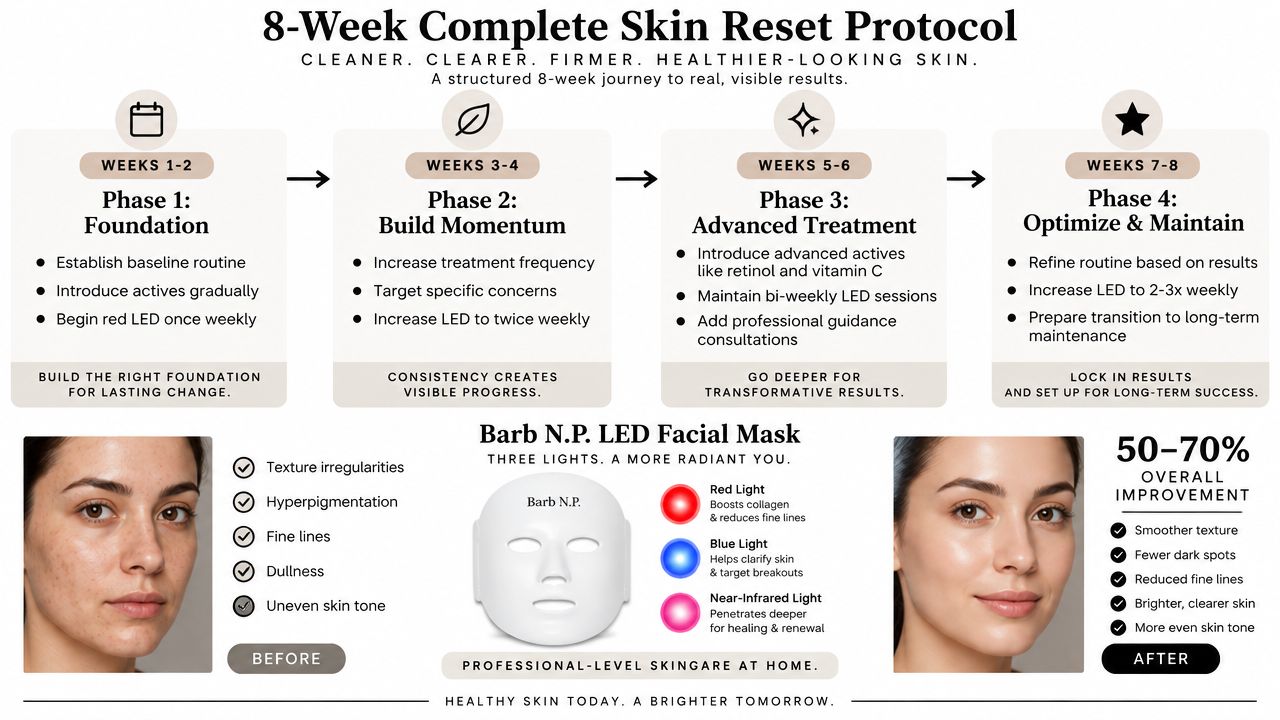
Some readers don't have one isolated concern. Their before photo shows uneven texture, pigmentation, fine lines, dullness, dehydration, and a routine that changes every few days. A complete reset should still begin with restraint. Combining everything at full intensity is more likely to create irritation than clarity.
An eight-week framework
Morning
- Cleanse: Use a gentle cleanser.
- Treat: Select one primary serum for the main concern.
- Moisturize: Support comfort and tolerance.
- Protect: Finish with broad-spectrum sunscreen.
Evening
- Cleanse: Remove environmental residue and sunscreen.
- Treat: Rotate retinol, pigment care, or acne care rather than stacking them.
- Moisturize: Use a recovery-focused formula on non-active nights.
LED sessions can be added when the device and concern are appropriate. The Barb N.P. Facial Mask's wireless design, comfortable facial fit, and three lighting settings make it practical to choose red, blue, or near-infrared support instead of treating every problem with the same wavelength. Professional LED therapy, injectables, PRP, and other in-clinic services may fit into a broader plan, but timing and contraindications need individual review.
A clinical study involving a face-conforming LED mask used a split-face design in 33 participants. Combining a 630 nm LED treatment with a skin-booster procedure improved deep-skin elasticity by 12.8%, compared with 3.1% for the procedure alone, and the study also reported greater moisture-loss reduction on day three plus significant improvement in five brightening-related indicators (2024 LED and skin-booster study). That finding is specific to the studied combination, not a guarantee for a general home routine.
Treat the reset as a process of dose optimization. Photograph the same area in similar lighting, record irritation, and change only what you can evaluate. If one concern worsens, simplify that part of the protocol instead of abandoning every supportive step.
Before & After: 8 Skincare Routine Comparisons
| Protocol | Complexity 🔄 | Resource needs ⚡ | Expected outcomes 📊 ⭐ | Ideal use cases 💡 | Key advantages ⭐ / Quick tips 💡 |
|---|---|---|---|---|---|
| The Classic 3‑Step Routine: Cleanse, Treat, Moisturize | Low, simple 5–10 min daily | Low, few products, no devices | Clearer complexion, improved texture & hydration in 4–6 weeks (⭐⭐) | Daily maintenance, beginners, post-injectable upkeep | Builds habit, accessible, enhances professional results. Tip: apply serum to damp skin and moisturizer within 60s. |
| Anti‑Aging Protocol: Vitamin C + Retinol + LED | High, multiple actives + weekly LED; progressive ramp | High, prescription/medical retinol, LED mask, time | Noticeably smoother skin, reduced fine lines, increased firmness in 8–12 weeks (⭐⭐⭐) | Mature skin, wrinkle prevention, collagen stimulation | Synergistic topical + LED for collagen. Tip: start retinol slowly; use SPF 30+ and LED 2–3×/wk. |
| Acne‑Prone Transformation: Salicylic + Niacinamide + Blue LED | Medium, exfoliation schedule + LED sessions | Medium, salicylic products, blue LED mask, non‑comedogenic care | Reduced active breakouts (2–8 weeks), less oil and smaller pores (⭐⭐) | Active acne, oily/congested skin, teens & young adults | Blue LED offers antibacterial effects vs oral antibiotics. Tip: avoid salicylic+retinol same night; change pillowcases regularly. |
| Hyperpigmentation: Vitamin C + Alpha Arbutin + Microneedling | High, topical regimen + monthly professional sessions | High, professional microneedling, brightening serums, SPF50+ | Significant fading of dark spots and evening of tone in 10–12 weeks (⭐⭐⭐) | Melasma, post‑acne marks, stubborn pigmentation (including deeper skin tones) | Multi‑level pigment targeting; microneedling enhances penetration. Tip: strict SPF 50+ and patience (8–12 wks+). |
| Sensitive & Barrier Repair: Hydration‑First Approach | Low–Medium, minimalist layering, avoid actives | Low, hyaluronic acid, ceramides, fragrance‑free products | Reduced redness and irritation; restored comfort in 1–4 weeks (⭐⭐) | Reactive skin, post‑procedure recovery, eczema/rosacea‑prone | Rapid barrier recovery, prepares skin for later actives. Tip: apply HA to damp skin, skip actives while repairing. |
| Sun Damage Reversal: Brightening + DNA Repair + Red LED | High, intensive topicals + weekly red LED | High, DNA repair serums, red LED mask, consistent SPF50+ | Smoother texture, faded sun spots, improved radiance in 12–16 weeks (⭐⭐⭐) | Photoaging, decades of sun exposure, sun spots | Cellular repair + collagen induction; non‑invasive alternative to lasers. Tip: use DNA repair serum before LED and SPF50+ daily. |
| Anti‑Inflammatory & Rosacea Management: Gentle + Red/NIR LED | Medium, gentle regimen + 2–3×/wk dual LED, trigger management | Medium, low‑irritant products, red+NIR LED mask | Less redness, fewer flushing episodes and calmer skin in 4–10 weeks (⭐⭐) | Rosacea, persistent redness, inflammatory conditions | Reduces inflammation and steroid dependency. Tip: avoid triggers, use mineral SPF, combine red+NIR 2–3×/wk. |
| Complete Skin Reset: Intensive 8‑Week Protocol | Very High, daily advanced routine + bi‑weekly clinic LED & consults | Very High, professional products, bi‑weekly LED sessions, clinician time | Dramatic multi‑concern improvement (50–70% overall) in ~8 weeks (⭐⭐⭐⭐⭐) | Multi‑concern transformations, event prep, comprehensive resets | Most comprehensive non‑invasive results with personalized support. Tip: commit fully, attend bi‑weekly visits and plan maintenance. |
Turn the Comparison Into a Sustainable Routine
The common pattern across these eight transformations is straightforward. Establish cleansing, treatment, moisturization, and medical-grade sunscreen before adding stronger actives or devices. Match LED settings to the primary concern, introduce retinol and exfoliants gradually, and separate barrier recovery from aggressive treatment.
How to judge progress
A useful before-and-after comparison checks more than brightness. Look at hydration, comfort, new breakouts, roughness, redness, pigment contrast, and how often the routine causes stinging. Use consistent lighting and angles, and give a routine enough time to show a pattern. A single favorable photo can reflect lighting, makeup, hydration, or facial expression rather than a durable skin change.
What to do when irritation appears
Stop the newest or strongest active first. Return to gentle cleansing, moisturizer, and sunscreen until the skin feels comfortable, then reintroduce one product at a lower frequency. Don't use burning as proof that a formula is working. Persistent swelling, pain, crusting, severe itching, or worsening redness needs professional advice.
When acne or pigmentation needs assessment
Acne that is painful, scarring, persistent, or rapidly worsening may need prescription care. Pigmentation that changes quickly, returns despite protection, or doesn't fit the expected pattern also deserves evaluation. Melasma, post-inflammatory hyperpigmentation, rosacea, medication-related changes, and suspicious lesions require different approaches, so a stronger serum isn't always the correct next step.
How in-clinic care fits
Professional treatments can support a home routine when the clinician matches the procedure to the skin's condition and the timing is appropriate. Microneedling, LED therapy, PRP, Botox, Dysport, and fillers each have different indications and aftercare considerations. After injections, for example, BotoxBarb's published guidance emphasizes gentle cleansing after about four hours, avoiding retinol and potent vitamin C for at least three days, and using hydration plus SPF 30 or higher. Follow the treating professional's instructions over a general online schedule.
Why maintenance matters
The visible after photo is a checkpoint, not the end of care. Continue the basics that protect the result, especially sunscreen, gentle cleansing, tolerable treatment, and moisturization. If your routine becomes difficult to follow, reduce steps before you reduce consistency.
BotoxBarb's product selection and professional guidance can help you compare medical-grade skincare, sun protection, LED light therapy, and in-clinic options without treating every concern as the same problem. The best routine is the one that fits your skin's biology, your tolerance, and the habits you can maintain.
BotoxBarb offers medical-grade skincare from brands such as SkinCeuticals, appointment-based aesthetic services, and LED light therapy support for people building a practical before-and-after plan. Visit BotoxBarb to explore the product selection and arrange guidance suited to your skin concerns.

