CO2 Laser for Stretch Marks: A Complete 2026 Guide
You've probably already tried the first wave of stretch mark advice. Creams that promise repair. Oils that feel nice but don't change texture. Maybe a retinoid, maybe exfoliation, maybe a drawer full of “skin renewing” products that helped hydration more than the marks themselves.
That frustration is reasonable. Stretch marks aren't just dryness or discoloration on the surface. They reflect structural change in the skin, which is why surface-only treatments often disappoint. If the goal is meaningful textural improvement, the conversation usually has to move from cosmetics to procedures.
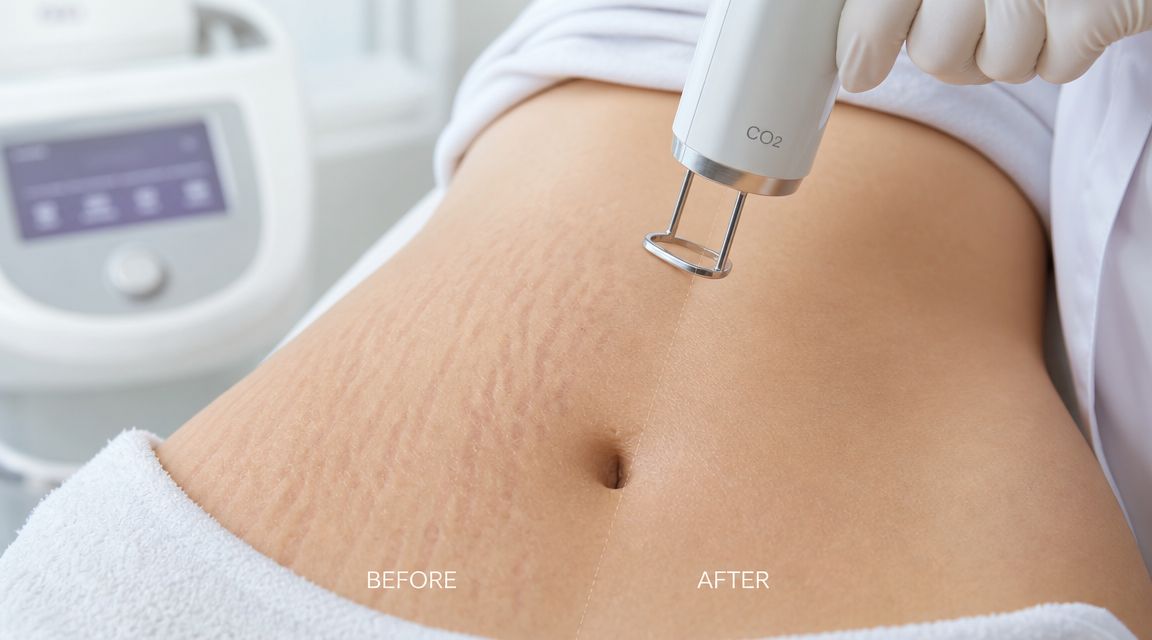
Fractional CO2 laser sits in that medical category. It isn't a magic eraser, and I never present it that way. It's a resurfacing and remodeling treatment that works by creating controlled injury in the skin so the body rebuilds some of what was lost. That matters because the primary target in stretch mark treatment is skin quality: smoother texture, less indentation, and better blending with surrounding skin.
From a practitioner's perspective, the patients who tend to feel happiest with CO2 are the ones who understand two things up front. First, improvement is usually gradual. Second, “better” is the right goal, not “gone.” When expectations are realistic, this treatment can be a very strong option for patients who are tired of hiding the area and want to actively rebuild it.
Stretch mark treatment works best when you stop asking, “Can this erase them?” and start asking, “Can this improve the skin enough that I stop fixating on them?”
Introduction The Reality of Treating Stretch Marks
A common consultation goes like this. Someone has already tried creams, oils, and months of consistent home care. The color may have faded, but the skin still looks creased, thin, or uneven when light hits it from the side. That is usually the point when procedural treatment becomes a reasonable discussion.
CO2 laser for stretch marks stands apart because it targets structural change in the skin, not just surface hydration. Fractional CO2 has been studied for striae because it creates controlled micro-injuries that prompt collagen remodeling and can improve texture and blending over a series of sessions. In practice, that matters most for patients bothered by indentation, crinkling, or the way the marks catch shadow.
I tell patients this early. Good treatment plans for stretch marks are rarely one-note. Laser can do a lot of the heavy lifting, but results often depend on the full strategy around it, including careful aftercare, barrier support during healing, and in some cases combination treatment with modalities such as microneedling, radiofrequency, or vascular-targeted treatment for red striae. That broader plan is often what separates modest improvement from a result that feels worthwhile.
Why topicals often hit a ceiling
Topicals still have value. They reduce dryness, support the skin barrier, and can make the area feel more comfortable.
They do not reliably rebuild dermal structure.
If a stretch mark feels indented or looks thinned compared with the surrounding skin, the main problem sits deeper than the stratum corneum. That is why patients who are frustrated by texture, not just color, often start asking about devices.
The patterns I hear most often are:
- “It's the texture that bothers me.” The skin feels crinkled, papery, or uneven.
- “They show more in certain lighting.” Shadowing and surface change stand out more than pigment alone.
- “Products helped the skin, not the marks.” Moisturizers improved comfort, but not the actual contour.
A more realistic mindset
Fractional CO2 is usually best approached as a treatment course with recovery built into it. It asks for downtime, sun avoidance, and disciplined post-care. In return, it offers a level of remodeling that topical skincare cannot usually produce on its own.
The trade-off is straightforward. More tissue response usually means more healing time. In my experience, patients do best when they choose CO2 for a clear reason, understand that improvement comes in stages, and are willing to support the skin properly afterward with measures such as guided wound care and, in the right setting, adjunctive LED therapy to calm inflammation and support recovery.
How Fractional CO2 Laser Remodels Your Skin
Think of fractional CO2 the way you'd think about aerating a lawn. You don't rip up the whole yard. You create many tiny, controlled openings so the system can regenerate more effectively. In skin, that same principle lets the treated area heal from surrounding intact tissue while triggering a deeper repair response.
“Ablative” means the laser removes tiny columns of tissue. “Fractional” means it does this in a patterned way, leaving untreated skin between those columns. That spacing is what makes healing possible without treating the entire surface as one solid wound.

What the laser is actually doing
The fractional CO2 laser used for striae operates at a 10,600 nm wavelength. In one clinical study, settings of 140 mJ were used, and the laser showed significantly greater reduction in stretch mark surface area than topical 10% glycolic acid plus 0.05% tretinoin, as reported in the clinical study on 10,600 nm fractional CO2 for striae alba.
That gives you a practical takeaway. This isn't just a glow treatment. It's a procedure with enough tissue effect to change the physical dimensions of stretch marks in studied settings.
Why texture improves first
Most patients notice texture changes before they notice color changes. That makes sense clinically. Fractional CO2 is strongest as a remodeling tool. It helps flatten, smooth, and tighten the uneven architecture of the mark by stimulating new collagen organization during healing.
A useful way to think about outcomes:
- Microscopic channels are created in the damaged skin.
- Healing signals activate and the skin starts repairing those channels.
- New collagen forms in a more organized pattern.
- The stretch mark softens and blends better with nearby skin.
Clinical perspective: The more a stretch mark behaves like a texture problem, the more fractional resurfacing tends to make sense.
What it does not do
It doesn't rebuild the skin overnight. It doesn't guarantee the same response in every patient. It also doesn't mean stronger settings are always better. Stretch mark treatment is a balancing act between visible improvement and tolerable downtime. Good treatment planning is less about intensity alone and more about whether the settings match the skin type, body area, and healing profile.
Are You an Ideal Candidate for CO2 Laser Treatment
Candidacy comes down to fit. I look at the age of the stretch marks, your skin tone, how your skin heals, and whether the expected downtime matches your life and goals.
The type of stretch mark matters first. Newer red marks and older white marks can both improve with fractional CO2, but they usually improve in different ways and at different speeds.

Red versus white stretch marks
Red stretch marks often have more active vascular change, while white stretch marks are older and more atrophic. In clinic, that usually means red marks may respond a bit more readily, while white marks tend to need more sessions and stricter expectation setting.
That does not make older pale marks a poor treatment target. It means the goal is usually improvement, not erasure. Texture, edge softening, and blending with surrounding skin are realistic targets. Complete clearance usually is not.
Some patients with early, shallow stretch marks are also better served by a lower-downtime resurfacing approach, such as a CoolPeel CO2 laser treatment option, especially if they want a more conservative first step. For deeper or more established striae, standard fractional CO2 often has more remodeling power.
Skin tone matters
Deeper skin tones need more caution, not automatic exclusion. Fractional CO2 can still be appropriate, but the chance of post-inflammatory hyperpigmentation changes the plan.
A careful consultation should cover:
- How your skin reacts after cuts, bites, acne, or previous procedures
- Whether you tan easily or have recent sun exposure
- The body area being treated, since friction and occlusion can slow recovery
- Whether the main issue is texture, color contrast, or both
- How consistent you can be with aftercare
This is also where a holistic plan matters. In higher-risk pigment patients, I am more likely to build in barrier-focused post-care, strict UV protection, and supportive recovery tools such as LED therapy at home or in clinic. Combination care does not replace the laser, but it can make healing calmer and more predictable.
Good candidate versus poor candidate
A strong candidate usually understands three things. Results come in stages. More than one session is often needed. The recovery period affects whether the treatment is worth it.
CO2 makes the most sense for patients who want to improve texture and indentation and are willing to trade some downtime for a stronger remodeling effect. It is a weaker fit for someone who wants the area to look normal immediately, cannot avoid sun, picks at healing skin, or is unlikely to follow post-care.
Pregnancy, active skin infection, recent tanning, and poorly controlled conditions that impair healing can all change timing or rule the treatment out for now. In those cases, I usually discuss delaying treatment or combining lower-intensity options first, then revisiting fractional CO2 when the skin is in a safer place.
What to Expect During Your Treatment and Downtime
Most treatment anxiety comes from not knowing what the day will feel like. The process is usually straightforward, but it's not casual in the way a facial is casual. This is a true resurfacing treatment.
The visit starts with photos, skin prep, and discussion of settings. Then a topical numbing cream is applied. Once the area is numb, the laser treatment itself is performed in passes over the stretch marks and, depending on the plan, sometimes slightly into the surrounding skin to help blending.
During the session
Patients describe the feeling in different ways, but common comparisons are heat, quick pinpricks, or repeated snapping sensations. Body areas vary in sensitivity. Abdomen, thighs, hips, and breasts don't all feel the same, and thin skin tends to be more reactive than thicker skin.
Immediately after treatment, the area usually looks red and feels hot, similar to a more intense sunburn. Swelling can show up early. Then the skin starts moving through the visible healing phase.
The downtime patients should plan for
Honesty matters. Fractional CO2 has social downtime. Even when healing is going well, the area can look rough before it looks better.
Common recovery features include:
- Early redness and warmth in the first part of healing
- A grid-like or bronzed appearance as treated skin starts to turn over
- Dryness, roughness, and flaking while the surface renews
- Temporary sensitivity to friction from clothing or exercise
Visible improvement is cumulative. Many patients experience about 50% to 70% improvement after a full course, which typically involves 4 to 6 sessions spaced 6 to 8 weeks apart, as described in this guide on CO2 laser treatment course expectations.
If you're comparing different resurfacing approaches, the recovery profile discussed in this CO2 CoolPeel overview is helpful for understanding how treatment intensity and downtime can vary across CO2 platforms.
When patients get disappointed
Disappointment usually comes from one of three mistakes:
- Treating too aggressively for the patient's skin
- Expecting final results during the healing phase
- Stopping after one session when the plan required a series
The best mindset is to judge progress after the skin has settled and collagen has had time to remodel. Stretch mark treatment is one of the clearest examples in aesthetics where patience changes how you feel about the outcome.
Essential Aftercare to Protect and Enhance Your Results
A common recovery mistake happens on day three or four. The skin looks calmer, discomfort is easing, and patients assume they can get back to normal products, workouts, or tighter clothing. That is often when irritation flares and healing gets dragged out.
After fractional CO2, aftercare shapes how evenly the skin recovers, how comfortable the area feels, and how much unnecessary inflammation you create along the way. I tell patients to keep the plan boring. Gentle cleansing, consistent barrier support, and protecting the area from friction usually matter more than adding extra products.
The recovery rules that matter most
- Clean gently: Use a mild cleanser and lukewarm water. Skip scrubs, acids, retinoids, and exfoliating pads until the skin has fully settled.
- Keep the barrier supported: Use the ointment or recovery cream your provider gave you, exactly as directed. Dry, tight skin usually heals less comfortably.
- Reduce friction: Loose clothing helps. Waistbands, shapewear, and repetitive rubbing can keep the area irritated longer than patients expect.
- Respect UV exposure: Treated skin is more vulnerable to post-inflammatory pigment change, especially if the area gets incidental sun.
- Don't pick, peel, or over-clean: Forced exfoliation increases the chance of prolonged redness and uneven recovery.
Practical rule: Good aftercare supports a well-planned treatment. Poor aftercare can compromise it.

Where LED support can fit
For selected patients, I also build in LED therapy after the skin is past the earliest healing window and no longer too reactive. I use it as support, not as a substitute for laser. The value is in calming visible inflammation and giving patients a structured way to stay consistent with gentle post-care.
That matters more in a holistic treatment plan than many standard guides acknowledge. CO2 can improve texture, but the recovery phase also benefits from smart adjuncts, especially in patients who are treating larger body areas or combining therapies over time. In practice, home LED is most useful for patients who are already good with routines and want one more low-irritation tool during recovery.
One available option is the Barb N.P. Facial Mask from BotoxBarb. It is a wireless LED mask with multiple light settings. I would consider that type of device for patients who already use LED regularly and want to add it thoughtfully as part of a broader skin-repair plan, not as a stand-alone answer for stretch marks.
What to avoid too soon
The biggest setbacks usually come from doing too much, too early. Patients often restart retinoids, glycolic products, firming creams, or intense exercise before the barrier is ready. That usually leads to more redness, more sensitivity, and a less predictable recovery.
If you want a good reference point for barrier-first healing after collagen-stimulating procedures, this guide on skin care after microneedling covers many of the same recovery principles.
Comparing CO2 Laser with Other Stretch Mark Treatments
CO2 has a strong role in stretch mark treatment, especially when texture is the main complaint. But it shouldn't be treated like the answer for every patient. Different technologies create different trade-offs, and those trade-offs matter more than marketing language.
Here's the practical comparison I use most often.
Stretch Mark Treatment Comparison
| Treatment | Mechanism | Best For | Downtime | Sessions Needed |
|---|---|---|---|---|
| Fractional CO2 laser | Ablative fractional resurfacing that creates controlled micro-injury and collagen remodeling | Texture change, indentation, older established marks | Moderate | Usually a course of treatments |
| Microneedling | Mechanical micro-injury to stimulate collagen | Mild to moderate texture issues, patients wanting less downtime | Lower | Usually a course of treatments |
| PRP | Biologic adjunct used to support healing and tissue repair | Combination plans, recovery support, quality-focused protocols | Low on its own | Varies by plan |
| Non-ablative fractional laser | Thermal stimulation without ablating the surface to the same degree | Patients prioritizing tolerability and less downtime | Lower to moderate | Usually a course of treatments |
| RF-based treatments | Heat-driven collagen stimulation, sometimes paired with needling | Texture support with a less aggressive recovery profile | Lower to moderate | Usually a course of treatments |
Where CO2 stands out
CO2 is often chosen when the stretch marks are visibly etched into the skin and the patient accepts more downtime in exchange for stronger resurfacing. That's the core advantage. It can be more assertive on texture than lighter options.
But “more aggressive” doesn't automatically mean “better.” In a split-side study of striae albae, the 10,600 nm CO2 fractional laser improved the CO2-treated side, yet the 1550 nm erbium glass laser produced significantly better clinical outcomes and fewer side effects with p = 0.002, as described in the Frontiers review and split-side comparative study.
That's a useful reminder for patients who assume stronger ablative treatment always wins. Sometimes it doesn't.
What combination therapy adds
The more modern question isn't only whether CO2 works. It's whether CO2 alone is the smartest protocol for your version of stretch marks. In smaller, more exploratory discussions, combining ablative CO2 with regenerative adjuncts such as biorevitalization or polynucleotides has been associated with greater improvement in stretch-mark depth in the combined-treatment group, as discussed in the report on polynucleotides and combination treatment for striae.
That aligns with what many experienced injectors and laser providers already see in practice. Some skin responds better when you stop thinking in silos and start building a protocol around the actual problem: depth, texture, healing capacity, and downtime tolerance.
If you're comparing resurfacing options broadly, this breakdown of Fraxel vs CO2 laser is a useful next read because it frames the trade-off between intensity and recovery in more detail.
Your Pre-Consultation Checklist and FAQs
A good consultation should feel specific, not scripted. If you leave with only generic reassurance, you didn't get enough information.
Questions to ask before booking
- Which device are you using? Ask whether it's a fractional CO2 system and how often the provider treats stretch marks specifically.
- How will you adjust for my skin tone? This matters for safety and pigment risk.
- Are my marks mainly a texture problem or a pigment problem? The answer shapes the treatment plan.
- What kind of downtime should I personally expect? Not what the average patient experiences. What you should expect.
- Would you recommend CO2 alone or in combination with another modality? That question often reveals how thoughtfully the provider plans treatments.
Common questions
Is it painful?
With numbing, most patients tolerate it well, but it's still a real laser procedure. Expect heat and discomfort, not a spa treatment.
Can CO2 laser completely erase stretch marks? No. An achievable goal is improvement in texture, blending, and visibility.
What are the main risks?
The main concerns are prolonged redness, irritation, and pigment change, especially if settings or aftercare aren't appropriate for your skin.
Is one session enough?
Usually not. Stretch marks tend to respond as a series-based problem, not a one-and-done treatment.
If you're deciding whether CO2 belongs in your treatment plan, the next step is a focused consultation with a provider who can assess skin tone, stretch mark type, texture depth, and recovery tolerance. You can explore treatment options and recovery-support products through BotoxBarb.