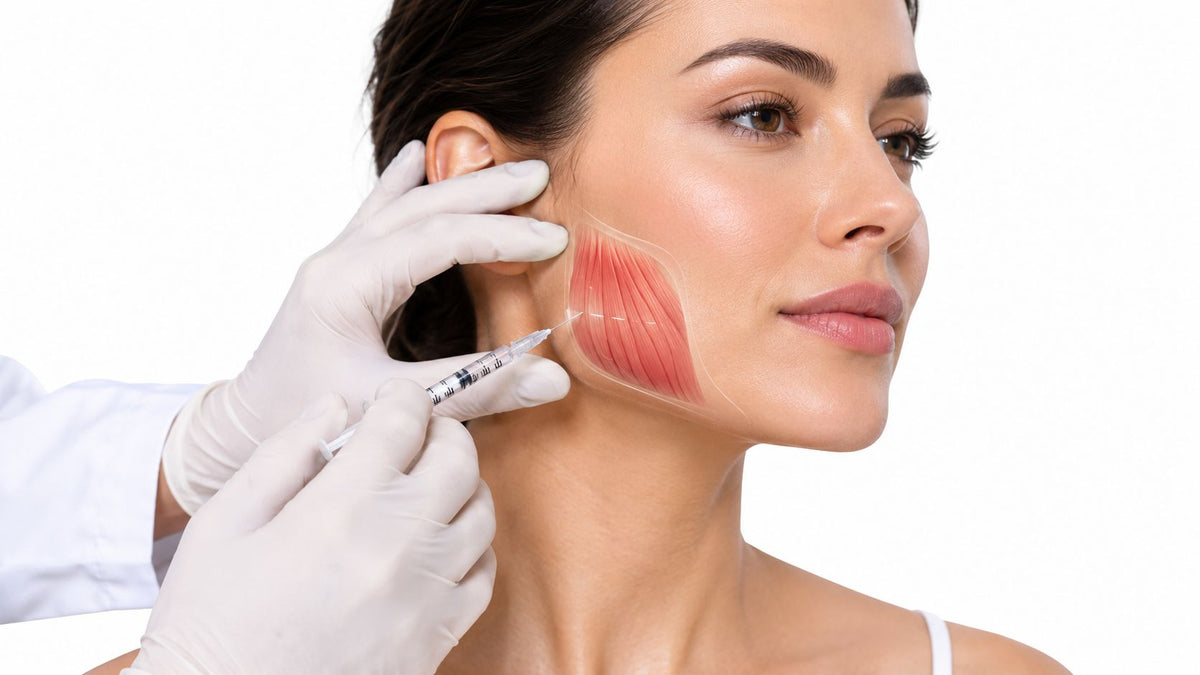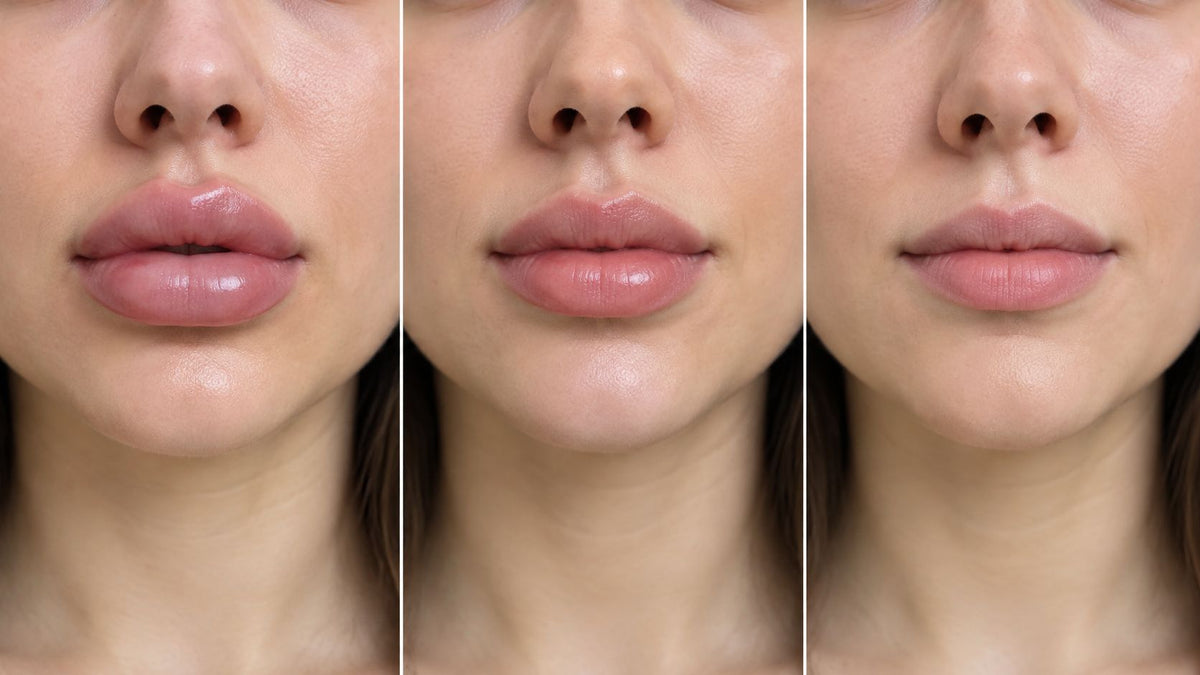
Does Jaw Filler Migrate? Causes, Risks, and What to Do
Jaw filler can migrate, but confirmed migration appears uncommon, and there isn't a reliable jaw-specific rate. A published estimate for dermal-filler migration is approximately 0.01–0.17%, but that figure doesn't tell you your personal risk or how often migration happens specifically after jawline treatment.
You may have noticed a firm bump or a new fullness along your jaw and started wondering whether the filler has moved. That change can be unsettling, but a lump or uneven contour doesn't automatically mean migration. Swelling, water binding, product placement, and other changes can look similar, so the safest next step is to understand what you're seeing before trying to correct it.
What Jaw Filler Migration Really Means
Migration means filler is identified away from the place it was intended to be injected. Think of a gel cushion pressed in one spot: pressure may make it bulge somewhere else. The analogy is imperfect, because filler sits within facial tissues, but it helps explain the difference between a product shifting and a treated area looking fuller.
Jawline filler is most commonly made from hyaluronic acid (HA). The U.S. Food and Drug Administration lists migration, meaning movement of filler away from its injection site, as a reported rare risk of soft-tissue fillers (FDA information on dermal fillers). That establishes that migration can happen. It doesn't establish how often it happens in jawline treatments.
A visible change can have several explanations. Early edema, bruising, uneven product integration, a nodule, or placement that doesn't produce the expected contour may all look like a bump or fullness. Appearance alone can't confirm that filler has moved. The clinician needs to consider where the product was placed, when the change appeared, whether it is changing, and whether examination or imaging would help.
What a documented case can and can't tell you
A 2016 case report described HA filler injected into the nose that later appeared as two separate, bean-sized soft masses in the forehead and glabella, areas that hadn't been injected. The authors discussed possible mechanisms including high-volume or high-pressure injection, massage, muscle activity, gravity, external pressure, lymphatic spread, and inadvertent injection into a blood vessel (the 2016 case report and review). This shows that remote movement has been documented. It is not a jawline case, and it can't predict how likely migration is for a person considering jaw filler.
A registered clinical study planned to use high-resolution MRI at baseline, week 12, and week 24 to distinguish product distribution from true migration outside the treatment area. That design highlights an important point: objective jaw-specific incidence data remain limited. So the balanced answer to “does jaw filler migrate?” is yes, it can, but a new irregularity doesn't prove it has.
How Common Jaw Filler Migration Actually Is
There isn't one dependable percentage that tells you how often jaw filler migrates. The estimate of approximately 0.01–0.17% comes from a peer-reviewed review of filler migration, not from a large study following a representative group of jawline patients (anatomy and injection-technique review). It can help show that migration is regarded as uncommon, but it should not be read as a personal prediction or guarantee.
Published case reports and small collections of reports create another limitation. They're useful for documenting what can happen, but unusual complications are more likely to be written up than routine outcomes. A review of lip-augmentation publications from 2010 through 2020 identified 53 patients across 38 reports; within the selected subset treated exclusively with HA gels, 2 patients had documented migration. That is approximately 7.4% of that published-case subset, not the risk for people receiving filler in the jaw or the general population. The selected cases can't answer how often a routine treatment leads to migration.
Why the jaw doesn't have a settled rate
The lower face has different anatomy and movement from the lips or other facial areas. Data from one treatment site can't be transferred to another. A recent expert review also notes that reliable information about the frequency, risk factors, and long-term persistence of displacement remains insufficient (expert review on filler displacement).
HA fillers are generally biodegradable, and their clinical effects commonly last about 4–18 months, depending on product, technique, and patient factors (medical-literature review of filler migration). That range describes typical effects, not a timer that proves filler has disappeared. If a contour change appears months after treatment, it deserves a fresh clinical assessment rather than an automatic label of migration. A percentage describes a group, not your jawline.
What Causes Jaw Filler to Move and Who Is at Risk
Filler movement doesn't have one confirmed cause. Proposed contributors include placing product in an unsuitable tissue plane, using excessive volume, injecting under high pressure, massage or other pressure after treatment, gravity, muscle activity, lymphatic spread, and displacement from later injections. These are possible mechanisms, not a checklist that can diagnose what happened in an individual case.
A useful analogy is a gel cushion under a sofa that's moved and sat on every day. If the cushion is placed poorly or repeatedly compressed, it may change shape or position. Facial tissue isn't furniture, but the analogy captures why placement, product amount, and repeated pressure matter. The lower face moves with chewing and talking, and it may also be pressed during sleep, clenching, or routine handling.
What you can discuss with your injector
Some treatment choices are within the clinician's control, and some habits are within yours. The aim isn't to eliminate every possible risk. It's to make a considered plan for your anatomy and avoid unnecessary pressure or product accumulation.
- Placement: Ask how the injector plans to place product along the mandibular contour and why that plane suits your anatomy.
- Volume: Discuss a conservative starting amount rather than assuming that more product will create a better-defined jaw.
- Technique: Accurate placement and low-pressure delivery are practical precautions described in injection guidance, though they can't guarantee that migration won't occur.
- Repeat treatment: Tell the injector about earlier filler in the area before adding more. Later injections may displace existing product.
- Pressure and handling: Follow the treating clinician's aftercare directions, and don't vigorously massage or press the area unless they've specifically advised it.
If you're comparing treatment plans or want to understand how providers approach chin and jaw injections, ProMD Health Washington, DC chin fillers offers a resource about that treatment area. For an appointment, bring your treatment history and ask how the proposed product, placement, and amount fit your goals. Permanent or semipermanent materials deserve particular discussion because they may persist and can be harder to manage if a complication occurs.
Telling Migration Apart From Normal Changes After Treatment
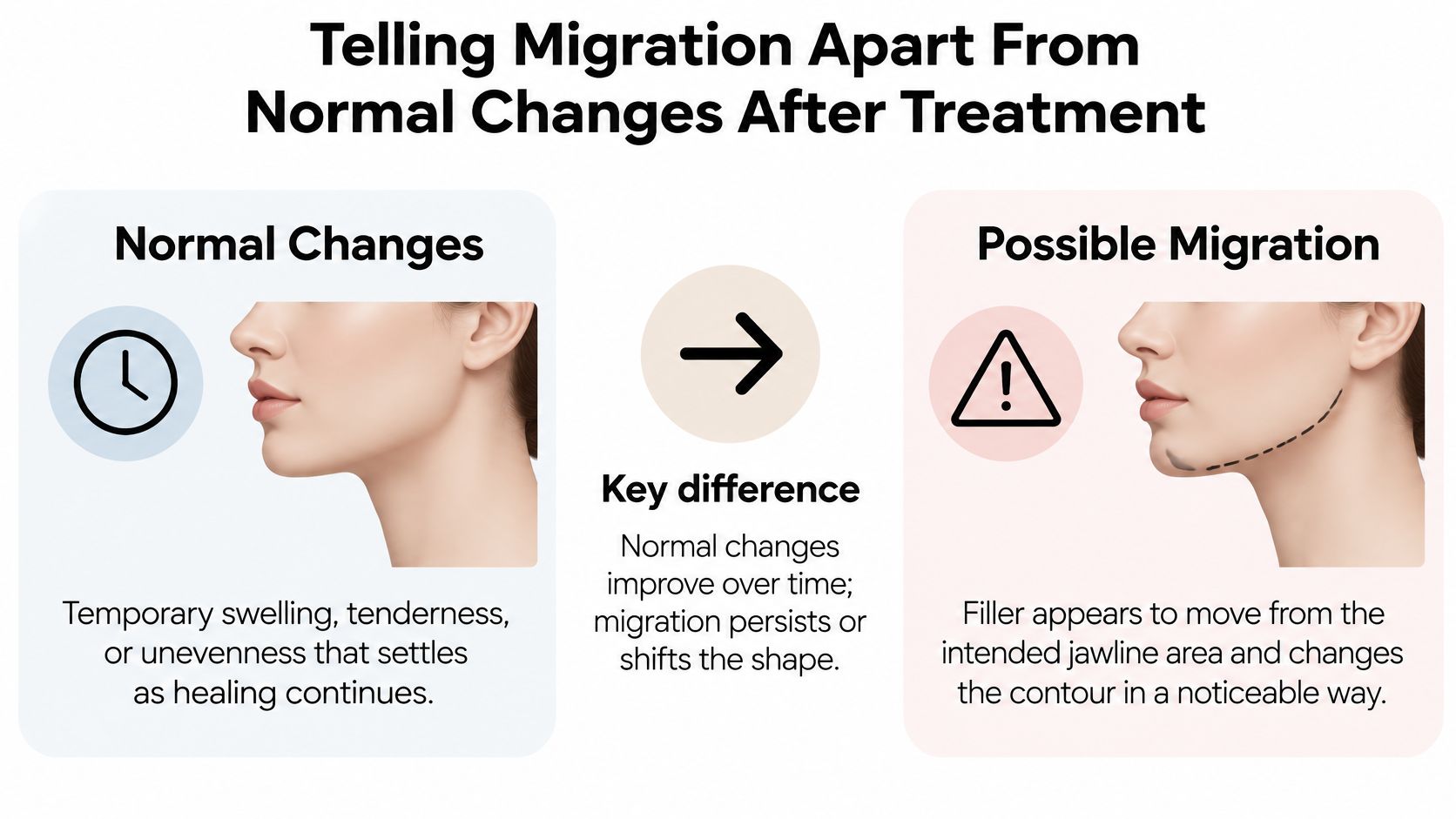
A jawline can look different without filler having traveled. HA is hydrophilic, which means it binds water. That can contribute to gradual fullness or irregularity even when the product hasn't moved far from the injection site. Early swelling, bruising, uneven integration, muscle-related clumping, and overfilling can also change the contour.
Consider someone who notices firmness on one side near the chin three weeks after treatment. The timing matters, but it doesn't settle the question by itself. A clinician may compare the area with the other side, review when the firmness appeared, and look at standardized photos taken after the initial swelling has eased. If the area is steadily improving, that pattern may be different from a new or persistent contour change outside the intended treatment zone.
A practical record to bring to an appointment
Photos can help show a change over time, but they can't confirm migration on their own. Use the same lighting and angle when taking pictures, and avoid pressing the area to “test” whether a lump moves.
- Timing: Note when you first saw or felt the change and whether it's getting better, staying the same, or worsening.
- Location: Record whether the fullness is within the treated jawline or seems to extend beyond it.
- Feel and appearance: Note firmness, tenderness, swelling, skin-color changes, and any difference between sides.
- Treatment details: Write down the product name, approximate treatment date, and any earlier filler in the area, if you know them.
Imaging can add information, but it doesn't automatically prove clinically meaningful migration. MRI signal can overlap with edema, inflammation, or fluid, and the presence of visible HA doesn't by itself establish that the product has displaced in a way that explains the contour. Observation helps the clinician assess the pattern; it isn't a substitute for an examination.
Prevention Strategies That Lower Your Risk
A sensible prevention plan starts before the appointment. Choose a qualified medical injector who can discuss your facial anatomy, intended placement, product, and conservative starting volume. Ask how the plan will create the contour you want without adding more product to every area that looks uneven.
During treatment, placement matters. The injector should follow the agreed plan and use a technique suited to the target area. Conservative volume and low-pressure delivery are risk-reduction measures described in an anatomy and injection-technique review, but no technique removes all uncertainty (review of jawline-relevant injection considerations). A provider who explains the plan clearly should also explain what changes to expect during healing and when to contact the clinic.
Aftercare and a clear treatment record
After treatment, follow the instructions from your injector rather than improvising. In particular, don't vigorously massage or repeatedly press the area to try to shape it yourself. If you're unsure whether a particular activity or treatment could put pressure on the area, ask the clinic. The dermal filler aftercare guide can also help you prepare questions about post-treatment care.
Keep the name of the product and the date and location of each treatment. Disclose previous filler, dental work, and surgery when you seek care, even if they seem unrelated. Old product may still be relevant: a narrative review found that reports of very late suspected migration were more common with permanent fillers than temporary products, and distant displacement has been described years after treatment (review of facial filler migration reports). That evidence comes largely from observational reports and case reports, so it doesn't establish how often late migration occurs. It does explain why a complete history helps a clinician interpret a new change.
An LED mask may be used as a supportive skin-care device, but it doesn't dissolve or reposition filler. The Barb N.P. Facial Mask is a wireless option designed to sit comfortably on the face and has three lighting settings for different treatment goals; verify current product specifications before purchasing. A clinical protocol evaluated a 660-nm LED mask at 6.4 mW/cm² and 8.02 J/cm² for 21 minutes, with treatment scheduled two or three times weekly for four weeks. A separate randomized half-face study involving 23 participants reported clinical improvement in 59% after LED treatment, including changes in texture, tone, and fine lines (LED therapy study). Those findings concern skin quality, not filler migration.
When to See a Clinician or Seek Urgent Care
A suspicious lump can tempt you to press or massage it until it seems to move. Don't try to diagnose or correct it that way. Pressure can make the area harder to assess, and attempting to dissolve filler without knowing what material is present or what is causing the change can complicate care.
Follow the symptom, not the assumption
Arrange a clinical assessment if you have persistent or new asymmetry, palpable nodules, a lasting contour irregularity, or fullness beyond the treated mandibular area. Contact the injecting clinician when possible and bring your photos and treatment records. The clinician can examine the area and decide whether further assessment is needed.
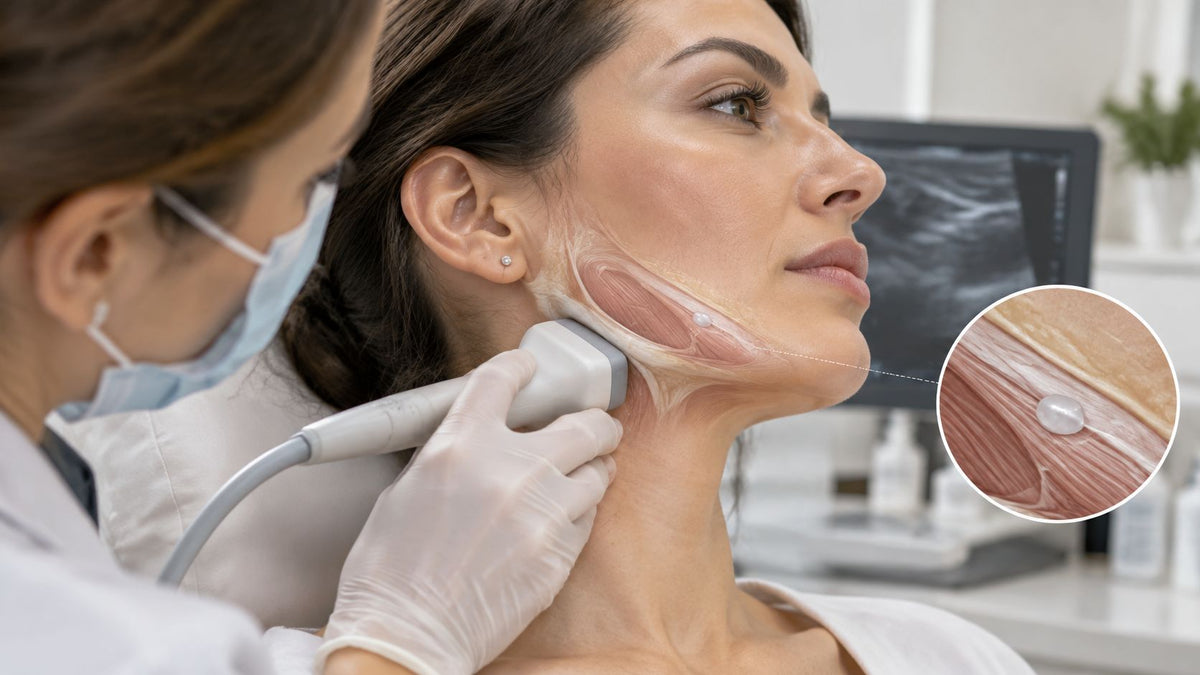
High-frequency ultrasound can help locate superficial filler and assess which tissue plane it occupies. HA may appear as hypoechoic or anechoic material on ultrasound, but the findings require clinical interpretation. MRI or contrast-enhanced CT may be considered when a clinician suspects deeper infection or complex spread. Imaging helps answer specific questions; it isn't a stand-alone diagnosis.
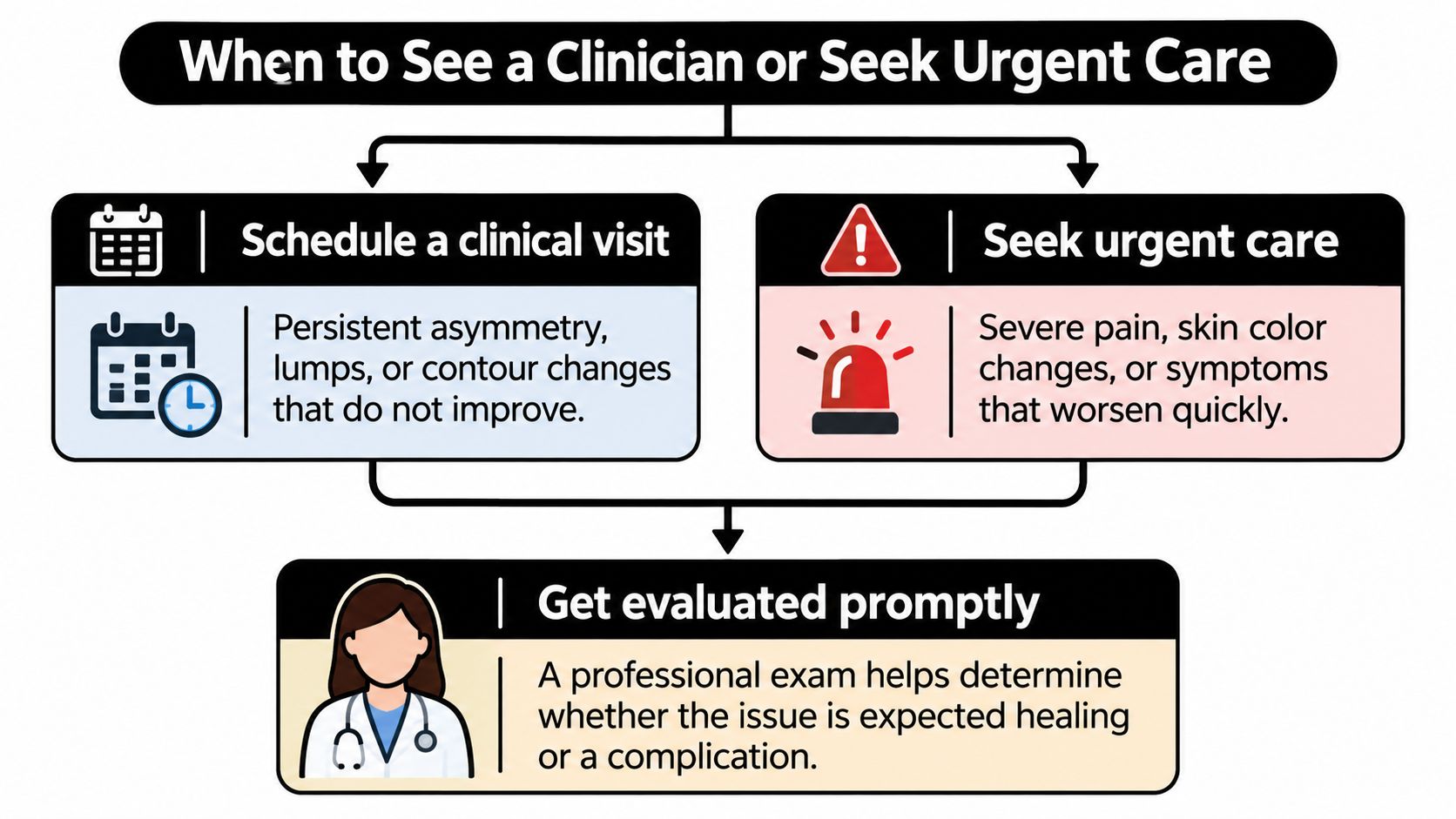
Seek urgent medical evaluation for sudden severe pain, skin blanching or mottling, or visual symptoms. These may indicate vascular occlusion, which is different from migration: occlusion involves filler entering or compressing a blood vessel and can threaten blood supply. The FDA identifies accidental injection into a blood vessel as the most serious dermal-filler risk because it can cause ischemia, skin necrosis, blindness, or stroke (FDA safety presentation on vascular occlusion).
If urgent symptoms appear, don't wait for a routine follow-up or try massage. Contact the treating clinician or seek urgent medical care. For less urgent but persistent changes, arrange an examination before deciding whether the area needs treatment. More detail about possible concerns is available in this guide to dermal filler side effects.
Corrective Options and Your Next Step
The right response depends on what the clinician finds and what product was used. If the concern involves HA filler, a clinician may consider hyaluronidase, an enzyme used to break down HA. That decision should follow an assessment, not a guess based on a lump alone. Limited displacement may sometimes be monitored or managed conservatively; more substantial or longstanding changes need an individualized plan.
Permanent filler can be more difficult to manage and may require surgical treatment. Late suspected displacement has been reported more often with permanent materials than temporary products, so identifying the filler matters. Bring any treatment records you have, including product names and approximate dates, and disclose treatments performed elsewhere.
Be cautious about marketing claims that a particular filler has “low migration.” Comparative evidence doesn't conclusively support such claims, and laboratory measures don't reliably predict long-term behavior in every patient. If a clinician recommends dissolving, ask what material they believe is present, what the proposed treatment can and can't do, and what follow-up they recommend. Information about hyaluronidase treatment can help you prepare questions for that discussion.
BotoxBarb offers in-clinic dermal filler, Botox, Dysport, LED light therapy, and PRP treatments, with appointment booking through barbnp.shop. If your jawline has changed, book an assessment before deciding on more filler or any correction, and bring standardized photos and your treatment records so a clinician can evaluate the area.
BotoxBarb offers in-clinic dermal filler assessments and treatments, along with Botox, Dysport, LED light therapy, and PRP. If you've noticed a jawline change, bring your photos and filler history to an assessment, then visit BotoxBarb to explore appointment options.