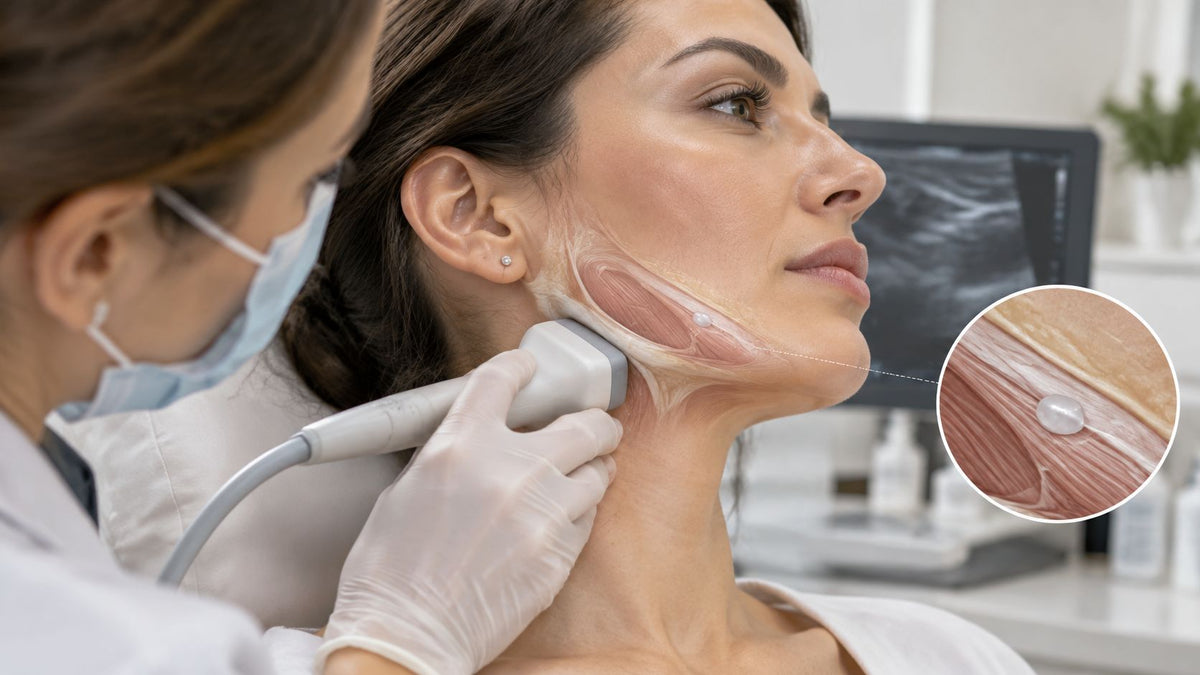
Article: Lip Filler Swelling Day by Day: A Timeline and Red Flags
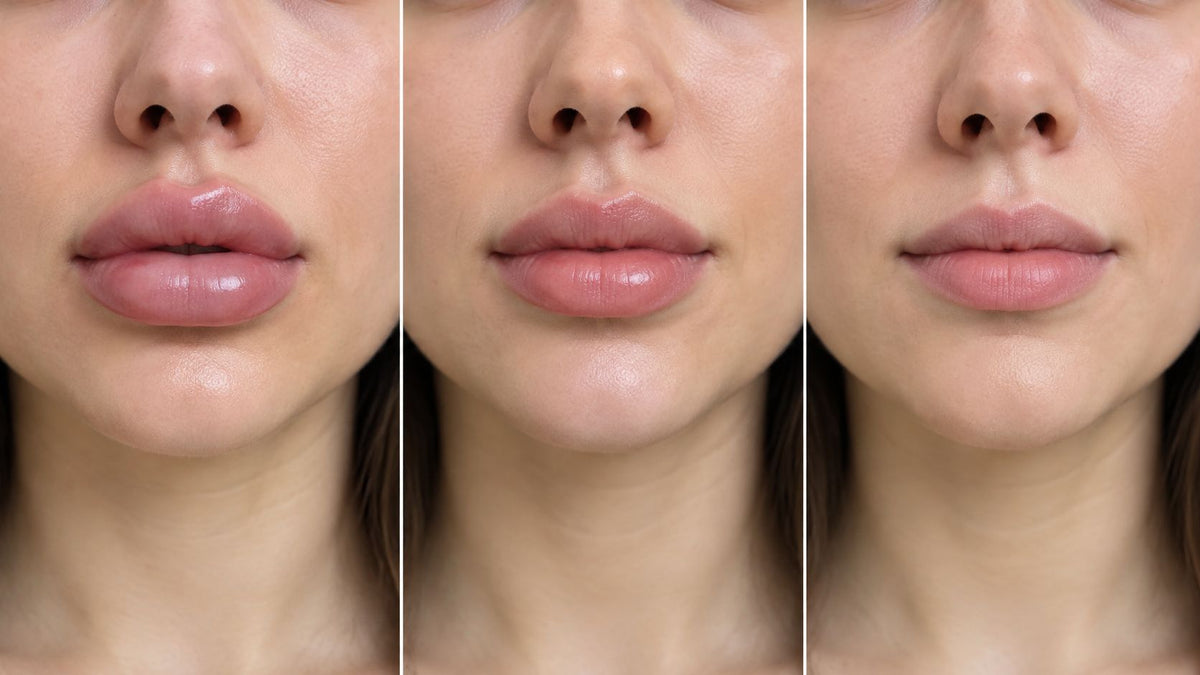
Lip Filler Swelling Day by Day: A Timeline and Red Flags
Lip filler swelling is usually most noticeable in the first 24 to 48 hours, and mild firmness can linger for one to two weeks while the filler settles. Your lips may look fuller the morning after treatment than they did when you left the clinic, but that early appearance isn't your finished result.
You might be checking the mirror, comparing sides, or wondering whether the tightness you feel is expected. The most useful question isn't how swollen your lips look. It's whether the swelling follows an improving pattern, and whether anything else, such as worsening pain or unusual skin color, accompanies it.
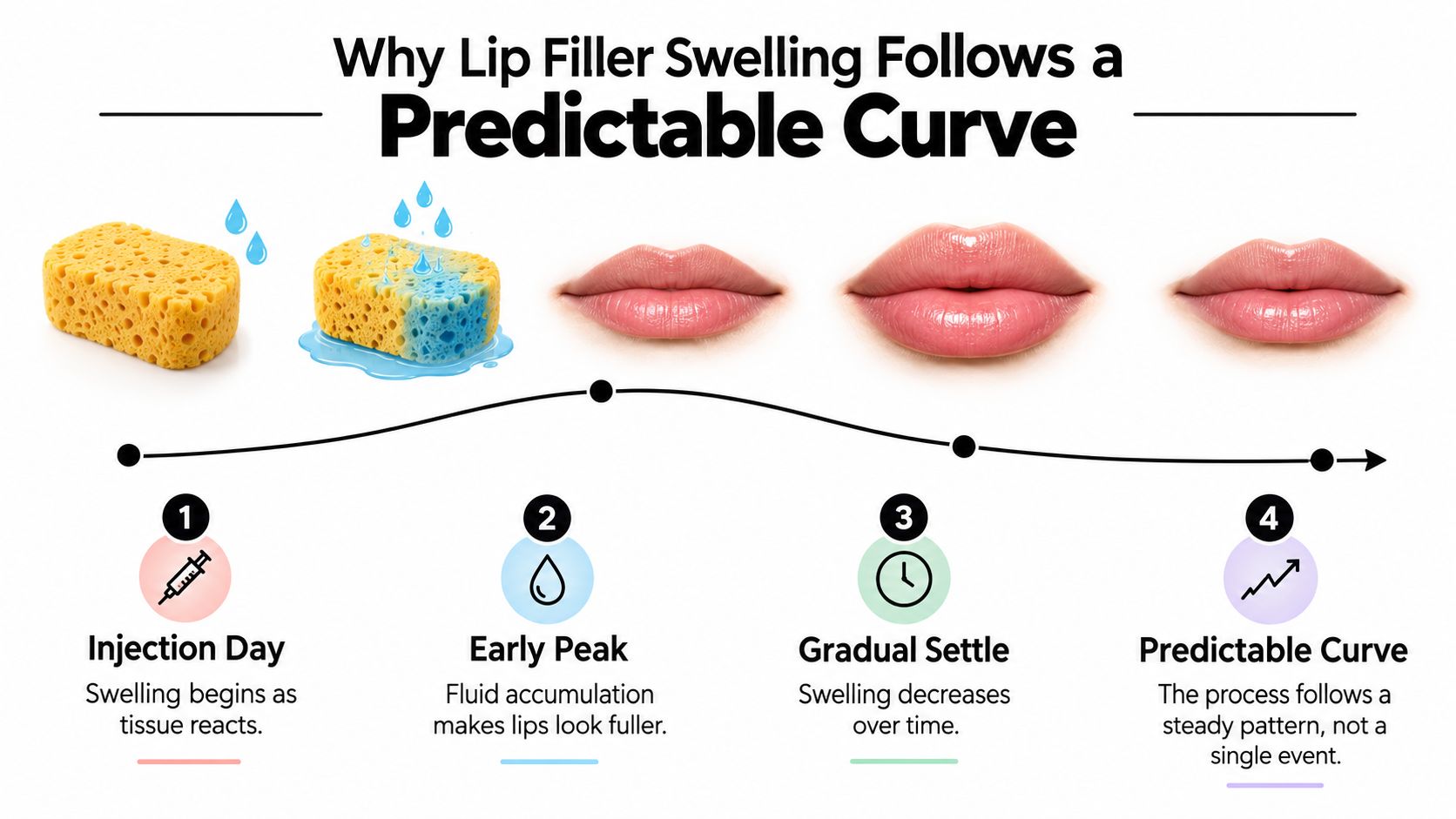
Why Lip Filler Swelling Follows a Predictable Curve
Post-filler swelling isn't a single reaction that switches off when your appointment ends. Your body responds to the injections while the filler begins holding moisture in the surrounding tissue. Those overlapping processes explain why the appearance can change after you've gone home.
The sponge analogy
Think of hyaluronic acid as a sponge that attracts and holds water. The comparison isn't exact, but it helps explain why the volume you see immediately after treatment isn't just the amount of filler injected.
Several processes contribute to that early fullness:
- Tissue irritation. The needle causes small injuries, and your body responds with inflammation.
- Changes in local circulation. Blood vessels widen, and inflammatory chemicals contribute to fluid accumulation.
- Water retention within the filler. Hyaluronic acid draws in and retains moisture as it hydrates and integrates into tissue.
Together, these mechanisms produce a rising-and-settling pattern rather than immediate resolution, as described in the clinical discussion of swelling after hyaluronic-acid filler.
Why someone else's recovery isn't your benchmark
The filler product, injection volume, technique, previous treatments, and your individual reactivity can all influence swelling. A friend's recovery photo can't tell you whether your own lips are healing appropriately.
The sponge analogy also helps separate injected filler from topical skincare. Mesoderm RX's resource on hydrating serums for visible aging offers related skincare context, but a facial serum shouldn't be treated as a remedy for post-injection swelling. Ask your injector before applying a new product around recently treated lips.
Practical rule: Compare your recovery with your own earlier symptoms, not with someone else's photograph.
A predictable curve is a helpful guide, not a guarantee that every change is harmless. Increasing fullness without other concerning symptoms is different from swelling accompanied by severe pain, unusual discoloration, or a sudden change in how you feel.
Day 0 to Day 2 and the First Swelling Peak
You leave your appointment, look in the mirror, and notice more fullness than you expected. Later, the lips feel tender and tight. By the next morning, they may look more swollen rather than less.
That sequence can fit the usual early response. Mayo Clinic's dermal-filler guidance describes swelling, bruising, tenderness, and temporary skin-color changes as common for a day or two after treatment, and notes that an ice pack may ease discomfort.
Treatment day
Day 0 means the day of your injections. Localized puffiness, redness, tenderness, and possible pinpoint bleeding can appear around injection sites, according to the FDA's dermal-filler patient information.
For example, you might notice that the lip border looks more pronounced while the treated areas feel sensitive. That's an illustrative experience, not a promise about what every patient will see. Your injector's instructions should remain your reference point.
As the evening continues, try to separate appearance from symptoms. “My lips look bigger” gives your clinician less useful information than “My lips look bigger, the tenderness is mild, and the skin color hasn't changed.”
The next morning and following day
Days 1 and 2 are commonly the peak-swelling window. Bruising may also become easier to see as blood from small injured vessels spreads and changes color, a progression described in the prospective multicenter lip-filler study.
People often confuse temporary swelling with excessive filler. The mirror can't reliably separate the two during the early inflammatory phase. A pronounced appearance doesn't automatically mean the final result will be too large.
Use these observations to describe what's happening:
- Appearance. Is the puffiness localized, or is it rapidly expanding?
- Comfort. Is it mild tenderness, or pain that's becoming more intense?
- Skin changes. Is there ordinary bruising, or a new pale, dusky, or otherwise concerning area?
Don't assume a symptom is safe merely because it appeared during the expected swelling window. Timing helps interpret recovery, but it doesn't override warning signs.
Early fullness deserves patience. Severe pain or abnormal skin color deserves medical attention.
Day 3 to Day 14 and the Settling Phase
The most reassuring change after the peak is a downward trend. Your lips don't need to look completely settled immediately, but uncomplicated swelling should gradually become less noticeable, with tenderness and movement improving.
The prospective study cited above describes improvement during days 3 to 5, while mild firmness can remain during days 7 to 14. Think of this as a range for observing progress, not a deadline that every patient must meet exactly.
Typical Lip Filler Swelling Timeline
The time windows below follow the clinical sources linked earlier. They're a guide to patterns, not a substitute for examining a painful or unusual change.
| Time Window | Typical Pattern | What to Watch For |
|---|---|---|
| Day 3 | Early improvement may become noticeable after the peak | Swelling that continues increasing instead |
| Days 4 to 5 | Less puffiness, improving tenderness and easier movement | Increasing pain, redness, or warmth |
| Days 7 to 14 | Mild residual firmness or swelling may remain while the appearance settles | Persistent symptoms, marked asymmetry, or a new firm area |
| After the settling period | A more useful opportunity to assess shape with your injector | Symptoms that haven't improved or swelling that returns |
A helpful comparison is functional as well as visual. Are your lips more comfortable when you speak? Does the tight feeling seem less distracting? Those observations can help you describe improvement without repeatedly pressing or examining the tissue.
When to judge symmetry
Assess symmetry after the early edema has subsided, rather than deciding on treatment day that the placement is uneven. The earlier clinical discussion supports assessment around the later settling window, when swelling is less likely to obscure the shape.
That doesn't mean every uneven area is harmless. Marked asymmetry, worsening discomfort, or a distinct new nodule deserves a clinician's assessment rather than reassurance based only on the calendar.
The same clinical discussion reports that, for one FDA-reviewed hyaluronic-acid filler, more than 60% of treatment-site reactions had resolved by day 7 and more than 88% by day 14. Those are product-specific treatment-site reactions, not a guarantee about every person's lip swelling.
A follow-up is useful if you're unsure whether you're seeing residual puffiness, firmness, or the actual settled contour. You don't need to diagnose that distinction yourself. Bring your observations and let your injector assess what remains.
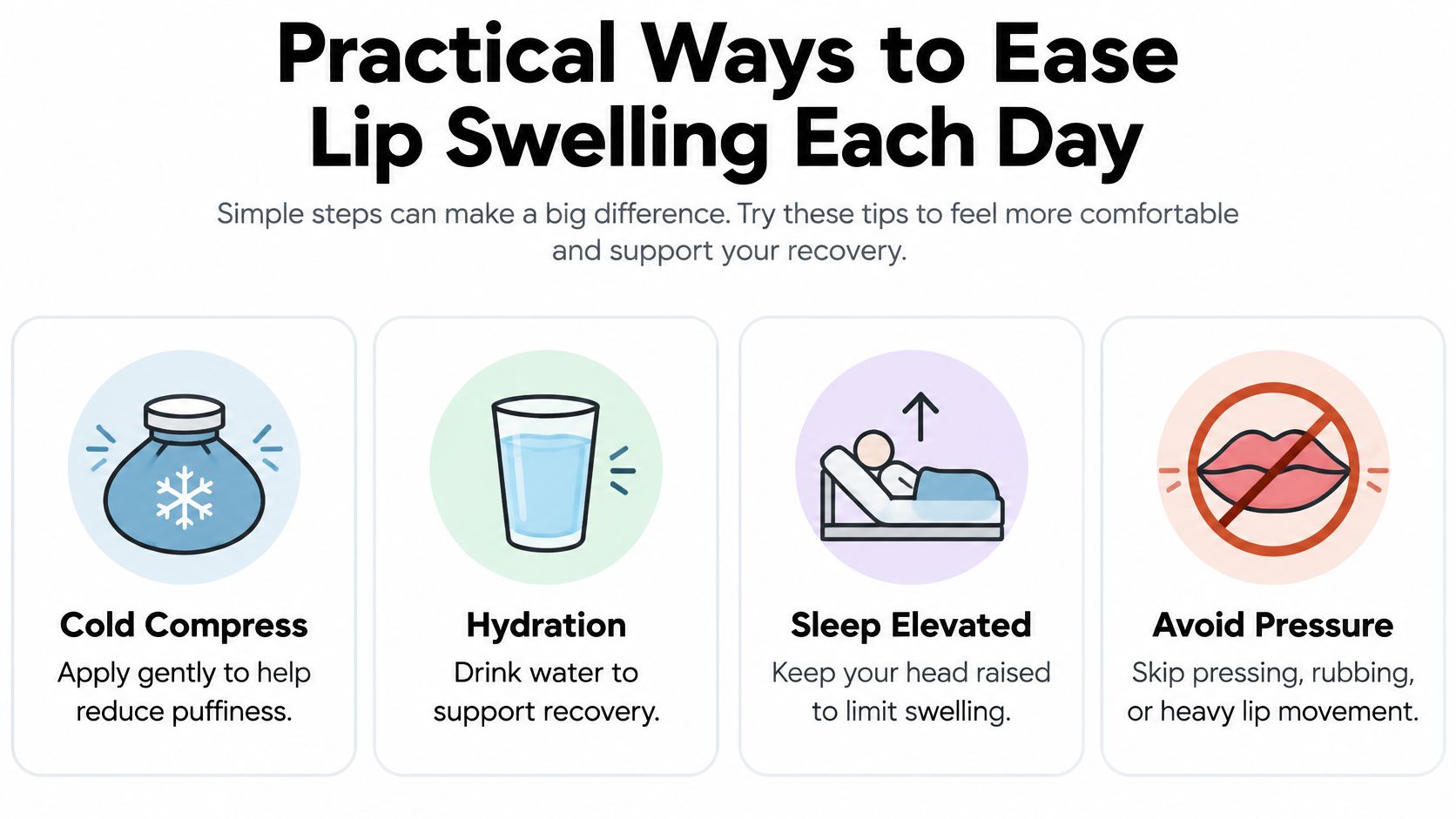
Practical Ways to Ease Lip Swelling Each Day
Aftercare should make recovery more comfortable without adding irritation or delaying assessment of a problem. Start with your treating clinician's instructions, since they know the product, technique, and circumstances of your treatment.
The most useful home measures are straightforward. The clinical discussion cited earlier supports brief, intermittent cold application during the first 24 hours, head elevation, and avoiding strenuous exercise and substantial heat exposure.
Keep cooling gentle
Use a clean cold pack as directed by your injector, with a protective barrier rather than bare ice against the skin. Apply it briefly, then remove it. Continuous cold can injure skin, so more cooling isn't necessarily better.
Don't use the pack to push, shape, or flatten a swollen area. If you're concerned about an uneven spot, ask the clinic whether it needs examination instead of trying to correct it yourself.
A manageable daily checklist
- Morning check. Notice whether discomfort and puffiness are improving. A photograph in similar lighting can make your description clearer if you contact the clinic.
- Daytime activity. Avoid strenuous workouts and substantial heat exposure while following your injector's restrictions. Saunas and hot baths aren't a way to speed up settling.
- Comfort measures. Use intermittent cooling when advised, and don't add new remedies just because swelling remains visible.
- Evening rest. Keep your head raised as instructed, and review any changes that developed during the day.
For a broader discussion of facial puffiness, Solawave's guide to find relief for a swollen face provides general skincare context. Post-injection care is a different situation, so don't automatically transfer massage, device, or product suggestions to recently treated lips.
Keep the clinic's dermal filler aftercare guidance available alongside your personalized instructions. If they differ from general advice online, ask your injector which approach applies to you.
Comfort isn't the same as treatment: A cold pack may soothe routine puffiness, but it can't rule out or treat a complication.
Avoid turning recovery into a series of experiments. If you're considering medication, supplements, massage, or a light-based device, ask the treating clinician first rather than assuming it will reduce swelling.
Red Flags That Need Urgent Clinical Care
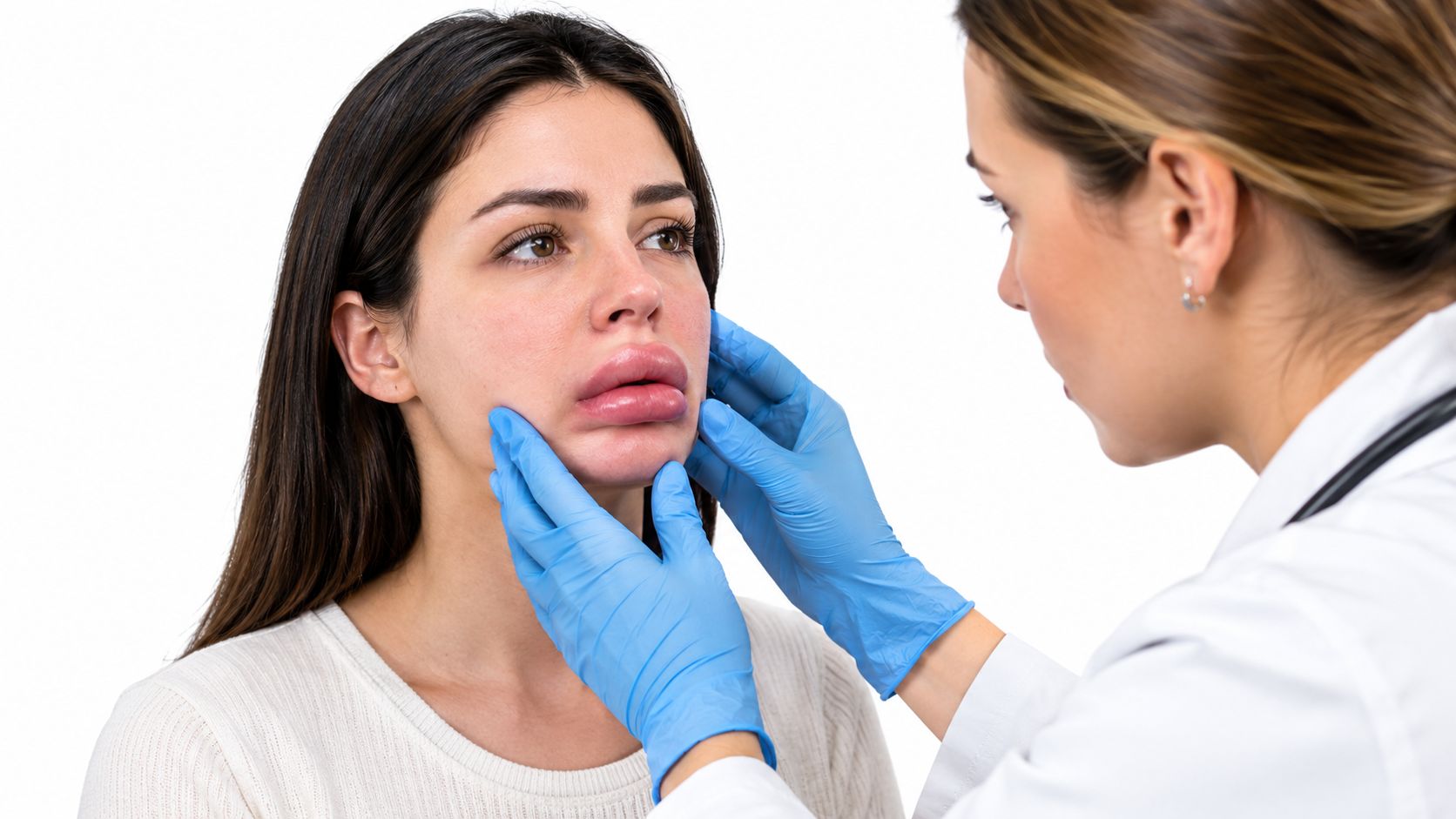
Severe or escalating pain, abnormal skin color, and visual symptoms must not be treated as ordinary swelling. A recovery timeline is useful only when the symptoms themselves remain compatible with routine healing.
The FDA information linked earlier identifies serious filler risks, including problems involving blood supply. The warning signs below warrant action rather than waiting for the next expected stage.
Seek emergency evaluation without delay
Get urgent emergency care for visual changes, sudden severe pain, or pale, blanched, or dusky skin. Cool skin, blistering, or skin whose color returns unusually slowly after pressure are also concerning signs of possible vascular compromise.
Don't repeatedly press the area to test it, and don't wait for a photograph to look worse. Contact your treating clinician immediately as well, but don't delay emergency evaluation while waiting for a message back.
A bruise and impaired blood supply aren't distinctions you should have to make alone. If discoloration is unusual, especially with pain or coolness, describe it as a possible complication when seeking care.
Contact your clinician promptly
Other changes need prompt clinical assessment, even if they don't resemble an emergency:
- Rapid progression. Swelling that expands quickly or seems disproportionate to the treatment.
- Possible infection. Increasing redness, warmth, fever, or drainage.
- A changing pattern. Marked asymmetry, worsening tenderness, or a newly distinct firm area.
- Persistent symptoms. Redness, pain, or swelling that isn't following the expected improving course.
Acute hypersensitivity reactions can develop quickly. Don't assume a sudden change is merely an unusually strong version of normal inflammation.
When you call, say when treatment occurred, when the change began, whether pain is increasing, and whether you've noticed temperature or color changes. Those details help the clinician decide how urgently you need to be seen.
The additional guidance on swelling after filler can help you prepare questions, but an online article can't assess circulation, diagnose infection, or clear you to wait.
You don't have to prove something is wrong before asking for an examination.
If you're uncertain which level of care you need, explain the symptoms directly to a clinician. Don't minimize a worrying change because you're afraid of seeming anxious.
When Swelling Returns After the First Week
Swelling that returns after your lips appeared settled is different from puffiness that never fully disappeared. The useful question becomes what changed, not how long it has been since treatment.
A review of hyaluronic-acid filler complications separates reactions into immediate, within 24 hours; early, from 24 hours to 4 weeks; and delayed, after 4 weeks. These categories help clinicians describe timing, but they don't tell a patient whether a particular reaction is safe.
Returning swelling isn't automatically routine recovery
Most injection-site reactions are mild, self-limiting, and reversible. Nevertheless, the same review describes late-onset reactions appearing several months after treatment, including inflammation, swelling, nodules, induration, abscesses, infection, and discoloration.
Induration means an area feels unusually firm or hardened. A nodule is a more distinct lump. Neither term tells you the cause without an assessment.
For example, lips that stayed slightly puffy but gradually improved represent a different history from lips that returned to their usual comfort and then became swollen again. Both deserve an accurate description, but the second pattern shouldn't be dismissed as the original swelling taking longer to settle.
What to tell your clinician
Record the sequence rather than trying to name the condition:
- The symptom-free interval. Explain whether swelling fully resolved before returning.
- The location. Describe whether the whole lip is affected or there's a specific swollen or firm spot.
- Associated changes. Mention tenderness, warmth, redness, drainage, discoloration, or feeling unwell.
- Recent events. Share recent illness, vaccination, injury, other procedures, and changes in products or medications without assuming any caused the reaction.
Don't start massaging a new lump or reusing an old treatment plan without advice. Similar-looking swelling can require different management, and a clinician needs to understand the current episode.
If returning swelling includes the emergency warning signs described earlier, use the same urgent-care pathway. Being further from the original appointment doesn't make severe pain or visual symptoms less important.
Otherwise, arrange a prompt review with your injector. The aim is to identify the cause and choose appropriate care, not just to make the swelling temporarily less visible.
Booking Your Lip Filler Follow-Up at BotoxBarb
A follow-up gives you a place to discuss appearance and symptoms separately. You can want reassurance about the shape while also needing someone to assess tenderness, firmness, or an unexpected change.
BotoxBarb offers in-clinic dermal fillers and online appointment booking. The practice is led by Barb N.P., an Italy-born registered nurse and licensed nurse practitioner who has collaborated with physicians across Florida and California.
Prepare for an assessment, not just a photograph
Bring your treatment details if another clinician performed the injections. Your product name, treatment record, photographs, and a clear account of when symptoms changed are more useful than a single close-up image.
For routine planning, the practice's lip filler appointment guide provides additional context. For a possible complication, contact your treating clinician directly rather than relying on a standard booking request.
Useful questions include:
- Recovery pattern. Does the current appearance fit the expected settling process?
- Remaining firmness. Does this area need monitoring or examination?
- Aftercare. Which products and activities can I resume?
- Next steps. When should I contact you again if the symptoms don't improve?
Keep skincare devices separate from swelling care
For a later skincare routine, the Barb N.P. Facial Mark is a device to ask the practice about alongside other LED-mask options. Before purchasing, confirm the current manufacturer specifications for wireless operation, facial comfort and fit, and three lighting settings for different treatments. Those features aren't established by the clinical research cited here.
LED masks have been studied for facial skincare rather than as a proven home treatment for fresh lip-filler swelling. A randomized, sham-controlled red-LED trial reported improvements in some wrinkle measurements, but that doesn't establish benefit for post-injection edema. Ask your injector when, or whether, a device belongs in your recovery routine.
The overall pattern remains an early peak followed by gradual settling. Judge the cosmetic result after the early swelling has resolved, but ask for assessment sooner whenever symptoms are persistent, worsening, or unusual.
BotoxBarb offers in-clinic dermal filler services and appointment booking for personalized aesthetic care. Visit BotoxBarb to arrange a consultation or ask about a lip-filler follow-up, and contact your treating clinician directly if swelling isn't improving as expected. For severe pain, concerning skin-color changes, or visual symptoms, seek emergency evaluation rather than waiting for a routine appointment.