Your Guide to Face Rejuvenation Laser Treatment in 2026
Your skincare may still be good. Your sunscreen may still be consistent. You may even have a shelf full of serums that worked beautifully a few years ago. Then one day the mirror starts showing things topical products don't fully budge anymore. Fine lines stay etched in. Sun spots linger. Skin texture looks rougher, duller, less even.
That's usually the moment patients start asking about face rejuvenation laser treatment.
Laser treatments sit in a useful middle ground. They're more powerful than at-home skincare, but they don't automatically mean surgery, dramatic downtime, or an all-or-nothing decision. Used well, they can become part of a longer-term plan for smoother texture, more even tone, softer lines, and healthier-looking skin.
Considering Your Next Step in Skin Renewal
A common story goes like this. Someone has done the “right” things for years. They wear SPF, use retinol off and on, maybe get the occasional facial, and still feel like their skin has plateaued. The main complaints are usually familiar: crepey lines around the eyes, acne scarring that catches the light, scattered brown spots, or a face that looks tired even when they feel fine.
That frustration is part of why laser rejuvenation keeps growing as a category. One market analysis cited by Dr. M. MacDonald reports that the global skin rejuvenation market was valued at USD 2.17 billion in 2025 and is projected to grow to USD 5.22 billion by 2035, reflecting a 9.1% compound annual growth rate in this market overview of cosmetic laser treatment statistics. Patients keep pursuing these treatments because they're looking for visible change, not just temporary glow.

When skincare stops being enough
The shift from creams to devices usually happens when the problem is deeper than surface dryness. Pigment, scar texture, and collagen loss often need a treatment that works below the top layer of skin. That's where lasers can make sense.
Not every laser is aggressive. Some options are designed for a stronger resurfacing effect. Others are gentler and spread treatment across a series of sessions. The right choice depends on your skin goals, your tolerance for downtime, and your risk profile.
Skin quality changes can be subtle at first. Then they become the thing you notice in every photo.
What patients are really asking
Individuals aren't asking for “laser” in the abstract. They're asking practical questions:
- Will it help my specific concern: Fine lines, brown spots, acne scars, or redness?
- How much recovery can I handle: A few days of social downtime, or something longer?
- Will I need one treatment or a series: This matters for planning and expectations.
- What comes after: How do you maintain results so the investment makes sense?
Those are the right questions. Laser treatment works best when it's treated as part of a strategy, not as a one-time magic fix.
How Laser Energy Rejuvenates Your Skin
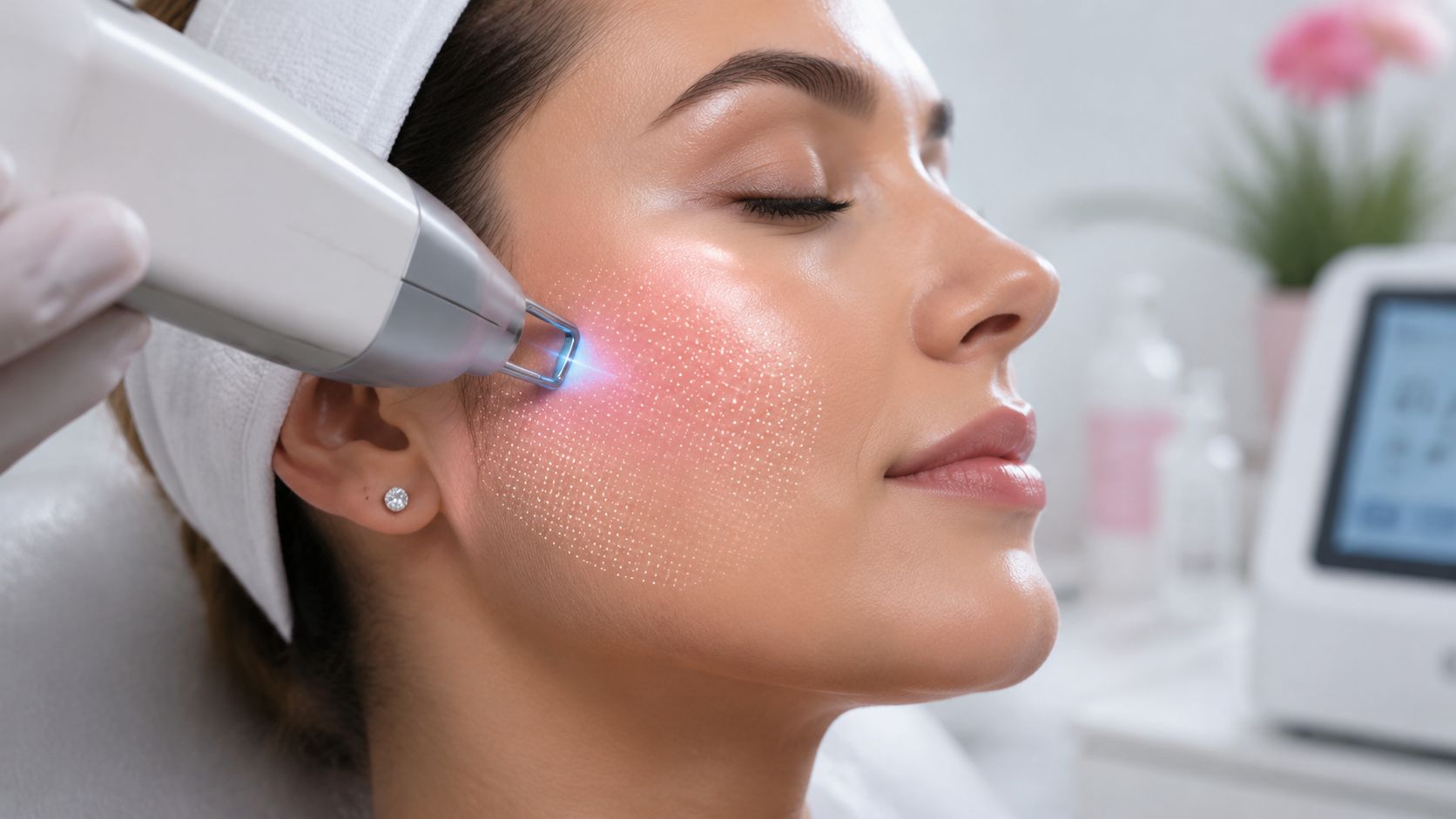
Laser resurfacing works because it creates a controlled thermal or ablative injury in the skin. That sounds harsh, but in experienced hands it's the entire point. The treatment either heats or removes targeted tissue in the epidermis and upper dermis, which prompts healing, collagen formation, and tissue remodeling, as explained by Cleveland Clinic's overview of laser skin resurfacing.
A simple way to think about it is lawn repair. If a lawn is patchy, compacted, and uneven, you don't fix it by spraying water on top and hoping for the best. You aerate it. You disrupt it in a controlled way so healthier growth can replace what wasn't functioning well.

What the laser is actually doing
At the skin level, the treatment has two jobs. First, it targets damaged or aged tissue. Second, it signals your body to rebuild.
That rebuilding response is why laser treatments can do more than create a short-term polished look. Collagen remodeling is what helps soften fine wrinkles, improve acne scars, and make skin feel firmer and look smoother over time.
Why results aren't just surface deep
Patients sometimes think resurfacing is just “taking off a layer.” That's only part of the story. The more important effect is what happens after treatment, during healing and remodeling.
Here's the practical sequence:
- Energy is delivered precisely: The laser targets selected skin layers rather than treating everything randomly.
- The skin responds to controlled injury: Depending on the device, this may mean heating tissue or removing part of the outer skin.
- Healing kicks in: Fresh skin cells replace older damaged cells.
- Collagen remodeling follows: Firmness, texture, and line improvement develop as a result.
Practical rule: If a treatment promises major skin renewal without any healing response at all, be skeptical. Meaningful change usually requires some level of controlled stimulation.
What this means for outcomes
Laser energy isn't ideal for every cosmetic concern. It's strongest when the issue is texture, tone, pigment irregularity, superficial wrinkles, or certain scars. It's less useful when the problem is volume loss, heavy jowling, or loose tissue hanging downward.
That distinction matters because patients often describe everything as “aging skin,” even when the treatment path for each part is different.
A Guide to Facial Laser Technologies
The first decision point is simple. Is the treatment ablative or non-ablative? That difference shapes recovery, intensity, and how many sessions you'll likely need.
Mayo Clinic's laser resurfacing guidance notes that ablative laser resurfacing often requires only one treatment when done without a fractional laser, with new skin typically forming in 7 to 10 days. It also notes that nonablative or fractional Er:YAG approaches usually need 2 to 4 treatments spaced over weeks or months.
The main categories that matter
Ablative lasers remove part of the outer skin and treat more aggressively. These are often chosen when someone wants stronger correction of wrinkles, textural damage, or certain scars and accepts a more demanding recovery.
Non-ablative lasers heat tissue without removing the surface to the same degree. They're usually better suited to patients who want less downtime, a more gradual approach, or a lower-risk option for certain skin profiles.
Fractional technology can sit inside either category. Instead of treating the entire surface uniformly, it treats portions of skin in a patterned way, leaving surrounding areas to support healing.
You'll also hear device names and broad labels such as these:
- CO2 lasers: Often discussed when deeper resurfacing is the goal.
- Erbium lasers: Commonly considered when resurfacing is needed with a different balance of intensity and recovery.
- Fractional resurfacing devices: Often chosen for staged improvement in texture and tone.
- IPL: Technically not a laser in the strict sense, but frequently grouped into rejuvenation conversations because it targets pigment and redness concerns.
- Picosecond devices: Often discussed for pigment-focused work, depending on the patient and platform.
Ablative vs non-ablative at a glance
| Factor | Ablative Lasers (e.g., CO2, Erbium) | Non-Ablative Lasers (e.g., Fraxel, IPL) |
|---|---|---|
| Intensity | More aggressive resurfacing | Gentler treatment approach |
| Surface effect | Removes treated outer skin layers | Primarily heats tissue with less surface removal |
| Downtime | Longer recovery is typical | Usually less downtime |
| Sessions | Often one treatment for significant results | Usually 2 to 4 treatments |
| Best fit | More pronounced texture and wrinkle correction | Gradual improvement in tone, texture, and pigment-related concerns |
| Trade-off | Stronger result potential, more recovery | Easier recovery, more repeat visits |
Matching the device to the problem
A good consult doesn't start with “Which laser do you want?” It starts with “What are we trying to fix?”
If the top complaint is etched texture, more aggressive resurfacing may be worth discussing. If the main issue is uneven tone, pigment, or a patient who can't take much downtime, a gentler path often makes more sense. If you want a deeper comparison of two common categories, this guide on Fraxel vs CO2 laser is a helpful starting point.
The wrong laser isn't just ineffective. It can create recovery and risk without giving you the change you actually wanted.
What to Expect from Your Laser Journey
Most patients do better when they understand the laser process as a timeline, not a single appointment. The treatment itself is only one part. Planning, healing, and follow-through are what shape the final result.
Johns Hopkins notes in its laser skin resurfacing guide that laser resurfacing can improve fine lines, uneven color, acne scars, and texture changes, but it cannot fix significant sagging skin and is not a substitute for a facelift or neck lift. That's one of the most important expectation-setting points in any consult.

Who tends to be a good candidate
Laser resurfacing usually makes the most sense for patients focused on skin quality. Think:
- Fine lines and early wrinkles
- Sun-related discoloration
- Acne scarring or rough texture
- Uneven tone
- General dullness and loss of smoothness
It's a weaker fit when the main complaint is structural descent. If someone points to jowls, a heavy neck, or loose lower-face skin as their biggest concern, I'd rather say that clearly than oversell a device. Laser can polish the skin over sagging tissue, but it won't lift that tissue in the way surgery can.
The treatment timeline in real life
A typical journey has several phases.
Consultation first. Here, skin tone, medical history, scar tendency, pigment history, sun habits, and downtime tolerance all matter. The treatment plan should come from the exam, not from a social media trend.
Treatment day next. Most patients are surprised by how straightforward the appointment itself feels. The details vary by device and intensity, but the session is usually much shorter than the period of healing that follows.
Early recovery. This is the part people need to respect. Skin may look red, swollen, or feel hot and tight. With stronger resurfacing, the face can look rough before it looks better.
Peeling or flaking. This stage can be emotionally awkward if you weren't prepared for it. The skin often goes through a visible shedding phase before the newer surface shows through.
Delayed improvement. Some changes are visible once healing settles, but collagen remodeling doesn't happen overnight. With gentler approaches, the improvement often builds gradually over a series of treatments and then continues developing after that. If you're specifically comparing a lighter CO2 approach, this overview of CO2 CoolPeel helps explain where that style of treatment can fit.
What you can and can't expect
Patients are happiest when they go in with the right target.
What lasers often do well:
- Soften fine wrinkling
- Improve texture
- Reduce visible sun damage
- Help certain acne scars
- Make skin look more even and refined
What lasers don't reliably do:
- Replace a facelift
- Restore lost facial volume
- Correct heavy jowling
- Solve every redness or pigmentation issue with one session
If your mirror concern is “my skin looks older,” laser may help a lot. If your concern is “my face has dropped,” the plan usually needs something else.
Safety Risks and Preparing for Treatment
Laser treatment isn't casual skincare. It's a medical procedure, and the safety conversation should sound like one. A good provider doesn't just describe benefits. They screen for what could go wrong, who needs a gentler option, and when not to treat.
One area that deserves more honesty is pigment risk. Mount Sinai notes in its laser resurfacing guidance that while lasers can treat hyperpigmentation, patients with darker skin tones should be particularly cautious because certain lasers carry a higher risk of post-inflammatory hyperpigmentation. It also notes that non-ablative or fractional approaches generally have a lower risk of complications for these skin types.
Risks patients should understand
Some reactions are expected. Redness, swelling, heat, tightness, and peeling are part of the normal healing picture for many treatments. That's not a complication by itself.
The more concerning issues are different. These can include prolonged irritation, worsening pigment, delayed healing, or scarring risk in poorly selected patients or poorly chosen settings. The takeaway isn't fear. It's provider selection and careful planning.
Why skin tone changes the plan
Darker skin tones and melasma-prone patients often need a more conservative strategy. That doesn't mean “no lasers ever.” It means the device category, treatment density, aftercare, and pretreatment planning matter more.
Generic medspa marketing presents a problem. “Laser for brighter skin” is not enough guidance for someone with a history of pigment rebound. In these patients, lower-aggression pathways are often more realistic than trying to force a dramatic resurfacing result.
Safer treatment isn't the weakest treatment. It's the treatment your skin can heal from predictably.
A practical prep checklist
Before treatment, patients usually do best when they keep the plan simple:
- Avoid sun exposure: Tanned or recently sun-exposed skin is harder to treat safely.
- Pause irritating products: Retinoids, exfoliating acids, and harsh scrubs often need to be held before treatment based on your provider's instructions.
- Report your history accurately: Cold sores, abnormal scarring, melasma, recent procedures, and active breakouts all matter.
- Arrive with calm skin: Inflamed, over-exfoliated skin is not a good starting point.
A practical aftercare checklist
After treatment, the priorities are protection and restraint:
- Cleanse gently: Don't scrub, brush, or use actives too early.
- Moisturize exactly as directed: Treated skin heals better when the barrier is supported.
- Avoid picking or peeling: Let shedding happen on its own.
- Protect from sun aggressively: This is one of the biggest factors in how evenly the skin heals.
- Check in if healing seems off: Increasing pain, unusual drainage, or unexpected pigment change deserves prompt review.
Enhancing and Maintaining Your Laser Results
Laser treatment works better when it's part of a layered plan. One procedure may improve skin texture beautifully, but facial aging rarely lives in one lane. Some people need help with movement-related lines. Others have volume loss. Others mostly need skin maintenance after a corrective treatment.
That's why I often think of laser as a skin quality anchor. It addresses the canvas. Then other options can be added based on what's still left on the face.
Where injectables and PRP fit
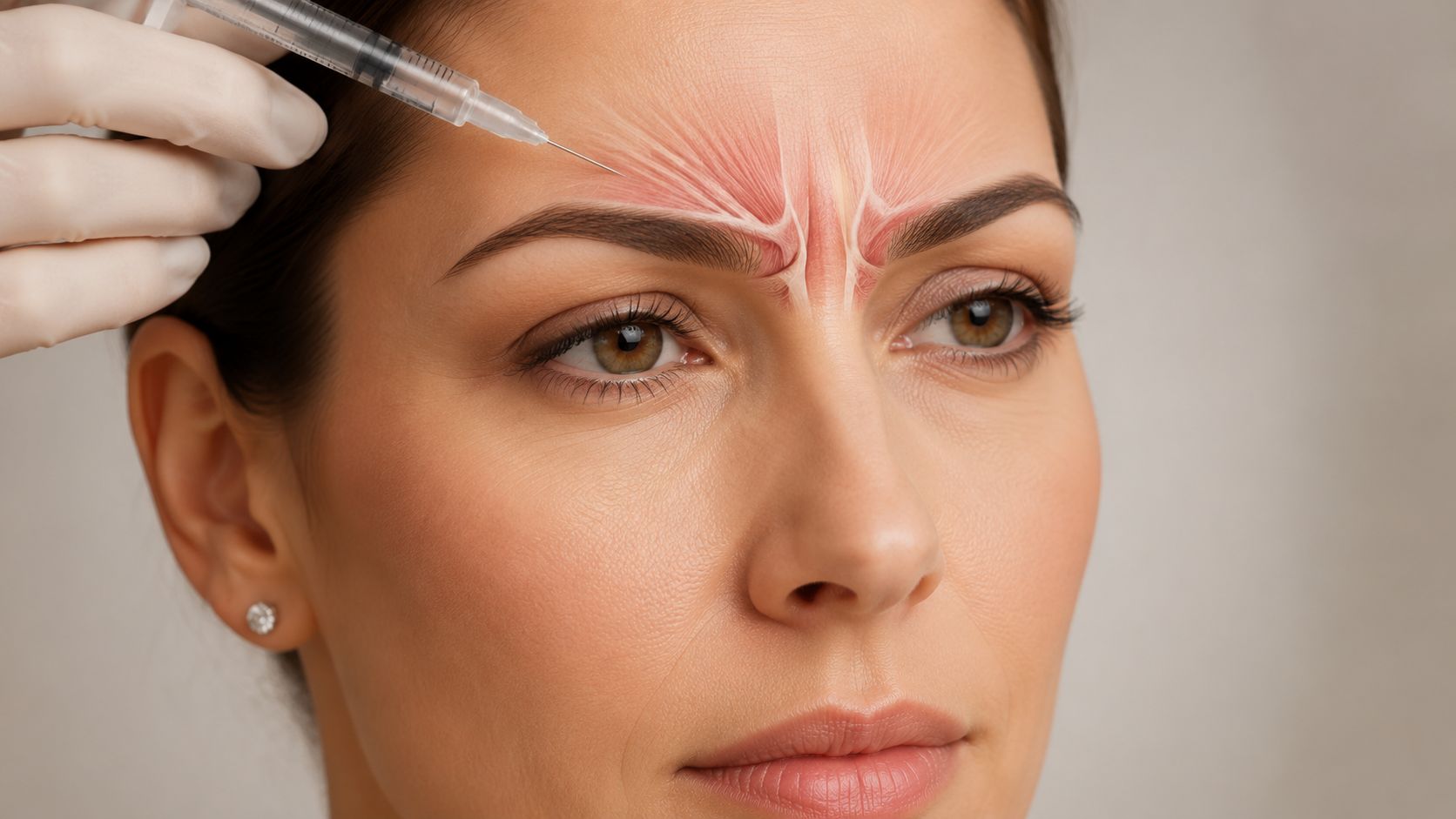
Neurotoxins can help when expression lines keep folding skin in the same places. Fillers can help when the issue is deflation, not texture. PRP may be considered in broader regenerative plans where healing support and skin quality are part of the goal.
None of those replace resurfacing, and resurfacing doesn't replace them. They solve different problems. The strongest aesthetic plans usually come from matching each tool to the concern it treats.
Why home maintenance matters
Laser can reset the skin, but it doesn't stop sun exposure, inflammation, or time. At-home care is what protects your result and often determines how long your skin continues to look healthy after the in-office work.
That includes basic things like sunscreen and barrier-respecting skincare. It can also include light-based maintenance at home when used appropriately.

One device option for ongoing support
An LED mask can make sense for patients who want a noninvasive maintenance step between office visits. The Barb N.P. Facial Mask is one such option. It's a wireless mask designed for easy use at home, it's built for comfort on the face so patients are more likely to use it consistently, and it includes 3 lighting settings for different treatment goals, including anti-aging support, acne-focused use, and calming inflamed skin.
That kind of tool doesn't replace professional resurfacing. It fits after it. If you're building a broader collagen-support plan, this article on how to boost collagen production naturally complements the in-office side of treatment nicely.
- For post-procedure maintenance: Patients often want something gentle once their provider clears them for regular skincare routines again.
- For consistency: Wireless design matters because convenience tends to improve adherence.
- For multi-goal routines: Different light settings are useful when someone's concerns aren't limited to one issue.
Choosing Your Provider and Final Questions
The device matters, but the operator matters more. Two clinics can advertise the same laser and deliver very different outcomes because assessment, settings, treatment density, and aftercare are where judgment shows up.
If you're considering face rejuvenation laser treatment, vet the provider before you vet the brand name of the machine.
What to look for in a consultation
A strong consultation should feel specific, not salesy. The provider should examine your skin, ask about pigment history, discuss downtime frankly, and tell you if laser isn't the right first move.
Use this checklist:
- Credentials that are clear: Look for a qualified medical professional such as an M.D., D.O., or N.P. working within an appropriate aesthetic setting.
- Experience with multiple skin concerns: Acne scars, pigment, textural aging, and mature skin don't all get treated the same way.
- Before-and-after photos that match your concern: Not just any result. Your concern.
- A plan for complications and aftercare: You want to know who answers questions when healing doesn't go exactly as expected.
Questions worth asking
Patients often get better consults when they ask direct questions such as:
- What problem is this laser meant to treat on my face
- Why are you recommending this category instead of a gentler or stronger one
- How much downtime should I realistically plan for
- What does my skin tone or pigment history change about the plan
- If this doesn't address sagging or volume loss, what would
Those questions quickly reveal whether the provider is customizing treatment or merely selling a popular procedure.
Quick answers to the practical concerns
How much does laser treatment cost?
Cost varies widely by device, treatment area, provider experience, and whether you need one session or a series. A real quote should come after an exam, not from a generic menu alone.
Does it hurt?
Comfort depends on the laser type and intensity. Gentler treatments are usually easier to tolerate. More aggressive resurfacing typically requires stronger comfort measures and a more involved recovery.
How long do results last?
That depends on the issue treated, your sun habits, your skincare, and whether facial aging is being driven by texture, movement, volume loss, or laxity. Good results last longer when patients protect them.
The final decision
The best laser candidates aren't the people chasing the strongest treatment. They're the people choosing the right treatment for the right problem, with a provider who knows when to be aggressive and when not to be.
Laser resurfacing can be a powerful tool for smoother, clearer, healthier-looking skin. It just works best when expectations are realistic, the plan is individualized, and maintenance is built in from the start.
If you're ready to talk through your own skin goals, BotoxBarb offers consultations, in-clinic aesthetic services, and curated at-home options that can support a personalized rejuvenation plan.